You want to say something, but the words feel clumsy. Maybe your coworker just lost a parent, or a partner, or a child. You know a quick "sorry for your loss" isn’t enough. But you also don’t want to write something that sounds like a form letter or, worse, makes things awkward. That’s normal. Most people freeze up here.
Condolence letters sit in a tricky space for professional correspondence. They’re personal, but you’re writing to someone you share a break room and a project deadline with. Get the tone wrong, and you either sound cold or too familiar. The goal is to make the person feel seen without making them feel obligated to manage your emotions.
Why starting with a sample helps
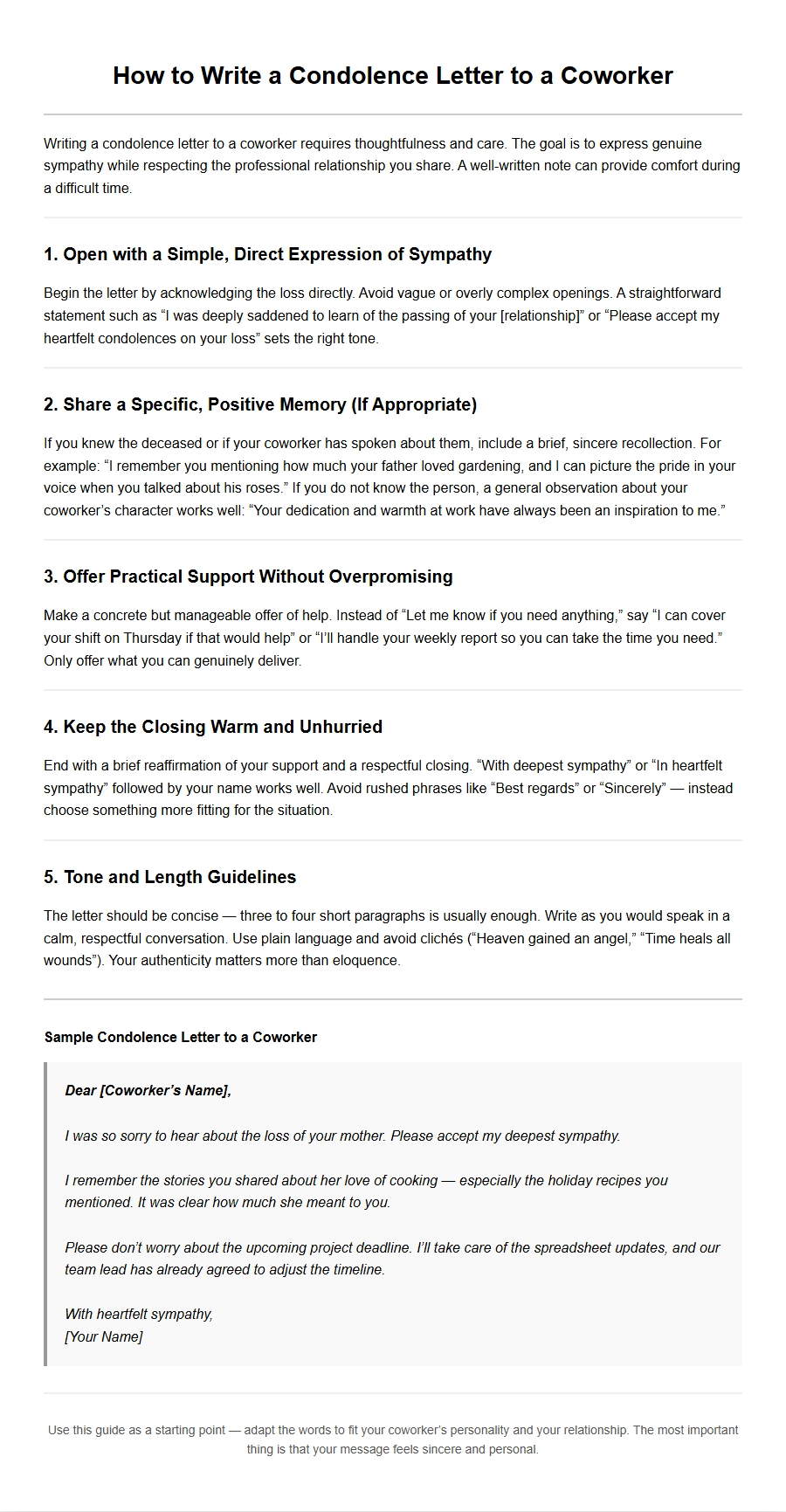
Using a letter template for a condolence note isn’t lazy. It’s smart. A sample gives you the bones: the right salutation, a respectful closing, and the basic structure for professional letter writing etiquette. You don’t have to invent the framework from scratch while your mind is already worrying about what to say. The sample handles the business letter format so you can focus entirely on the personal message inside it.
Category: Condolence Letters
Even seasoned writers use examples. The trick is knowing how to adapt a sample without losing your authentic voice. The sample is your scaffold, not your script.
Choosing the right sample for your situation
Not every condolence letter should look the same. If your coworker was your manager’s direct report and you barely knew them, a formal, short note is appropriate. If you sat next to this person for three years and frequently talked about their kids, your tone in writing should be warmer and more specific.
A formal letter sample typically uses "Dear [Name]" and closes with "Sincerely." A semi-formal version might use "With deep sympathy" and include a brief personal memory. Match the sample’s level of formality to your actual relationship, not your relationship to the company hierarchy.
How to customize a condolence letter sample
The biggest mistake people make is copying a sample verbatim. That’s when a letter feels robotic. Take the structure from a customizable letter template, then swap the generic phrases for real details.
Instead of saying "I was saddened to hear about your loss," try "ifference your mom made in the office when she visited last year." That’s specific and truthful. It shows you actually noticed something about their life.
If the sample says "Please let me know if there's anything I can do," change that. Offer something concrete. "I’m handling the Johnson account this week, don’t worry about it." That’s more helpful than an open-ended offer that nobody ever takes you up on.
Mistake to avoid: Using outdated salutation and closing like "To whom it may concern" or "Respectfully yours" in a personal condolence note. Those belong in formal letters of recommendation, not here. Keep the opening human. Just their name works.
Practical tips for adapting your tone
If you’re writing by email, the subject line matters. Keep it simple: "Thinking of you" or "With sympathy." Don’t put "condolences" in all caps.
If you’re printing the letter, letterhead design is optional. A blank sheet of good paper is often better than a company letterhead with logos and taglines. It makes the message feel personal, not corporate.
Proofreading letter rules are slightly different here. You want to check for typos, but don’t obsess over making it sound perfect. A slightly imperfect sentence that is honest beats a polished sentence that says nothing.
When you mention religion, be careful. Not everyone shares your beliefs. If you are unsure, stick to universal language like "peace" or "comfort." For more guidance, it’s worth reviewing how to mention religion in condolence letter without making assumptions.
Common mistakes in condolence letter writing
One common error is making the letter about your own feelings. "I can’t imagine how you feel" is fine, but don’t write a paragraph about how sad you are. The focus should stay on the person grieving and the person they lost.
Another mistake is using a digital letter format that feels too casual. No emojis, no "LOL," no exclamation points. Keep the letter structure simple: opening, memory or acknowledgment, offer of help, closing. That’s all you need.
If you are writing to someone who lost a child, the tone gets even more delicate. It’s okay to say the child’s name if you knew it. Don’t try to find a silver lining. For specific advice, see sympathy message for loss of unborn child for more guidance on wording that doesn’t minimize the loss.
For a manager or executive, your note might be slightly more formal but still warm. A formal letter of condolence to an executive can still feel genuine if you include one concrete detail about the deceased or the colleague’s work ethic.
When to send the letter
Send it within the first two weeks if possible. Beyond that, it gets harder. But don’t skip it just because time passed. A late letter is better than no letter.
If you are writing to someone who lost a child, the guidelines shift. It’s worth reading sympathy letter guidelines for children loss to avoid common pitfalls that can unintentionally hurt the reader.
If you’re worried about sounding awkward, that’s normal. Most people are. The most important thing is that you wrote. How to express sorrow without being awkward mostly comes down to being brief, honest, and not trying to fix anything.
Closing the letter well
End with something simple. "With sympathy," "Thinking of you," or "Warmly" all work. Avoid "In closing" or "In summary" – the letter is short enough to end naturally.
After you send it, let it go. Don’t follow up asking if they received it. Don’t bring it up in the office. The letter did its job when they read it.
Use a sample to save time on structure and spend that time on the part that matters: writing something that sounds like you, aimed at someone hurting, without making it harder for them to read. That’s the whole point of professional letter writing etiquette here.
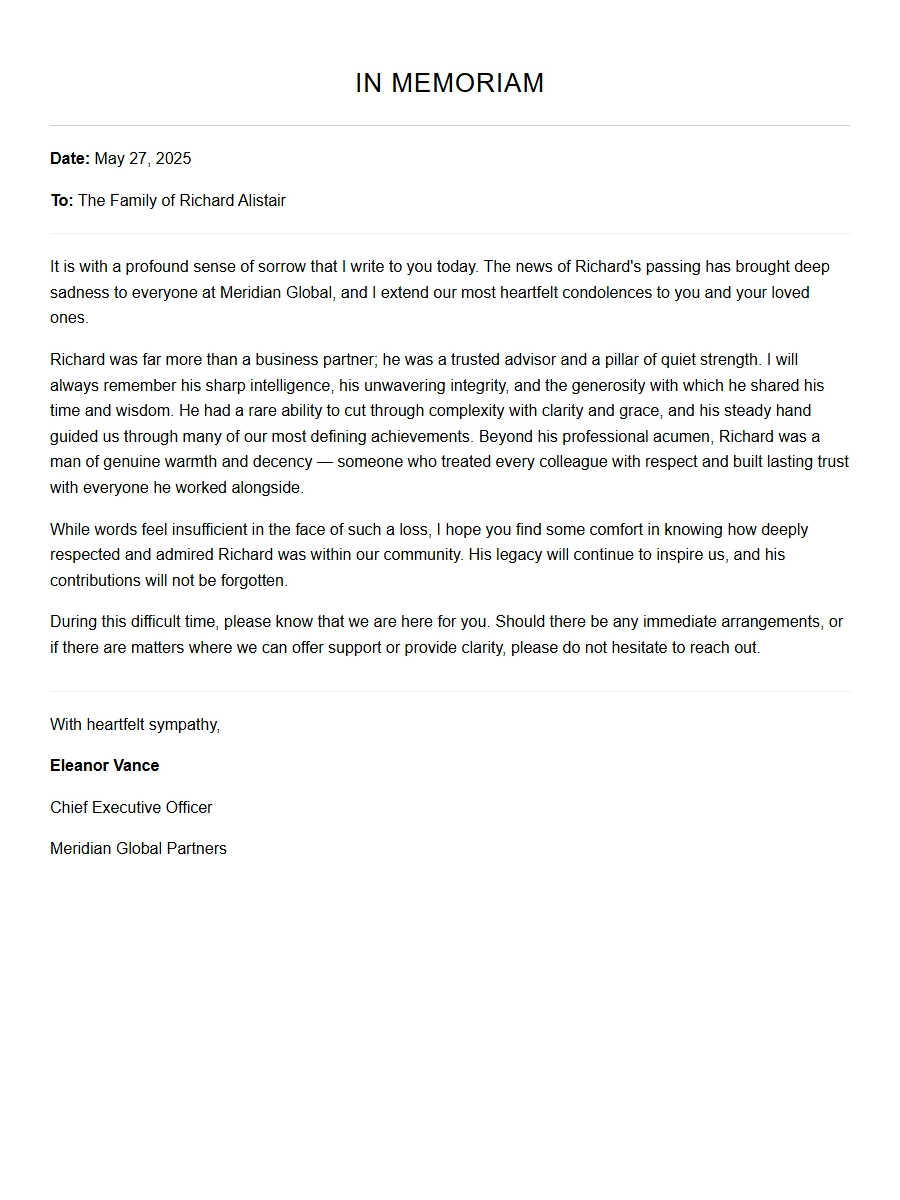 Formal Condolence Message for a Business Partner
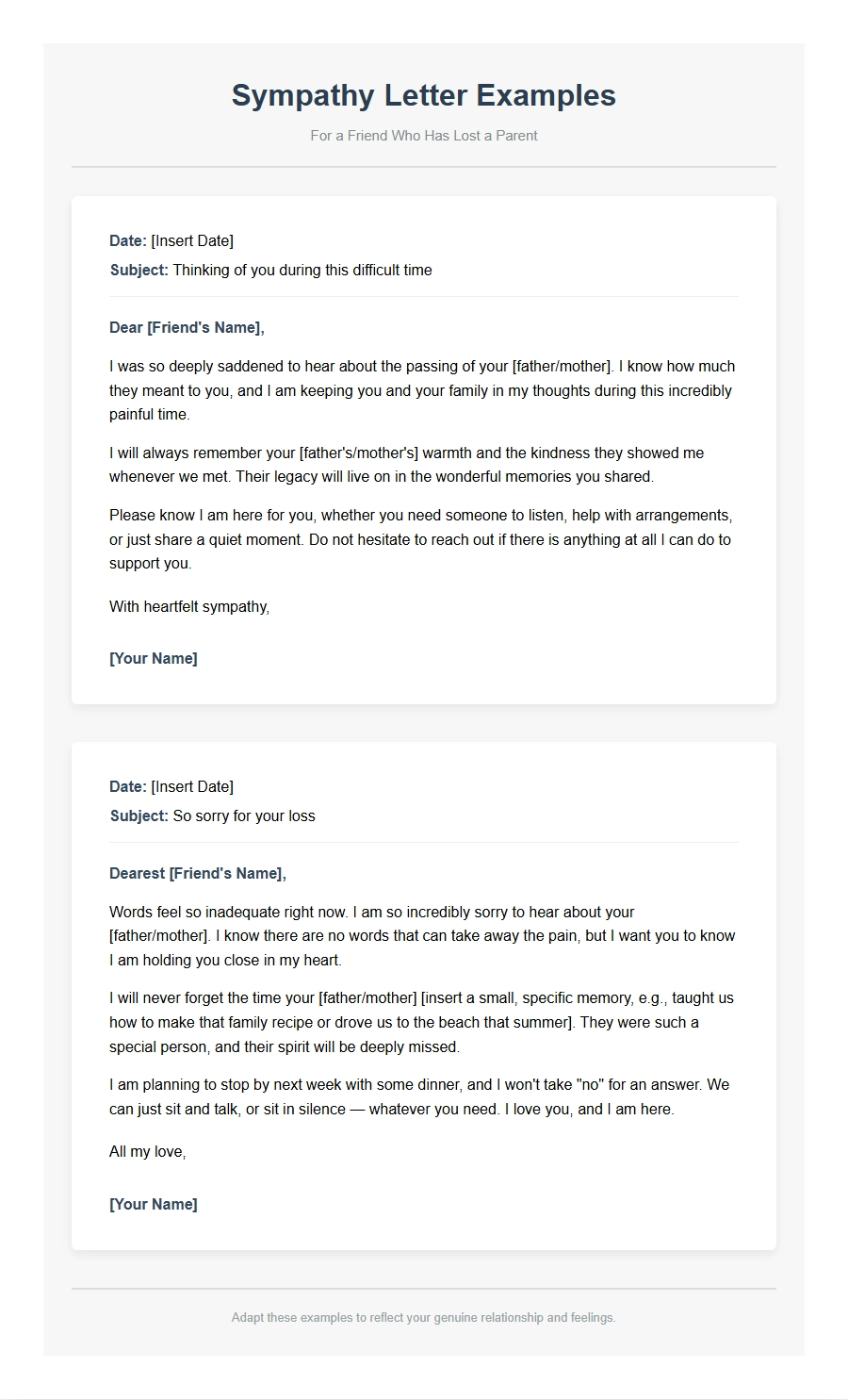 Sympathy Letter Examples for a Friend Who Lost a Parent
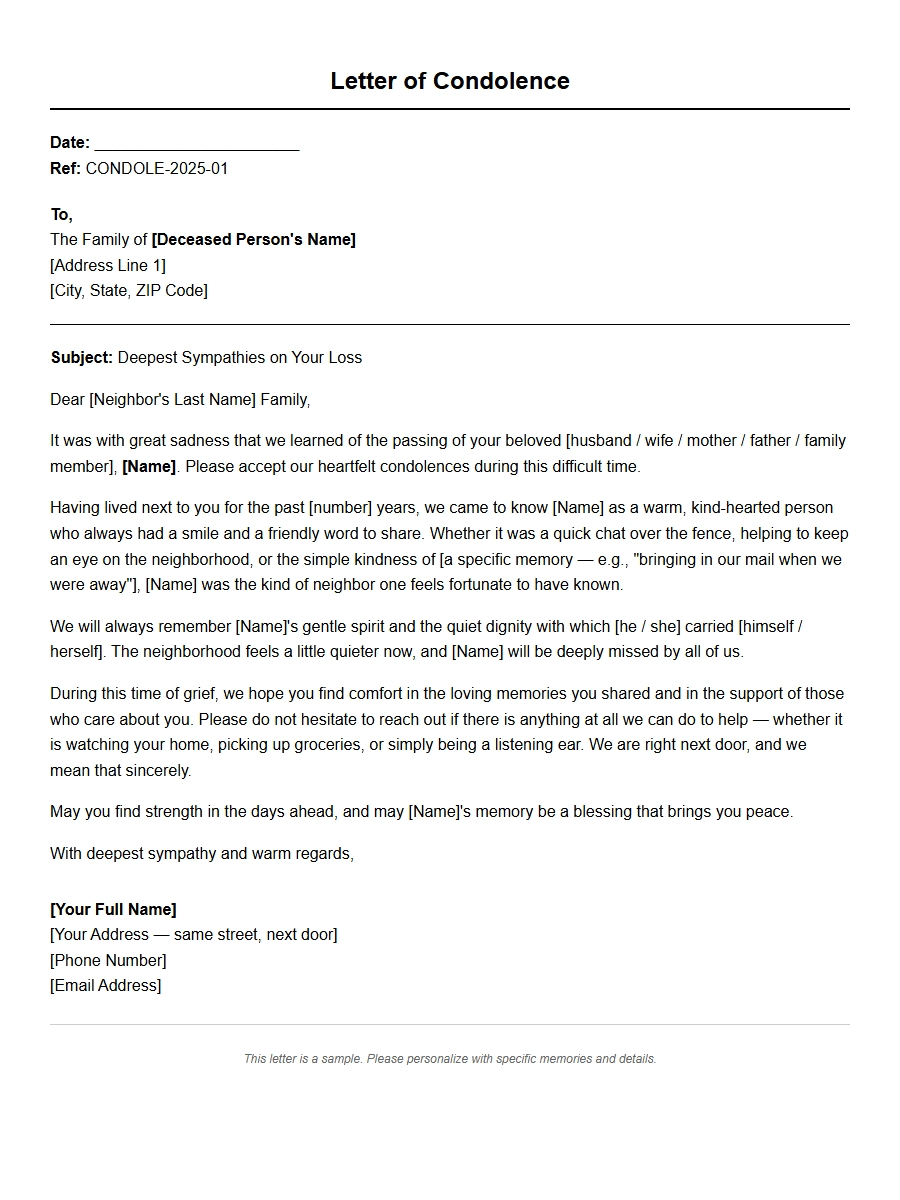 Condolence Letter Sample for a Neighbor
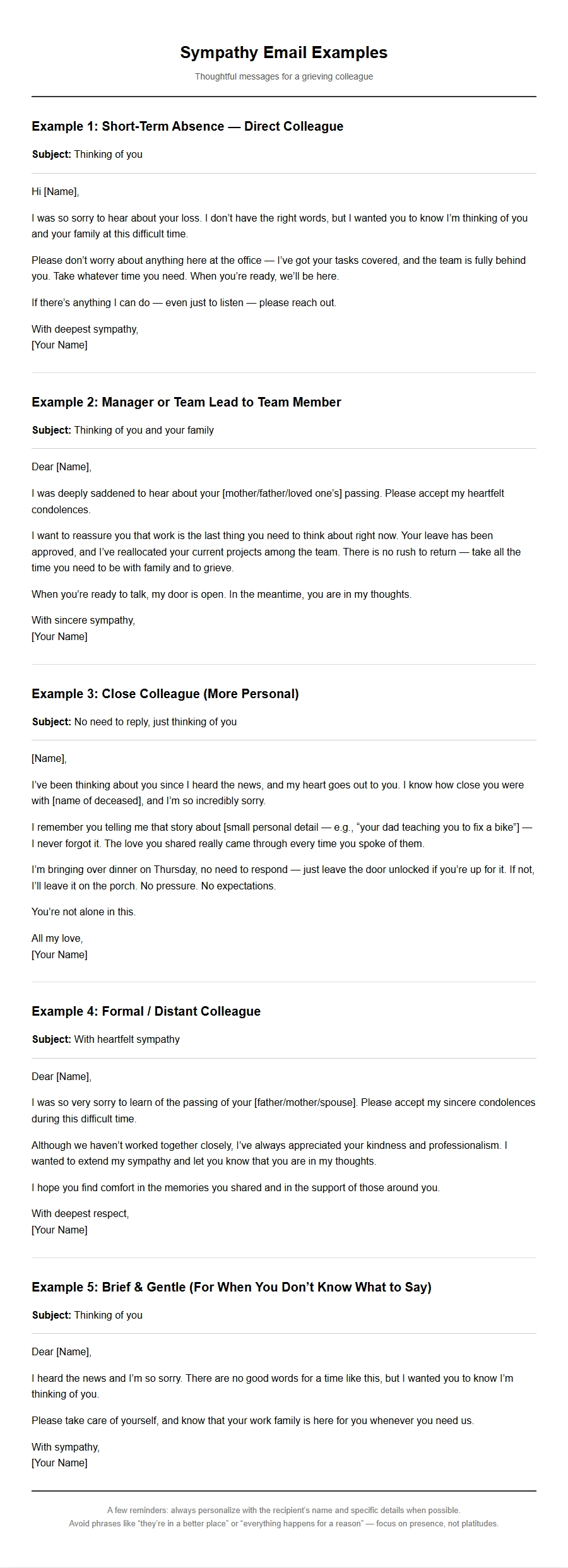 Sympathy Email Examples for a Grieving Colleague
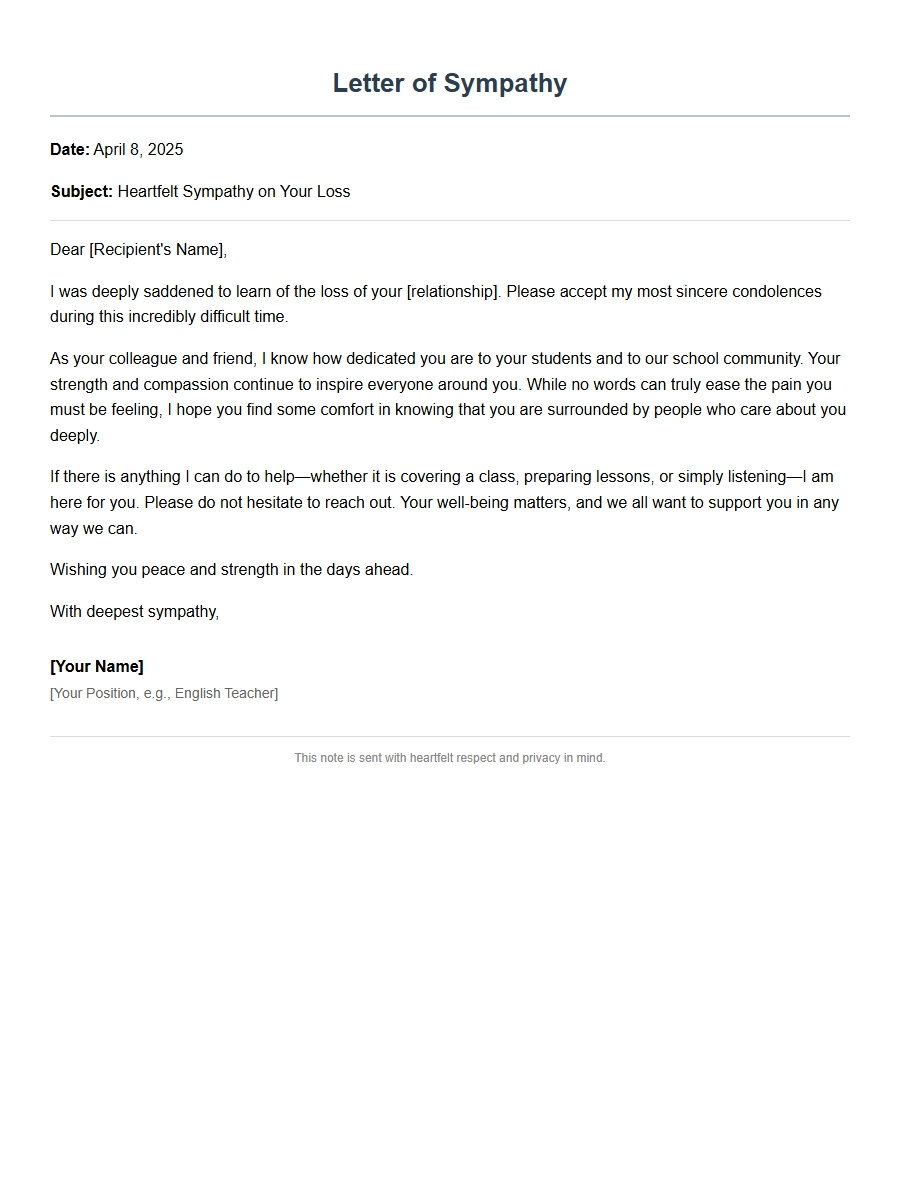 Condolence Words for a Teacher
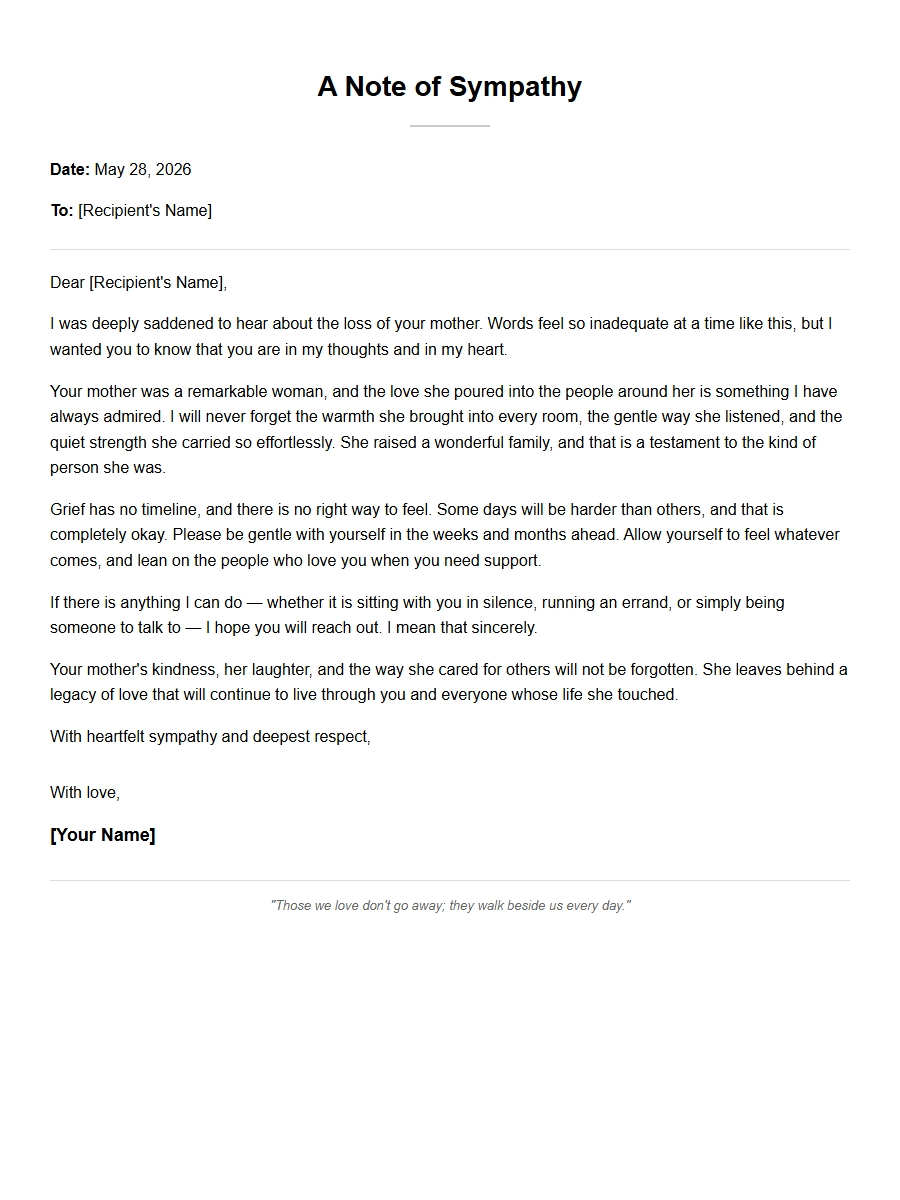 How to Write a Condolence Note for Loss of Mother