Staring at a blank page when you need to write a note to someone who lost their mother can feel paralyzing. You want to say the right thing, but every word seems inadequate. That anxiety is completely normal—and using a good sample can turn that blank-page dread into a thoughtful, personal message in minutes.
Writing a condolence note isn’t about perfection. It’s about showing up. A sample gives you a structure and a starting point, so you don’t have to invent the wheel while your friend or colleague is grieving. It’s not cheating; it’s a smart, time-saving strategy that leaves room for your own voice.
Category: Condolence Letters
When you choose a letter template, look for one that matches your relationship to the bereaved. A note to a coworker will feel different than one to your best friend. The right sample will include a respectful salutation, a simple expression of sympathy, and space for a short memory or offer of help. That’s the skeleton—you add the heart.
How to adapt a sample without losing your authentic voice
Start with the sample’s structure: opening, acknowledgment of loss, a personal touch, and a closing. Then swap out generic phrases for your own words. Instead of “I’m sorry for your loss,” try “I was so sad to hear about your mother. She always made me laugh at those family dinners.” That’s the kind of detail that makes a letter feel real.
Watch out for tone in writing. A formal business letter format uses “Dear [Name]” and “Sincerely,” but a note to a friend can start with just their name or “My dear [Name].” Pick a salutation and closing that fits your relationship. For email, keep the subject line simple, like “Thinking of you” or “With sympathy.” Digital letter format still needs a clear subject so it doesn’t get buried.
Common mistakes to avoid
One big one: using outdated salutations like “To whom it may concern” in a sympathy note. Never do that. Also, don’t overshare your own grief story unless it’s directly relevant. The focus should stay on the person who lost their mother. And if you’re sending an email, pay attention to proofreading letter tips—a typo in a condolence note can feel careless, even though we all make them.
Another pitfall: treating a sympathy note like a letter of recommendation or resignation letter sample. They’re completely different formats. A condolence note is short, warm, and focused on the recipient. If you’re unsure about length, aim for two to three paragraphs. That’s enough to be meaningful without rambling.
Personalize the opening paragraph
The first line is where most people freeze. Instead of “I’m writing to express my condolences,” try a direct acknowledgment: “I heard about your mom, and I’m so sorry.” Then follow with a specific memory or a simple offer: “I remember how she’d always ask about my garden. I’ll miss her warm smile.” That grabs attention and shows you cared enough to remember.
If you didn’t know the mother well, that’s okay too. Say something like, “I know how much she meant to you from the way you’d light up when you talked about her.” That’s honest and kind.
When to use a more formal approach
For a professional correspondence—like a note to a client’s family or a dignitary—stick with a traditional business letter structure. Use a letterhead design if you’re printing it. Keep the language respectful but not stiff. A sample for a formal situation will guide you on salutations like “Dear Mr. and Mrs. Smith” and closings like “With deepest sympathy.” Avoid casual phrases like “Hang in there” in those contexts.
Once you have a draft, read it aloud. Does it sound like you? If not, tweak the phrasing. The best letters feel both professional and personal. They show you cared enough to write, even when it was hard. Practice makes the process faster, but even your first attempt will mean more than silence.
Use the sample as a springboard, not a crutch. You’ll find your voice after the first few sentences. And next time you face a blank page, it won’t feel so scary.
Samples to Guide You
How to Write a Condolence Note for Loss of Mother
A Personal Condolence Letter from a Close Friend
Dearest Sarah,
I was heartbroken to hear about your mother's passing. There are no words that can truly ease your pain, but I want you to know that I am holding you close in my thoughts. Your mother was such a warm, generous soul — I'll never forget how she welcomed me into your home with open arms and insisted I stay for dinner. Her laughter could light up any room.
Please don't hesitate to reach out if you need anything at all — whether it's someone to sit with, help with errands, or just a quiet presence. I'm here for you, today and in the weeks ahead.
With deepest sympathy, Maya
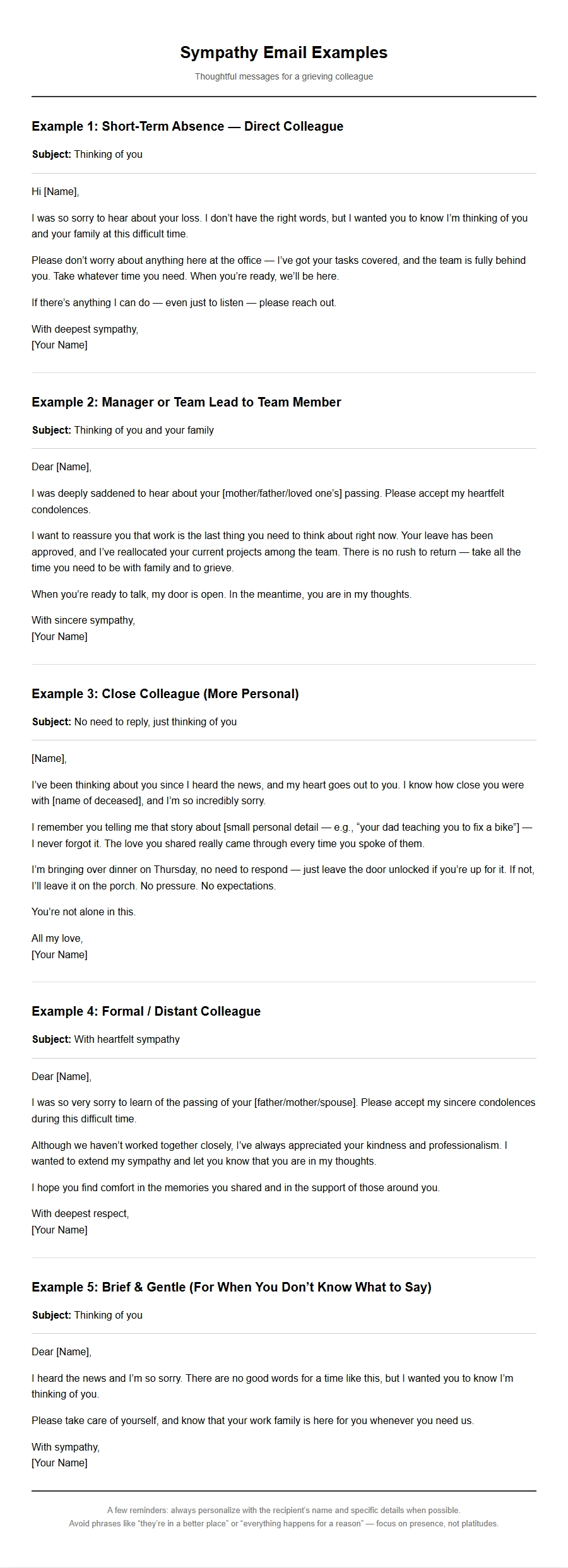
A Note from a Colleague at Work
Dear James,
Our entire team was deeply saddened to learn about the loss of your mother. We know how close you were to her, and we want you to know that we are thinking of you during this incredibly difficult time.
Please take all the time you need to be with your family. Your projects are being covered — Lena has volunteered to handle your current client reports, and Tom will manage the upcoming presentation. You don't need to worry about anything here.
We've also arranged for a meal delivery service for your family this week. If there's anything else we can do, please let me know.
With heartfelt condolences, Your work family
A Message from a Distant Relative
Dear Celine and family,
Though we've been separated by distance and time, the news of Aunt Rose's passing brought a deep ache to my heart. She was a remarkable woman — strong, loving, and always full of stories. I remember the summers we spent at her house, the scent of her baking, and the way she made every child feel special.
I wish I could be there to give you a hug and share memories. Please know that I am thinking of you all. I will call you next week to check in.
With love and sympathy, Your cousin, Elena
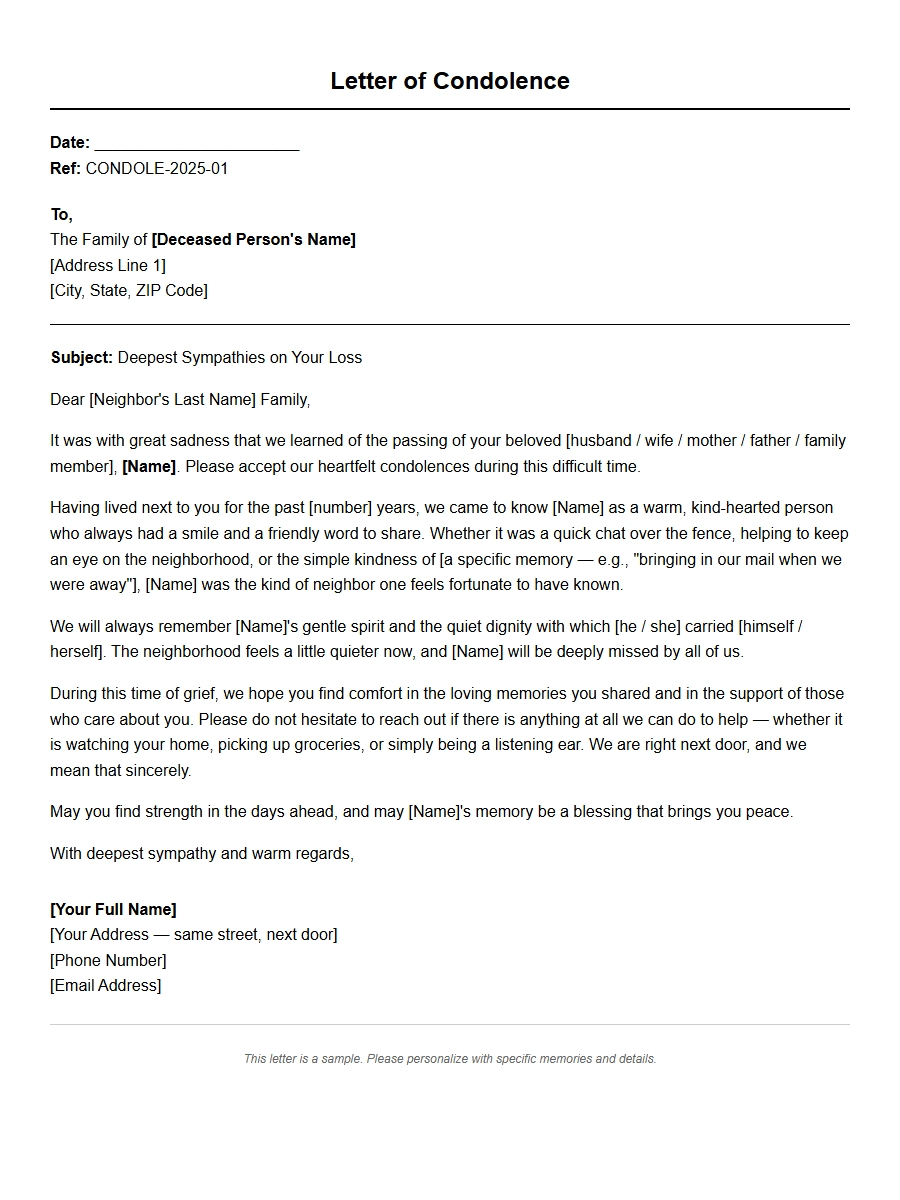
A Sympathy Card from a Neighbor
Dear Mr. and Mrs. Park,
We were so sorry to hear about your mother's passing. She was a familiar and kind face in our neighborhood — always tending to her roses and waving as we walked by. Her gentle spirit made our street a warmer place.
We've left a small casserole on your front porch, and we're happy to help with yard work or anything else you might need. Just knock on our door anytime.
Our deepest sympathies, The Millers (next door)
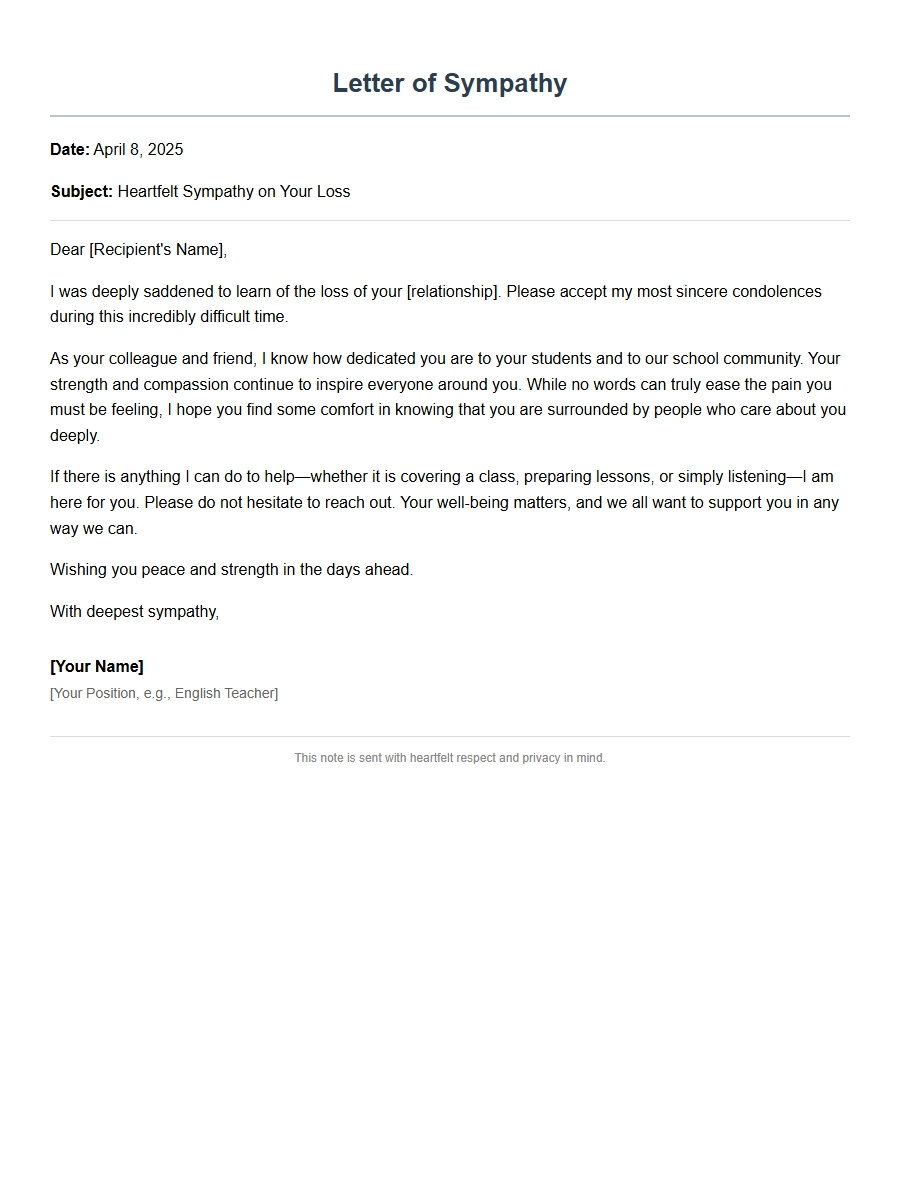
A Letter from a Past Teacher or Mentor
Dear Michael,
I was deeply saddened to read about the passing of your mother. As your former teacher, I remember how proudly you spoke of her during our class projects. She was clearly a guiding light in your life.
Your mother's encouragement of your education — staying up late to help with science fair boards, attending every parent-teacher conference — is a legacy that lives on in you. The person you have become is a testament to her love and dedication.
Please accept my heartfelt condolences. I am thinking of you and your family.
With sympathy, Mrs. Aldridge
A Group Condolence Message from a Church Community
Dear the Henderson family,
Our church community comes together today to share your sorrow over the loss of your beloved mother, Margaret Henderson. She was a pillar of our congregation — serving on the hospitality committee, teaching Sunday school, and always offering a listening ear.
We have arranged the following support for your family:
Meal delivery schedule — sign up for dinners during the next two weeks
Prayer chain — our members are holding you in prayer daily
Childcare — available for younger children during visiting hours
You are not alone. We are here for you.
In God's love, Pastor Thomas and the congregation
A Note from a Book Club or Hobby Group
Dear Jenna,
Our book club was devastated to hear about your mother's passing. Although most of us never met her, we feel we knew her through the wonderful stories you shared about her — especially the time she debated with you about the ending of your favorite novel!
We are postponing our next meeting to give you space, but we wanted to let you know that we're thinking of you. A few of us have put together a care package with some comforting reads and tea. We'll drop it by next week.
Please take all the time you need. We'll be here when you're ready.
With love, Your book club friends
A Short Formal Condolence Letter
Dear Mr. and Mrs. Taylor,
On behalf of the entire board of directors at Pinecrest Foundation, I extend our deepest sympathies to you and your family on the passing of your mother, Edith Taylor.
Mrs. Taylor was a cherished member of our community, and her contributions to local charities will be remembered with gratitude. Her warmth and dedication were an inspiration to all who knew her.
Please accept this expression of our heartfelt condolences. If we may be of any assistance during this time, please do not hesitate to contact the foundation office.
Yours sincerely, William Stone, Executive Director
A Memory-Sharing Condolence Note
Dear Lisa,
I was so sorry to hear about your mom. She was one of the kindest people I've ever known. I'll never forget the memories we made together:
She taught us how to make her famous lasagna — and let us eat it straight from the pan.
She drove us to every dance practice without complaint, always with snacks and a smile.
She stayed up with me when I was scared during that thunderstorm sleepover.
Your mother raised an incredible daughter, and her love lives on in you. I hope these memories bring you comfort in the days ahead.
With all my love, Jessie
A Note Offering Specific Help (with Checklist)
Dear Hiroshi,
I was so heartbroken to hear about your mother's passing. I'd like to help in practical ways during this difficult time. Below is a list of things I can do — please let me know what would be most helpful.
Task
Available Days
Notes
Pick up relatives from airport
Weekdays & weekends
I have a minivan (seats 6)
Walk the dog
Morning or evening
I know your dog well
Cook a meal
Any evening
Can deliver; please list dietary needs
Run errands (groceries, pharmacy)
Daily until 5 PM
Text me a list
No need to reply now — just know I'm here. Sending you all my love.
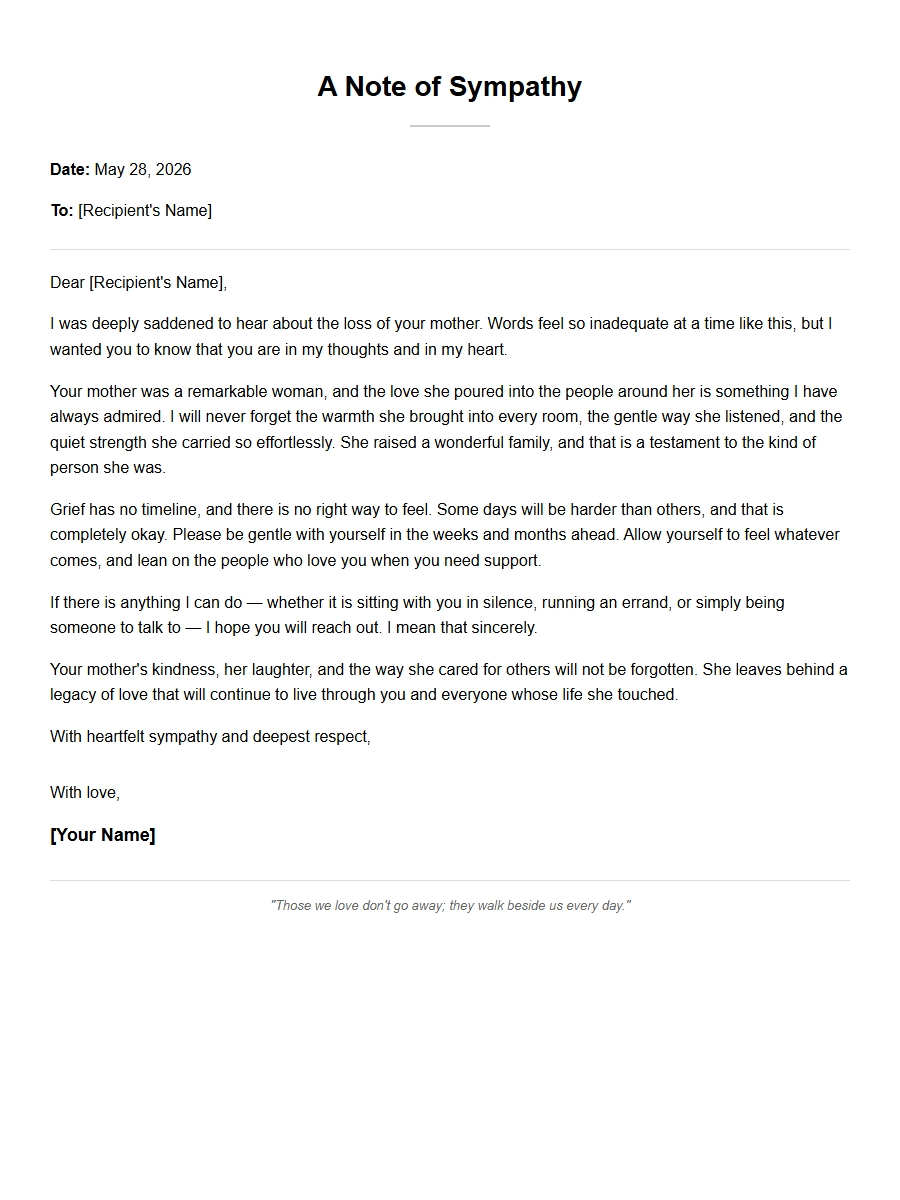
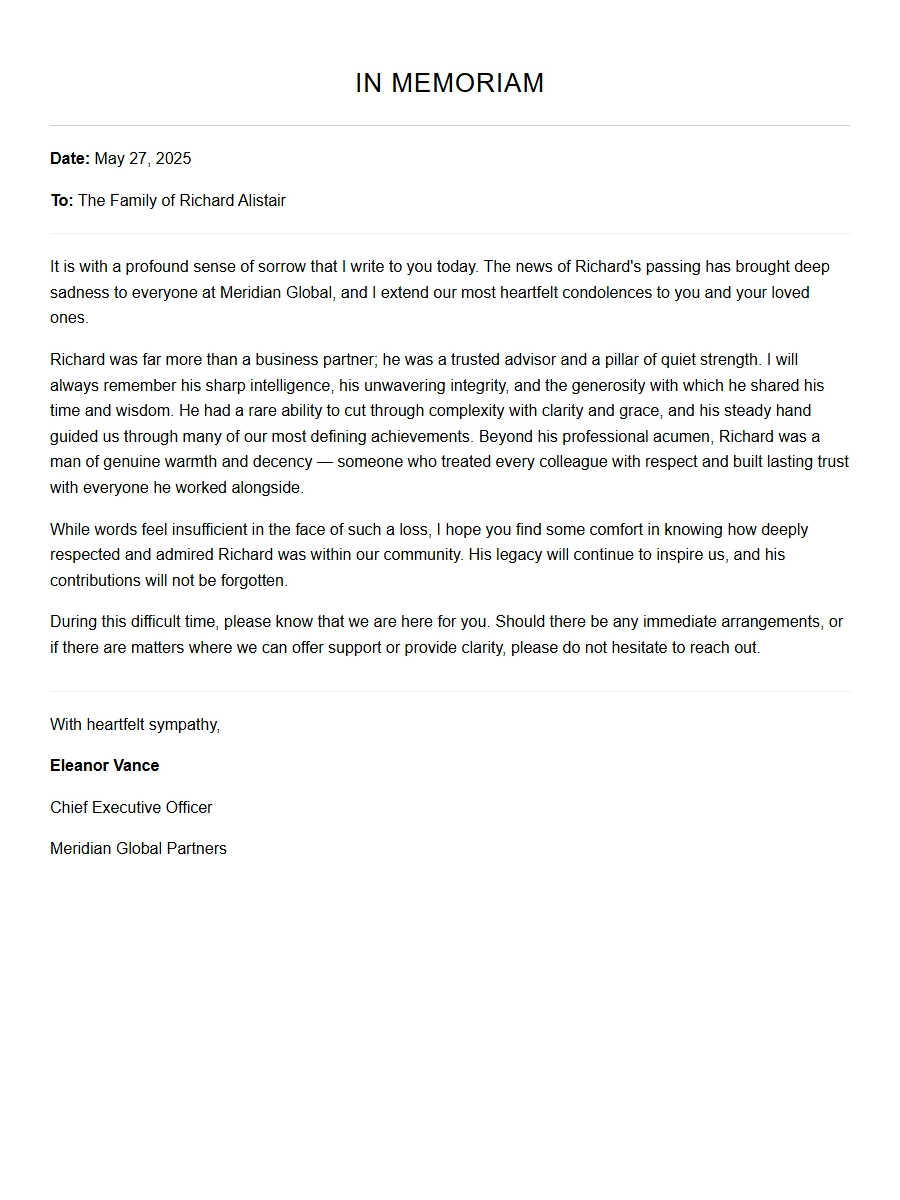 Formal Condolence Message for a Business Partner
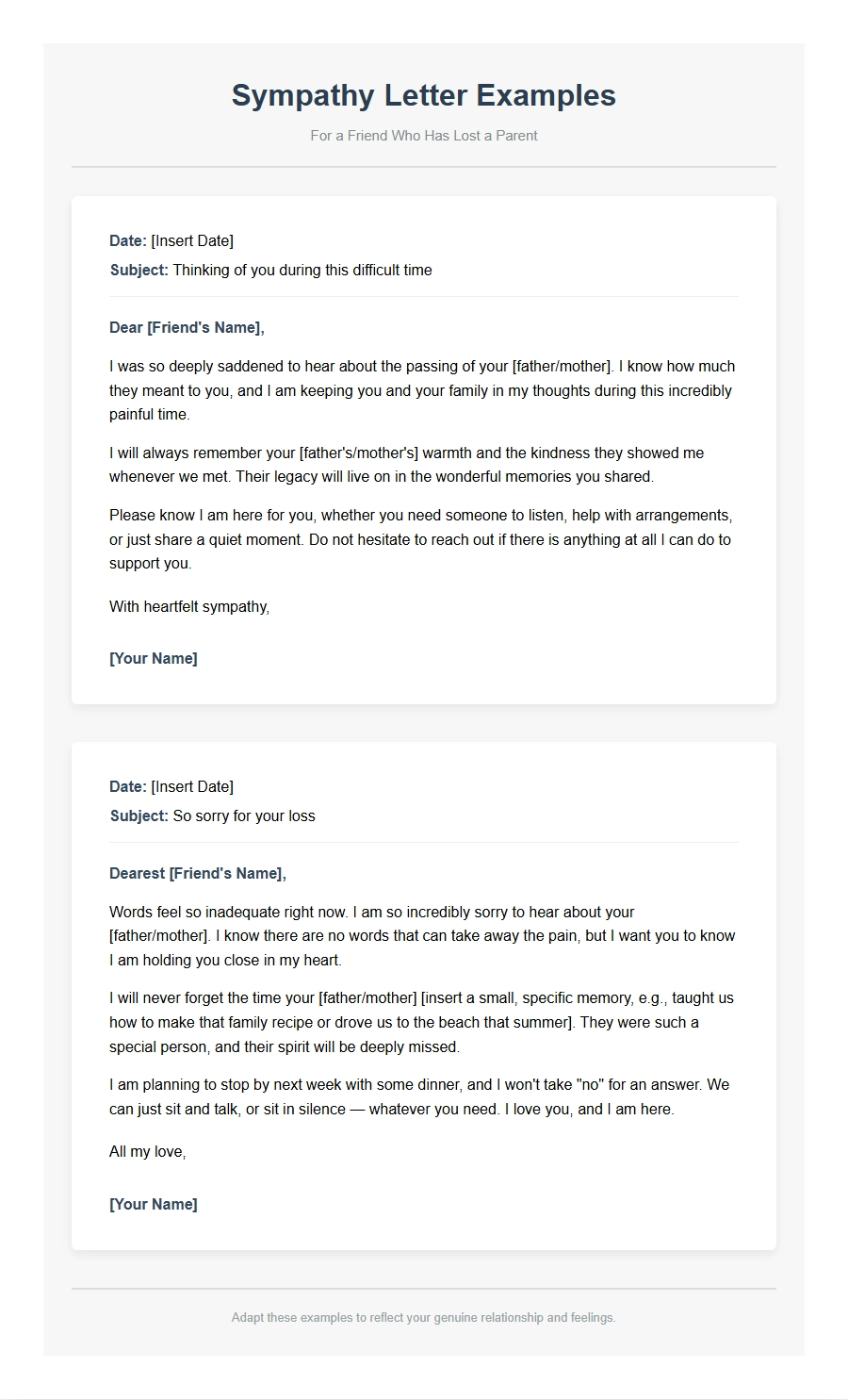 Sympathy Letter Examples for a Friend Who Lost a Parent
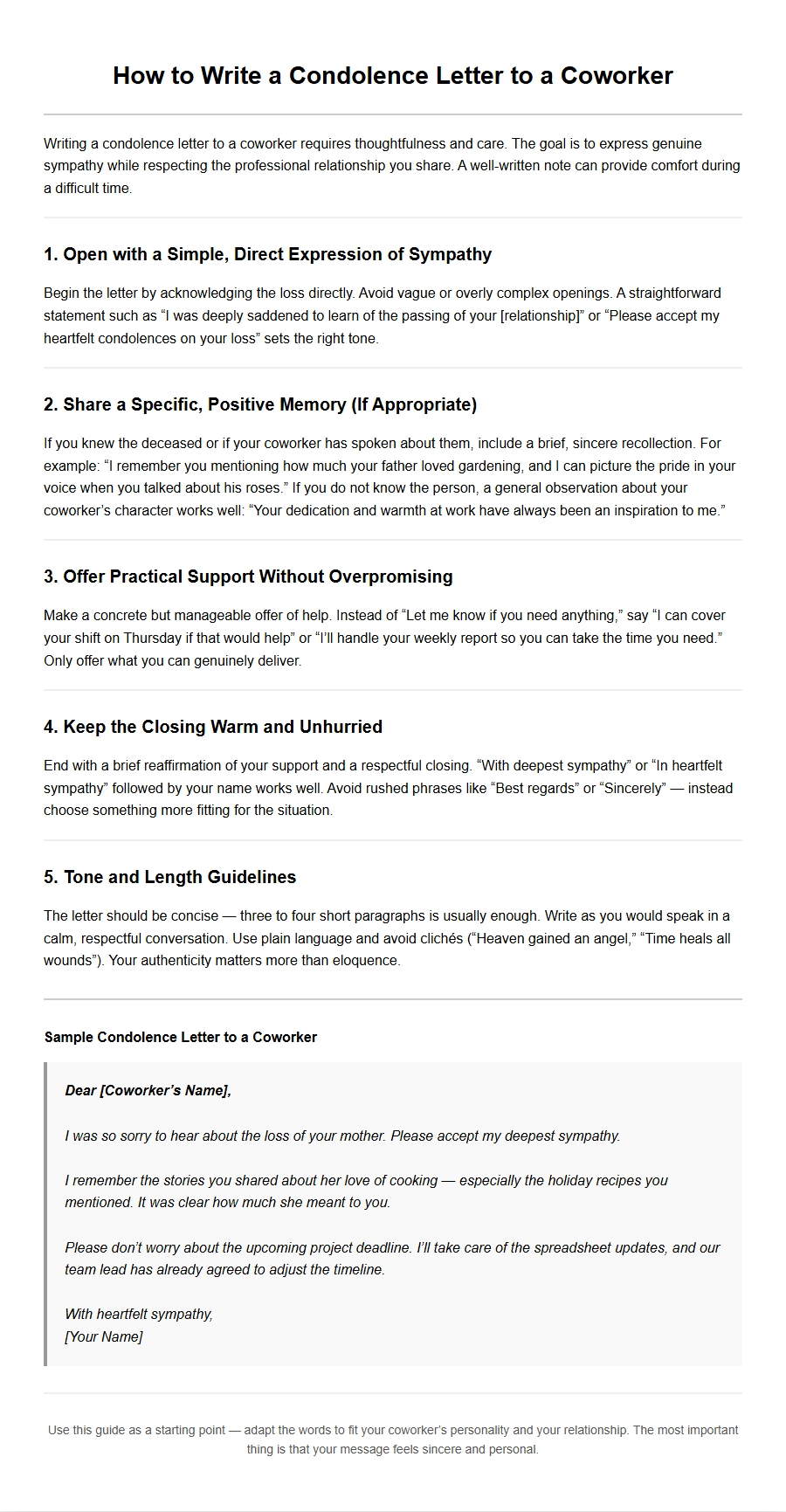 How to Write a Condolence Letter to a Coworker
 Condolence Letter Sample for a Neighbor
 Sympathy Email Examples for a Grieving Colleague
 Condolence Words for a Teacher