Sympathy Letter Examples for a Friend Who Lost a Parent
Staring at a blank page when you need to write a letter of sympathy for a friend who lost a parent can feel paralyzing. The weight of wanting to say exactly the right thing—without sounding hollow or clichéd—often makes the first sentence the hardest. The good news? A well-chosen example turns that anxiety into a heartfelt message in minutes.
Why a sample isn’t a crutch—it’s a smart start
Using a sympathy letter template is not cheating. It gives you a solid structure, a proven tone, and key phrases that feel natural but respectful. Think of it as a scaffold: you keep the shape but fill it with your own memories, your friend’s name, and the specific details that make the letter personal. Professional correspondence writers do this all the time—they borrow effective frameworks and adapt them. The same logic applies here.
Category: Condolence Letters
Choosing the right example for your situation
Not all sympathy letters look the same. A formal printed letter works well if your friend values tradition or if the loss is recent and you want to show extra care. A shorter email or handwritten note fits a more informal friendship. Look for examples that match the relationship you have with your friend. If you’re close, a slightly warmer tone with shared memories feels right. If you haven’t spoken in a while, lean toward a more formal, respectful structure. The best sample is the one you can personalize without losing your own voice.
How to adapt a sample without sounding robotic
Start with the salutation and closing—use your friend’s name naturally (“Dear Sarah,” not “To Whom It May Concern”). Then read the sample’s body and swap generic phrases for real moments. If the sample says “I was saddened to hear about your loss,” you can add a small detail: “I still remember the way your dad laughed at that barbecue last summer.” That tiny shift makes the letter truly yours. Pay attention to tone in writing: avoid overly formal language if you never speak that way in person. And when you’re done, always proofread the letter once—common mistakes like a misspelled name or wrong parent name can undo all your thoughtfulness.
If you’re sending by email rather than printed mail, consider digital letter format. Keep the subject line simple (“Thinking of you,” not “Condolence Letter”) and use a readable font. For a printed card, follow basic letter writing etiquette: black ink, neat handwriting, and a quality envelope. The physical form still matters to many people.
One mistake to skip
Don’t fall into the trap of using an outdated salutation and closing like “Dear Sir” or “Yours faithfully” when writing to a friend. It will feel cold. Also, avoid rushing the opening paragraph. That first sentence sets the tone—start with simple, direct empathy: “I’m so sorry about your mother.” Then explain how you learned the news, then share a memory or offer specific help. Avoid vague offers like “Let me know if you need anything.” Instead, say “I’ll drop off dinner Wednesday evening—no need to reply.”
The goal isn’t to write a perfect letter on your first try. It’s to get something down that feels true to you and helpful to your friend. Over time, you’ll notice the process gets faster—you’ll learn which letter structure feels most natural, which phrases land best, and how to balance warmth with respect. Use the sample as a springboard, not a cage. The best letters feel both professional and personal, like a hand reaching out from the page. Practice a few times, and soon you’ll write without needing a sample at all.
Samples You Can Use
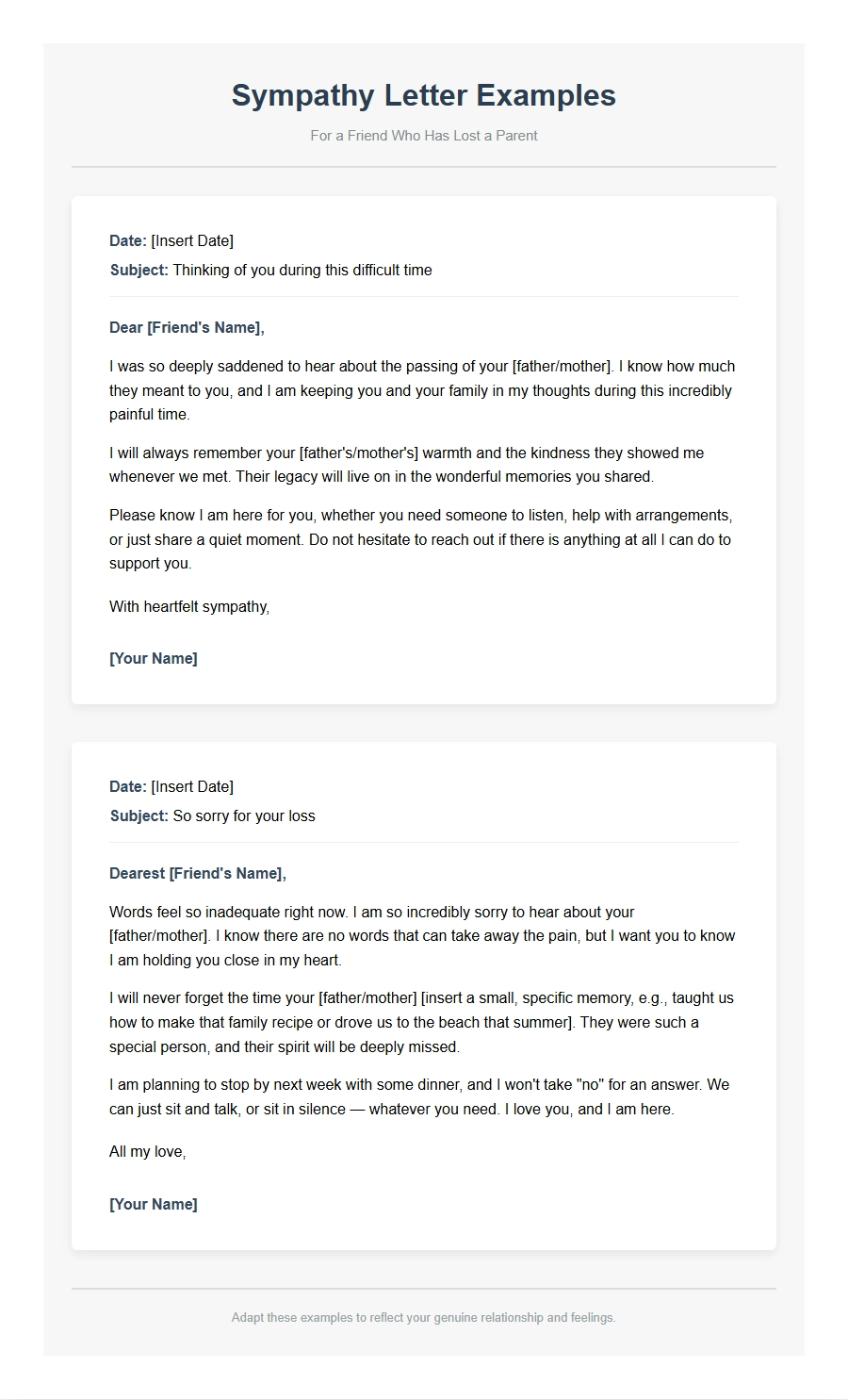
Sympathy Letter Examples for a Friend Who Lost a Parent
Simple and Sincere
Dear [Friend's Name],
I was so saddened to hear about the passing of your beloved mother. Please know that my thoughts are with you during this incredibly difficult time. I have no doubt that she was a wonderful person, having raised such a kind and compassionate friend as you.
I am so sorry for your loss. If you need someone to talk to, or simply want a quiet presence nearby, I am here for you. There is no need to respond—just take all the time you need to grieve and be with your family.
With deepest sympathy, [Your Name]
With a Fond Memory
Dear [Friend's Name],
I am writing with a heavy heart to express my deepest condolences on the loss of your mother. The news has left me completely stunned.
I will always remember the time she invited me for dinner after a particularly rough week. She made her famous lasagna and insisted I take home the leftovers. Her warmth and generosity made such a lasting impression on me. She had a way of making everyone feel like family.
Those memories are now treasures. I hope you and your family find comfort in the love and laughter she brought into your lives. Please let me know if there’s anything I can do to help ease this burden, even in the smallest way.
With heartfelt sympathy, [Your Name]
Offering Concrete Help
Dear [Friend's Name],
I am so sorry to learn about the passing of your mother. Please accept my sincere condolences during this heartbreaking time.
I know that grief can be overwhelming and that everyday tasks become monumental. I would like to help in a practical way. Below are a few things I can do for you and your family—just say the word and I will arrange it:
Prepare and deliver meals for the next week
Help with grocery shopping or running errands
Take care of any pets or plants
Drive you or your family members to appointments or services
You don’t have to face this alone. I’ll check in with you again in a few days, but please reach out anytime if you need something sooner.
Thinking of you, [Your Name]
For a Close Friend - Heartfelt
My dearest [Friend's Name],
Words cannot express how deeply sorry I am for the loss of your mother. She raised an extraordinary person, and I am forever grateful to have you as my friend. I know that the bond you shared with her was incredibly special, and the pain of losing her must be unbearable.
I want you to know that I am here for you—through the raw grief, the quiet moments, and the long days ahead. You can call me at any hour, and I will listen or just sit with you in silence if that is what you need.
Your mother’s kindness lives on in you, and I hope that brings you some comfort. Please take care of yourself, and lean on those who love you.
With all my love, [Your Name]
For a Colleague or Friend
Dear [Friend's Name],
I was shocked and deeply saddened to hear about the passing of your mother. Please accept my sincerest condolences. Although I never had the pleasure of meeting her, I know from the way you speak of her that she was a remarkable woman who lived a life full of love and dedication.
During this difficult time, please don’t worry about work—your team is fully covering for you, and we all send our warmest thoughts. Take whatever time you need to be with your family and to honor her memory.
If you would like to talk, or if there is any way I can support you professionally or personally, please do not hesitate to reach out.
With sympathy and respect, [Your Name]
Including a Poem or Quote
Dear [Friend's Name],
I am so sorry for the loss of your mother. She was a beautiful soul, and her passing leaves an empty space in so many hearts.
I came across a poem that reminded me of the love you two shared, and I thought you might find some comfort in it:
“Do not stand at my grave and weep; I am not there. I do not sleep. I am a thousand winds that blow. I am the diamond glints on snow.”
I hope this brings you a moment of peace. Your mother will always be with you in the gentle breezes and warm memories. I am thinking of you and sending all my love.
With heartfelt sympathy, [Your Name]
Religious Tone with Prayer
Dear [Friend's Name],
We are all praying for you and your family. I was so saddened to learn that your beloved mother has passed away. May you find strength in the Lord and comfort in the knowledge that she is now at peace in His loving arms.
I remember her faith and devotion—she was a true example of grace. I have been praying for your family, especially for you, that God may grant you peace that surpasses all understanding during this season of sorrow.
Please let me know if you need any support or just someone to pray with you. Our church community is also holding you close in prayer.
In God’s love, [Your Name]
Non-Religious but Spiritual
Dear [Friend's Name],
I was deeply sorry to hear about your mother’s passing. Even though words feel inadequate, please know that I am thinking of you with a heart full of compassion.
While I don’t have strong religious beliefs, I do believe that the love we share never truly ends. The energy, kindness, and light your mother brought into this world live on through you and everyone she touched. She is part of the fabric of the universe now.
I hope you can find moments of stillness and connection as you grieve. I will be checking in on you, and I am always ready to go for a walk, share stories, or simply be present.
With warmest sympathy, [Your Name]
Short and Direct (for a Card)
Dear [Friend's Name],
I am so sorry for the loss of your mother.
Please accept my deepest condolences. She was a wonderful person, and she will be deeply missed by all who knew her. You are in my thoughts.
Wishing you strength and peace. With sympathy, [Your Name]
Long and Reflective with a Table of Remembrance
Dear [Friend's Name],
I am writing this with tears in my eyes—your mother's gentle spirit touched so many lives. I wanted to share some of the beautiful memories I have of her, and maybe you can add your own special ones to this list.
Memory
Why It Matters
Her laugh at family gatherings
It was contagious and made everyone feel light
Her homemade apple pie
She always saved a slice for me
Her wise advice during tough times
She always knew the right words
Her love of gardening
She taught me patience and beauty
These memories will always be treasures. I hope that in time, the pain of losing her will be softened by the joy of having known such a remarkable woman. Please take care of yourself, and lean on your loved ones—including me—whenever you need to.
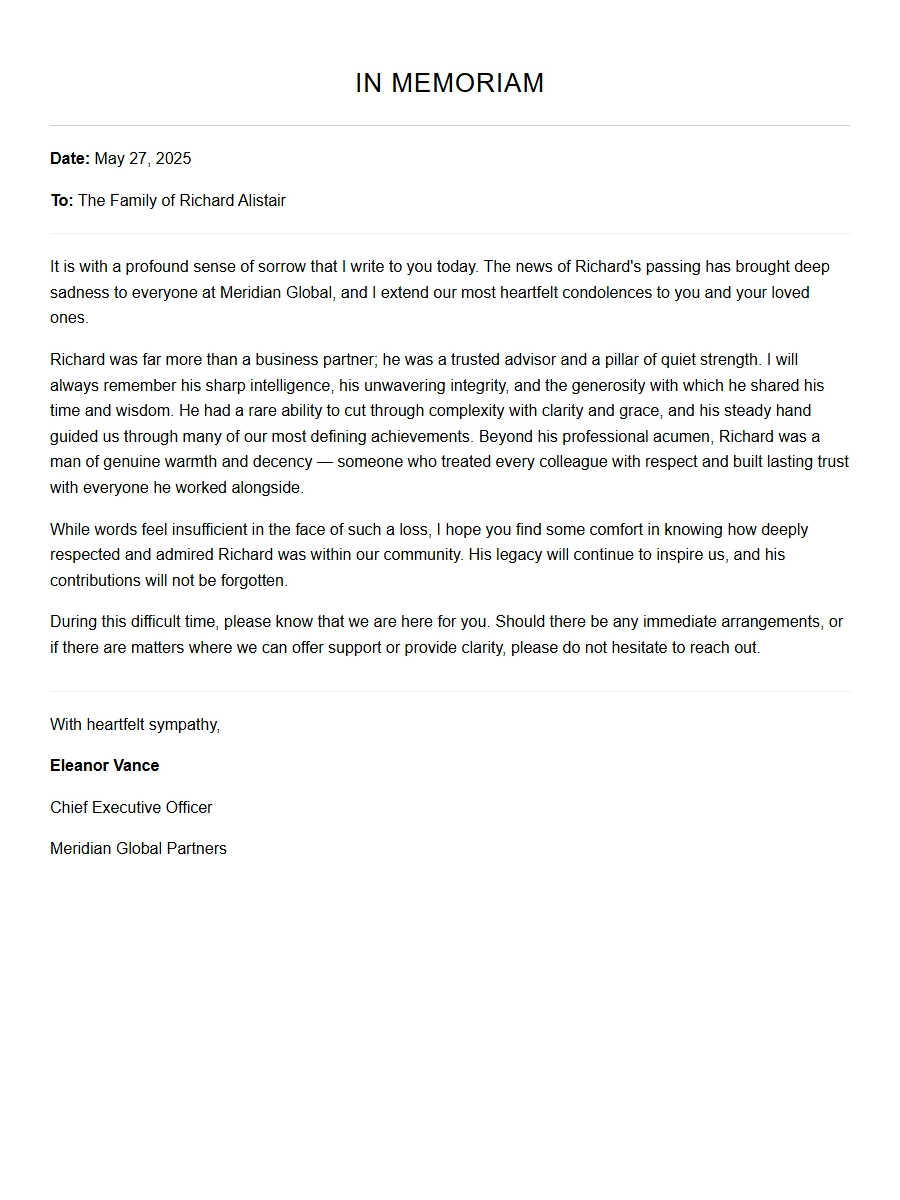 Formal Condolence Message for a Business Partner
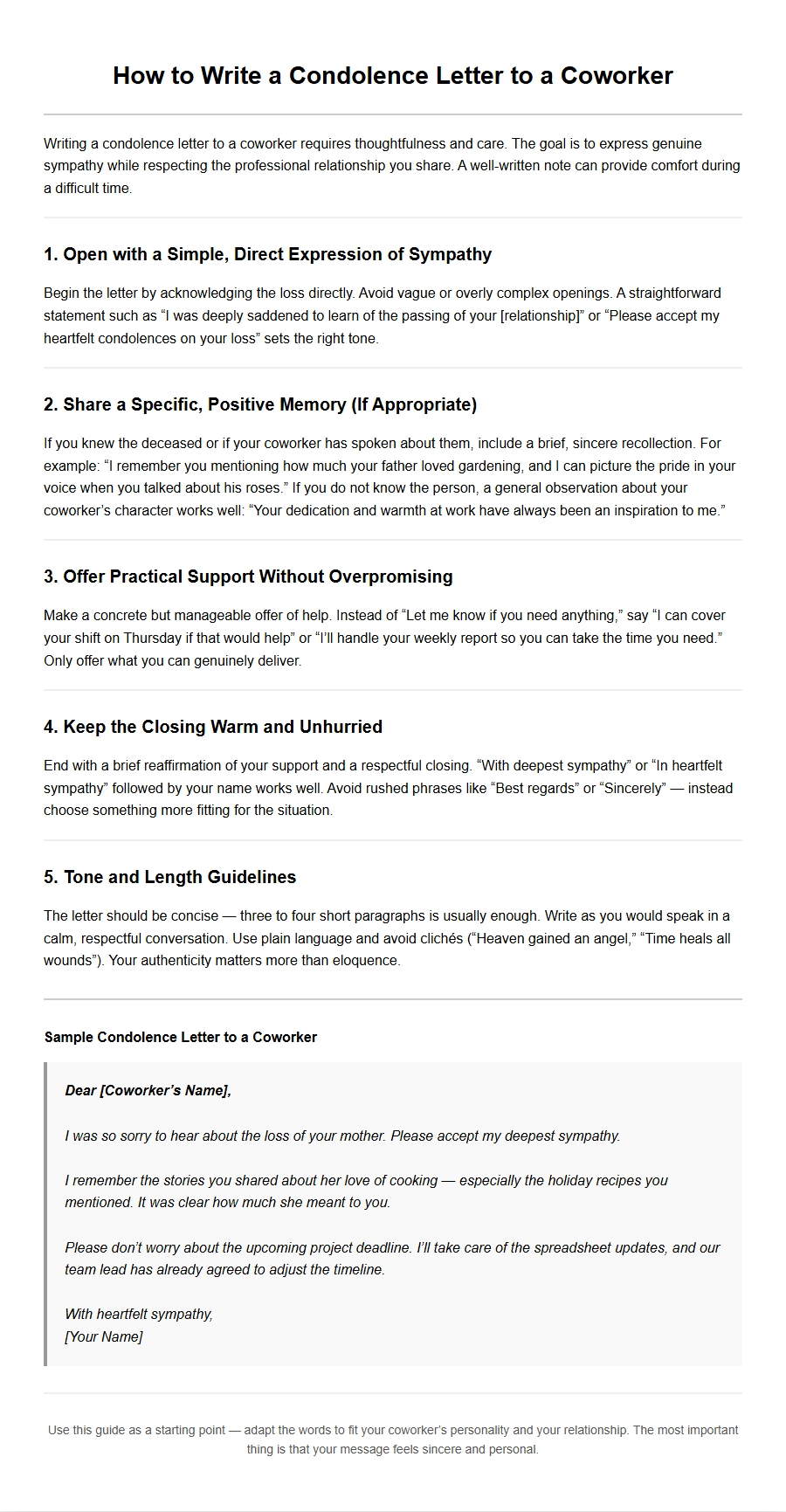 How to Write a Condolence Letter to a Coworker
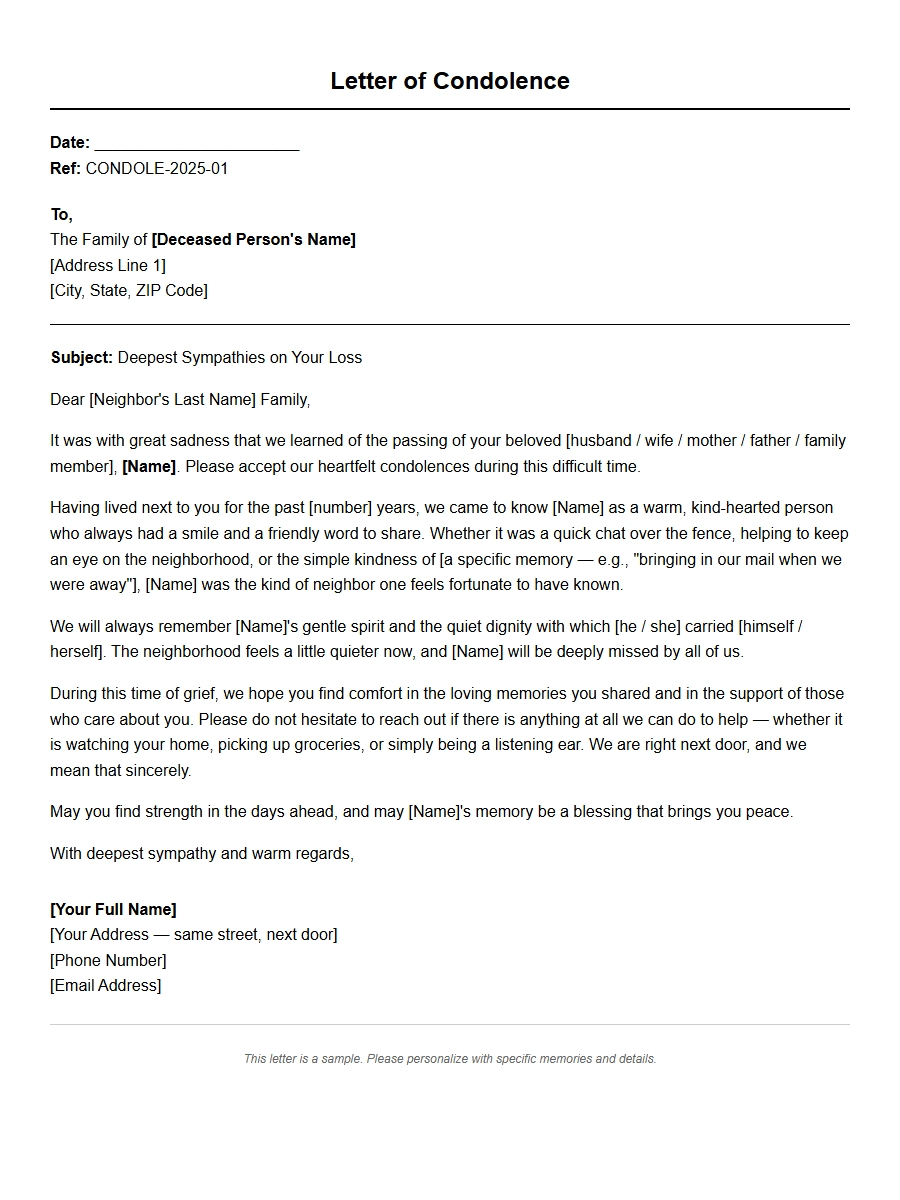 Condolence Letter Sample for a Neighbor
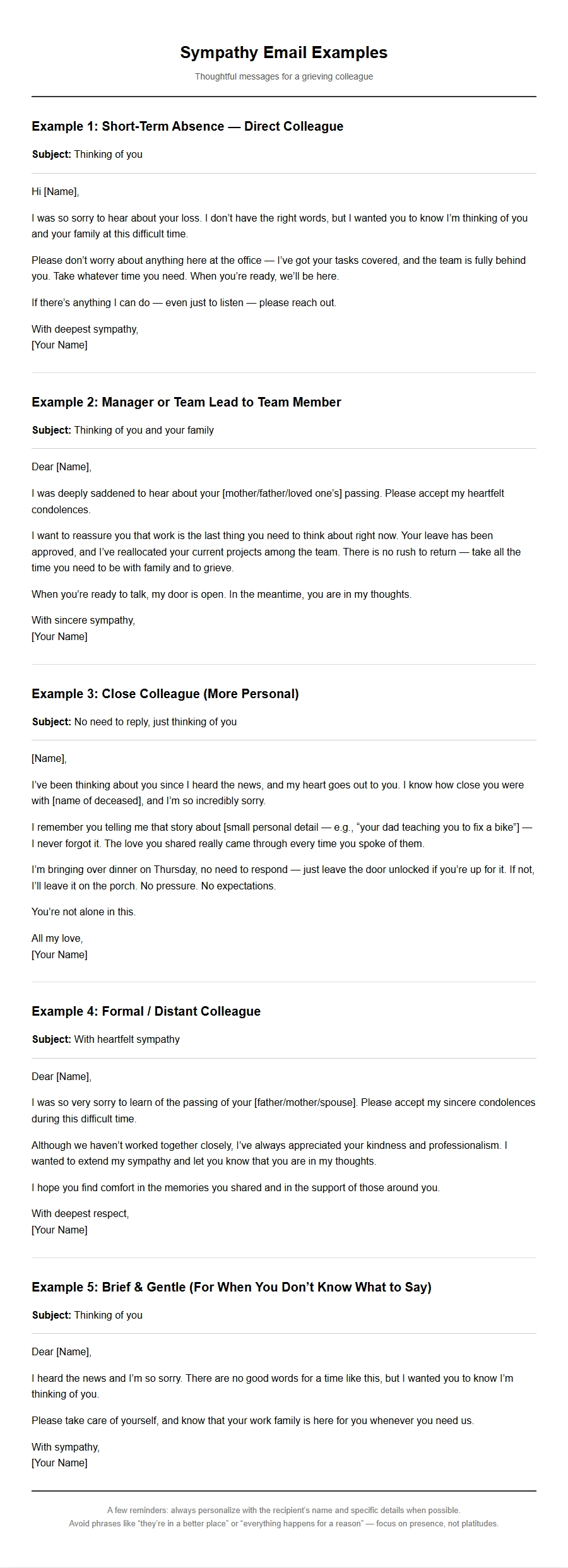 Sympathy Email Examples for a Grieving Colleague
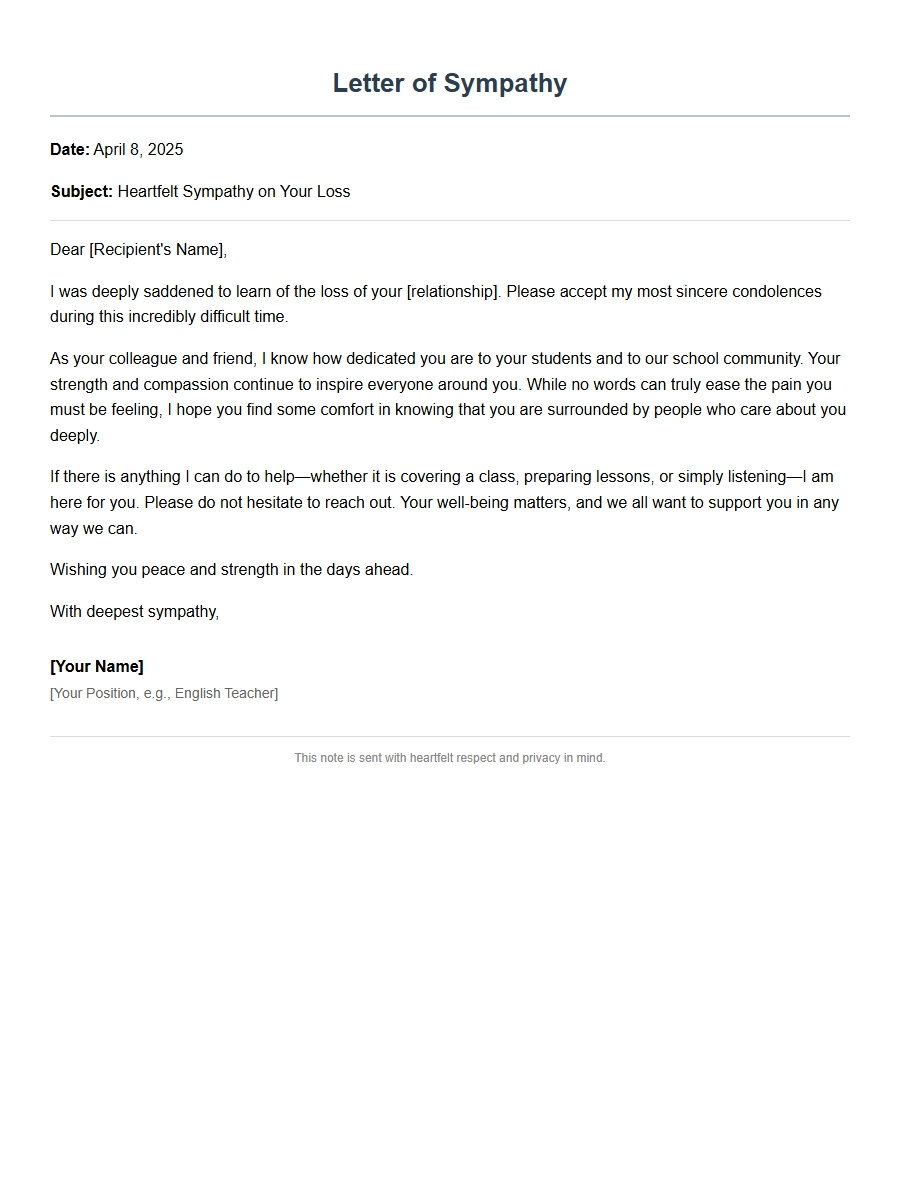 Condolence Words for a Teacher
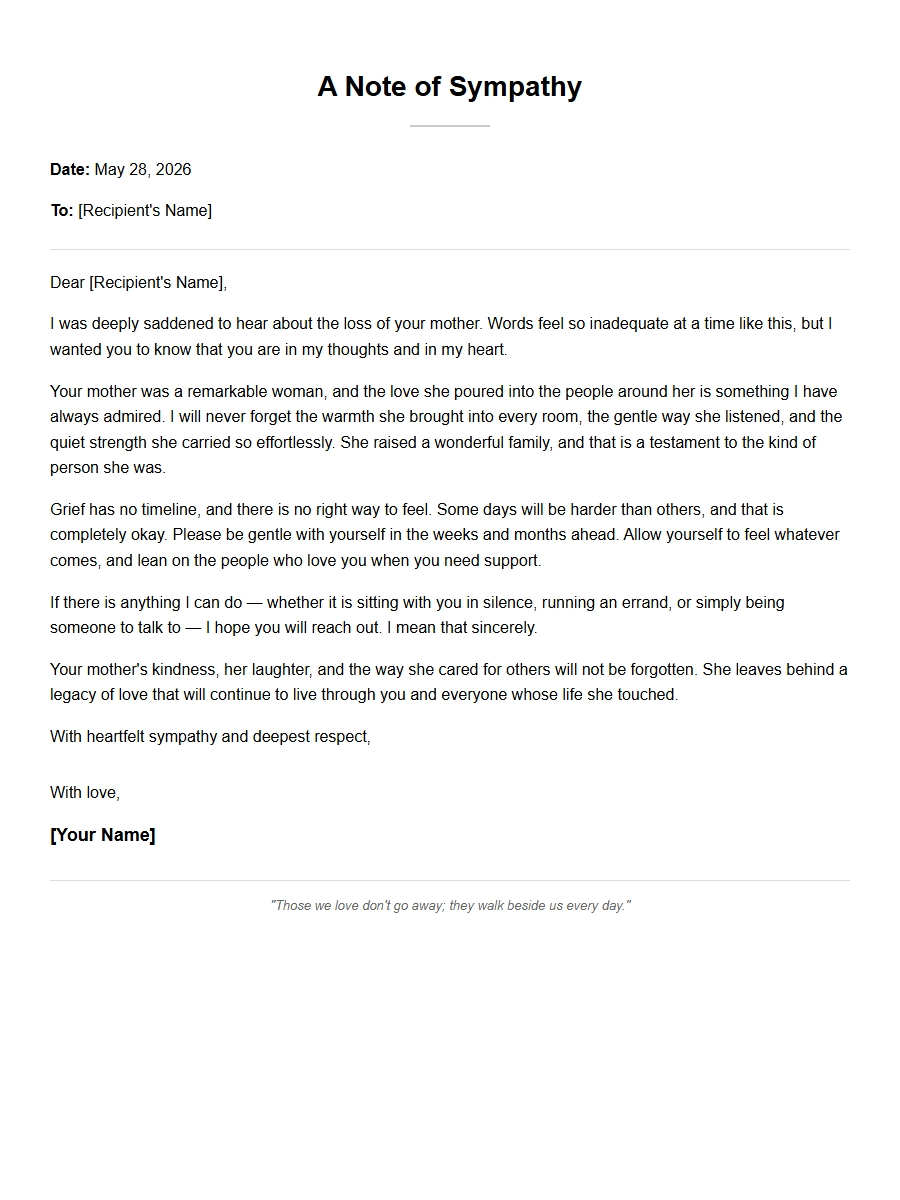 How to Write a Condolence Note for Loss of Mother