Express Sorrow Without Awkwardness in Condolence Letters
Staring at a blank page when you need to write a professional letter can feel paralyzing—but the right sample turns that anxiety into a confident, polished draft in minutes. When that letter needs to express sorrow without being awkward, the weight feels even heavier. You want to say something meaningful, but every word sounds clumsy or hollow. A thoughtfully written sample gives you a structure so you can focus on the personal message instead of worrying about etiquette.
Using a professional correspondence template is not cheating. It’s a smart way to ensure your letter follows formal writing tips while leaving room for your own voice. A good sample helps you avoid common pitfalls like using the wrong salutation and closing or forgetting to proofread your letter before sending it.
Category: Condolence Letters. Whether you’re writing to a colleague after a loss or sending a note to a friend, the right sample can guide your tone. It helps you move from awkward silence to warm, genuine communication.
Why Starting with a Condolence Letter Sample Helps
A blank page is intimidating. A sample is not. It gives you a clear letter structure and shows you how to balance professional distance with personal warmth. You can see exactly where your name goes, how to address the recipient, and how to close the letter without second-guessing yourself.
If you’re unsure about the right phrasing, look at a sample letter expressing regret over absence to see how others have handled similar situations. It’s much easier to edit a draft than to start from nothing.
How to Choose the Right Tone for the Situation
Not all condolence letters sound the same. A formal business letter format works for a professional acquaintance, but it will feel cold for a close friend. Think about your relationship with the recipient. Are you writing to a grieving spouse, a colleague you barely know, or a family friend?
For a close friend, your natural voice matters more than perfect formality. For a professional contact, stick to standard letter writing etiquette but add one personal sentence. If the family is facing extra stress, a condolence letter for financial hardship due to death shows that you understand their specific burden. Matching your tone to the situation makes your message feel genuine.
Adapting the Sample Without Losing Your Authentic Voice
Ever received a letter that felt too stiff or too casual? Tone is everything. Once you have a solid template, read it aloud. Does it sound like you? If not, tweak it. Change formal phrases into your natural speech. If the sample says “I was deeply saddened to learn,” and you usually say “I was so sorry to hear,” go with your gut. Your authenticity matters more than perfect etiquette.
Specific memories make a huge difference. Instead of a generic offer of help, mention something concrete. You can learn from examples of supportive messages for new widows that pair practical help with heartfelt words. The sample gives you the structure; your memories bring it to life.
Common Mistakes to Avoid in Condolence Writing
One big mistake is ignoring letter writing etiquette for digital formats. An email condolence needs a clear subject line and a proper signature, just like a printed letter. Don’t treat it like a text message. Another mistake is using outdated salutations like “To Whom It May Concern.” Always use the person’s name if you know it.
If the death was sudden, choose a condolence phrase for unexpected accident death that addresses the shock directly and gently. Avoid platitudes like “Everything happens for a reason.” They can feel dismissive. Stick to simple honesty: “I am so sorry. I don’t know what to say, but I am thinking of you.”
Finally, don’t forget to proofread your letter. A typo in a sympathy note can distract from your message. Read it once, wait a minute, and read it again.
Digital Format vs. Printed Letter
When is email okay? For a professional network or an acquaintance, a carefully written email is acceptable. But use a proper digital letter format. Include a subject line like “Thinking of you” or “With deepest sympathy.” For closer relationships, a handwritten note or a printed letter on simple letterhead design shows extra effort. It becomes something they can hold on to.
If you’re unsure what to include, you might wonder how to offer flowers instead of cash in a letter. A simple, direct sentence is all it takes. The sample can show you the phrasing, but your sincerity makes it meaningful.
Practice Makes the Process Faster
The first time you write a condolence letter, it takes forever. The second time is easier. Using a customizable letter template speeds up the process. You learn the flow of professional correspondence and the rhythm of compassionate writing.
Over time, you’ll rely less on the sample and more on your instincts. The sample is a springboard, not a crutch. It teaches you the rules so you can eventually bend them with confidence. The goal is connection, not perfection. Your letter doesn’t have to be a masterpiece. It just has to be kind.
Samples for Inspiration
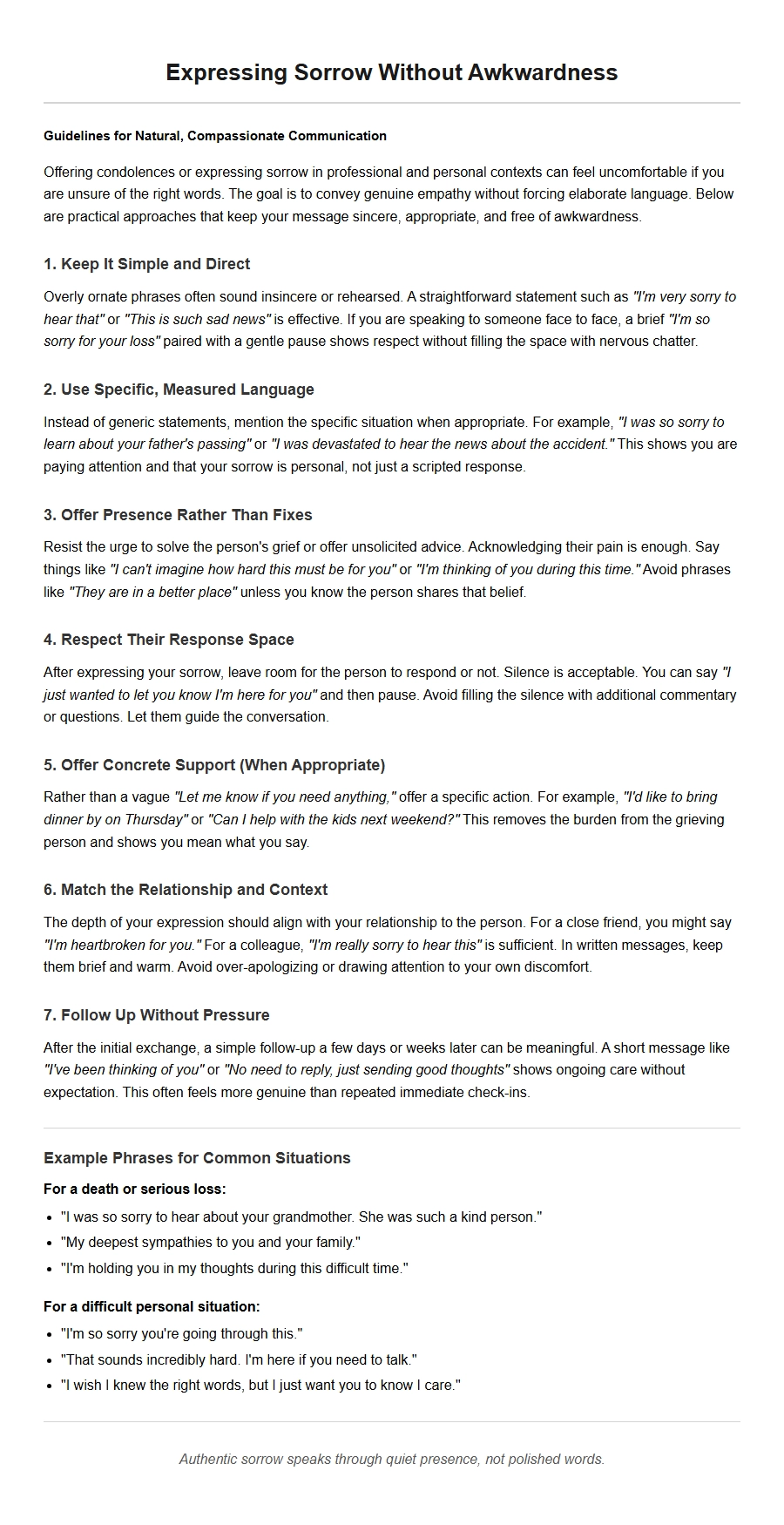
Express Sorrow Without Awkwardness in Condolence Letters
Keep It Simple and Direct
When you don't know what to say, the most natural approach is often the simplest. You don't need to craft a lengthy message or use elaborate language. A short, heartfelt statement avoids the awkwardness of over-explaining or trying to fix the situation.
Consider this structure:
Start with acknowledgment: “I was so sorry to learn about your loss.”
Add one genuine sentiment: “I’m thinking of you during this difficult time.”
End simply: “With deepest sympathy, [Your Name].”
This formula works for emails, handwritten notes, or even text messages. By keeping your words concise and sincere, you remove the pressure to say the “right thing” – your presence and care are what matter most.
Share a Brief, Positive Memory
One of the least awkward ways to express sorrow is to share a short, positive memory of the person who passed. This shifts the focus from your own discomfort to a moment of warmth.
Example: “I’ll always remember how your dad made everyone laugh at the company picnic. That kindness meant a lot to me.”
Tips for doing this naturally:
Keep it brief – one or two sentences.
Avoid details that might be painful (e.g., illness, accident).
End with a simple offer of support: “Please know I’m here if you need anything.”
Sharing a memory gives the bereaved something concrete to hold onto, and it prevents the letter from feeling generic or forced.
Acknowledge the Awkwardness Directly
Sometimes the most relieving approach is to name the awkwardness. By stating that you’re unsure how to express your sorrow, you demonstrate vulnerability – which can feel more authentic than a perfectly polished line.
Here’s a sample opening:
“I’m writing even though I don’t have the right words. Please know that I’m deeply sorry for your loss, and I’m thinking of you.”
Why this works:
It releases you from the pressure to be eloquent.
It gives the bereaved permission to also feel uncertain.
Honesty often softens the distance grief creates.
After this, you can add a simple offer: “If you ever want to talk or just sit in silence, I’m free next Tuesday afternoon.”
Use a Small Table to Offer Specific Help
Offering help in a condolence letter can feel awkward if you’re too vague (e.g., “Let me know if you need anything”). Instead, offer concrete options in a simple list or table. This makes the offer feel genuine and easy to accept.
Example:
Help I Can Offer
When
Bring dinner (let me know dietary needs)
Tuesday or Thursday evening
Walk your dog
Any morning this week
Pick up kids from school
Wednesday after 2:30 pm
Add a short note: “No pressure to reply – just wanted you to know these are options if they help. With sympathy, [Name].” This removes the burden from the bereaved to think of what they need.
Focus on the Bereaved, Not the Circumstances
A common awkwardness comes from talking too much about how the person died – being curious or providing commentary. Instead, direct your attention entirely to the person grieving.
Examples of what not to lead with:
“I heard it was sudden – that must have been terrible.”
“At least they’re not suffering anymore.”
Better alternatives:
“I’m holding you in my thoughts today.”
“I was so sorry to hear your grandmother passed. She was always so kind to me.”
“Please know I’m here to listen whenever you feel like talking.”
By centering your message on the living person’s experience, you avoid second-guessing the details and stay in a supportive, caring space.
Keep It Short for a Distant Acquaintance
When you don’t know the bereaved person well – a coworker’s spouse, a neighbor, a former classmate – a longer letter can feel intrusive or overly familiar. A brief, polite note is both respectful and avoids awkward overreach.
Simple template:
Dear [Name],
I was saddened to learn of your loss. Please accept my sincere condolences. I’m thinking of you and your family during this time.
With sympathy,
[Your Name]
That’s it. No need for memories, offers, or reassurances. A short message honors the relationship without pretending to be closer than you are. This removes any awkward “I don’t know what else to say” feeling.
Avoid Empty Platitudes – Use a List of Things Not to Say
One major source of awkwardness is using phrases that sound hollow or even harmful. Being aware of these can help you choose better words. Below is a table of common platitudes versus more genuine alternatives.
Avoid this
Try this instead
“They’re in a better place.”
“I’m so sorry you’re going through this.”
“Everything happens for a reason.”
“I can’t imagine how you feel, but I’m here for you.”
“Stay strong.”
“Take whatever time you need.”
“At least you have other children.”
“I’m holding you in my heart.”
Using careful, plain language shows respect and empathy. When you don’t know what to say, saying “I don’t know what to say” is infinitely better than a cliché.
Use a Bullet List to Express What You Feel
If writing paragraphs feels unnatural, you can express sorrow through a simple list of thoughts. This structure can feel more honest and less like a formal letter, reducing awkwardness.
Example:
I was shocked to hear about your loss.
I remember how much your mom loved gardening – she gave me cuttings from her roses.
I’m thinking of you and your family.
If you ever want to talk about her, I’m always happy to listen.
No need to reply – just wanted you to know I care.
This format works especially well in emails or cards. It feels like a stream of thought rather than a formal composition. The recipient can read it without the pressure to respond in a certain way.
Offer Future Support, Not Immediate Pressure
A common awkward moment is putting someone on the spot to arrange support right after a loss. Instead, mention a specific future time or leave the offer open-ended without requiring a reply.
Example paragraph:
“I won’t ask you to decide anything now. But in a few weeks, if you feel like a quiet walk or a coffee, send me a text. I’ll check in with you around the middle of next month – no need to respond to this note.”
This approach:
Gives the person space to grieve.
Shows you’re planning to be there long-term.
Takes away the awkwardness of asking for help.
You can add a small table of possible check-in dates (e.g., “I’ll text you on March 15 and again on April 1 – just to say hi, nothing more.”).
When Writing to a Group – A Short, Inclusive Note
If you need to express sorrow on behalf of a team or family, keep the tone collective and avoid singling out individuals. This prevents awkwardness of speaking for everyone while still being personal.
Example:
“On behalf of the marketing team, I want to express our deep sympathy for your loss. Many of us remember your dad’s cheerful presence at company events. We’re thinking of you and your family during this time. Please let us know if there’s anything the team can do – we’ve set up a meal schedule (attached) if that’s helpful.”
This works because:
It names the group without being formal.
It includes a specific offer (meal schedule) that is easy to accept.
It avoids over-personalizing from people who may not have been close.
End with a simple closing: “With sincere condolences, [Your Name] and the team.”
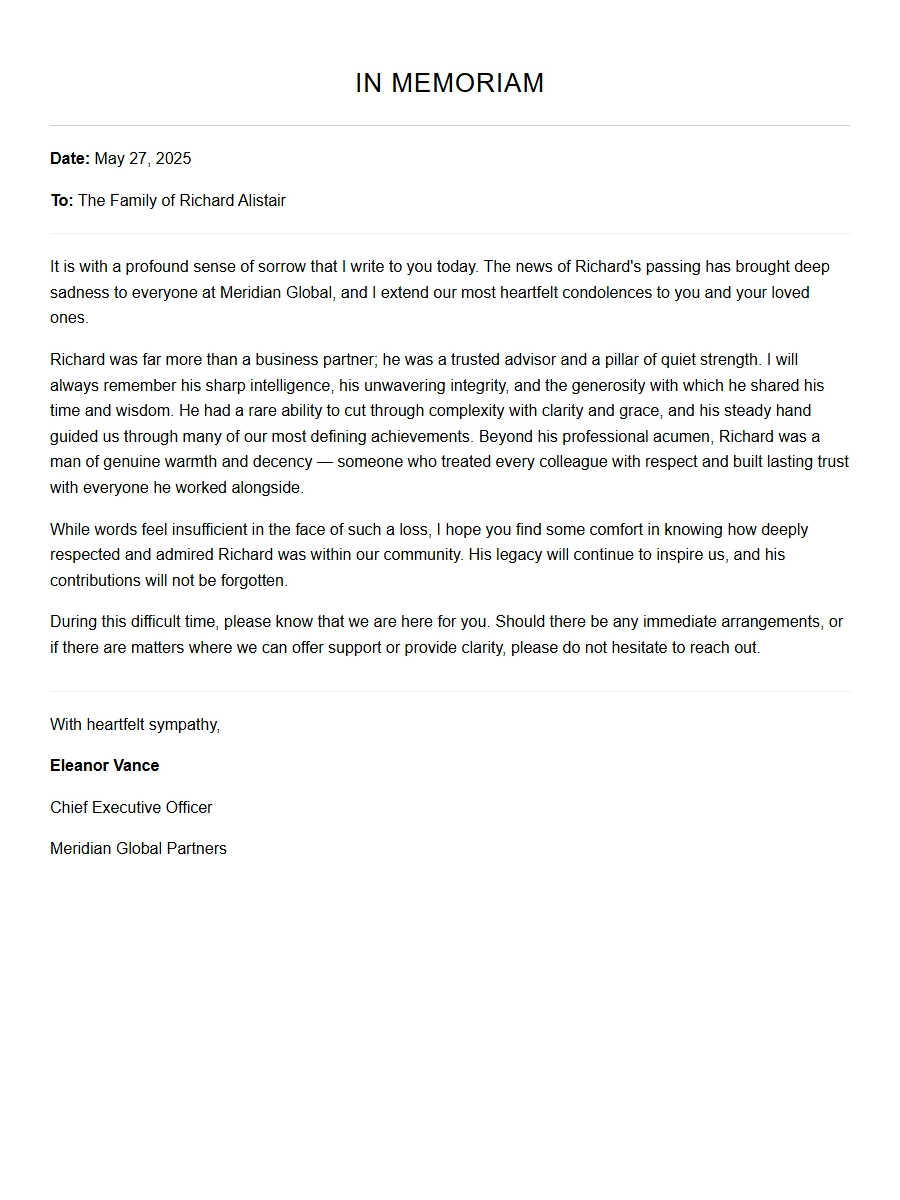 Formal Condolence Message for a Business Partner
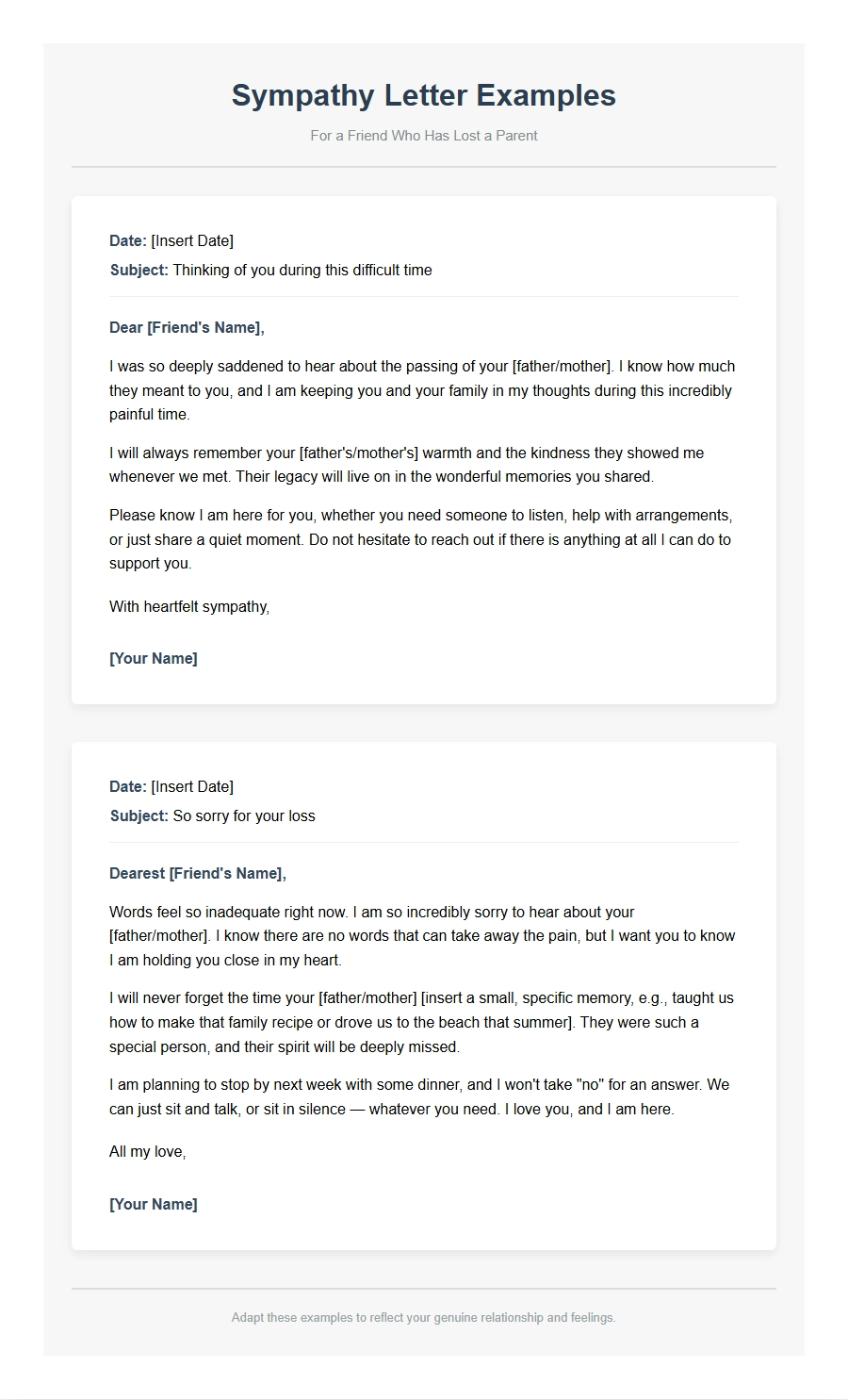 Sympathy Letter Examples for a Friend Who Lost a Parent
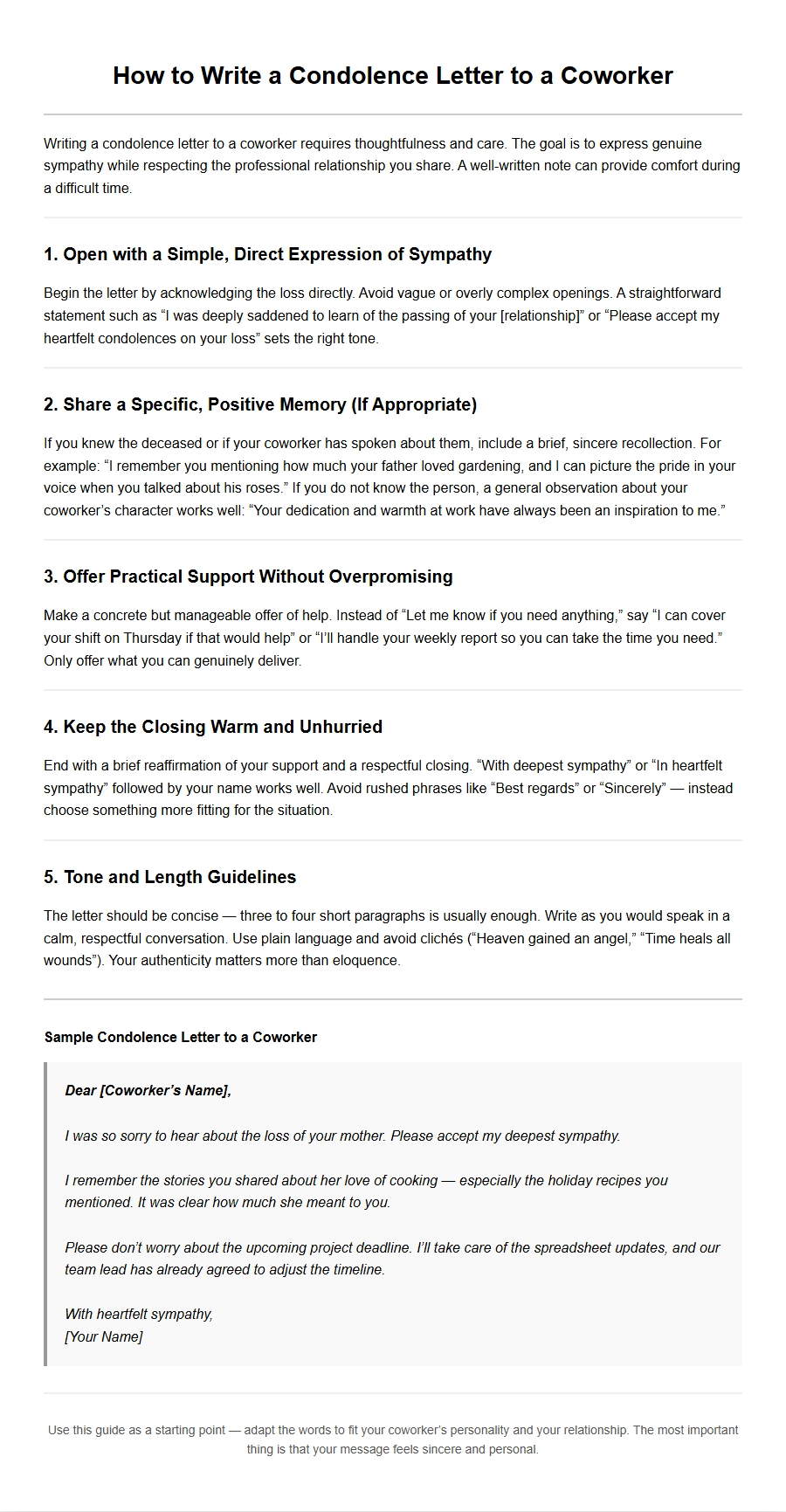 How to Write a Condolence Letter to a Coworker
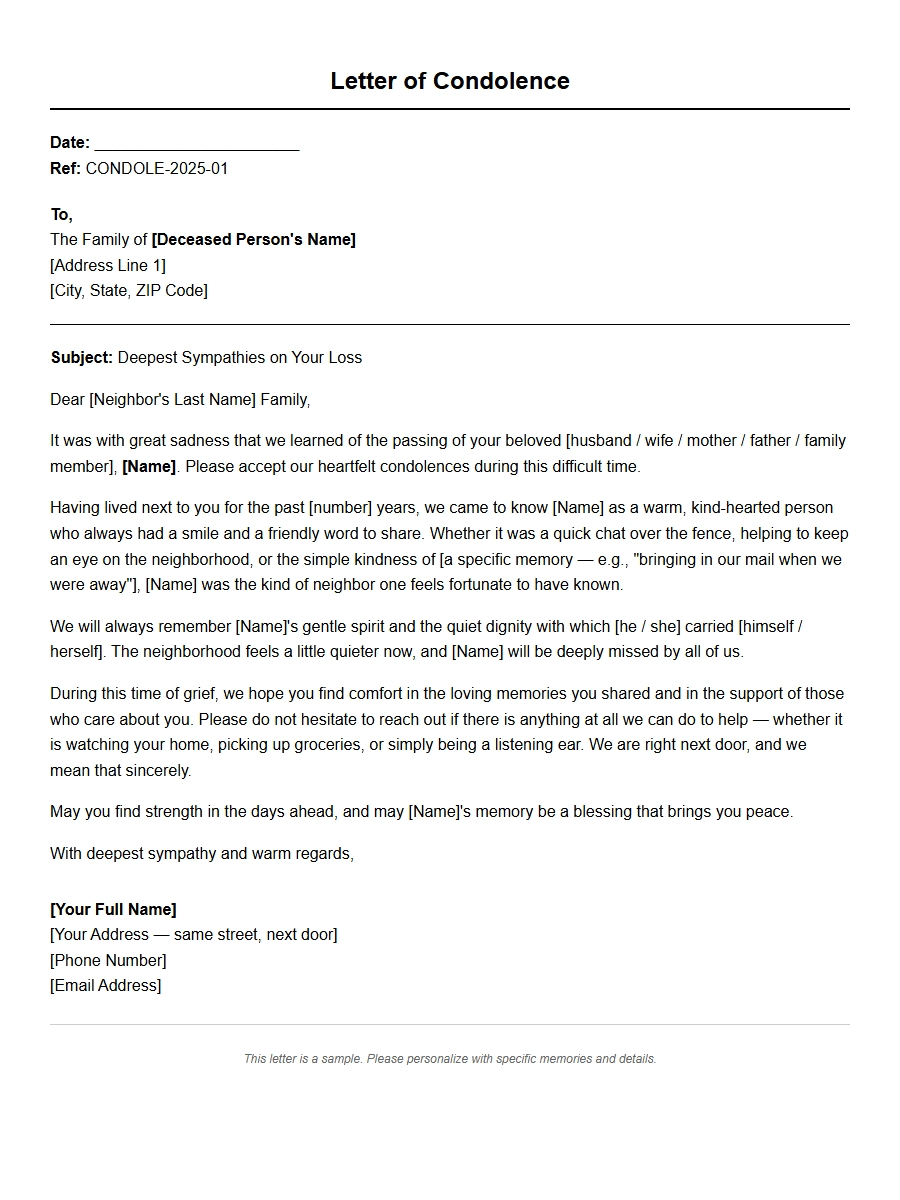 Condolence Letter Sample for a Neighbor
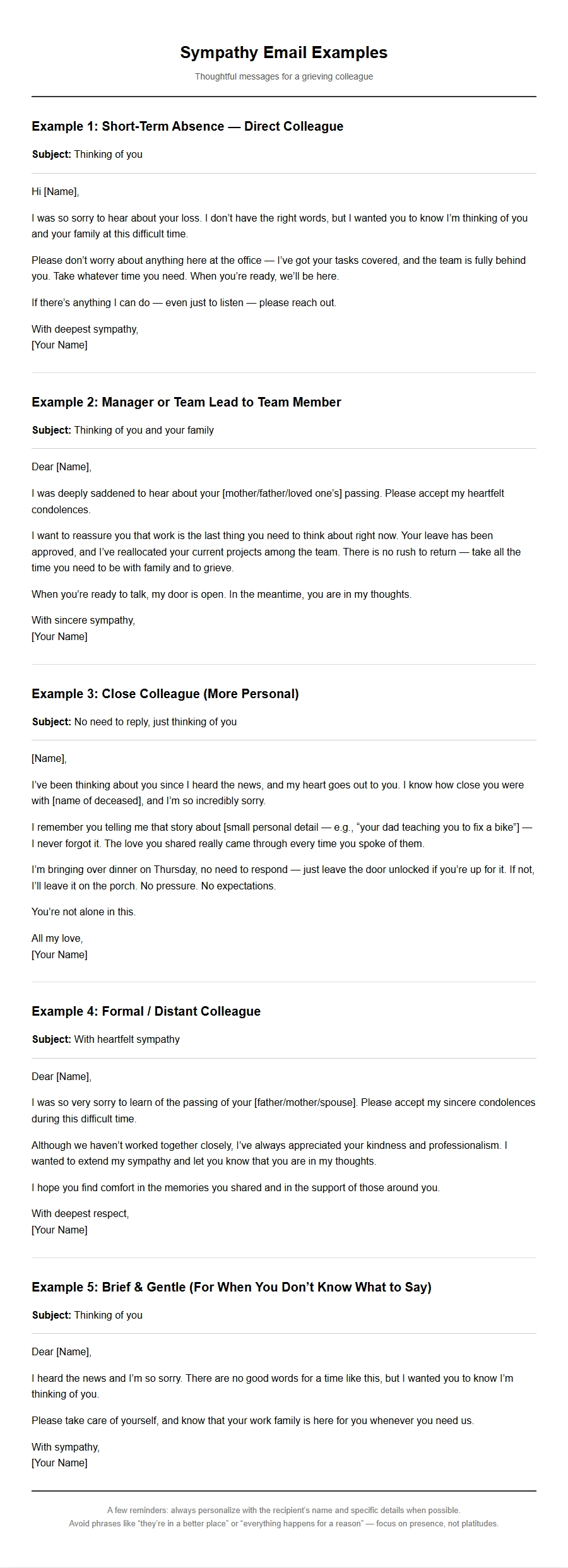 Sympathy Email Examples for a Grieving Colleague
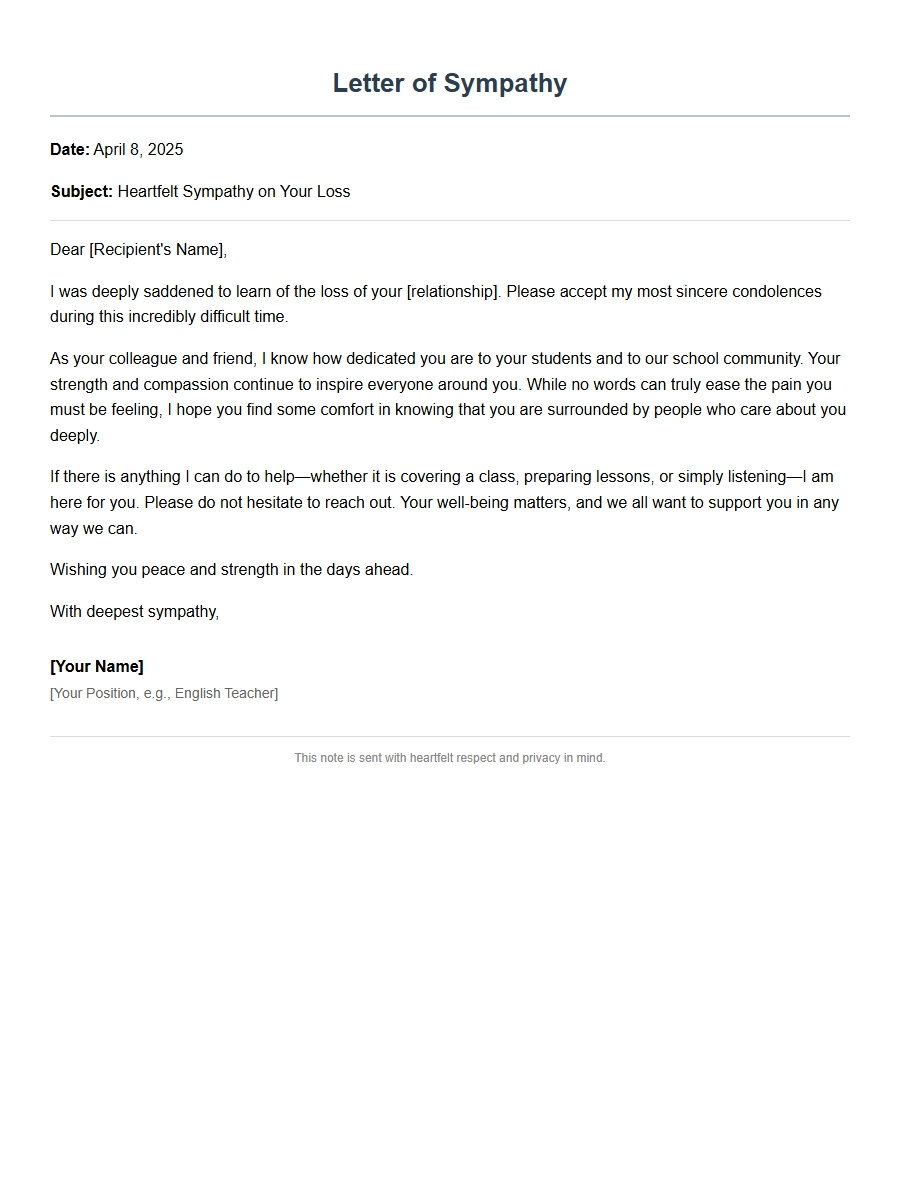 Condolence Words for a Teacher