You’ve just heard that a colleague lost their mother, or a friend’s partner is battling a long illness. You want to write a condolence letter, but the words feel hollow. Worse, you know the standard “let me know if you need anything” sounds empty. What you really want is to offer practical help—but how do you say that without sounding pushy or insincere?
The good news is that you don’t have to reinvent the wheel. Using a letter template for condolence messages isn’t cheating; it’s a smart way to start. A sample gives you the right letter structure and tone in writing, so you can focus on the personal parts that matter most. Think of it as a scaffold: it holds up your thoughts while you build something real.
[Category: Condolence Letters]
What does “offering help” really mean in a condolence letter?
A sympathy note isn’t just about saying you’re sorry. It’s also about showing you’re there—practically. People grieving often don’t know what they need, or they hesitate to ask. Your job is to name a specific, concrete offer. Instead of “I’m here if you need anything,” try “I’d love to bring dinner on Thursday” or “Can I pick up your kids from school next week?” That kind of professional correspondence (even between friends) feels more actionable and less vague.
How to choose the right sample for your situation
Not every condolence letter is the same. A note to a close friend will sound different from one sent to a colleague you barely know. If you’re writing in a work context, look for business letter format samples that keep the tone respectful but warm. For personal relationships, a more conversational style works. Pay attention to salutation and closing—a simple “Dear Sarah” and “With deep sympathy” is safer than guessing at overly formal phrases.
Customizing the template without losing your voice
Once you have a sample, adapt it. Don’t copy it word for word. Replace generic phrases with your own memories or specific offers. For example, if the template says “I remember your mother’s kindness,” you could say “I still think about the day she brought cookies to the office.” That personal touch is what makes customizable letter templates powerful—they give you a frame, but you fill it with real life.
Be careful with letter writing etiquette. Avoid clichés like “they’re in a better place” unless you know the person’s beliefs. Instead, focus on the help you’re offering. If you’re sending an email (which is fine for a quick note), use digital letter format—keep the subject line clear, like “Thinking of you” or “A small offer of help.”
Common mistakes when offering help in a condolence letter
One big error: making an offer you can’t follow through on. If you say “call me anytime,” but you’re terrible at answering the phone, that’s worse than saying nothing. Be realistic. Another mistake is using an outdated letterhead design for a printed card—keep it simple. And if you’re writing a formal note for work, don’t skip proofreading letter. A typo in a sympathy note can feel careless.
Also, avoid the temptation to over-explain your offer. “I know you’re busy, so I thought maybe if you wanted, I could possibly bring a meal next week” sounds hesitant. Be direct: “I’ll drop off a casserole on Tuesday. Is that okay?” That respects the recipient’s time and energy.
Tailoring the opening to grab their attention—gently
The first line sets the tone. Instead of “I was so sorry to hear,” try connecting with a memory or a simple acknowledgment. “I heard about your loss and wanted to reach out” is fine. Then immediately transition to your offer. For example: “I know this is a heavy time. I’d like to help by walking your dog each morning for the next two weeks.” That shows you’ve thought about their specific situation.
What if the person is a caregiver or colleague on leave?
Caregiver burnout is real. An offer like “Can I sit with your mom for an afternoon so you can rest?” is incredibly meaningful. For a colleague on bereavement leave, keep it brief: “No need to reply. Just know I’m handling your projects until you’re back.” That’s letter structure at its most helpful—clear, action-oriented, and respectful.
Close by reaffirming your offer, but leave space. “I’ll check in next week to see how you’re doing” is better than “Let me know.” That way the burden isn’t on them to reach out. If responding via email, remember sympathy response for email notification of death has tips for keeping the tone consistent.
The best condolence letters feel both professional and deeply personal. A sample is your starting point—not your final draft. Use it to learn formal writing tips and tone in writing, then add your own voice. With practice, you’ll get faster, and your offers will feel more natural. Start with one sentence of genuine help, and the rest will follow.
Helpful Examples
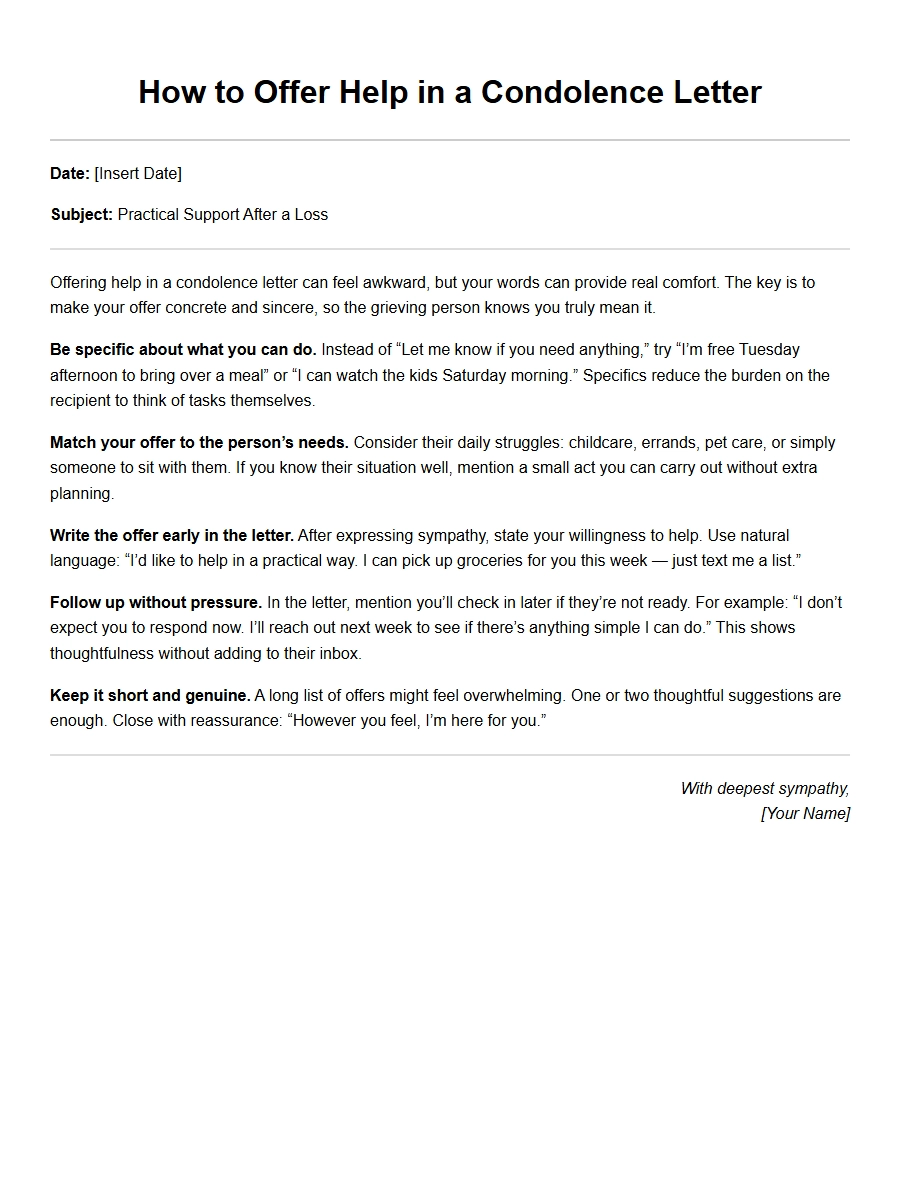
How to Offer Help in a Condolence Letter
Offering Meals and Errands
Example of Offering Practical Help in a Condolence Letter:
Dear [Name],
I was deeply saddened to hear of your loss. During this difficult time, I would like to help in a tangible way. Please let me know if I can assist with meals or errands in the coming weeks.
Meal delivery: I can drop off dinner on Tuesdays or Thursdays—just text me your preferences.
Errands: I am happy to pick up groceries, pharmacy items, or drive children to school.
I have created a simple schedule for coordination:
Day
Available Help
Contact
Monday
Dinner drop-off
555-0100
Wednesday
Grocery run
555-0101
No pressure to respond; just know I am here. With heartfelt sympathy.
Providing Childcare Support
Sample Offer of Childcare in a Condolence Letter:
Dear [Name],
I cannot imagine how you are managing everything right now. To give you some breathing space, I would love to help with childcare.
Babysitting: I can watch your kids for a few hours on weekends or after school.
School pick-up: I am free most afternoons to collect them and bring them home.
Here is a list of my available slots this month:
Day
Time
Activity
Saturday
10:00 AM – 2:00 PM
Playdate at my house
Wednesday
3:00 PM – 5:00 PM
School pick-up + snack
Please call me when you need a break. You are in my thoughts.
Financial Assistance Offer
Example of Offering Financial Help in a Condolence Letter:
Dear [Name],
In this time of loss, I want to offer support that may ease your burden. Please consider this a concrete gesture of care.
I have set aside a small fund to help with immediate expenses. Here is what I propose:
Gift contribution: $200 toward funeral costs or household bills.
No strings attached: Use it however you need—no repayment expected.
Below is a quick summary of how the funds have been allocated among friends:
Friend
Contribution
Purpose
Jane Doe
$100
Groceries
John Smith
$150
Utility bill
Myself
$200
General support
I will transfer the money if you accept. With deepest sympathy.
Helping with Funeral Arrangements
Sample Offer for Funeral Logistics Support:
Dear [Name],
I know planning a funeral can be overwhelming. Please let me take care of some details so you can focus on family.
Venue coordination: I can call funeral homes and compare options.
Guest list: I am happy to send notifications or manage RSVPs.
Here is a task list I have drafted for your review:
Task
Status
Contact
Book chapel
Pending
St. Mary’s, 555-0200
Order flowers
In progress
Lily’s Florist
Just say yes, and I will get started. You are not alone in this.
Offering a Listening Ear
Example of Emotional Support Offer:
Dear [Name],
Grief can be isolating, and I want you to know I am here to listen—anytime, without judgment.
I can offer the following times for a phone call or quiet visit:
Phone chats: Call me any evening after 7 PM.
In-person: I can come over for tea on weekends.
To make it easier, here is my availability:
Day
Time
Type
Monday
8:00 PM – 10:00 PM
Phone
Saturday
2:00 PM – 4:00 PM
Visit
No need to prepare—just be. I hold you in my heart.
Garden or Home Maintenance Help
Sample Offer for Household Chores Assistance:
Dear [Name],
During this trying time, maintaining a home can feel exhausting. I would be honored to help with outdoor or indoor tasks.
Lawn mowing: I can do it every other Saturday.
Light cleaning: Dusting, vacuuming, or tidying up.
Here is a plan I suggest:
Task
Frequency
Duration
Mow lawn
Weekly
1 hour
Water plants
Twice a week
30 min
I will start next week unless you prefer otherwise. With warm condolences.
Coordinating Meal Trains
Example of Organizing Community Meal Support:
Dear [Name],
Many of us want to help with meals. I can coordinate a meal train so you receive nourishing food without worry.
Here is the schedule I propose:
Date
Volunteer
Meal Type
Monday, June 5
Alice B.
Chicken soup
Wednesday, June 7
Bob C.
Lasagna
Friday, June 9
Me
Vegetable stir-fry
I will handle all communication. Just let me know dietary restrictions. Thinking of you.
Pet Care Support Offer
Sample Offer for Pet Assistance:
Dear [Name],
I know your dog Max needs walks and care. During this difficult time, I would like to help with pet duties.
Daily walks: I can take Max out every morning or evening.
Feeding and vet visits: I am happy to manage meals or drive to appointments.
Here is my tentative availability:
Day
Service
Time
Monday–Friday
Morning walk
7:00 AM – 8:00 AM
Saturday
Vet visit
10:00 AM
I love animals and would be glad to help. My deepest sympathy to you.
Offering to Forward Mail or Notifications
Example of Administrative Help Offer:
Dear [Name],
Handling paperwork after a loss can be tedious. I can assist with administrative tasks such as forwarding mail or notifying relevant parties.
Here is what I can do:
Mail forwarding: Collect and redirect your mail to a temporary address if needed.
Notification calls: Inform banks or subscriptions of the passing.
I have already compiled a list of commonly contacted entities:
Entity
Action
Notes
USPS
Forward mail
Need change of address form
Utility company
Stop billing
Requires death certificate
Just let me know if you want me to proceed. With sincere sympathy.
Offering to Host Memorial Gathering
Sample Offer for Hosting a Small Tribute:
Dear [Name],
Sometimes a quiet gathering with close friends can bring comfort. I would be honored to host a small memorial at my home.
Details I have in mind:
Date: Next Saturday, if that works.
Format: Simple tea and rememberance, 2-4 hours.
Here is a rough plan:
Item
Responsibility
Cost Estimate
Venue (my house)
Me
Free
Catering (finger foods)
Shared
$50
I can send invites and handle logistics. Let me know your thoughts. With love and prayers.
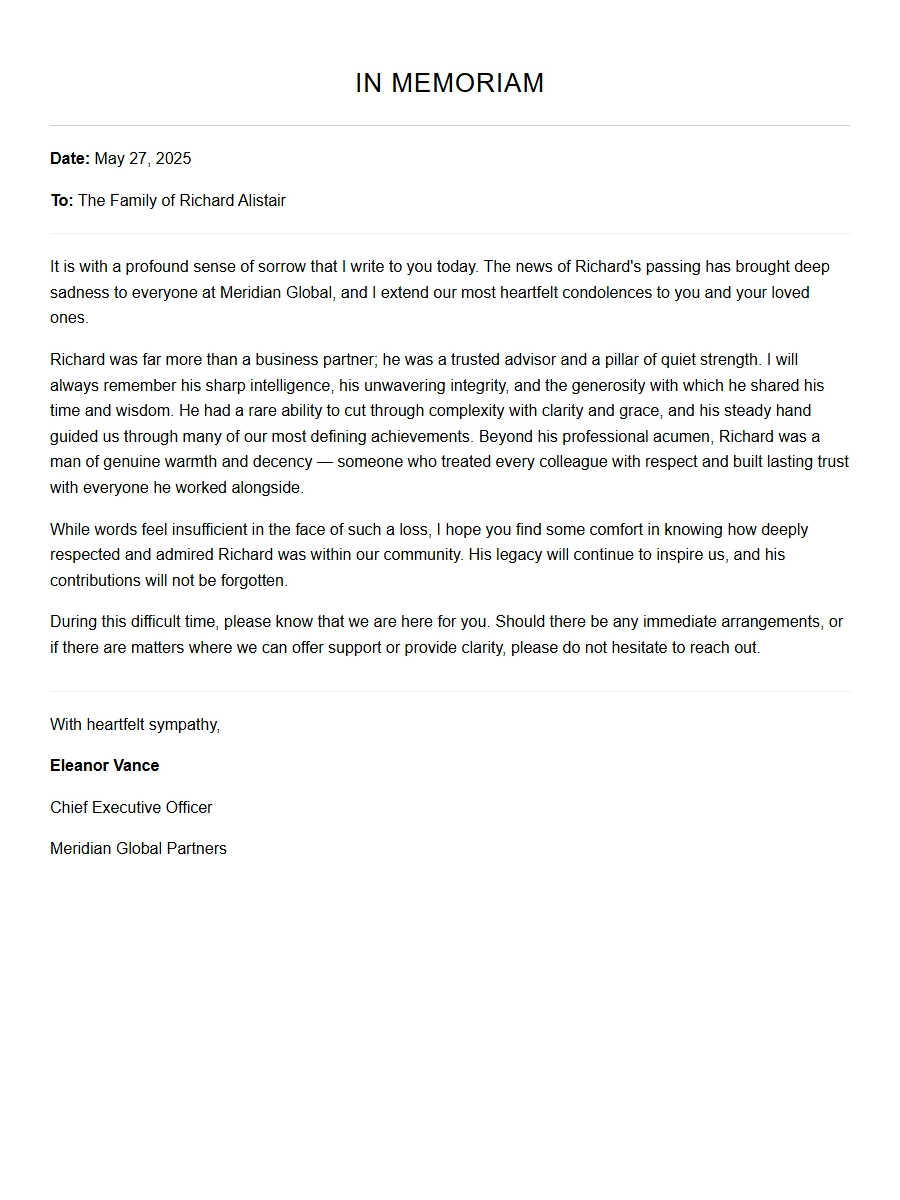 Formal Condolence Message for a Business Partner
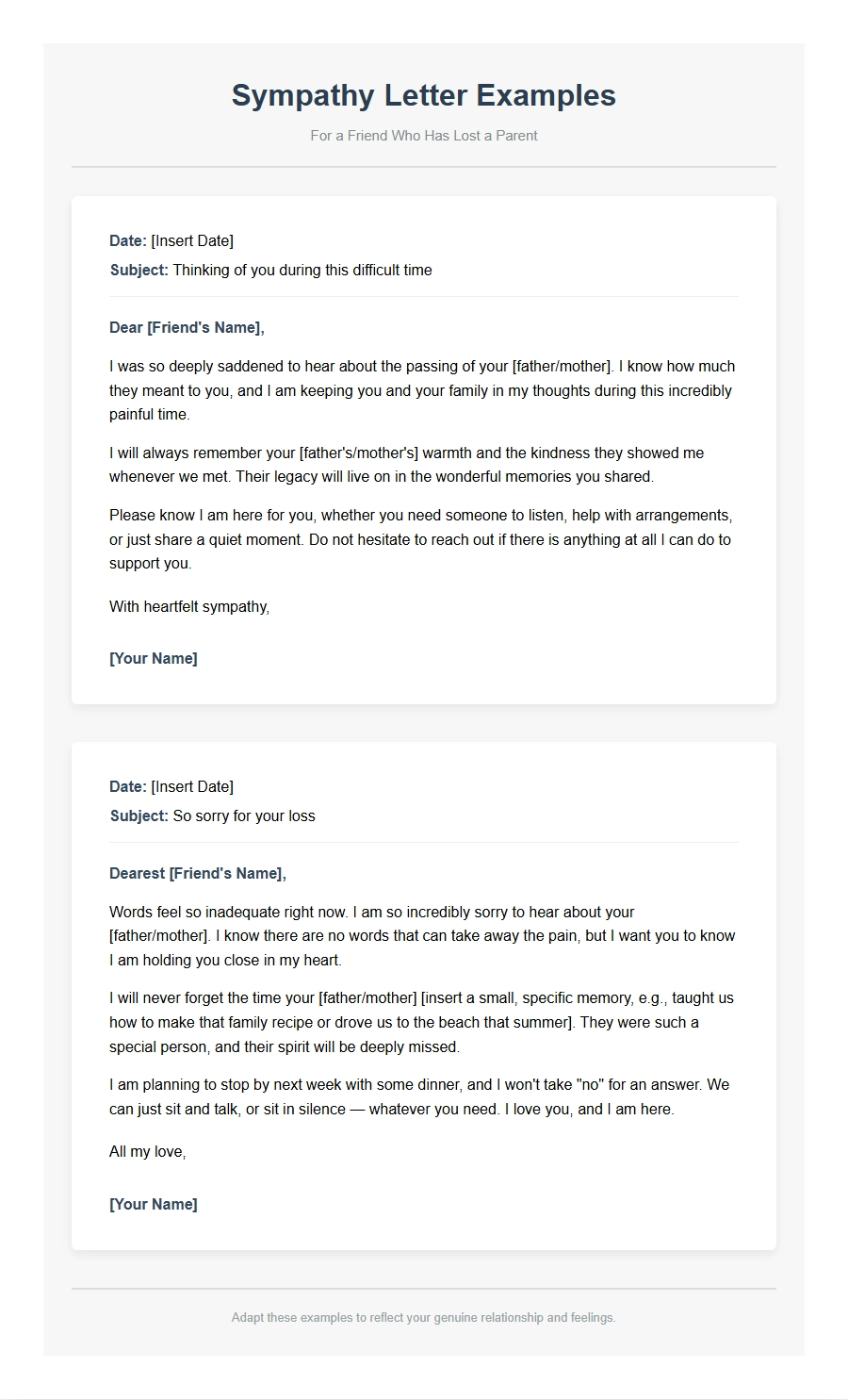 Sympathy Letter Examples for a Friend Who Lost a Parent
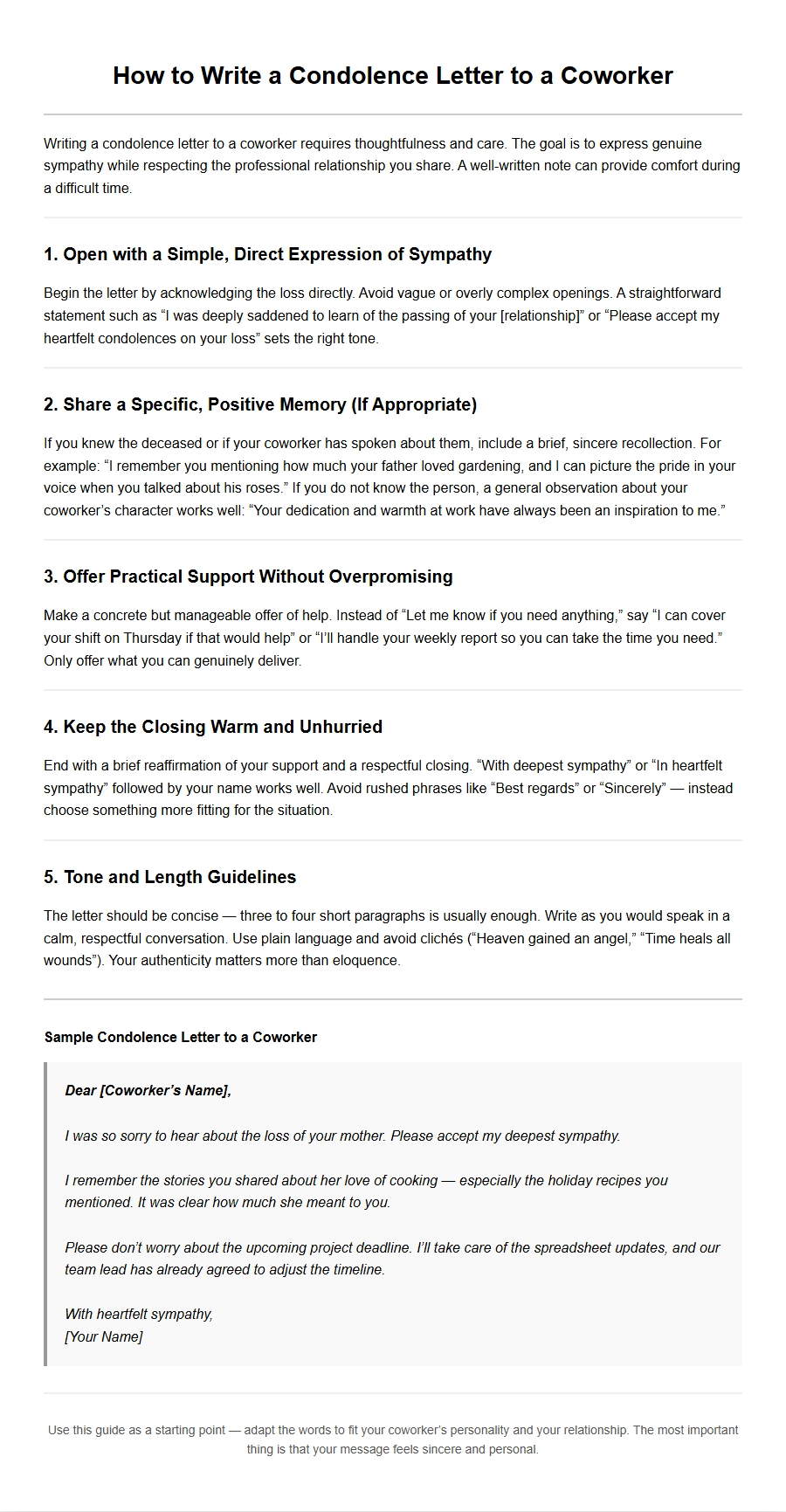 How to Write a Condolence Letter to a Coworker
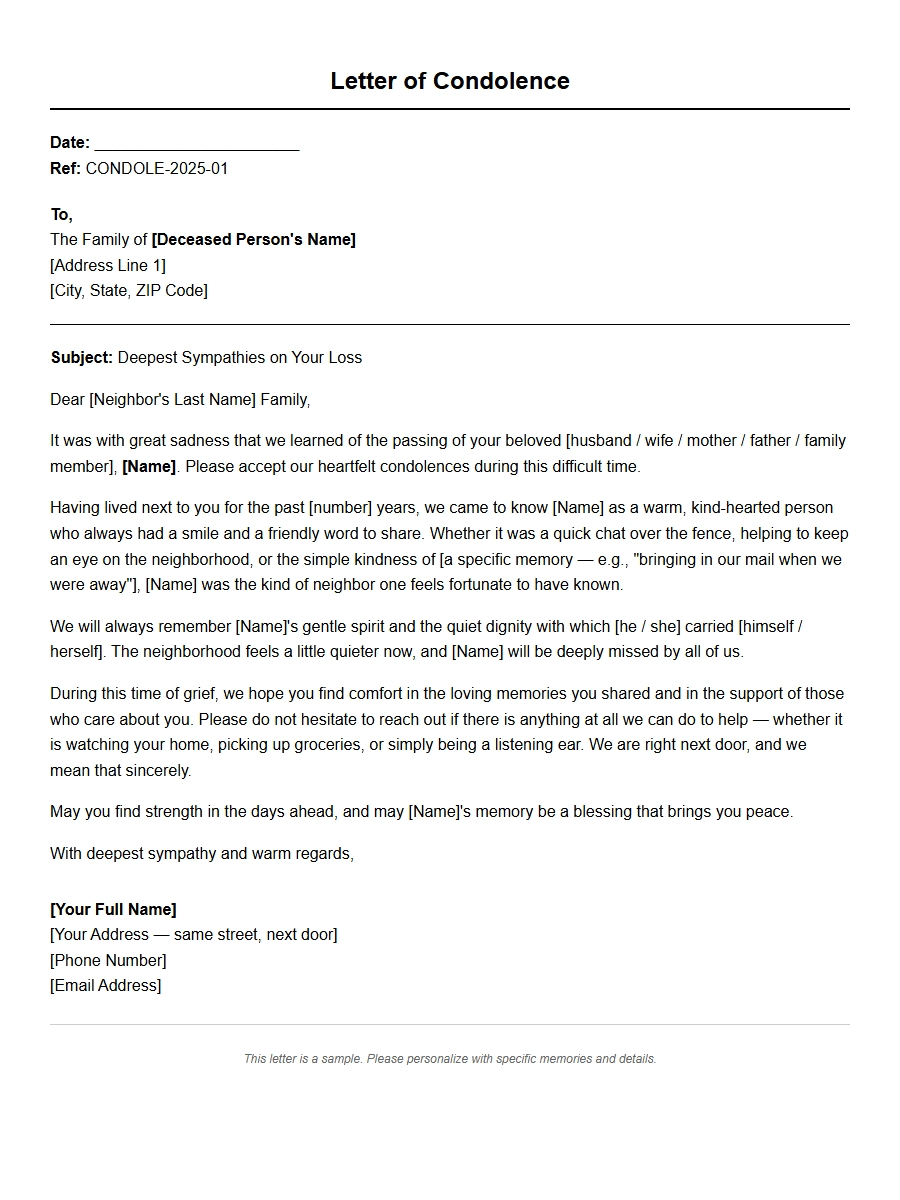 Condolence Letter Sample for a Neighbor
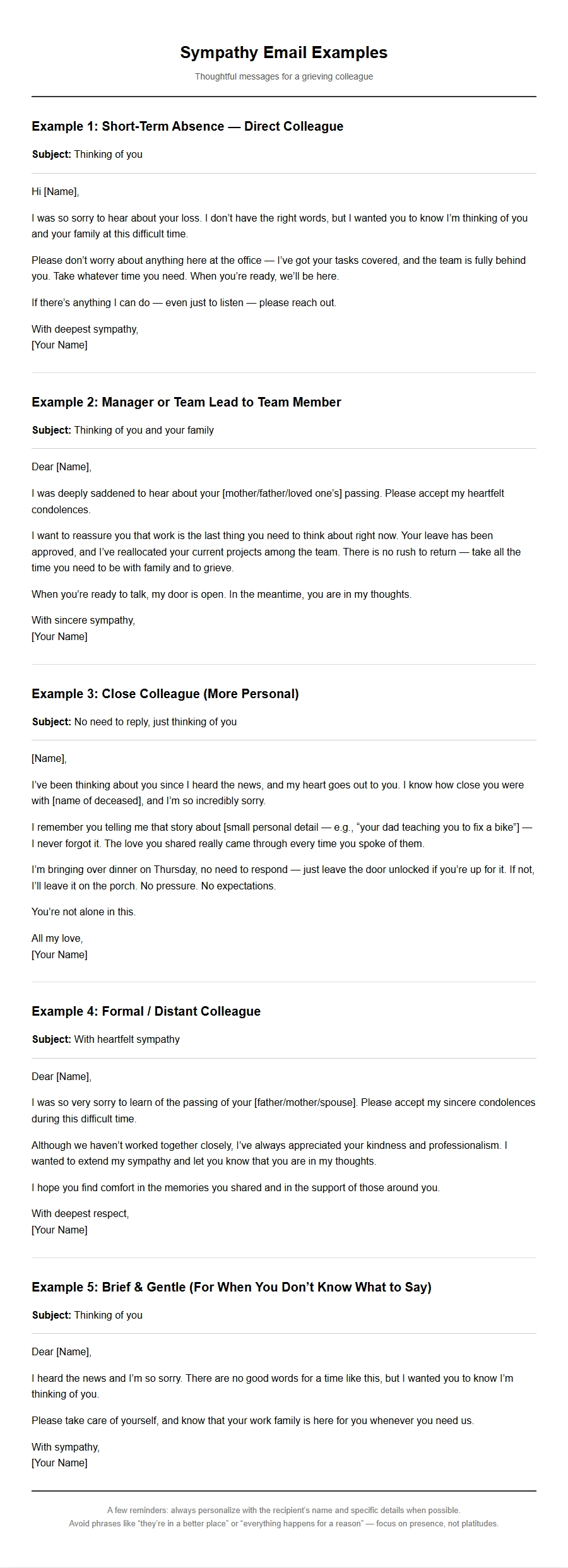 Sympathy Email Examples for a Grieving Colleague
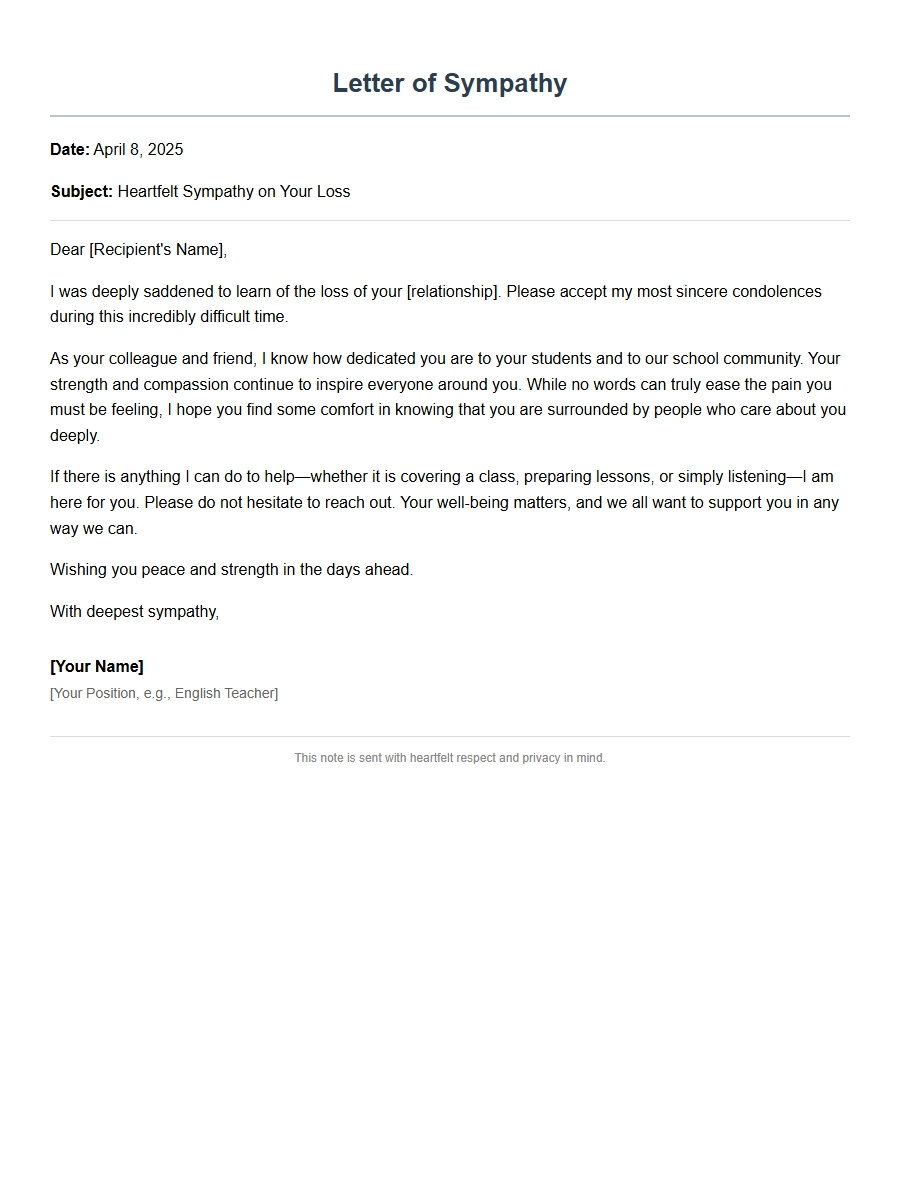 Condolence Words for a Teacher