How to Send Condolences When You Can’t Attend the Service
You just got the news. A friend lost their parent. A colleague’s spouse passed away. You want to say something, but you can’t make it to the service. Maybe you live too far away. Maybe the timing doesn’t work. Maybe you’re sick yourself. So you sit down to write a letter, and the blank page stares back at you. That moment of paralysis is normal. The good news is you don’t need to start from scratch.
Using a sample or template when you need to send condolences but cannot attend the service isn’t cheating. It’s a smart, time-saving strategy. A good sample gives you the structure and tone you need—things like the right salutation, a natural closing, and the kind of language that feels respectful without being stiff. What it doesn’t do is write the personal part for you. That’s where you step in.
Category: Condolence Letters
Why a letter template helps when you can’t be there
A condolence letter is a form of professional correspondence, even if it’s to someone you know well. It follows certain letter writing etiquette. You want to acknowledge the loss, express sympathy, and offer support—all without saying the wrong thing. A letter template gives you a reliable framework. You don’t have to wonder how to start or worry about the tone. You just adapt it to your situation.
The key is to pick a sample that matches your relationship with the recipient. A note to a close friend will sound different from one to a colleague you barely know. If the deceased is your uncle, for instance, you’ll want a customizable letter that lets you mention a specific memory. For a formal relationship, lean toward a more reserved letter structure with a traditional salutation and closing.
Adapting a sample without losing your voice
Once you have a sample, don’t copy it word for word. Read it through. Then rewrite key parts in your own words. Change the opening to sound like you. If the sample says “I was deeply saddened to learn of your loss,” and that feels too formal, try “I’m so sorry to hear about your mother.” The tone in writing should match who you are and how you usually speak to this person.
One common mistake is using an outdated salutation like “To Whom It May Concern.” That doesn’t work for a condolence letter. Use the person’s name. If you’re unsure about the family structure, “Dear [Name] and family” is a safe, respectful option.
Another mistake is ignoring the format. Are you sending an email or a printed card? For a digital letter format, keep it shorter and avoid fancy formatting. For a printed letter, you might want a simple letterhead design or just your name and address at the top. Either way, proofreading the letter before you send it is crucial. A typo in a sympathy note can feel careless, even if you didn’t mean it that way.
What to include in a condolence letter when you can’t attend
Since you won’t be at the service, your letter carries extra weight. It’s your way of showing up. Acknowledge that directly. Something like, “I wish I could be there with you on Tuesday, but I’ll be thinking of you that day.” That small line shows you know the date and you care.
Mention the deceased by name. Share a short, specific memory if you have one. Even a sentence like “I’ll never forget how your dad laughed at his own jokes” works. If you don’t have a personal memory, keep it simple: “From what you’ve told me, she was a remarkable woman.”
Offer concrete support, but only if you mean it. “Please let me know if you need anything” is fine, but it’s a bit generic. A better option: “I’d love to drop off a meal next week if that would help. I’ll text you to check in.” That’s specific and actionable.
Common pitfalls and how to avoid them
The biggest mistake people make is writing too much about themselves. This isn’t the place to recount your own grief story. Keep the focus on the person who died and the person you’re writing to. Another pitfall is using clichés like “They’re in a better place” or “Time heals all wounds.” Those can land as dismissive. Instead, stick to straightforward statements like “I’m so sorry for your loss” or “This is really hard, and I’m thinking of you.”
If you’re unsure about the formal writing tips for a condolence note, remember this: shorter is safer. A few sincere sentences are better than a long, rambling paragraph. And if you’re writing on behalf of a team or a company, use a business letter format but keep the language warm. Sign off with something like “With deepest sympathy” or “Thinking of you.” Our guide on how to sign off a formal sympathy letter offers more options if you’re unsure.
If the person you’re writing to has lost a sibling, the pain can feel very specific. You might want to check a sympathy message for sibling loss to get the tone right. And no matter who you’re writing to, it helps to know what to avoid in a sympathy letter so you don’t accidentally say the wrong thing.
When the recipient is struggling with more than grief
Sometimes the person you’re writing to is already dealing with anxiety or other challenges. Grief can make that worse. If you know your friend has been struggling, consider reading this comforting email for a friend with anxiety during grief for ideas on how to phrase your note with extra care.
And if you’re writing about the loss of an uncle or aunt, you can find specific phrasing in our message for loss of uncle or aunt guide. Small details like naming the relationship matter because they show you’ve thought about the person.
Making the letter your own
The best condolence letters feel professional where they need to be and personal where they can be. Use the sample as a springboard, not a crutch. Change the words until they sound like you. Read it out loud. If it feels natural, it’s ready.
You don’t have to be a great writer to send a meaningful letter. You just have to show up on the page. And when you can’t be at the service, that letter is how you show up. Write it. Send it. Then let go of worrying whether it was perfect. What matters is that you reached out.
Samples for Inspiration
How to Send Condolences When You Can’t Attend the Service
Condolence Letter to a Close Friend
Dear [Friend's Name],
I was deeply saddened to hear about the passing of your [mother/father/spouse]. My heart aches for you, and I wish I could be there to offer comfort in person at the service. Unfortunately, I am unable to attend due to a prior commitment that cannot be changed.
Please know that I am holding you close in my thoughts. I will always remember the way your mother’s laugh lit up a room, and I am so grateful for the kindness she showed me over the years. If you would like, I can help organize a small gathering of friends later this month to share memories.
I will also be sending a donation to [charity] in her memory. Let me know if there is anything else I can do from a distance—whether it’s bringing over a meal next week or simply listening on the phone.
With deepest sympathy, [Your Name]
Formal Condolence for a Colleague
Dear [Colleague's Name],
On behalf of the team, please accept our heartfelt condolences on the loss of your [father/mother/sibling]. We understand how difficult this time must be for you and your family.
Regrettably, I will not be able to attend the funeral service due to a scheduled business trip. However, I want you to know that your absence is felt, and we are all thinking of you. I have arranged for a bouquet of flowers to be delivered to the funeral home on the day of the service.
If there are any projects or deadlines you need assistance with during your bereavement leave, please do not hesitate to reach out. I would be happy to cover your responsibilities until you return.
You have my deepest sympathy and support. Warm regards, [Your Name]
Short Email Condolence When Unable to Attend
Subject: Thinking of you
Dear [Name],
I was so sorry to learn of your loss. I wish I could be at the service to offer my condolences in person, but I am unable to travel at this time.
I have sent a small floral arrangement to the funeral home as a token of my sympathy. Please let me know if there is a charity you would prefer donations be made to in lieu of flowers. I would be honored to contribute.
You are in my thoughts, and I hope to see you soon when things settle down.
With love, [Your Name]
Condolence Message for Social Media or Online Tribute
[Name] was such a wonderful person, and I am heartbroken to hear of their passing. I wish I could attend the memorial service, but I am out of the state on that date.
My thoughts are with the family during this difficult time. I will be sharing a memory of [Name] on the tribute page later today. For those who wish to honor their life, the family has suggested donations to [charity], which I plan to do.
Rest in peace, dear friend. You will be missed by so many.
Personal Note to a Family Member
Dear [Family Member's Name],
I am so sorry that I will not be able to attend Grandma’s funeral on Saturday. I have a medical appointment that cannot be rescheduled, and I am absolutely heartbroken to miss being with everyone.
Please know that I am thinking of you all and will visit next month to light a candle at her grave and share stories. I will also be sending a memorial contribution to the hospice that cared for her.
If you need anything in the coming days—someone to pick up groceries or just a listening ear—please call me anytime. I love you all.
With all my love, [Your Name]
Condolence Letter with a Table of Ways to Honor
Dear [Name],
I was so saddened to learn of your loss. I regret that I cannot attend the funeral service due to my current health situation. Please accept my deepest sympathy.
I want to do something meaningful to honor [Deceased]’s memory. Below are a few options I am considering. Please let me know which you would prefer, or if there is another way I can help.
Option
Details
Send flowers
White lilies to the service
Donate to charity
To the American Cancer Society
Plant a tree
In a local park in their name
Meal delivery
Send a gift card for takeout
I will wait for your preference before taking any action. In the meantime, I am thinking of you and sending comfort from afar.
Sincerely, [Your Name]
Sympathy Card Message for Acquaintance
Dear [Name or Family],
I was very sorry to hear about the passing of [Deceased]. Although I was not able to attend the service due to work obligations, please know that you are in my thoughts.
I especially remember [Deceased]’s kindness at the community picnic last summer. They were always so generous with their time. I have made a donation to the local food bank in their memory, as I know that was a cause they cared about deeply.
May you find comfort in the wonderful memories you shared.
With sympathy, [Your Name]
Condolence Letter for a Neighbor
Dear [Neighbor’s Name],
I was so sorry to hear of your loss. [Deceased] was a wonderful neighbor—always ready with a friendly wave and a helping hand. I wish I could be at the funeral, but I am out of town visiting family.
Please let me know if you need someone to keep an eye on your house, water plants, or collect mail while you are occupied with arrangements. I will be happy to help as soon as I return next week.
I left a small sympathy card and a potted plant on your doorstep as a token. Thinking of you during this hard time.
Warmly, [Your Name]
Sample Condolence Letter to a Teacher or Mentor
Dear [Teacher/Mentor’s Name],
I was deeply saddened to learn of the passing of your [spouse/parent]. I still remember the stories you shared about them during class, and I know how much they meant to you.
Unfortunately, I will not be able to attend the memorial service as I live in a different city now. However, I wanted to express my gratitude for the impact you had on my life. Your guidance helped shape my career, and I will always be grateful.
I have made a contribution to the scholarship fund in [Deceased]’s name, as I know education was a passion you both shared. Please accept my deepest condolences.
With respect and sympathy, [Your Name]
Template for Condolence Letter with Donation Information
Dear [Name],
I was so sorry to hear of your loss. Though I cannot be present at the service, I want to express my heartfelt sympathy and support.
In lieu of flowers, I understand the family has requested donations to the following organizations. Please choose the one that best reflects [Deceased]’s interests, or let me know if you have another preference.
Organization
Suggested Donation
American Heart Association
$50
Local Animal Shelter
Any amount
Scholarship Fund at [School]
$100
I will make the donation as soon as I hear from you. In the meantime, know that you are in my prayers. I hope to visit you in person soon once things are less hectic.
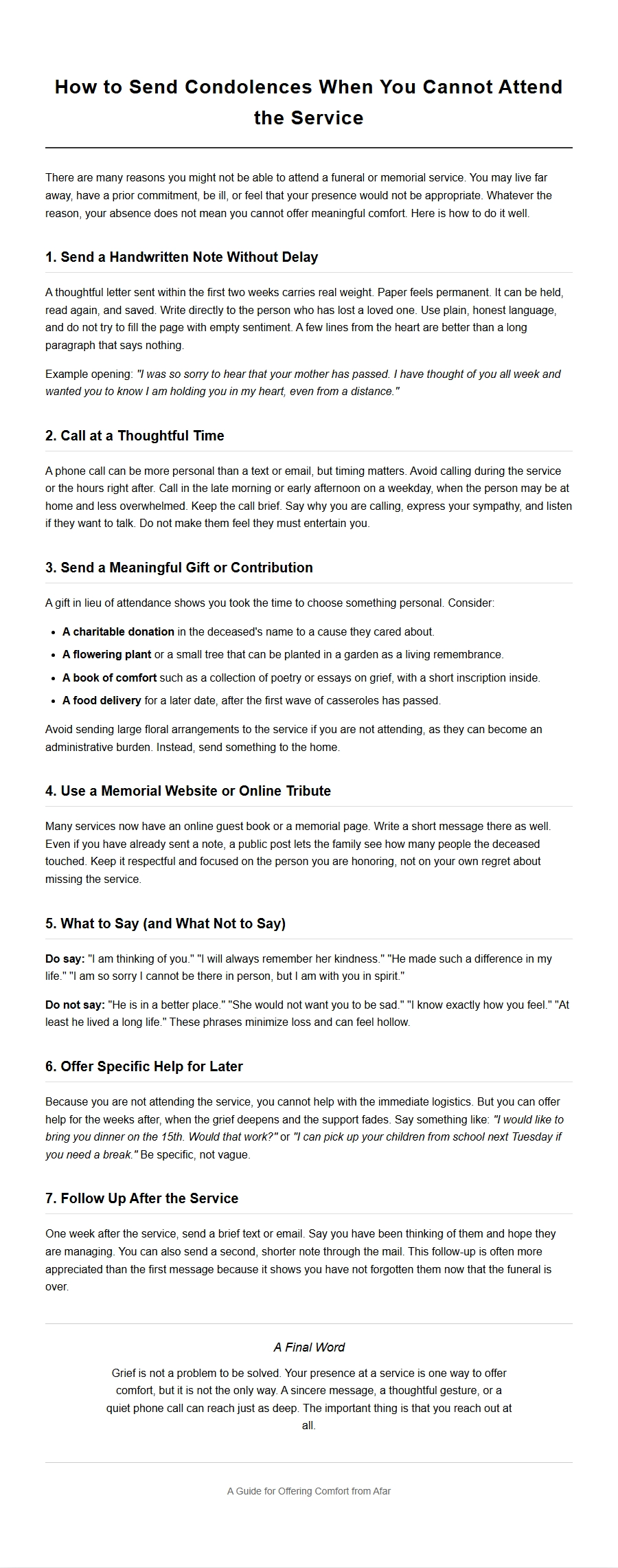
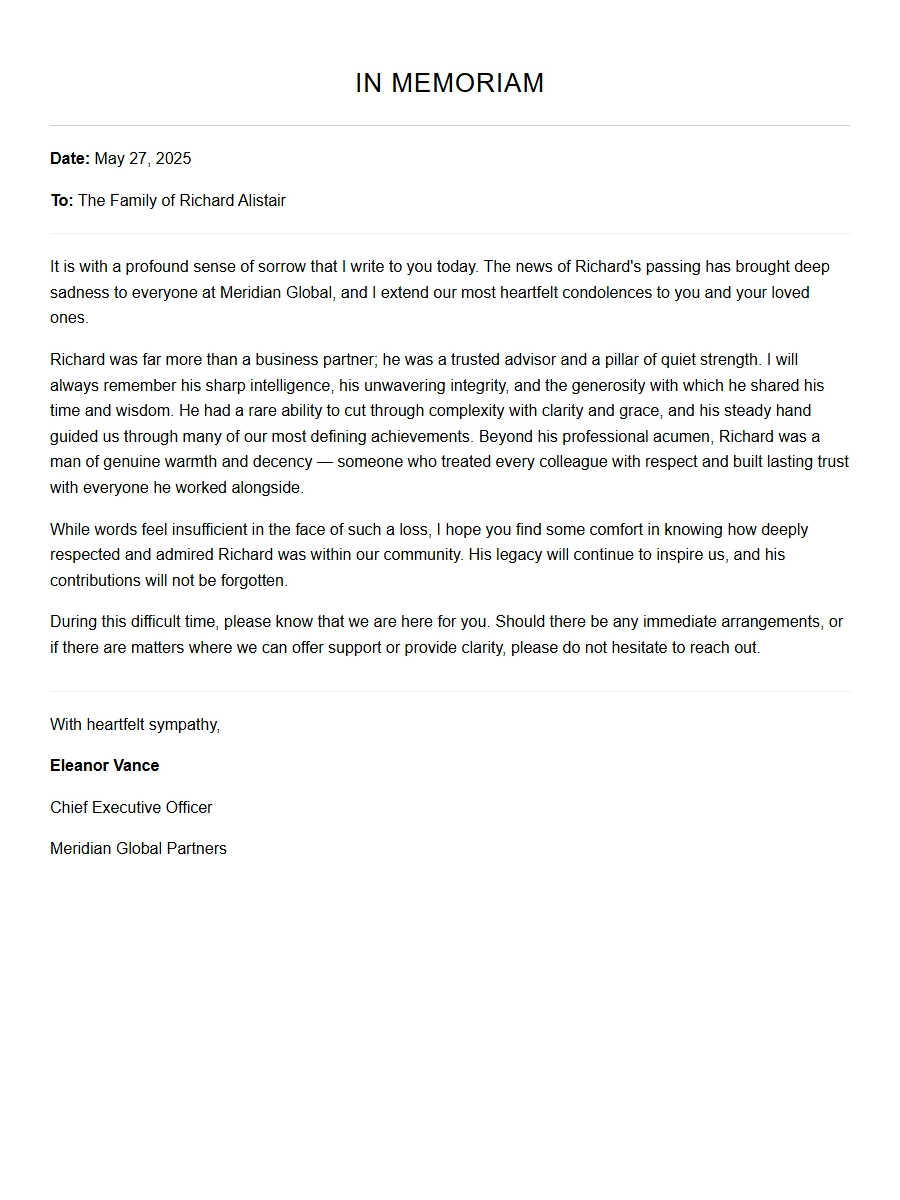 Formal Condolence Message for a Business Partner
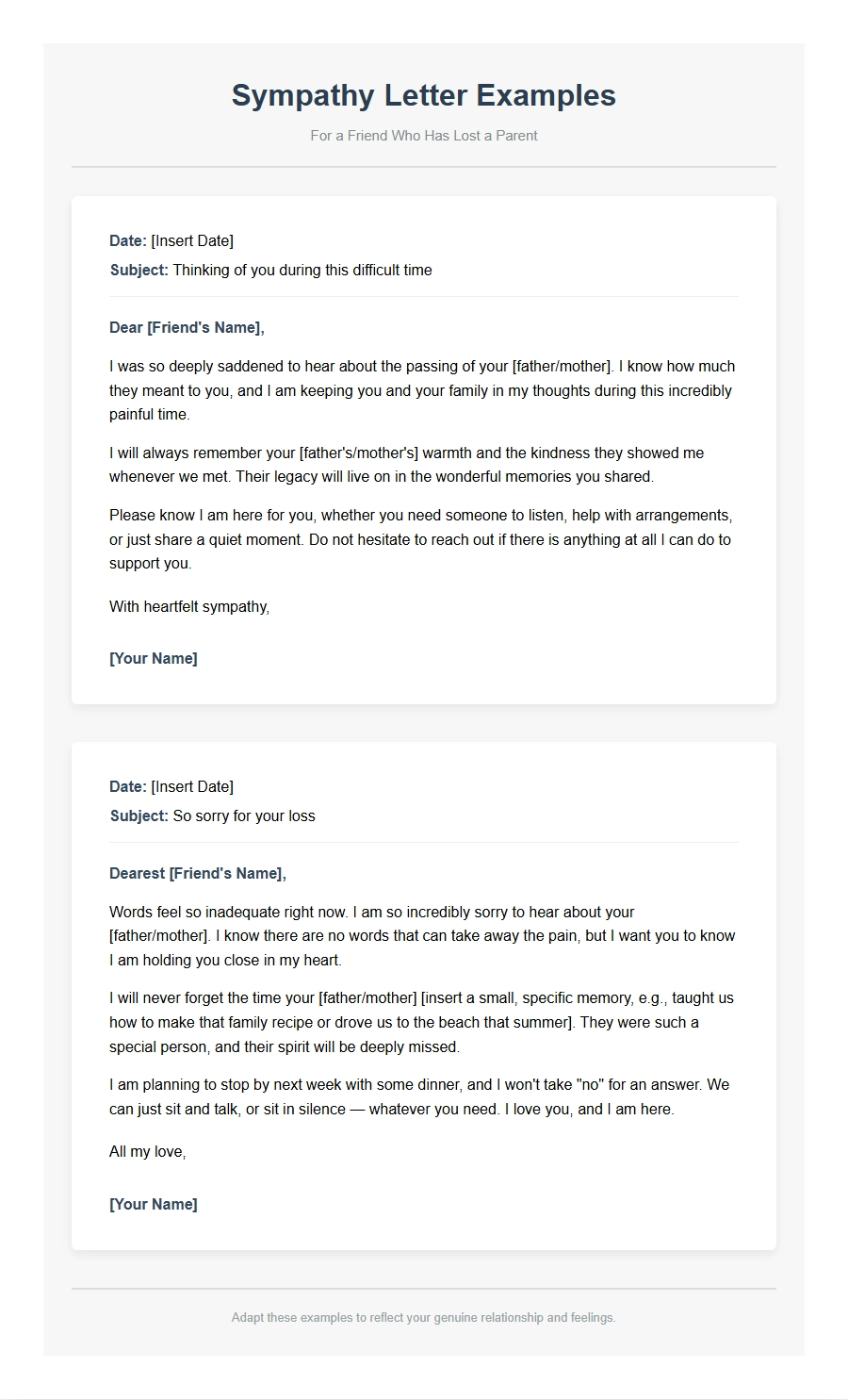 Sympathy Letter Examples for a Friend Who Lost a Parent
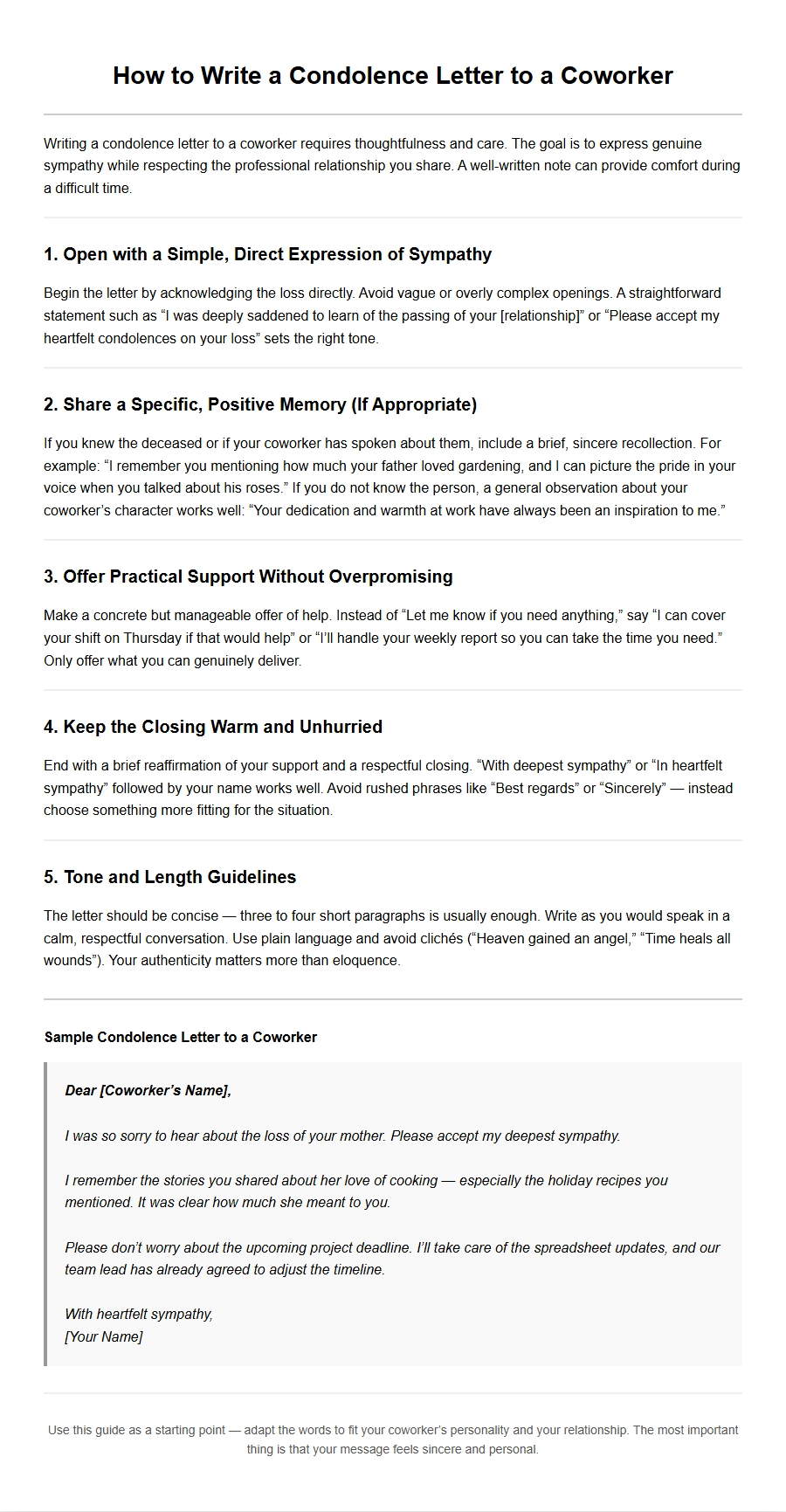 How to Write a Condolence Letter to a Coworker
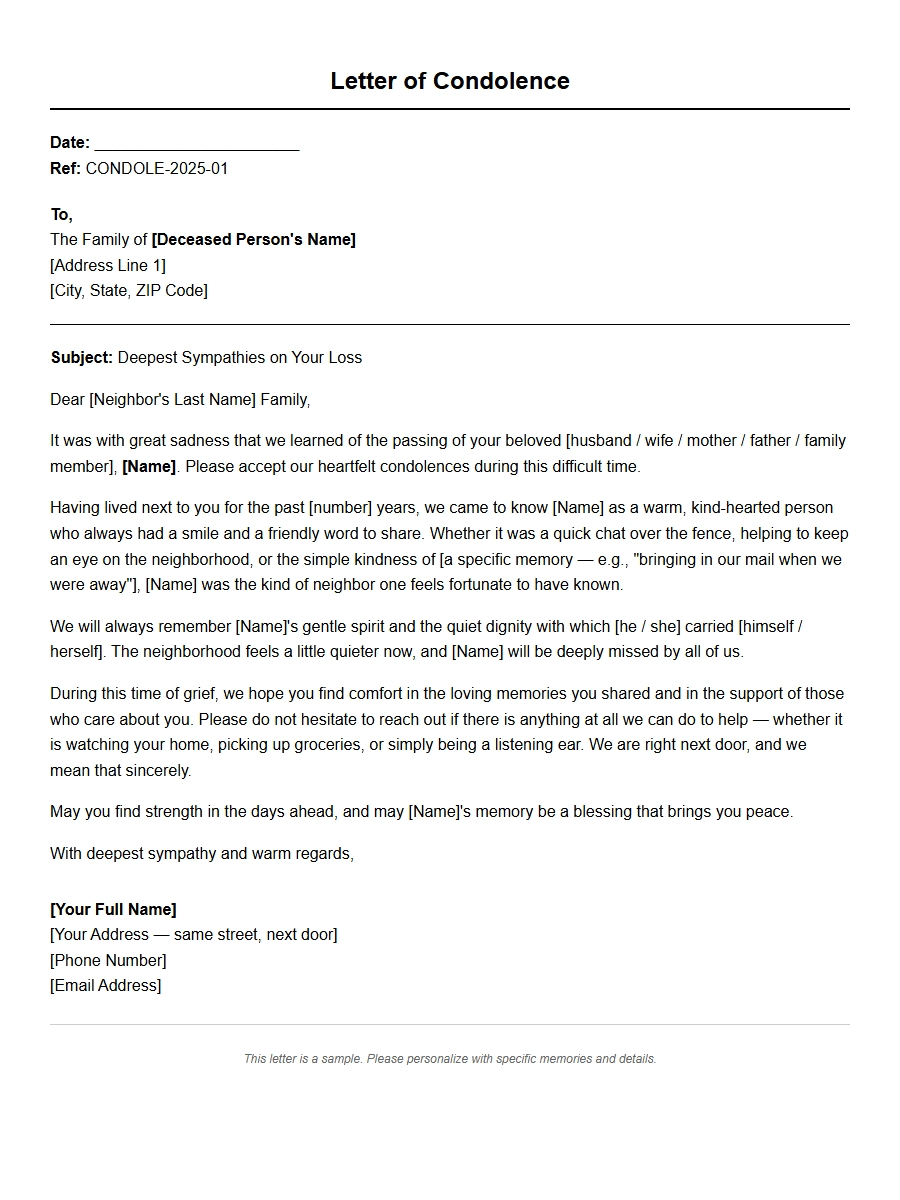 Condolence Letter Sample for a Neighbor
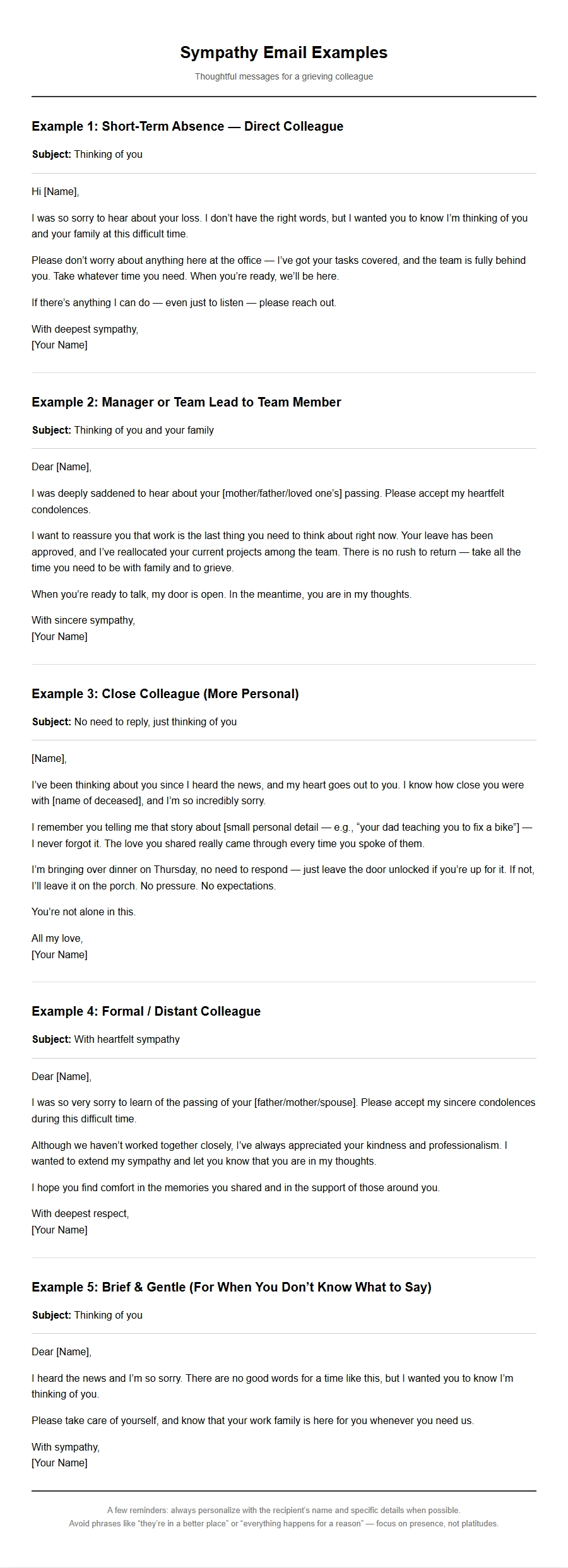 Sympathy Email Examples for a Grieving Colleague
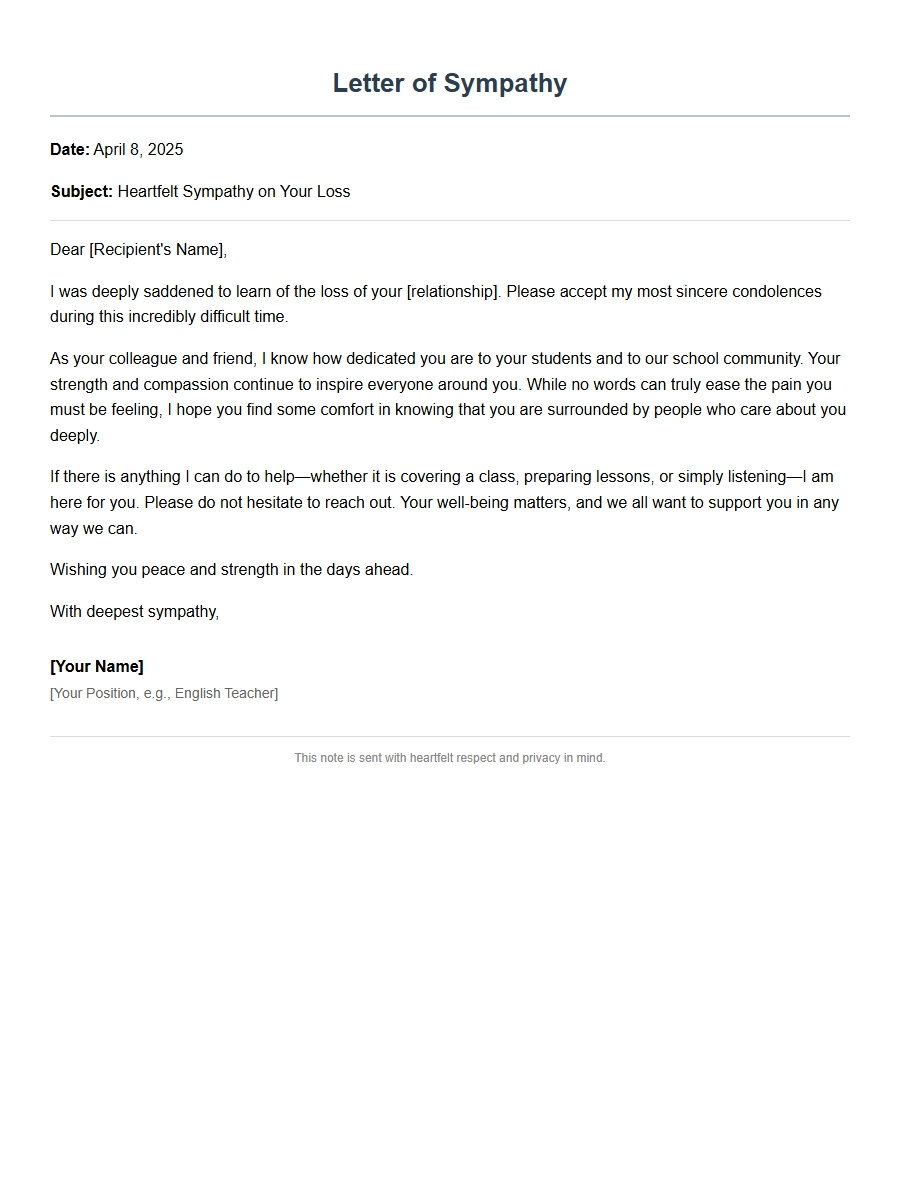 Condolence Words for a Teacher