You need to write a supportive note for a caregiver who is clearly running on empty, but the words won’t come. You know their exhaustion is real, yet you’re worried anything you write will sound hollow or generic. That’s not a failure of empathy. It’s just that caregiving burnout is a heavy topic, and finding the right tone matters.
Using a sample note isn’t cheating. It’s a smart starting point. A good sample gives you the letter structure and tone in writing that feels genuine, while leaving you room to add your own specific memories or observations. It keeps you from staring at a blank screen, and it helps you avoid accidentally sounding cold or overly formal when what the person really needs is warmth and recognition.
What makes a good note for caregiver burnout?
The best notes don't try to fix the situation. They simply name the struggle and offer solid support. Think of it as professional correspondence of the heart. You're not writing a business letter, but you are writing a message that needs to be clear, respectful, and actionable.
Start with a simple, honest opener
Don’t overthink it. Something like, “I’ve been thinking about you a lot lately. I know how much you’re doing for your mom, and I wanted you to know I see it.” That’s enough. Avoid letter writing etiquette traps like starting with “I hope this letter finds you well” — it feels distant when someone is in the middle of a crisis.
Name the exhaustion without using their story as a lesson
You might write, “I remember when I was caring for my father, the hardest part wasn’t the work itself—it was feeling like no one understood how tired I was.” This small moment of shared experience is more powerful than any generic pep talk. It turns your note into a real letter of recommendation for their strength, without it sounding like a performance review.
How to adapt a sample without losing your voice
Take the structure from a letter template — the opening, the validation, the offer of help — and rewrite it in your own words. If the sample says, “Your dedication is inspiring,” and that feels too polished, change it to, “I don’t know how you do it, but I’m grateful you’re there.” The goal is to keep the customizable letter feeling like it came from you, not from a script.
One common mistake is using outdated salutation and closing phrases like “To whom it may concern” or “Sincerely yours.” For a note about burnout, “With love,” “Thinking of you,” or even just your name works better. Match the closing to your relationship with the caregiver.
Offer real, specific help
Don’t say “Let me know if you need anything.” That puts the burden back on them. Instead, write something concrete: “I’m dropping off dinner this Thursday at 6. No need to reply. I’ll leave it on the porch.” This turns your note from a sentiment into a real action. If you’re writing a resignation letter sample for a professional caregiver who is leaving a job, the same rule applies — offer a clear transition plan, not just regrets.
If you’re unsure about the format, keep it simple. A handwritten card works best for personal burnout notes. For more formal situations — like a note to a colleague or a client who is caregiving — a short email with a clear subject line is fine. Pay attention to letterhead design only if it’s a formal organizational letter. Otherwise, plain paper or a nice card is better.
Real examples to guide you
Here’s a short note for a friend caring for a spouse with a chronic illness:
“Karen, I know yesterday was brutal. You don’t have to be strong all the time. I’m free on Saturday afternoon if you want company — or if you want to be alone while I sit with him for a few hours. Text me either way.”
And here’s one for a family member who is clearly exhausted but won’t ask for help:
“Dad, I’m worried about you. You’ve been at the hospital every day this week. Let me take over on Sunday. I’ll handle the meds and the meals. You can sleep or just get out of the building. I’ve got this.”
Notice how both use direct language, specific offers, and no pressure to respond. That’s the sweet spot for formal writing tips applied to a personal situation.
Mistakes that make a note feel hollow
Do not use clichés like “God never gives us more than we can handle” unless you are certain of the person’s beliefs. Even then, consider how to mention religion in condolence letter situations — the same caution applies here. Assume nothing about their coping mechanisms.
Also, avoid implying that their burnout is a sign of weakness or poor planning. Phrases like “You need to take better care of yourself” sound like blame, not support. Instead, say “I know you’re doing your best. That’s more than enough.”
Proofread, but don’t over-polish it
Read your note aloud. If it sounds like you, it’s ready. Proofreading letter content is important for catching typos, but don’t edit out your natural voice. A slightly messy sentence feels more human than a perfectly crafted one that reads like a form. If you’re sending a digital letter format, double-check the tone — email can feel more distant, so add a warm subject line like “Thinking of you today.”
Let the note be a starting point
No single note will fix burnout. But a thoughtful note can be the moment someone feels seen, and that matters. Use the sample as a springboard, not a script. Write from your own place of care, not from perfection. The more you practice writing these notes, the faster and more natural it will feel — and the more likely you are to actually send them. That’s the whole point.
Templates and Samples
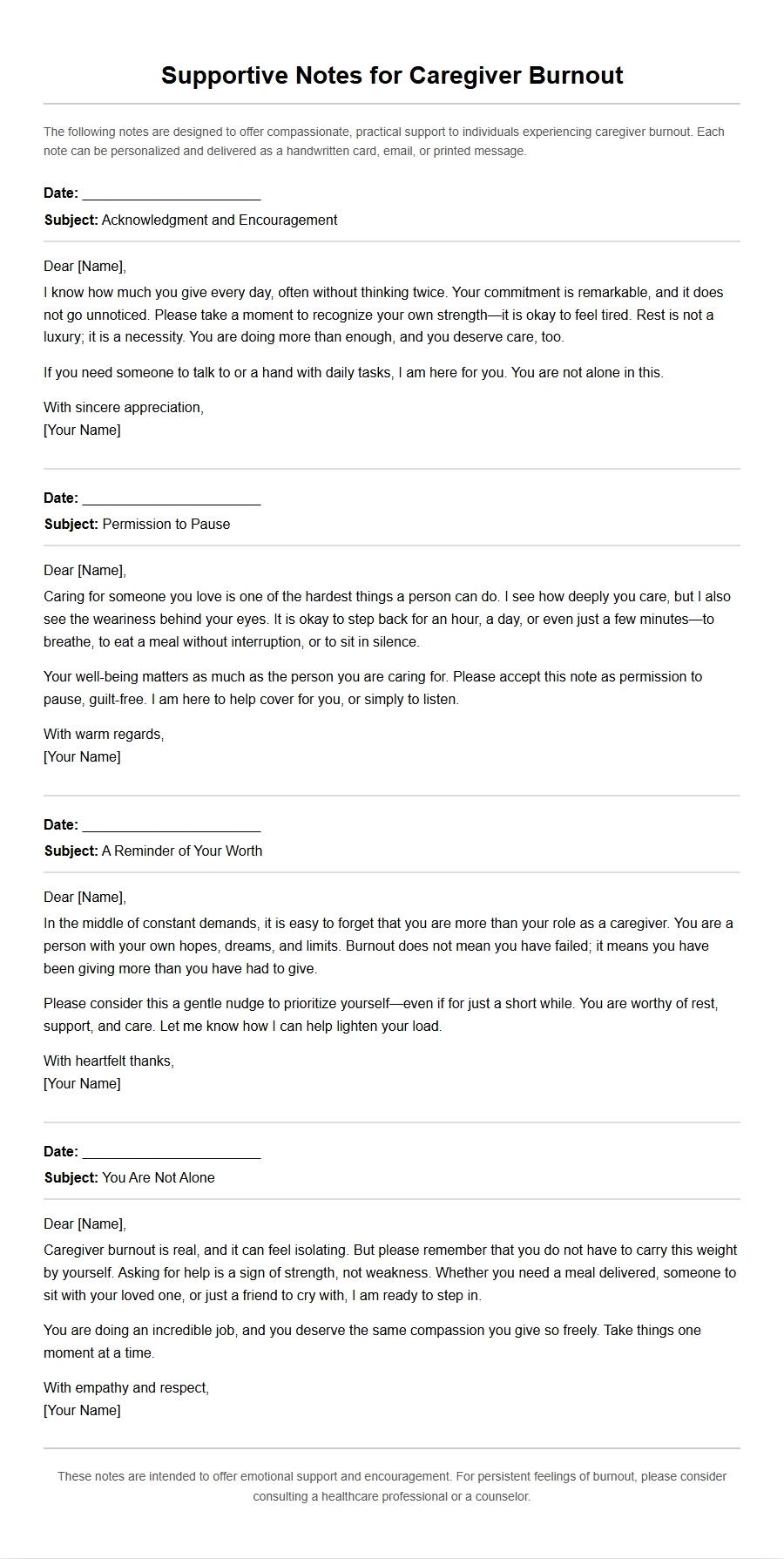
Supportive Notes for Caregiver Burnout: Examples
A Note from a Close Friend
Dear Sarah,
I was so deeply saddened to hear about your mother’s passing. I know you had been her primary caregiver for so long, and the weight of that role—alongside this loss—must be overwhelming. Your tireless love and effort were a testament to your bond.
Please know that you don't have to face these next days alone. I am here to listen if you want to talk, or to sit quietly with you if you don’t. I can bring over dinner on Tuesday, or help sort through the mountain of paperwork if that would ease your load.
Caregiver burnout is real, and you have been running on empty for months. Now is the time to let others carry some of that for you. You gave so much of yourself to care for her; please allow us to care for you.
With heartfelt sympathy and steady friendship, Rebecca
From a Family Member
Dear Cousin Tom,
I’m writing to share my deepest condolences on the loss of your father. Over these past few years, I watched you put every ounce of your strength into his care—driving him to appointments, managing medications, and being present even when you were exhausted. You gave him the gift of dignity and love.
Now, as you grieve, please remember that your own well-being matters too. The burnout you’ve been carrying doesn’t vanish overnight. It’s okay to rest, to cry, and to ask for help.
Let me and the rest of the family step in. I have started a meal calendar and a list of people willing to help with errands or just keep you company. I’ve included the schedule below:
Monday: Aunt Lisa delivers dinner
Wednesday: Cousin Maria takes your kids for the afternoon
Friday: I will come by to help clean out Dad’s room – only if you’re ready
You are not alone. We will get through this together.
With love, Your cousin, Jamie
From a Support Group Leader
Dear Michelle,
Our caregiver support group was so saddened to learn about your husband’s passing. We have watched you care for him with such grace, often putting his needs before your own even when you were running on fumes. Your journey has been one of incredible sacrifice.
As you navigate this time of loss, please remember that caregiver burnout is not a sign of weakness—it is the result of pouring out love beyond your limits. Now is the time to pour some of that love back into yourself.
We invite you to our next meeting on Thursday at 7 PM, where we will focus on grief and self-care after caregiving. You can join in person or by video. Let us surround you with the same support you have given others.
You matter. Your health matters. We are here for you.
In solidarity, Karen, Support Group Facilitator
Date
Time
Topic
Thursday, March 14
7:00 PM
Grief & Self-Care for Caregivers
From a Spiritual Advisor
Dear Linda,
I extend my deepest condolences to you upon the death of your sister. For the past year, you have been her faithful caregiver, carrying a burden that would have crushed many. Your devotion has been a living prayer.
Now, as you rest from this long vigil, I want to remind you that your soul also needs tending. Burnout can leave us feeling empty, but even in that emptiness, there is space for grace. Allow yourself permission to be still, to weep, and to receive care from others.
Our congregation is holding a special prayer circle for caregivers on Saturday morning. I have listed the details below:
What: Caregiver Prayer and Reflection Circle
When: Saturday, 10:00 AM
Where: St. Mark’s Chapel, Room 3
You are welcome to come and simply be held in prayer, no words needed. May you feel the presence of love surrounding you.
With peace, Reverend Harris
A Short and Simple Note
Dear David,
I was deeply sorry to hear about your grandfather’s passing. You were his primary caregiver for so long, and I know the toll that took on you. Please accept my heartfelt condolences.
Now, please take care of yourself. Rest, hydrate, and let others help. It’s okay to put your own oxygen mask on first. I am thinking of you and am here if you want to talk or need anything at all.
With sympathy, Anna
From a Former Caregiver
Dear Mark,
I heard that your wife passed away last week. I know you have been her caregiver for the past two years, and I remember what that journey was like from my own experience caring for my father. The mix of exhaustion, love, and loss is something only a fellow caregiver can understand.
You did everything you could for her. You gave her comfort and presence until the very end. Now, as you face the silence and the grief, please do not neglect the caregiver inside you who also needs care. Burnout is a real wound; let yourself heal.
I’d like to offer to take you for coffee this week, or just sit with you in silence if that’s what you need. You are not alone.
With understanding, Patricia
Day
Time
Activity
Thursday
3:00 PM
Coffee at Joe’s
Or Friday
10:00 AM
Walk in the park
With Practical Help Offer
Dear Rachel,
My heart goes out to you on the loss of your mother. You have been her devoted caregiver for years, and I know the burnout you were already feeling has now been compounded by grief. Please let me help lighten your load in practical ways.
Below is a list of things I can do for you this week. Just let me know which ones would be most helpful by replying to this note.
Offer
Available Days
Make and deliver dinner
Tuesday, Thursday
Pick up groceries or prescriptions
Any afternoon
Walk your dog
Daily at 5 PM
Help with thank-you notes
Wednesday evening
You do not have to handle everything alone. Accepting help is a sign of strength, not weakness. I am here for you.
With sincere sympathy, Your neighbor, Brian
From a Colleague or Coworker
Dear Mei,
I was so sorry to learn about your father’s passing. On top of everything, I know you had been juggling caregiving duties with work, and that took a huge toll on your energy and focus. Please accept my deepest condolences.
Your team at the office wants to support you. We have arranged for your projects to be covered for the next two weeks, and we’ve set up a meal delivery schedule. There is absolutely no pressure to check emails or respond to work matters until you are ready.
Caregiver burnout is often invisible to others, but we saw how hard you worked. Now is the time to rest and grieve without guilt. We are thinking of you.
With sympathy and support, Your colleague, James
Work covered through March 22
Meal deliveries: Monday, Wednesday, Friday
Contact person for questions: James (ext. 5401)
For a Caregiver Who Is Also a Parent
Dear Priya,
I am so sorry for the loss of your husband. You have been a superhero—caring for him while also raising your children and managing a household. The burnout you have experienced is immense, and now you must also guide your kids through grief. Please know that you are not expected to do it all.
Your children need you to be gentle with yourself. It’s okay for them to see you cry, and it’s okay to let them help in small ways. I have spoken with a few other parents from school, and we have organized playdates and homework help for the next few weeks to give you some quiet time.
You have carried so much. Now let your community carry you. You are a wonderful mother and caregiver, and you deserve care too.
With love and strength, Your friend, Anita
Day
Help Offered
Monday
Playdate for kids from 3–5 PM
Wednesday
Homework help at 4 PM
Friday
Dinner delivered by the family next door
A Follow-Up Note
Dear James,
A few weeks have passed since your brother’s funeral, and I wanted to check in on you. Grief after long-term caregiving can hit in waves, and the initial numbness may have given way to deeper exhaustion now. You gave everything to be his caregiver, and that experience of burnout doesn’t just disappear.
Please know that my offer to help still stands. If you need someone to talk to, or even just to sit with, I am here. I’ve also attached a list of local grief support groups specifically for former caregivers—sometimes speaking with people who truly understand makes all the difference.
Take each day as it comes. Be kind to yourself. You deserve rest and peace.
With continued sympathy, Your friend, Lorraine
Caregiver Grief Support Group: Tuesdays 7 PM, Community Center
One-on-one counseling: Caregiver Support Line (555-1234)
Walk-in hours at the hospice bereavement office: Thursdays 10–12
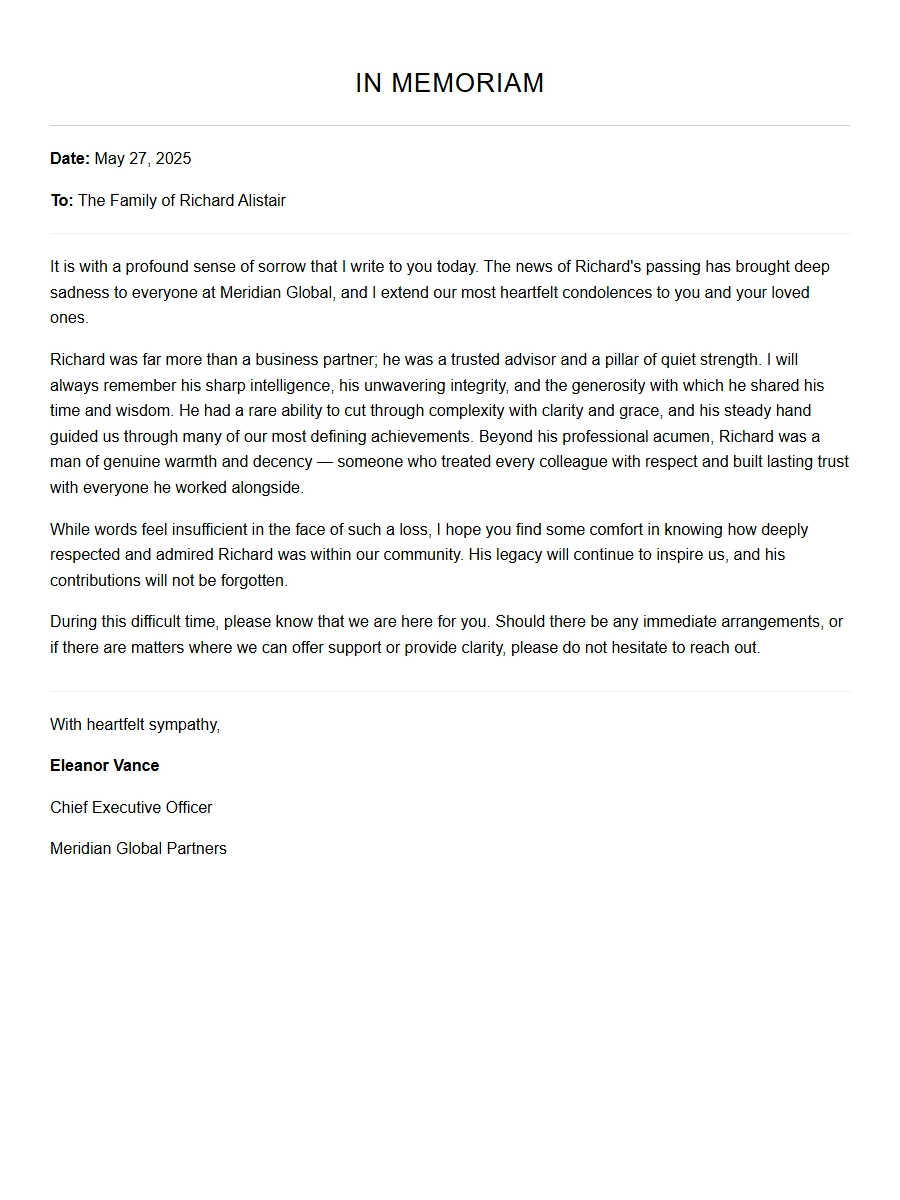 Formal Condolence Message for a Business Partner
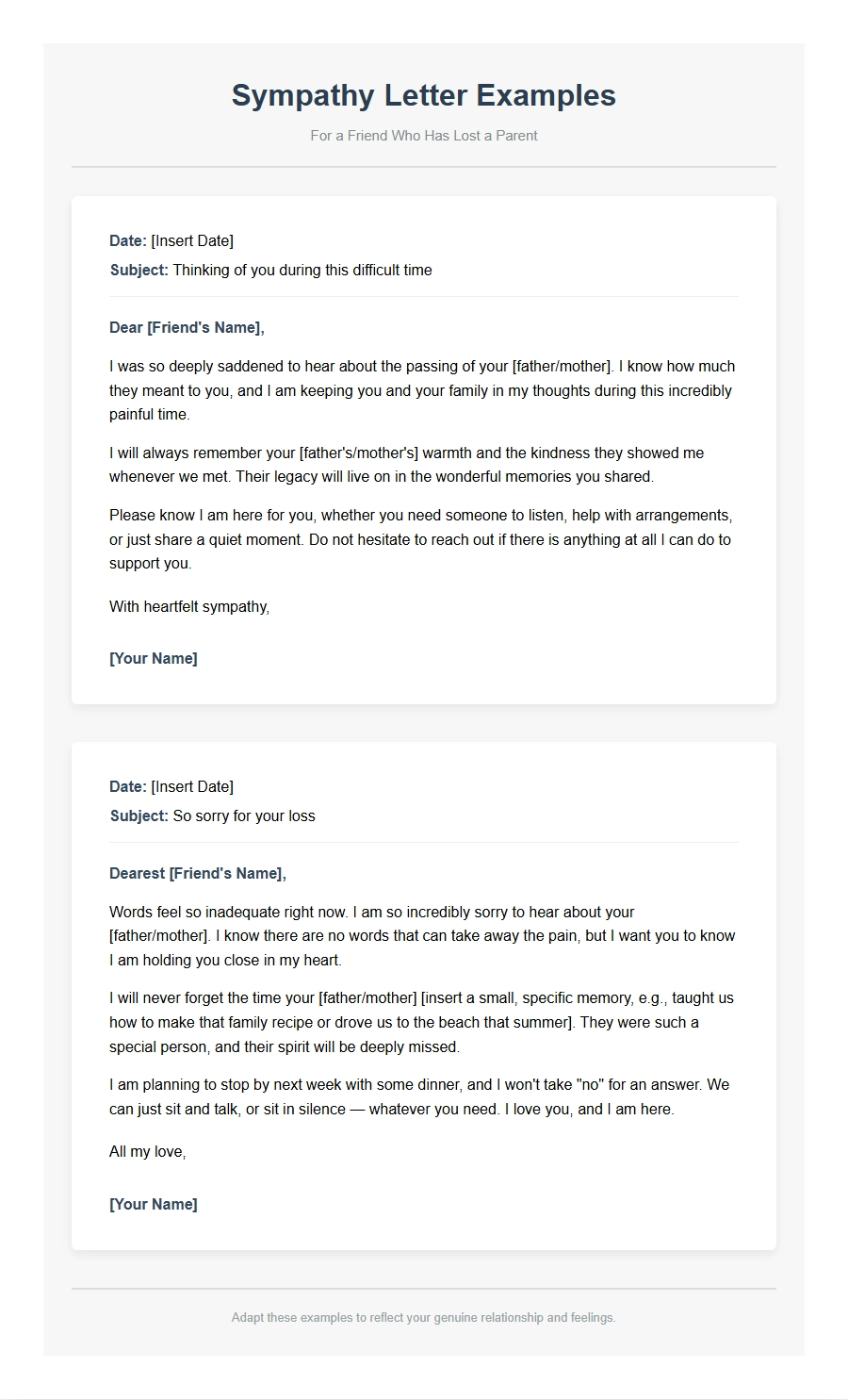 Sympathy Letter Examples for a Friend Who Lost a Parent
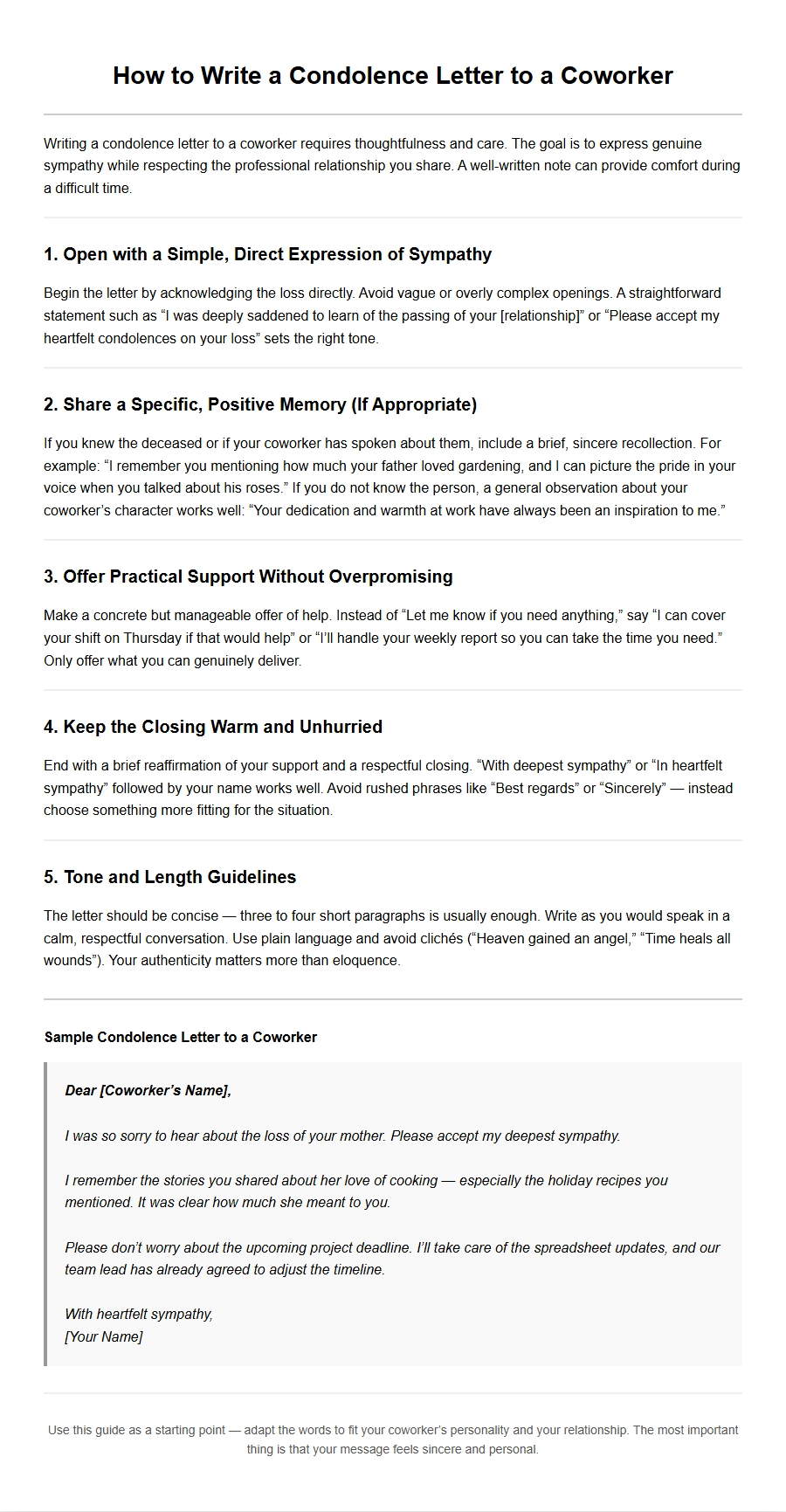 How to Write a Condolence Letter to a Coworker
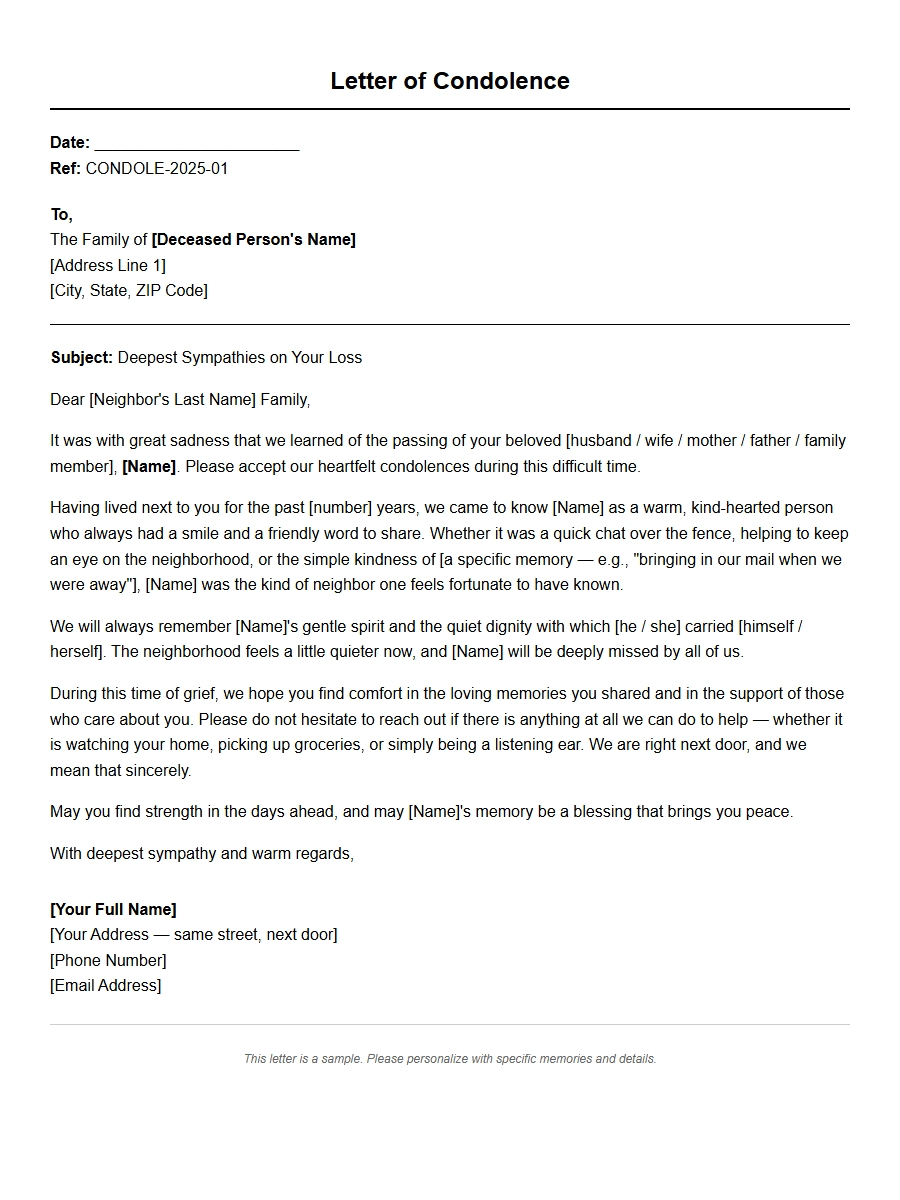 Condolence Letter Sample for a Neighbor
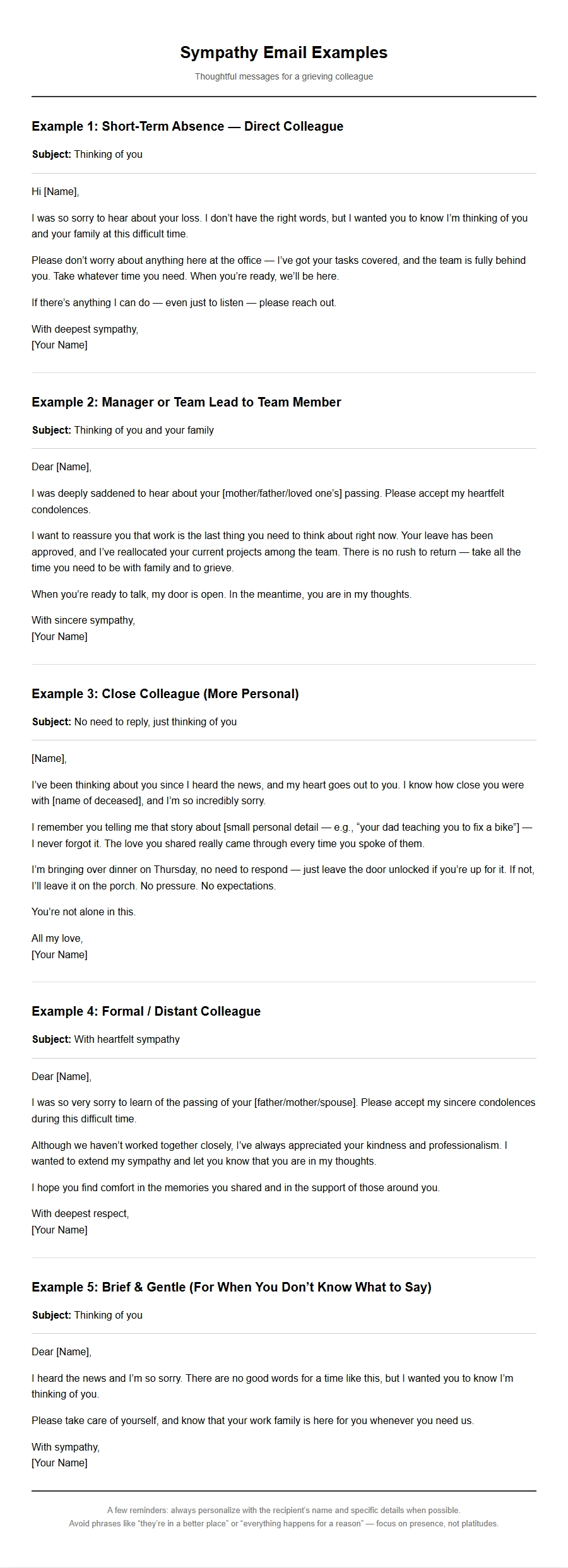 Sympathy Email Examples for a Grieving Colleague
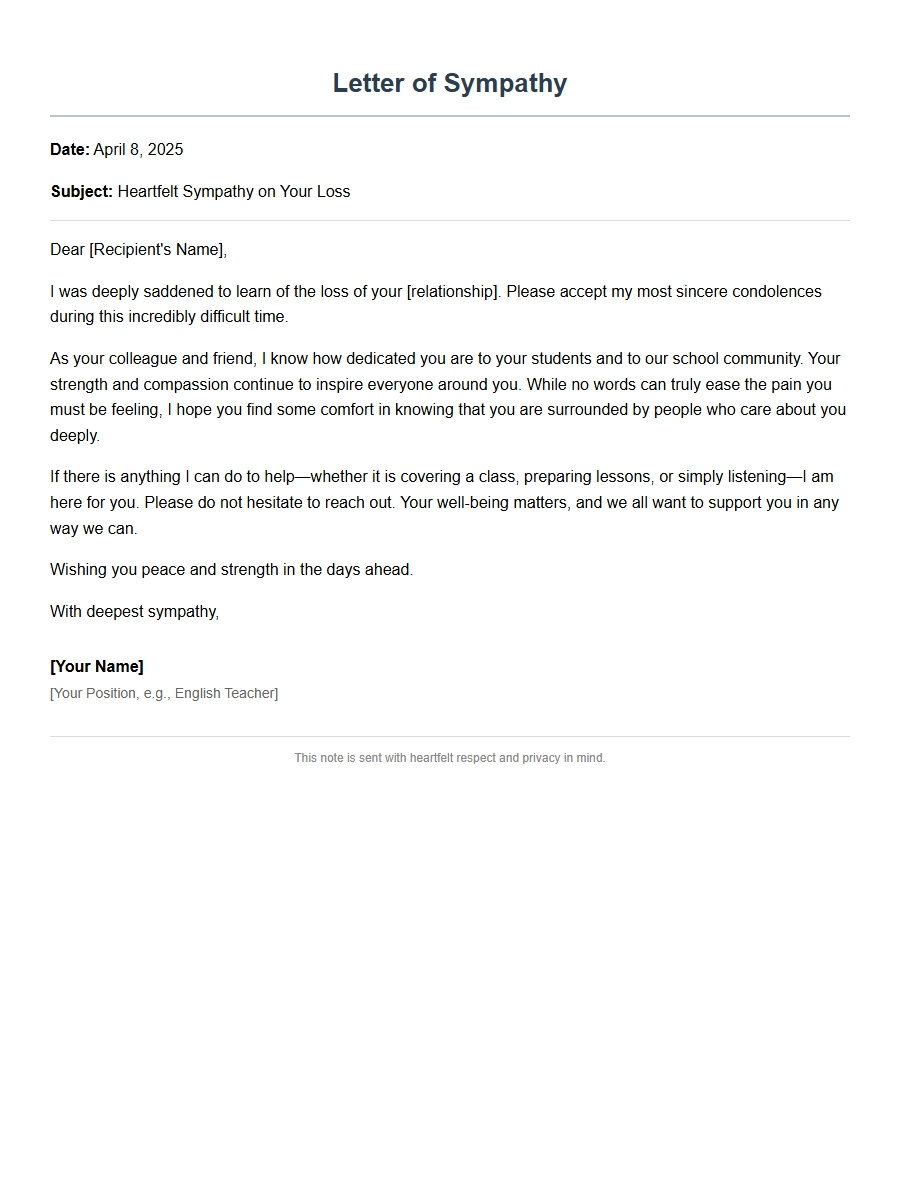 Condolence Words for a Teacher