Condolence Note for Colleague on Bereavement Leave
You're staring at a blank screen, trying to find the right words for a colleague who just lost someone. It’s awkward. It’s emotional. You don’t want to say the wrong thing, but you also don’t want to say nothing. The pressure to get it right can stop you cold—but a good condolence note sample turns that anxiety into something you can actually send with confidence.
Using a sample isn’t cheating. It’s a smart way to save time while still writing something heartfelt. A solid letter template gives you the structure, the right tone, and key phrases you can borrow. But it’s still yours—you fill in the personal details, the shared memory, the specific warmth only you can offer. That’s the difference between a robotic form letter and a customizable letter that feels genuine.
Category: Workplace Condolence Letters
Let’s be honest: most people overthink letter writing etiquette when it comes to grief. Should you write “Dear” or just jump in? Is email okay or does it need to be a printed card? The answer depends on your workplace culture and your relationship with the colleague. A close teammate might appreciate a quick email, while a more formal setting calls for a physical note. The key is to match the tone in writing to the situation—warm but not intrusive, professional but not cold.
What should a condolence note for a colleague on bereavement leave include?
Start with a simple salutation. “Dear [Name],” works for most cases. If you’re emailing within a company, you can skip the full address block and just use the person’s first name. Avoid overly formal salutation and closing like “To whom it may concern” or “Sincerely,”—those feel distant. Instead, close with something like “With sympathy,” “Thinking of you,” or “Warmly.”
Next, express your sympathy directly and briefly. One or two sentences is enough. You don’t need to explain death or give platitudes like “they’re in a better place.” Simple words like “I was so sorry to hear about your loss” are enough. If you knew the person who passed—a parent, spouse, or child—you can add a quick mention. If you didn’t, just say you’re thinking of them during this hard time.
How to adapt a sample without losing your authentic voice
Take the sample and treat it like a skeleton. Swap out generic phrases for specific ones. If you and your colleague shared a coffee routine, say “I’ll miss our morning chats too.” Mentioning a shared memory appropriately makes the note feel personal. But be careful—don’t bring up a funny story if the loss is fresh and heavy. Learn how to reference shared memories appropriately so you don’t accidentally misfire. A brief, kind recollection is usually safe.
Another common mistake is making the note about you. Avoid long explanations of your own grief or advice on how to cope. The focus should stay on the colleague and their loss. Keep it short—three or four sentences in the body is plenty. This isn’t a letter of recommendation or a cover letter example where you need to sell yourself. It’s a quiet gesture of support.
Formatting: digital vs. printed notes
For email, use a clear subject line like “Thinking of you” or “With sympathy.” Keep the body plain text or simple HTML—don’t use fancy fonts or colors. For a printed note, choose a blank card or simple letterhead. Letterhead design can be elegant, but avoid company logos unless your organization has a standard sympathy card. The digital letter format is more flexible, but don’t use a generic “sent from my iPhone” signature. Add a short line like “Take all the time you need—we’ve got your projects covered.” That shows practical support.
Before you send, proofread the letter carefully. Read it aloud to catch awkward phrasing. Double-check the name of the deceased if you mention it. A typo in a condolence note feels careless, and you want to avoid that. Choosing the right closing sentences for sympathy cards can also help end the note on a warm, respectful note.
How to handle the subject of the loss differently
If you’re writing to someone who lost an ex-spouse with whom they had children, the dynamics are different. You can still offer sympathy, but keep it neutral—focus on the colleague’s loss, not the relationship history. A sample designed for that situation can guide you. See this sample letter for loss of ex-spouse connection for wording that respects boundaries.
If the colleague is a teacher or works with children, consider the message more carefully. Appropriate sympathy words for a teacher should be respectful of their professional role while still being personal. The same structure applies, but you might include a line about how their students miss them or how much they’re valued at school.
Putting it all together
You don’t need to be a writer to write a good condolence note. Use a sample to get started, then tweak it with your own voice. Keep it short, sincere, and focused on the person who is grieving. Avoid common pitfalls like being too formal or too casual—aim for the middle ground where professionalism and empathy meet. Good wording for a sympathy card inside message can help you strike that balance.
Remember: the note itself matters less than the fact that you sent it. Your colleague will remember that you reached out, not the exact words you used. So take the sample, make it yours, and send it today. The more you do it, the easier it gets. And next time, you won’t even need the sample. You’ll know what to say.
Ready-to-Use Examples
Condolence Note for Colleague on Bereavement Leave
Formal Condolence Letter from Manager
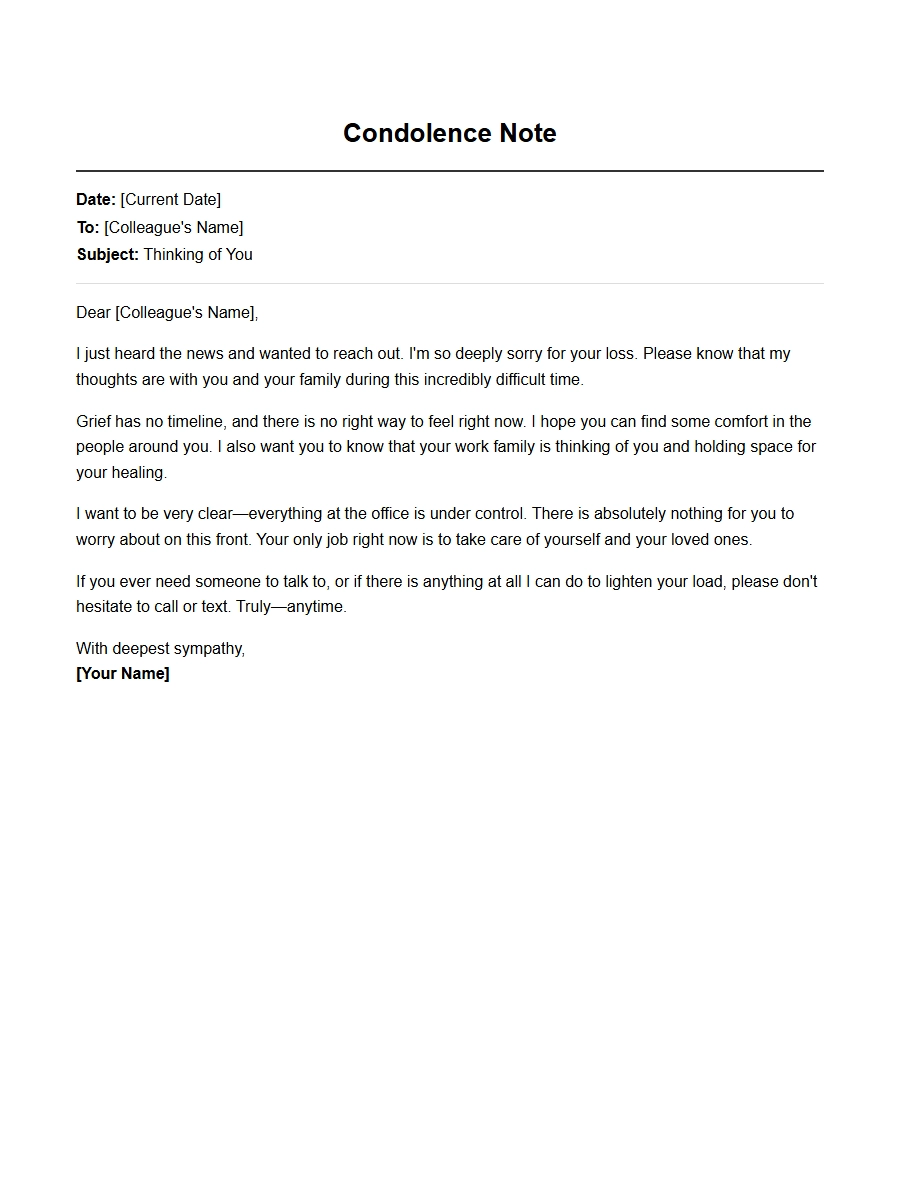
Dear [Colleague's Name],
On behalf of the entire management team, please accept our deepest condolences on the passing of your [relation]. We are deeply saddened by your loss and understand that this is a difficult time for you and your family.
During your bereavement leave, please do not worry about work. We have arranged for your responsibilities to be covered. You are welcome to take the time you need to grieve and attend to family matters.
If you need any assistance with administrative matters related to leave or benefits, please contact our HR department at hr@company.com or call extension 1234. They can also provide information about our employee assistance program.
Please know that we are thinking of you. You have our full support.
With sincere sympathy, [Your Name] [Your Title]
Informal Note from Colleagues
Hey [Name],
We were so sorry to hear about your loss. It's hard to find the right words, but we wanted you to know that you're in our thoughts.
We've put together a small list of things we can help with, whenever you're ready:
Meal delivery – just tell us your favourite cuisine
Dog walking or plant watering
Picking up groceries or prescriptions
Covering any urgent work items
No pressure at all – take all the time you need. We've got your back.
Warmly, Your team at [Department]
Email Message to a Bereaved Colleague
Subject: Thinking of you
Dear [Name],
I was deeply saddened to learn of your loss. Please accept my heartfelt condolences during this difficult time.
I remember how much you spoke about [relation] with such affection. The stories you shared about family holidays and weekend traditions were always a highlight in our office chats. Those memories will surely bring you comfort in the days ahead.
Take all the time you need. I've spoken with [Manager] to ensure your projects are on hold. If there's anything I can do – whether it's forwarding mail, sending a card, or just listening – please don't hesitate to call or text me.
With deepest sympathy, [Your Name]
Short Sympathy Card Message
With heartfelt sympathy,
May loving memories bring you peace and strength in the days ahead.
Thinking of you and your family during this time of loss.
With sincere condolences, [Your Name]
---
A simple expression of care can mean so much. You are not alone.
Letter Offering Practical Support
Dear [Name],
I was so sorry to hear about your loss. Grief is a heavy burden, and I hope you are surrounded by love and support.
Knowing how overwhelming daily tasks can become, I've compiled a few resources that might ease your load:
Meal service: I can coordinate a meal train with friends. Just share dietary needs.
Childcare/pet care: Happy to help with school runs or dog walks.
Errands: Grocery runs, pharmacy pickups – just text me a list.
Work matters: I can handle any urgent emails or calls. I'll check in weekly.
No need to respond now. Whenever you're ready, I'm here. Please take gentle care of yourself.
With deepest sympathy, [Your Name]
Condolence Letter from HR Department
Dear [Colleague's Name],
The Human Resources team extends our deepest sympathies on the passing of your [relation]. We understand the profound impact this loss has on you and your family.
Below is a summary of the leave benefits and support available to you during this time:
Benefit
Details
Bereavement Leave
Up to 5 paid days (subject to policy). Additional unpaid leave available upon request.
Gradual return options – please discuss with your manager.
Condolence Fund
A small contribution from the company welfare fund may be available.
Please contact us at hr@company.com or ext. 1234 if you need any assistance. You are in our thoughts.
With sympathy, Human Resources Team
Message from a Close Colleague and Friend
Dear [Name],
I'm writing this through tears. I can't believe [relation] is gone. You were always so proud of them, and I saw how much they meant to you. I'll never forget the time you showed me that photo from your holiday – you both looked so happy.
Please know that I am here for you, day or night. Don't hesitate to call me, even just to sit in silence. Grief is isolating, but you don't have to go through it alone.
I've also collected a few memories from our mutual friends:
Your [relation]'s famous barbecue sauce – we all miss it!
The way they always remembered everyone's birthday
That hilarious story they told at the company picnic
Take all the time you need. I love you, my friend.
With all my heart, [Your Name]
Condolence for Loss of a Parent
Dear [Name],
I was heartbroken to learn of your mother's/father's passing. Losing a parent is one of life's hardest milestones, and I am so sorry you are going through this.
From our conversations, I know how close you were. Your stories about family dinners and weekend calls always painted a picture of deep love and respect. That bond will never fade.
During your bereavement leave, please prioritise yourself and your family. I've arranged for your duties to be covered until [date]. If you need more time, just let me know.
I am lighting a candle in their memory today. May you find comfort in the legacy they left behind.
With deepest sympathy, [Your Name]
Condolence for Loss of a Spouse or Partner
My dear [Name],
Words cannot express how deeply sorry I am for the loss of your beloved [spouse/partner]. The love you shared was evident to everyone who knew you both. It was an honour to witness your partnership.
Please take all the time you need. Grief has no timeline. I've coordinated with our team to ensure you don't have to worry about work for the next few weeks. We've also set up a meal schedule; I'll send you the details later.
Below are a few practical things that might help:
Meals: A rotating schedule from [dates] – you can pause anytime.
House tasks: I can arrange lawn care or cleaning if needed.
Company support: HR has authorised a small grant from our bereavement fund.
You are not alone. I am holding you close in my heart.
With love and deepest sympathy, [Your Name]
Condolence for Loss of a Sibling
Dear [Name],
I was devastated to hear about your sister/brother. Siblings share a unique bond – a mix of rivalry, laughter, and unwavering support. I know how much they meant to you, and I am deeply sorry for your loss.
Please remember that grief comes in waves. It's okay to have good days and bad days. I'm here to sit with you through both.
I've spoken with our team leader, and we've arranged for you to take as much time as needed. No deadlines, no pressure. We've also collected donations to plant a tree in their memory – a living tribute that will grow as your memories do.
If you feel up to it, your colleagues would love to attend a small virtual gathering to honour their life. No rush – we'll plan it when you're ready.
Rest in peace, [Sibling's Name]. You are not forgotten.
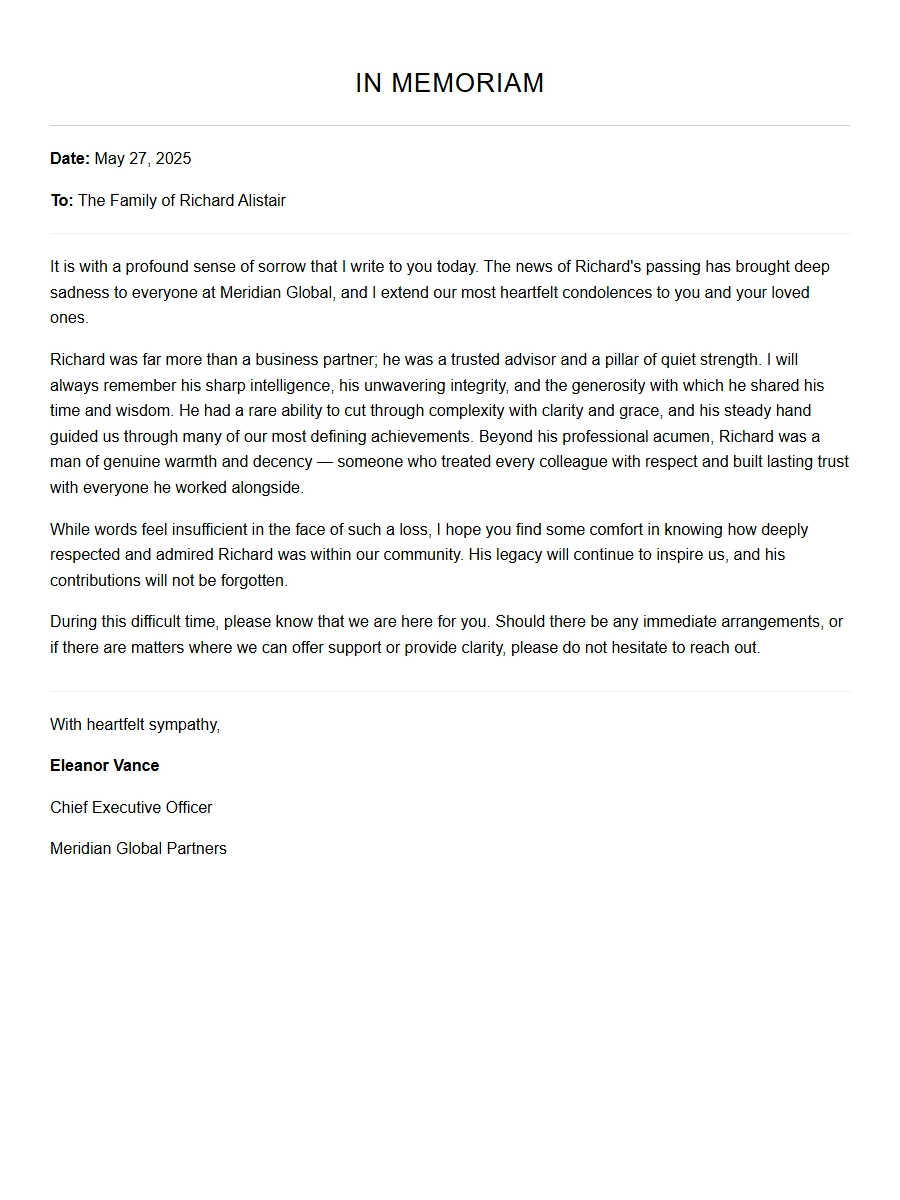 Formal Condolence Message for a Business Partner
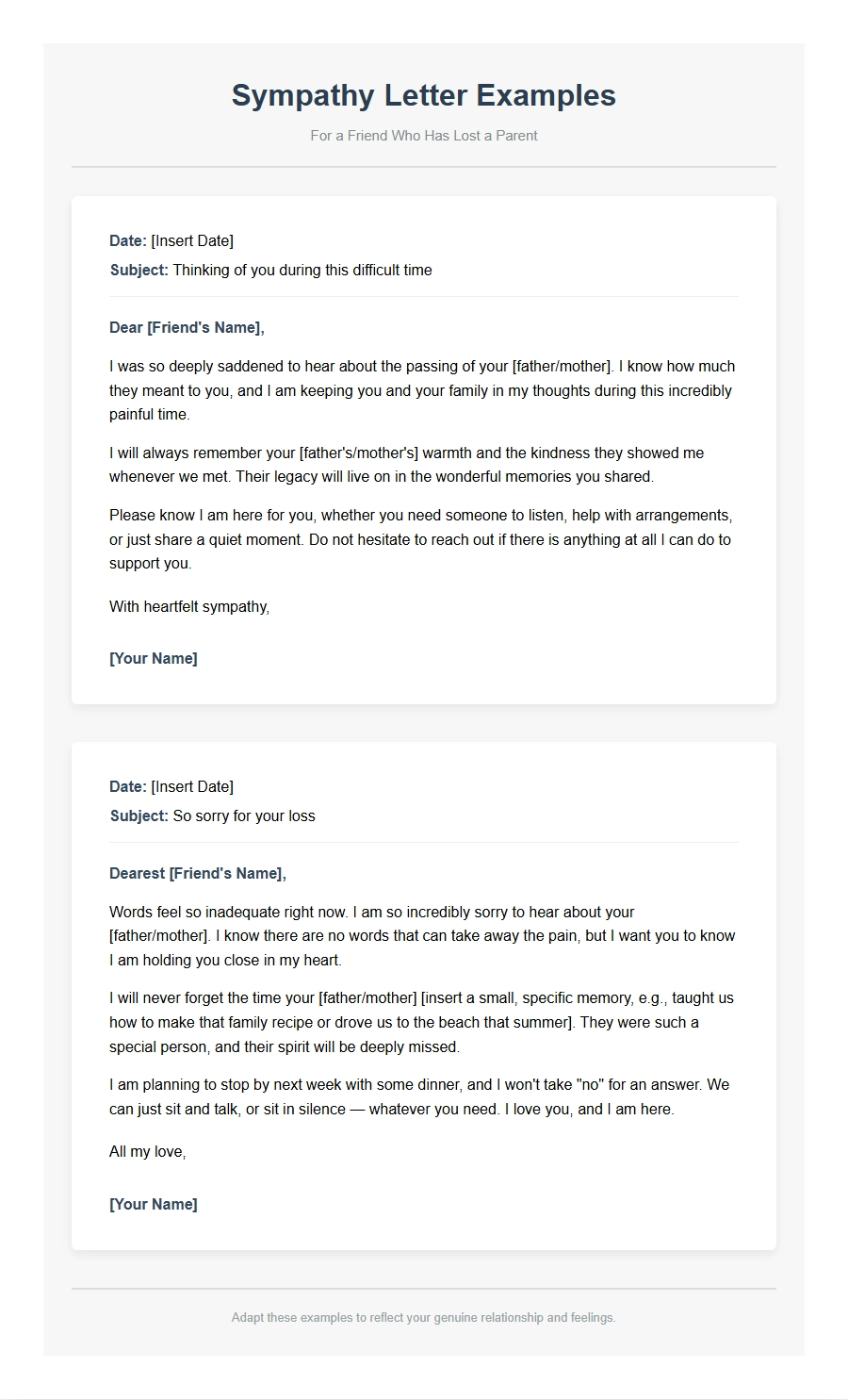 Sympathy Letter Examples for a Friend Who Lost a Parent
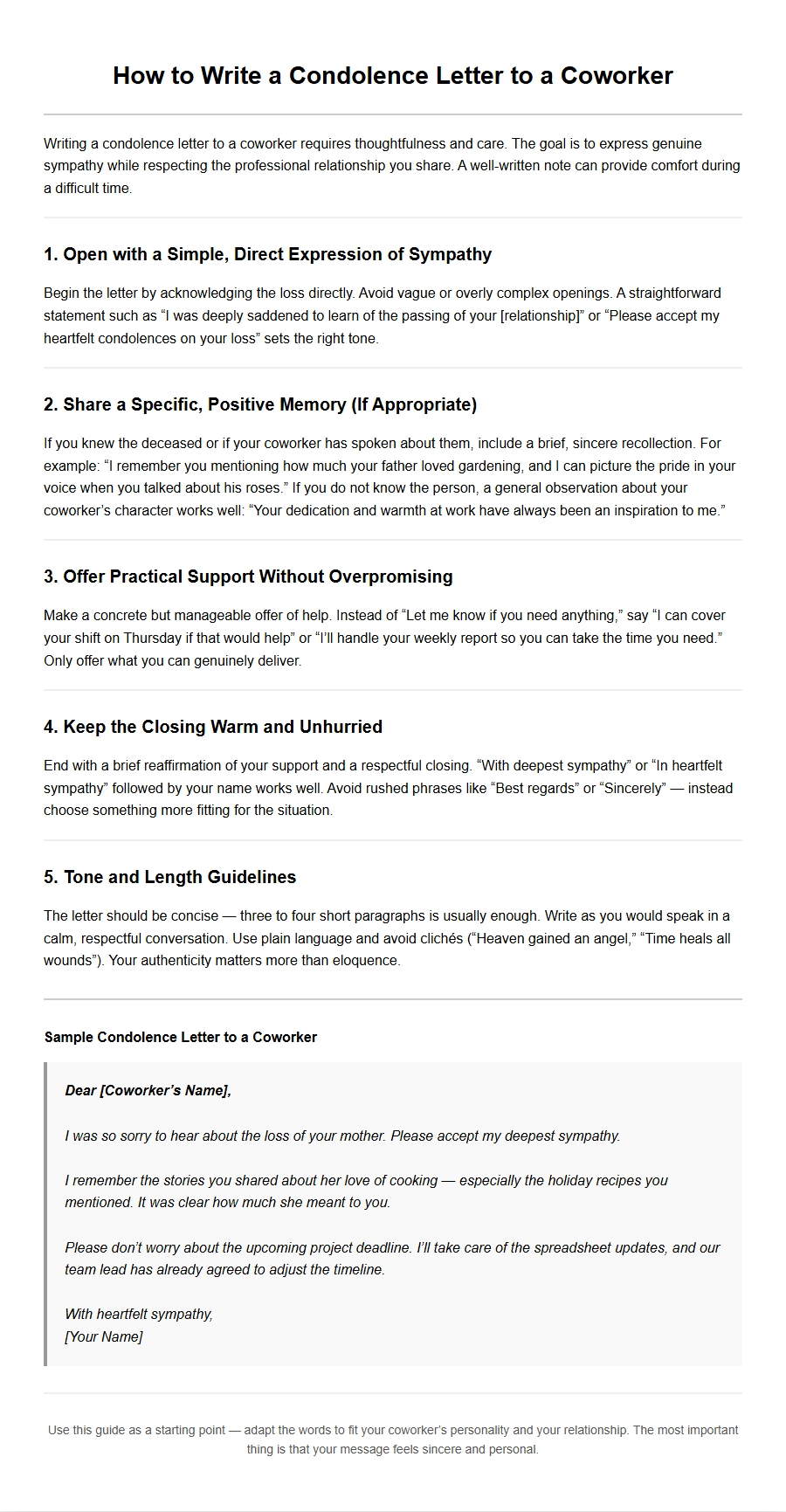 How to Write a Condolence Letter to a Coworker
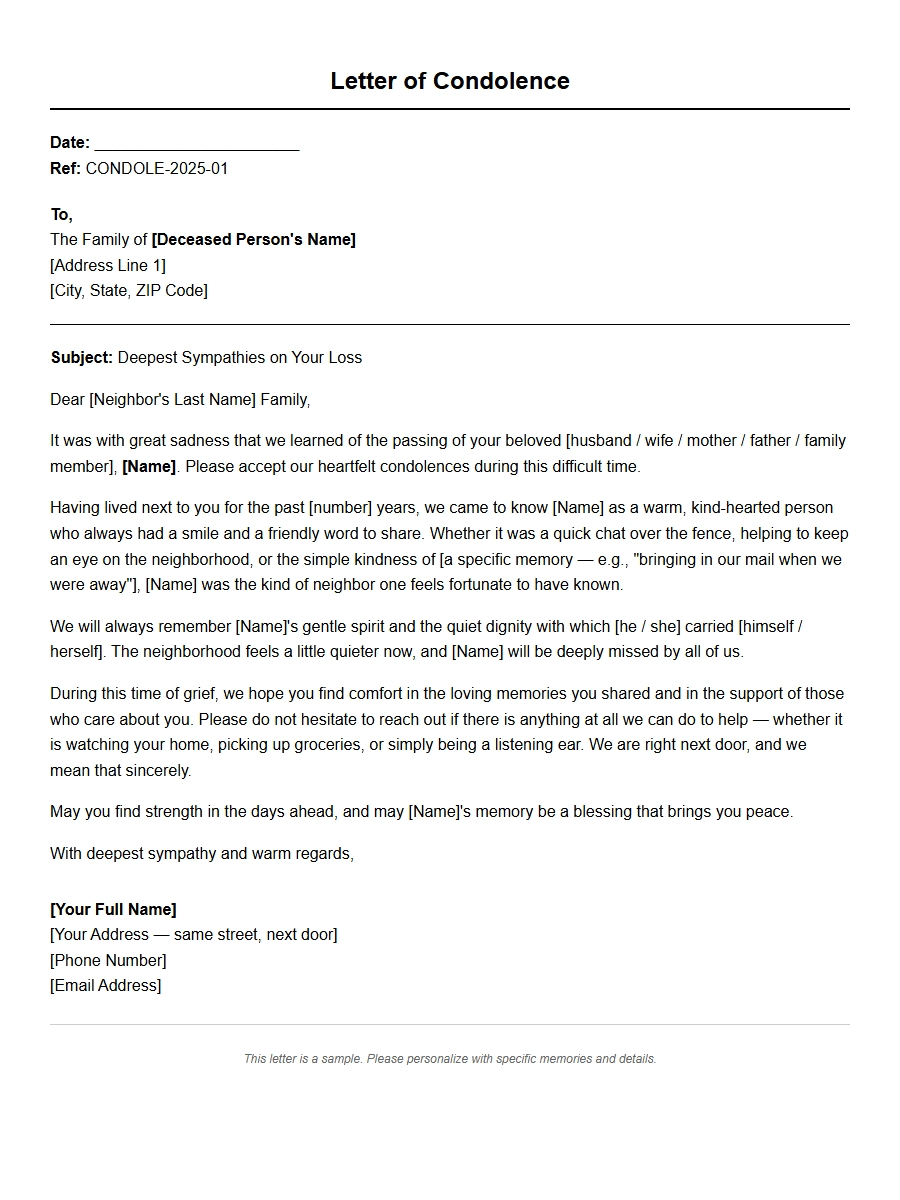 Condolence Letter Sample for a Neighbor
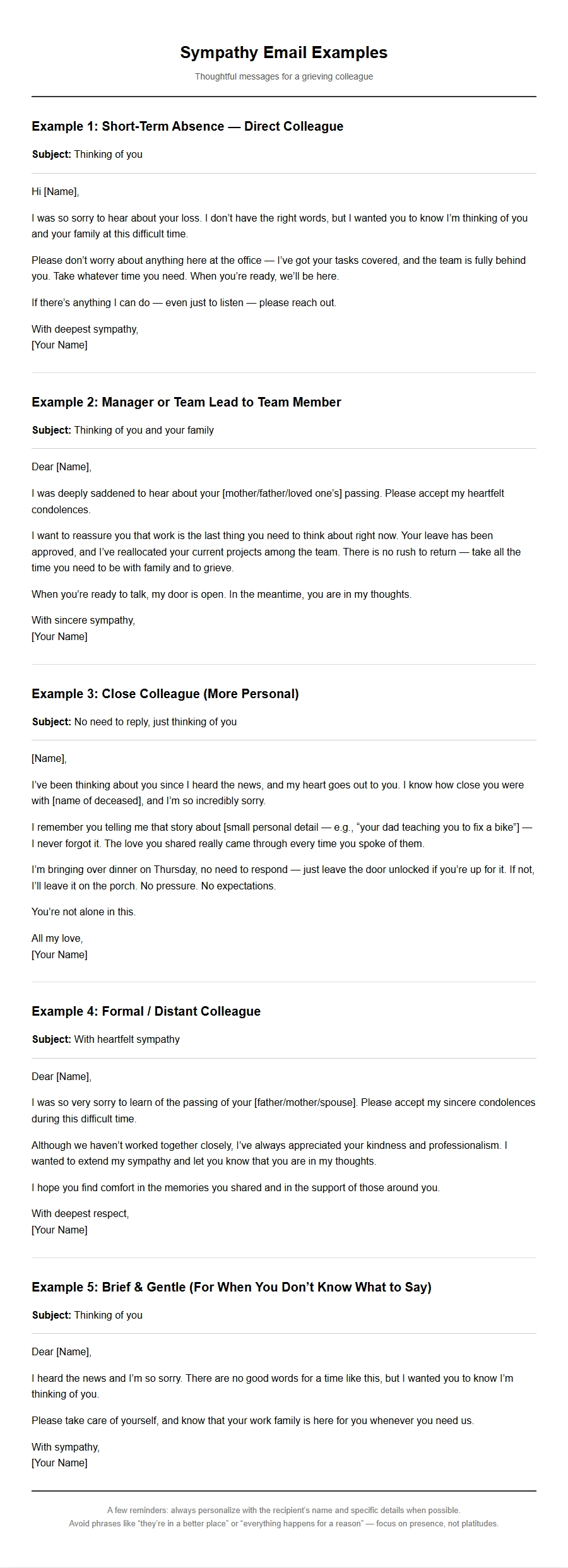 Sympathy Email Examples for a Grieving Colleague
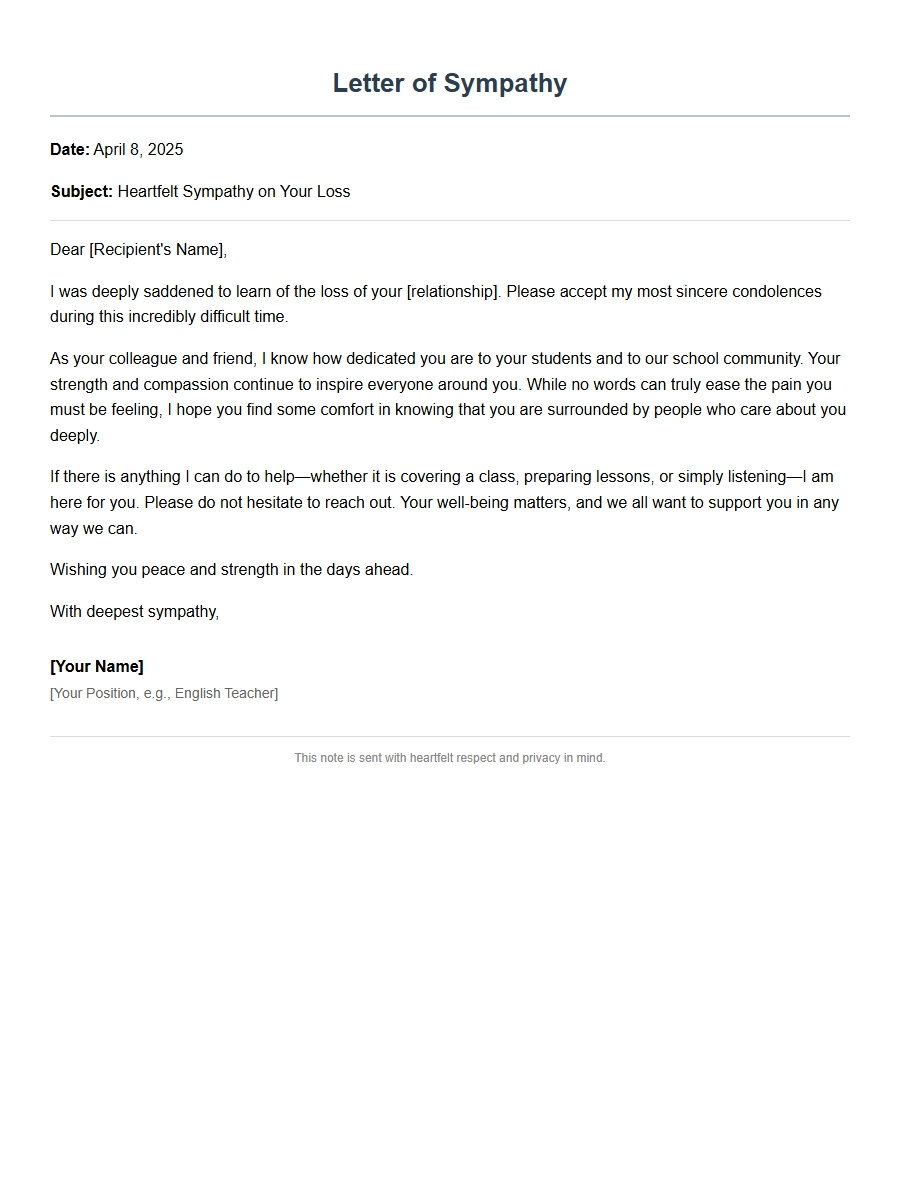 Condolence Words for a Teacher