You find out about a sudden death and your first instinct is to reach out—but then the blank page stares back at you. What do you say? How do you avoid sounding hollow or making things worse? That paralyzing feeling is normal, but you don't have to start from scratch. Using a well-written condolence letter sample isn’t cheating. It’s a smart way to get the structure and tone right so you can focus on making the message genuinely yours.
A sample gives you a framework: a warm salutation, a clear expression of sympathy, a personal touch, and a respectful closing. It also saves you from second-guessing every word. The key is to choose a letter template that matches your relationship with the bereaved and the circumstances of the loss. A sudden death, especially, calls for extra care—you need to acknowledge shock without overwhelming the reader.
Category: Condolence Letters
What makes a sympathy letter feel real after a sudden loss?
When someone dies unexpectedly, the usual platitudes can fall flat. “He’s in a better place” might not help someone who’s reeling. Instead, focus on what you do know: you’re sorry, you’re thinking of them, and you remember something specific about the person who died. That’s where a sample can guide you, not dictate you.
Look for a customizable letter that leaves room for your own memories. For example, a good template might say “I was so saddened to hear about [Name]’s passing. I’ll never forget the time we…”—then you fill in a short, genuine anecdote. That one sentence makes the whole note feel personal, not generic.
How to adapt a sample without losing your voice
Start by reading a few examples to get a sense of letter structure—the order of opening, body, and closing. Then ignore the sample and write your own draft using its skeleton. If the sample says “I am writing to express my deepest sympathies,” you might change it to “I’m so sorry. I can’t imagine how you’re feeling right now.” The goal is to sound like you, not like a form letter.
Tone in writing is everything here. Too formal and you sound distant; too casual and you might seem insensitive. For a sudden death, err on the side of warmth and simplicity. Avoid outdated salutation and closing like “Dear Sir” or “Yours faithfully.” Instead, use the person’s first name if you’re close, and close with “With deepest sympathy” or simply “Thinking of you.”
One common mistake is ignoring the medium. A printed condolence note on nice paper feels different from an email. If you’re sending a digital letter format, keep the subject line clear—something like “Thinking of you after [Name]’s passing.” And if you’re using letterhead design for a more formal version (maybe for a company or organization), make sure it doesn’t distract from the message.
Practical tips for writing with confidence
Start your first paragraph by naming the loss directly. “I was heartbroken to learn of [Name]’s sudden death” is honest and clear. Then in the second paragraph, offer a memory or a specific quality you admired about the person. This is where formal writing tips meet real emotion: short sentences, simple words, no need to be poetic.
Avoid empty promises like “Let me know if there’s anything I can do.” Instead, be concrete: “I’ll drop off dinner on Thursday—does that work?” That kind of specific offer is far more helpful. And always proofread. A typo in a sympathy note can feel careless. Take time for proofreading letter—read it out loud to catch awkward phrasing.
If you’re struggling to find the right words, remember that it’s okay to say you don’t know what to say. “I don’t have the right words, but I wanted you to know I’m thinking of you” is both honest and comforting. That’s part of letter writing etiquette for emotional situations: sincerity always beats perfection.
Where to find the right sample for your situation
Not all condolence letters are the same. If the family requested donations in lieu of flowers, you might use a memorial donation request letter as a guide for your own message. If the loss was a miscarriage, sensitivity is even more critical—a miscarriage support message can help you avoid common missteps. And if you want to write a sympathy note without using the word “dead,” there are ways to phrase it gently—check this guide for alternatives.
For those who prefer a non-religious approach, a non-religious sympathy message template can provide the structure without spiritual references. And if the family has already experienced multiple losses, a message for a second loss can help you acknowledge their compounded grief without overloading them.
Your letter doesn’t have to be perfect—it just has to be sent
Think of the sample as a springboard. You read it, you adapt it, and then you send it. The worst thing you can do is overthink until you never write anything. Even a short, simple note can mean the world to someone grieving. Over time, writing these letters gets easier. You’ll develop your own rhythm and phrases that feel natural.
So take a deep breath, pick a sample that fits, and start writing. The person on the other end doesn’t need a masterpiece—they need to know you care. That’s the only thing that truly matters.
Helpful Examples
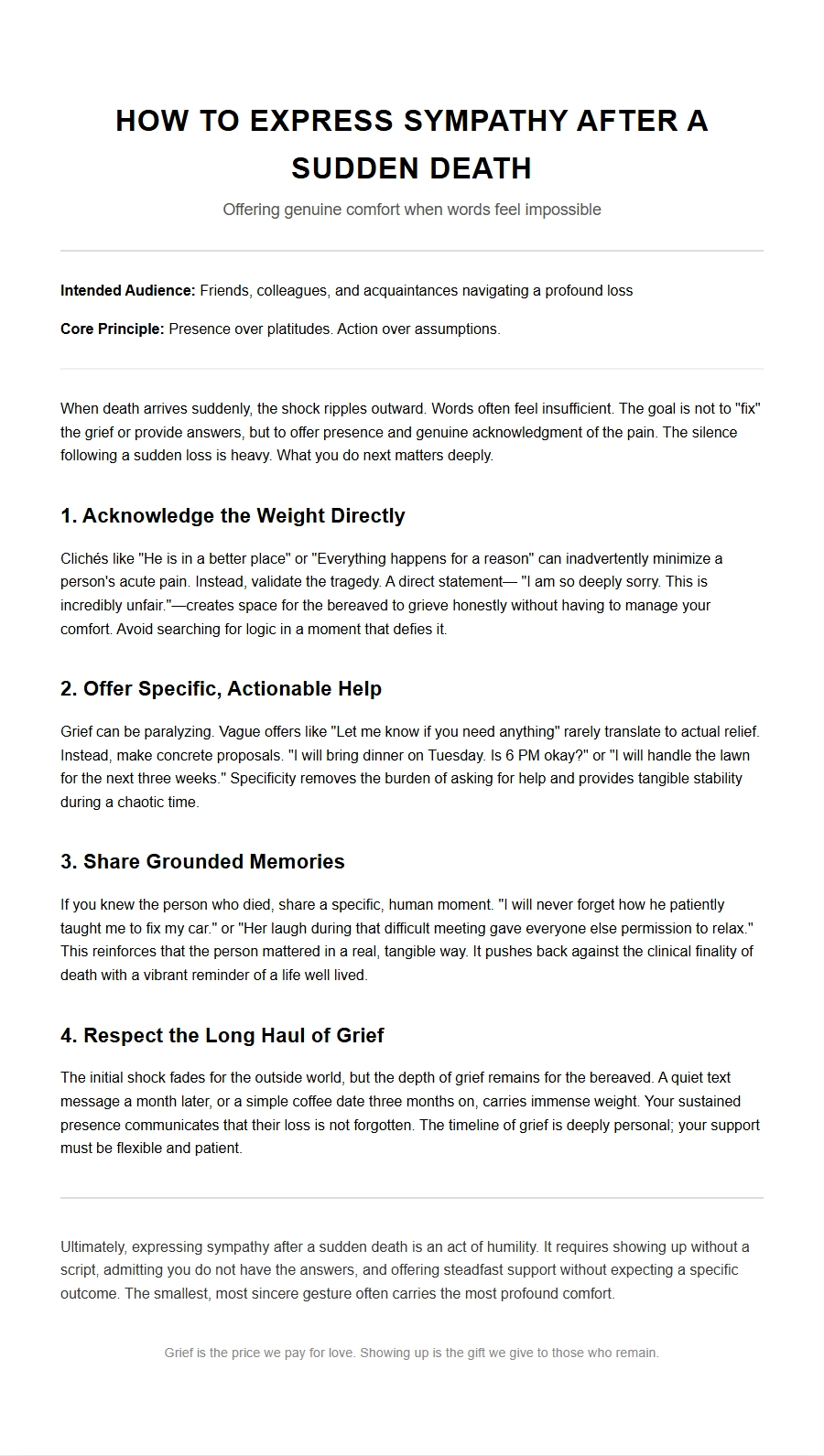
How to Express Sympathy After a Sudden Death
A Letter to a Close Friend After a Spouse's Sudden Death
Dear Sarah,
I was heartbroken to hear about Tom's sudden passing. I am so deeply sorry for your loss. Words feel so inadequate at a time like this, and I know nothing I can say will take away the shock and pain you must be feeling.
Please know that I am here for you, absolutely no strings attached. If you need someone to sit with you in silence, to help with the hundreds of logistical tasks that follow a sudden death, or just to watch a movie so you don't have to be alone, I am available. Don't hesitate to call me at any hour.
I remember how Tom always made us laugh with his silly jokes. The world feels a little dimmer without him in it. I will hold those memories close, and I am holding you in my heart during this unimaginable time.
With all my love and deepest sympathy, Megan
Short Sympathy Note for a Colleague After a Family Member's Sudden Loss
Dear Marcus,
I was so shocked and saddened to learn of your brother's sudden passing. Please accept my heartfelt condolences. Losing someone so unexpectedly is a terrible blow.
While I know work is the last thing on your mind right now, I want you to know that your team is fully covering your responsibilities. There is absolutely no pressure to return until you are ready. Take all the time you need to be with your family and process this loss.
I am thinking of you during this difficult time.
Warmly, Jennifer
A Formal Sympathy Letter to a Bereaved Family
Dear Mr. and Mrs. Harrison,
On behalf of the entire staff at Oakwood Elementary, please accept our deepest condolences on the sudden passing of your daughter, Emily. We were all deeply shaken and saddened by the news.
Emily was a bright, kind, and joyful student who touched the lives of everyone she met. Her presence in our classrooms and hallways will be profoundly missed. We are planning a small memorial in her honor at the school garden, and we will share the details with you once they are finalized.
We have also set up a fund in Emily's name to support art programs, a subject she dearly loved. Please let us know if there is anything we can do to support your family during this devastating time.
With heartfelt sympathy, Principal Robert Blake
Sympathy Email to a Friend Who Lost a Parent Suddenly
Subject: Thinking of you
Dear Alex,
I just heard about your mom's sudden passing and I am completely devastated for you. I know how close you were, and I can't imagine the shock you are in right now.
There are no right words for this, but I want you to know I am here. I can drop off dinner tomorrow evening if that helps, or I can just be a listening ear. Whatever you need, whenever you need it.
Your mom was such a warm, generous person. I will always remember how she welcomed everyone into her home. Sending you so much love and strength.
Take care of yourself, Priya
A Note to a Neighbor After a Sudden Death in the Family
Dear Helen,
We were so sorry to learn about your husband's sudden passing. He was such a kind neighbor, always ready to lend a hand or share a friendly wave. Our hearts go out to you and your children.
We would like to help in a practical way. Over the next few weeks, we would love to organize a neighborhood meal train. Below is a list of people who have already offered to bring food:
Day
Meal
Volunteer
Monday
Chicken soup & bread
Mr. & Mrs. Chen (#3)
Tuesday
Lasagna & salad
The Park family (#7)
Wednesday
Vegetable curry & rice
Us (#5)
We will coordinate the schedule fully. Please don't worry about a thing. You are in our thoughts.
With sympathy, John and Maria
Sympathy Message for a Sudden Loss of a Young Child
Dear Lisa and David,
I am writing with a heavy heart after learning about the sudden passing of your precious son, Leo. There are no words that can possibly ease the agony of losing a child. I am so deeply sorry.
I am holding you in my thoughts and prayers constantly. I know how much Leo loved building blocks and watching the birds in your backyard. Those memories will stay with me forever.
Please know that I am here to support you in any way you need. Whether you need help with daily tasks, someone to talk to, or simply a quiet presence, I am just a phone call away. Please take care of yourselves and allow yourselves to grieve.
With deepest sympathy and love, Your friend, Anna
A Condolence Letter for a Mentor Who Passed Away Unexpectedly
Dear Mrs. Whitfield's family,
I was stunned and heartbroken to learn of Mrs. Whitfield's sudden passing. She was more than a teacher; she was a mentor who shaped my life in profound ways. Her wisdom, patience, and unwavering belief in her students were extraordinary.
I will always cherish the extra time she spent helping me with my science project committed to memory. She taught me not just facts, but how to think critically and believe in myself. The world has lost a brilliant and kind soul.
My deepest condolences to you, her family. I hope the beautiful memories you share bring you some comfort in the days ahead. She will be profoundly missed.
With gratitude and sympathy, James Peterson
A Practical Sympathy Message with a List of Ways to Help
Dear Tom,
I was devastated to hear about your brother's sudden death. I know there's nothing I can say to fix this, but I want to make sure you're taken care of. Here are a few concrete ways I can help, starting tomorrow:
Drive your kids to school and pick them up for the rest of the week.
Bring over dinner for you and your family on Wednesday evening at 6 PM. Please let me know if anyone has dietary restrictions.
Help you contact the funeral home and handle any paperwork you'd rather not face alone.
Please pick one, or all, no pressure. You don't have to do this alone. I am thinking of you every day.
With love and strength, Sam
A Heartfelt Sympathy Note for a Sudden Death of an Adult Sibling
Dear Chloe,
I am absolutely shattered to hear about your brother, Mark's, sudden passing. I know how much he meant to you and how close you two were. Losing a sibling is like losing a piece of your own history.
I remember the summer we all spent at the lake house. Mark's laughter was so infectious, and he taught me how to skip rocks properly. He was a wonderful person, and I am so grateful for the time we had with him.
I am here for you, Chloe. To cry, to talk, to just be silent. Whatever you need. Please take all the time you need to grieve and lean on those who love you. You are not alone.
With all my sympathy, Oliver
A Brief, Dignified Sympathy Card Message
Dear Maria,
I was deeply saddened to hear of your father's sudden passing. Please accept my most sincere condolences during this incredibly difficult time.
I will always remember your father's gentle smile and the kind way he listened to everyone. He was a truly good man. May you find strength in the beautiful memories you shared with him.
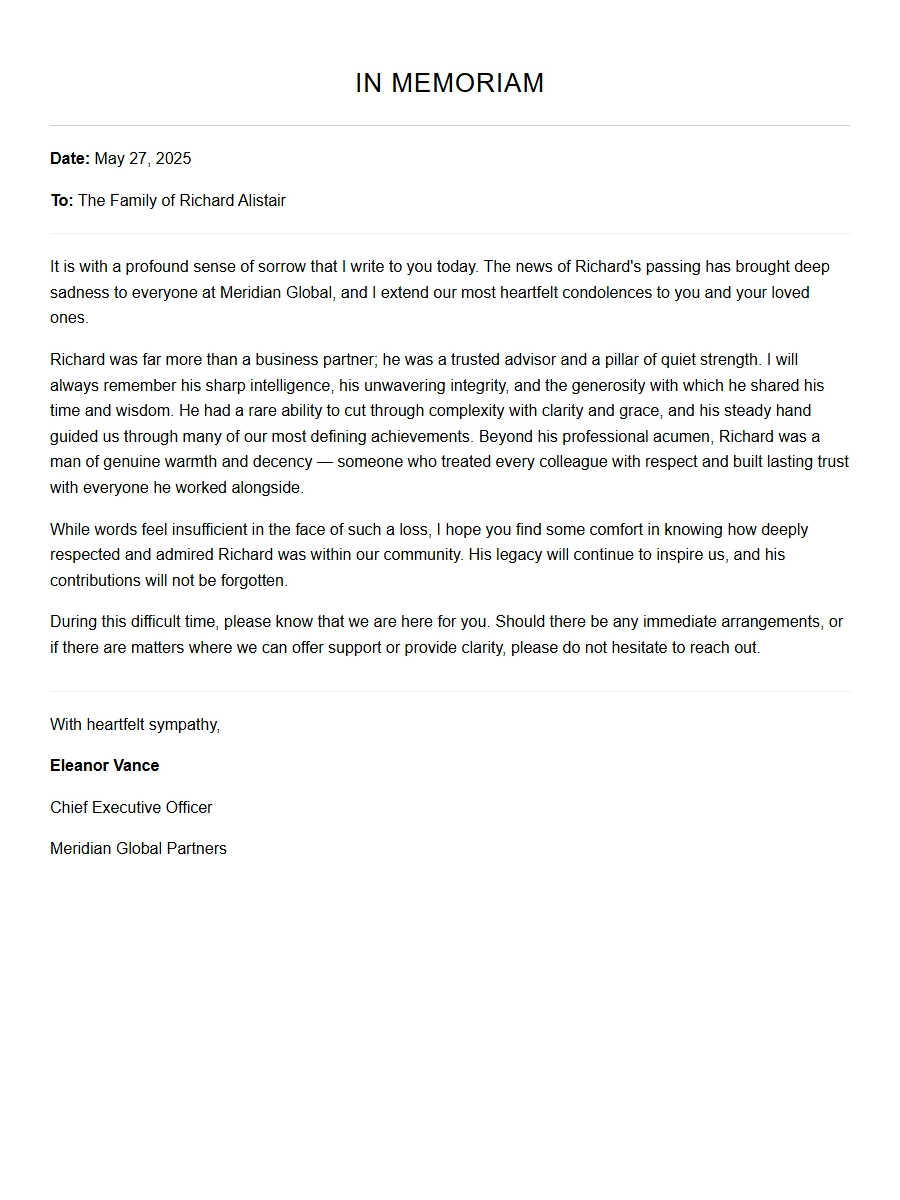 Formal Condolence Message for a Business Partner
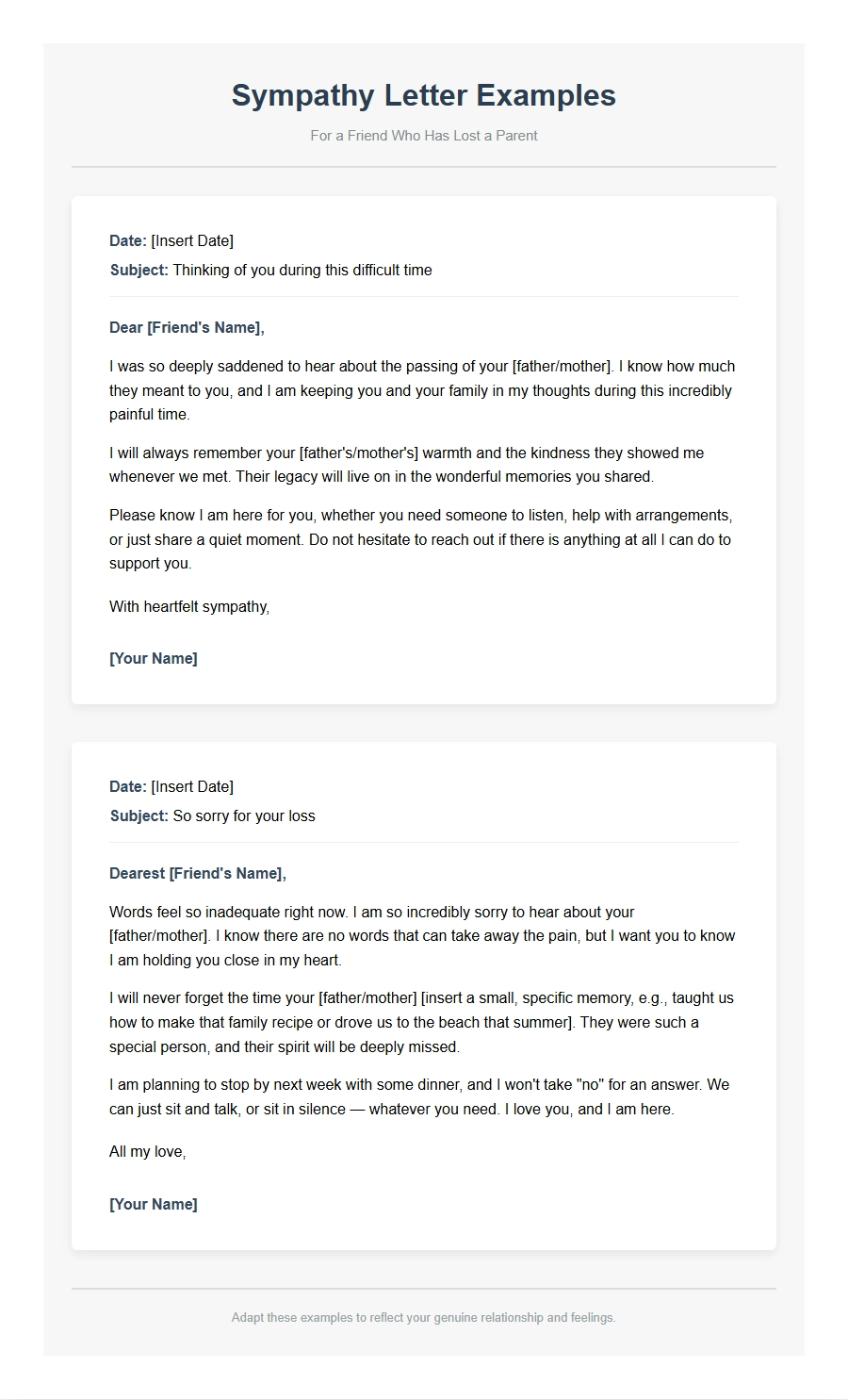 Sympathy Letter Examples for a Friend Who Lost a Parent
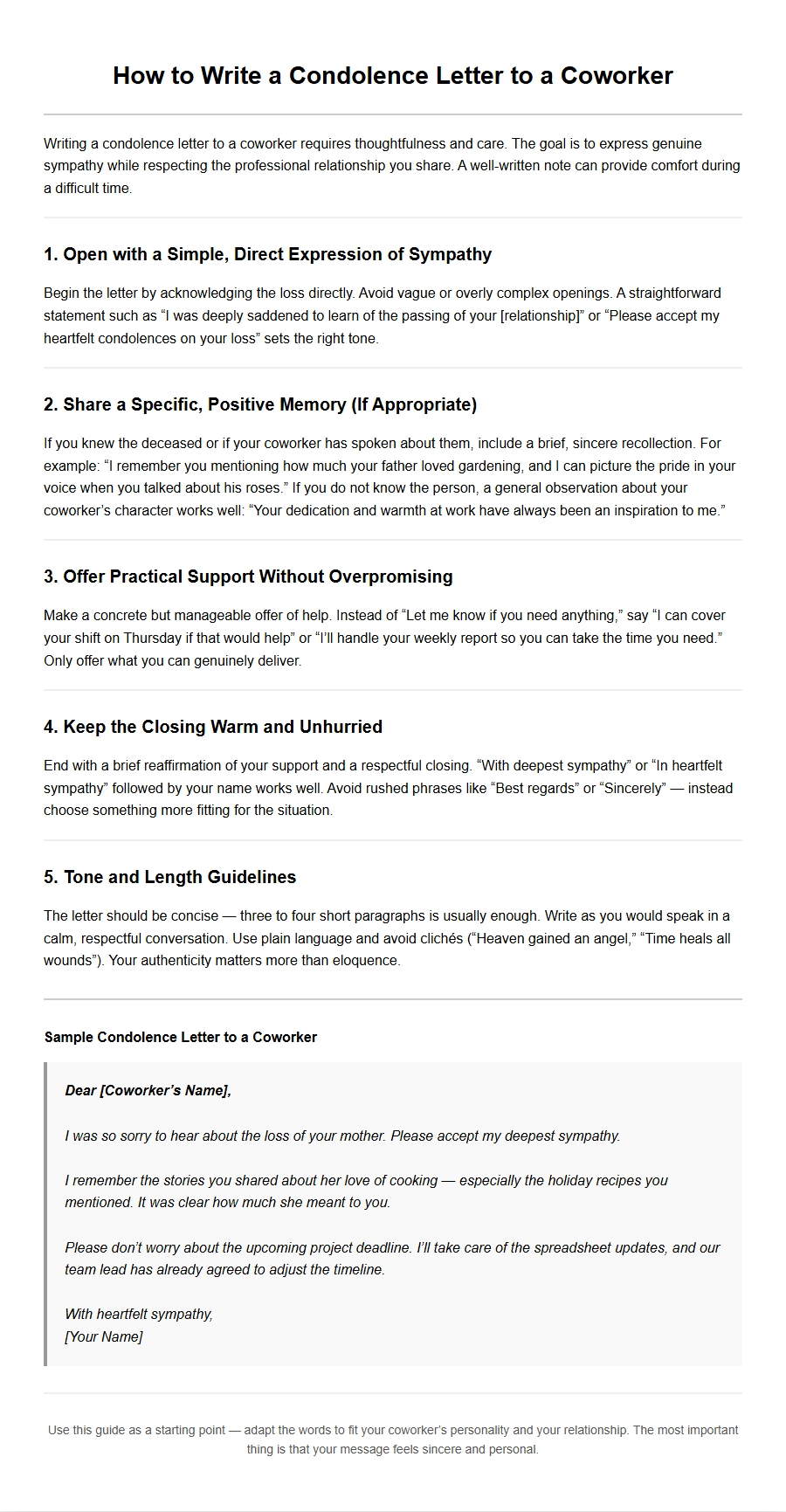 How to Write a Condolence Letter to a Coworker
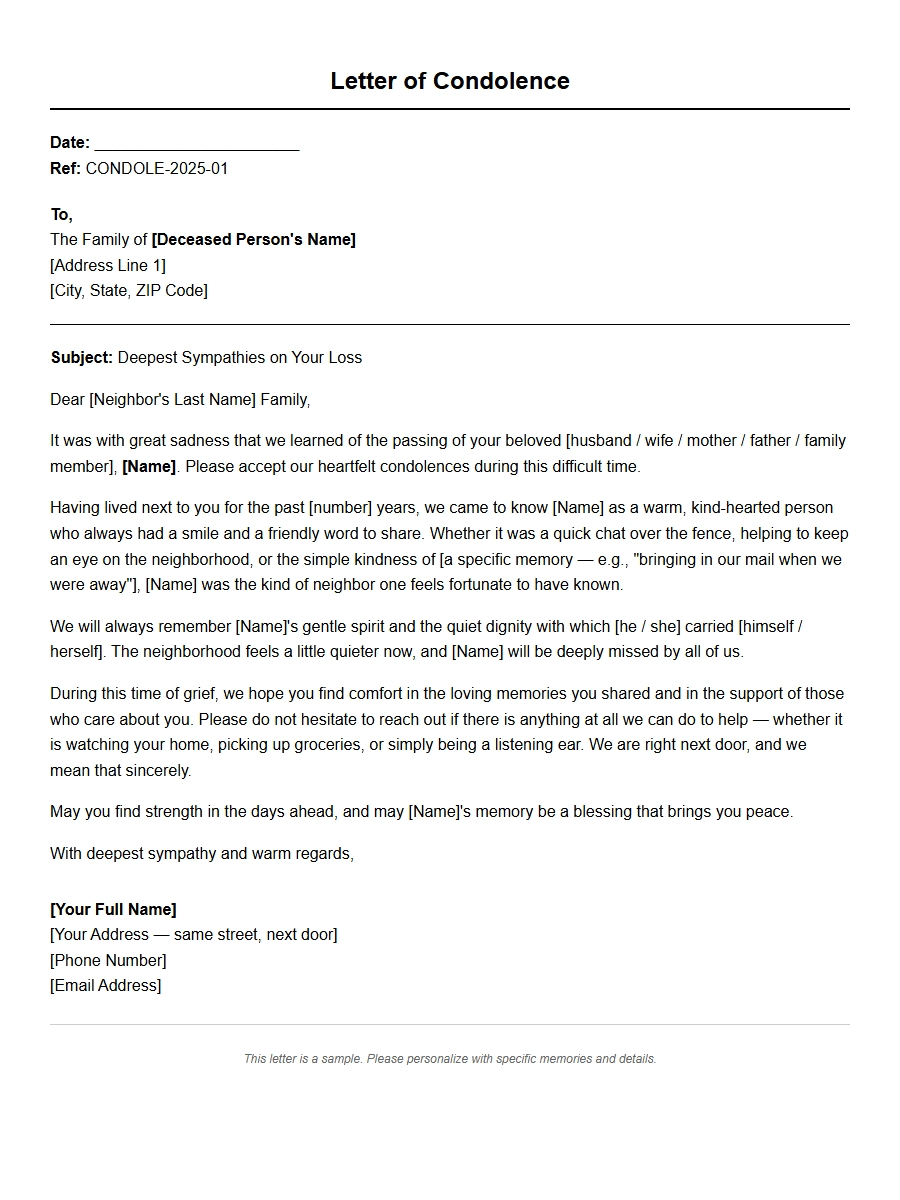 Condolence Letter Sample for a Neighbor
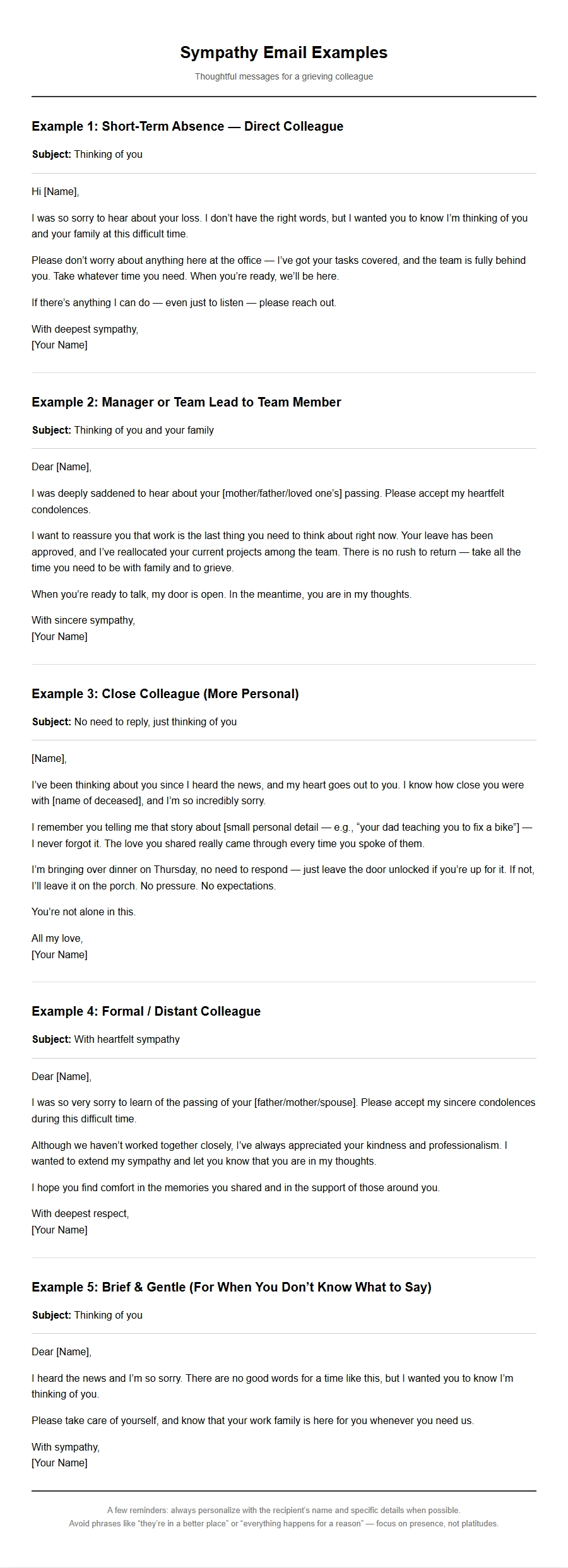 Sympathy Email Examples for a Grieving Colleague
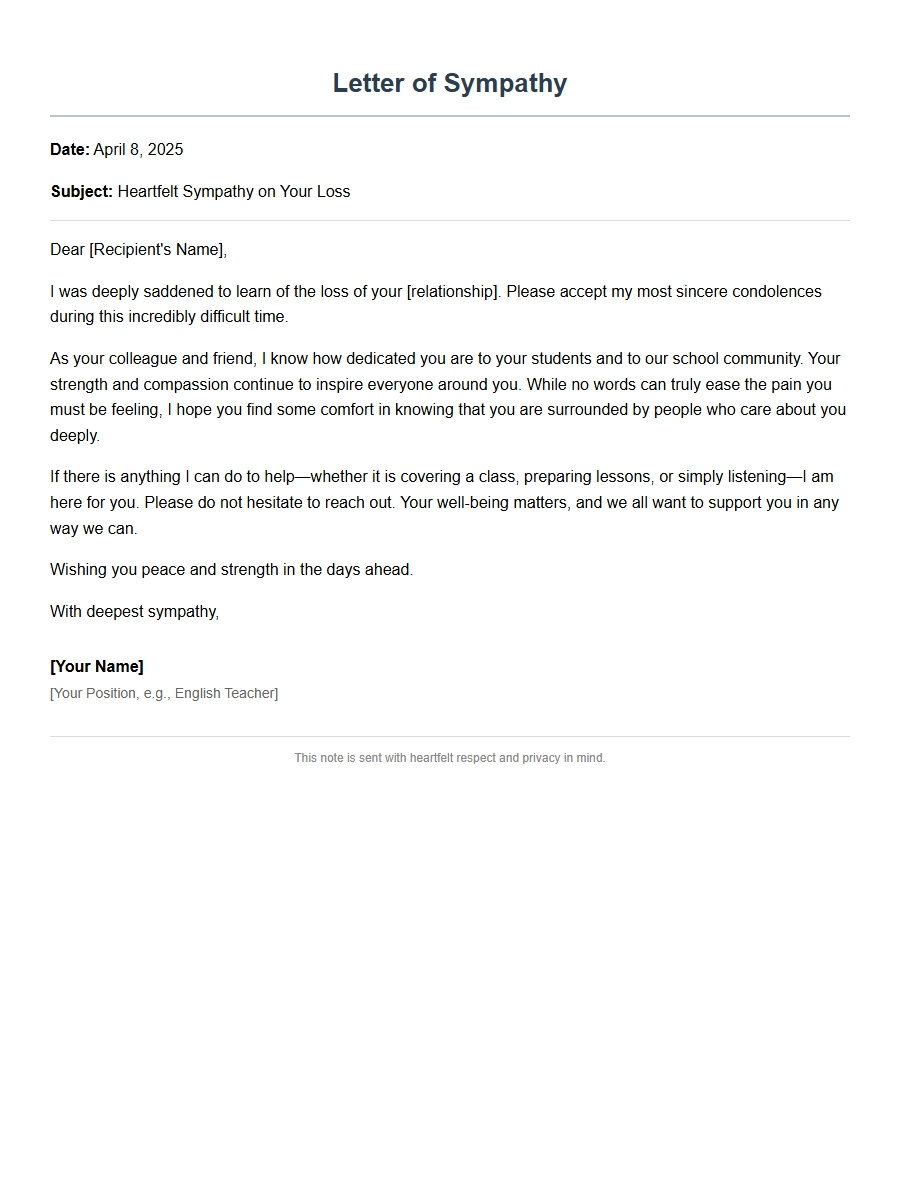 Condolence Words for a Teacher