How to Write Condolence Notes to Mourning Families
You’re staring at a blank card or email, trying to find the right words for someone who just lost a loved one. It feels paralyzing—get it wrong and you might sound cold, but stay silent and you risk seeming uncaring. A good condolence letter sample can turn that anxiety into a confident, heartfelt note in minutes.
Using a sample isn’t cheating. It’s a smart shortcut. A well-written template gives you a solid structure, the right tone, and key phrases to express sympathy—while leaving plenty of room for your own memories and voice. Think of it as training wheels that come off once you’re comfortable.
Category: Condolence Letters
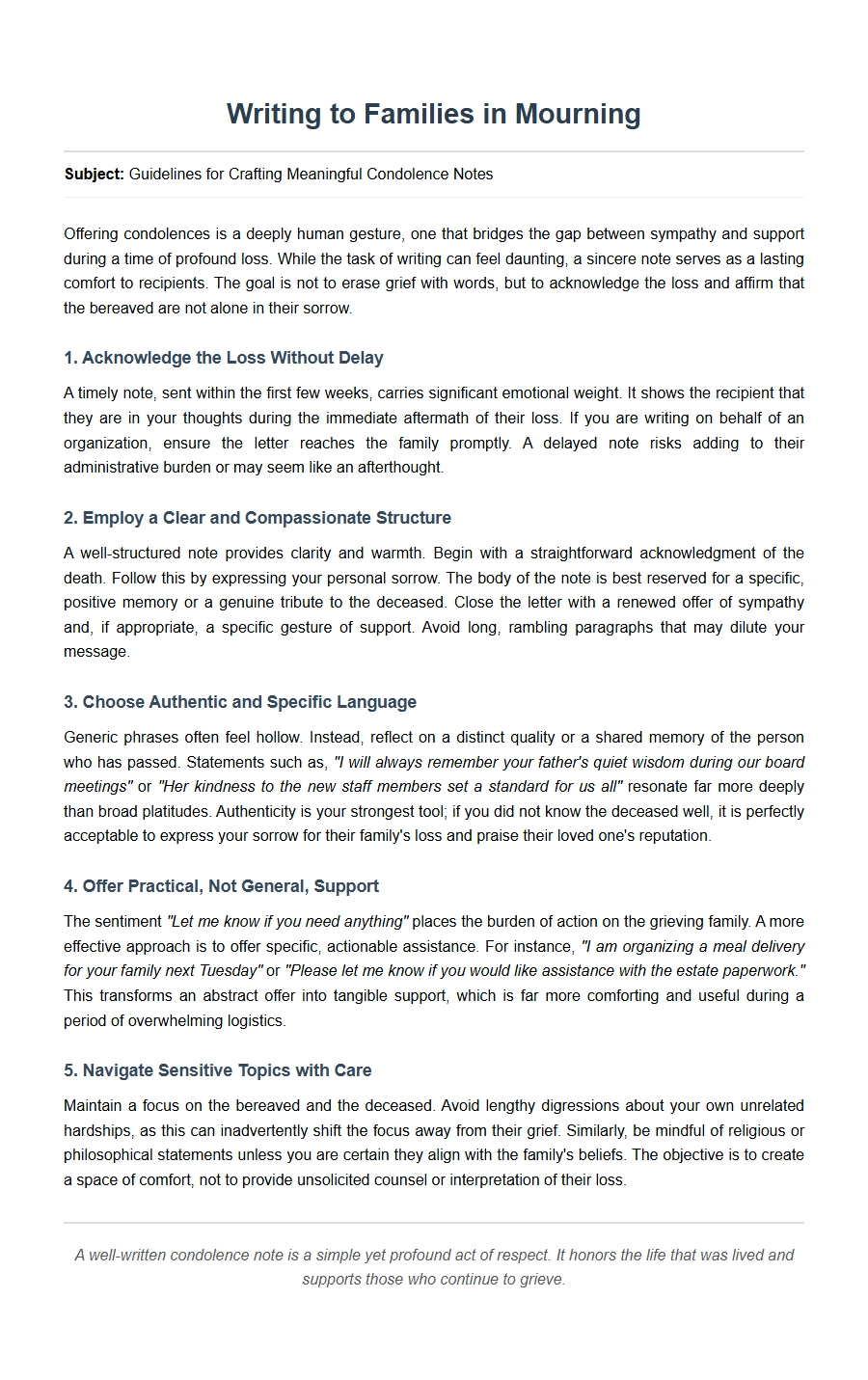
First, choose a sample that fits the situation. A formal letter template works for a business associate or distant relative; a shorter, warmer version suits a close friend. Consider the relationship and the family’s culture. For professional correspondence, keep the tone respectful but not stiff. For a personal note, let your genuine care show.
Once you have a sample, adapt it without losing your authentic voice. Read it aloud—does it sound like you? Change phrases that feel borrowed. Formal writing tips help here: avoid clichés like “they’re in a better place” unless you know the family believes that. Instead, share a specific memory or simply say “I’m so sorry for your loss.” Pay attention to salutation and closing—for condolence letters, “Dear [Name],” and “With deepest sympathy,” are safe and warm. If you’re writing to a former spouse or a second loss situation, adjust the greeting accordingly.
Avoid common mistakes. Using outdated salutations like “To whom it may concern” in a condolence note can feel distant. Business letter format rules don’t always apply here—you can skip the full address block in a personal note. For digital letter format (email or online message), keep it simple: a short subject line like “Thinking of you” works. If you’re printing or handwriting, letterhead design matters less than neatness and a quality card. Always proofread your letter—one typo in a sympathy note can distract from your message.
Tailor the opening paragraph to grab attention—but here, that means showing you truly understand their loss. Start with “I was so sad to hear about [name].” Avoid “I was shocked” unless you were close. Mention how you knew the deceased, and if you have a memory, share it. For help with that, see writing a letter to share a memory of deceased. If you missed the funeral, how to apologize for missing a funeral via letter offers specific phrasing. And if the family has faced a second loss, examples of messages for second loss event can guide you.
Finally, use your sample as a springboard, not a crutch. The best condolence notes feel both professional and personal—they acknowledge the loss while reflecting your unique relationship. Practice makes the process faster. Over time, you’ll write these notes with ease, and your words will bring real comfort to grieving families.
Examples for Different Needs
How to Write Condolence Notes to Mourning Families
Simple Condolence Note to a Colleague
Dear Marcus,
I was deeply saddened to learn of your mother’s passing. Please accept my heartfelt condolences during this difficult time.
I remember you mentioning how much she loved gardening, and I hope those happy memories bring you some comfort. There is no need to worry about the project deadline; your team is covering everything. Take all the time you need.
With sympathy, Elena R.
Extended Family Condolence Letter
Dearest Aunt Maria and Uncle Joe,
Words cannot express how much we will miss Cousin Sophia. Her kindness and laughter were a gift to everyone who knew her.
We are holding you close in our thoughts and prayers. Please let us know if we can help with meals, errands, or anything else during the coming weeks. We are just a phone call away.
With all our love, Your niece, Clara, and family
Condolence Letter for the Loss of a Child
Dear David and Lisa,
There are no words for the pain of losing a child. We are absolutely heartbroken for you both after hearing about sweet Emma.
We treasure every memory of her bright smile and gentle spirit. During such an unimaginable time, please lean on those who love you. We are here to sit with you, listen, or simply be present—whatever brings you comfort.
In deepest sympathy, Mark and Selena
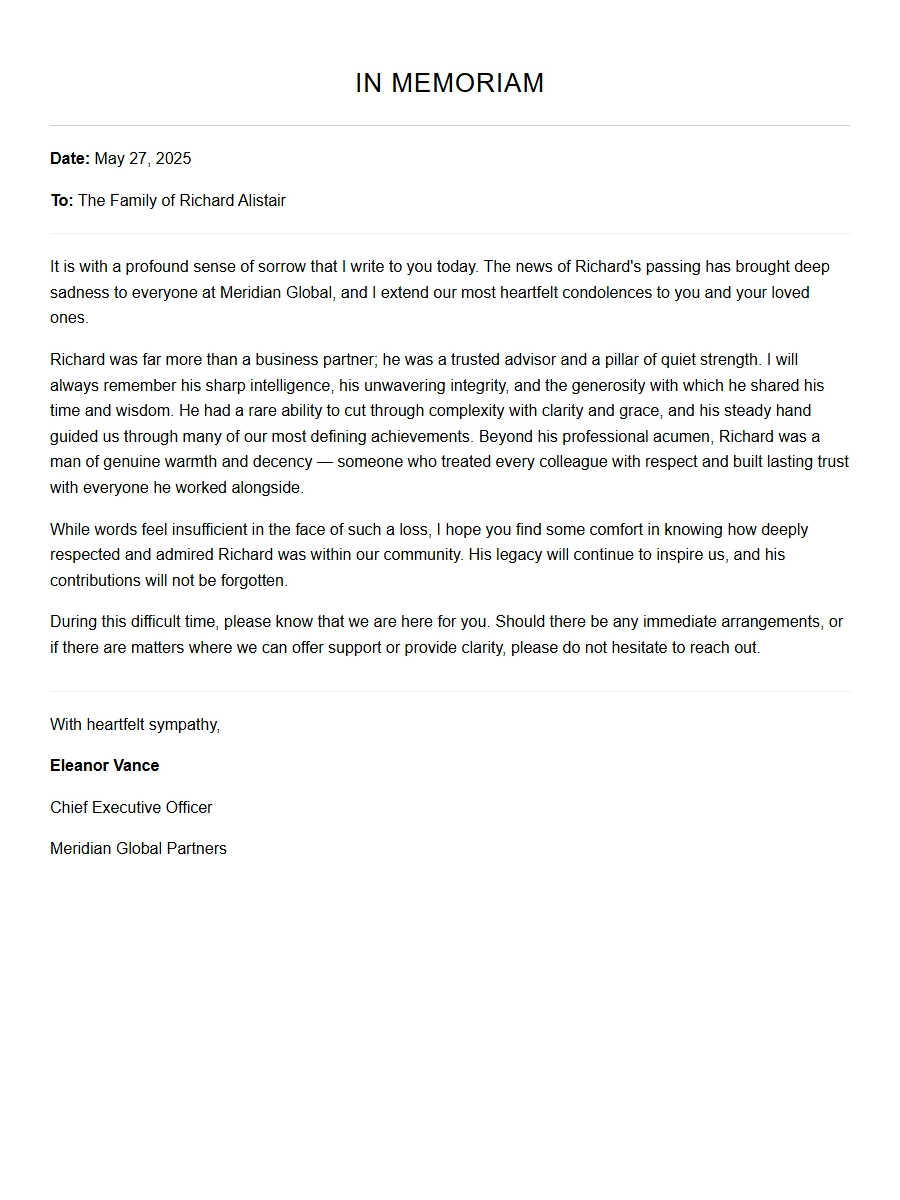
Formal Condolence Letter from a Business
To the Family of Mr. Harold T. Vance,
On behalf of the entire management team at Vance Industries, I extend our sincere condolences on the passing of our esteemed founder, Mr. Harold T. Vance.
His visionary leadership and integrity have left an indelible mark on our company and community. We share in your grief and offer our support during this transition.
Sincerely, Patricia Ng, CEO
Condolence Card for a Neighbor's Loss
Dear Mrs. Patel,
We were so sorry to hear about your husband’s passing. He was a wonderful neighbor and friend, always quick with a wave and a warm word.
We will miss seeing him in the garden. Please don’t hesitate to call if you need anything—we are right next door.
With caring thoughts, Matt and Jenna
Condolence Letter for a Pet's Death
Dear Anika,
I was heartbroken to learn that your dear dog, Milo, has passed away. I know how much joy and comfort he brought into your life.
Our furry friends leave paw prints on our hearts. He was lucky to have such a loving home. Please take gentle care of yourself as you grieve.
With warm sympathy, Your friend, Leo
Condolence Letter to a Church Community
Beloved Congregation,
It is with heavy hearts that we share news of the passing of our dear sister in faith, Margaret Ashford. She served as a deacon for over 20 years, leading our youth ministry with grace and joy.
A memorial service will be held on Saturday, October 12th at 11 AM in the sanctuary. In lieu of flowers, the family requests donations to the Youth Scholarship Fund.
In God's peace, Pastor Lee
Condolence Note for a School Community
Dear Students and Staff,
We are deeply saddened to inform you of the passing of our beloved teacher, Mrs. Janet Clark, after her courageous battle with illness.
Mrs. Clark inspired generations of students with her passion for literature and kindness. Counseling services will be available in the library throughout the week. A tribute book will be placed in the main office.
With deepest sympathy, Principal Torres
Condolence Letter for a Parent of a Friend
Dear Sophie,
I was so sorry to hear about your father’s passing. He was always so kind and welcoming when I visited your home.
I remember how proud he was of your art projects. Please know I am thinking of you and your family. Let’s get coffee or take a walk whenever you feel up to it. No pressure, just love.
With heartfelt sympathy, Your friend, Jordan
Condolence Letter to an Employee's Family
To the Family of Kevin Wu,
We were devastated to learn of Kevin’s sudden passing. He was a dedicated member of our engineering team for eight years, known for his sharp mind and gentle humor.
Our workplace feels his absence deeply. We are arranging a memorial fund in his name and will share details soon. Please accept our profound condolences and any support you may need.
 Formal Condolence Message for a Business Partner
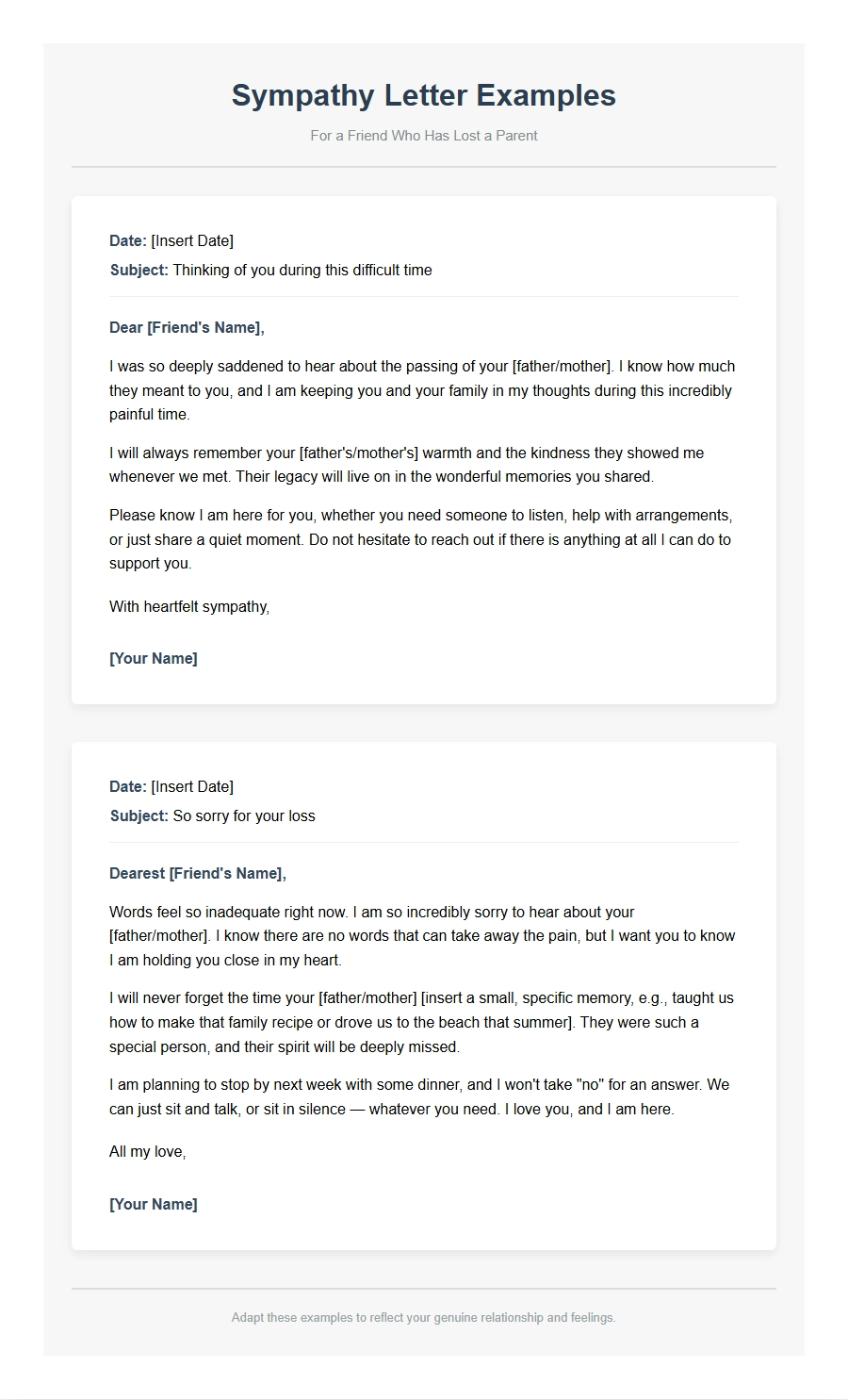 Sympathy Letter Examples for a Friend Who Lost a Parent
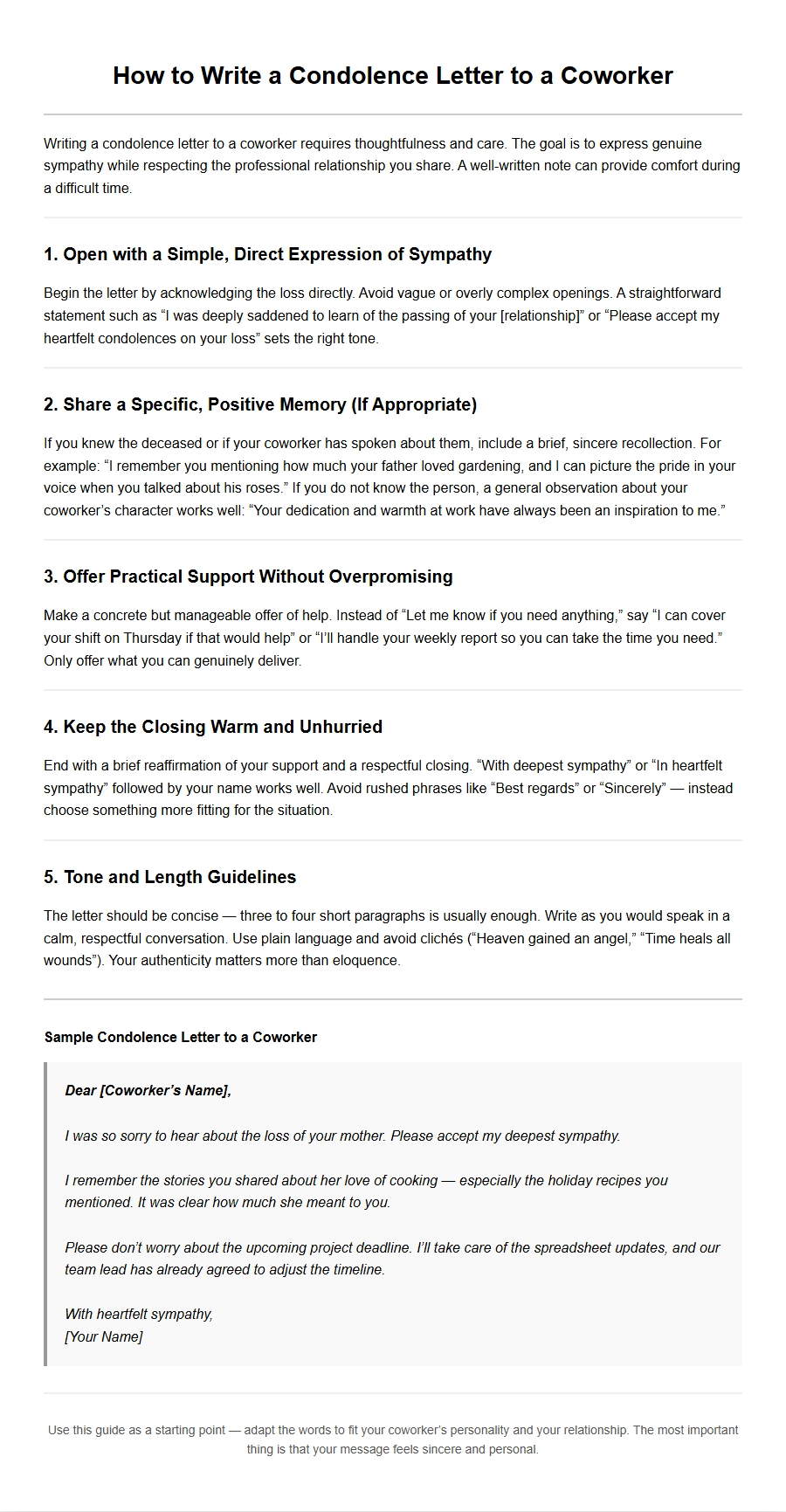 How to Write a Condolence Letter to a Coworker
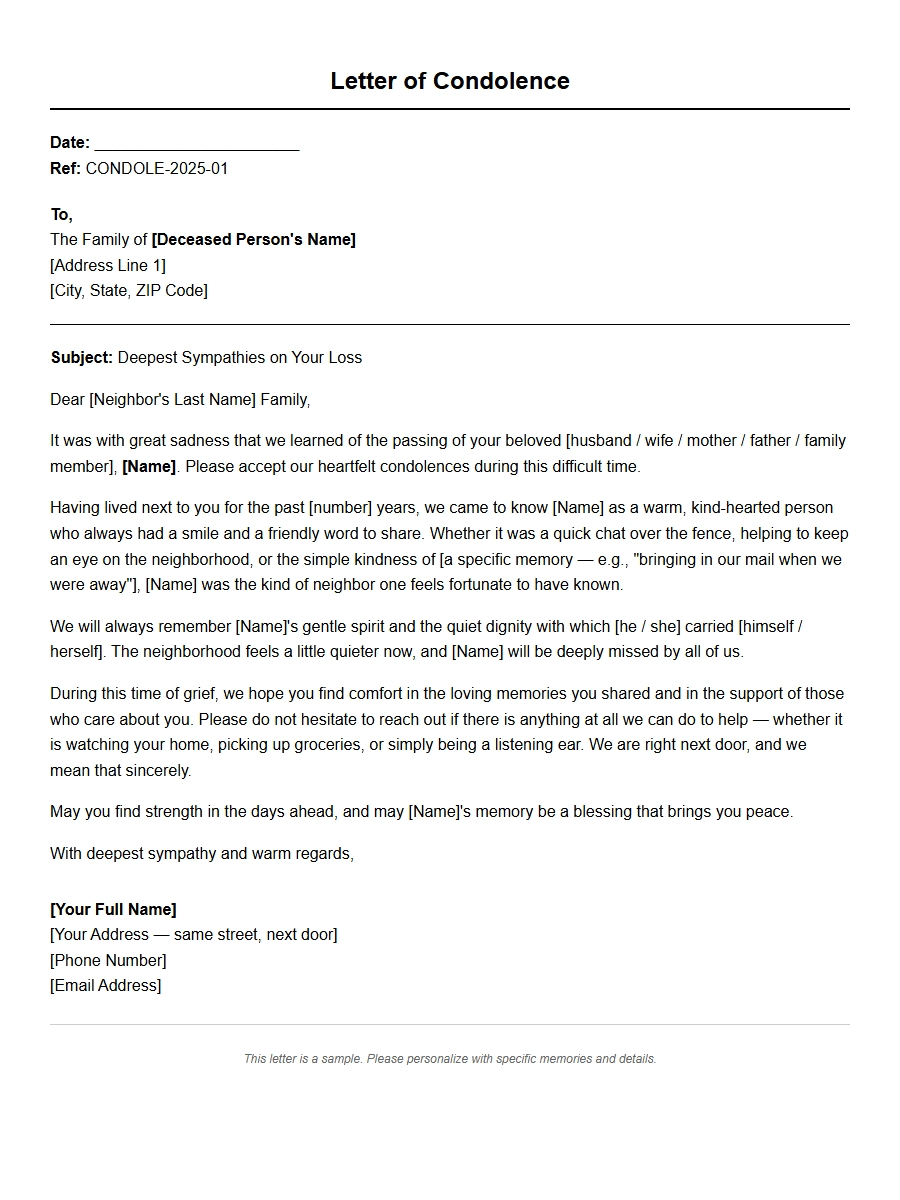 Condolence Letter Sample for a Neighbor
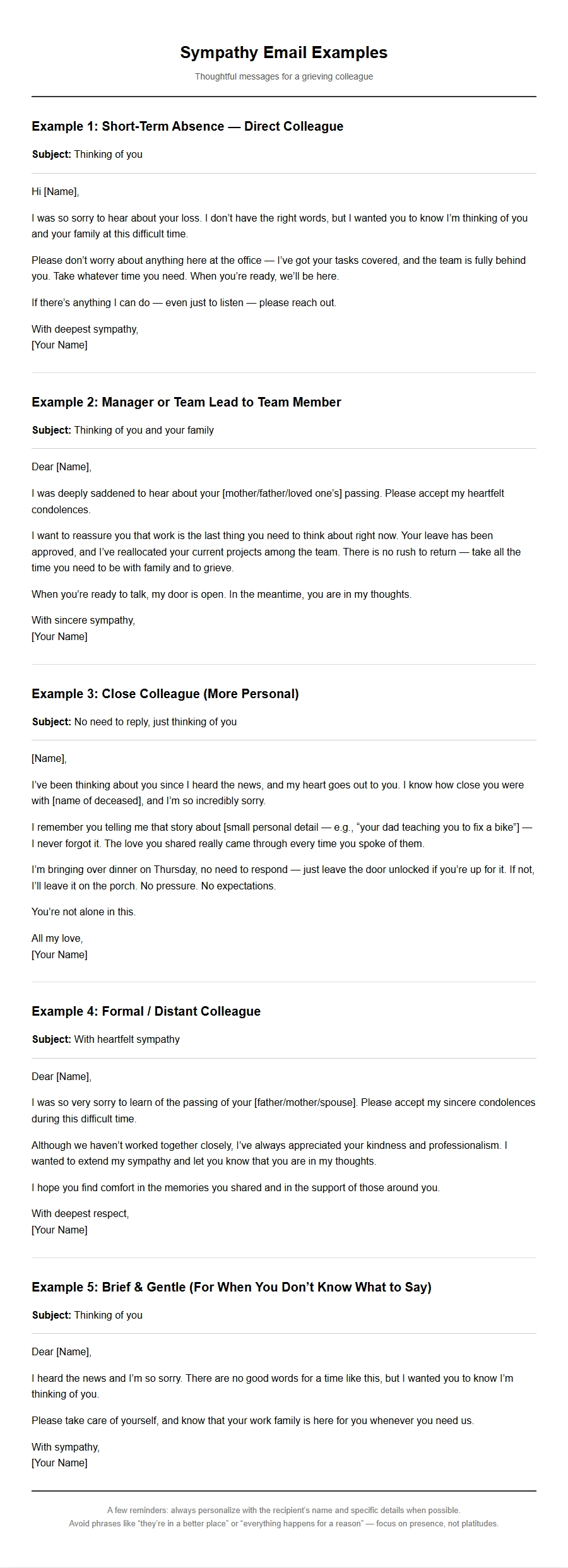 Sympathy Email Examples for a Grieving Colleague
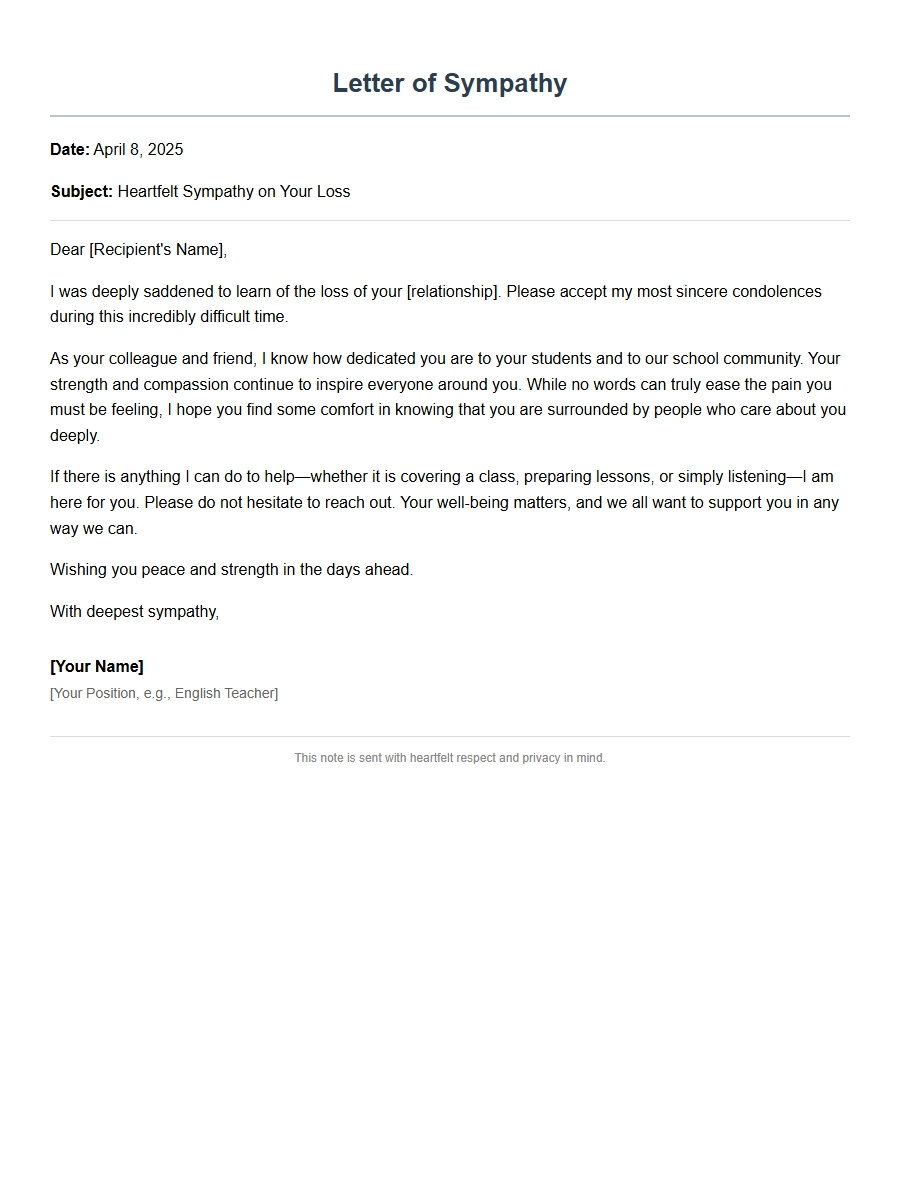 Condolence Words for a Teacher