You need to send a condolence letter today but don’t know where to begin. Or maybe you’ve been putting it off for days because the words just won’t come. That blank page feels impossible when you’re trying to comfort someone who’s grieving. Using a brief condolence statement as a starting point isn’t cheating. It’s a smart way to get past that initial paralysis so you can write something genuine.
Think of a letter template the same way you might think of a recipe. You follow the basic structure, but you adjust the seasoning to match your taste. A sample gives you the letter structure, the appropriate tone in writing, and the key phrases that feel respectful without being overly formal. Your job is to fill in the specifics that make it personal.
What makes a condolence statement work?
A brief condolence statement does two things. It acknowledges the loss directly, and it offers genuine comfort without trying to fix anything. The best ones avoid vague phrases like “they’re in a better place” unless you know for certain the recipient believes that. Instead, focus on the person who died. Mention them by name. Share a short, specific memory if you have one. That’s where the real connection happens.
When you’re learning letter writing etiquette, remember that brief doesn’t mean cold. You can say plenty in two or three sentences. “I was so sad to hear about your father, John. I’ll never forget how he helped me fix my car that summer. You’re in my thoughts.” That’s enough. It’s specific, it’s kind, and it doesn’t burden the grieving person with a long letter they have to respond to.
How to adapt a sample without losing your voice
You’ll find plenty of cover letter examples and resignation letter sample templates online, but condolence letters are different. They require a softer touch. The trick to adapting any customizable letter is to start with the structure and then swap out the generic parts for your own words.
Let’s say a sample starts with “I was deeply saddened to hear of your loss.” That’s fine, but it might feel stiff. You could change it to “I’m so sorry to hear about Jim” or “I was heartbroken to learn about your grandmother.” See how that shifts? You’re keeping the same professional correspondence framework while making the salutation and closing feel more natural. For a printed letter, use “Dear [Name],” as your salutation. For email, you can skip the formalities and start with just the name and a simple opening.
One common mistake people make is leaving the sample untouched. If it says “Please let me know if there’s anything I can do,” trade that for something more specific, like “I’ll bring dinner over on Thursday if that works.” The letterhead design matters less than the heart of the message. You can always proofreading letter tips tell you to check for typos, but with condolence letters, double-check the name and the relationship. Getting those wrong undoes all your good intentions.
When to use a formal versus informal tone
This is where many people get stuck. Ever received a letter that felt too stiff or too casual? The same rules apply here. For a coworker or a professional acquaintance, lean toward formal writing tips that keep things respectful. “I’m sorry for your loss” followed by a brief sentence about their impact at work is appropriate. For a close friend or family member, you can let your guard down. Write how you talk. Use contractions. Mention a funny memory if it feels right.
The format also matters. If you’re sending a digital letter format like an email, keep the subject line simple. You can use one of the professional condolence email subject lines that say something like “Thinking of you” or “With sympathy for your loss.” That prepares the reader for the content without being jarring. If you’re mailing a card or printing a letter, use a clean, simple layout. Avoid fancy fonts or heavy letterhead design. Let the words speak for themselves.
Common pitfalls to skip
Don’t write a novel. The grieving person doesn’t have the energy to read three paragraphs of your own feelings. Keep it to three or four sentences. Don’t offer unsolicited advice about grief or coping. Don’t compare their loss to someone else’s. And don’t forget to sign off with warmth. “With love” or “Thinking of you” works better than “Sincerely” for most personal notes.
Another thing. If your company has a professional condolence email subject lines policy or you’re writing on behalf of a team, check the business letter format your organization uses. Some workplaces have guidelines for condolence messages from leadership. Follow those, but still aim for a human tone. You’re writing to a person, not an HR file.
A few complete short examples you can start with
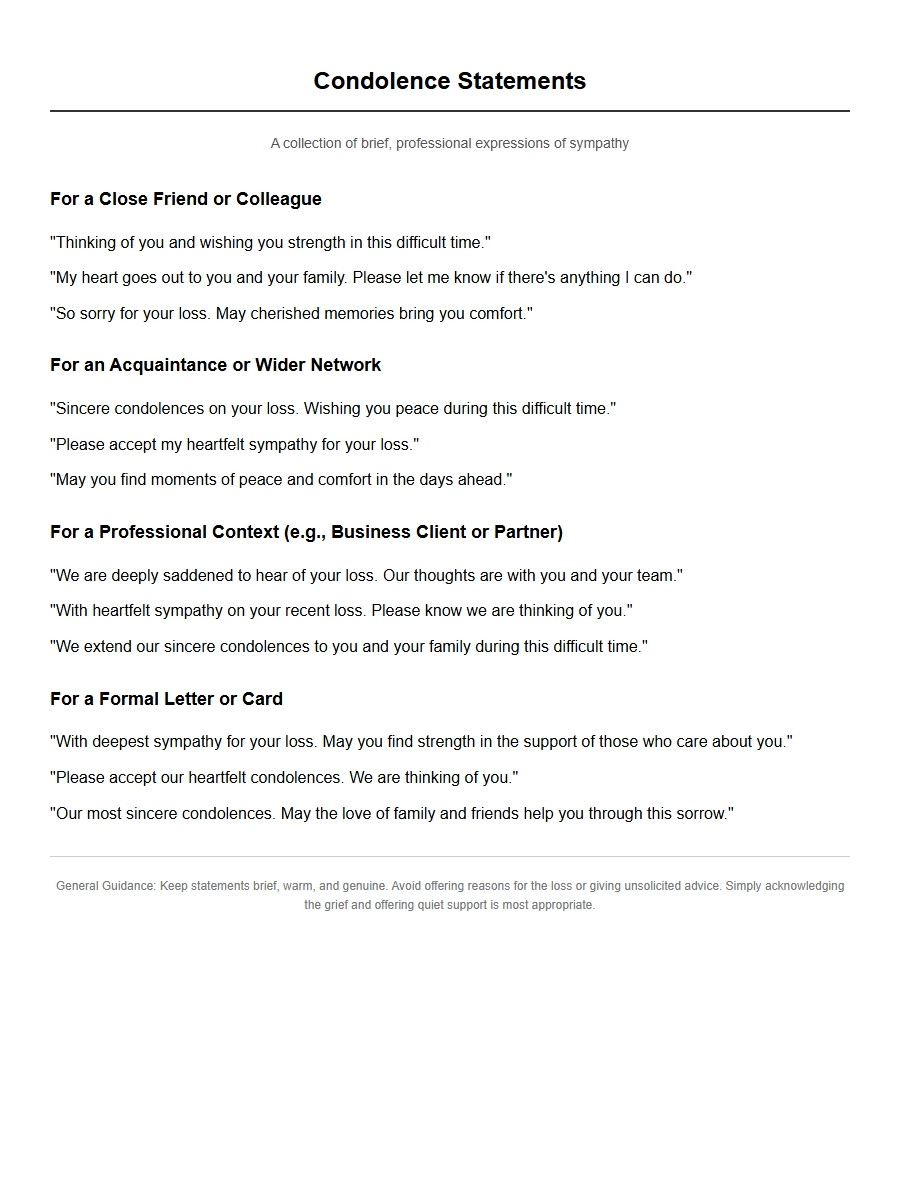
Sometimes seeing a full example helps you get unstuck. Here are a few brief condolence statements you can adapt:
- “I’m so sorry for your loss. I’ll always remember how kind your mother was to everyone she met. Thinking of you during this hard time.”
- “We were so sad to hear about Tom. He was such a good friend to our family, and we’ll miss him a lot. Sending you our love.”
- “I can’t imagine what you’re going through right now, but I want you to know I’m here for you. Please let me know if you need anything at all.”
Notice how each one is short, specific, and avoids empty promises. You can use these as a skeleton and swap in your own details.
Making the sample your own
The goal is to sound like yourself while respecting the occasion. Read your letter out loud. Does it sound like something you would actually say? If not, revise it. A letter template is a tool, not a script. You’re always allowed to change the wording until it feels right.
If you’re writing to someone who lost a child, be extra careful. Sympathy letter guidelines for children loss remind us to avoid platitudes and instead offer steady, quiet support. The same principle applies to condolences for military service member death, where you might want to acknowledge their service while focusing on the person behind the uniform.
When you’re stuck on how to offer help without sounding hollow, read through how to offer help in a condolence letter. It breaks down the difference between “let me know if you need anything” and actually showing up with something concrete.
One last thing before you write
Every condolence letter you write will feel a little awkward at first. That’s normal. You’re trying to comfort someone during one of the hardest moments of their life. The fact that you’re even trying matters more than getting the words perfect. Use the sample to get started. Adjust it until it sounds like you. Then send it without overthinking it.
The next time you need to write a condolence letter, you’ll remember how to adapt a professional correspondence sample without losing your own voice. And if you’re not sure about the language, how to write a letter without using the word dead offers alternatives that feel more gentle and natural.
You’ve got this. Start with the sample, add your own memory or thought, and trust that your simple message will mean more to them than you realize.
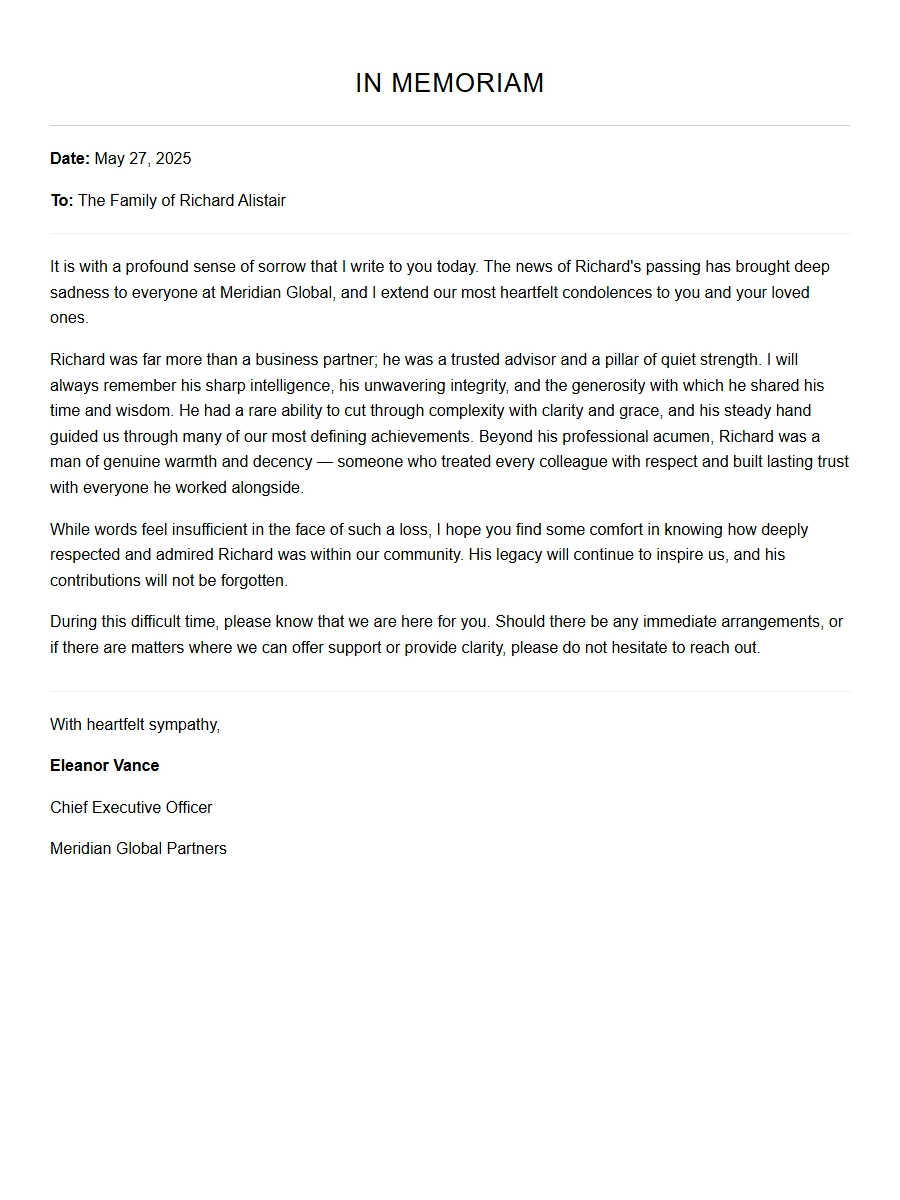 Formal Condolence Message for a Business Partner
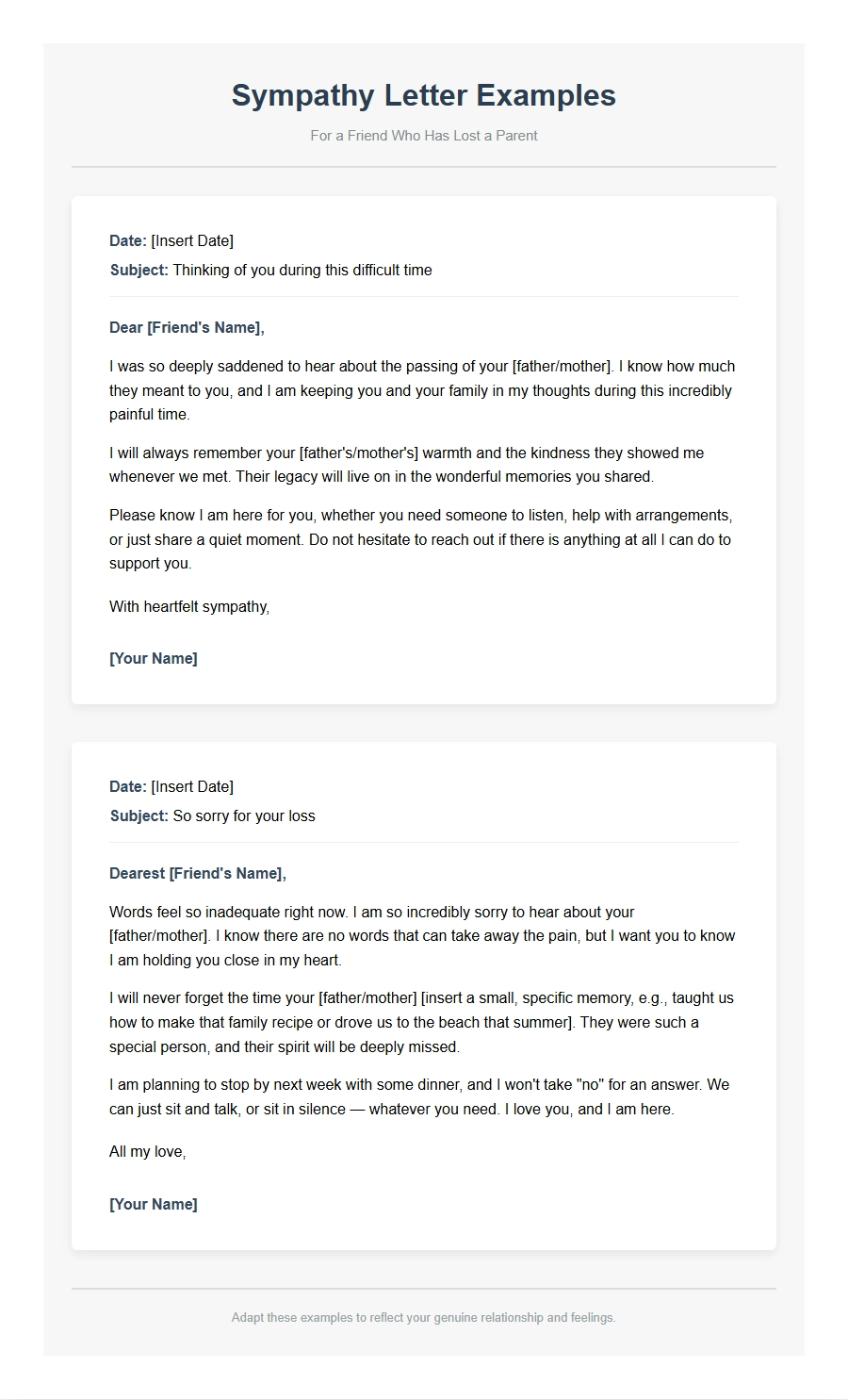 Sympathy Letter Examples for a Friend Who Lost a Parent
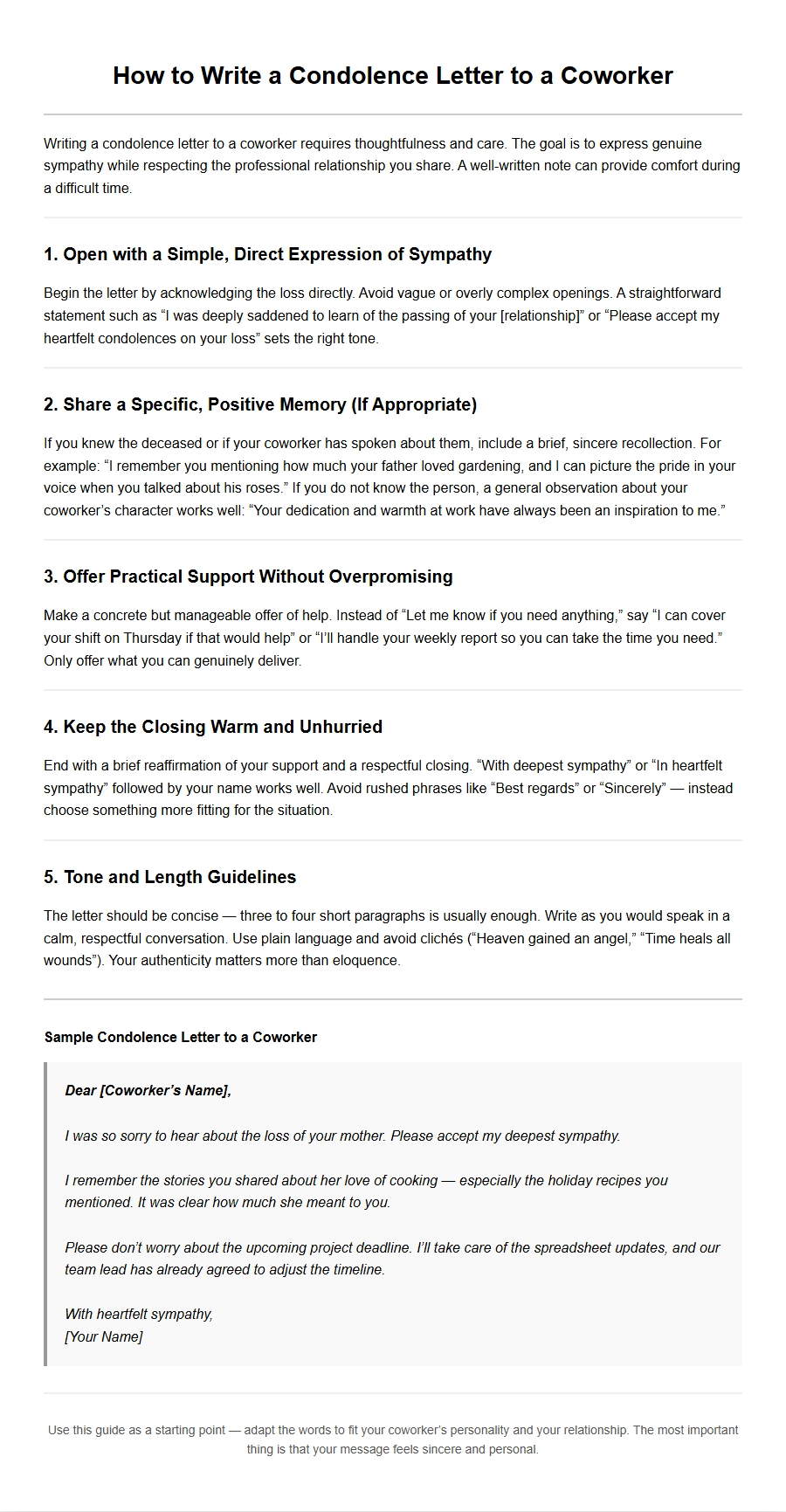 How to Write a Condolence Letter to a Coworker
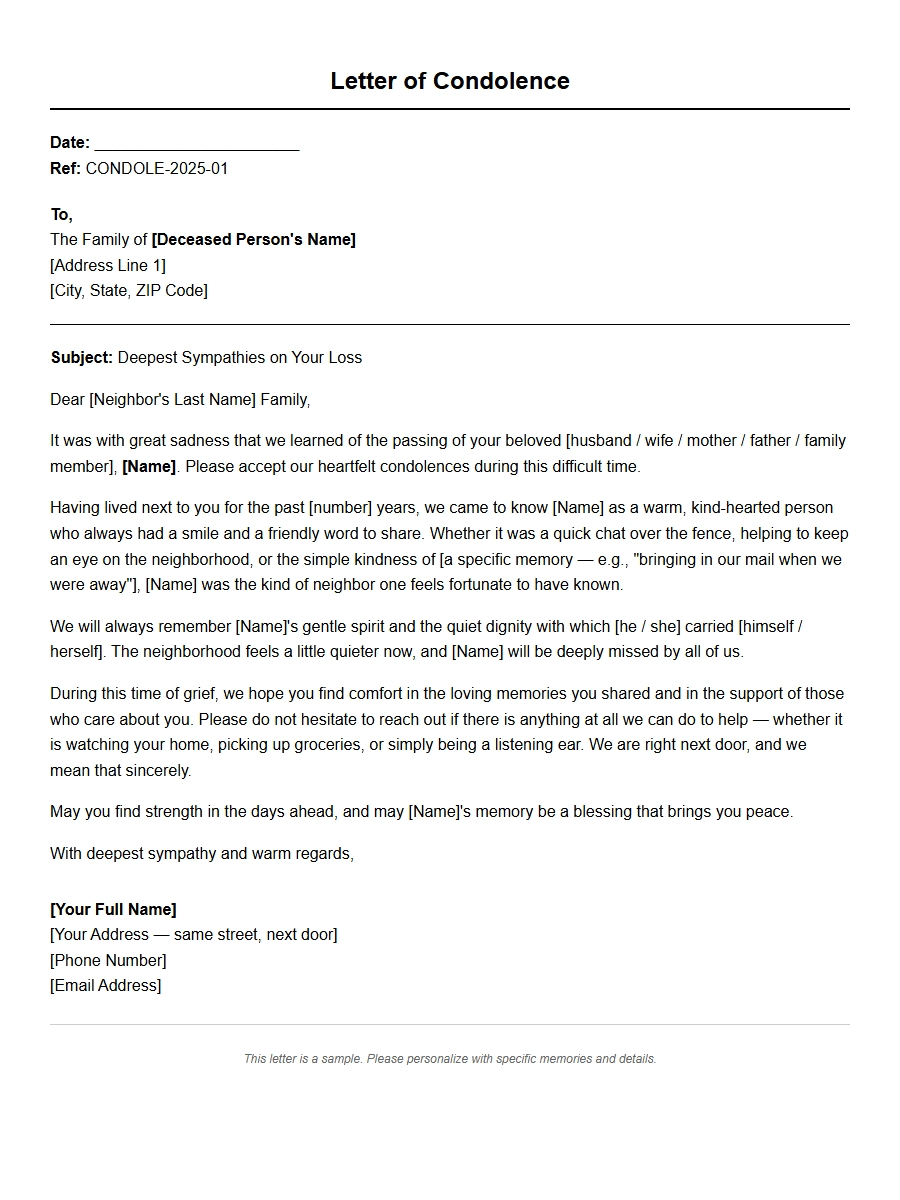 Condolence Letter Sample for a Neighbor
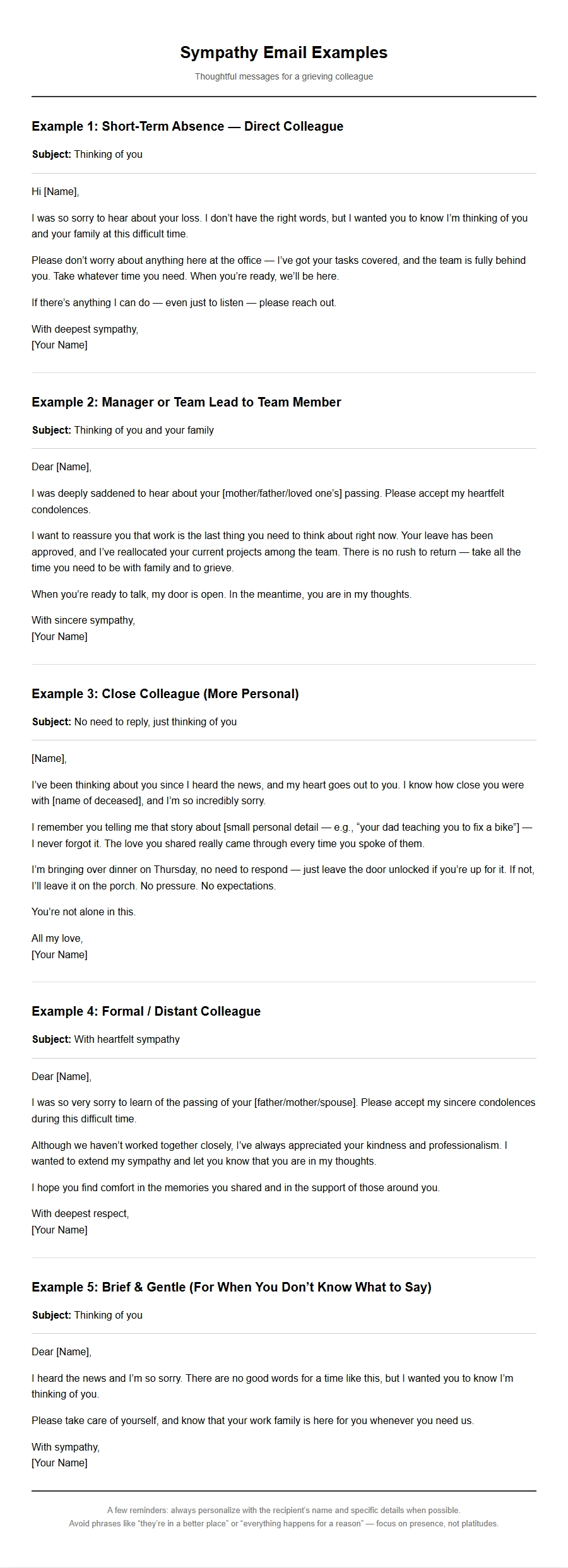 Sympathy Email Examples for a Grieving Colleague
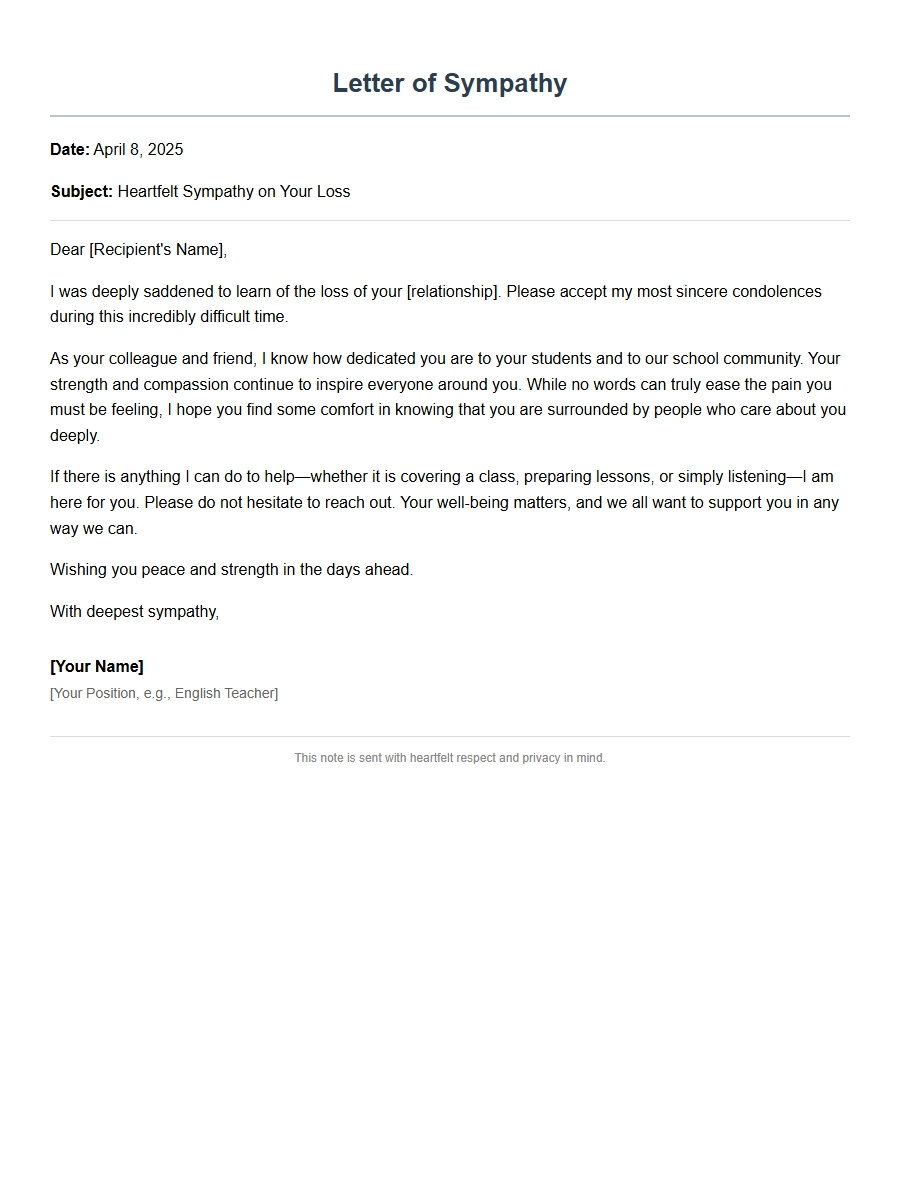 Condolence Words for a Teacher