How to Write a Harassment Complaint Without Retaliation
Staring at a blank page when you need to write a harassment complaint can feel paralyzing. You're worried about backlash, about not being taken seriously, or about making a legal misstep. But the right sample of a professional letter can turn that anxiety into a confident, polished draft in minutes.
Let’s be honest—filing this kind of complaint is one of the hardest things you’ll do at work. The stakes feel incredibly high. Using a ready-made letter template isn’t cheating. It’s a smart, time-saving strategy that gives you a protective shell of professionalism and objectivity. HR departments and legal teams need to see clear, chronological facts, not emotional rants. A good template provides the letter structure you need while leaving room for your personal experience.
Category: Complaint Letter Templates
Where to start: choosing the right structure
First, decide on your format. Are you sending an email or a physical letter? For most workplace issues, a digital letter format works best—ideally a concise email with a formal PDF attachment. If you’re printing it, stick to a standard business letter format with your contact info at the top, a clear subject line, and a date.
When you pick a sample, look for one that matches your specific situation. A complaint about a coworker looks different from one about a supervisor. A good customizable letter lets you drop in specific dates, times, and witnesses without forcing you to guess at the right phrasing.
Adapting the sample without losing your voice
Here’s the trick: take the skeleton of the template but fill it with your own concrete details. Focus strictly on facts. Tone in writing matters enormously here. Instead of writing "He was always mean to me," write "On March 12, he said X to me in front of Y." Instead of "She made my life miserable," write "She excluded me from four consecutive team meetings after I raised my concern."
A proper salutation and closing adds to the professionalism. "Dear [HR Manager Name]" is far better than "To Whom It May Concern." If you don’t know the person’s name, call the HR department and ask. Closing with "Sincerely" or "Best regards" followed by your full name keeps it neutral and respectful.
Common mistakes to avoid
Don’t speculate on the other person’s intentions. Stick to what you saw, heard, and experienced. Avoid vague generalizations like "HR never listens." If you have prior complaints or reports, reference them specifically.
This is professional correspondence, not a diary entry. Before you hit send, proofreading your letter is crucial—not just for typos, but for tone. Read it out loud. Does it sound calm and factual? Would you feel comfortable explaining every sentence to a neutral third party? If not, revise it.
If your situation involves a school or workplace accommodation, you might find a similar approach in our guide on requesting a special education accommodation plan review. The principles of documentation and factual requests apply there too.
When you’re escalating an issue, the same letter writing etiquette applies. State the problem, your desired outcome, and a reasonable deadline for response. This is exactly how you handle escalating a customer service issue in writing—just with higher stakes and more formal language.
Your letter is a springboard, not a final solution
Think of this letter as the start of a paper trail. It’s evidence that you documented your concern professionally and in a timely manner. Even if the immediate response isn’t perfect, having a clean, factual record protects you down the line. The same format helps when you need to dispute a ticketing error or submit a feedback form for poor customer support—you’re practicing the same muscle of clear, professional communication.
For the most direct example, look at our general guide on writing a complaint letter to the human resources department. It covers the core structure for workplace issues and can be adapted to include specific anti-retaliation language.
Your complaint letter is a beginning, not an end. Use the sample to get past the blank page, then make it yours. The best letters feel both professional and personal. Practice makes this process faster, and each time you write one, you’ll get clearer and more confident.
Extra Samples
How to Write a Harassment Complaint Without Retaliation
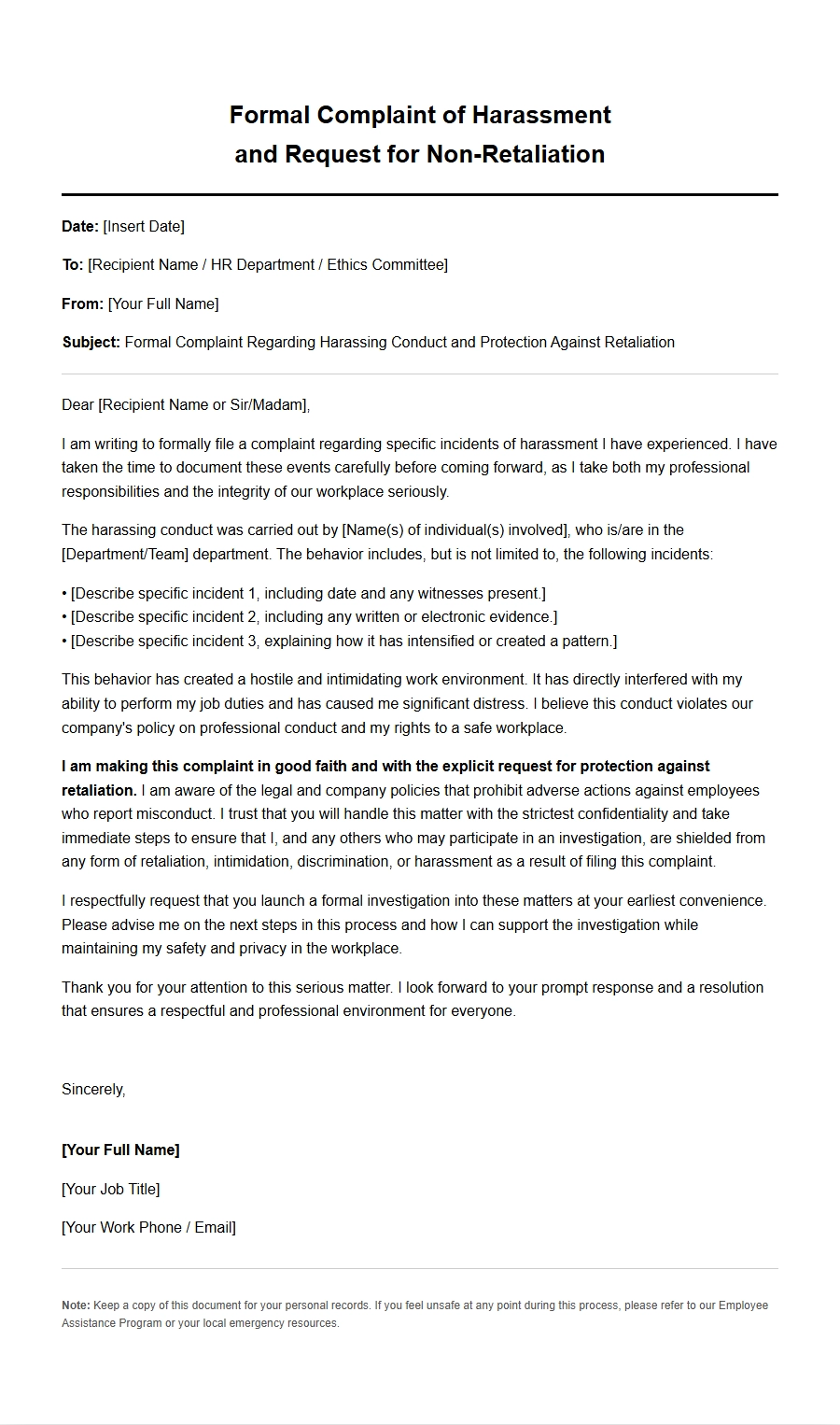
Formal Complaint Letter to HR
To: Human Resources Department
From: [Your Name]
Date: [Current Date]
Subject: Formal Harassment Complaint – Request for Confidentiality
I am writing to formally report harassment I have experienced from [Harasser’s Name], [Job Title], in [Department]. The behavior includes:
Repeated unwelcome comments about my appearance (e.g., [specific comments]).
Inappropriate physical contact on [Date] in the breakroom.
Exclusion from meetings and work assignments after I declined social invitations.
I have documented each incident in a private log (see attached). I am filing this complaint now because the behavior has escalated and I fear for my safety and career. I request that this complaint be handled with the highest confidentiality to prevent retaliation, as allowed under company policy Anti-Harassment Policy Section 4.2.
I ask for a prompt investigation and that no adverse action be taken against me for reporting. Please acknowledge receipt of this letter in writing and inform me of the next steps. I am prepared to cooperate fully while retaining my right to file externally if needed.
Email to Supervisor Requesting Support
To: [Supervisor’s Name]
Subject: Request for guidance regarding workplace interactions
Dear [Supervisor’s Name],
I am reaching out to seek your advice about some interactions that have made me uncomfortable. I value my role here and want to ensure a professional environment. Over the past few weeks, [coworker’s name] has made remarks about my background that I find demeaning, such as [brief example]. I have tried to address these directly but the behavior continues.
I am not yet filing a formal complaint because I want to handle this informally if possible. Could you help me understand the proper channels and whether there is a way to address this without fear of retaliation? I specifically ask that this email be kept confidential and that no action be taken that could single me out.
I would appreciate a short meeting to discuss options. Thank you for your support.
Best regards, [Your Name]
Grievance Form for Union Filing
Union Grievance – Harassment Complaint (No Retaliation Request)
Field
Details
Employee Name
[Your Name]
Union Local
[Local #]
Date of Incident(s)
[List dates]
Type of Harassment
Sexual / Racial / Bullying (circle)
Person(s) Responsible
[Name(s)]
Description of Grievance:
I am filing this grievance under Article 15 of our collective bargaining agreement. The above‑named individual(s) have subjected me to [describe harassment] which violates our workplace harassment policy and state law. I have previously raised concerns informally but the behavior has not stopped.
Request for Retaliation Protection:
I explicitly request that the union ensure management does not retaliate against me for filing this grievance. I ask that all discussions about this matter be kept confidential to the extent possible. I am prepared to provide witness names and documentation. I seek an investigation, cessation of harassment, and no adverse actions against me.
Anonymous Report to Ethics Hotline
Anonymous Observer Harassment Report
I am writing anonymously to report harassment I witnessed on multiple occasions in the [Department Name]. The actions I observed include:
[Date]: [Coworker A] loudly made offensive jokes about [protected characteristic] while [Manager Name] was present and did nothing.
[Date]: [Coworker B] physically blocked [Victim’s Name] from leaving a meeting and used intimidating language.
I am filing this report without disclosing my identity because I fear retaliation if my name became known. The victim has not complained, possibly for the same reason. The environment has become tense, and these incidents have affected team morale.
I ask that the company investigate these incidents promptly and take corrective action. Please do not attempt to identify the reporter. I am willing to provide additional detail through the anonymous channel, but only if my identity remains completely protected.
Follow-up Letter After Initial Complaint
Re: Follow-up on Harassment Complaint Dated [Date]
Dear [HR Representative Name],
I am writing to follow up on the harassment complaint I submitted on [Date]. I have not received any update since the acknowledgment letter. I want to reiterate my concern about retaliation. To date, I have not experienced any adverse action, but I remain cautious. I request a meeting to discuss the status of the investigation and any interim measures in place to protect me.
I also want to provide a list of witnesses who can corroborate my account:
[Name 1] – witnessed incident on [Date].
[Name 2] – heard the comments on [Date].
I trust the company will keep this follow-up confidential. If there are steps I can take to help the process, please advise. I expect a response within five business days.
Sincerely, [Your Name]
Complaint Letter to the EEOC
Letter to Equal Employment Opportunity Commission (EEOC)
To: EEOC District Office, [City]
I am writing to file a charge of harassment and retaliation in violation of Title VII of the Civil Rights Act. My employer, [Company Name], failed to stop harassment even after I reported it internally. I now file this complaint because I am being retaliated against for speaking up.
Details of Harassment:
Date
Incident
Harasser(s)
Jan 15
Racial slurs in team meeting
Manager A
Feb 10
Unwelcome touching during review
Manager A
Mar 5
Written warning after complaint
HR (retaliation)
I request that the EEOC investigate these matters. I specifically note that after my internal complaint, I received a low performance rating and was excluded from meetings – clear retaliation. I ask for protection and remedies under federal law. I have attached supporting evidence.
Confidential Memo to the Ombudsperson
MEMORANDUM
To: Office of the Ombudsperson
From: [Anonymous / Your Name]
Subject: Seeking guidance before reporting harassment
I am considering filing a harassment complaint but am very concerned about retaliation. Before I do, I want to discuss my options confidentially. The behavior I have experienced includes:
Frequent derogatory remarks about my accent (from [Coworker Name]).
Being assigned impossible deadlines after I asked for respect.
One instance of threatening body language by [Supervisor Name] on [Date].
I have not yet documented everything formally because I fear that even an informal conversation could lead to backlash. Can you advise me on the safest way to proceed? I need to know:
What protection is available if I report.
How to write a complaint that minimizes risk.
Whether anonymous reporting is possible.
Please treat this memo as completely confidential under the ombudsperson privilege. I await your suggestions.
Complaint to Legal Department – Request Protection
Privileged and Confidential – Legal Department
To: Legal Counsel, [Company Name]
From: [Your Name], [Job Title]
Date: [Current Date]
I am writing to formally report harassment and to request immediate legal protection from retaliation. The harassment, by [Name], includes repeated sexually suggestive comments and one instance of unwanted physical contact on [Date]. I reported this to my manager on [Date], but the behavior escalated, and I now fear for my safety and job security.
I am asking the legal department to:
Issue a no‑retaliation directive to my supervisor and HR.
Place me under the protection of the company whistleblower policy.
Investigate the matter immediately.
I have kept a detailed log of all incidents (attached). I request that this complaint be treated as confidential and that I be given a secure method to communicate with the investigator. I am willing to cooperate fully but need assurance that my career will not suffer.
Thank you for your urgent attention.
Bullying Complaint with Incident Log
Bullying and Harassment Complaint – No Retaliation Request
I am writing to document a pattern of bullying by [Coworker Name] that has created a hostile work environment. The bullying has taken the form of constant criticism, exclusion, and verbal abuse. I have kept a log of incidents:
Date
Event
Witness
Apr 3
Yelling at me in front of clients
[Name]
Apr 10
Removing my name from project emails
None
Apr 17
Spreading false rumor about my work
[Name]
I have tried resolving this informally but the bully ignores me. I now submit this formal complaint. I specifically ask that no adverse action be taken against me for reporting – including any change in my schedule, assignments, or performance reviews. I request a neutral investigation and interim measures such as separation of work areas. I am prepared to testify.
Complaint Against Supervisor with Interim Action Request
Complaint Against [Supervisor Name] – Immediate Retaliation Protection Needed
I am filing this complaint against my direct supervisor, [Supervisor Name], for ongoing harassment. The supervisor has made sexual advances, threatened my job when I refused, and given me poor evaluations after I set boundaries. Specific examples:
[Date]: Suggested we “work late alone” while touching my shoulder.
[Date]: Told me “you won’t get promoted if you don’t cooperate.”
Because this person controls my schedule and performance reviews, I am at high risk of retaliation. I therefore request:
Immediate transfer to another supervisor during the investigation.
That my current supervisor be prohibited from any work‑related decisions about me.
That all communication about this complaint be kept from him.
I have copied HR and the company Ethics Officer. I ask for an acknowledgment of these interim measures within 48 hours. I remain ready to provide evidence in a safe setting.
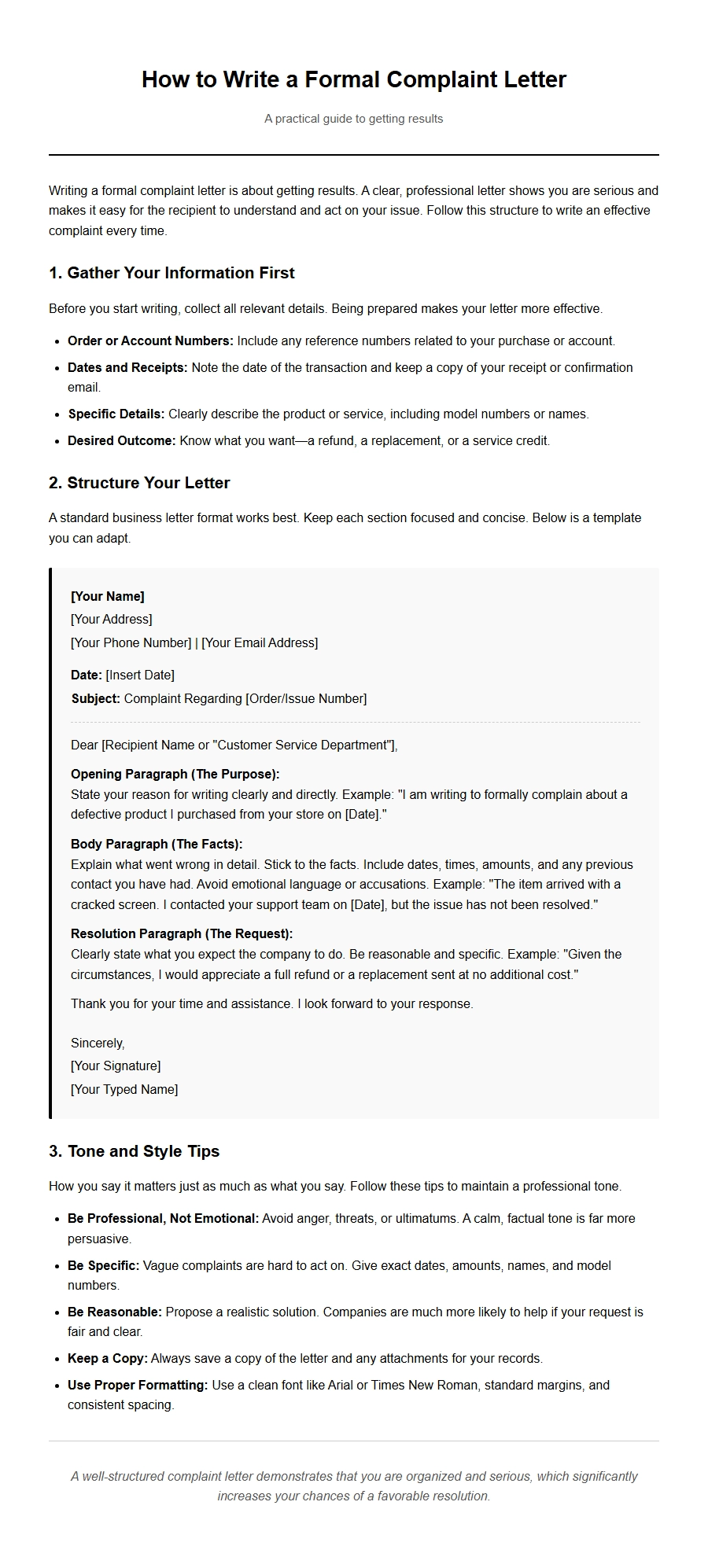 How to Write a Formal Complaint Letter
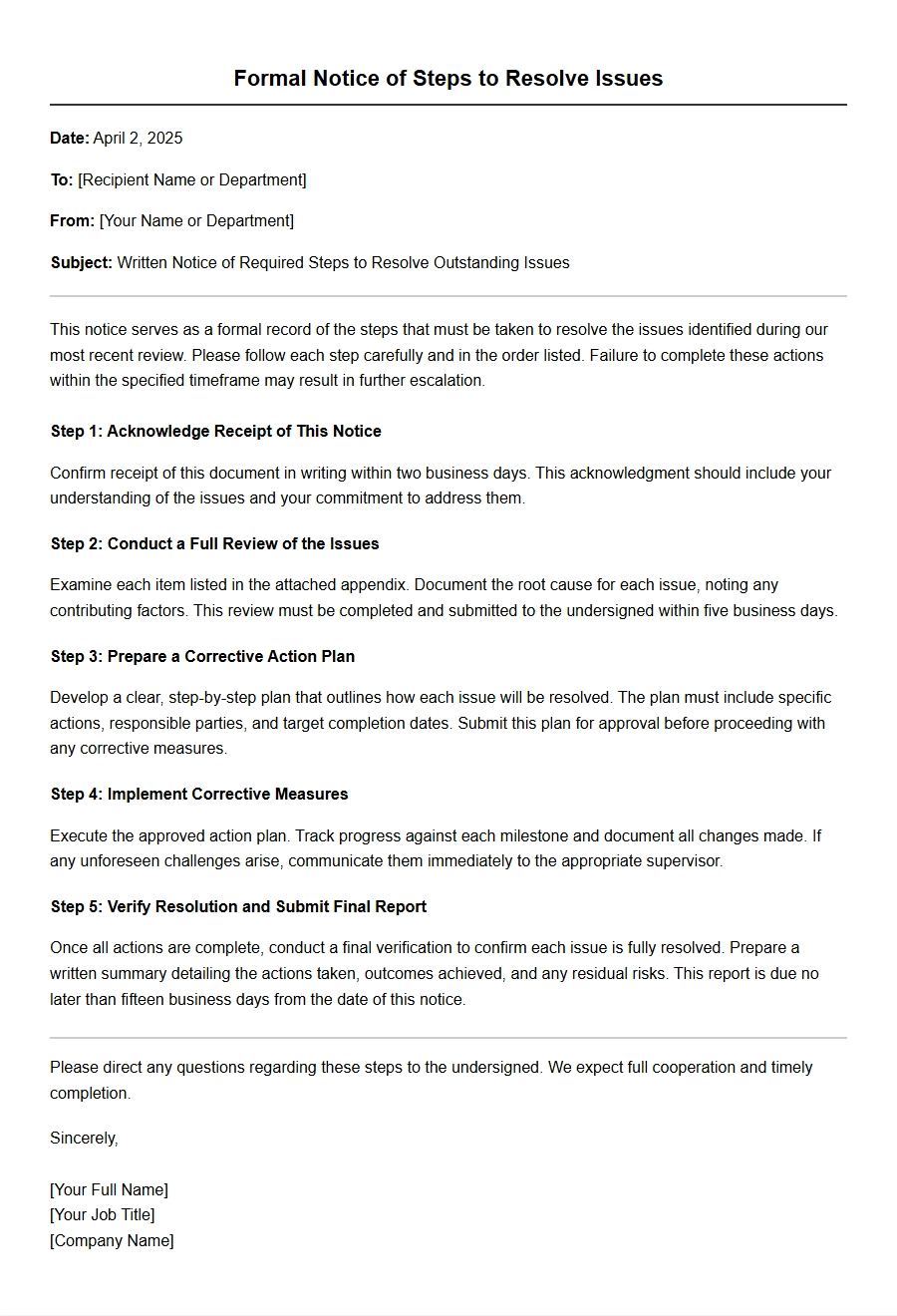 Steps to Resolve Issues via Written Notice
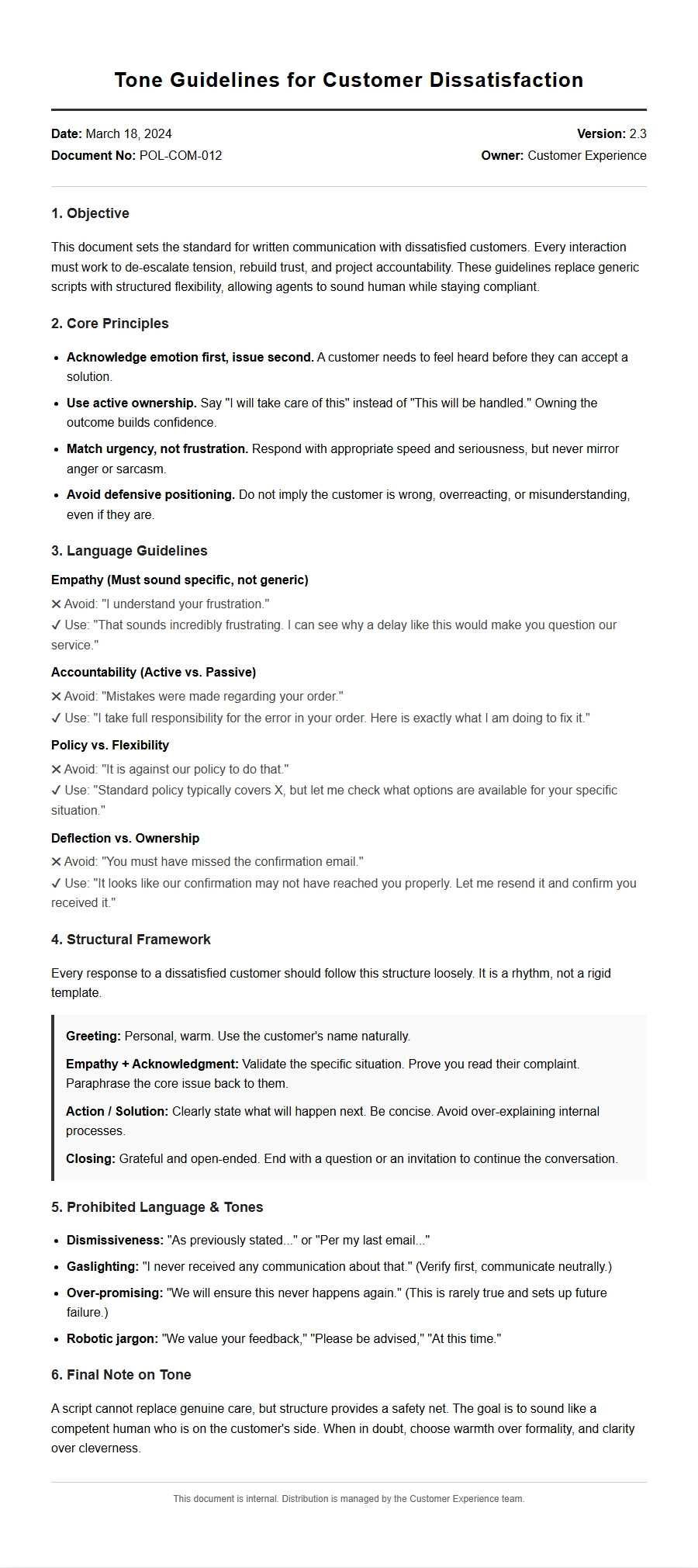 Tone Guidelines for Dissatisfied Customer Letters
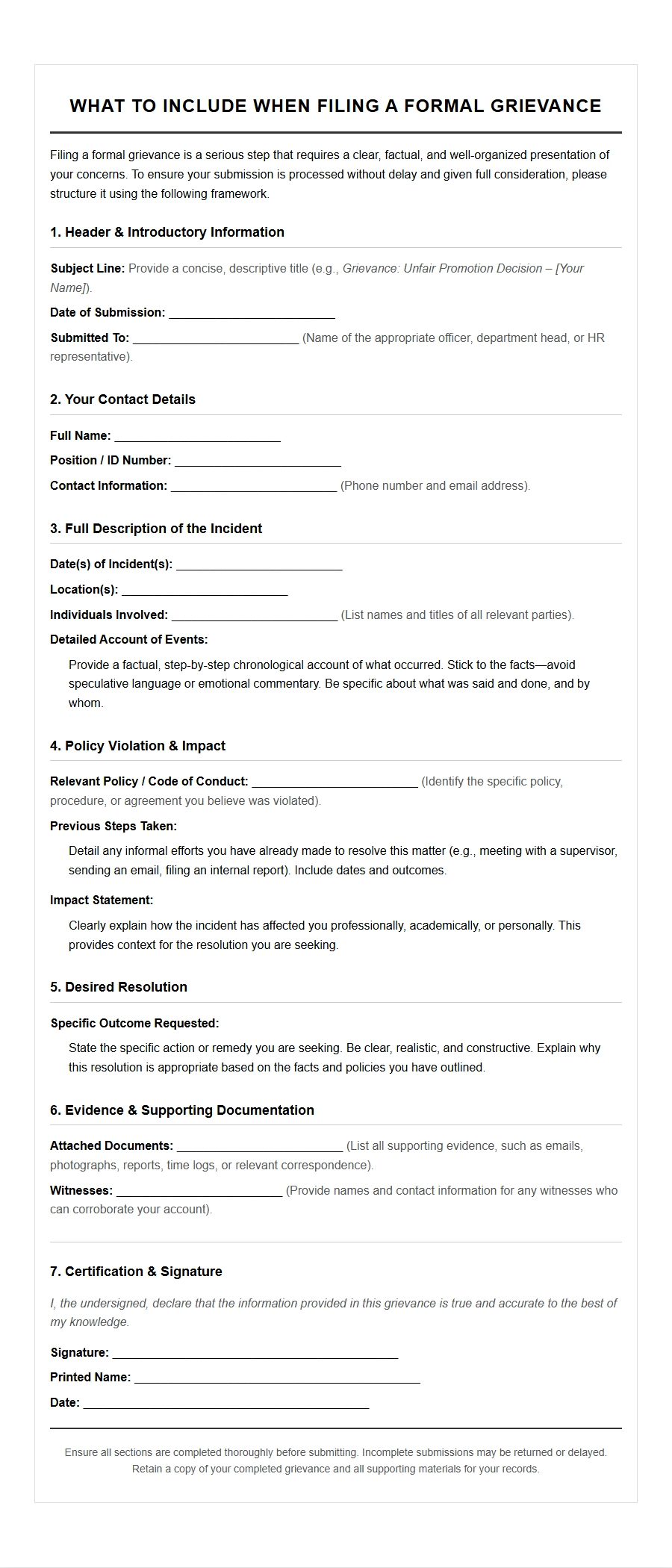 What to Include in a Formal Grievance Letter
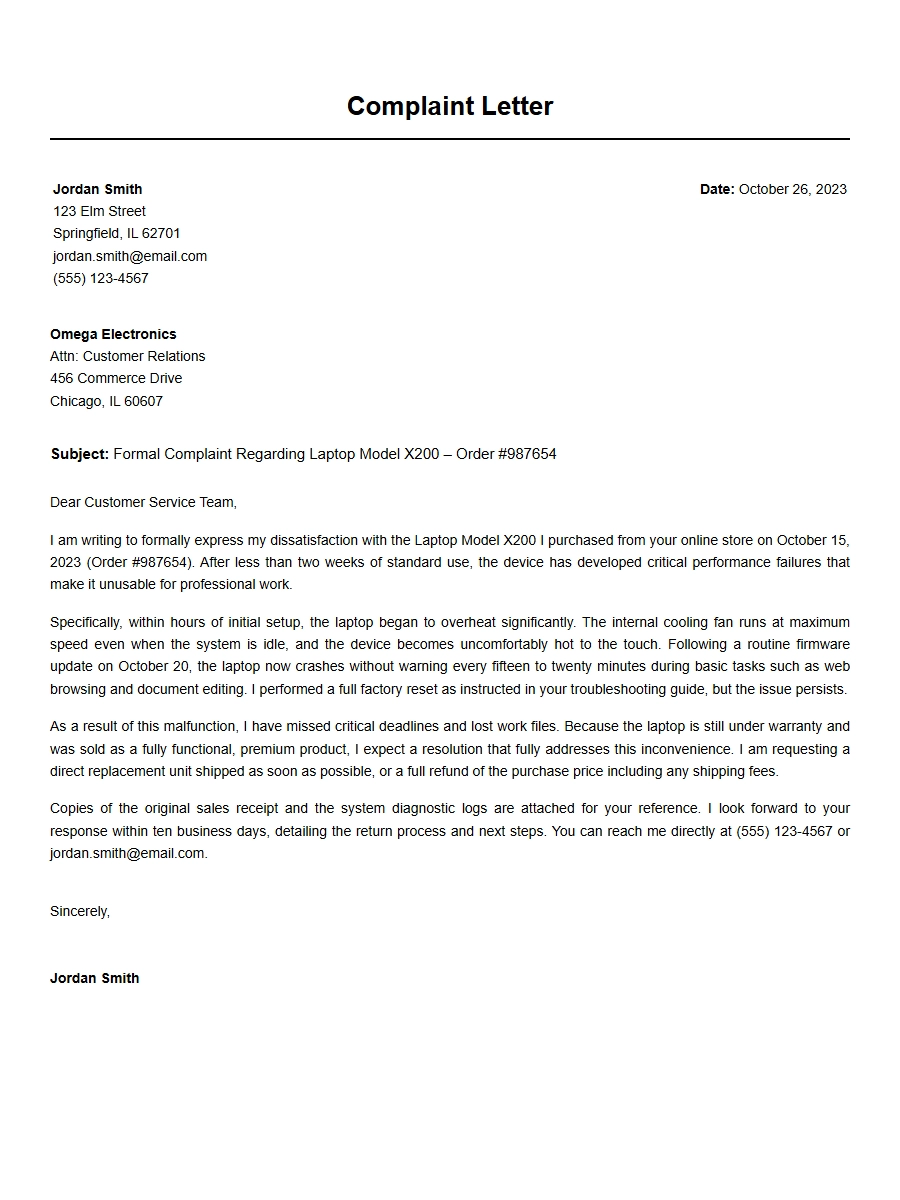 Structure of an Effective Complaint Letter
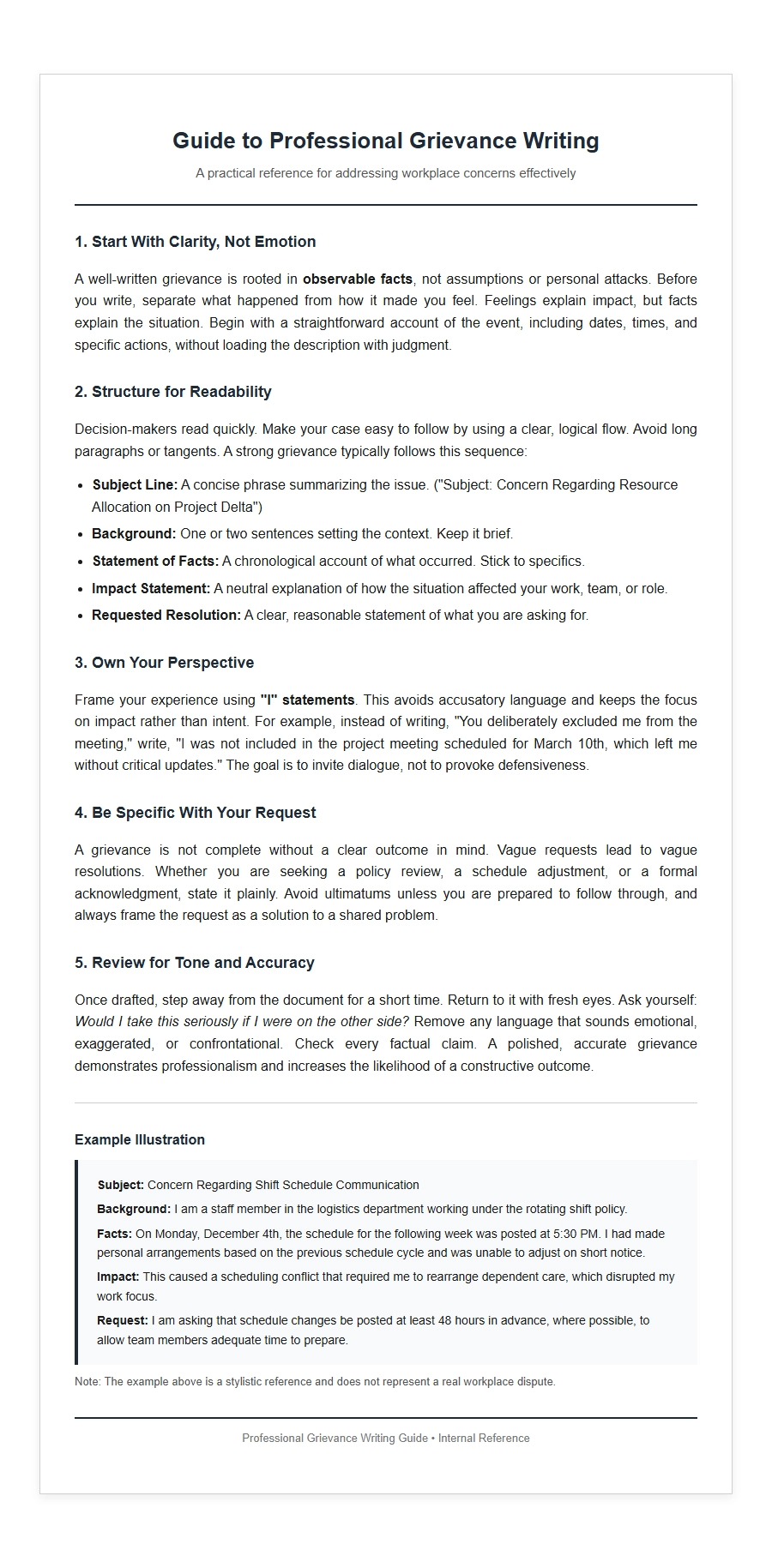 Best Practices for Writing Professional Grievance Letters