You're staring at a blank page, trying to remember the last time you wrote a formal complaint. Maybe a package arrived damaged, a service was terrible, or a bill is wrong. That empty screen feels like a wall. But here's the thing: the right sample turns that anxiety into a draft you can polish in minutes.
Using a letter template isn't cheating—it's a smart shortcut. A solid sample gives you the business letter format, the correct salutation and closing, and the flow of a professional argument. You just have to fill in your specific facts. The real skill is knowing how to adapt it without losing your own voice.
Category: Complaint Letter Tactics
What makes a complaint letter structure work?
A good complaint letter follows a simple arc: state the problem, explain the impact, and say what you want. That's it. But the letter structure matters because it guides the reader—often a customer service rep or manager—straight to the facts without frustration. Start with a clear subject line. In an email, that means "Order #12345: Damaged item received." In a printed letter, put it under the date.
Your opening paragraph should name the product, service, or situation and state that you're dissatisfied. No long stories. For example: "I'm writing about the refrigerator I purchased on March 5 (invoice #6789). It arrived with a dented door and the compressor stopped working after two days." That's direct and honest. It sets the tone.
Then explain the impact. Did it cost you time, money, or stress? Be specific but not dramatic. "I spent three hours on the phone with your support team and was told a technician would come, but no one showed." This part of the professional correspondence shows the reader that the issue is real and unresolved.
Finally, state your resolution request. "I want a full refund or a replacement delivered within five business days." Be reasonable. If you're asking for something extreme, you'll lose credibility. If you're unsure, check letter writing etiquette for complaint letters—usually a fair fix (refund, replacement, or service credit) is best.
How to pick the right sample and make it yours
Before you copy a sample, think about your audience. Are you writing to a small business owner or a corporate customer service department? A formal business letter format (with your address, their address, date, and salutation) works for printed mail. But if you're sending an email, skip the addresses and use a clear subject. The digital letter format is looser—you can use "Dear [Name]" or "Hello" followed by your complaint body.
Once you have a sample, rewrite the opening to sound like you. Replace generic phrases ("I am writing to express my displeasure") with your own words ("I'm pretty frustrated that the replacement part still doesn't fit"). That keeps your tone in writing authentic. Then check the salutation and closing—"Dear Sir/Madam" feels old. Use a name if you have one, or "Dear Customer Service Team." For closing, "Sincerely" works, but "Best regards" is fine for email.
Common mistakes that weaken your complaint
One big error is forgetting to include evidence. Mention attachments like receipts, photos, or order confirmations. If you're disputing a collection agency debt validation request, attach any proof of payment or incorrect information. That makes your letter harder to ignore.
Another mistake is using outdated letterhead design for printed letters. If you're mailing a physical letter, use a clean letterhead with your name, address, and contact info. But for email, skip the fancy logo—a plain signature with your name and phone number is enough.
Don't forget proofreading letter before sending. A typo can make you look careless, even if your complaint is valid. Read it aloud. Better yet, have someone else read it. Also, check the format: if you're pasting into an online form, keep it plain and avoid special characters that might break.
Finally, know when to calm down. A complaint letter should be firm, not angry. If you're tempted to write in all caps or use accusations, take a break. The best letters explain the problem clearly and propose a fair solution. That gets results.
Adapting samples for different scenarios
Sometimes you need more than a standard complaint. If you're reporting public park vandalism to a municipal council, your letter should address a government body. Use a formal business letter format and include the date, location, and description of damage. Reference any previous communication. For legally binding notice phrasing for breach of contract, you may need more precise language—consider consulting a sample that uses "hereby notify" and "demand cure within 30 days" to ensure enforceability.
In each case, the customizable letter is your starting point. Don't treat it as a fill-in-the-blank robot. Read it, understand its logic, then rewrite it in your own voice. That way you keep the structure but avoid sounding like a template.
Use the sample as a springboard, not a crutch
Writing a good complaint letter gets easier every time you do it. The first draft might feel awkward, but after a few tries you'll recognize the patterns. Use samples to learn the formal writing tips that work—like keeping paragraphs short, using active voice, and stating your request clearly. Over time, you'll need the sample less and less.
Remember, the best letters feel both professional and personal. They show you've thought about the problem and that you expect a fair outcome. So next time you face a blank page, grab a relevant sample, adapt it, and send it with confidence. You've got this.
Helpful Examples
Structure of an Effective Complaint Letter
Clear Subject Line and Reference
Subject: Formal Complaint Regarding Delayed Shipment – Order #8743B
Date: January 15, 2025
Dear Customer Service Team,
I am writing to formally complain about the repeated delays in receiving my order #8743B, placed on December 20, 2024. The expected delivery date was January 5, 2025, but the package has not arrived as of this letter.
Key details:
Order total: $249.99
Shipping method: Express (2–3 business days)
Tracking number: 1Z999AA10123456784
I have contacted your support team twice (calls on Jan 8 and Jan 12), but received only generic updates. This impacts my business operations, as the items were for a client project due January 20.
I request a full refund of shipping costs ($29.99) and a guaranteed delivery date within 48 hours. Please respond by January 18, 2025, with a resolution. If not resolved, I will escalate this to consumer protection agencies.
Sincerely, Marcus Chen ACME Designs LLC
Professional Tone with Chronological Timeline
To: HR Department, TechCore Inc. From: Sandra Olivetti, Senior Developer Date: March 3, 2025
I am filing this complaint regarding persistent issues with the office temperature controls on floor 4, where my team works.
Timeline of events:
Date
Issue Reported
Response
Feb 10
HVAC unit blowing cold air at 62°F
“Technician will come tomorrow” – no visit
Feb 17
Unit still malfunctioning
“Parts ordered” – no timeline given
Feb 24
Temperature hit 55°F; staff wore coats
“We are working on it” – no action
This condition reduces productivity—three team members have taken sick leave due to cold symptoms. I request an emergency HVAC service within 48 hours and a temporary space heater for each desk until repairs are complete.
Thank you for your prompt attention.
Bulleted Complaint with Desired Resolution
Subject: Faulty Product Replacement Request – Vacuum Cleaner Model V8
Dear Returns Department,
I purchased a Model V8 vacuum cleaner on February 1, 2025 (receipt #90210). The unit stopped working after three uses. Specifically:
Suction power drops after 2 minutes of use
Brush roll makes loud grinding noise
Filter clogs despite regular cleaning
I have already tried troubleshooting per the manual (cleaned filters, checked hose for blockages) but the issue persists. This is my second V8 unit with the same defect.
I request a full replacement with a different model (V9 Pro) at no extra cost, given the recurring issue. Alternatively, I expect a full refund including original shipping ($450 total).
Please provide a prepaid return label and confirm the exchange within 5 business days. I have attached photos of the serial number and purchase receipt.
Regards, Angela Torres
Detailed Service Complaint with Table
To: Management, Elite Fitness Club Date: April 10, 2025
I am writing to formally complain about the declining quality of your personal training services since my contract renewal in March.
Comparison of services:
Service Aspect
Advertised
Actual Experience
Sessions per week
3 one-hour sessions
Only 2 sessions in 3 weeks
Trainer qualifications
Certified NASM
Trainer has no visible certification
Progress tracking
Monthly assessments
None provided
I have paid $600 for a 12-session package but received only 2 sessions since March 15. I requested a schedule change via email on March 20 with no response.
I demand a prorated refund of $500 for unfulfilled sessions and a written commitment to service standards. If unresolved within 10 days, I will file a complaint with the Better Business Bureau.
Soft Opening with Clear Call to Action
Subject: Neighborhood Noise Complaint – Construction Work After Hours
Dear Property Manager,
I am a resident at 123 Oak Lane, Apt 4B, and I must complain about construction noise from your building site across the street. The work continues past 8 PM on weekdays and starts at 6 AM on Saturdays, violating city noise ordinance 14-78.
Observed violations this week:
Tuesday, March 25: Jackhammer noise until 9:15 PM
Thursday, March 27: Heavy machinery starting at 6:30 AM
Saturday, March 29: Continuous drilling from 7 AM to 5 PM
This affects my ability to work from home (I require quiet for client calls) and sleep. I have already contacted the city noise complaint line, but they advised me to first address the site directly.
Please ensure all construction stops by 6 PM on weekdays and no earlier than 9 AM on weekends. I request a written confirmation of these measures within 3 days.
Thank you, David Kim
Formal Medical Billing Dispute
To: Billing Department, City Medical Center Patient ID: #MT-48291 Date: May 12, 2025
I am disputing a charge of $1,250 on my statement dated April 30, 2025, for “urgent care visit” on February 18, 2025. I was told at check-in that my insurance (Aetna PPO) would cover 80%, and I only owed a $50 co-pay, which I paid in full.
Billing breakdown (from statement):
Charge Description
Amount
Insurance Paid
Patient Responsibility
Urgent care facility fee
$800
$400
$400
Lab work (blood test)
$450
$200
$250
Total disputed
$650
I have attached the receipt showing my $50 payment and a copy of my insurance card. I request you recalculate the charges per my plan’s benefits. If the remaining $600 is still owed, please provide an itemized explanation of why insurance denied the rest. I expect a resolution within 15 business days.
Workplace Harassment Complaint
Confidential – For HR Only
To: Human Resources Director, InnovateCorp From: Jordan Lee, Marketing Associate Date: June 8, 2025
I am filing a formal complaint of harassment against my supervisor, Mark Thompson (Department Head). This is a summary of incidents:
May 20: Mark made a derogatory comment about my ethnicity in a team meeting, saying “people from your background don’t get creative work.”
May 25: He excluded me from a crucial project meeting, claiming I “lack the right attitude.”
June 3: He sent an email copying my co-workers, criticizing my work quality publicly.
I have tried addressing this informally by speaking with Mark on May 27, but he dismissed my concerns. This behavior violates company policy against discrimination and hostile work environment.
I request a formal investigation, a written apology, and that Mark be required to attend diversity training. I also ask that no retaliation occur. Please acknowledge receipt of this complaint within 48 hours.
Product Return and Refund with Timeline
Subject: Defective Laptop Request for Refund – Order #LP-7732
Dear Customer Support,
I purchased a TechBook Pro 15 laptop on April 5, 2025 (order #LP-7732, $1,899). The laptop has a hardware defect—the screen flickers and the keyboard has unresponsive keys—making it unusable for professional work.
My return attempts:
April 10: Contacted support via chat; told to mail it in. No label provided.
April 15: Called again; promised a label via email. Not received.
April 20: Emailed twice; automated reply only.
I am now requesting a full refund of $1,899 plus $25 shipping. Under your 30-day return policy, I am still within the window. As proof, I have original receipt, serial number (TP-12345), and photos of the flickering screen.
I expect a prepaid return label and refund confirmation within 5 business days. If not satisfied, I will initiate a chargeback with my credit card company.
Regards, Priya Mehta
Breach of Contract Letter
To: Project Manager, GreenScape Landscaping Contract Ref: GSL-2025-03 Date: July 22, 2025
This letter serves as formal notice that GreenScape Landscaping has materially breached the contract signed on February 1, 2025, for backyard renovation at 456 Elm Street.
Contract requirements vs. actual work:
Scope Item
Contract Value
Delivered
Status
Install patio pavers (200 sq ft)
$3,000
Only 120 sq ft done
Incomplete
Build cedar fence (80 linear ft)
$2,500
Fence is 4 ft high instead of 6 ft
Non-conforming
Plant 12 shrubs
$600
5 shrubs planted, 3 dead
Defective
Despite my request on July 10 to remedy these issues within 14 days, no worker has returned. I demand full refund of $6,100 paid to date (total contract $6,800) or completion per specifications by August 5. If unresolved, I will pursue legal action for breach of contract.
Utility Billing Error with Evidence
To: Customer Service, City Power & Water Account #: 876-54321 Date: August 3, 2025
I am disputing my July 2025 bill for $342.17, which includes an unusually high water charge of $187.50. My average monthly water bill is $45–$55.
Billing comparison (last 3 months):
Month
Water Usage (gallons)
Water Charge
Sewer Charge
May 2025
3,200
$48.00
$25.00
June 2025
3,100
$46.50
$24.50
July 2025
12,500
$187.50
$93.75
I checked my meter reading on July 31: it shows 8,900 gallons, not 12,500. I also had no leaks or unusual usage (no pool, no irrigation, same household size). This appears to be a meter reading or billing error.
I request a corrected bill reflecting actual usage of 8,900 gallons, amounting to approximately $112.50 for water. Please also waive any late fees if the bill is processed while under dispute. I expect a response within 10 days.
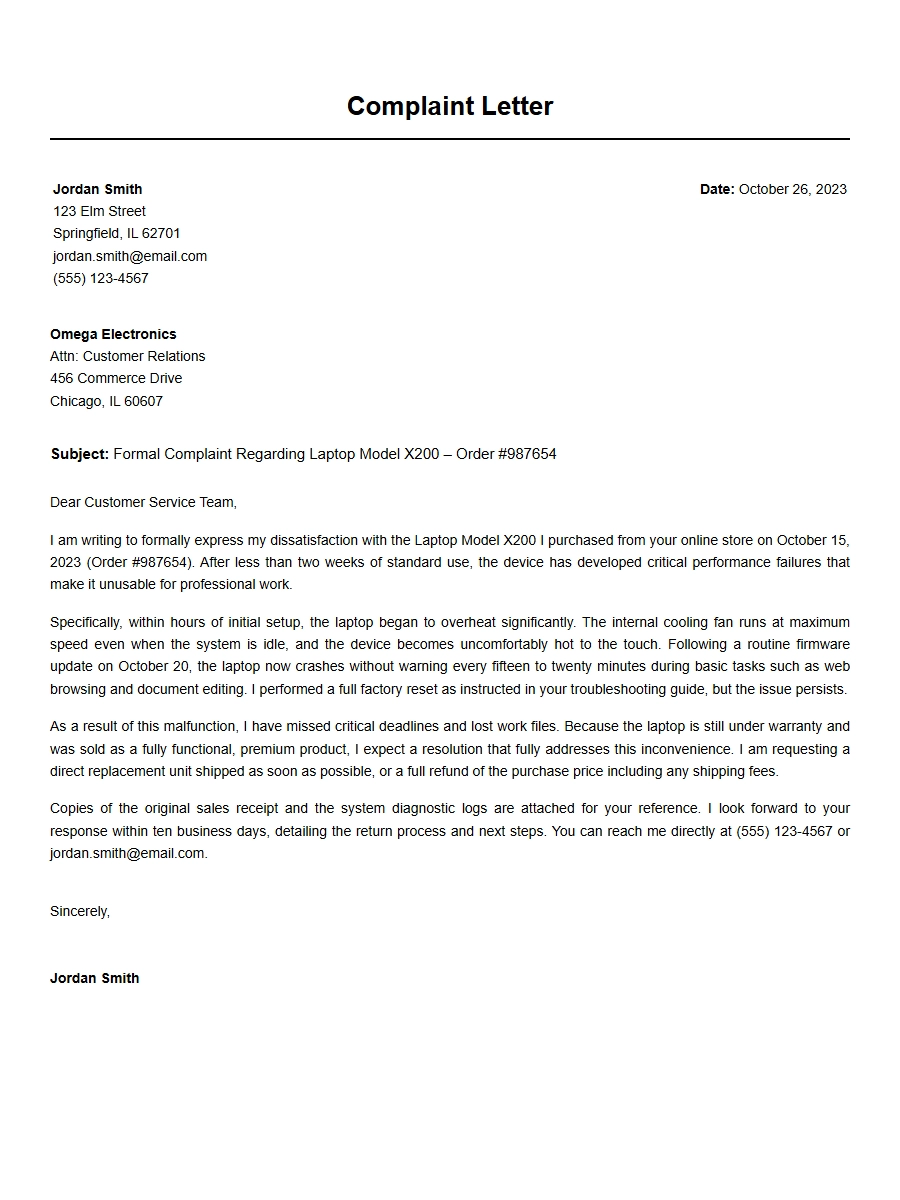
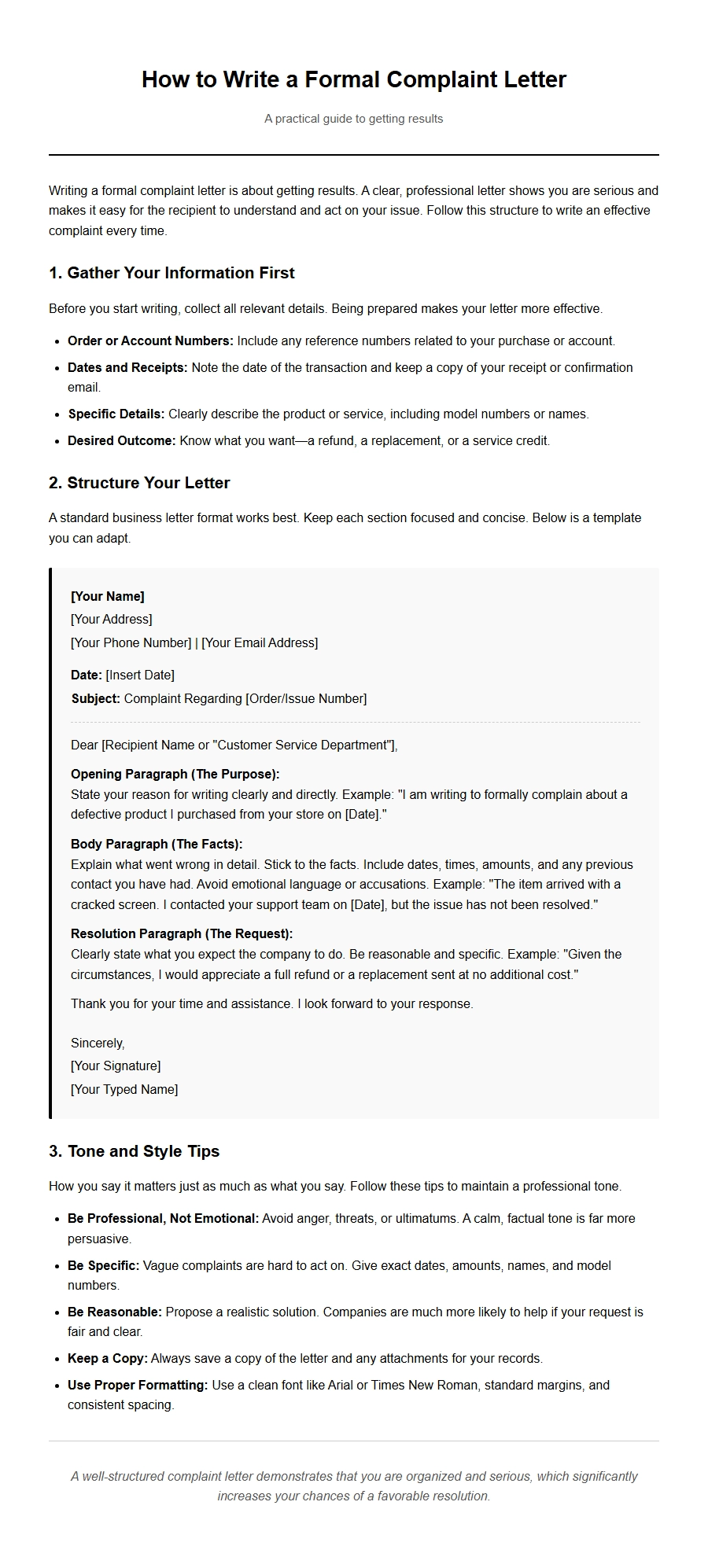 How to Write a Formal Complaint Letter
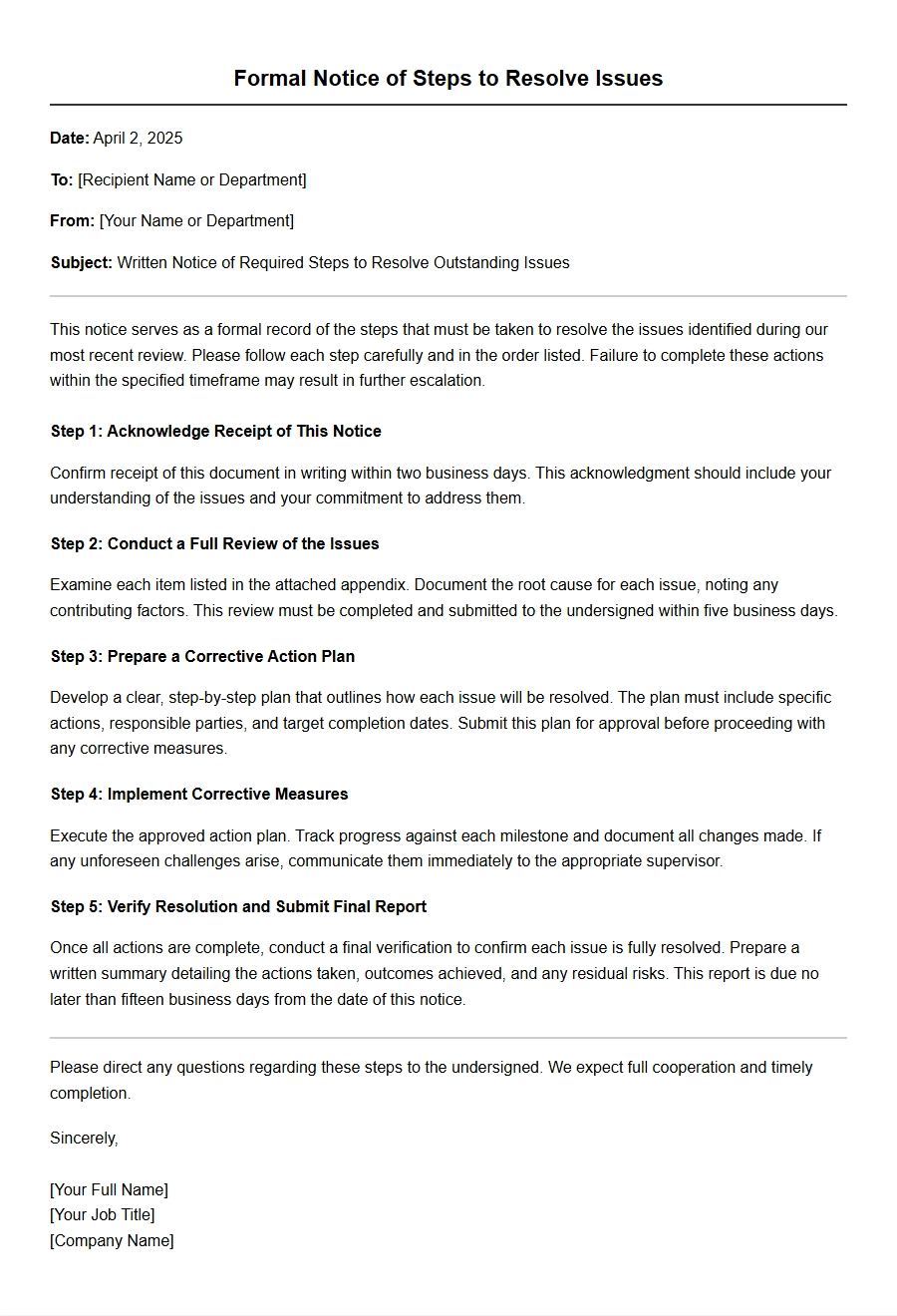 Steps to Resolve Issues via Written Notice
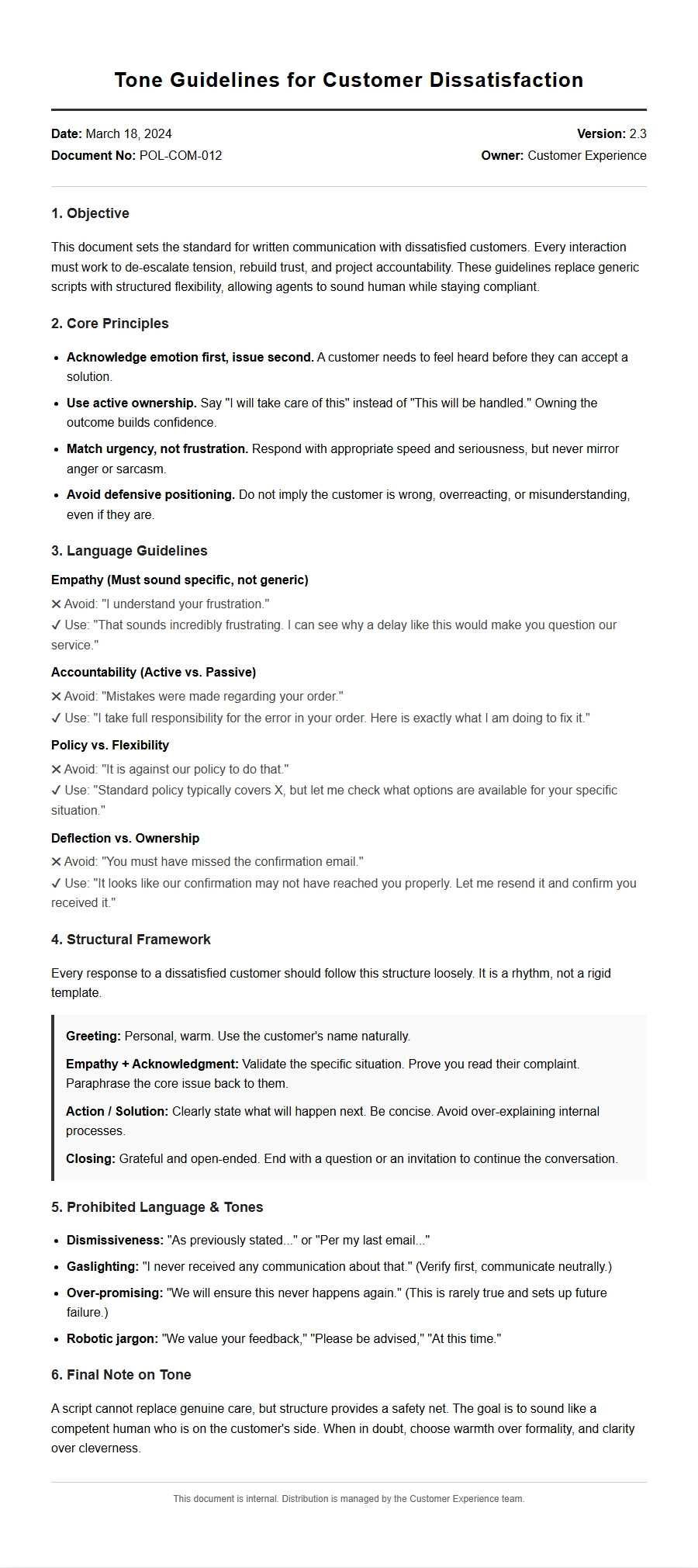 Tone Guidelines for Dissatisfied Customer Letters
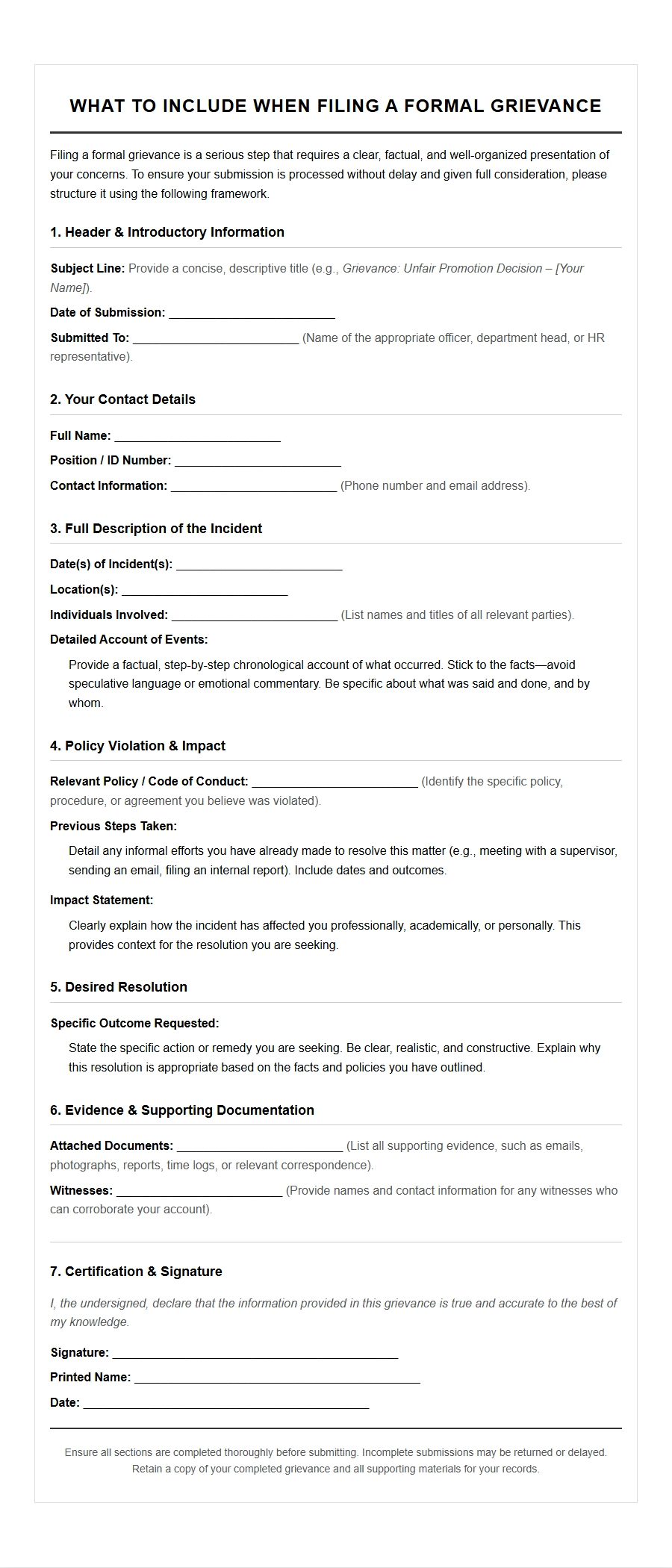 What to Include in a Formal Grievance Letter
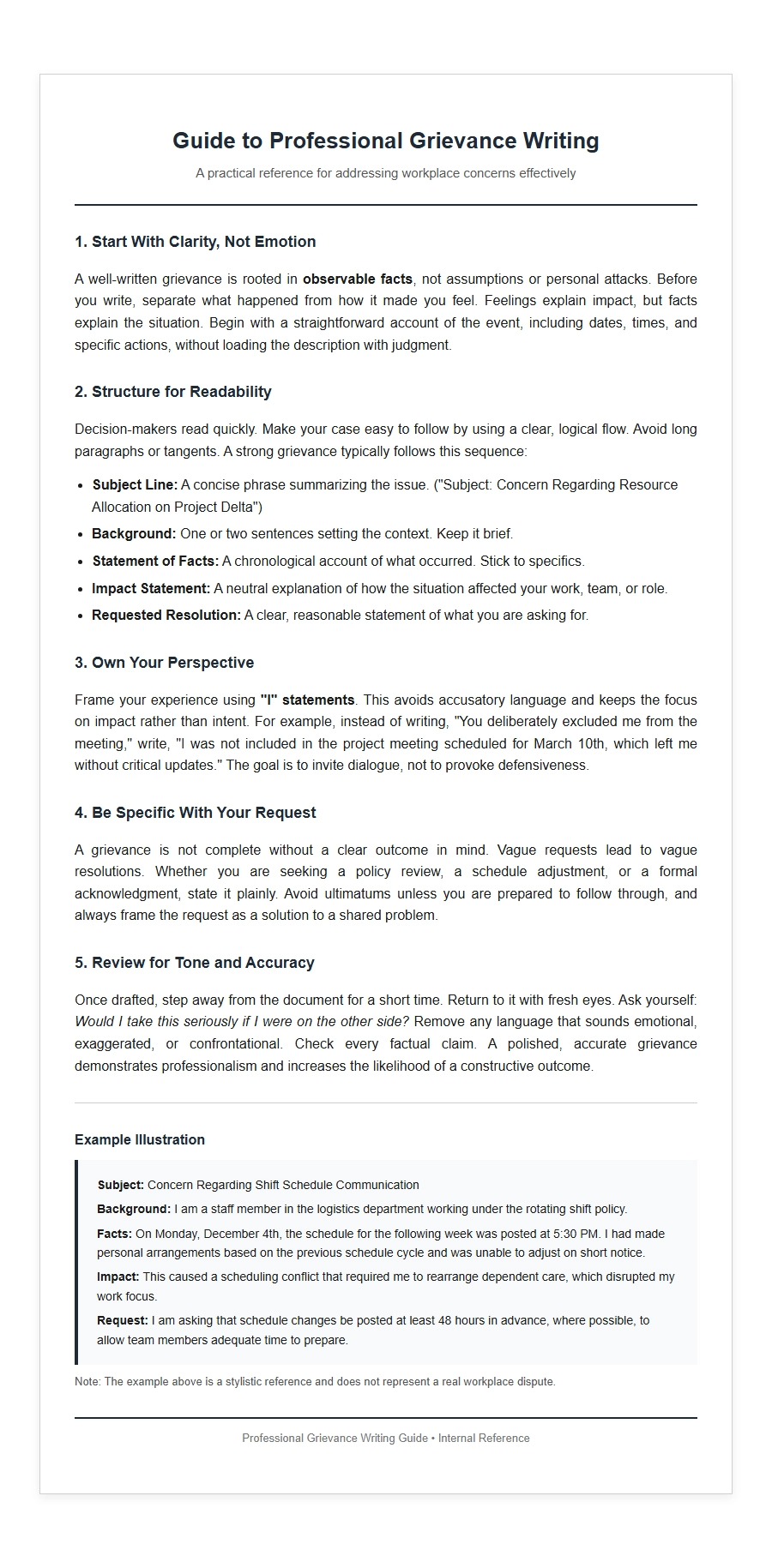 Best Practices for Writing Professional Grievance Letters
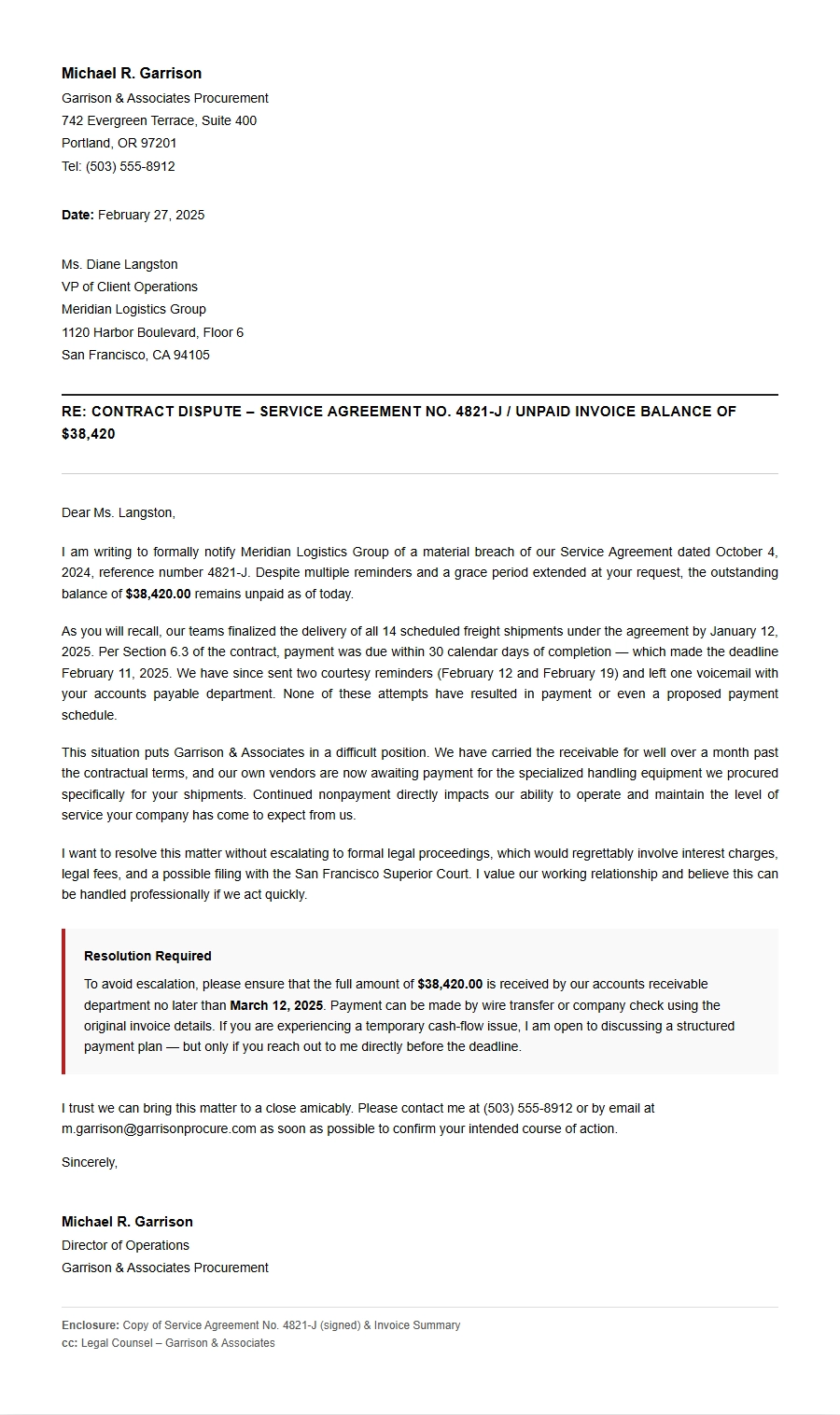 Key Elements of a Business Dispute Letter