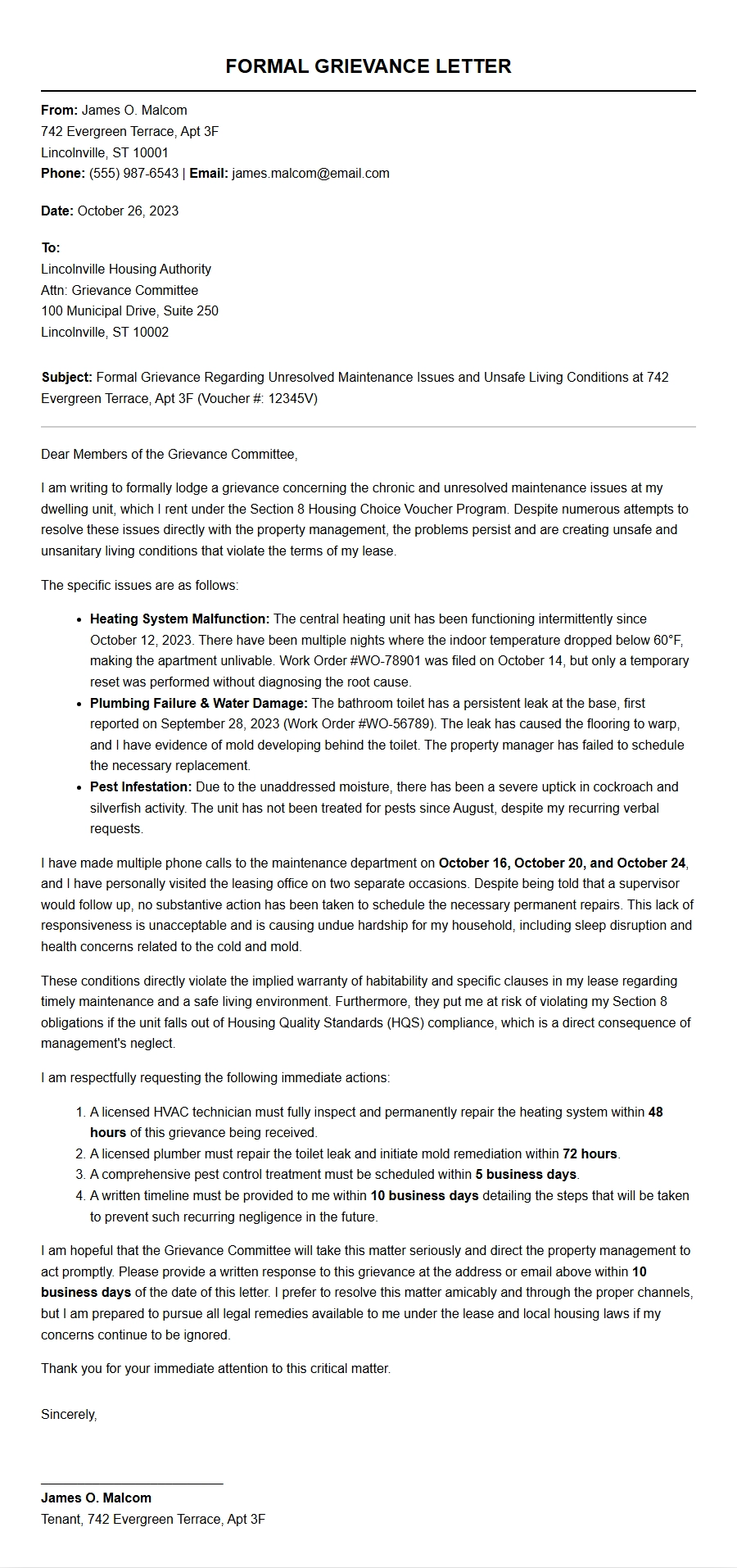
How to Write a Grievance Letter to Housing Authority
If you're drafting a grievance letter against a housing authority, you're probably frustrated with a situation that's been dragging on. Maybe your maintenance requests have been ignored, or you're dealing with unsafe conditions. The last thing you want is to struggle with formatting and formal language on top of that.
Using a letter sample isn't cheating. It's a smart way to get the structure right—proper salutation and closing, business letter format, and the right tone in writing. A good template gives you a framework, but you still customize it with your specific facts. Think of it as a starting point, not a final product.
Category: Complaint Letters
How do you choose the right sample? For a grievance against a housing authority, you need a formal letter with a professional tone. Avoid casual language. Use a clear letter structure: your contact info, date, recipient's name and title, a subject line that states the issue, body paragraphs explaining what happened and what you want, and a respectful closing. Many people overlook the importance of letterhead design in a physical letter or digital letter format if you're sending by email. A clean, simple header with your name and address sets a serious tone.
Letter writing etiquette matters more than you think. Use a standard salutation like "Dear [Name]" and avoid outdated greetings like "To Whom It May Concern." If you don't know the name, call the housing authority's main line and ask. The same care applies to the closing—"Sincerely" or "Respectfully" works well. Never use "Best" in a grievance; it feels too casual.
Your opening paragraph needs to grab attention right away. Don't bury your main point. Start with something like: "I am writing to formally grieve the repeated failure to address unsafe electrical wiring in my unit at 123 Main Street since September." That tells the reader exactly what this letter is about. Then provide specific dates, names of staff you spoke with, and any communication records. Formal writing tips often mention using a factual, chronological order. Emotion has a place, but keep it in check. Stick to what happened, not how you feel about it.
Adapting a sample without losing your authentic voice is easier than you think. Start by filling in your details in the template, then read it out loud. If a phrase sounds too stiff, tweak it. For example, change "I am in receipt of your notice" to "I received your notice." The goal is professional correspondence, not robotic jargon. A good sample is customizable letter that leaves room for your personality while maintaining the right level of formality.
Common mistakes trip up even experienced writers. One big one is using an outdated salutation. Another is ignoring the fact that you might be sending the letter by email instead of print. In a digital format, include a concise subject line and paste the letter in the body or attach a PDF. Don't just write "complaint" as the subject—make it specific, like "Grievance regarding unit 4B maintenance delays." Also, always proofread your letter. A typo or missing date can weaken your argument. Read it twice, or ask a friend to proofread letter for you.
The same attention to structure applies when you're writing about other housing issues. For instance, if your grievance involves rental property maintenance delays, the format is nearly identical. You just swap the details. If your housing authority has violated consumer protection law, you can use a formal notification sample as your base. And if you need to escalate to an investigation, a request for investigation into conduct follows a similar letter pattern. The key is always the same: clear, factual, and respectful.
Even outside housing complaints, the basics of letter structure and tone in writing carry over. A grievance letter for a medical billing error or a corporate governance complaint both need the same salutation and closing conventions. Learning to write one well makes you better at all professional correspondence.
Once you've written your first draft, don't send it immediately. Let it sit for a few hours, then reread it. Ask yourself: does this represent me professionally? Does it clearly state what I need? The sample helped you start, but your voice makes it effective. Practice writing these letters—the process gets faster each time, and soon you won't need to lean on a template at all.
Extra Samples
How to Write a Grievance Letter to Housing Authority
Maintenance Neglect and Mold Infestation
To: Housing Authority Grievance Department From: Jane Doe, Unit 4B, 123 Main St Date: March 15, 2025
I am writing to formally grieve the housing authority's persistent neglect of maintenance issues in my apartment, specifically a severe mold infestation in the bathroom that has been reported multiple times. Despite submitting work orders on January 10, February 5, and March 1, 2025, no action has been taken.
The mold has caused health problems for my family, including persistent coughing and allergic reactions. I have attached photographs and copies of the work orders for reference. The following issues remain unresolved:
Black mold on bathroom ceiling and walls
Peeling paint and water stains indicating a leak
No response to emergency maintenance request (March 10)
I request an immediate inspection and remediation within 7 days, or I will seek legal assistance. Please provide a written timeline for repairs.
Noise Complaint and Management Inaction
To: Housing Authority Compliance Office From: Robert Smith, Unit 2A, 456 Oak Ave Date: March 14, 2025
I am filing this grievance due to ongoing excessive noise from the apartment above (Unit 3A) and the housing authority's failure to enforce quiet hours. Since December 2024, I have submitted six formal noise complaints regarding loud music, stomping, and shouting between 11 PM and 3 AM.
Despite promises to address the issue, the noise continues unabated. My evidence log includes:
Date
Time
Nature of Disturbance
Complaint Filed
Dec 5, 2024
12:30 AM
Loud music
#N-2024-121
Jan 18, 2025
1:15 AM
Shouting voices
#N-2025-009
Mar 12, 2025
11:45 PM
Heavy stomping
#N-2025-078
I request a written warning to the tenant of Unit 3A, and if the behavior persists, eviction proceedings. I also want compensation for the disruption of my peaceful enjoyment of the premises.
Unfair Rent Increase Without Justification
To: Housing Authority Rent Review Board From: Maria Garcia, Unit 5C, 789 Elm St Date: March 13, 2025
I grieve the 12% rent increase applied to my lease renewal effective April 1, 2025. The increase is not justified by any documented improvement in services or property value. My current rent is $1,250/month; the proposed rent is $1,400/month.
According to the lease agreement and local regulations, rent hikes must be reasonable and based on actual cost increases or capital improvements. Over the past year, the housing authority has:
Failed to repair broken hallway lighting (reported 3 times)
Delayed garbage collection services
Decreased security patrols
I request a formal hearing to review this increase. I also demand an itemized breakdown of operating costs and any renovations that purportedly justify the hike. Please respond within 10 business days.
Unsafe Conditions: Broken Locks and Lighting
To: Housing Authority Safety Coordinator From: David Chen, Unit 1D, 321 Pine Road Date: March 12, 2025
I am filing a grievance regarding dangerous security conditions that the housing authority has refused to address. The main entrance door lock has been broken since February 20, 2025, allowing unauthorized access to the building. Additionally, the stairwell lighting on floors 2 and 3 has been non-functional for two weeks.
These conditions endanger all residents, particularly elderly and disabled tenants. I have reported these issues twice via phone and once in writing. The specific safety hazards are:
Main door lock broken – any person can enter freely
Stairwell dark – risk of falls and assault
Security camera in lobby malfunctioning
I demand immediate repair of the lock and lighting within 24 hours and a timeline for camera restoration. If not addressed, I will contact the city building inspector and file a police report for neglect.
Discrimination by Housing Staff
To: Housing Authority Equal Opportunity Officer From: Aisha Mohammed, Unit 3C, 654 Cedar Lane Date: March 11, 2025
I am grievously complaining about discriminatory treatment by housing manager Mr. Thompson. On multiple occasions he has made derogatory remarks about my ethnic background and has deliberately delayed processing my maintenance requests compared to other tenants.
Specific incidents include:
January 22: Mr. Thompson told me to "go back to where you came from" when I asked about a repair.
February 14: My request for a leaky faucet was ignored for 3 weeks, while my neighbor (of different ethnicity) got same-day service.
March 5: He refused to accept my rent payment, claiming I needed extra documentation not required from others.
I have witnesses and recording of the January 22 incident. I request a formal investigation, disciplinary action against Mr. Thompson, and assurance of fair treatment. I also want all delayed requests processed immediately.
Delay in Emergency Pest Control
To: Housing Authority Health and Safety Office From: Carlos Rivera, Unit 6A, 987 Maple Drive Date: March 10, 2025
I grieve the housing authority's failure to respond to a bed bug infestation in my apartment. I reported the issue on February 25, 2025, as an emergency because my child has severe allergic reactions to bites. To date, no inspection or treatment has been scheduled.
According to the lease, pest control is the responsibility of the authority, and an emergency request must be addressed within 48 hours. My family has suffered numerous bites, and I have spent $200 on over-the-counter treatments. Timeline of my requests:
Date
Method
Response
Feb 25
Online form
Auto-reply only
Feb 28
Phone call
"We will note it"
Mar 2
In-person visit
Promised call back
I demand immediate extermination services, reimbursement for my out-of-pocket costs, and compensation for the health impact. I will escalate to the city health department if no action by March 17.
Improper Eviction Notice Violating Lease
To: Housing Authority Legal Compliance Division From: Lisa Park, Unit 2B, 210 Birch Street Date: March 9, 2025
I grieve the eviction notice I received on March 7, 2025, which states I must vacate by April 6, 2025, for alleged "violation of quiet enjoyment." This notice is improper because I was never given a warning or an opportunity to cure any alleged violation, as required by my lease and state law.
The lease (Section 12) states that any complaint must be preceded by a written notice specifying the violation and allowing 14 days to remedy. No such notice was ever provided. Additionally, the grounds are false—I have never been cited for noise or disturbance.
I request immediate withdrawal of the eviction notice and a written apology. If the authority proceeds, I will file a formal challenge and request a hearing. Please provide all documentation related to any alleged violation within 5 days.
Lack of Accessibility Accommodations
To: Housing Authority ADA Compliance Officer From: George Harris, Unit 8C, 456 Walnut Ave Date: March 8, 2025
I am a wheelchair user and have requested reasonable accommodations since moving into this building six months ago. Specifically, I need a ramp at the back entrance (the only accessible route) and grab bars in the bathroom. Despite submitting a formal request with a doctor's note on December 1, 2024, no action has been taken.
The current situation causes me daily hardship and violates the Fair Housing Act and ADA. My specific complaints:
Back entrance has two steps with no ramp – I cannot exit independently
Bathroom has no grab bars near toilet or shower – risk of falls
Door widths are too narrow for my wheelchair in the hallway
I demand installation of a permanent ramp and grab bars within 30 days. I also request a meeting with maintenance to discuss widening the hallway door. If ignored, I will file a HUD complaint.
Poor Communication and Unanswered Requests
To: Housing Authority Customer Service Manager From: Susan Lee, Unit 7D, 789 Spruce Street Date: March 7, 2025
I grieve the chronic failure of the housing authority to communicate regarding my open maintenance requests and questions about lease terms. Over the past two months, I have submitted five inquiries via phone, email, and the online portal, but have received no substantive responses.
Specific issues include:
Question about late fee policy (Feb 1) – never answered
Request for a copy of my lease (Feb 15) – no response
Follow-up on plumbing repair (Feb 28) – promised call never happened
Complaint about unreturned security deposit (March 1) – ignored
This lack of response is unacceptable and makes it impossible to resolve problems. I request a direct contact person who will respond within 2 business days to any communication. I also want all outstanding issues addressed in writing within one week.
Inadequate Response to Broken Heating System
To: Housing Authority Emergency Services From: James Wong, Unit 9A, 321 Oak Street Date: March 6, 2025
I am filing a grievance regarding the housing authority's failure to restore heat to my apartment. The furnace broke on February 28, 2025, and despite multiple calls, no permanent repair has been made. Temperatures inside my unit have dropped to 55°F, endangering my elderly mother who lives with me.
I have called the emergency line six times. Log of interactions:
Date
Time
Agent
Promise
Feb 28
9 AM
Sarah
"Technician by noon"
Mar 1
10 AM
Mike
"Part ordered, 2-3 days"
Mar 5
4 PM
Lucy
"Will escalate"
No technician has ever come. I demand immediate installation of a temporary heater and permanent repair within 48 hours. I also request compensation for the health risk and inconvenience. I will call the local news if not resolved.
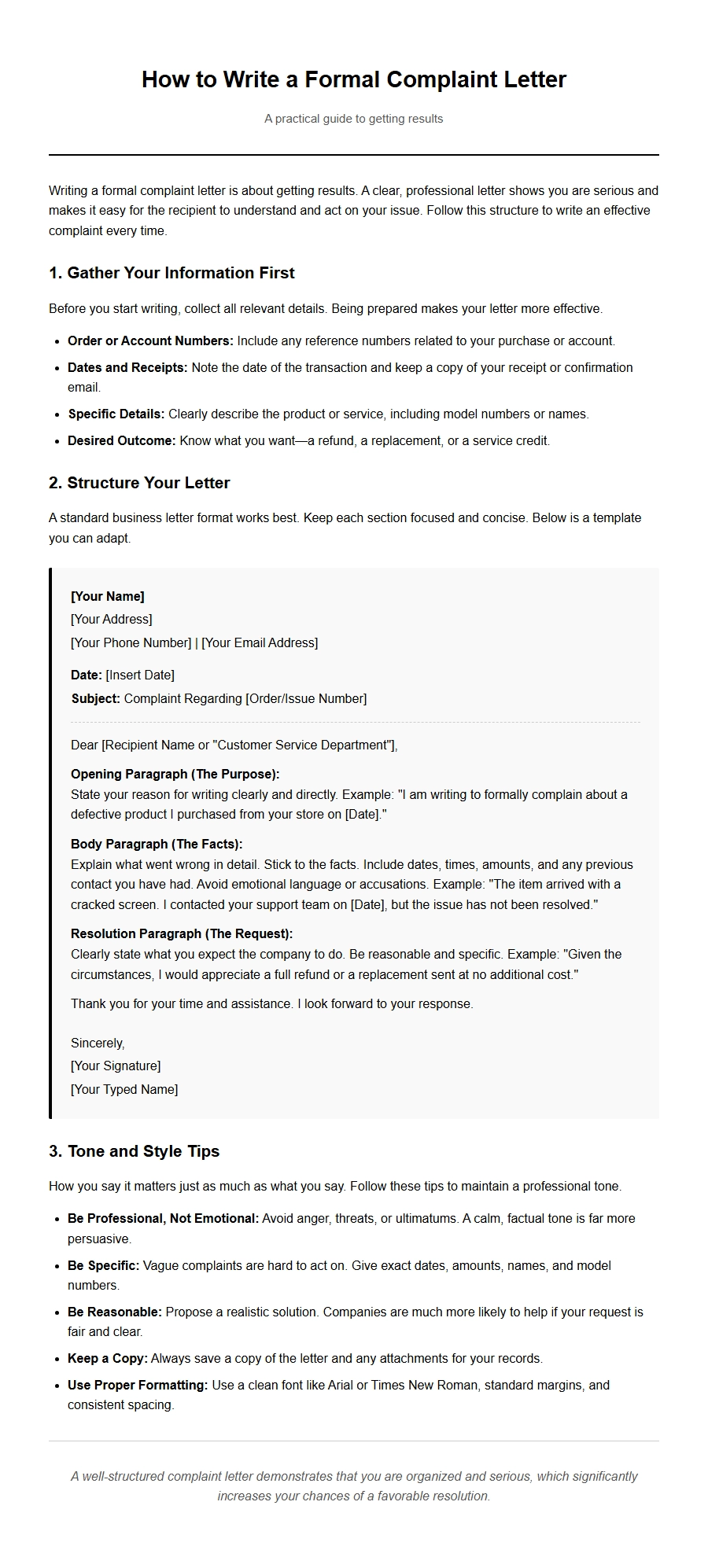 How to Write a Formal Complaint Letter
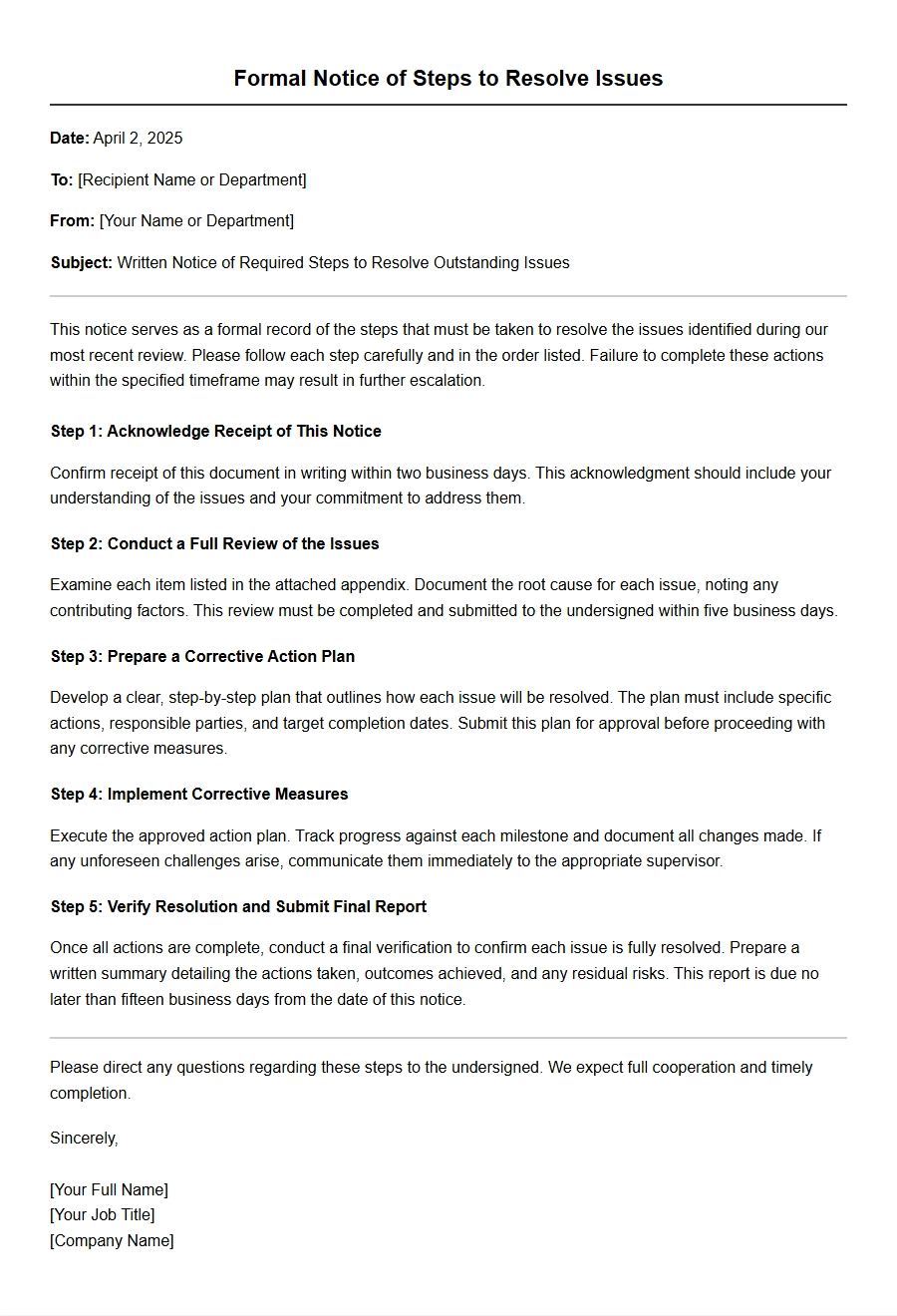 Steps to Resolve Issues via Written Notice
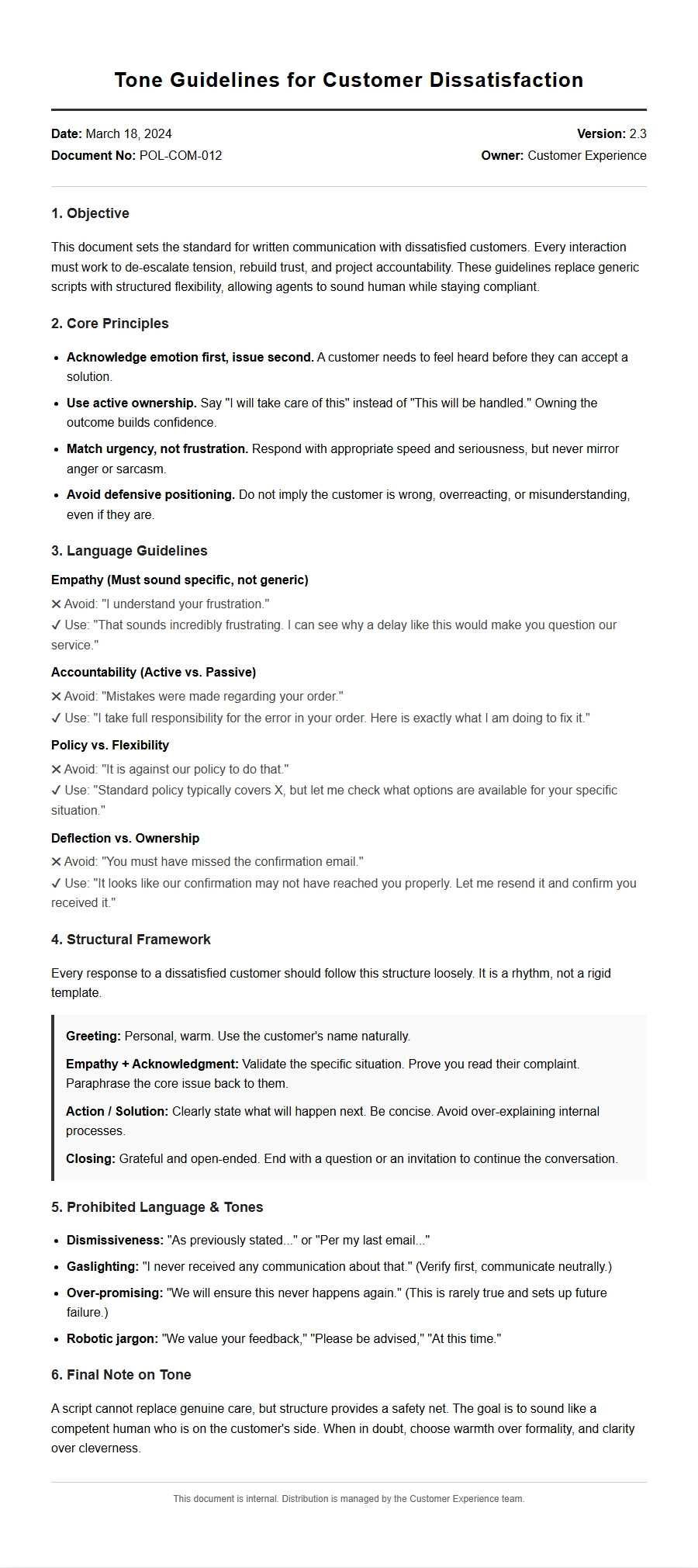 Tone Guidelines for Dissatisfied Customer Letters
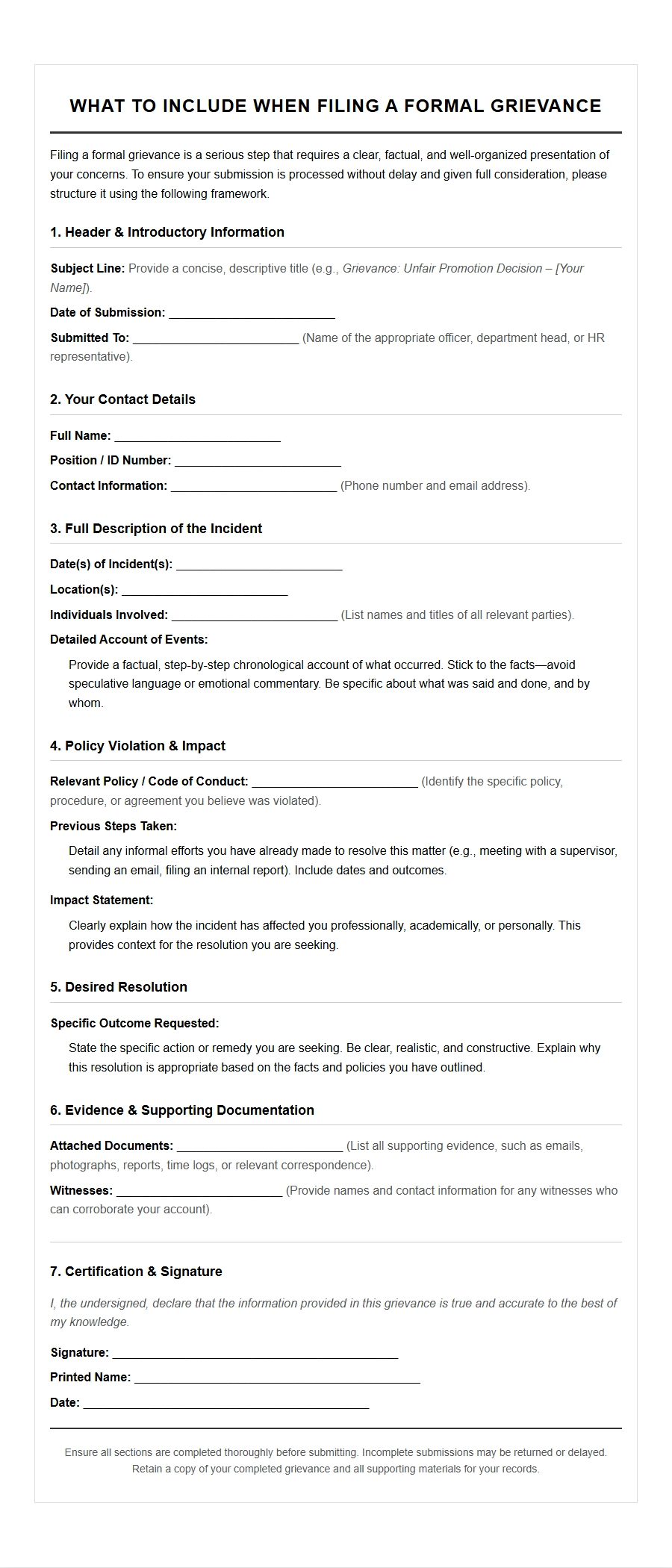 What to Include in a Formal Grievance Letter
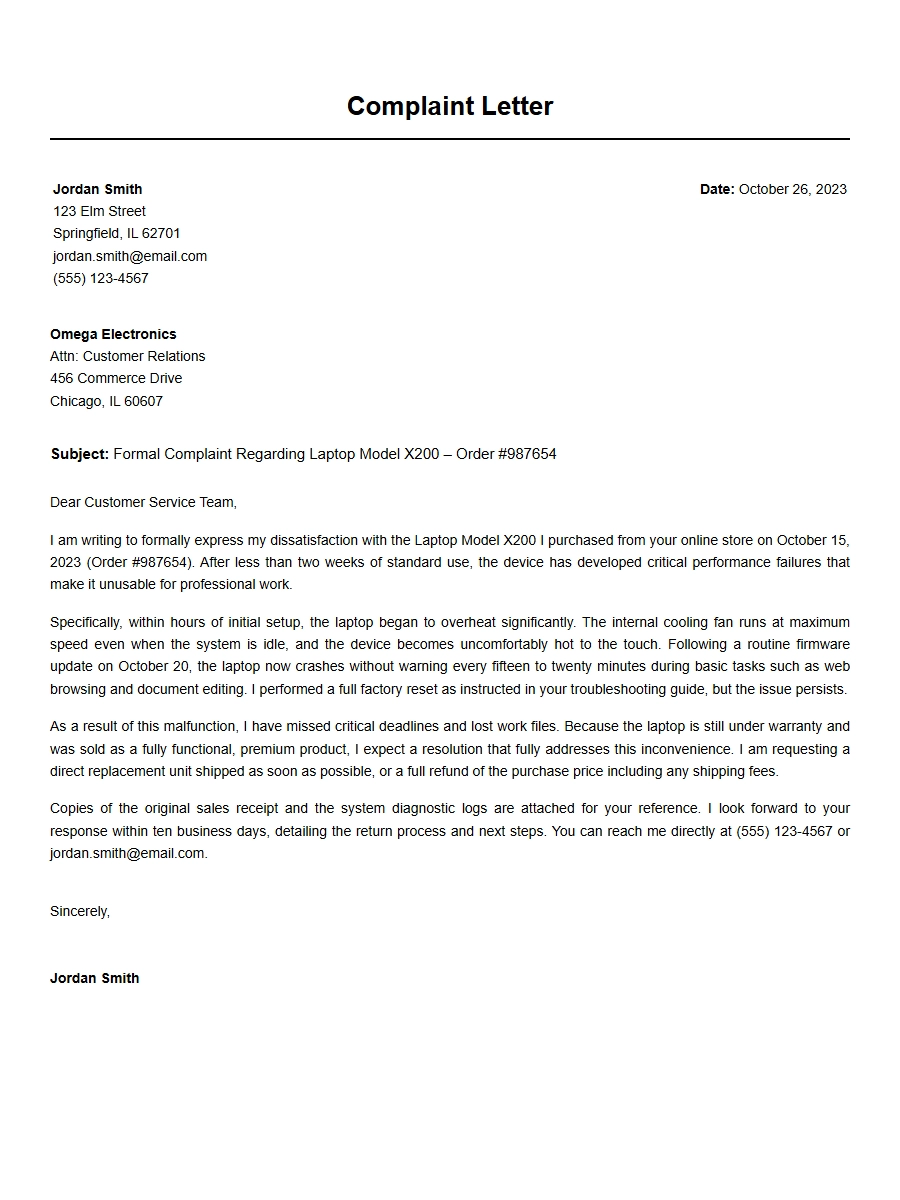 Structure of an Effective Complaint Letter
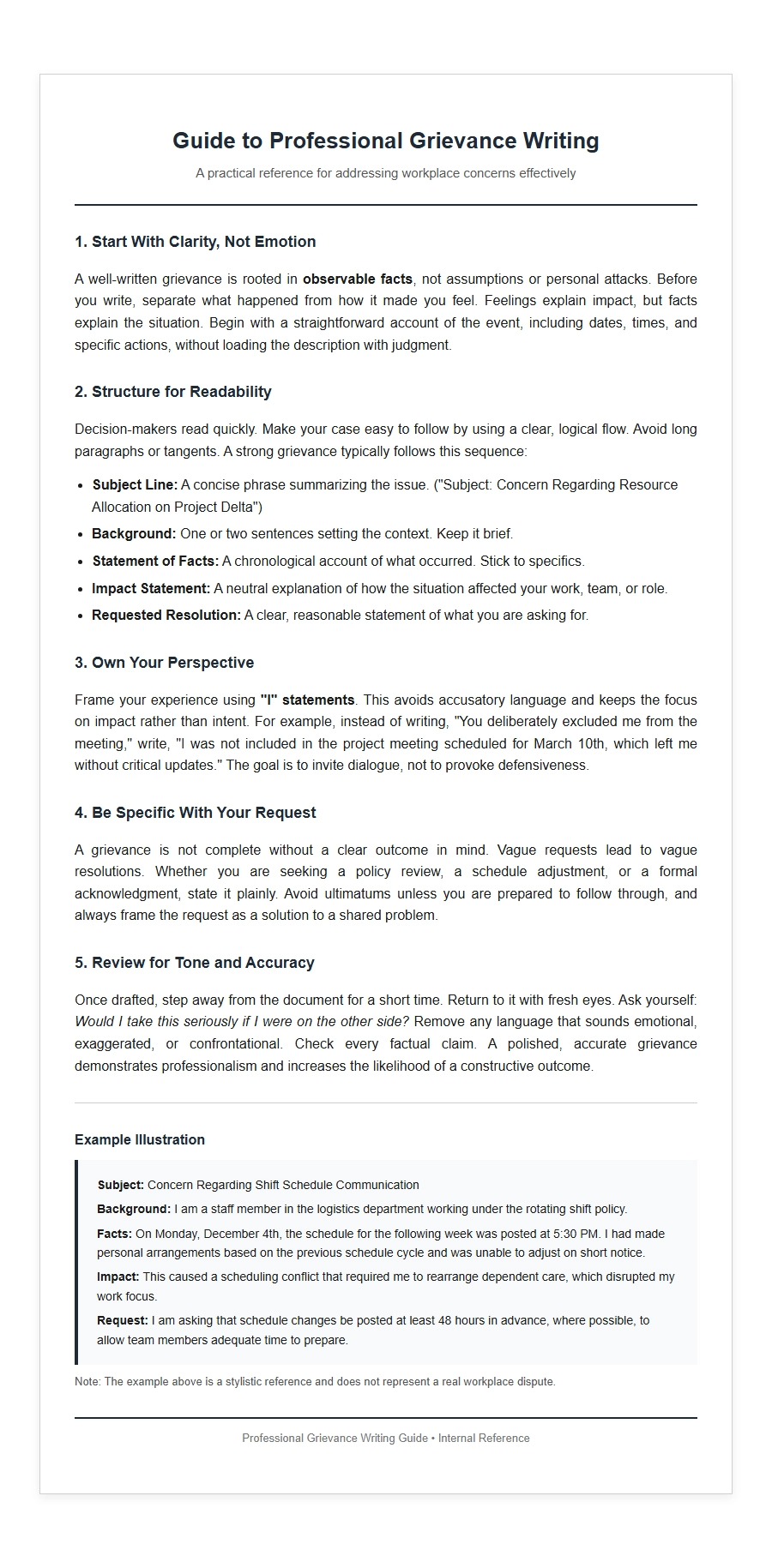 Best Practices for Writing Professional Grievance Letters