You’ve got a genuine issue—maybe a faulty product, a service failure, or a billing error—and you know you need to put it in writing. But staring at a blank page makes the frustration worse. You want to sound professional, not angry. You want to be taken seriously, not dismissed. A good formal complaint letter does exactly that: it states the problem clearly, shows you’ve done your homework, and tells the other person what you expect next.
Why a complaint letter works better than a phone call
Phone calls get forgotten. Emails to customer service vanish into black holes. A formal complaint letter creates a record. It shows you’re serious and willing to follow a process. Whether you’re writing about airline baggage loss or a fraudulent charge on your merchant account, putting it in writing gives you something to reference later. And no, using a sample isn’t cheating—it’s smart. A good letter template gives you the structure and tone you need so you can focus on the facts.
Start with the right format
Even in 2025, people still send printed letters for serious complaints. But digital format works too, especially if you're sending a polite but firm escalation email draft to a supervisor. The basics stay the same: your contact info, the date, the recipient’s name and title, a clear subject line, a formal salutation, and a professional closing. Skip the flowery letterhead design unless you’re representing a business. For personal complaints, simple is better.
Say exactly what went wrong
The opening paragraph should grab attention without dramatics. “I am writing to formally report a billing error on my account dated March 15, 2025” works better than “I am extremely disappointed with your company.” Be specific. If you’re complaining about airline baggage loss, include your flight number, date, and baggage claim tag number. If it’s about a fraudulent charge to your merchant processor, paste the transaction ID. The reader needs to know what happened without digging through paragraphs of emotion.
Include what you want as a resolution
Many people forget this step. You don’t just want to vent—you want something to change. A refund, a replacement, an investigation, or a policy review. State it plainly. “I expect a full refund of $150 to be issued within 10 business days.” That’s not rude; it’s clear. And it makes it easier for the company to respond quickly. If you’re dealing with something like dental office hygiene standards, ask for a specific corrective action, not just vague “improvements.”
Common mistakes that weaken your letter
Using outdated salutations like “To Whom It May Concern” makes you look like you’re sending a form letter. If you don’t have a name, call the company and ask. Or use a department title. Avoid threats and accusations—stick to facts. And don’t ignore formatting: a printed letter needs a proper business letter format, while an email needs a clear subject line and short paragraphs. Proofreading matters too. A typo undermines your credibility. Read it out loud before you send it.
When to use a sample
Samples help when you’re unsure about the tone or structure. For example, if you’re writing about cafeteria food safety standards, you can use a sample to see how to present evidence without sounding paranoid. Samples also help with letter writing etiquette—things like when to use “Dear Mr. Smith” versus “Dear Dr. Taylor.” But never copy a sample word for word. Your situation is unique. Adjust the details, change the tone to match your personality, and keep your own voice.
Quick tips for the opening paragraph
Hook them in the first two sentences. Mention the product or service, the date, and the problem. Then state what you want. That’s it. The rest of the letter is evidence and context. If you’re sending a resignation letter sample or a letter of recommendation, the same rule applies—open with clarity. The reader shouldn’t have to guess why they’re reading.
Category: Professional correspondence
How to keep your tone professional but human
Ever received a letter that felt so stiff it could have been written by a robot? That’s the opposite of what you want. Use natural language. “I’m disappointed that the replacement part still doesn’t fit” is better than “I wish to express my dissatisfaction with the aforementioned component.” The key is balancing formality with sincerity. If you’re angry, say you’re frustrated—but don’t insult anyone. Keep the tone polite and firm. That combination gets results faster than aggression or flattery.
Before you send it
Check the salutation and closing. “Yours sincerely” works when you know the name. “Yours faithfully” works when you don’t. Attach supporting documents—receipts, photos, screenshots—but mention them in the body so they don’t get overlooked. And if you’re sending by email, paste the letter into the body. Attachments sometimes go unopened.
Writing a formal complaint letter gets easier the more you do it. The first one feels awkward. By the third one, you’ll know which details matter and which ones to skip. A sample gets you started, but your own experience and honesty will make the letter land. And if it doesn’t work the first time? Escalate. Keep a copy of everything. You’re not being difficult—you’re being thorough.
Samples to Guide You
How to Write a Formal Complaint Letter
Essential Components of a Formal Complaint Letter
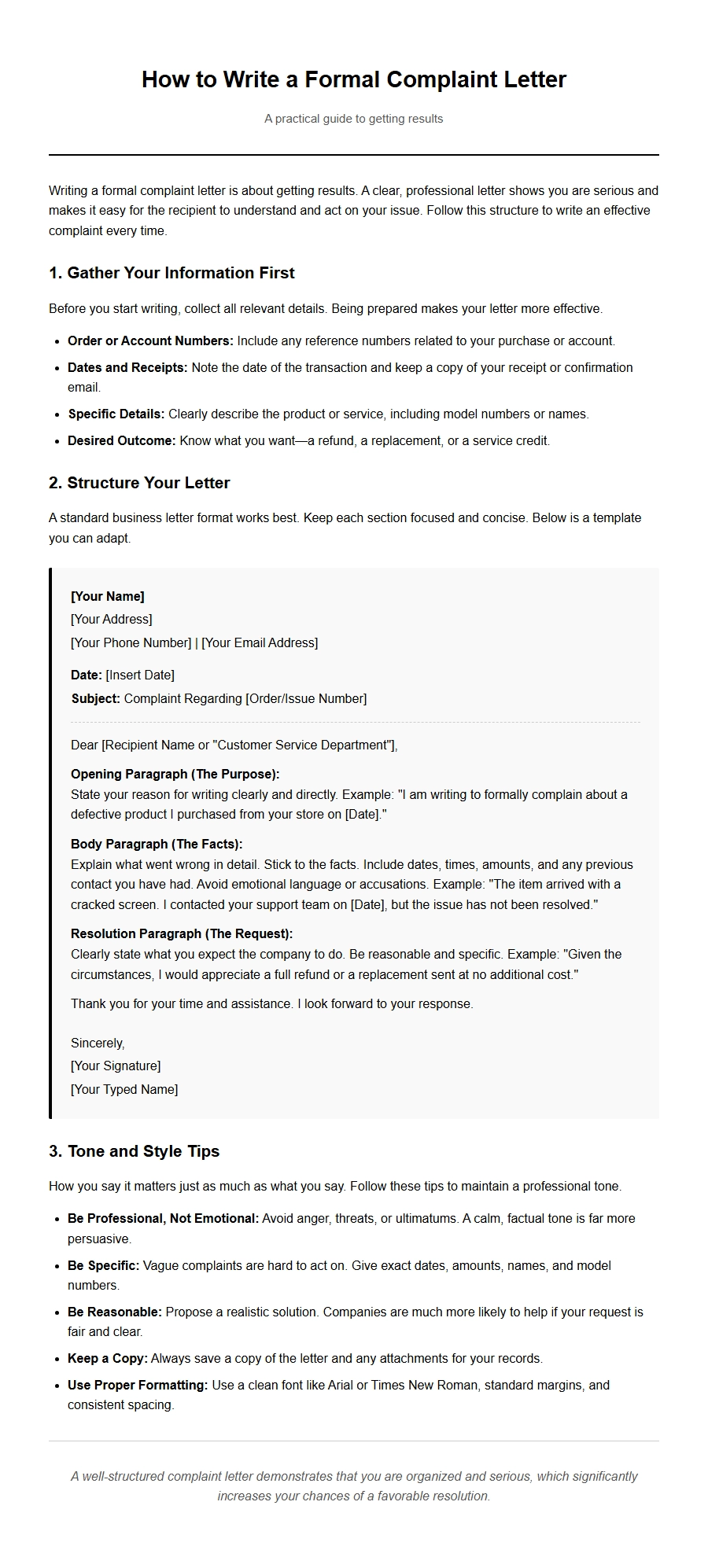
Every formal complaint letter should include these key elements to ensure it is taken seriously. Start with your contact information and the date. Then add the recipient's name, title, and company address. Clearly state the subject line summarizing the issue. In the opening paragraph, explain why you are writing and reference any previous communication, if applicable. The body should describe the problem factually, listing specific dates, order numbers, or locations. Next, state the desired resolution — what action you expect the company to take. Close with a polite request for a timely response, and include your signature block. Below is a quick checklist of components:
Component
Description
Contact Info
Your name, address, phone, email
Recipient Details
Name, title, organization
Subject Line
Brief issue summary
Problem Description
Facts, dates, evidence
Desired Resolution
Specific action requested
Closing
Polite request and signature
Using this structure ensures clarity and professionalism.
Step-by-Step Structure for Your Complaint
Follow this logical structure to organize your formal complaint letter effectively. First, open with a clear subject line such as "Complaint Regarding Order #12345". Then write a brief introductory paragraph stating the purpose. In the second paragraph, provide a chronological account of the issue: what happened, when, and where. Use bullet points if multiple incidents occurred:
Date of incident: October 5, 2023
Description: Product arrived damaged
Prior contact: Called customer service on Oct 6
Next, explain how the problem has affected you. Then state your requested resolution — for example, a refund, replacement, or apology. Finally, close by specifying a deadline for response (e.g., 10 business days) and thank the recipient for their attention. Keep the tone respectful and factual throughout.
Template: Complaint About Poor Service
Below is a practical template you can adapt for a complaint about poor customer service. Replace the bracketed fields with your details.
Subject: Complaint Regarding Service on [Date] at [Location]
Dear [Manager's Name],
I am writing to formally express my dissatisfaction with the service I received on [Date] at your [branch/store name]. Unfortunately, the experience fell far below my expectations. Staff member [Name] was unhelpful and spoke to me in a rude tone, despite my polite requests for assistance. I have been a loyal customer for [X] years, and this incident was extremely disappointing.
I expect your company to uphold a standard of professionalism. I request a written apology from [Staff Name] and assurance that appropriate training will be provided. Please respond within 10 business days. Thank you for your attention to this matter.
Sincerely, [Your Name] [Your Contact Info]
Example: Product Defect Complaint Letter
This sample letter addresses a defective product purchase. Use it as a guide when writing to the manufacturer or retailer. Begin with your order details in a small table for clarity:
Field
Details
Order Number
ORD-98472
Product
Electric Kettle Model EK-200
Date of Purchase
March 12, 2024
Price Paid
$45.99
Dear Customer Service,
I purchased the Electric Kettle listed above. Upon first use, the kettle failed to heat water and emitted a burning smell. I have attached photos of the damaged base. I expect a full refund or a replacement unit at no extra cost. Please arrange a prepaid return label. I look forward to your resolution within 7 days. Thank you.
Best regards, Jordan Smith jordan.s@email.com
Tips for Maintaining a Professional Tone
Your tone can determine how seriously your complaint is received. Follow these tips to stay professional while being firm:
Use polite language: Always include "please" and "thank you."
Avoid anger or accusations: Stick to facts. Instead of "you ruined my order," say "the order did not meet the described specifications."
Be specific and concise: State exactly what went wrong without rambling.
Focus on resolution: Frame your letter around what you want, not just what went wrong.
Proofread: Errors undermine credibility. Read your letter aloud before sending.
Remember, a calm, clear, and respectful letter is more likely to get a positive response.
How to Address the Complaint to the Right Person
Addressing your letter to the correct person or department increases the chance of a swift resolution. Follow these steps:
Check the company's website for a customer service or complaints email or postal address.
If you have an order confirmation, look for a contact name or department.
For a large company, address it to the Customer Relations Manager or the specific department head.
When in doubt, use "To the Customer Service Team" or "Dear Sir or Madam".
If previous correspondence exists, reply to the person you already spoke with.
Using a specific name shows you've done your research and makes your letter more personal.
Including Evidence and Documentation
Supporting evidence strengthens your complaint significantly. Always reference and attach copies – never originals. Include these types of evidence:
Type of Evidence
Example
Receipts
Order confirmation, invoice
Photos
Damaged product, packaging
Correspondence
Emails, chat logs, call notes
Witness statements
Names of staff or bystanders
In your letter, mention the enclosed evidence: "I have attached photos of the defect (Attachment A) and my receipt (Attachment B)." If sending by email, attach files clearly labeled. This documentation removes ambiguity and shows you are prepared.
Sample Letter for Escalating an Unresolved Complaint
If your initial complaint received no response or an unsatisfactory reply, send an escalation letter. Address it to a higher authority. Example:
Subject: Escalation of Complaint Regarding Order #ORD-98472
Dear [Senior Manager or CEO Name],
On March 15, 2024, I complained to your customer service about a defective kettle (order #ORD-98472). I received only an automated reply and no resolution. I am disappointed that my earlier concerns were not addressed. I now request your personal intervention. I expect a full refund within 5 business days. If I do not hear from you by [date], I will escalate to the Better Business Bureau. Please treat this matter with urgency.
Sincerely, Jordan Smith jordan.s@email.com Phone: (555) 123-4567
This letter is more assertive but still professional.
What to Do After Sending the Complaint Letter
Once your letter is sent, follow these steps to track and manage your complaint:
Keep a copy of the letter and any attachments for your records.
Note the date sent and the deadline you gave for response.
Monitor your email and postal mail for a reply. If you receive none, follow up via phone or email after the deadline passes.
Document all subsequent communication – dates, names of representatives, and what was said.
If no resolution, consider contacting a consumer protection agency or ombudsman.
Being organized after sending the letter shows diligence and helps if escalation becomes necessary.
Common Mistakes to Avoid
Avoid these frequent errors that weaken formal complaint letters:
Vague descriptions – Always include specific dates, order numbers, and names.
Emotional language – Avoid insults, threats, or yelling (all caps).
Unrealistic demands – Request what is fair and reasonable.
Ignoring formatting – A messy letter looks unprofessional.
Forgetting to sign – Even in email, include a signature block with contact info.
Proofreading catches many of these mistakes. Read your letter once as if you were the recipient – would you take it seriously?
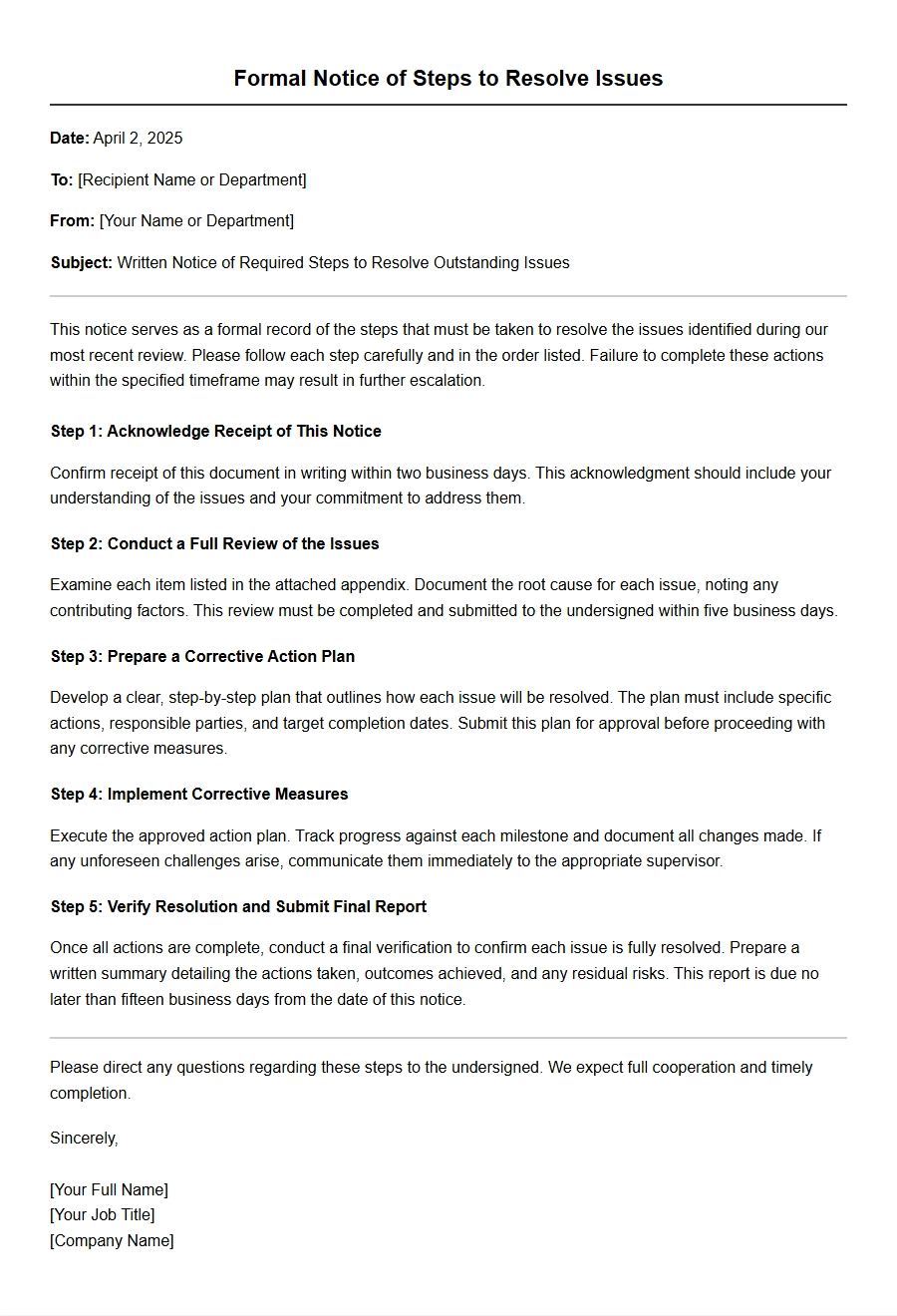 Steps to Resolve Issues via Written Notice
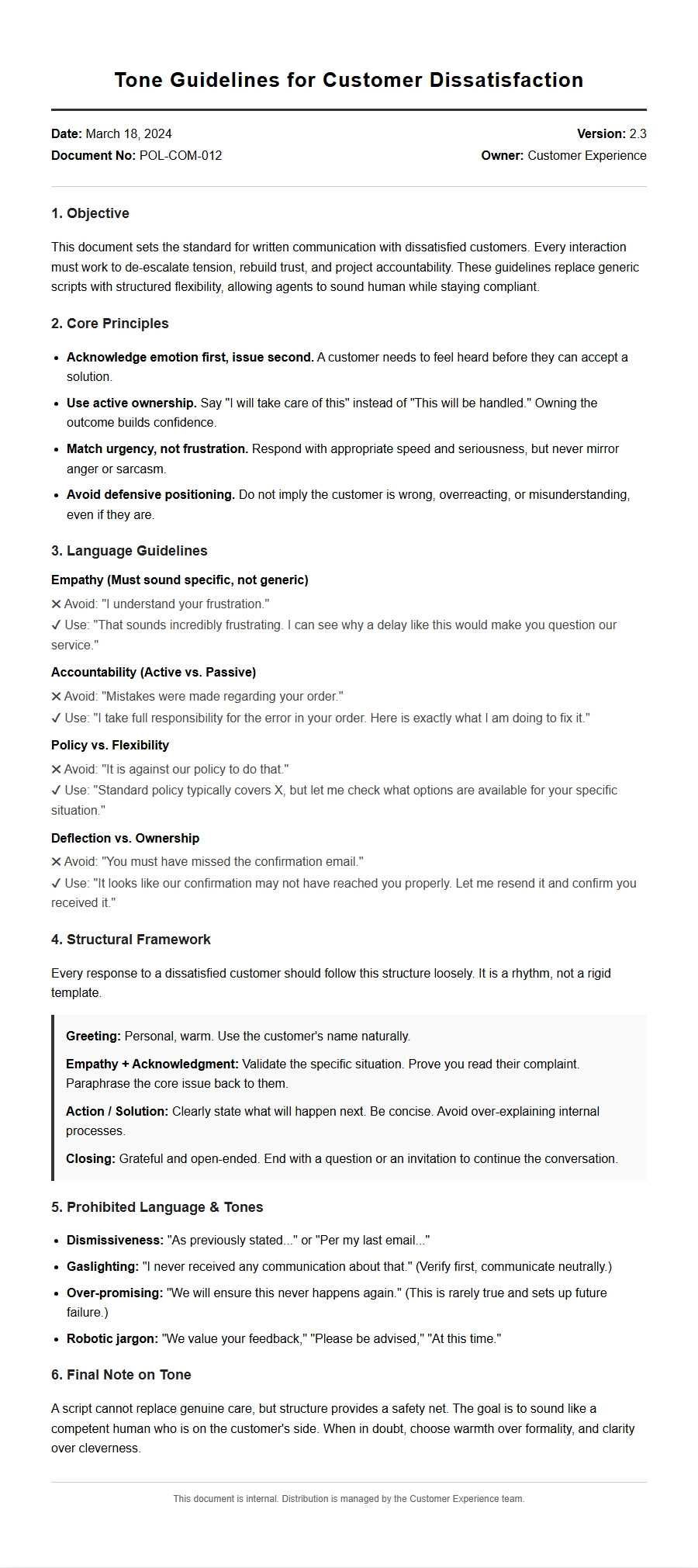 Tone Guidelines for Dissatisfied Customer Letters
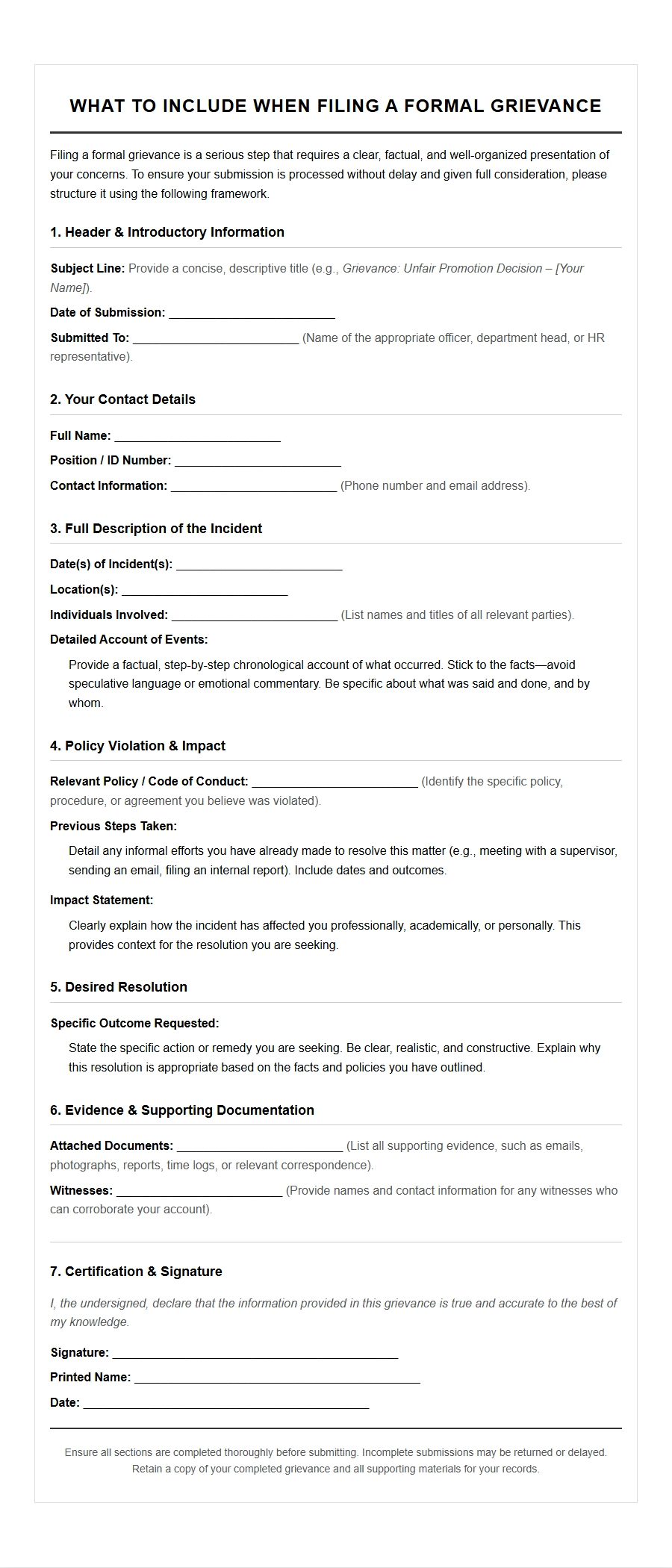 What to Include in a Formal Grievance Letter
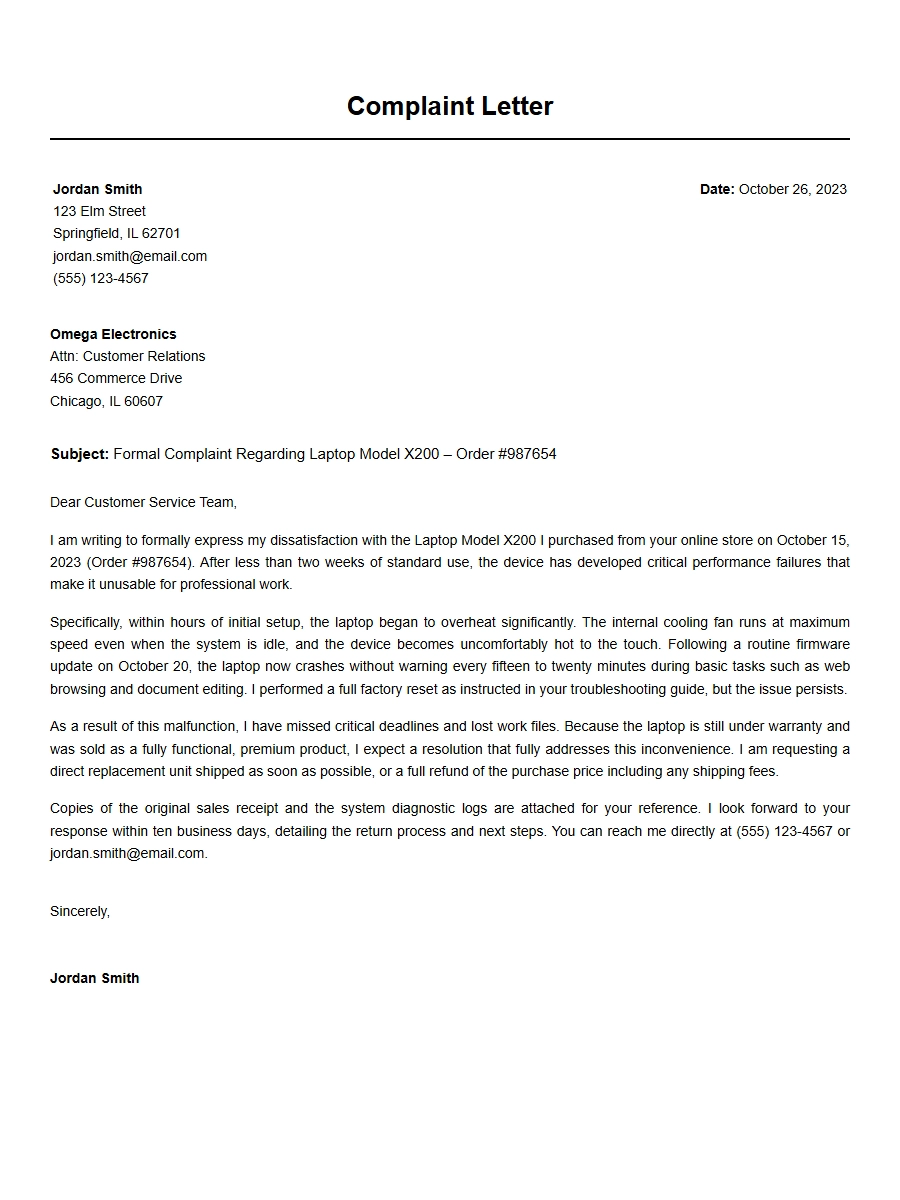 Structure of an Effective Complaint Letter
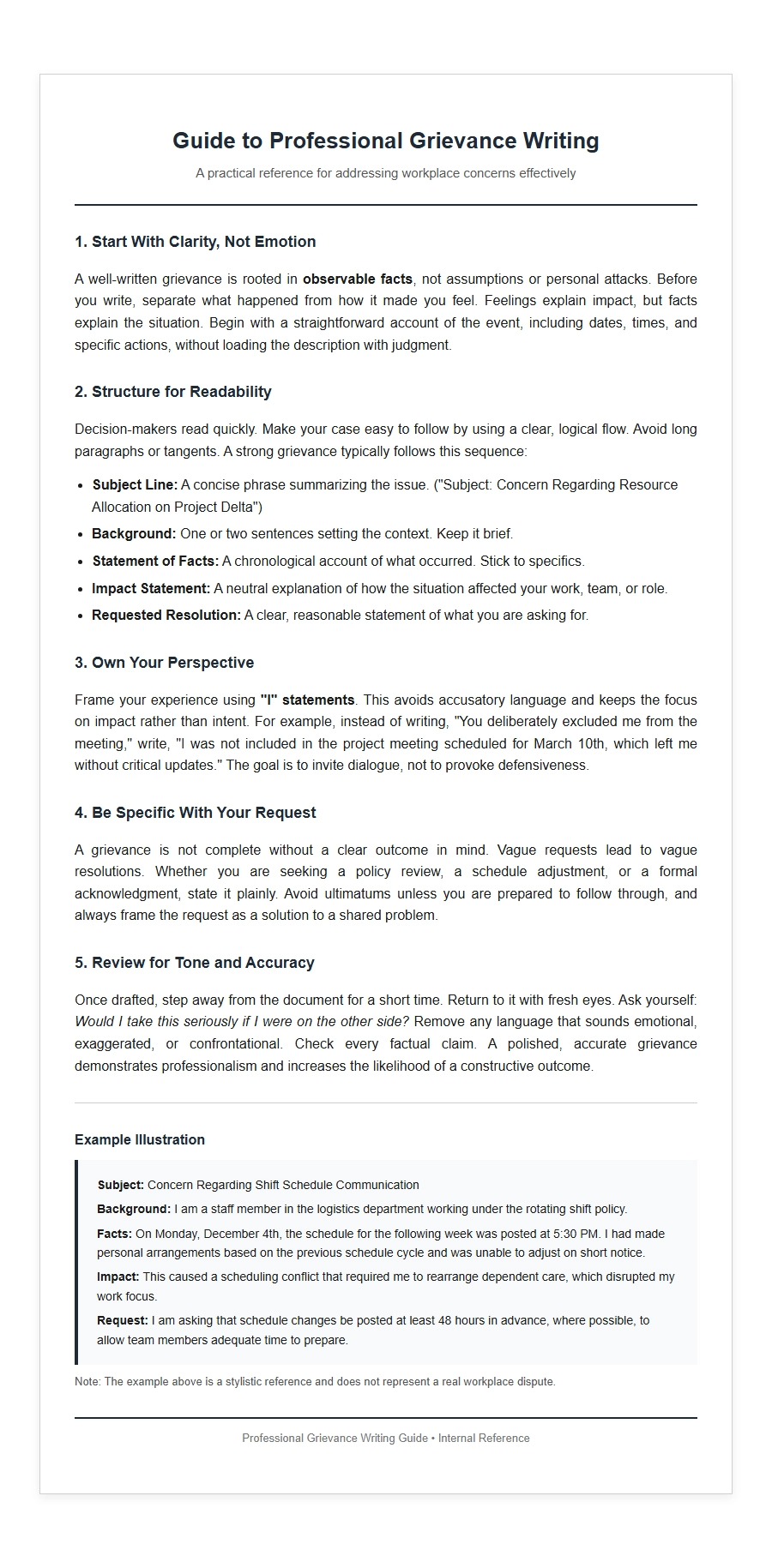 Best Practices for Writing Professional Grievance Letters
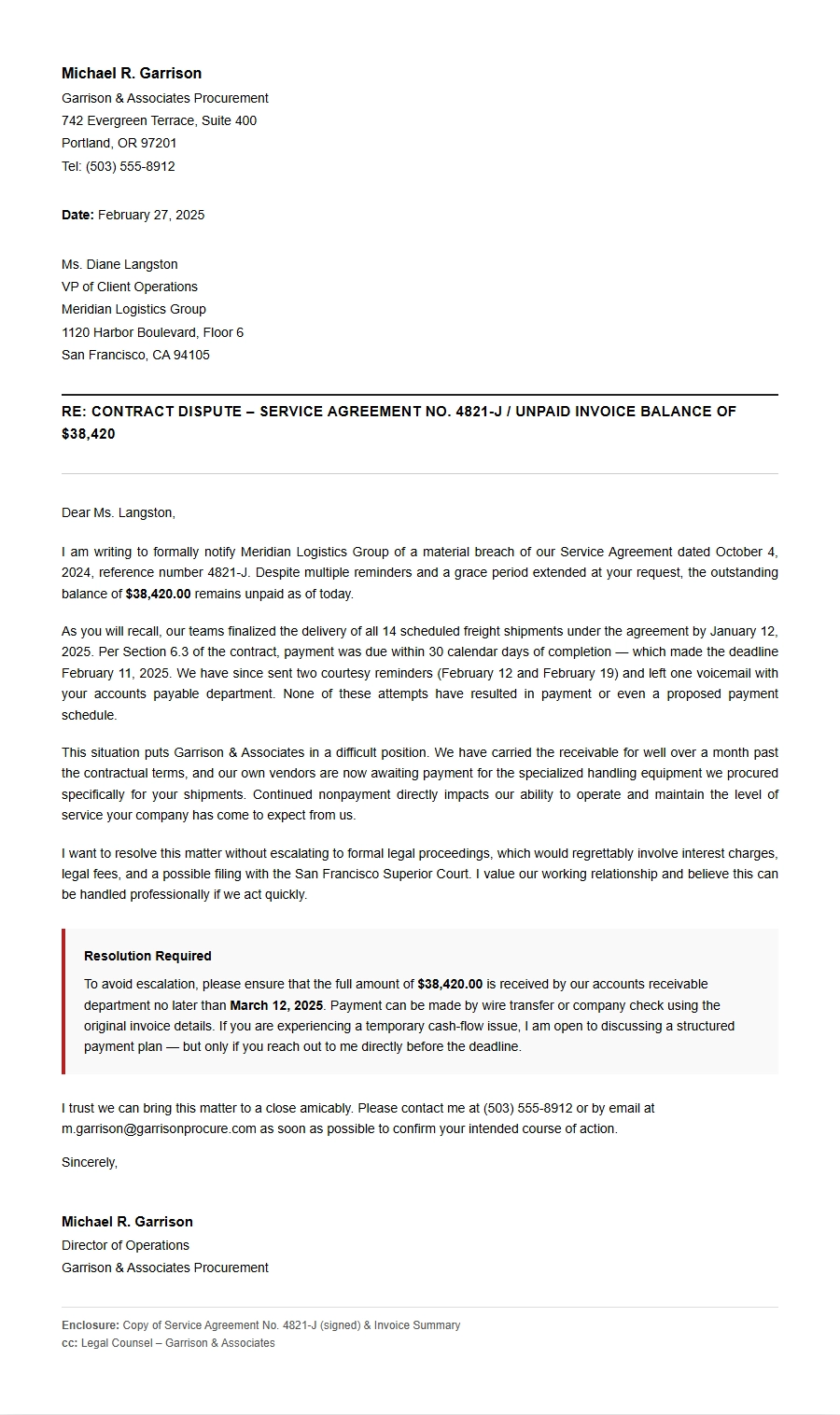 Key Elements of a Business Dispute Letter