When you’ve been treated badly by customer support, the last thing you want to do is spend another hour drafting a formal complaint. You just want the issue fixed, and you want it acknowledged. A good feedback form for poor customer support experience isn’t about venting—it’s about getting the right person to take action. The trick is knowing how to write one that actually works.
What makes a feedback form useful here
A feedback form for a bad customer service experience is different from a general comment card. You’re not suggesting improvements. You’re documenting a failure so the company can investigate, apologize, and (hopefully) make things right. This means your form should focus on facts, not emotions—though it’s fine to say you’re upset.
Most companies have standard feedback forms, but they’re rarely designed for serious complaints. They ask vague questions like “How was your experience?” with a star rating. That won’t cut it when you need to report a refund lost in limbo or a representative who was outright rude.
How to structure your complaint in a form
Before you start typing, know that the most effective feedback forms follow a simple structure: what happened, when it happened, who was involved, what you were promised, and what you need now. Stick to this order.
Start with the date and time of the interaction. Include the name of the agent if you have it. Then describe the issue in one or two sentences. For example: “I called on April 10 to cancel my subscription. The agent confirmed it was processed, but I was billed again on April 15.”
Next, explain what went wrong with the support itself. Did they transfer you multiple times? Did they give incorrect information? This is where you connect the service failure to the larger problem. A clear, short description is more effective than a long story.
If the company has a formal complaints process, they may send a confirmation email after you submit the form. Keep that. It serves as a record. If you don’t receive any kind of follow-up within two business days, you may need to escalate using an escalation email to senior management regarding misconduct complaint.
What to include in the form fields
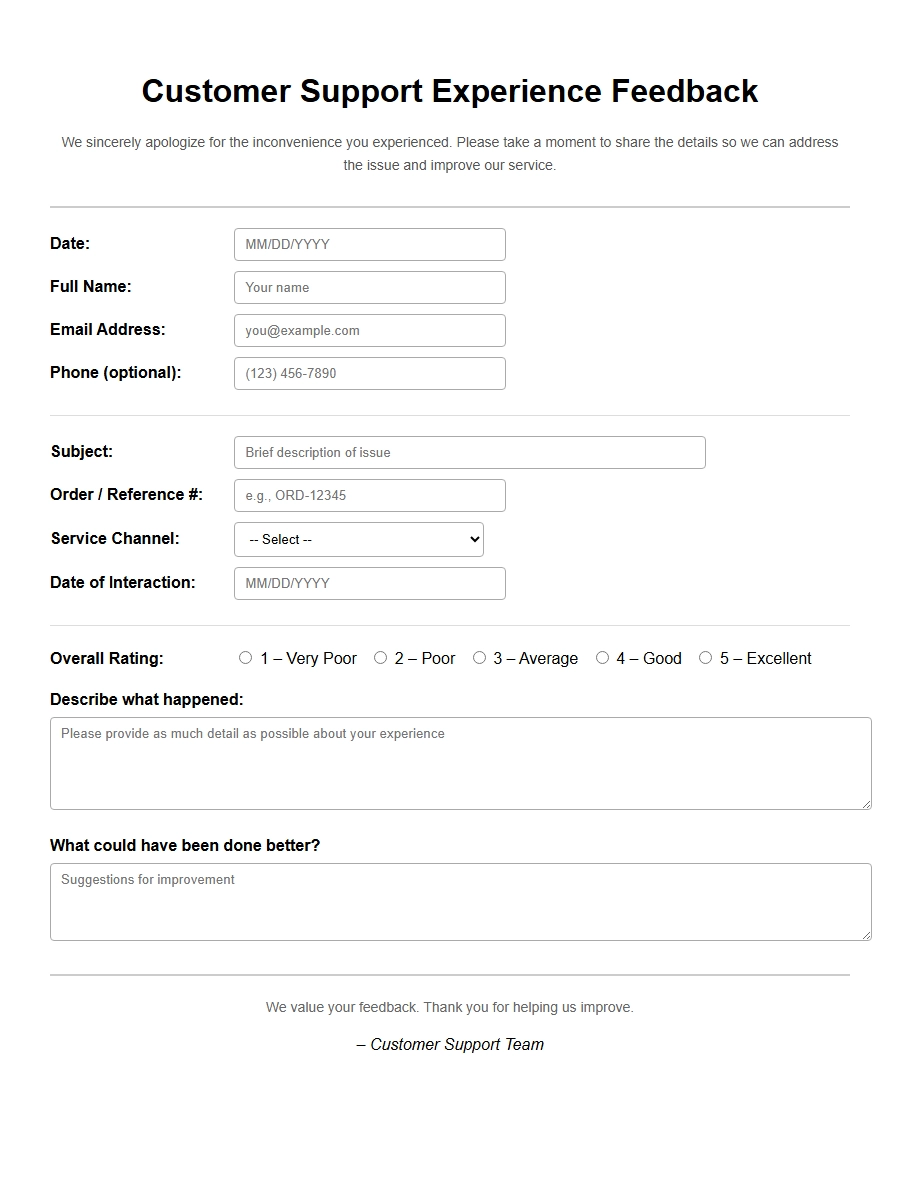
A well-designed feedback form should ask for these specifics:
Your contact information (so they can actually respond)
Order or account number (so they can look up your file)
Date of the interaction
Agent name or ID (if you have it)
A short description of the problem
What you want as a resolution (refund, redo of service, apology, etc.)
If the form doesn’t have a space for what you want, add it in the comments box. Be direct: “I expect a full refund to my original payment method within 5 business days.” That’s not rude—it’s clear.
Mistakes that weaken your complaint
The most common mistake people make is writing too much. A feedback form is not a diary entry. Stick to the relevant facts. Emotional language like “I am so frustrated I can’t sleep” might feel good to write, but it often distracts from the actual problem. Save the emotional impact for the subject line, if needed, but keep the body factual.
Another mistake is leaving out the resolution. If you don’t state what outcome you want, the company may assume you just want to vent. They might close your case without doing anything. Always end with what you need.
Also avoid naming specific employees in a public or defamatory way. Stick to facts. Instead of “the agent was lying,” write “the agent told me my refund was processed, but it wasn’t.” That’s harder to argue with.
If the situation involves serious misconduct, like a representative who was aggressive or dishonest, consider using a formal request for investigation into conduct complaint letter instead of a simple feedback form. That creates a stronger paper trail.
Should you use a template or letter instead
Some companies don’t have a proper feedback form. They just have a general “contact us” page. In that case, you’re better off sending a structured email or letter. You can use the same structure I described above, but format it as a formal complaint.
For service failures that involve real money or time lost, a letter often gets more attention than a web form. Forms go into a queue. Letters get assigned to a manager. And if you need to escalate later, you have a dated document to reference.
If the issue involves a repair or service from a tradesperson who wasn’t licensed, you’ll want to use a specific format. A complaint about unlicensed tradesperson services requires mentioning the lack of licensing directly, because that changes how the company handles the complaint.
How to follow up after you submit
Wait two to three business days. If you hear nothing, send a follow-up with the date you submitted the original form. Reference the confirmation number if you have one. Keep it polite but firm. Something like: “I submitted a complaint on May 1 and haven’t received a response. Please confirm receipt and provide an expected resolution date.”
If that gets ignored, you escalate. Use an assertive tone complaint letter for service recovery to make it clear you expect action, not another apology. A slightly firmer tone often gets faster results because it signals you’re not going to drop the issue.
For problems with travel-related services, like an airline losing your luggage, follow a different process. Airline complaint systems are overwhelmed, so you need to be very specific about dates and baggage tags. A complaint letter for airline baggage loss damage should include your baggage claim number, flight numbers, and an itemized list of contents if the bag was damaged.
One last thing to remember
Your feedback form is the start, not the end. Use it to create a record. Then follow through. Most companies will make things right if you are clear, calm, and persistent. You don’t need to be aggressive—just specific. That alone puts you ahead of 90% of complainants who give up after the first form.
Common Sample Formats
Feedback Form for Poor Customer Support Complaint
Formal Complaint: Unresolved Tech Support Issue
Date: 2025-03-15 Customer ID: CUST-4829
I am writing to formally complain about the poor customer support I received regarding my internet connectivity issue. Despite three phone calls and two chat sessions over the past week, my problem remains unsolved. Each agent asked me to repeat the same troubleshooting steps without reading the previous notes.
Details of contacts:
Date
Agent
Duration
Outcome
Mar 10
Jessica
25 min
Reset modem
Mar 12
Mark
18 min
Reset modem again
Mar 14
Priya
30 min
Promised callback (never received)
I request a senior technician to resolve this permanently within 48 hours. Please confirm receipt and expected resolution date.
Feedback Form for Live Chat Support
Chat Reference: CHT-77201 Agent: Agent Alex Date: 2025-03-18
Please rate the following aspects of your chat experience on a scale of 1 (poor) to 5 (excellent):
Response time: 2
Agent knowledge: 1
Politeness: 3
Resolution: 1
What went wrong? The agent took over 10 minutes to answer each message. When I explained my billing error, Alex repeatedly said “I understand” without actually addressing the issue. Finally, I was told to call a different department. This is unacceptable for a premium account holder.
Suggestion: Improve agent training on billing processes and enforce faster response SLAs.
Complaint About Rude Customer Service Representative
To: Customer Service Manager From: Patricia Dunn Account: #87432-01
I am lodging a formal complaint against your representative David R. I called on March 22 at 2:30 PM to cancel a recurring charge. David immediately became defensive, interrupted me, and said, “If you’d read the terms, you wouldn’t be calling.” His tone was condescending and unprofessional.
After I requested a supervisor, he put me on hold for 12 minutes, then came back and said the supervisor was “too busy for this.” I eventually had to hang up and call again, where another agent resolved my issue in 5 minutes.
Action requested:
An apology from David or his supervisor.
Training for David on respectful communication.
Confirmation that my account notes reflect this incident.
Rating Sheet for Recent Support Interaction
Interaction ID: SRV-2025-0398 Date: 2025-03-20 Department: Technical Support
Please provide your ratings for the following support areas:
Criteria
Rating (1-5)
Comments
First response time
2
Waited 14 minutes on hold
Problem understanding
1
Agent kept asking irrelevant questions
Solution effectiveness
1
Issue still not fixed after 2 hours
Overall satisfaction
1
Worse support experience ever
I expected a quick fix for a known software bug, but instead I was transferred three times. Please ensure frontline agents have access to known issue databases.
I am requesting immediate escalation of my case. My order #102938 was delivered damaged on March 5. Since then, I have spoken to four different support agents. Each one promised a replacement and said they would send a return label. No label has arrived, and the replacement has not shipped.
Summary of broken promises:
March 6 – Agent Sarah: “You’ll get a label in 24 hours.” Nothing.
March 9 – Agent John: “I’ve reissued the label. Check spam.” Nothing.
March 12 – Agent Mia: “A supervisor will call you.” No call.
March 16 – Agent Carlos: “I manually submitted the request. Wait 3-5 days.” Still waiting.
I want this escalated to a case manager who can personally oversee a replacement shipment within 48 hours. If unresolved, I will file a chargeback.
Dissatisfaction Survey for Phone Support
Call ID: CL-2025-04-003 Agent: Sandra Lee Length of call: 37 minutes
Thank you for asking me to complete this feedback form. Unfortunately, my experience was poor.
Reasons for dissatisfaction (check all that apply):
Long hold time before speaking to agent
Agent did not listen to my issue
Agent provided incorrect information
Problem was not resolved
Additional comments: Sandra put me on hold five times to “check with a supervisor.” Each time I waited 3-5 minutes. She then told me my warranty had expired, which is false – I have proof of an extended warranty. When I pushed back, she became argumentative. I finally gave up. This was a complete waste of my time. I expect a call from a quality assurance team within 24 hours.
Structured Complaint Form: Billing Support Failure
Customer Name: Marcus Chen Account Number: ACCT-7723 Contact Date: 2025-03-25
Issue description: Incorrectly charged $129.99 instead of $89.99 for monthly service. I contacted billing support on March 23.
Support interaction details:
Time
Action
Result
9:00 AM
First call – agent Tina
Promised refund within 3 days
9:45 AM
Received automated email
Said no refund possible
10:15 AM
Second call – agent Raj
Claimed no record of first call
Desired resolution: Immediate reversal of the $40 overcharge, plus a written apology for the contradictory information. Also, please ensure this never happens again by linking call transcripts to accounts.
Complaint About Unhelpful Self-Service and Agent Handoff
To: Customer Support Quality Team From: Lina K.
I tried to reset my password via your website, but the “forgot password” link threw an error. I called support and waited 22 minutes. When I finally reached an agent, she told me “there’s a known issue” and that I should just wait 24 hours. I asked if she could escalate – she said no.
This is not acceptable. A known issue with no workaround and no ETA should trigger an escalation automatically. Your agent’s lack of empathy made a frustrating situation worse.
Details:
Error code: PWD-ERR-503
Browser: Chrome 120
Agent name: Tammy (no ID given)
I request that this feedback is forwarded to the web development team and that I receive a credit of $10 for the wasted time. If you need a screenshot of the error, I can provide it upon request.
Feedback Form for Email Support (No Response)
Subject: Follow-up on ticket #EM-8824 Sent: March 12, 2025 Expected response: 24 hours
I am filling out this form because my email support request was ignored. I reported that my order was missing an item, and attached photos of the packing slip. I have received no automated confirmation and no human reply even after 5 business days.
Evaluation of email support:
Initial acknowledgment: Not received
Response time: Overdue by 4 days
Resolution status: Not started
Impact: I cannot file a missing item claim with my credit card company until I get a written statement from your company. This delay is costing me time and money.
Please respond to this form with a case number and assign a dedicated agent to resolve the issue within 24 hours. I expect a copy of all correspondence regarding my order.
Formal Written Complaint With Demand for Compensation
Date: March 28, 2025 To: Customer Relations Manager Re: Poor support on account #55012
I have been a loyal customer for 6 years, but my recent support experiences have been unacceptable. Over the past two months, I have contacted your team five times about a recurring billing glitch. Each interaction ended with a promise of a callback that never came.
Timeline of failures:
Contact #
Date
Promise Made
Actual Outcome
1
Jan 15
Call back in 1 hour
No callback
2
Jan 28
Escalated to tier 2
No response
3
Feb 10
Refund within 5 days
Refund never processed
4
Mar 1
Personal case manager assigned
No contact from manager
5
Mar 20
Problem resolved
Bug reappeared next day
I demand a full account review, a permanent fix, and compensation of one month free service for the repeated failures. If this is ignored, I will switch providers and publicly share my experience.
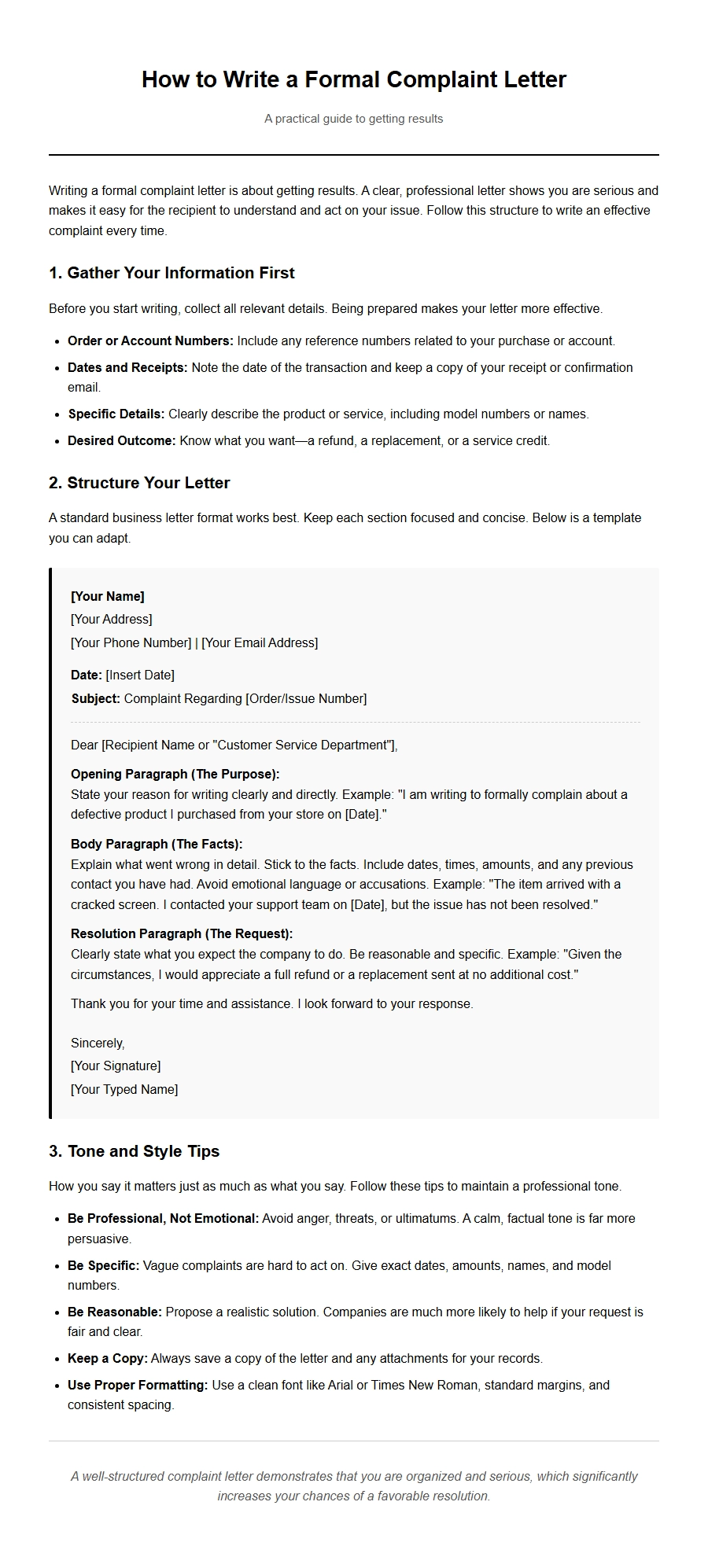 How to Write a Formal Complaint Letter
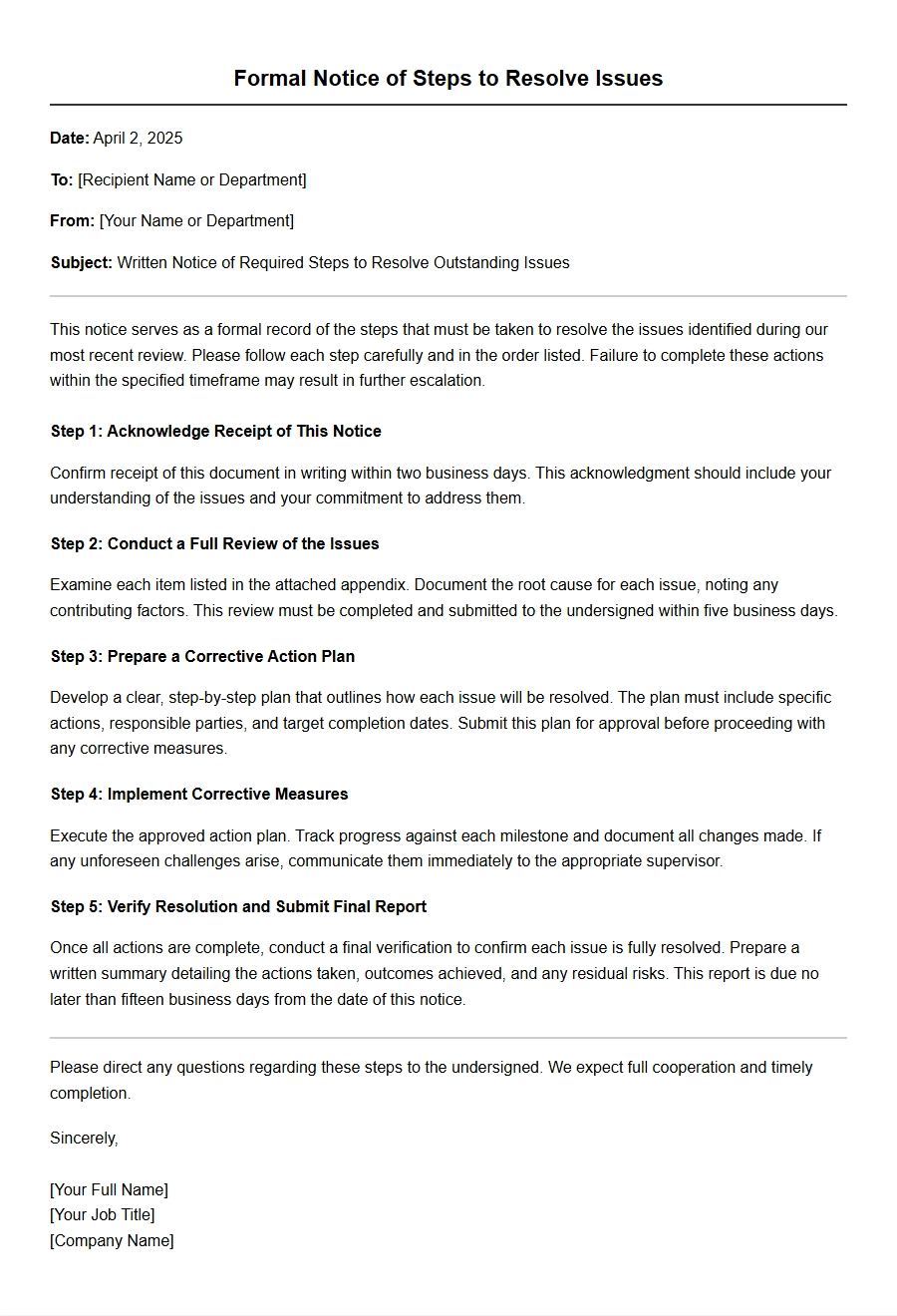 Steps to Resolve Issues via Written Notice
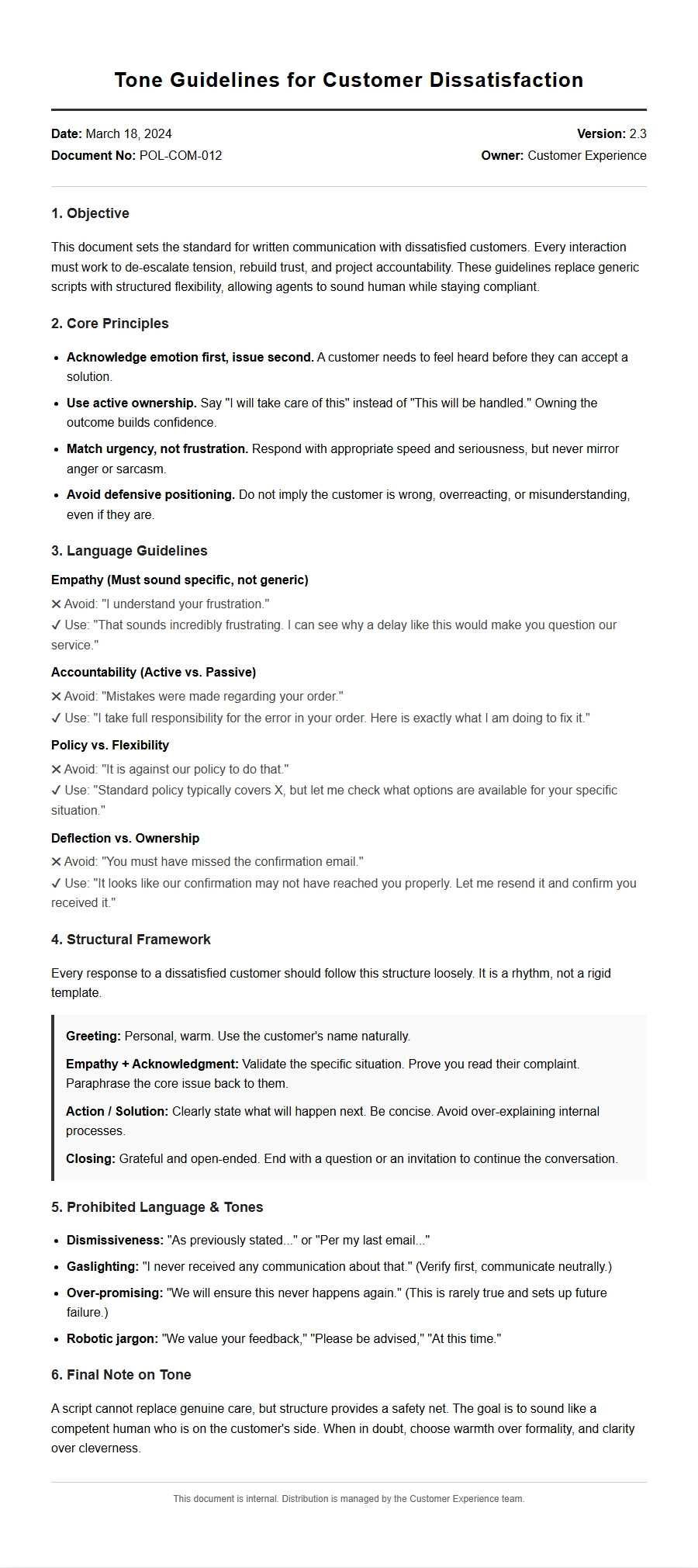 Tone Guidelines for Dissatisfied Customer Letters
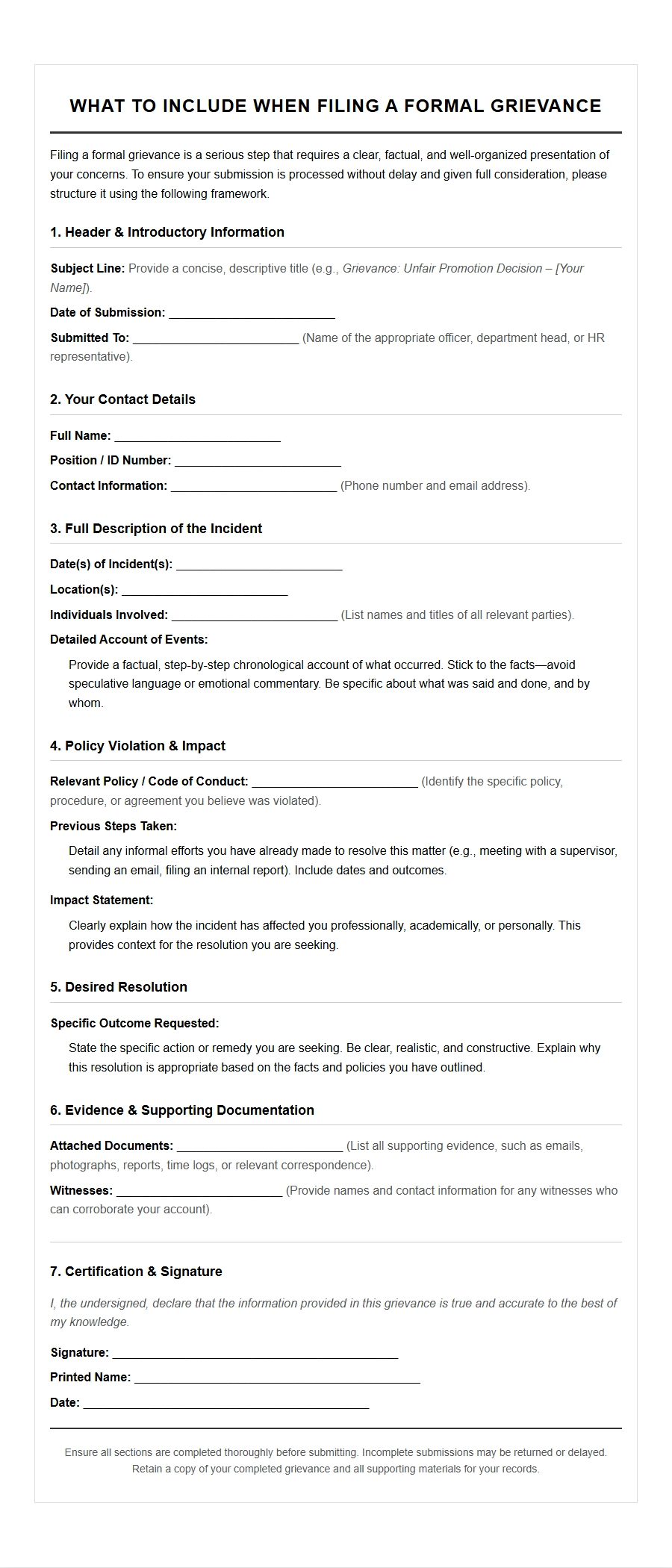 What to Include in a Formal Grievance Letter
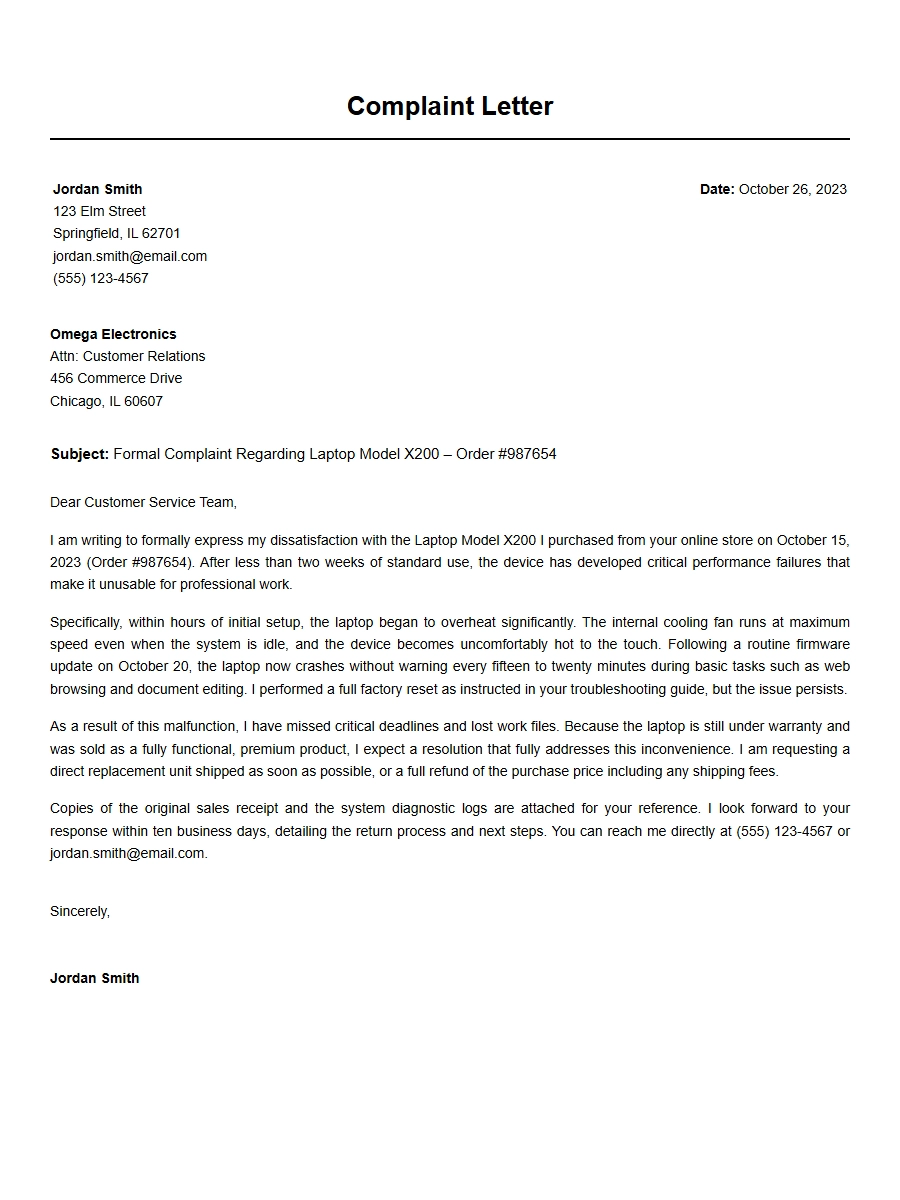 Structure of an Effective Complaint Letter
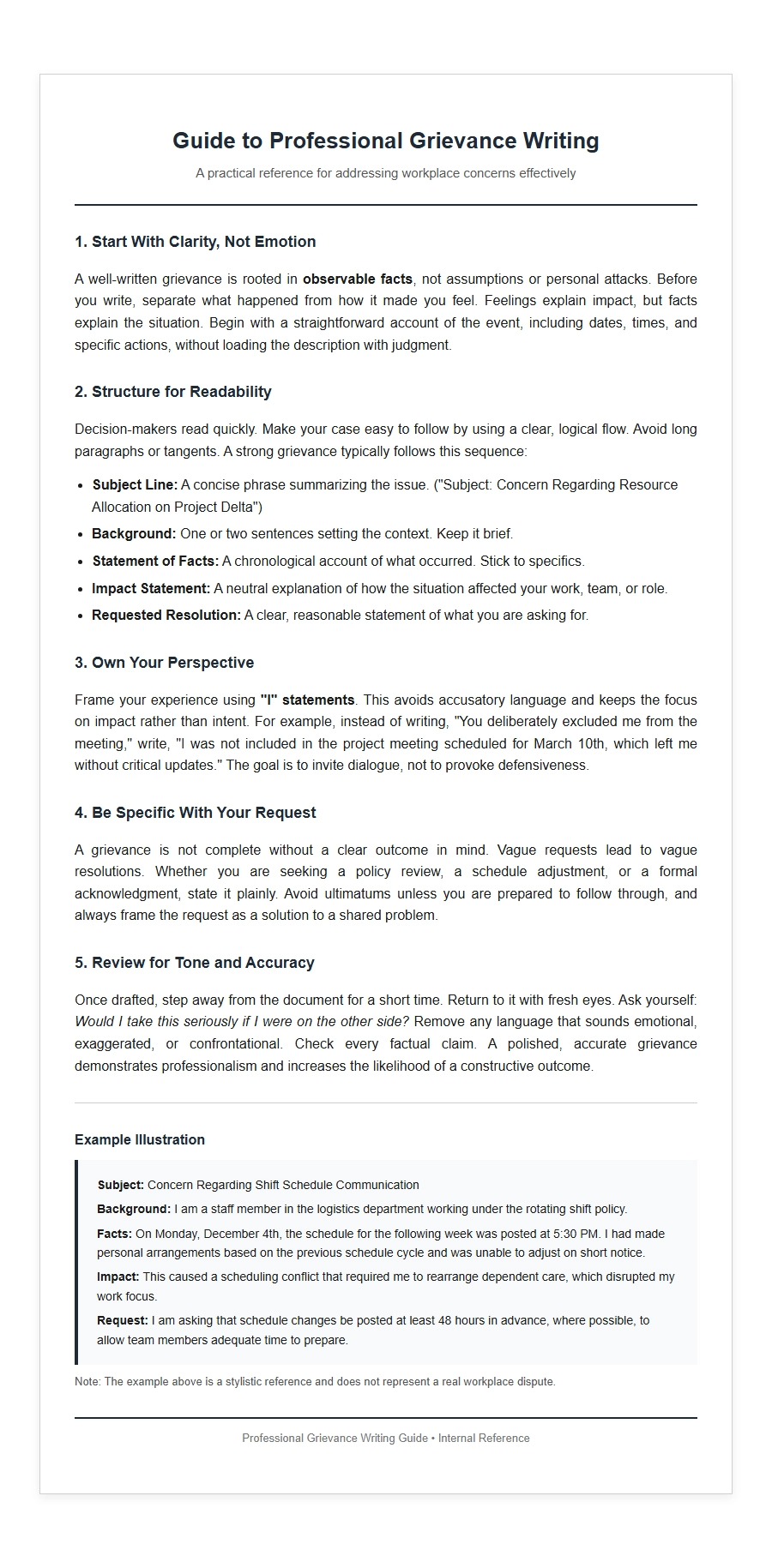 Best Practices for Writing Professional Grievance Letters