grievance letter regarding unfair treatment by manager - Complaint Letters
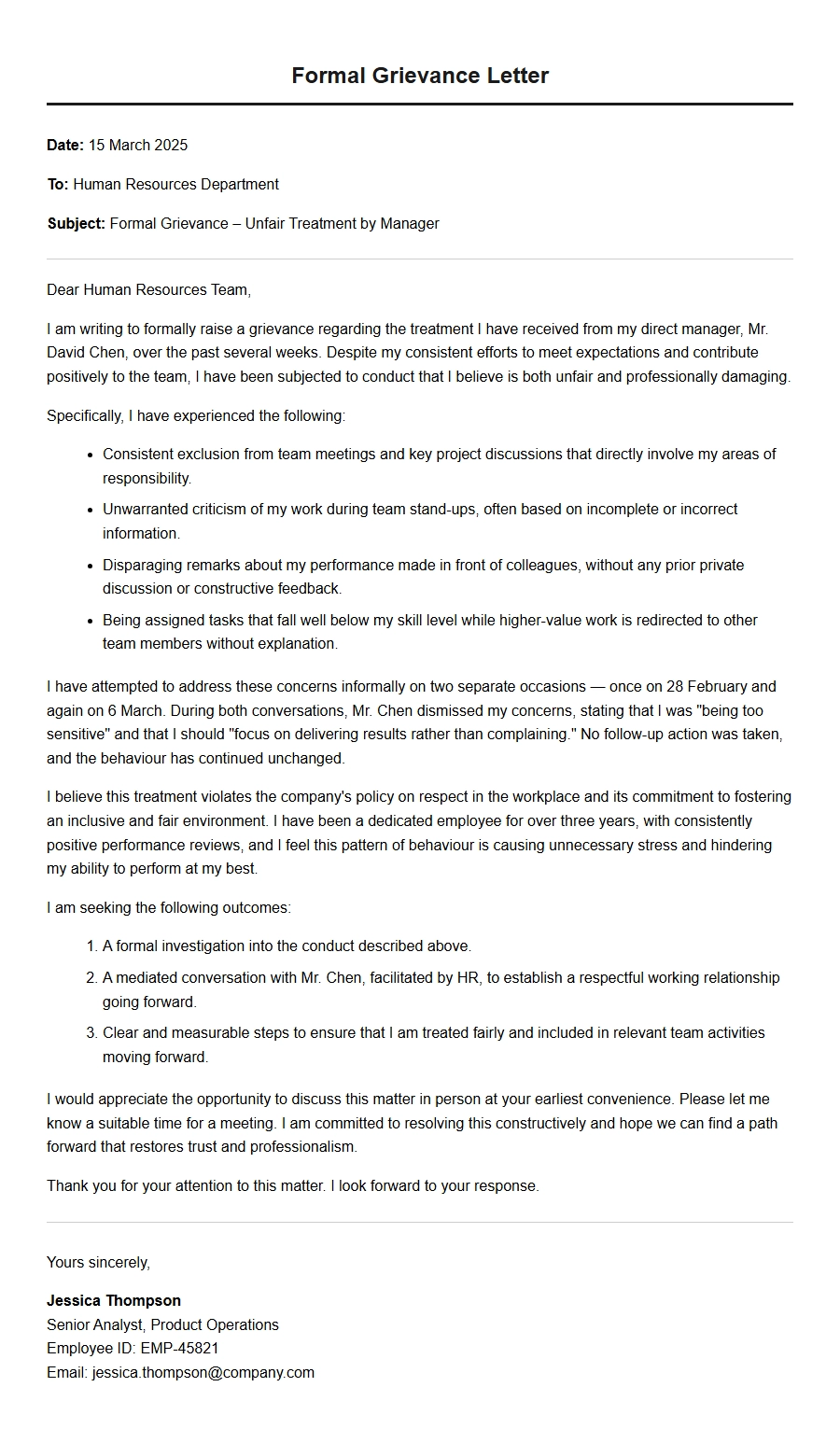
You’re sitting at your desk, replaying the conversation in your head. Maybe your manager embarrassed you in a team meeting, gave you an unfair workload, or dismissed your concerns about a hostile environment. The anger is fresh, but you know that firing off an emotional email will only backfire. You need a grievance letter regarding unfair treatment by manager—something formal enough to be taken seriously, yet personal enough to sound like you.
Using a sample letter isn’t cheating. It’s a smart way to start. A well-written sample gives you the letter structure and professional correspondence tone you need, without you having to wrestle with every sentence from scratch. You’ll still personalize it, but you won’t waste time wondering whether to use “Dear” or “To Whom It May Concern.” That’s the difference between staring at a blank page and finishing a draft in ten minutes.
Category: Workplace Complaints & Grievances
What a Good Grievance Letter Sample Should Include
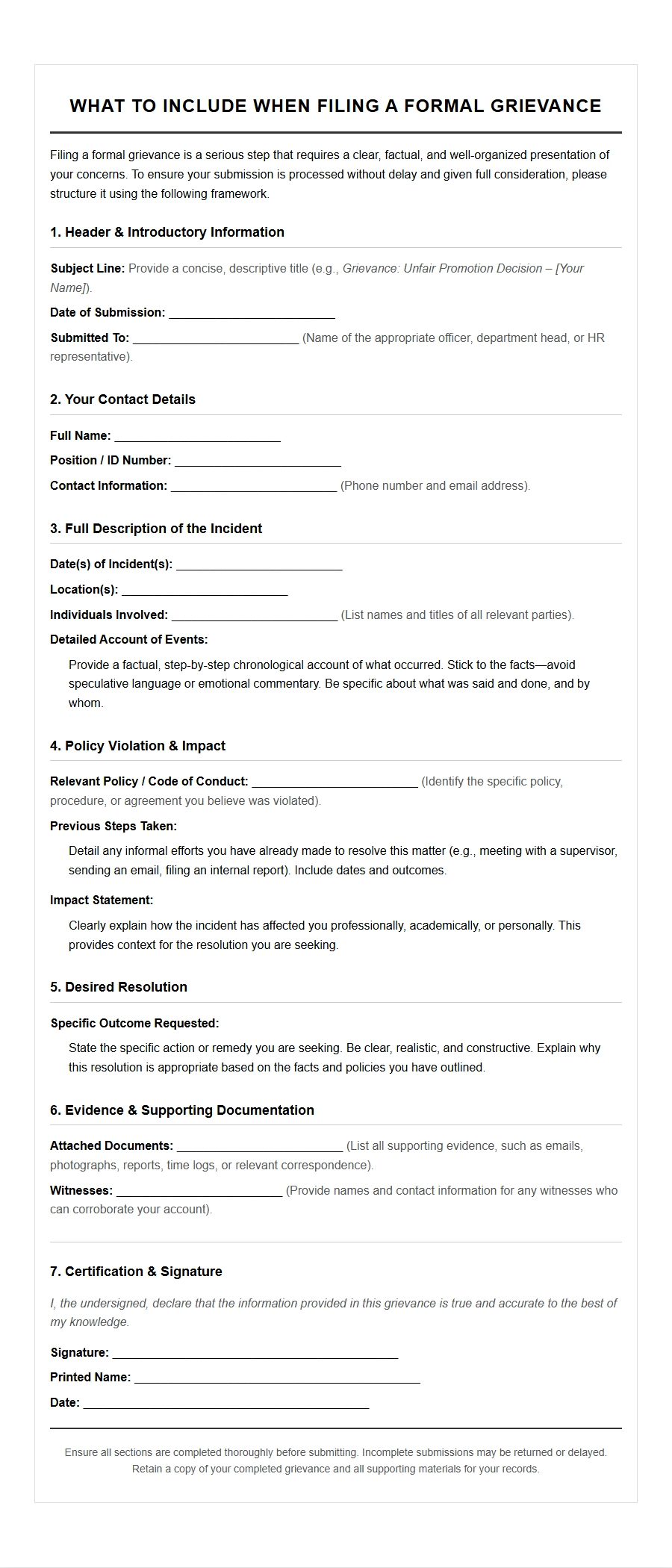
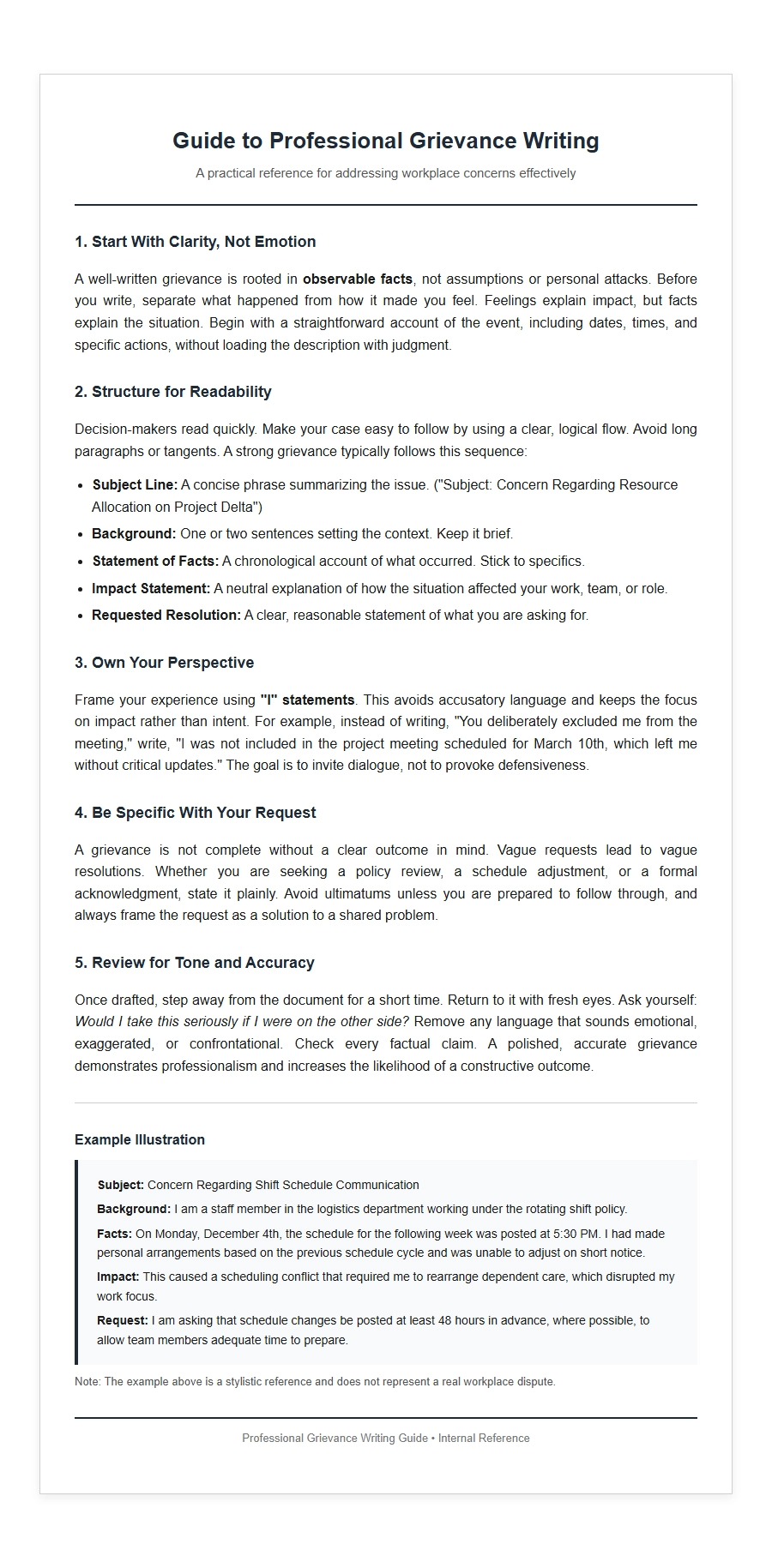
Before you start typing, understand the core pieces every formal grievance letter needs. A letter template will typically have a clear subject line, a respectful salutation and closing, a factual timeline of events, and a specific request for resolution. For example, “I am writing to formally document an incident on March 14 where my manager publicly criticized my work without allowing me to respond.” Notice the focus on facts, not feelings.
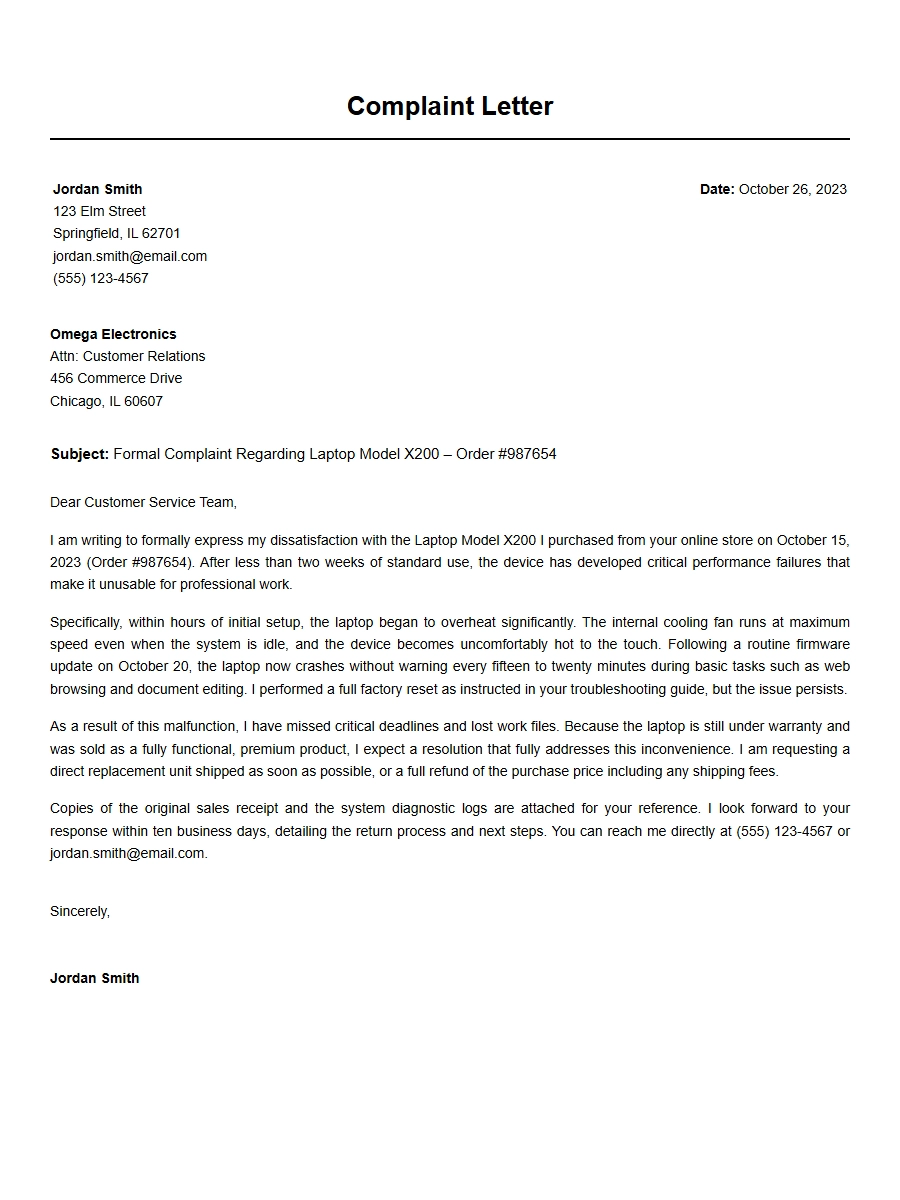
Business letter format matters here. If you’re sending a printed letter, include your address, the date, and the recipient’s address. If it’s email, a clear subject line like “Formal Grievance – Unfair Treatment by Manager” sets the tone. Many people forget that the format for printed letters differs from digital letter format—in email, you can skip the addresses but never skip the salutation or closing.
How to Adapt a Sample Without Losing Your Voice
The trick is to treat the sample as a skeleton, not a script. Start by swapping the sample’s details with your own. Ask yourself: “What happened, when, where, and who was involved?” Describe events in chronological order. For instance, instead of “last week,” say “on Tuesday, March 11, during the 10 AM team stand-up.” Specificity makes your letter credible.
Then adjust the tone. If your workplace is relatively casual, you don’t need to sound like a lawyer. A sentence like “I felt the feedback was unfair because I had followed the procedure outlined in the project guidelines” is direct without being aggressive. Avoid phrases like “I was deeply humiliated” unless you can back it up with context—emotion can weaken your case.
Customizable letter means you keep your authentic voice while following the sample’s structure. One common mistake is copying the sample’s opening verbatim. Instead, tailor the first paragraph to grab attention: “I’m writing to address a pattern of exclusion that began when my manager reassigned my largest project without notice.” That’s specific and serious.
Common Mistakes That Weaken Your Letter
Even with a great sample, people slip up. Using outdated salutation and closing like “Dear Sir” when you don’t know the recipient’s gender is risky. Use “Dear [Manager’s Name]” or “Dear Human Resources Team” instead. Another mistake? Ignoring the difference between email and printed letter. If you paste a long formal letter body into an email without trimming it, it feels clunky. Keep email versions shorter and more direct.
Proofreading letter errors can undermine your credibility. Typos make you look careless, even if your case is solid. Read your letter out loud, or ask a trusted friend to review it. And don’t forget to check letterhead design if you’re printing—a clean header with your name and contact info adds professionalism.
When to Adjust Formality Based on Your Industry
Not every workplace expects the same level of formality. In a corporate office, stick to formal writing tips like “I request a meeting to discuss this further” rather than “Can we talk?” In a startup or creative environment, you can lean slightly more conversational while still being clear. Use the sample to gauge the default tone, then adjust up or down.
For example, if you’re in retail or healthcare, your grievance letter might need to cite specific policies. If you’re in education, mention the code of conduct. The key is to match the expectations of your industry while keeping the letter professional.
Next Steps After Writing Your Draft
Once you’ve adapted the sample and checked for errors, set the letter aside for a few hours. Re-read it with fresh eyes. Does it sound like you? Is the request for resolution clear? (e.g., “I request a formal investigation and a transfer to a different supervisor.”) If it feels too robotic, tweak a few sentences to reflect your natural speech without losing professionalism.
Remember, a sample is a springboard, not a crutch. The best grievance letters feel both professional and personal. They show you’re serious about resolving the issue, not just venting. Practice writing a few versions, and over time you’ll get faster and more confident. You’ve got this.
grievance letter regarding unfair treatment by manager - Complaint Letters
Biased Performance Review Grievance
To: Human Resources Department
Subject: Formal Grievance Regarding Unfair Performance Evaluation by Manager
I am writing to formally lodge a grievance against my manager, Jane Smith, concerning my recent performance review dated March 15, 2025. The evaluation contains multiple inaccuracies and reflects a clear bias, which I believe stems from a personal conflict rather than objective assessment of my work.
Area of Concern
Manager's Rating
My Evidence
Project Completion
Below Expectations
All 4 projects delivered on time per email records
Team Collaboration
Needs Improvement
Positive feedback from 3 peers attached
Initiative
Unsatisfactory
Led two process improvements documented
I request a full review of my performance by a neutral third party and that the current rating be removed from my record pending investigation. I am prepared to provide further documentation. Thank you for your prompt attention.
Sincerely, John Doe Employee ID: 4521
Discriminatory Remarks Complaint
To: HR Director
Subject: Grievance: Unfair Treatment Due to Discriminatory Comments by Manager
I am filing this grievance because of repeated discriminatory remarks made by my manager, Mark Johnson, regarding my age and cultural background. These comments create a hostile work environment and directly violate company policy on diversity and inclusion.
Specific incidents include:
January 22, 2025: In a team meeting, Mark said, “You young people don’t understand real commitment.”
February 10, 2025: He mocked my accent in front of colleagues, saying I should “speak properly.”
March 5, 2025: He assigned me a lower-level task stating, “This is more suited to someone from your background.”
I have documented each occurrence with dates and witnesses. I request an immediate investigation and corrective action, including sensitivity training for Mark. I also ask that no retaliation occur as a result of this complaint. Please let me know the next steps.
Respectfully, Maria Garcia Department: Sales
Unfair Denial of Leave
To: HR Manager
Subject: Grievance Regarding Manager’s Unreasonable Denial of Leave
I wish to formally complain about my manager, Tom Brown, who unjustly denied my leave request for April 18–20, 2025. I submitted the request two weeks in advance via the company portal. The stated reason for denial was “operational needs,” yet three colleagues in the same team had leave approved for overlapping dates.
Requested Dates
Submission Date
Denial Reason
Other Approved Leaves
April 18–20
April 4
Operational needs
Colleague A: Apr 17-19; Colleague B: Apr 18-21
I had already booked non‑refundable travel. This appears to be personal bias, as Tom has made negative remarks about my use of leave in the past. I request that my leave be retroactively approved or that I be compensated for my losses. I also ask for a transparent leave approval policy to be enforced.
Thank you for addressing this matter. Lisa Chang Position: Analyst
Micromanagement and Hostility Grievance
To: Human Resources
Subject: Formal Complaint About Manager’s Micromanagement and Hostile Behavior
I am writing to express my distress over the constant micromanagement and hostile attitude of my manager, Rachel Adams. Over the past three months, she has demanded hourly status updates, questioned every minor decision, and often raised her voice during one‑on‑ones. This has severely impacted my morale and productivity.
Highlights of the behavior:
Requiring me to CC her on all emails, even internal team messages.
Criticizing my work in front of peers without constructive feedback.
Threatening to put me on a performance improvement plan for “lack of autonomy,” which is paradoxical.
I have tried to address this directly with Rachel, but she dismissed my concerns. I request mediation with a neutral HR representative and that my work be evaluated independently. I also ask for a change in reporting structure if this cannot be resolved.
I look forward to your intervention. David Kim Employee # 9872
Punitive Task Assignment Letter
To: HR Department
Subject: Grievance Against Manager for Unfair Task Assignments as Punishment
I am filing this grievance because my manager, Chris Lee, has been assigning me menial tasks that fall far outside my job description, apparently as retaliation for raising safety concerns last month. This constitutes unfair treatment and potentially constructive dismissal.
Date
Task Assigned
My Role
Normal Duties
Feb 28
Clean storage room
Senior Engineer
System design & testing
Mar 10
Data entry of old records
Senior Engineer
Technical analysis
Mar 25
Fetch coffee for meeting
Senior Engineer
Client presentations
These assignments are not part of any team rotation and are not given to other engineers. I believe this is directly linked to my whistleblower report on unsafe wiring. I request immediate cessation of such assignments and a review of my manager’s conduct.
I value my job and hope this can be resolved internally. Patricia Nguyen Employee ID: 6743
Retaliation After Reporting Misconduct
To: Ethics & Compliance Office
Subject: Grievance: Retaliation by Manager for Reporting Unethical Behavior
I am formally complaining that my manager, Greg Walsh, has retaliated against me since I reported him for falsifying expense reports on January 15, 2025. The company’s anti‑retaliation policy is clear, yet I have faced the following adverse actions:
My quarterly bonus was reduced without written justification.
I was removed from two high‑visibility projects with no explanation.
Greg gave me a negative mid‑year review citing “poor judgment,” despite strong past performance.
I attach emails showing my report and the sudden change in treatment. I request a formal investigation and protection from further retaliation. I also ask that my bonus be restored and that I be reassigned to a neutral manager for my next review.
I trust the company will uphold its values. Samuel Adams Region: Midwest
Unfair Workload Distribution Letter
To: HR Business Partner
Subject: Grievance Regarding Unequal Workload Assigned by Manager
I am writing to complain about the consistent and unfair workload distribution by my manager, Laura Chen. Since November 2024, I have been assigned an average of 50% more tasks than my peers with the same title and pay grade. This is documented in the project tracking tool.
Month
My Tasks
Team Average
Difference
Nov 2024
12
7
+5
Dec 2024
10
6
+4
Jan 2025
14
8
+6
When I raised this with Laura, she said I was “more efficient,” but this has led to burnout and compromised quality. Meanwhile, colleagues with lighter loads receive recognition. I request that work be redistributed equitably and that a transparent system be implemented. I also ask for a meeting to discuss my career path without punitive bias.
Thank you for your fairness. Robert Zhao Department: Operations
Verbal Abuse in Team Meetings
To: Director of HR
Subject: Grievance Against Manager for Verbal Abuse During Meetings
I am lodging a formal complaint regarding my manager, Angela White, who has repeatedly subjected me and other team members to verbal abuse in weekly team meetings. Her tone is condescending, she interrupts constantly, and she has made demeaning remarks such as “you don’t belong here” and “your work is embarrassing.”
This behavior is documented by emails from witnesses and my own notes. A few examples:
March 12: Angela shouted at me for asking a clarification question.
March 19: She told a junior colleague they were “useless” in front of the whole team.
March 26: She threatened to “write up” anyone who disagreed with her.
I feel intimidated and unable to communicate openly. I request that Angela be required to attend anger management training, that a formal warning be placed in her file, and that I be provided a safe channel for ongoing feedback. My mental health is suffering, and I hope for swift action.
Respectfully, Jasmine Patel Team Lead, Marketing
Ignored Reasonable Accommodation Request
To: HR & Benefits
Subject: Grievance: Manager Denied Reasonable Accommodation Without Review
I am filing a grievance because my manager, Eric Thompson, summarily denied my request for a reasonable accommodation related to my chronic back condition, without engaging in the interactive process required by the ADA. I submitted a doctor’s note on February 1, 2025 requesting an ergonomic chair and two additional breaks per day.
Eric refused, saying “we don’t do special treatment.” He did not contact HR or consider any alternatives. This is a clear violation of company policy and federal law.
My request details:
Ergonomic chair: cost estimate $450, already approved in similar cases.
Two 10‑minute breaks: no impact on productivity; willing to make up time.
I request that HR review my accommodation request immediately, override my manager’s denial, and ensure that Eric receives training on disability accommodation procedures. I also ask for no negative repercussions for asserting my rights.
Thank you for your understanding. Mia Williams Data Analyst
Credit Theft by Manager
To: HR Complaint Officer
Subject: Grievance: Manager Taking Credit for My Work
I am formally complaining that my manager, Kevin Brown, has repeatedly taken credit for my contributions during executive presentations and project reviews. This unfair treatment undermines my professional reputation and denies me recognition for substantial efforts.
Project
My Contribution
Manager’s Claim
Date
Q1 Dashboard
Designed & coded entire tool
Presented as “my team’s work” without naming me
Feb 2025
Client Report
Wrote 90% of analysis
Sent to VP with only Kevin’s name
Mar 2025
Process Improvement
Invented new workflow
Kevin claimed he “guided” it
Apr 2025
I have emails and project logs proving my authorship. I request that proper attribution be given in all relevant documents and that Kevin be counseled on ethical leadership. I also ask that this not affect my performance reviews negatively.
I hope for a fair resolution. Ethan Park Senior Developer
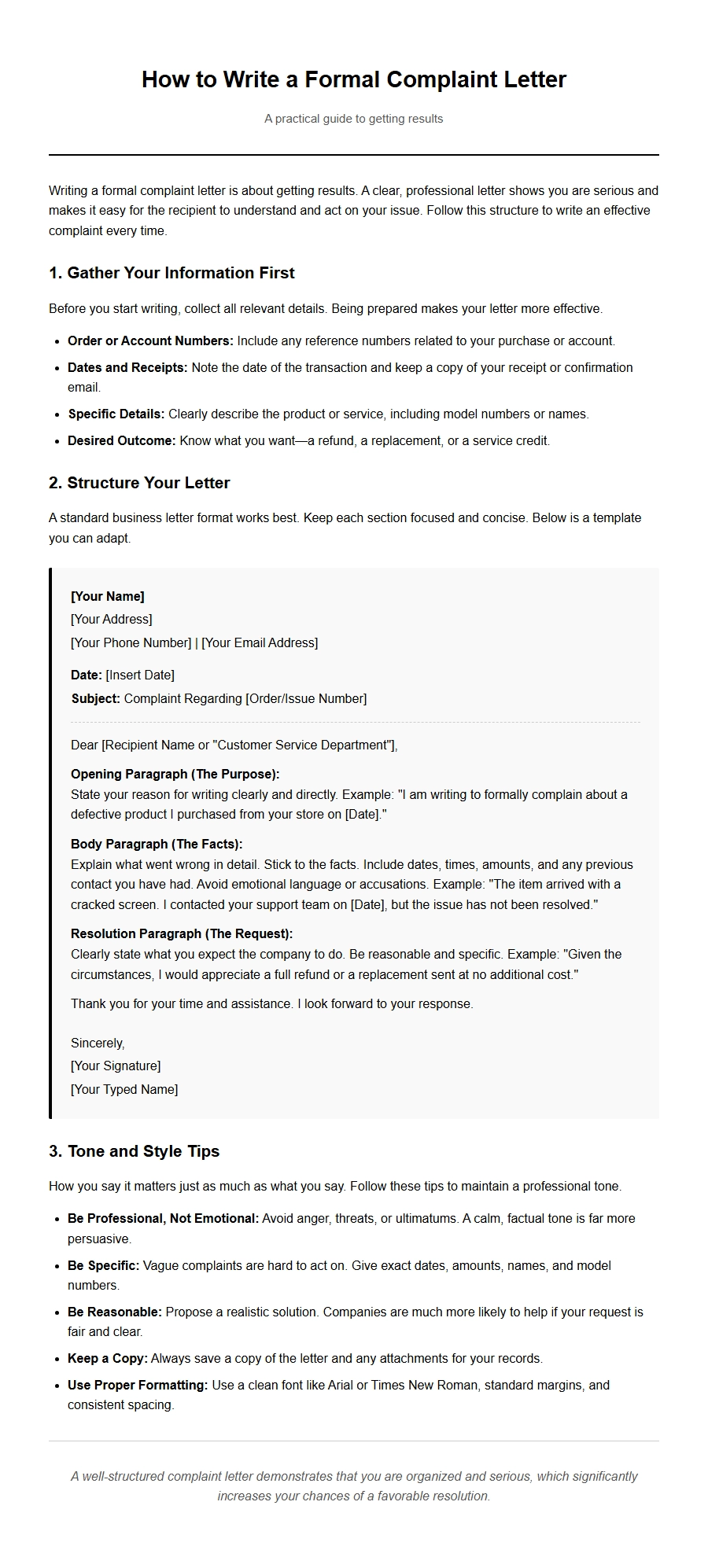 How to Write a Formal Complaint Letter
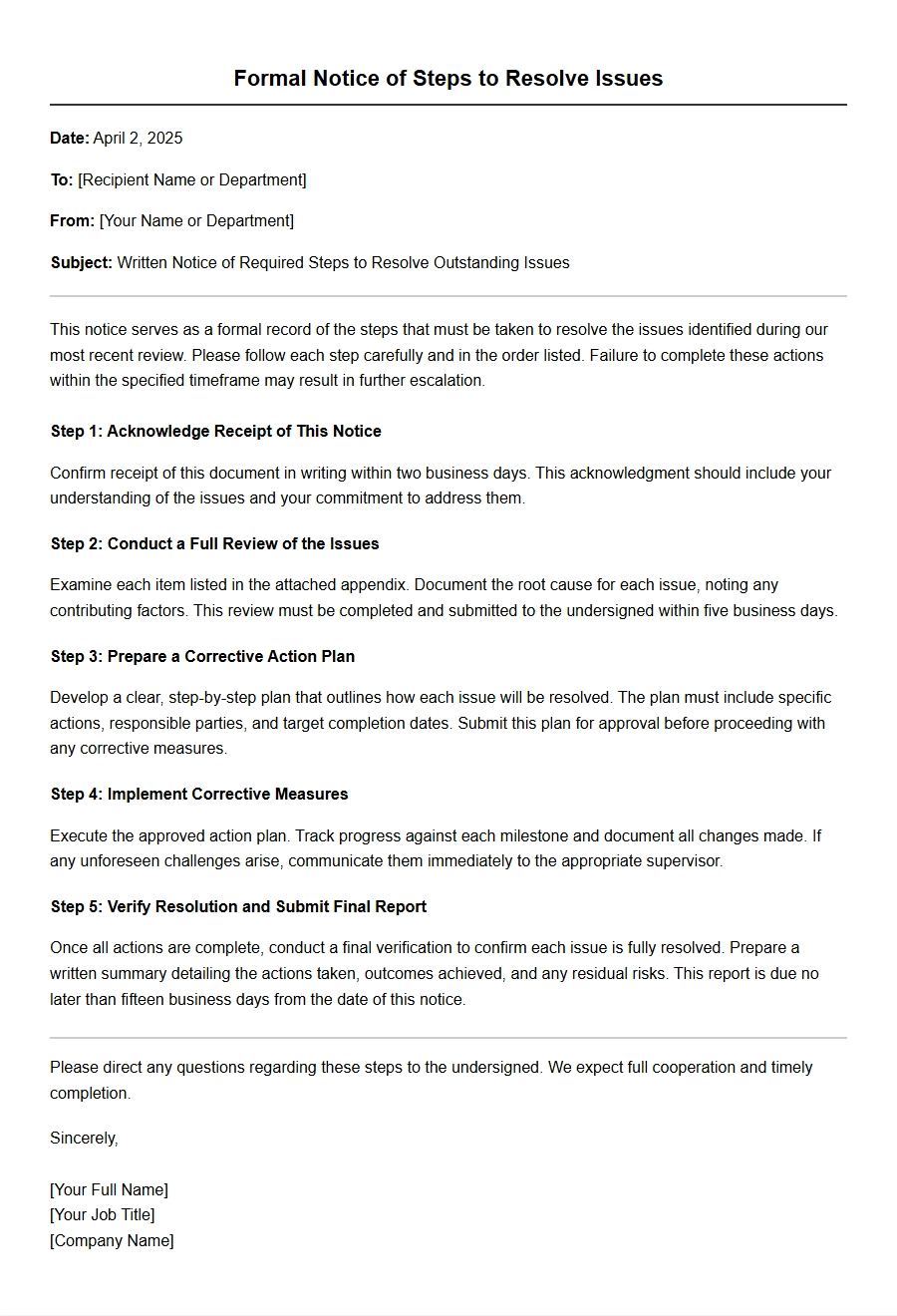 Steps to Resolve Issues via Written Notice
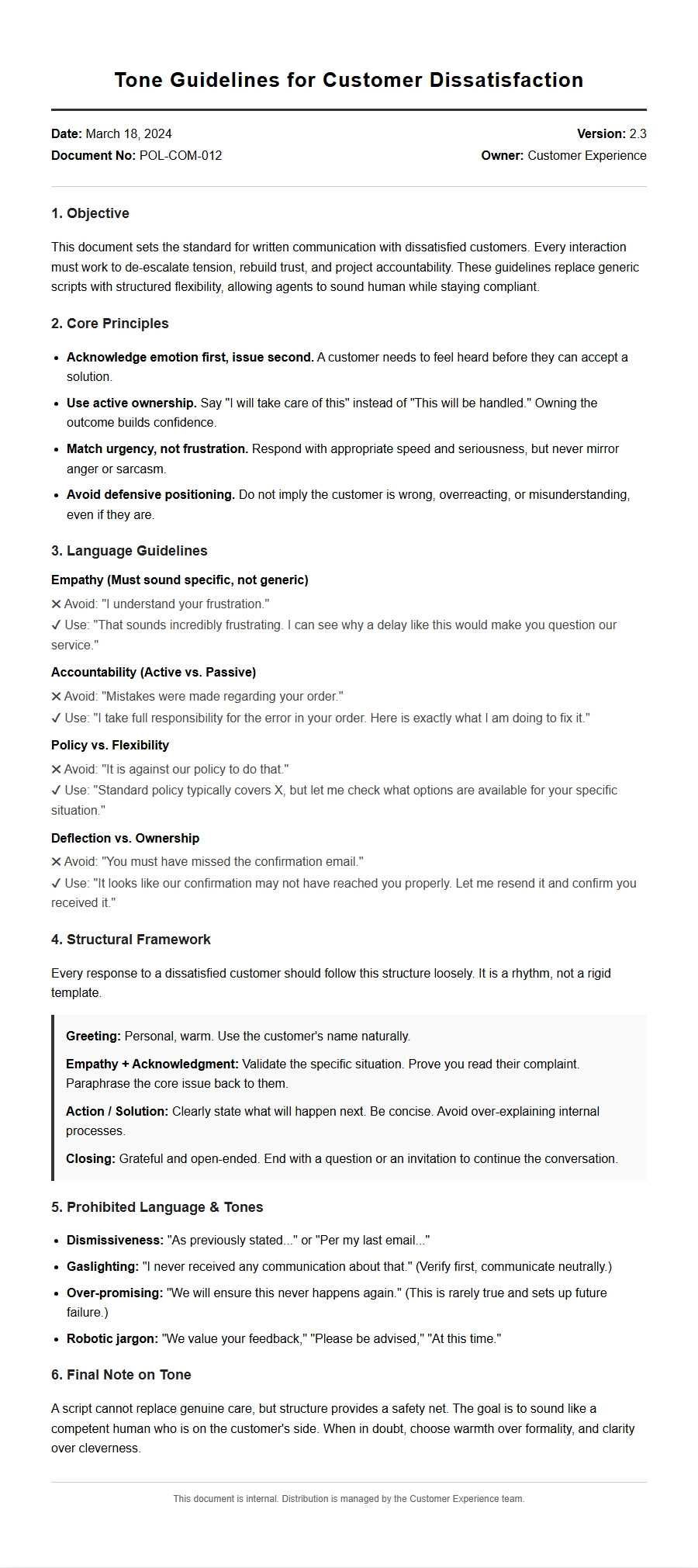 Tone Guidelines for Dissatisfied Customer Letters
 What to Include in a Formal Grievance Letter
 Structure of an Effective Complaint Letter
 Best Practices for Writing Professional Grievance Letters