requesting special education accommodation plan review - Complaint Letters
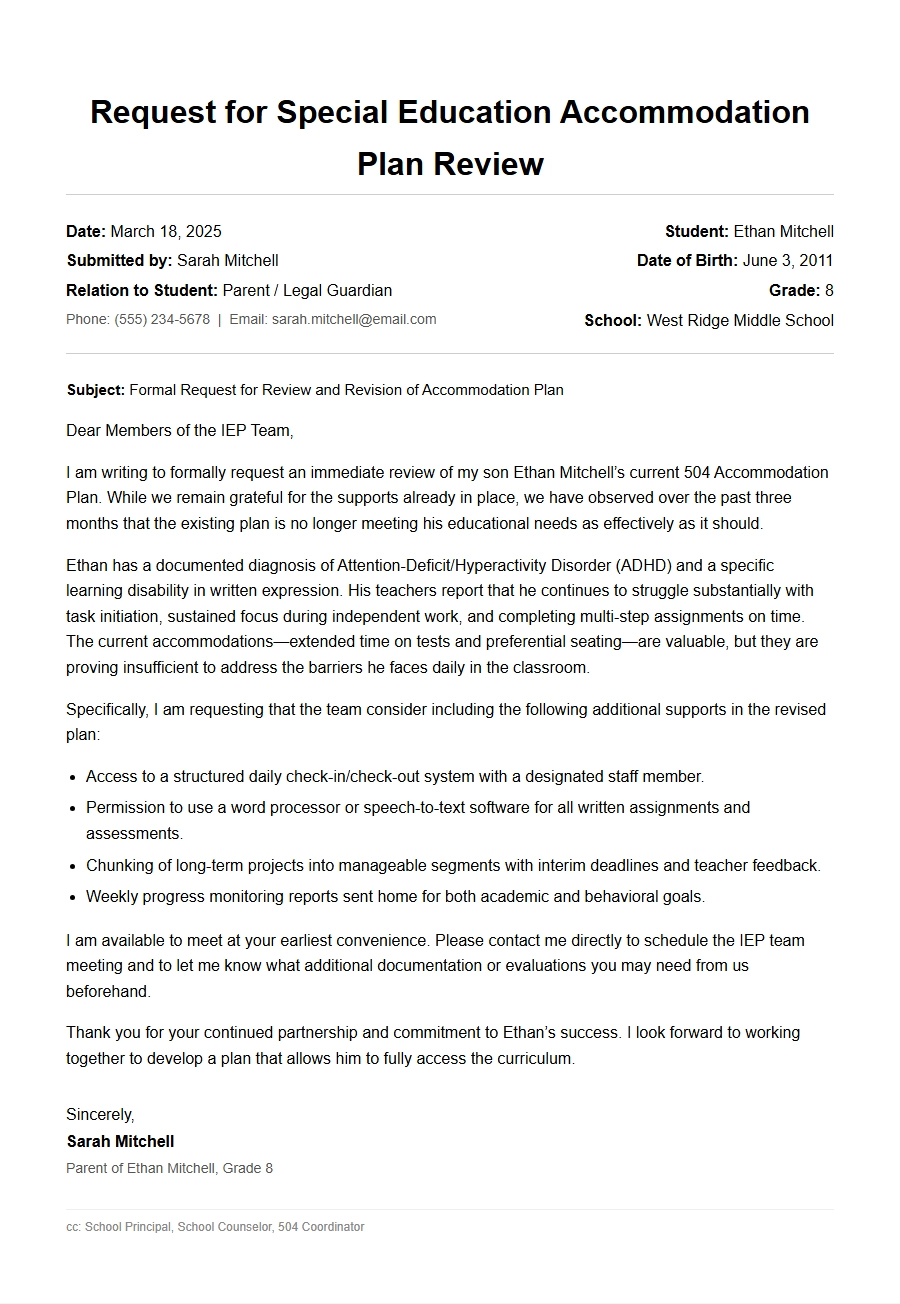
You’ve watched your child struggle day after day, and you know the current accommodation plan isn’t working. Requesting a special education accommodation plan review can feel overwhelming—especially when you’re not sure how to phrase your concerns. A well-written letter sets the right tone and gets the process moving. But you don’t have to start from scratch.
Using a letter sample isn’t cheating—it’s smart. A good template gives you structure, a professional tone, and key phrases you can customize. You save time and avoid common missteps. Think of it as a reliable starting point, not a crutch.
Category: Requesting Special Education Accommodation Plan Review
How to Choose the Right Letter Sample for Your Situation
Not every sample fits your needs. If you’re writing to a school district, you want a formal letter with a proper business letter format. For a quick email to your child’s case manager, a more direct digital letter format works better. Look for a customizable letter that lets you swap out details like dates, names, and specific concerns. Avoid samples that feel too generic or too stiff—your authentic voice matters.
When you browse a letter template, notice the salutation and closing. “Dear [Case Manager’s Name]” is better than “To Whom It May Concern.” The closing should be polite but clear: “Thank you for reviewing my request. I look forward to your response.” That small touch follows basic letter writing etiquette and shows you’re professional.
How to Adapt a Sample Without Losing Your Authentic Voice
Start by reading the sample all the way through. Then rewrite the opening paragraph to reflect your child’s specific situation. Instead of copying “I am writing to request a review,” say something like “Over the past three months, my son has continued to struggle with reading comprehension despite his current accommodations.” That grabs attention and shows you’re grounded in real experience.
Keep the sample’s structure—it likely organizes your request, background, evidence, and desired outcome in a logical flow. But use your own words for the middle sections. If the sample mentions a specific law or regulation, check it’s accurate for your state. Tone in writing matters here: be firm, respectful, and focused on facts. Avoid emotional language that could weaken your case.
Common Mistakes to Avoid When Writing Your Request
One big mistake is using outdated salutations like “Dear Sir or Madam” in an email. For professional correspondence, address the person by name if you know it. If you don’t, “Dear Special Education Team” is fine.
Another mistake is ignoring formatting for the medium. A printed letter needs proper letterhead design or at least your contact info at the top. An email can skip the letterhead but still needs a clear subject line like “Request for Accommodation Plan Review – [Child’s Name].” Proofreading your letter is essential—typos undermine your credibility. Read it aloud or have a friend check it.
If you’re unsure about the right structure, take a cue from other formal requests. For example, a key elements of a business dispute letter include a clear statement of the issue, supporting facts, and a specific request. The same applies here. You might also model your tone after a polite but firm escalation email—respectful yet direct.
Putting It All Together
Once you’ve adapted your sample, double-check the details. Did you include your child’s name, school, and current plan type? Have you referenced any evaluations or teacher feedback? Be specific. If you’re disputing a lack of progress, you can draw on strategies from disputing an unexpected bank fee letter—state clearly what you want and why it’s justified.
If you need to include evidence like test scores or medical notes, treat it like you would in a notifying a car dealership of repair shop errors letter—attach copies and reference them in the body. And if you’re correcting a previous miscommunication, follow the logic of a billing error correction notice: state the error, provide the correct information, and request a specific action.
Forward-Looking Thought
Remember, a sample is a springboard, not a finish line. The best letters feel both professional and personal—they show you care and you mean business. Writing gets easier with practice. Next time you need a review, you’ll already know the flow. For now, pick a sample, make it yours, and send it off. You’ve got this.
Templates and Samples
requesting special education accommodation plan review - Complaint Letters
Insufficient Speech Therapy Minutes
Dear IEP Team,
I am writing to formally request a review of my child, Emily's, special education accommodation plan. Emily currently receives 30 minutes of speech therapy per week, but her progress has stagnated. Her speech-language pathologist has noted that she requires more intensive support to meet her goals. Based on her recent evaluations, I believe the current allocation is insufficient.
Specifically, I request the following:
Increase speech therapy to 60 minutes per week, in individual sessions.
Add a weekly consultation between the SLP and classroom teacher.
Include specific measurable benchmarks for articulation and language comprehension.
I have attached a log of recent communication attempts and Emily's updated assessment results. Please schedule a meeting within the next 30 days to discuss amending her plan. I look forward to collaborating with the team to ensure Emily receives a free appropriate public education.
Sincerely, Maria Gonzalez
504 Plan Lacks Anxiety Accommodations
To the Section 504 Coordinator,
This letter constitutes a formal complaint and request for review of my son Alex's 504 accommodation plan. Alex has a diagnosed anxiety disorder, and the current plan only provides extended time on tests. Over the past semester, he has had multiple panic attacks in class and refused to attend school on days with presentations. The plan does not address triggers such as loud noises or group work.
I am requesting an immediate review to add the following accommodations:
Permission to take breaks in a designated calm-down space.
Preferential seating near an exit.
Option to present projects individually to the teacher instead of in front of the class.
A written crisis plan for severe episodes.
Please provide a written acknowledgment of this request within five business days and a meeting date within 15 days. The current plan is not adequate to meet Alex's needs. Thank you for your prompt attention.
Respectfully, James Chen
Lack of Progress Monitoring Data
Dear IEP Case Manager,
I am writing to formally request a review of my daughter Sarah's special education accommodation plan due to a lack of progress monitoring data. According to her IEP, the school is required to collect data on her reading fluency every two weeks. However, I have not received any progress reports since November. Her reading scores have declined, and I am concerned that the current accommodations are not effective.
I request the following during the review:
Presentation of all progress monitoring data collected this school year.
A discussion of whether current accommodations (extended time, small group instruction) are research-based.
Revision of the plan to include monthly data-sharing with parents.
Below is a timeline of my previous requests for data:
Date
Request Method
Response
01/15/2024
Email to teacher
No response
02/01/2024
Phone call to case manager
Promised data by 02/10, not received
Please schedule a meeting within 10 school days to review the plan.
Sincerely, Linda Park
Denial of Assistive Technology
To the Special Education Director,
This is a formal complaint requesting a review of my son Michael's IEP accommodation plan. Michael has a specific learning disability in written expression. The IEP team denied my request for a speech-to-text device, stating that he could use pencil and paper with extended time. However, Michael's handwriting is illegible and his writing speed is far below grade level, causing frustration and avoidance.
I request an immediate review to consider assistive technology supports, including:
Training for Michael and his teachers on using the technology
The denial appears to violate the requirement that the team consider assistive technology for each child with a disability. I have attached a letter from his occupational therapist recommending such tools. Please provide a written response within 10 days and schedule a meeting to address this issue.
Thank you, Robert Torres
Behavioral Intervention Plan Not Followed
Dear School Principal,
I am writing to formally complain and request a review of my daughter Jasmine's special education accommodation plan, specifically the Behavioral Intervention Plan (BIP). The BIP states that when Jasmine displays tantrum behavior, staff should implement a calm-down strategy involving a break in the guidance counselor's office. However, on three occasions last week, the teacher instead sent Jasmine to the hallway or issued detention. This is a clear failure to implement the plan.
I request an immediate review to ensure fidelity of implementation. Specifically:
Retraining of all staff on the current BIP procedures.
A meeting to consider whether the BIP needs revision based on recent incidents.
Development of a communication log between home and school regarding behavior incidents.
I have documented each incident below:
Date
Incident
Plan Violation
03/12/2024
Shouting in class
Sent to hallway instead of guidance office
03/14/2024
Refused to do work
Given detention via email to me
Please confirm receipt of this complaint and a meeting date within 15 days.
Sincerely, Patricia Wright
Delayed Reevaluation Hinders Plan Update
To the Child Study Team,
This letter serves as a formal complaint and request for review of my son Kevin's special education accommodation plan. Kevin's triennial reevaluation was due in October 2023. As of March 2024, the psychological and educational assessments have not been completed. Without current evaluation data, the accommodation plan cannot be meaningfully reviewed or updated. Kevin is struggling in math and his current accommodations (preferential seating, graphic organizers) may no longer be sufficient.
I request the following:
Immediate scheduling of all overdue assessments within 30 days.
A meeting to review the existing plan pending evaluation results, with interim accommodations if needed.
Written documentation of the reason for the delay.
Delays in evaluation violate the Individuals with Disabilities Education Act timelines. Please respond in writing within 5 business days. I am prepared to file a state complaint if this issue is not resolved promptly.
Regards, Diane Moore
Inappropriate Placement in Self-Contained Classroom
Dear IEP Team,
I am writing to formally request a review of my daughter Maria's special education accommodation plan regarding her educational placement. Maria is currently placed in a self-contained classroom for most of the day, but she has made significant gains in social skills and academics. Her current plan does not include any mainstreaming opportunities. I believe a more inclusive setting with appropriate supports would better meet her needs.
I request a meeting to discuss transitioning Maria into a general education classroom with the following accommodations:
1:1 paraprofessional support for core subjects
Modified assignments and assessments
Social skills group twice a week
Collaborative teaching model (co-teaching)
I have attached a letter from her private therapist supporting increased inclusion. The current restrictive environment is not the least restrictive environment (LRE) as required by law. Please schedule a review within 30 days and include a district representative with authority over placement.
Sincerely, Carlos Reyes
Extended School Year Services Denied
To the Special Education Coordinator,
This is a formal complaint and request for review of my son Ethan's IEP accommodation plan. Every year, Ethan exhibits severe regression over summer break in reading and math, despite receiving ESY services in previous years. The district denied ESY for summer 2024, stating that Ethan has met his annual goals. However, his progress data shows that he requires constant repetition to retain skills, meeting the regression/recoupment criterion for ESY.
I request an immediate review of the decision, including:
A meeting to present regression data from past summers.
Reconsideration of ESY eligibility.
If approved, development of an ESY plan with specific reading and math goals.
I have attached a list of regression incidents documented by his tutor. Please acknowledge receipt within one week and schedule a review before the end of April so we can plan appropriately. Denial of ESY without proper consideration violates IDEA.
Thank you, Susan Adams
Testing Accommodations Not Provided
Dear School Counselor,
I am writing to file a complaint and request a review of my daughter Lily's 504 accommodation plan. Lily's plan specifies that she receive extended time (time and a half) and a quiet setting for all tests, including state assessments. During the recent math benchmark exam, the teacher failed to provide a quiet setting—Lily was seated near a door with hallway noise and was interrupted multiple times. She became anxious and could not finish; her score does not reflect her true ability.
I request the following actions:
An immediate meeting to review the plan and ensure all staff understand its requirements.
Documentation of accommodations provided during the benchmark.
Consideration of makeup testing under correct conditions.
Training for staff on implementing 504 accommodations.
This incident is not isolated; similar failures occurred in October. A responsive plan review is essential to prevent further harm. Please contact me to schedule a meeting within 10 school days.
Sincerely, Karen Lee
Transition Services Not Addressed in Plan
To the IEP Team,
I am writing to formally request a review of my son Daniel's special education accommodation plan, specifically regarding transition services. Daniel is 17 years old and will graduate in two years. His current IEP contains no transition goals or services, neither for post-secondary education nor employment. The law requires that transition planning begin at age 16. Without a plan, Daniel has no roadmap for next steps.
I request a meeting to develop a transition plan that includes:
Vocational assessment within 60 days.
Work-based learning experiences (e.g., internship or job shadowing).
Instruction in self-advocacy and independent living skills.
Connection with the state vocational rehabilitation agency.
I have already contacted the local disability employment office; they are ready to collaborate. Please acknowledge this complaint in writing and schedule a review within 30 days. Daniel deserves a meaningful transition plan that prepares him for life after high school.
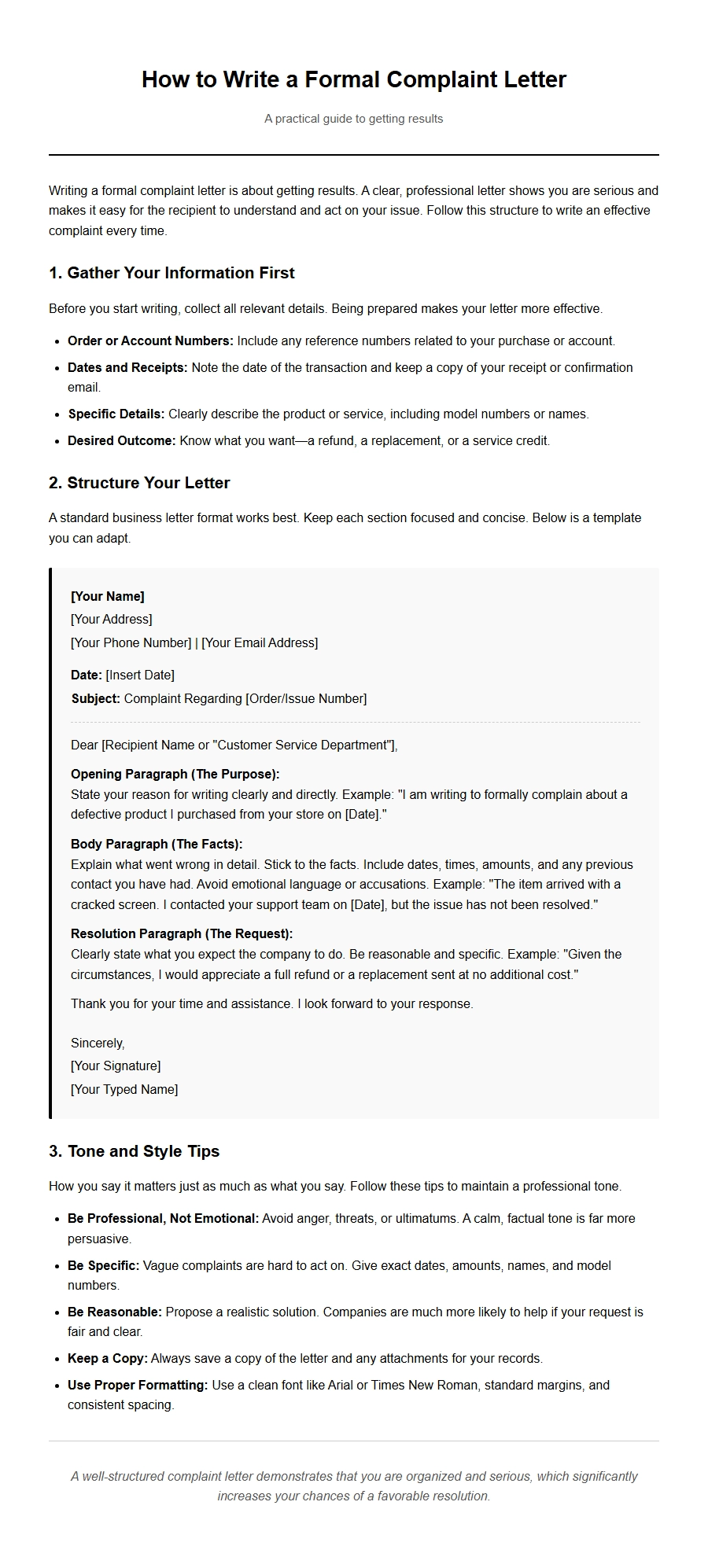 How to Write a Formal Complaint Letter
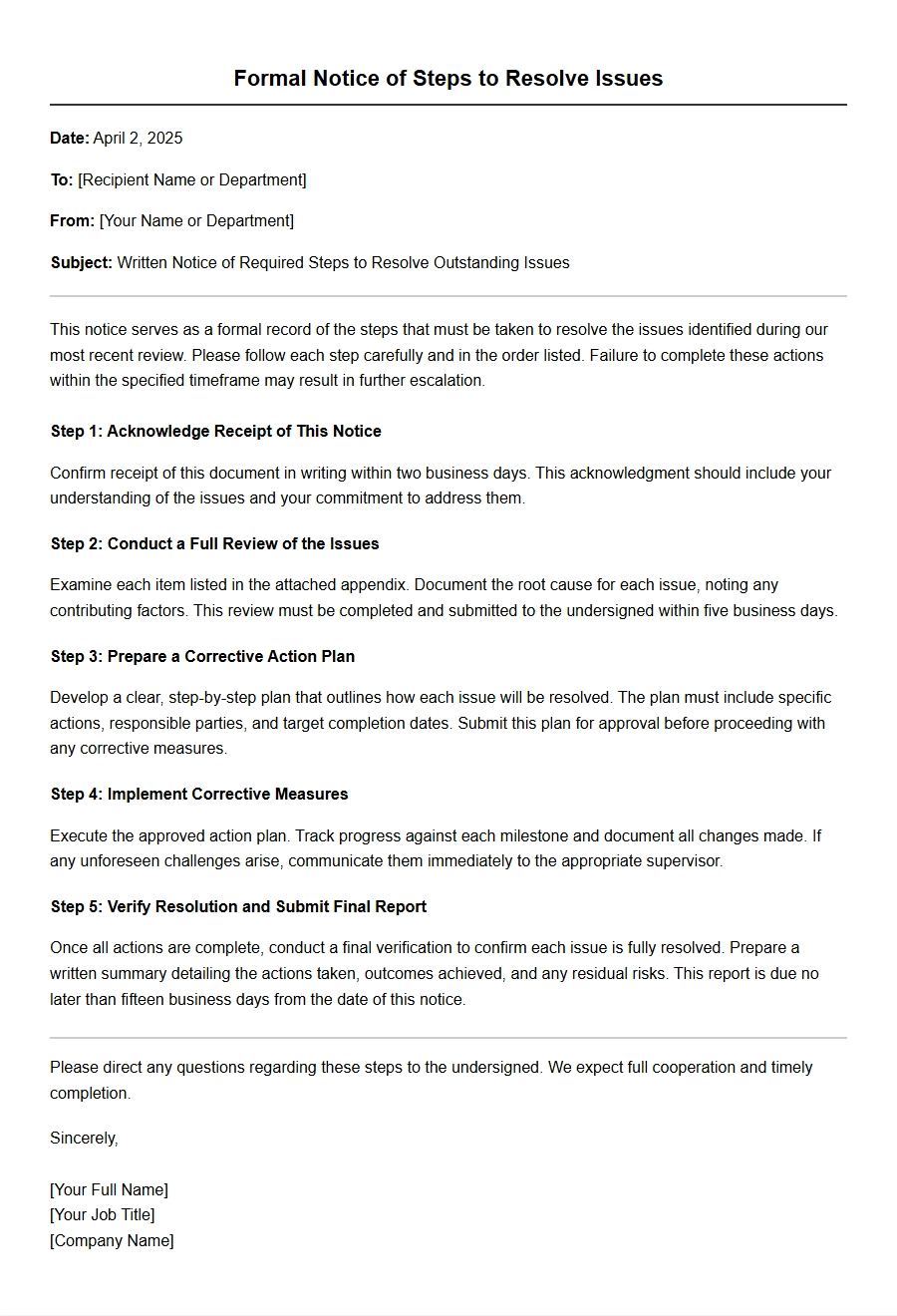 Steps to Resolve Issues via Written Notice
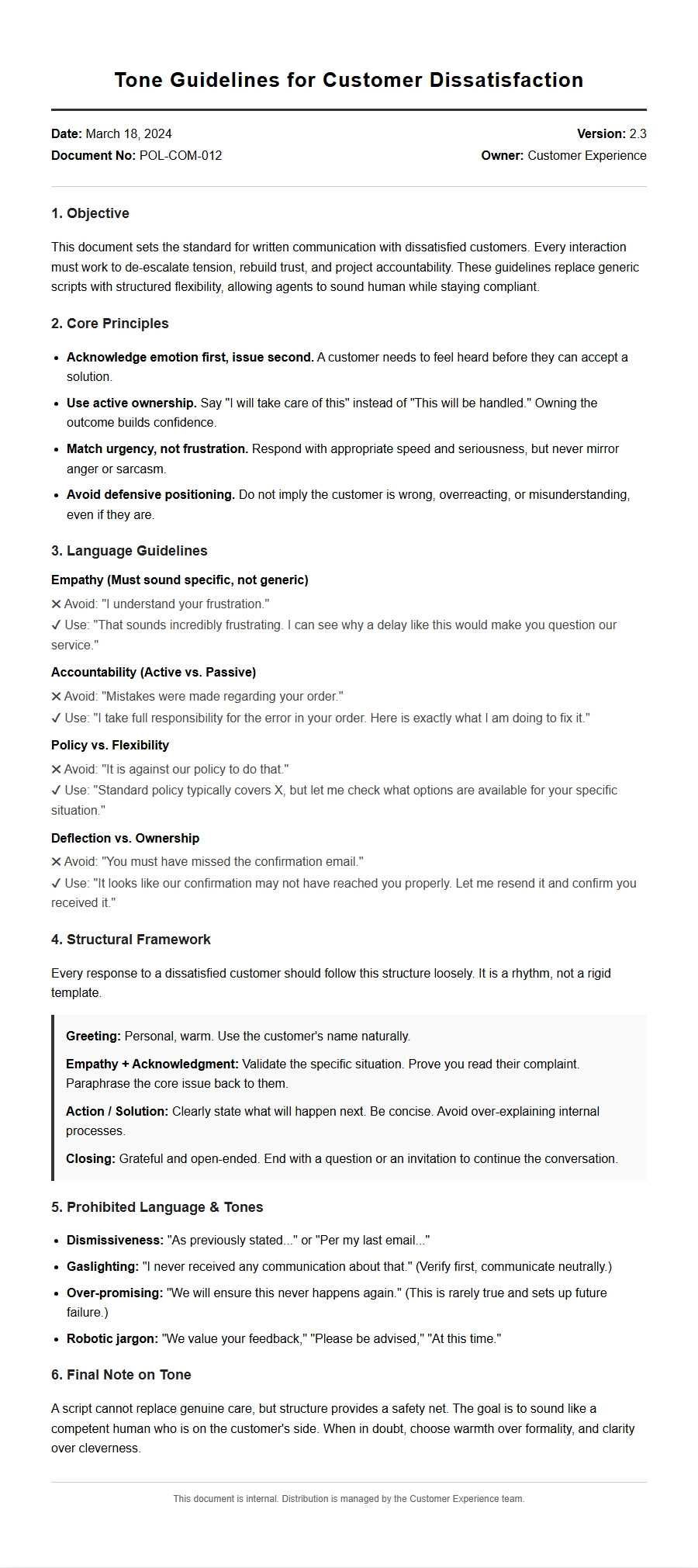 Tone Guidelines for Dissatisfied Customer Letters
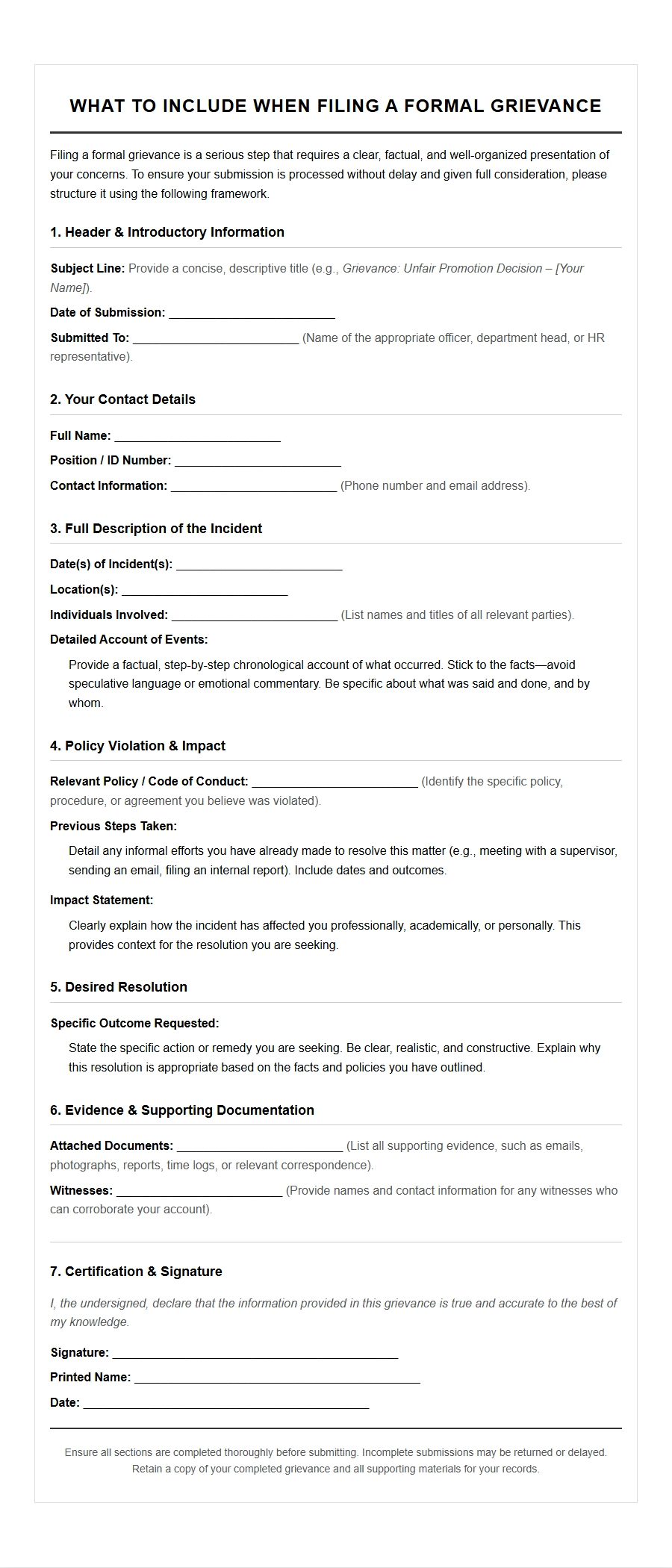 What to Include in a Formal Grievance Letter
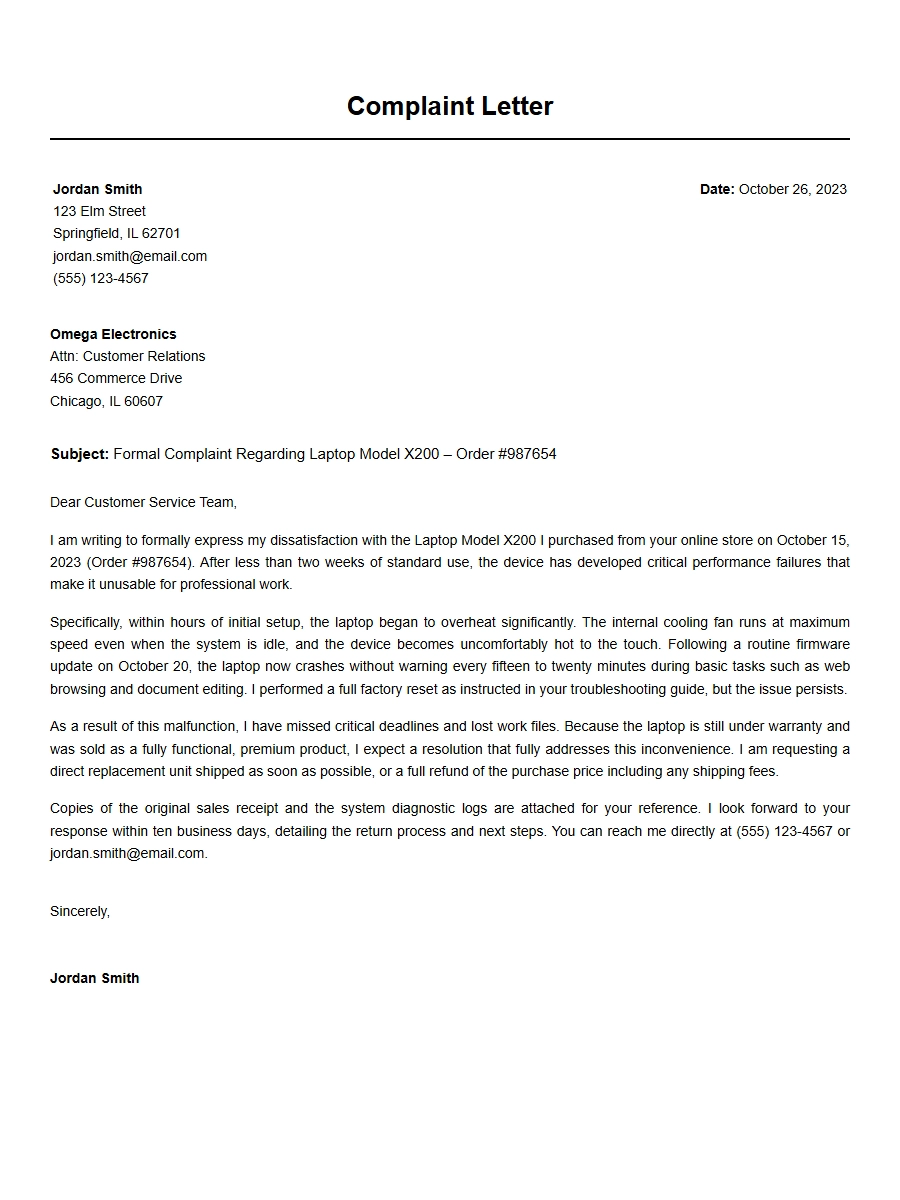 Structure of an Effective Complaint Letter
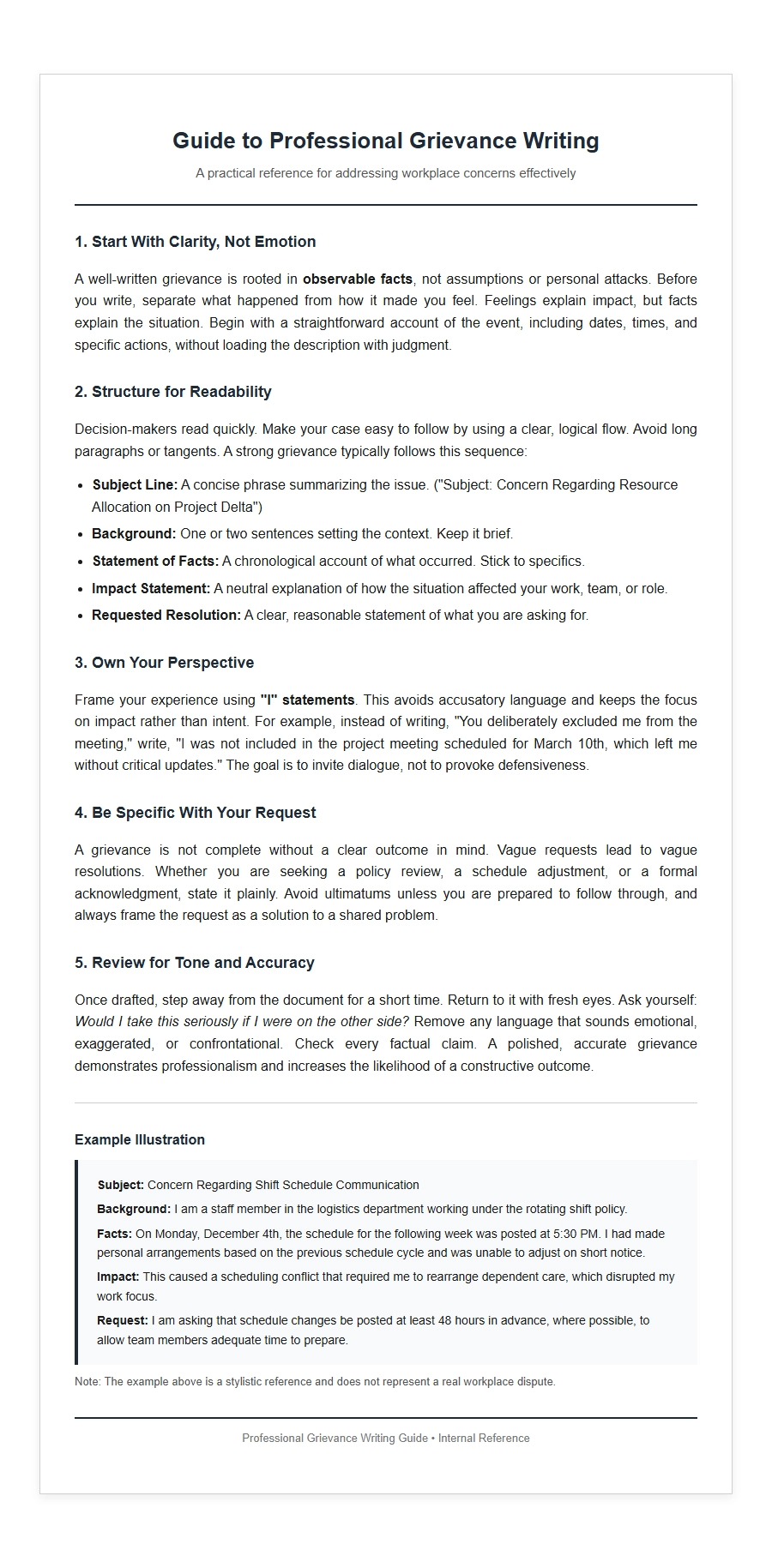 Best Practices for Writing Professional Grievance Letters