Staring at a blank page when you need to write a formal complaint to HR can feel overwhelming. You might rehearse the problem in your head, then freeze when it’s time to put words on screen. The right sample turns that anxiety into a clear, professional letter you can send in minutes.
A complaint letter to human resources department isn’t just about venting. It’s professional correspondence that needs the right tone and structure. Using a sample isn’t cheating—it’s a smart shortcut. A good template gives you a proven format, appropriate language, and key phrases to adapt. You just need to fill in your specific details without starting from scratch.
Category: Persuasive letter
What Makes a Good HR Complaint Letter?
HR needs clear facts and a reasonable request. Your letter should explain what happened, when, and who was involved. Then state what you want as a solution. A strong sample shows you how to organize these pieces without sounding emotional or accusatory.
Stick to professional writing tips here. Keep your language direct but polite. Skip dramatic words like “unacceptable” or “outrageous.” Instead, say “I was unable to complete my work because of repeated interruptions from my manager.” That’s factual and harder to dismiss.
How to Choose the Right Sample for Your Situation
Not all complaint letters are the same. A letter about workplace harassment needs a different tone than one about a pay discrepancy. Look for a sample that matches the seriousness of your issue. If your problem involves legal concerns like discrimination or safety violations, you might also want to reference a formal grievance process.
Once you find a good template, don’t just swap in names and dates. Read it aloud. Does the language feel natural to you? If a sentence sounds too stiff, rewrite it. Your letter should sound like you—just a more careful, polished version of you.
Start with a clear subject line and salutation. Most business letters still use “Dear [Name]” or “Dear HR Manager” if you don’t know the person. Avoid “To Whom It May Concern” unless you have no other option. It feels outdated and impersonal.
The opening paragraph should state your purpose directly. Say “I am writing to formally address an issue regarding...” instead of beating around the bush. Your sample might include a stronger opening, which is worth keeping. Grabbing attention early helps HR understand the urgency.
Handling the Tricky Middle Section
The middle of your letter is where you lay out the facts. Keep this part chronological and specific. Include dates, times, names of witnesses, and reference any prior emails or conversations. If your complaint involves multiple events, use short paragraphs separated by time or incident.
This is where letter structure matters. HR professionals scan letters quickly. If they need to read a giant block of text, they might miss key details. Use short paragraphs of two to four sentences. That’s easier to scan than a wall of text.
Be honest about what you want as an outcome. Do you need a formal apology? Reimbursement for expenses? A policy change? Or just a meeting to discuss the issue? Saying “I would appreciate a written response outlining the next steps” is clear and professional.
If the situation involves a third party, like unlicensed work done by someone your company hired, include copies of contracts or receipts as attachments. Don’t just mention them—reference the attachments at the end of your letter.
Common Mistakes to Avoid
One frequent error is using an outdated salutation. “Dear Sir” is no longer appropriate when you don’t know the recipient’s gender. “Dear HR Team” works fine.
Another mistake is treating an email complaint the same as a printed letter. For email, skip letterhead design and formal address blocks. Write a clear subject line, then start with a brief greeting and your complaint directly. Save the full formal format for printed letters or official documentation.
Some people also forget to proofread. A typo in a complaint can make you look careless. Read your letter twice. Better yet, have a friend glance at it. A well-checked letter shows you take the matter seriously.
Ending Your Letter with a Clear Next Step
Close with a polite request and a forward-looking statement. Something like “I look forward to your response and hope we can resolve this quickly.” Then add a standard closing like “Sincerely” followed by your printed name and contact information.
Don’t forget to sign or type your full name. If you are sending a printed letter, leave space for a handwritten signature above your typed name.
If you are emailing, your signature block with phone number and email is enough. Skip the letterhead unless your company expects it.
A Final Thought on Using Samples
The best letters feel both professional and personal. A sample gives you the structure, but your voice makes it real. Practice writing a few drafts if you have time. The more you do it, the faster it becomes.
Start with a solid sample, adapt it honestly, and send it with confidence. That blank page won’t stay blank for long.
Extra Samples
How to Write a Complaint Letter to HR
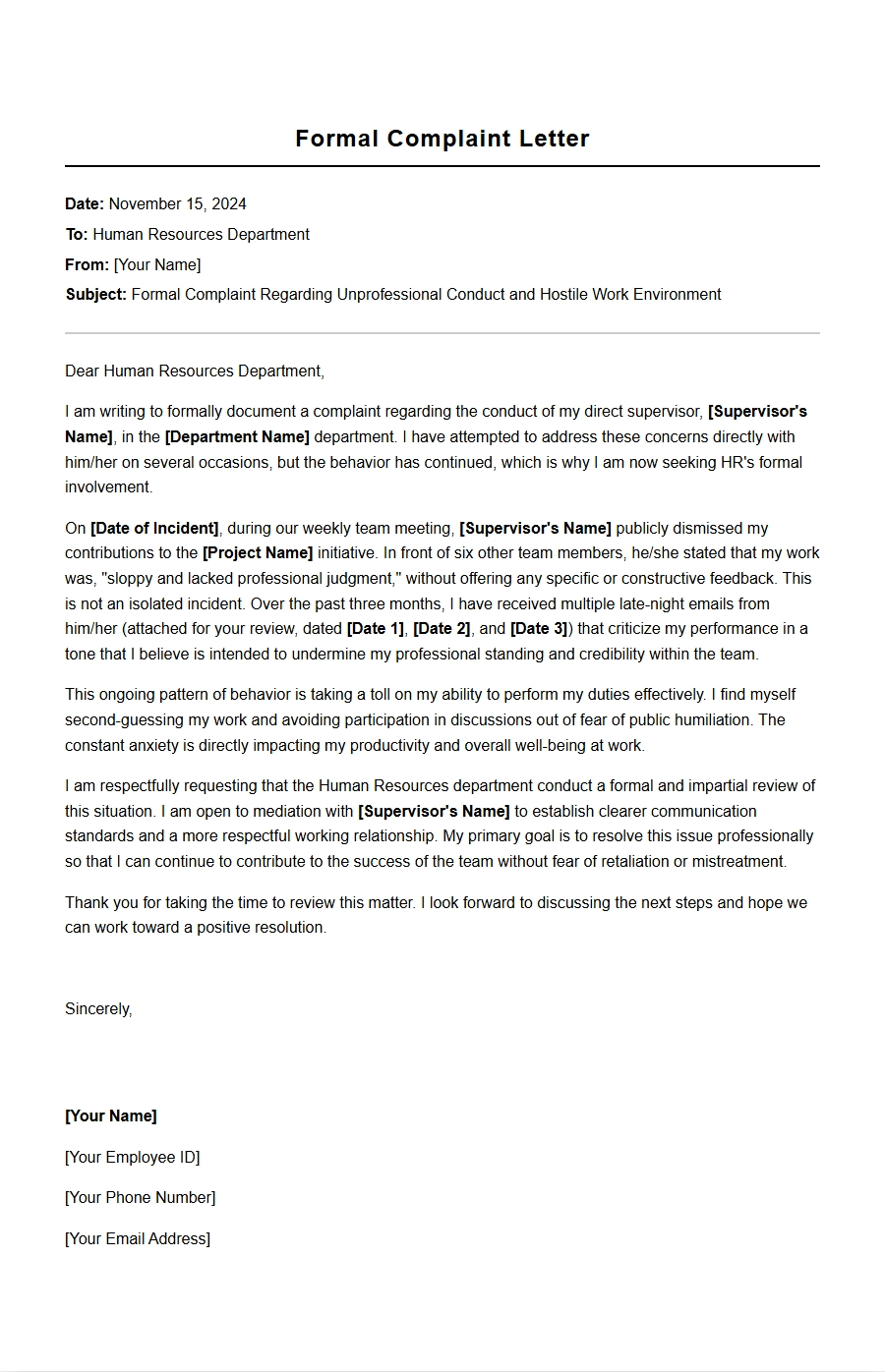
Complaint Regarding Unprofessional Behavior from Supervisor
To: Human Resources Department From: Jane Doe, Senior Analyst Date: March 15, 2025 Subject: Formal Complaint – Unprofessional Conduct by Supervisor
I am writing to formally report a pattern of unprofessional behavior exhibited by my direct supervisor, Mr. Alan Reed (Manager, Data Team). Over the past three months, I have experienced the following incidents:
Frequent public belittling of my work during team meetings, including statements such as “That’s the best you could do?” in front of colleagues.
Dismissive tone when I raise questions or request clarification; he often interrupts and says “Figure it out yourself.”
On March 10, he sent an email at 10:30 PM demanding an immediate response on a non-urgent matter, which I find inappropriate after-hours pressure.
These actions have created a stressful work environment and undermine my confidence. I have tried addressing the issue directly with Mr. Reed, but the behavior continues. I request that HR investigate this matter and take appropriate corrective action to ensure a respectful workplace.
I am available to discuss this further and can provide additional documentation if needed.
Report of Workplace Harassment by a Colleague
To: Human Resources From: Michael Chen, IT Specialist Date: March 20, 2025 Subject: Complaint of Harassment by Co-worker
I am filing this complaint against my colleague, Laura Simmons (Marketing Department), for repeated unwelcome comments and behaviors that constitute harassment under company policy.
Below is a log of incidents:
Date
Incident Description
Witness
Feb 12
Made derogatory remarks about my accent in front of other staff.
John Park (Finance)
Feb 28
Sent me a message via Slack saying “People like you don’t belong here.”
N/A (screenshot available)
Mar 5
Physically blocked my path in the hallway while laughing.
Sarah Kim (HR intern)
I have asked Laura to stop multiple times, but the behavior has escalated. I feel unsafe and unable to focus on my work. I request a formal investigation and measures to stop the harassment, including possible separation of workspaces.
Thank you for your prompt attention.
Discrimination Based on Age in Promotion Decisions
To: Human Resources Department From: Robert Blake, Senior Engineer (age 62) Date: March 18, 2025 Subject: Complaint of Age Discrimination
I believe I was unfairly denied a promotion to Principal Engineer position (posted January 2025) due to my age. I have been with the company for 15 years, consistently exceeding performance targets. The position was awarded to a candidate in her early 30s with less than 5 years of experience.
Key facts supporting my complaint:
My performance rating for 2024 was “Exceeds Expectations.” The selected candidate received “Meets Expectations.”
During the interview process, the hiring manager (Ms. Torres) made remarks about “bringing fresh energy” and “new blood,” which I perceive as age-biased language.
Two younger colleagues with similar or lesser qualifications were also promoted ahead of more seasoned employees in recent months.
I request that HR review the selection decision and the promotion criteria to ensure they comply with age discrimination laws. I am willing to participate in an informal mediation or formal investigation.
Complaint About Unsafe Working Conditions
To: Human Resources / Health & Safety From: Emily Nguyen, Warehouse Associate Date: March 22, 2025 Subject: Immediate Safety Hazard in Shipping Area
I am writing to report unsafe working conditions in the shipping dock that pose a risk to all employees. Despite previous verbal complaints, no action has been taken. The issues include:
Broken floor tiles near the loading bay – tripping hazard reported since January 2025.
Inadequate lighting in the east aisle, causing near misses with forklifts.
Missing guardrails on the upper mezzanine where inventory is stored.
On March 19, I slipped on a loose tile and narrowly avoided a fall. My shift supervisor, Mr. Davis, said he would submit a work order but nothing has changed. I fear a serious injury will occur soon.
I request an immediate inspection of the facility and that all hazards be corrected within one week. Please also provide a written timeline for repairs. This complaint is made in good faith and I ask for confidentiality to protect against retaliation.
Grievance Over Unfair Performance Review
To: Human Resources From: Priya Kumar, Customer Support Lead Date: March 25, 2025 Subject: Appeal of Unfair Performance Rating
I am formally challenging my 2024 annual performance review rating of “Needs Improvement,” which I believe is inaccurate and based on subjective criteria rather than documented facts. My manager, David Lee, provided no specific examples of underperformance during the review meeting.
Evidence supporting my appeal:
Area
Actual Performance
Manager’s Claim
Customer satisfaction score
94% (exceeds target of 90%)
“Below average” (no data given)
Ticket resolution time
Average 3.2 minutes (target 5 min)
“Too slow” (no timestamp provided)
Team collaboration
Volunteered to train 3 new hires
“Not a team player” (vague claim)
I request a full re-evaluation of my performance by a neutral HR representative and that the rating be adjusted to reflect my actual contributions. I have attached performance dashboards and peer feedback for your review.
Complaint Regarding Retaliation After Reporting Misconduct
To: Human Resources – Ethics Hotline From: Sandra Lopez, Accounting Clerk Date: March 28, 2025 Subject: Retaliation for Reporting Financial Irregularities
I am writing to report retaliation I have experienced since I filed a complaint on February 10 about improper expense reporting by my department head, Ms. Gloria Vance. Within two weeks of my report, the following adverse actions occurred:
My lunch break was shortened from 60 to 30 minutes without explanation;
I was reassigned from interesting special projects to menial filing tasks;
Ms. Vance sent an email to the team implying that “some people can’t be trusted” – a clear reference to me.
These actions have created a hostile environment and are intended to discourage me from further reporting. I believe this is direct retaliation in violation of company policy and whistleblower protections.
I request an immediate investigation and interim measures to separate me from Ms. Vance’s supervision until the matter is resolved. I am prepared to provide documented evidence of each retaliatory act.
Wage Discrepancy and Pay Equity Concern
To: Human Resources – Compensation From: Carlos Mendez, Junior Designer Date: March 30, 2025 Subject: Request for Pay Equity Review
I have discovered that I am being paid significantly less than my peers in the same role with comparable experience and performance. After a colleague shared his salary confidentially, I learned the following:
Employee
Years of Experience
Annual Salary
Performance Rating
Me (Carlos)
3 years
$45,000
Exceeds Expectations
Peer A (hired same date)
2.5 years
$52,000
Meets Expectations
Peer B (hired 6 months later)
3 years
$50,000
Exceeds Expectations
This pattern suggests possible bias or negotiation inequity. I request that HR conduct a pay equity audit for the Design department and adjust my salary to the market midpoint (at least $50,000) retroactive to my hire date. I also ask that future salary decisions be transparent and based on objective criteria.
Thank you for addressing this serious concern.
Complaint About Denied Leave Request Without Valid Reason
To: Human Resources From: Lisa Thompson, Administrative Assistant Date: April 2, 2025 Subject: Unjustified Denial of Pre-Approved Leave
I am writing to formally object to the denial of my annual leave request for April 15–19, 2025, which I submitted on February 28 (over six weeks in advance). My manager, Rebecca Torres, rejected it on March 20 citing “operational needs,” yet no other staff had requested that period off and coverage was available.
Relevant details:
I have 15 unused vacation days; the request was within planned downtime.
On March 18, Rebecca approved a similar leave request from another team member for the same week.
When I asked for explanation, she stated “your turn will come” without further justification.
I believe this denial is arbitrary and possibly based on personal bias. Under company policy, leave should not be unreasonably refused. I request that HR either approve my original dates or propose a mutually agreeable alternative within two weeks. I also ask for a review of consistent leave approval practices in our department.
Complaint About Hostile Work Environment Due to Bullying
To: Human Resources Department From: David Okafor, Sales Associate Date: April 5, 2025 Subject: Hostile Work Environment – Bullying by Team Lead
I am submitting this complaint regarding the bullying behavior of my team lead, Mark Jensen, which has created an intimidating and hostile work environment. Over the last two months, I have experienced:
Mark repeatedly criticizing my sales calls in loud, demeaning tones in front of customers and colleagues;
Deliberately excluding me from important team emails and meetings (I found out later through others);
Threatening to “write me up” for minor lateness while ignoring similar infractions by others.
On March 28, I approached Mark privately to discuss the issue. He responded by saying “If you can’t handle it, maybe you should quit.” I felt humiliated and powerless. This ongoing behavior has caused me anxiety and sleeplessness, affecting my performance.
I request that HR conduct a thorough investigation and take steps to stop the bullying, including possible training for managers. I also ask for protection from retaliation. I am willing to provide specific dates and witnesses.
To: Human Resources – Policy Compliance From: Angela Green, Customer Relations Manager Date: April 8, 2025 Subject: Inequitable Enforcement of Remote Work Policy
I am writing to report that the company’s remote work policy is being applied inconsistently across departments, creating morale and fairness issues. Specifically, my department (Customer Relations) under Director Steve Hall strictly enforces a “three days in office” mandate, whereas other departments, such as IT and Marketing, are allowed full remote or hybrid flexibility with no consequences.
Examples of disparity:
Department
Policy Applied
Enforcement
Customer Relations
3 days in office per week
Strict – warnings issued for non-compliance
IT
Remote-friendly (no minimum days)
No enforcement
Marketing
Hybrid – manager discretion
Lax – many staff work remote 80%
I have raised this with Mr. Hall, who claimed it’s “business necessity,” but provided no data to support the distinction. This selective enforcement feels arbitrary and unfair. I request that HR review the policy’s application and either standardize expectations across all departments or provide transparent justification for the differences. Until then, I request equal consideration for flexible work arrangements.
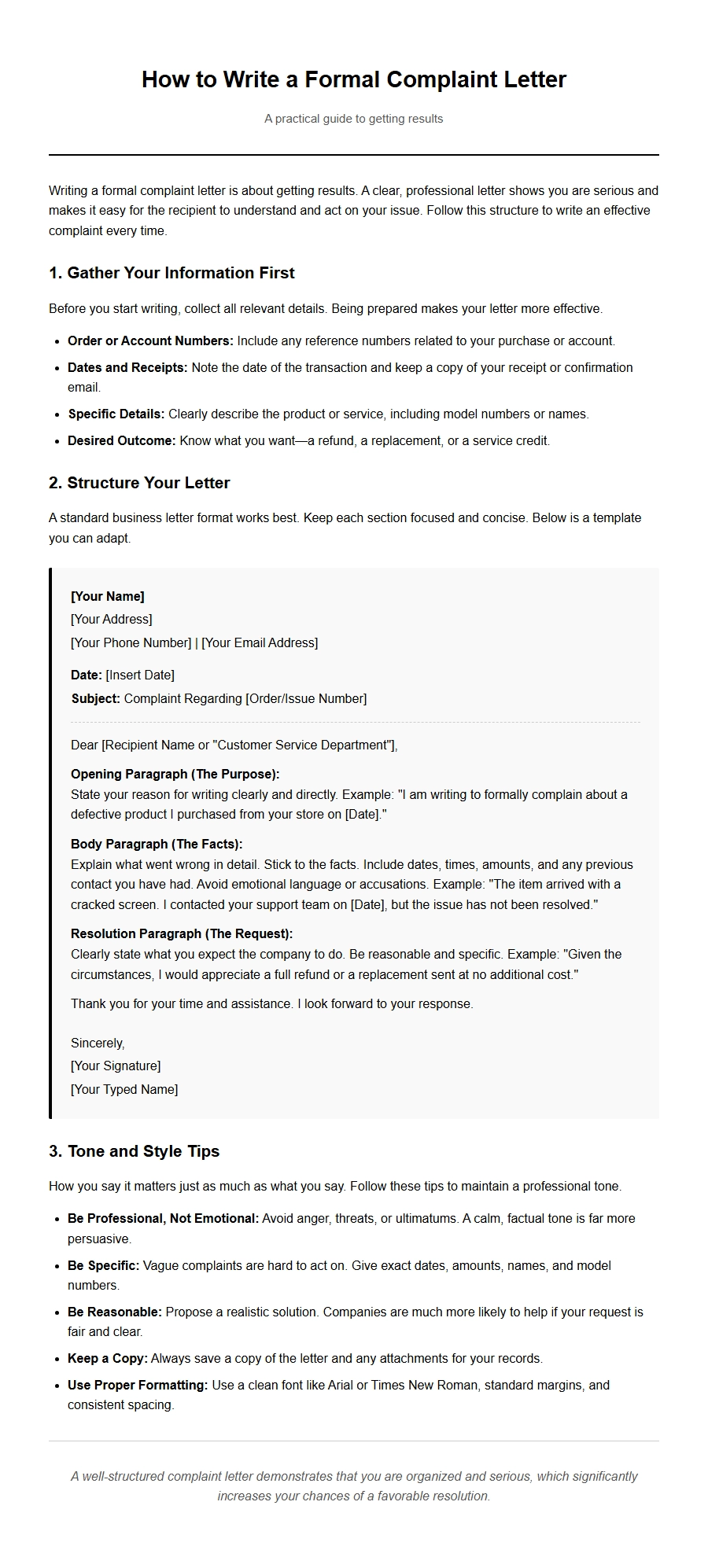 How to Write a Formal Complaint Letter
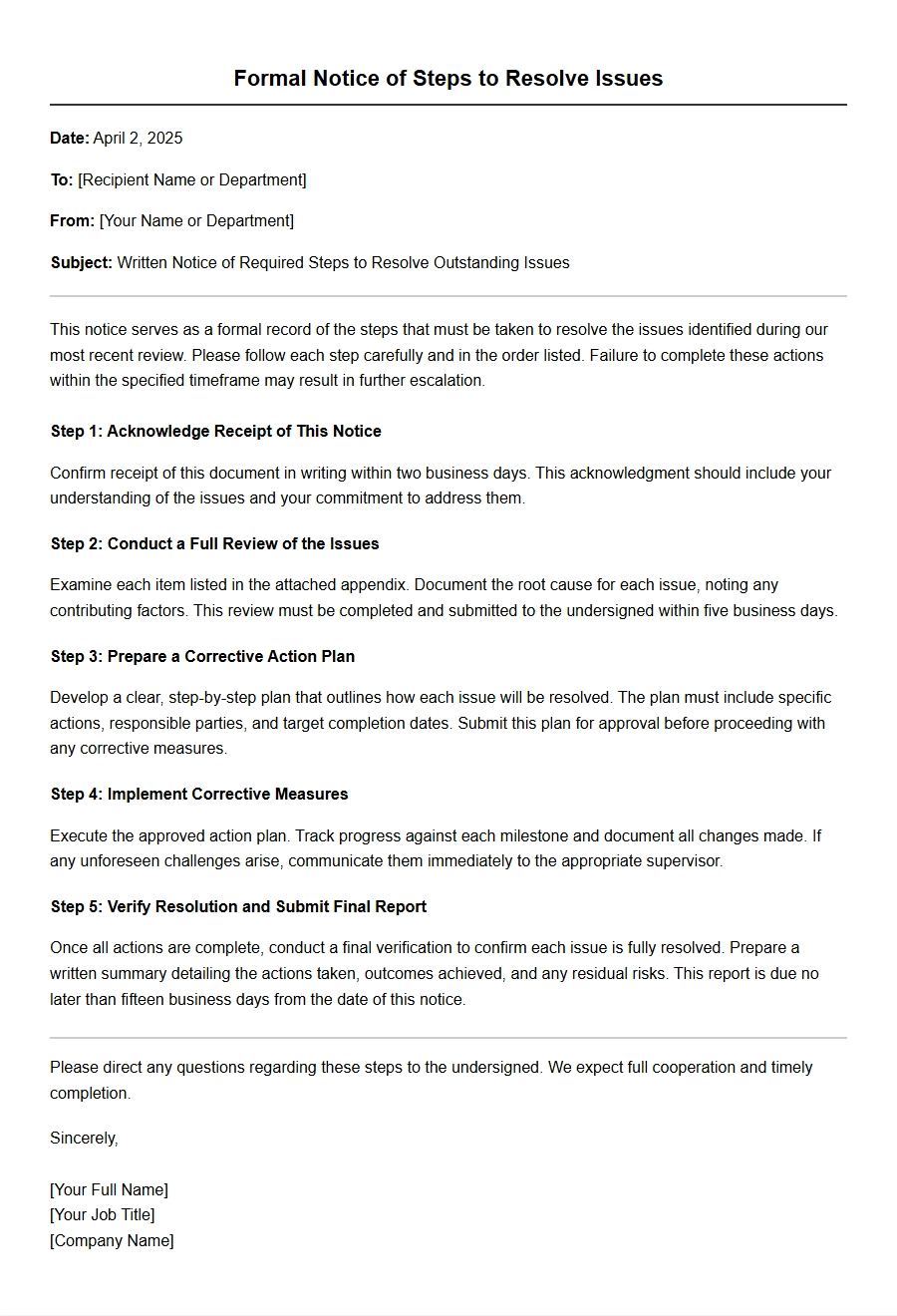 Steps to Resolve Issues via Written Notice
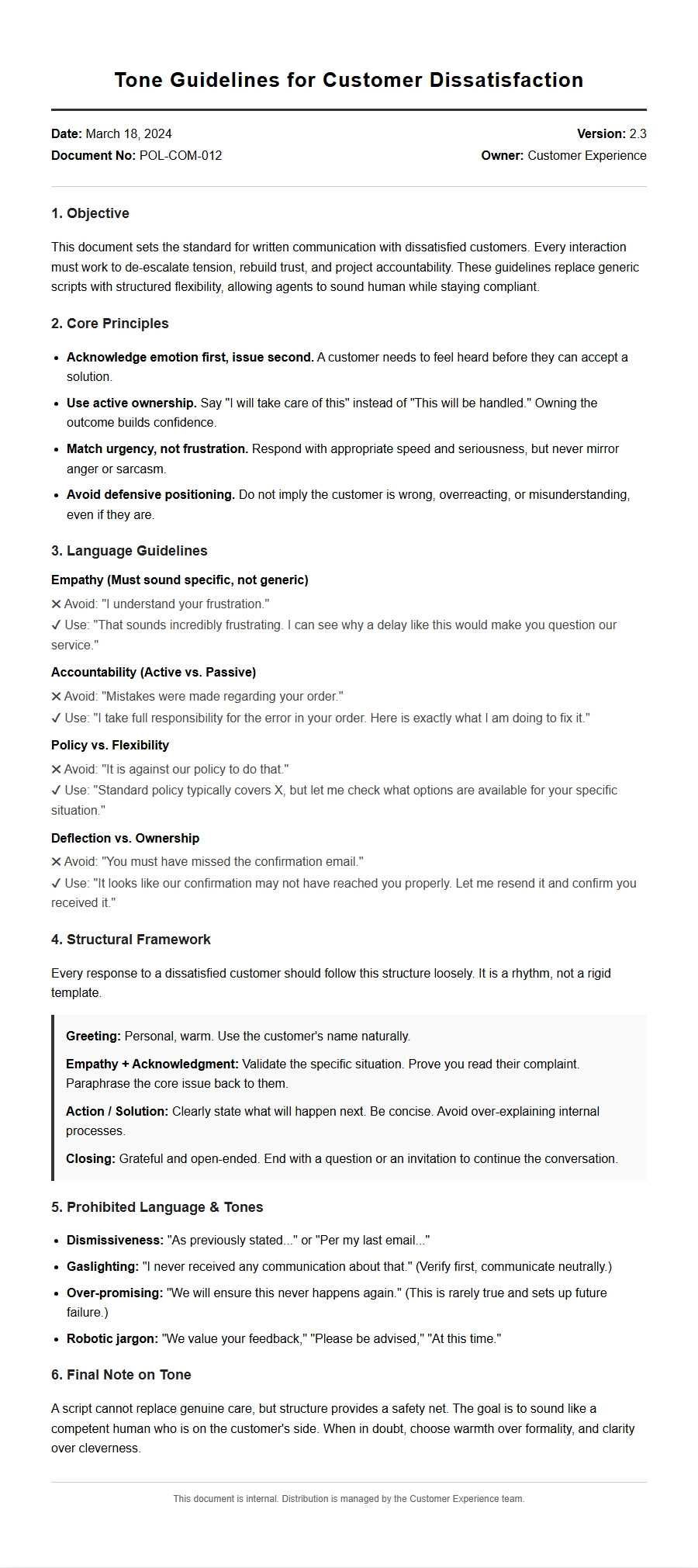 Tone Guidelines for Dissatisfied Customer Letters
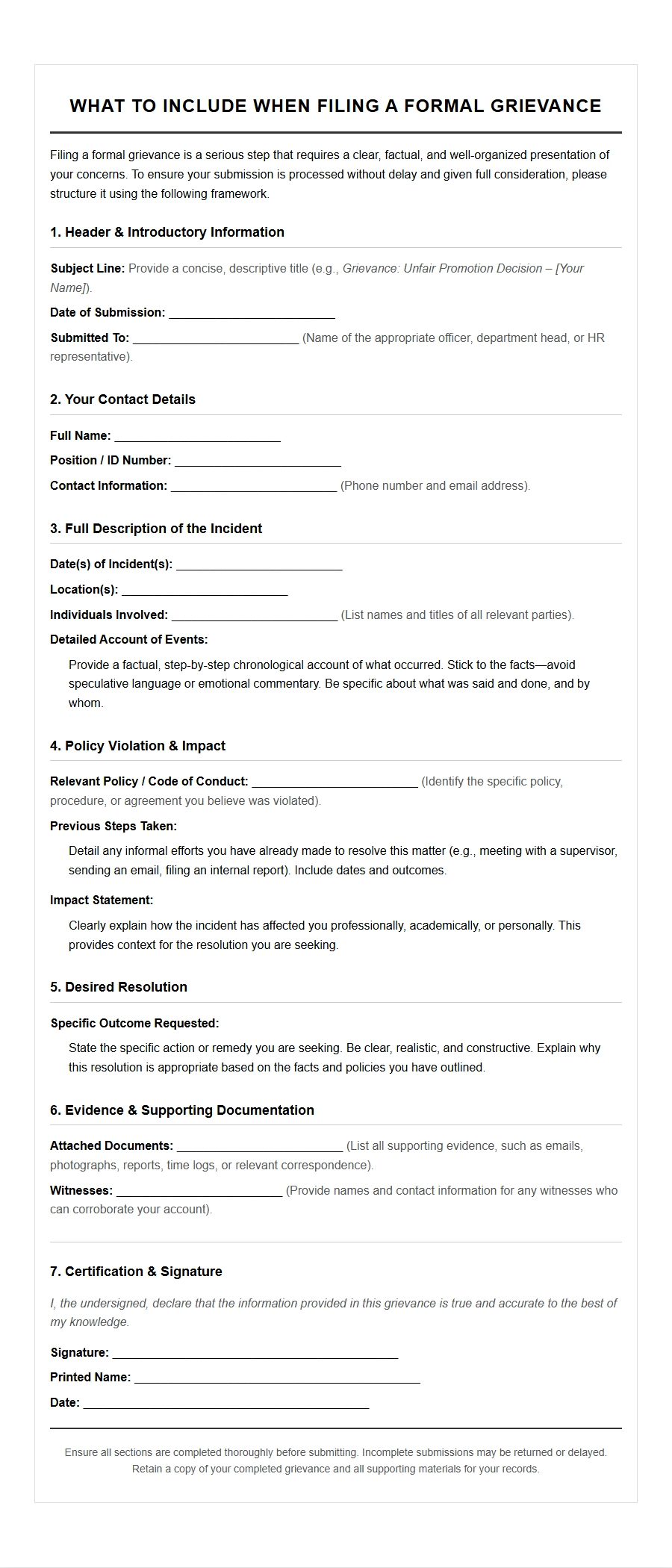 What to Include in a Formal Grievance Letter
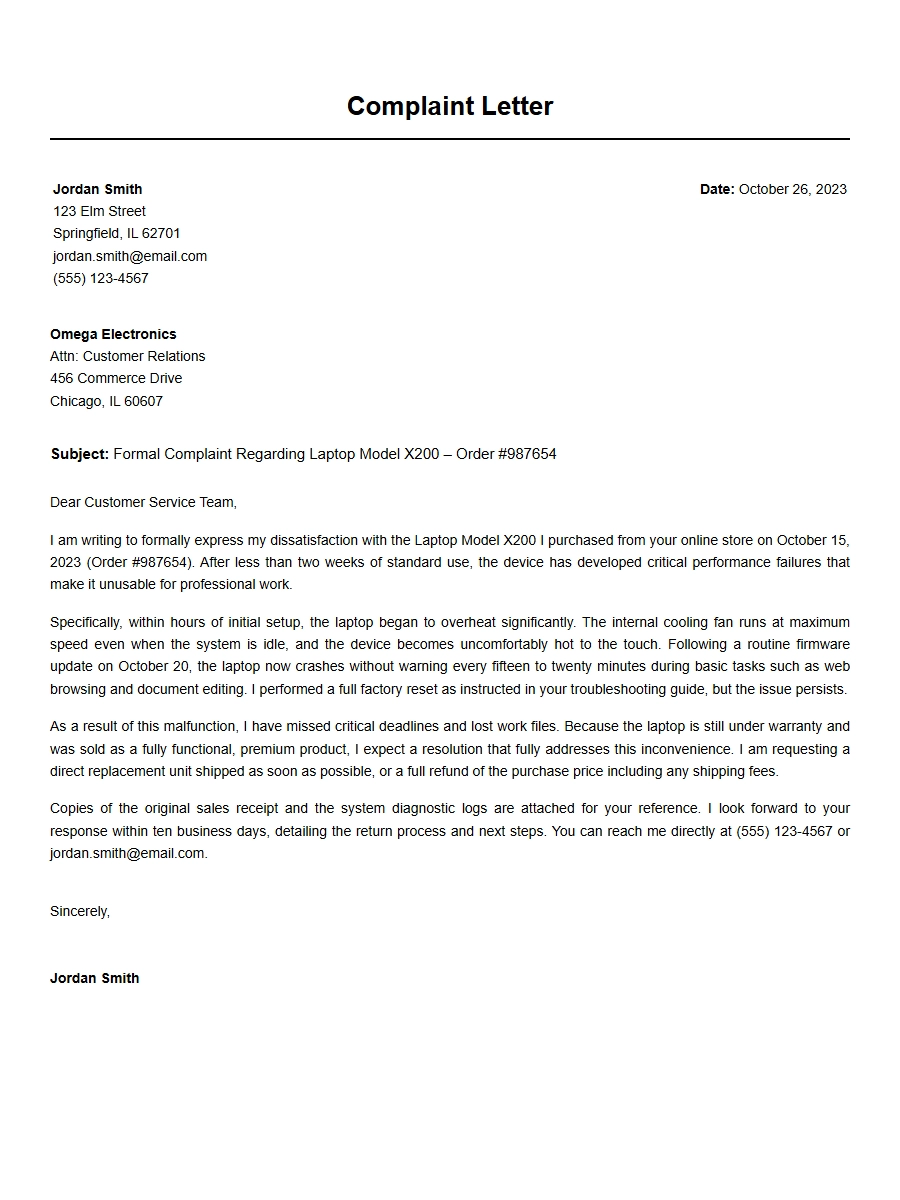 Structure of an Effective Complaint Letter
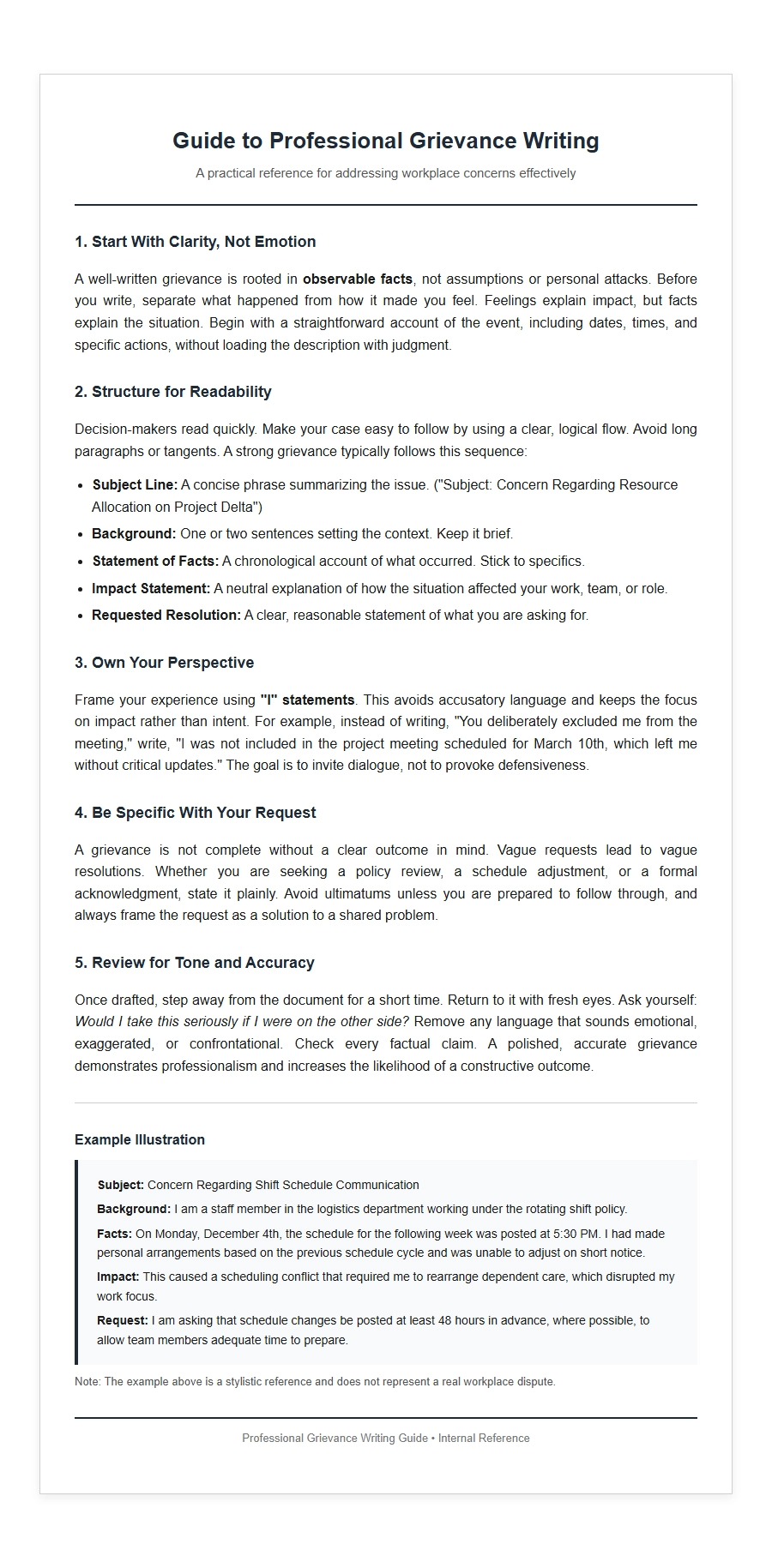 Best Practices for Writing Professional Grievance Letters