You’ve written the body of the sympathy letter—the memories, the comfort, the quiet acknowledgment of loss. Then you stop. How do you end it? "Sincerely" feels too corporate. "Love" is too familiar. The sign-off can trip you up more than any other part.
A weak or mismatched closing can undo the warmth you just built. But the right one leaves the reader feeling held, not rushed. And you don’t have to invent it from scratch. Using a letter template or sample for the closing isn’t cheating—it’s a smart way to find the tone that fits your relationship without overthinking. Professional letter writing etiquette means matching your sign-off to the formality of the situation, whether that’s a printed note or a digital message.
Category: Condolence Letters
What makes a good sympathy letter closing?
A closing does two things: it signals the end, and it leaves a final feeling. For a formal sympathy letter—say, to an executive, a colleague you don’t know well, or a client—you want respectful distance but genuine care. “With deepest sympathy” works. So does “With heartfelt condolences.” Both are safe and warm without assuming intimacy.
For a semi-formal note (a coworker you’ve worked with closely, a neighbor, a distant relative), you have more room. “Thinking of you” or “With caring thoughts” feel personal but not pushy. Avoid anything that sounds like a standard business letter format—skip “Yours truly” or “Respectfully.” This isn’t a cover letter.
How to adapt sample closings without sounding robotic
Even the best cover letter examples need tweaking. The same goes here. If you’re using a resignation letter sample or a generic condolence template, change the closing to reflect your voice. For example, “Wishing you peace” can become “Wishing you moments of peace” or “Holding you in my thoughts.” Small shifts make it yours.
Pay attention to tone in writing. If you’re writing to someone who prefers directness, a simple “With sympathy” is fine. If they’re more expressive, add a phrase after your name: “With sympathy and warm regards, [Your Name].”
Common mistakes in the sign-off
The biggest one? Using outdated phrases like “I remain yours faithfully” or “Your obedient servant.” Unless you’re writing a formal letter of condolence to a high-ranking executive in a traditional context, those feel stiff. Another mistake: ignoring the format. In a digital letter format (email), you can skip the date and full address, but the closing still matters. “Best” is too casual for a condolence email. Stick with “Warmly” or “With sympathy.”
Also, don’t forget to proofread the letter before you send. A typo in the closing—like “Sincerely” misspelled or an extra space—can distract from your intention. Read it aloud to check the rhythm.
Are you writing to an executive at your company? The formal letter of condolence to an executive calls for a polished, brief sign-off. “With deepest sympathy” paired with your full name and title works. If you’re writing to a coworker attending the funeral, a more personal closing like “You’ll be in my thoughts” fits better—check out our message for coworker attending funeral for phrasing ideas.
What if you can’t attend the service? The sign-off should acknowledge that. “Though I cannot be there, I am holding you in my heart” is a strong closing. For tips on wording, see how to send condolences when you cannot attend.
Even the loss of a pet deserves a respectful closing. “With sympathy for your loss of [pet’s name]” followed by “Thinking of you” is appropriate. For more, read our condolences for loss of dog or pet article.
Remember that letter structure matters: your closing should match the formality of your salutation. If you started with “Dear Mr. Smith,” don’t end with “All my love.” Keep the register consistent from start to finish.
Make the closing your own
You don’t need to reinvent the wheel. Use a customizable letter as a starting point, then adjust salutation and closing together. If you opened with “Dear [Name],” end with a sign-off that reflects your actual relationship. Practice a few versions. The best ones feel both professional and personal—like you wrote it just for them.
Let this closing be a springboard, not a crutch. Over time, these phrases will come naturally. You’ll spend less time staring at the page and more time writing the words that matter.
Everyday Writing Examples
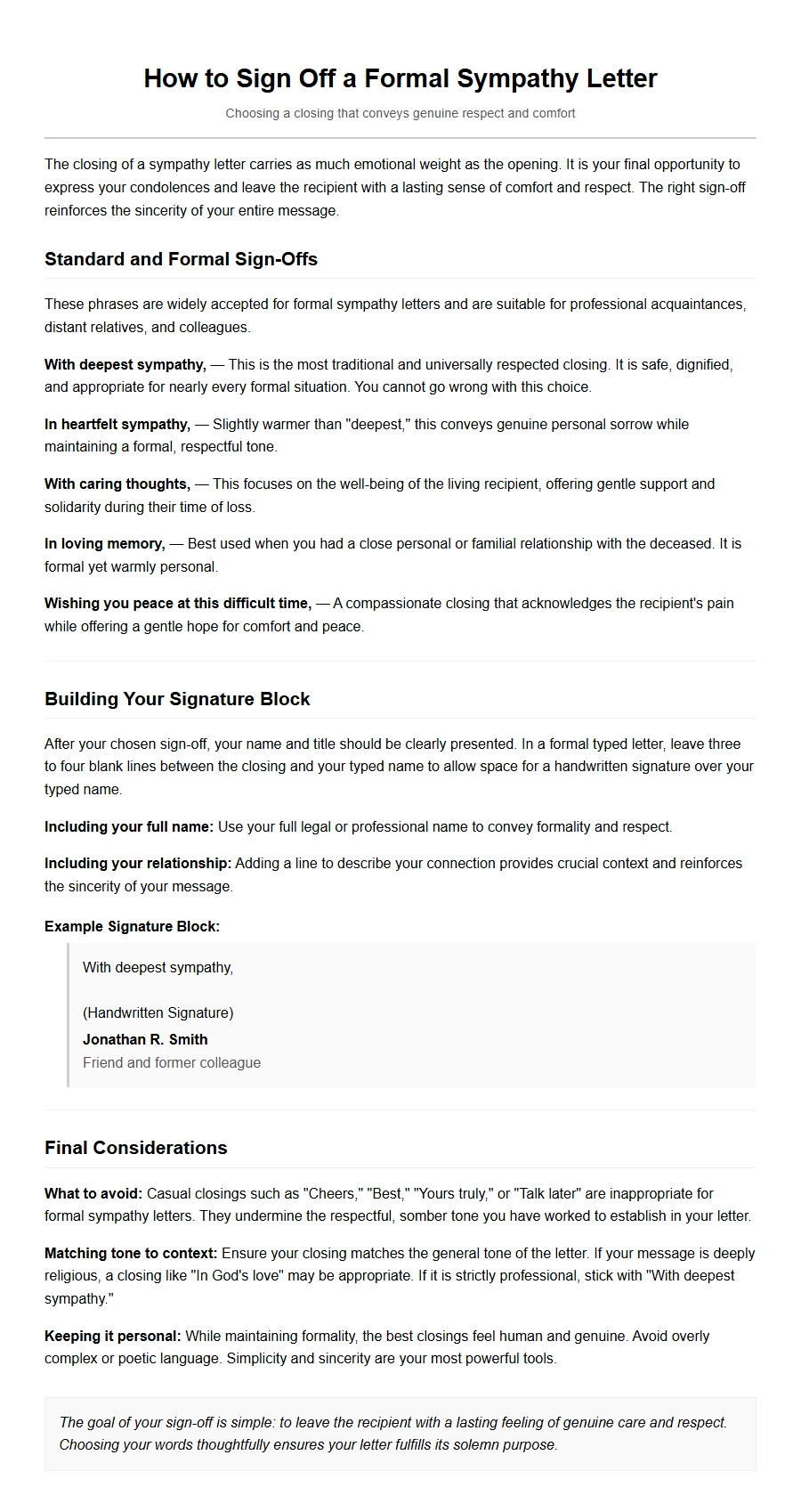
How to Sign Off a Formal Sympathy Letter
Sign-Off Options for a Business Associate
When writing a sympathy letter to a business associate, professionalism and sincerity must balance. Choose a sign-off that respects the professional relationship while conveying genuine condolence. Below are appropriate closings:
With deepest sympathy, – Suitable for formal business relationships where you want to express profound empathy.
Sincerely, – A standard but respectful closing that works for many formal condolence letters.
With heartfelt condolences, – Adds warmth without overstepping professional boundaries.
Yours sincerely, – The traditional formal ending for letters addressed by name.
With respect and sympathy, – Conveys deference and compassion.
Always pair the sign-off with your full name, title, and company name. Avoid casual closings like "Best" or "Warmly" in this context. Sign your letter by hand above your printed name to personalize the formal document.
Classic Formal Closings for Condolence Letters
The following classic sign-offs are appropriate for most formal sympathy letters. They are time-honored and convey respectful mourning. Use a comma after each phrase, then sign your name below.
Sign-Off Phrase
Best Used When
With deepest sympathy,
You want to express profound grief and support
With heartfelt condolences,
The loss feels personal and sincere
In sorrowful sympathy,
You share in the family’s pain
Yours in sympathy,
A traditional, slightly old-fashioned choice
With thoughts and prayers,
Appropriate when you want to offer spiritual comfort
Always ensure the sign-off matches the tone of the letter body. If you referenced the deceased’s name or shared a memory, the closing should echo that personal note. Avoid abbreviations or casual language.
How to Close a Sympathy Letter to a Colleague
Closing a sympathy letter to a colleague requires balancing professionalism with genuine care. Here are several sign-off options tailored to different workplace relationships:
With sincere sympathy, – A safe, respectful choice for a coworker you know professionally.
Wishing you peace, – Slightly warmer, suitable for a teammate or peer.
In sympathy, – Brief but acceptable in a very formal work environment.
With caring thoughts, – Expresses personal concern without over-familiarity.
Your colleague in sympathy, – Emphasizes the shared work connection while offering comfort.
After the sign-off, include your full name and optionally your job title. If you work closely together, you may add a handwritten note. For an email, a simple closing followed by your name and department is sufficient. Avoid using company slogans or jokes even if you normally do.
Sign-Offs for a Letter to a Grieving Friend
When writing to a close friend who has lost a loved one, your sign-off can be warmer and more personal while still maintaining a respectful tone. Consider these options:
With all my love and deepest sympathy, – For a very close friend, combines affection with condolence.
Thinking of you with heartfelt sympathy, – Expresses ongoing support.
Yours in friendship and sorrow, – A heartfelt blend of personal connection and grief.
With you in grief, – Short but powerful if you have shared a similar loss.
Ever your friend, – For an intimate friend, this closing reassures lasting bond.
Always use the friend’s name in the salutation and refer to the deceased by name. After the sign-off, you might add a separate line like "With love," if that is your usual style. The key is to remain authentic to your relationship while honoring the gravity of the occasion.
Using Religious or Spiritual Sign-Offs
If the bereaved family is religious or you share a faith tradition, incorporating spiritual language in your sign-off can provide deep comfort. Below are appropriate closings arranged by tradition:
Sign-Off Phrase
Faith Context
In God’s peace,
Christian (general)
With prayers for your comfort,
Interfaith / general religious
May his soul rest in eternal peace,
Catholic / Protestant
With blessings and sympathy,
Many religions
In the hope of the resurrection,
Specific Christian doctrine
When in doubt, choose a more general spiritual closing rather than one tied to a specific dogma unless you are certain of the recipient’s beliefs. Pair the sign-off with a short prayer or blessing in the body of the letter. Avoid mixing religious and secular language awkwardly.
Closing a Sympathy Note to a Neighbor
A sympathy letter to a neighbor should be neighborly – polite, caring, and supportive without being overly familiar. Consider these sign-offs:
With neighborly sympathy, – A warm yet appropriate closing that acknowledges your relationship.
Thinking of you and your family, – Shows concern without being intrusive.
With heartfelt condolences from next door, – Personalizes your location and support.
Yours truly, – A classic sign-off that maintains respectful distance.
With sympathy and warm regards, – Blends formal condolence with friendly warmth.
After the sign-off, include your full name and house number or street for clarity. If you have offered specific help (like collecting mail or walking a pet), mention it in the body. Hand-deliver the note rather than mailing it to show extra care. Keep the closing short but sincere.
Formal Yet Warm Sign-Offs
Sometimes you need a sign-off that is both formal and warm – appropriate for a former teacher, a distant relative, or a community leader. Here are options that strike that balance:
With sincere and heartfelt sympathy, – Combines professionalism with genuine emotion.
Yours very sincerely, – A traditional closing that adds warmth to formality.
With respectful sympathy, – Highlights deference while expressing condolence.
Kindest regards in your time of loss, – Polite and gentle.
Believe me, with deepest sympathy, – An older phrasing that conveys earnestness.
These closings work well when the relationship is not intimate but you still wish to communicate personal care. Always write the letter by hand if possible; printed letters can feel colder. Sign beneath the closing with your full name and perhaps a brief identifier (e.g., "Your former colleague").
Sign-Offs for a Letter to Your Boss's Family
When writing a sympathy letter to your boss’s family after the boss has passed away, maintain utmost professionalism and deference. Appropriate sign-offs include:
With deepest respect and sympathy, – Honors the boss’s authority and the family’s loss.
Yours respectfully, – Highly formal, best for very traditional workplaces.
With heartfelt condolences from your team, – If writing on behalf of colleagues.
In sincere sympathy, – Simple and suitable when you have a professional but not personal relationship.
With gratitude for his/her leadership and sympathy for your loss, – Combines professional appreciation with condolence.
If you are writing individually, mention your role (e.g., "Your husband’s project manager") at the end of the letter. Avoid using first names unless you were personally close. Keep the closing concise and sign with your full name and title. Do not offer unsolicited advice or talk about work in the closing.
Avoiding Clichés in Sympathy Sign-Offs
While many standard sign-offs are acceptable, some have become overused and may feel insincere. Here’s a table of clichés to avoid and better alternatives:
Avoid This Cliché
Why It Falls Flat
Better Alternative
"Our thoughts and prayers are with you"
Too generic, used in bulk sympathy cards
"With you in prayer and sympathy"
"Heaven gained an angel"
May not align with family’s beliefs
"May beautiful memories bring you peace"
"Time heals all wounds"
Minimizes grief, sounds dismissive
"Wishing you strength each day"
"I know just how you feel"
Presumptuous and often untrue
"I am so sorry for your loss"
Instead of using a clichéd sign-off, personalize it with a specific mention of the deceased or your relationship. For example, "With fond memories of Jane and sympathy for you" feels genuine. Always reread your closing to ensure it sounds like you, not a Hallmark card.
Quick Reference Table of Sign-Off Phrases
Use this quick reference table to choose the right sign-off for your formal sympathy letter based on the recipient relationship:
Recipient
Recommended Sign-Off
Alternative
Business associate
With deepest sympathy,
Sincerely,
Close friend
With all my love and sympathy,
Your friend in sorrow,
Colleague
With sincere sympathy,
Wishing you peace,
Neighbor
With neighborly sympathy,
Thinking of you,
Religious family
In God’s peace,
With prayers for comfort,
Boss’s family
With deepest respect and sympathy,
Yours respectfully,
Former teacher
With sincere and heartfelt sympathy,
Yours very sincerely,
Acquaintance
With sympathy,
Kind regards in your loss,
Remember that the sign-off should match the tone of the letter’s body. If you wrote a longer, more personal message, choose a warmer closing. If the letter is brief and formal, keep the sign-off similarly concise. Always hand-sign and spell-check before sending.
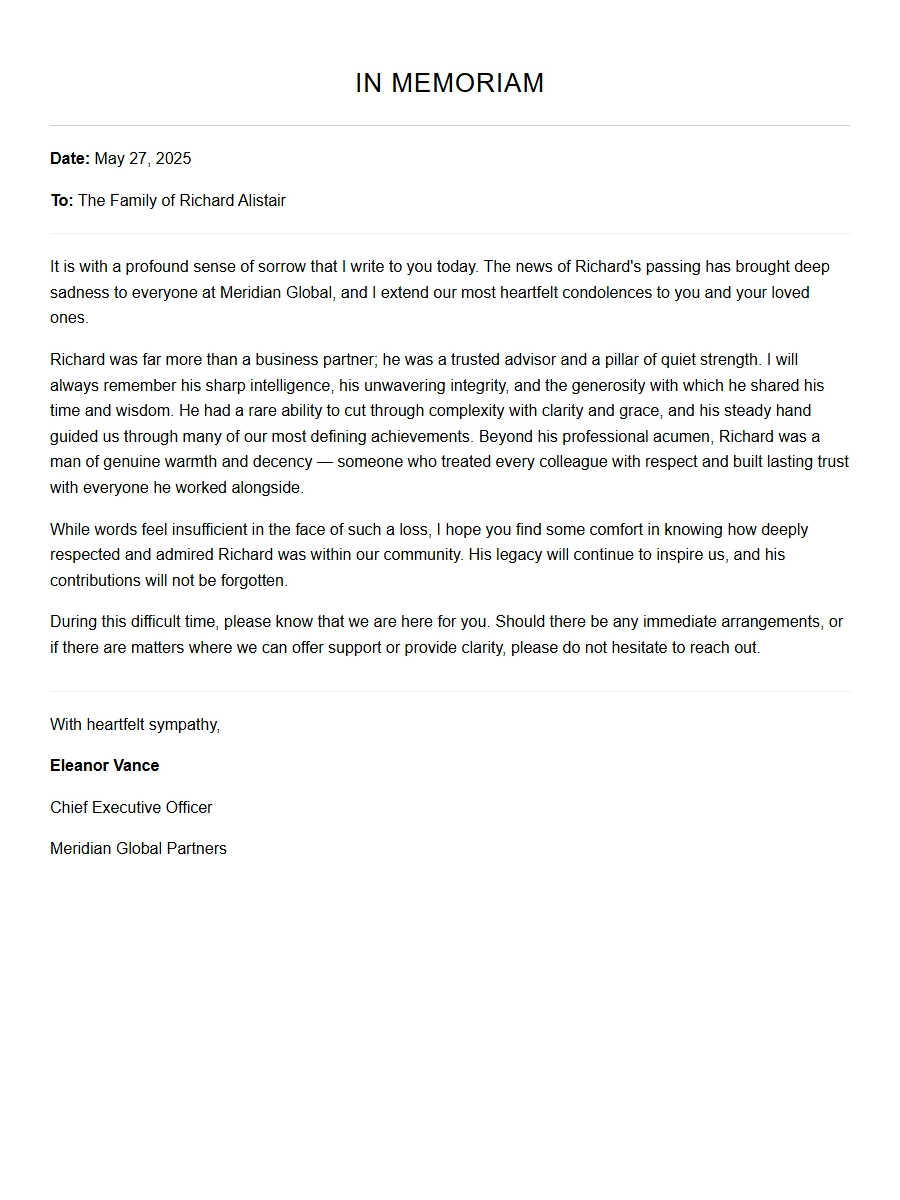 Formal Condolence Message for a Business Partner
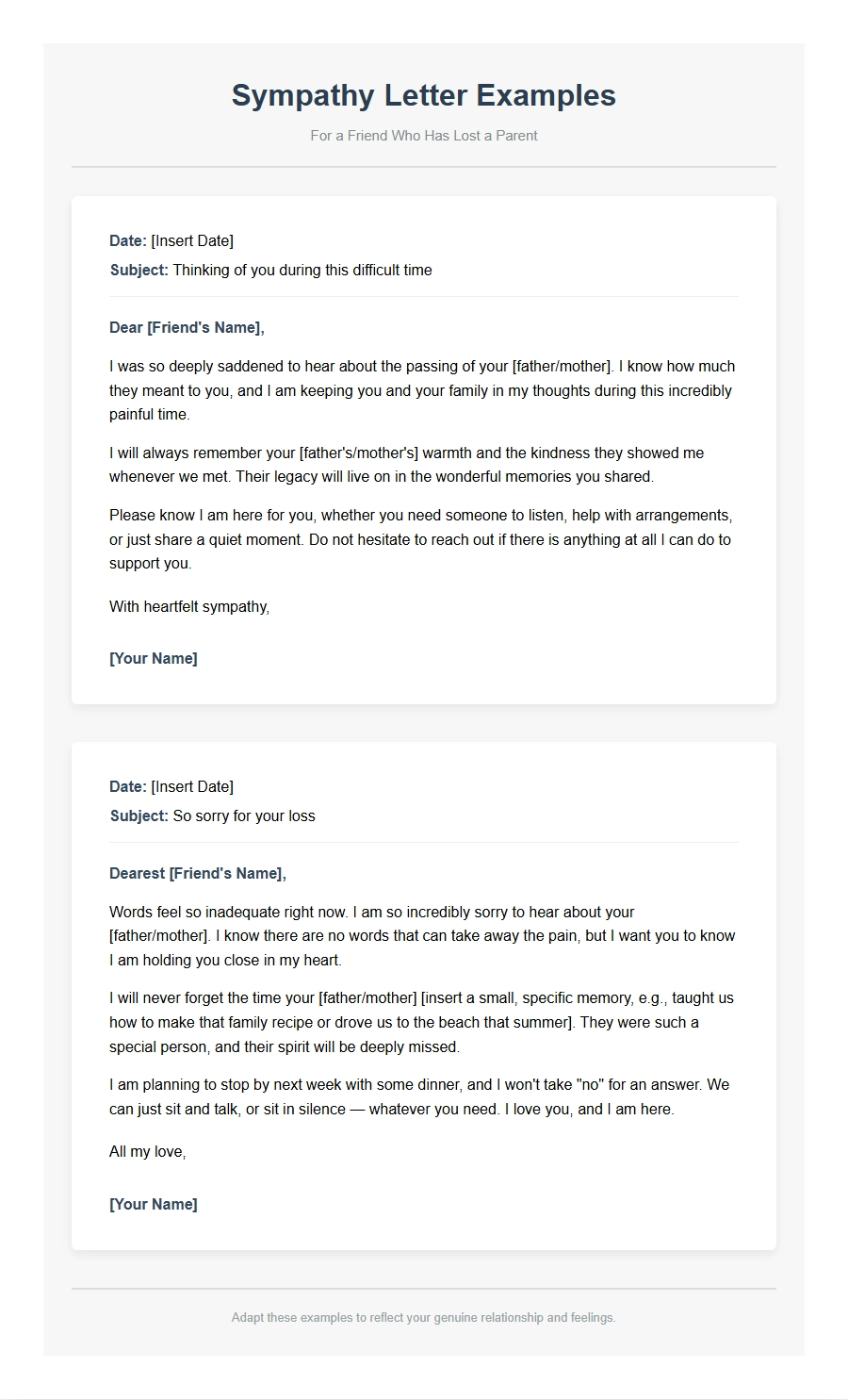 Sympathy Letter Examples for a Friend Who Lost a Parent
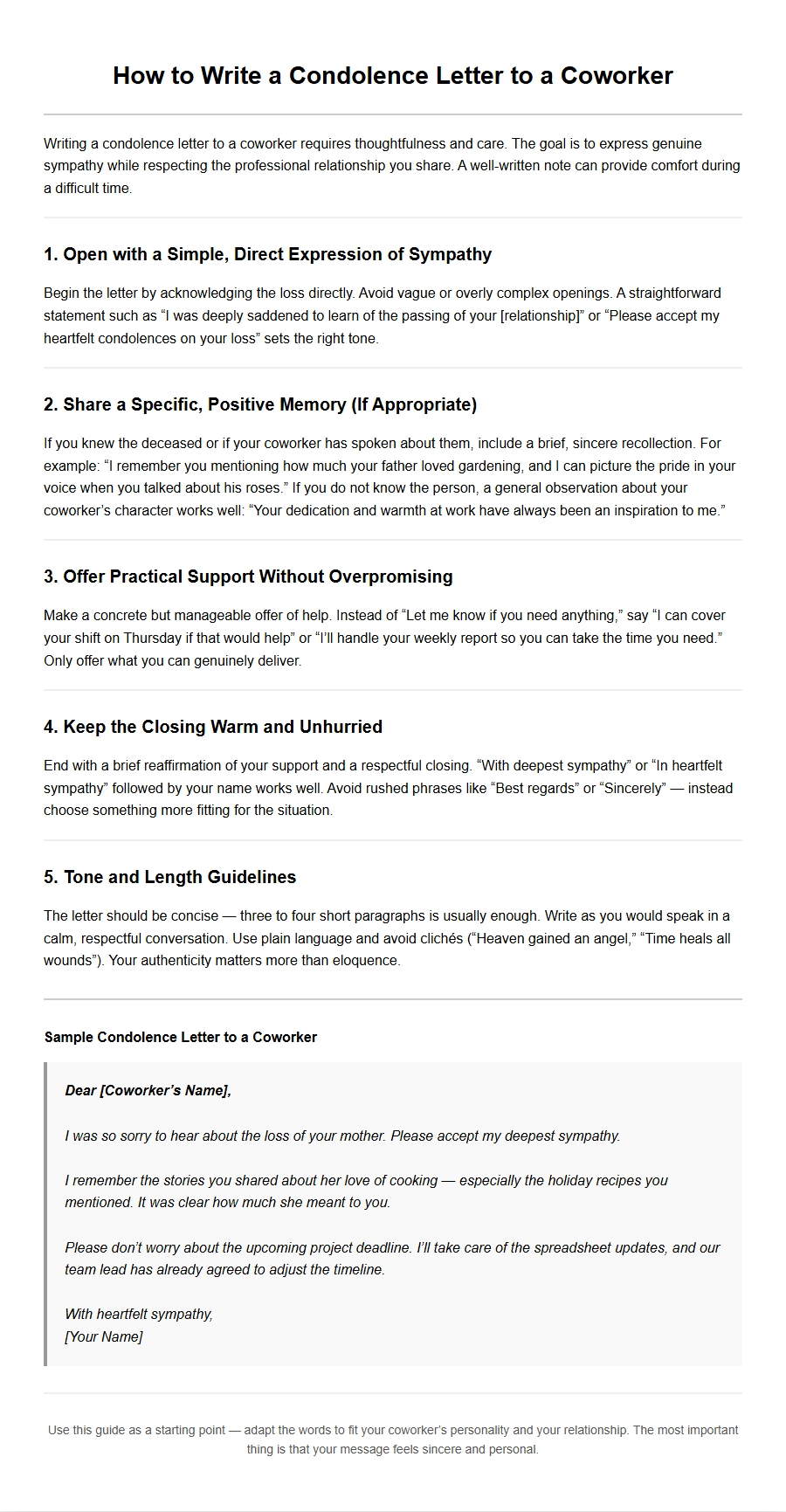 How to Write a Condolence Letter to a Coworker
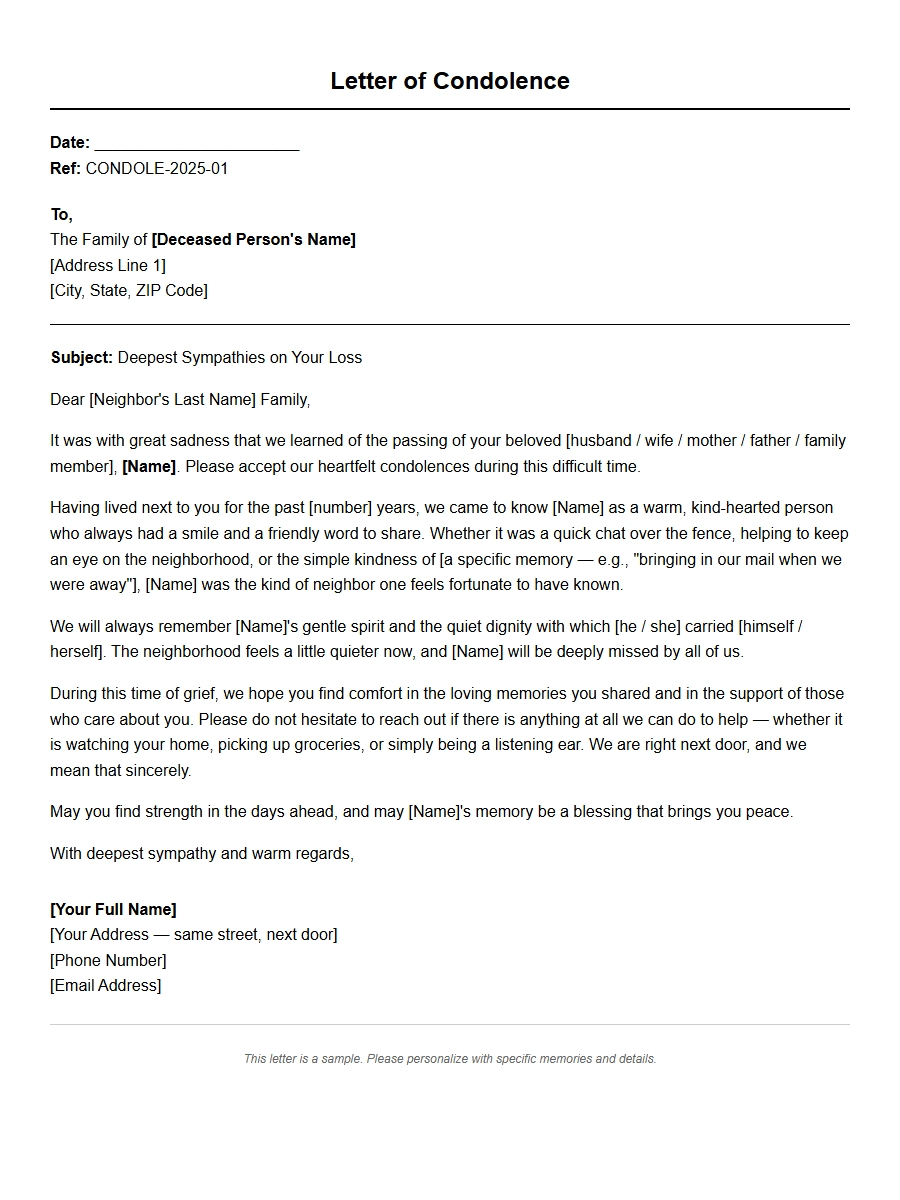 Condolence Letter Sample for a Neighbor
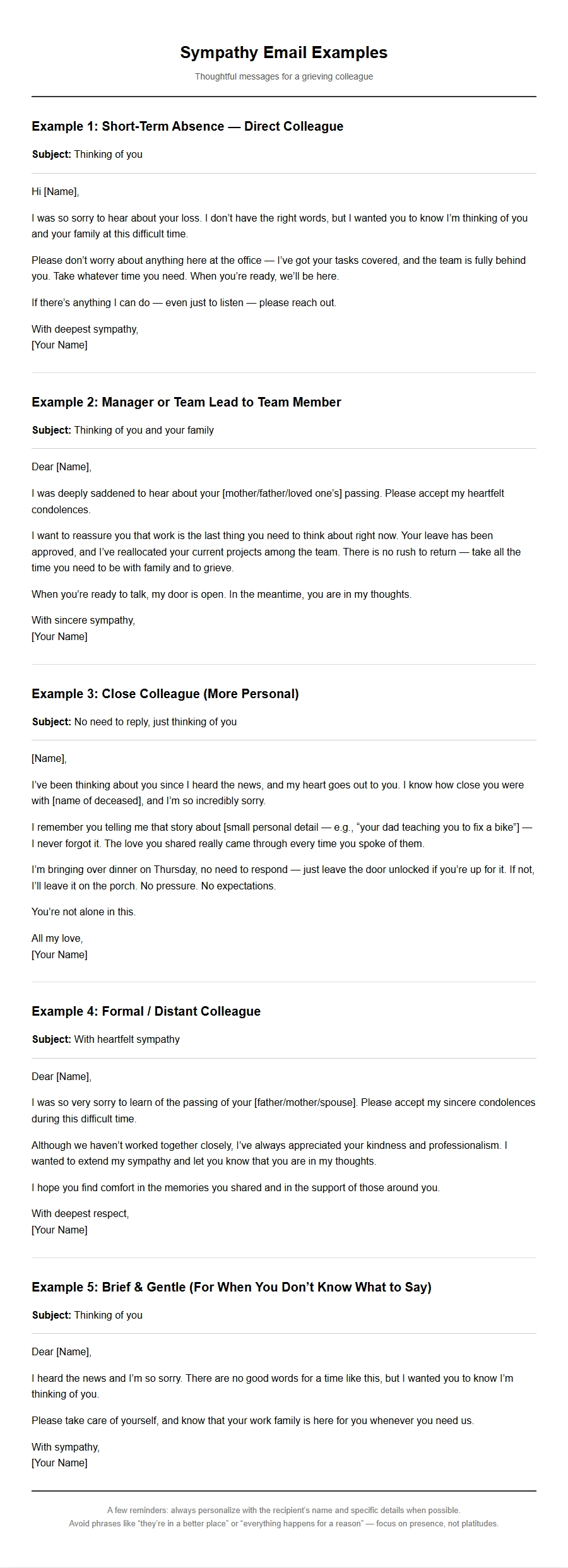 Sympathy Email Examples for a Grieving Colleague
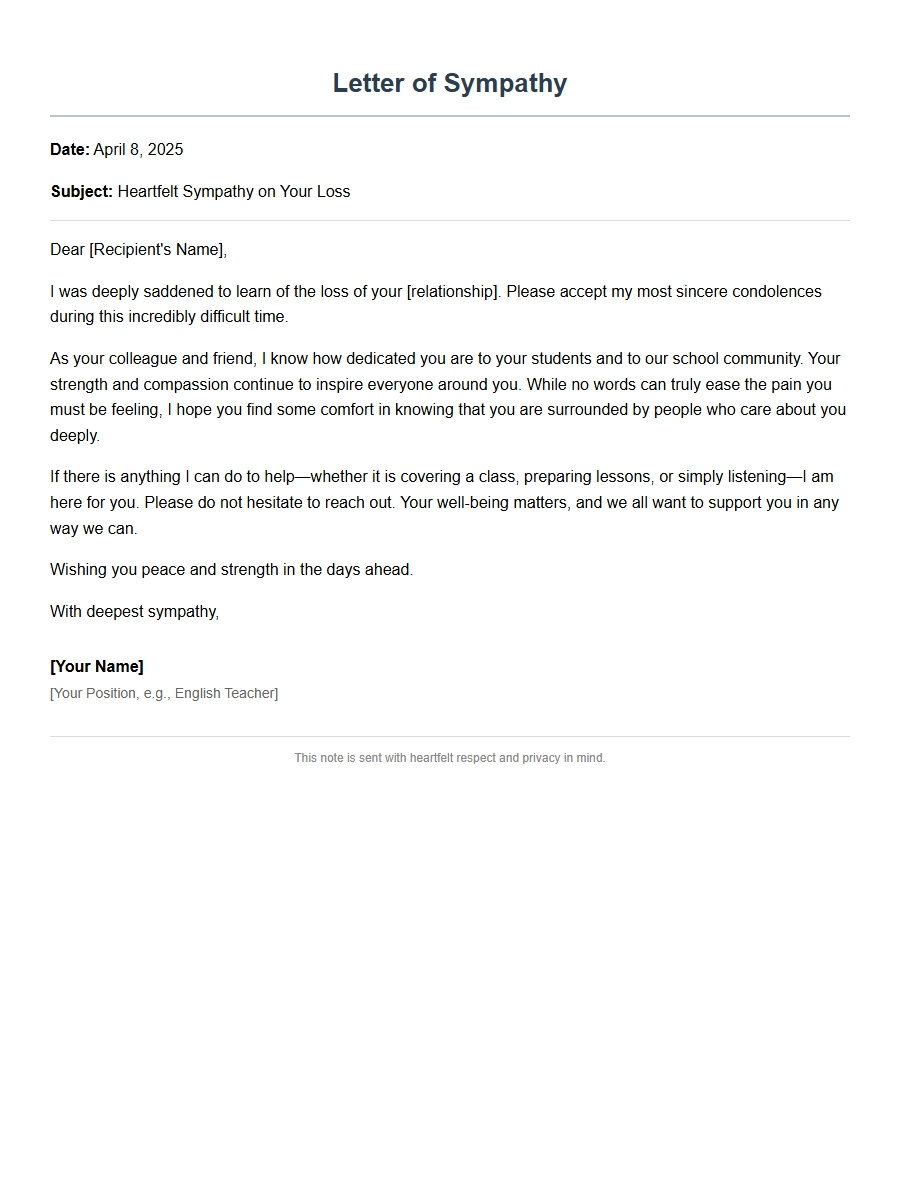 Condolence Words for a Teacher