You want to write a sympathy letter that truly comforts someone. But every word feels loaded. You worry about saying the wrong thing, sounding cold, or adding to their pain. That fear is normal. What matters is that you show up, even imperfectly. A well-chosen letter sample can guide you—but only if you avoid the common pitfalls that make sympathy letters feel hollow or impersonal.
Why a sympathy letter sample helps—and when it hurts
Using a sample is not cheating. It gives you a strong letter structure, appropriate salutation and closing options, and a reliable tone in writing. But if you copy it word-for-word without adapting it to your relationship with the bereaved, it will sound generic. The goal is to use the sample as a customizable letter framework, not a script.
Category: Condolence Letters.
What to avoid in a sympathy letter
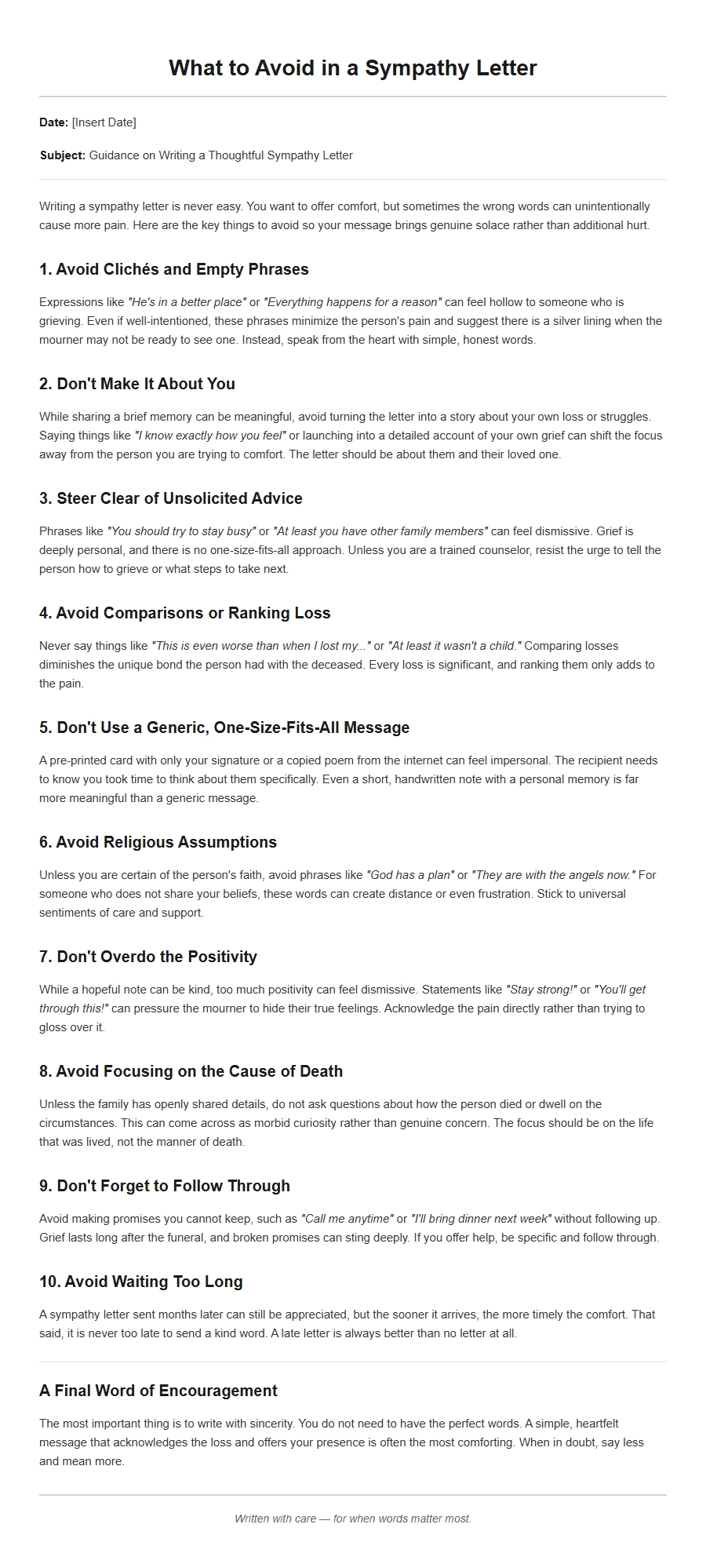
1. Avoid clichés that dismiss grief
Phrases like “He’s in a better place” or “Everything happens for a reason” often hurt more than they help. You don’t know the person’s beliefs, and grief does not feel reasonable. Instead, acknowledge the loss directly: “I was so sorry to hear about your mother. Her kindness meant a lot to me.” Specific memories are always better than platitudes.
2. Avoid making it about you
Your own sadness is valid, but the letter’s focus should stay on the bereaved. Don’t fill half a page with your own shock or how much you miss the person. Share one brief, honest sentence about how you feel, then spend the rest of the letter honoring the deceased and offering support. This is a key formal writing tip for any professional correspondence in sensitive situations.
3. Avoid being too brief or too long
A two-line sympathy note can feel dismissive. A three-page letter can overwhelm someone who can barely read. Aim for a few paragraphs—warm, sincere, and to the point. Use a letter template from our collection to judge the natural length for your situation.
4. Avoid the wrong salutation and closing
For close friends, “Dear Sarah” and “With love” work fine. For acquaintances or colleagues, stick to “Dear Mr. Johnson” and “Yours sincerely.” Mismatching the formality level can feel jarring. If you’re unsure, slightly formal is safer than overly casual. Check our guide on salutation and closing for more examples.
5. Avoid generic offers of help
“Let me know if you need anything” is well-meaning but vague. Instead, offer something concrete: “I’ll drop off dinner on Tuesday night if that helps,” or “I can water your plants while you’re away.” This shows real thoughtfulness. If you are writing to a bereaved mother or father, consider the specific help they might need—our letter sample for a bereaved mother or daughter shows how to phrase such offers.
6. Avoid neglecting proofreading
A typo in a sympathy letter can look careless. Read it aloud. Check the name of the deceased and the recipient. A small mistake can hurt. Always proofread your letter before sending. If you are sending a printed letter, pay attention to letterhead design and formatting—use a simple, clean business letter format adjusted for personal tone.
7. Avoid ignoring the medium
Printed letters on nice paper still carry weight. But email or a message on a memorial site is also acceptable—especially if you need to send a quick, heartfelt note. If you choose a digital letter format, keep it simple: no graphics, no long subject lines. The focus should be on your words, not the layout.
How to adapt a sympathy letter sample without losing your voice
Take the sample’s structure and replace the key sections with your own details. For example, if you find a sample that expresses regret for not being able to attend the funeral, you can customize it by adding a specific memory of the deceased. Our sample letter expressing regret over absence gives you a solid starting point.
After sending a sympathy letter, it’s thoughtful to check in with the bereaved later. A short message or a phone call can show you still care. If you need guidance on timing, see how to follow up after sending a condolence letter.
Special situations require extra care
If someone has lost a pet, the grief is real. Avoid comparing it to human loss—simply acknowledge how much that animal meant to them. Our guide on condolences for loss of a dog or pet offers a gentle tone.
Similarly, the loss of an unborn child carries deep, often silent pain. Avoid saying “You can try again.” Instead, name the loss and offer quiet support. The sympathy message for loss of an unborn child in our collection can help you find the right words.
Make the letter your own
The best sympathy letters balance sincerity with restraint. Use a sample to get the structure right, then pour your own voice into the spaces. Think of it as a springboard: you leap from the sample into a genuine expression of care. With a little practice, writing these letters will feel less daunting and more like a simple act of kindness.
Samples to Guide You
Mistakes to Avoid in a Sympathy Letter
Avoiding Clichés
One of the most common mistakes in sympathy letters is relying on overused phrases like "He's in a better place" or "Everything happens for a reason." These clichés can feel hollow and dismissive of the recipient's pain. Instead, focus on genuine emotion and specific memories.
What to Avoid
What to Write Instead
"He's at peace now."
"I'll miss his laughter and kindness."
"It was God's will."
"I'm holding you close in my thoughts."
"I know exactly how you feel."
"I can't imagine how hard this is for you."
Avoid phrases that minimize the loss or impose your beliefs. A simple, heartfelt statement of sorrow is far more comforting than a well-worn cliché.
Don't Compare Grief
Another major pitfall is comparing your own loss to the bereaved's. Saying "I know how you feel because I lost my mother, too" can unintentionally shift the focus to you and make the other person feel their grief is being measured.
Avoid: "When my uncle passed, I felt the same way."
Instead: "I am so sorry for your loss. Please know I'm thinking of you."
Avoid: "At least you had more time with him than I did."
Instead: "Your time together was precious. I'm here for you."
Everyone grieves differently, and comparisons can invalidate the unique bond the person had with the deceased. Offer empathy without equating experiences.
Steer Clear of Unsolicited Advice
Unsolicited advice is one of the worst things to include in a sympathy letter. Suggestions like "You should stay busy" or "Make sure to eat" can come across as patronizing. The grieving person doesn't need a to-do list; they need compassion.
Avoid These Remarks
Better Alternatives
"You need to get out more."
"I'm here when you're ready to talk."
"Try to stay positive."
"It's okay to feel however you feel."
"You should see a counselor."
"Would you like me to help find resources?"
Unless you are a close family member or the person has explicitly asked for guidance, avoid giving advice. Simply listening and offering presence is more valuable.
Don't Make It About Yourself
A self-focused sympathy letter can be deeply hurtful. Phrases like "This brings back all my memories of when my grandmother died" shift attention away from the person you're trying to comfort. The letter should center on the deceased and those left behind.
Avoid: Long paragraphs about your own similar tragedy.
Instead: Share a cherished memory of the person who passed.
Avoid: Using the letter to vent about your own struggles.
Instead: Ask how you can support the bereaved.
Keep the focus on the recipient: their loss, their loved one, and your support for them. A short, sincere note is better than a lengthy personal narrative.
Avoid Overly Positive Spin
Trying to find a silver lining often backfires in sympathy letters. Statements like "At least she isn't suffering anymore" or "He lived a full life" can minimize the pain of the loss. The bereaved need space to grieve, not forced optimism.
What Not to Say
What to Say Instead
"At least you have other children."
"I am so sorry for the loss of your son."
"She's in a happy place now."
"I will never forget her kindness."
"Everything will be okay."
"Take all the time you need."
Acknowledge the sadness directly. It's okay to say "I'm sorry for your pain" without trying to fix it. Grief needs validation, not a silver lining.
Don't Assume Religious Comfort
Assuming the recipient shares your religious views can be a misstep. Saying "God has a plan" or "They are with the angels now" may not align with their beliefs and can cause additional distress. Always be sensitive to the person's faith—or lack thereof.
Avoid: "I'll pray for you" unless you know they are comfortable with that.
Instead: "I'm thinking of you during this difficult time."
Avoid: Quoting scripture unless you are certain it will be welcomed.
Instead: Offer simple, universally respectful words of comfort.
If you know the person is religious, it's fine to use appropriate language. But when in doubt, stick to secular expressions of sympathy that honor their loss without imposing doctrine.
Don't Bring Up Sensitive Details
Avoid discussing the cause of death or any graphic details in your sympathy letter. Questions like "Was it a heart attack?" or comments on the manner of death can be extremely painful. The letter is not the place to satisfy curiosity.
Topics to Avoid
Better Focus
How the person died
How they lived and what they meant to you
Medical details or accident specifics
Expressions of love and support
Blaming anyone for the death
Offering unconditional compassion
If the cause is known and you want to acknowledge it, do so briefly and respectfully without dwelling. The focus should remain on honoring the deceased and supporting the bereaved.
Avoid Stiff or Overly Formal Language
Using overly formal or generic language can make your letter feel impersonal. Phrases like "We were saddened to learn of your loss" or "Please accept our deepest condolences" are correct but can come across as cold if not balanced with warmth.
Avoid: "It is with great regret that we acknowledge this unfortunate event."
Instead: "I am so sorry to hear about your father. He was a wonderful man."
Avoid: Copy-pasting from a sympathy card template.
Instead: Write from the heart, even if your words feel imperfect.
A natural, conversational tone conveys sincerity. Let your personality show, and include a specific memory or quality of the deceased to make the letter unique and meaningful.
Don't Expect a Reply or Impose Obligations
A sympathy letter should never demand a response or create obligations for the bereaved. Avoid sentences like "Let me know when you're free to catch up" or "Please call me when you have time." Grieving people are overwhelmed; your letter should be a gift with no strings attached.
Phrases That Add Pressure
Compassionate Alternatives
"Let me know if you need anything."
"I'm bringing dinner on Thursday—no need to reply."
"Give me a call when you can."
"I'll check in next week. Sending love."
"I hope you're taking care of things."
"Please don't worry about responding at all."
Instead of vague offers, make concrete but non‑intrusive gestures. The message should communicate: "I care, and I'm here—but no expectations."
Keep It Concise, Not Rambling
A long, rambling sympathy letter can overwhelm the recipient. While you want to express your feelings, a letter that goes on for pages may feel like a burden to read. Aim for a few heartfelt paragraphs—usually 150–200 words is ideal.
Avoid: Multiple tangents about unrelated memories or advice.
Instead: Stick to expressing sorrow, a brief positive memory, and an offer of support.
Avoid: Repeating the same sentiment over and over.
Instead: Be direct and sincere once; repetition dilutes the message.
Quality over quantity. A short, well‑chosen note speaks volumes. Your goal is to comfort, not to recount your entire relationship with the deceased. Keep it focused and respectful of the reader's emotional capacity.
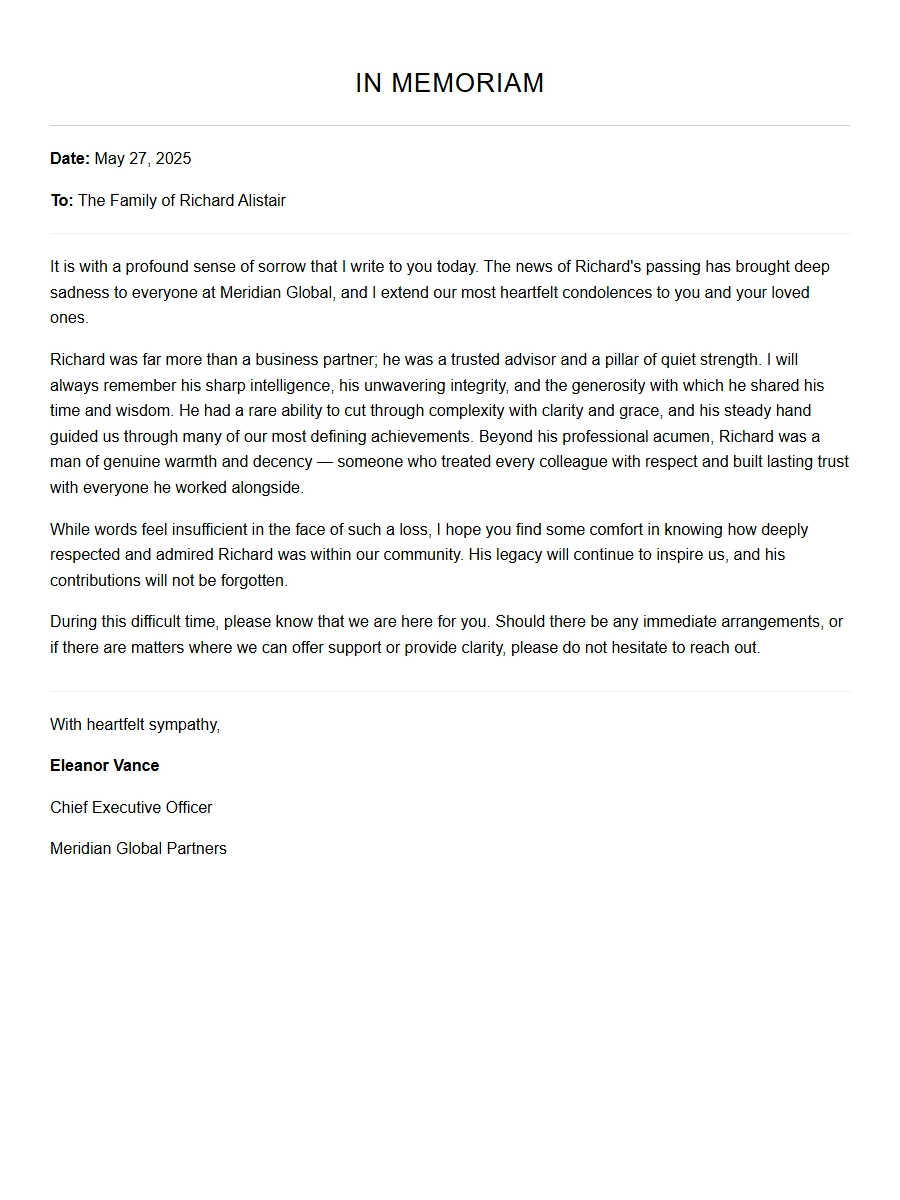 Formal Condolence Message for a Business Partner
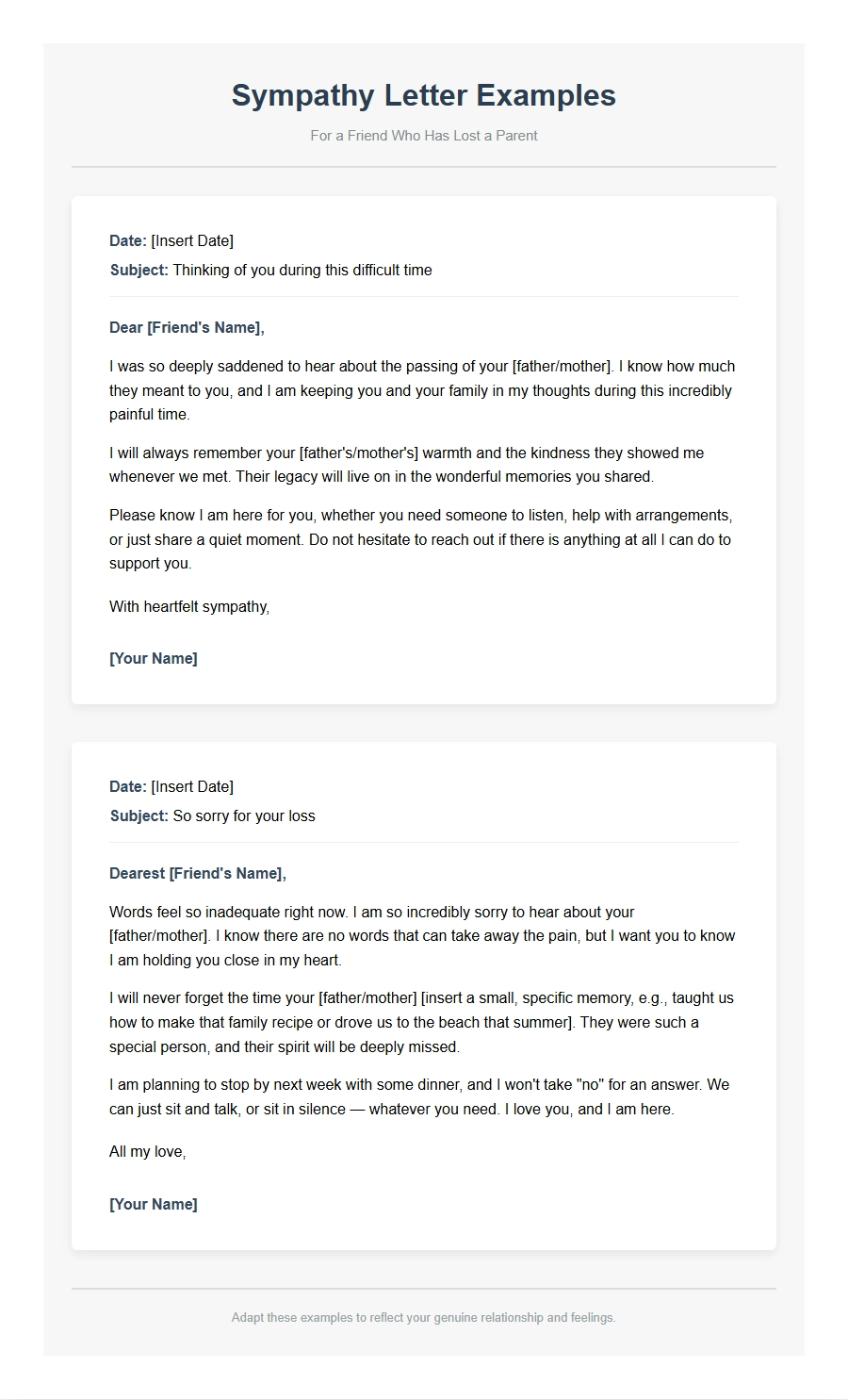 Sympathy Letter Examples for a Friend Who Lost a Parent
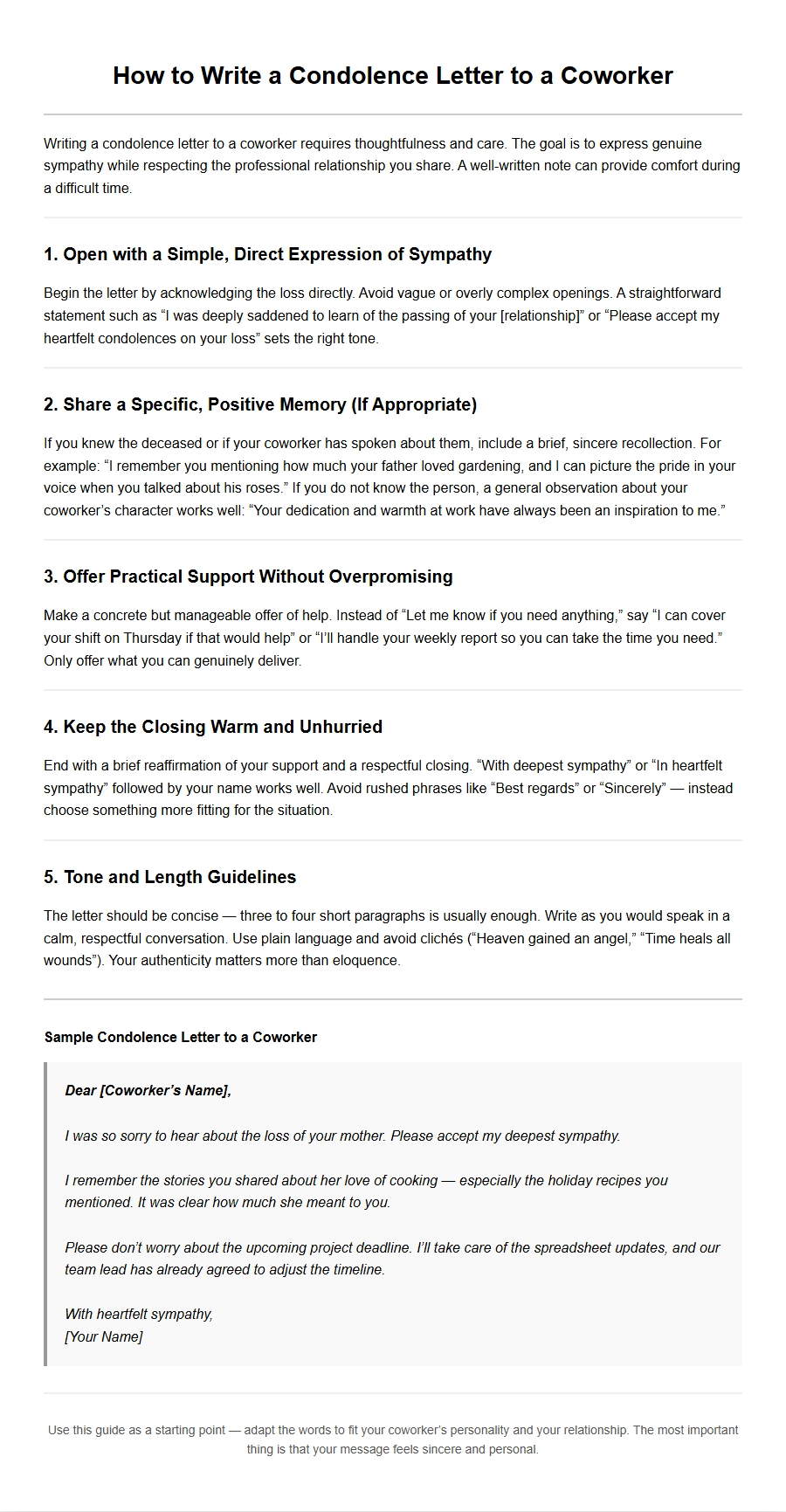 How to Write a Condolence Letter to a Coworker
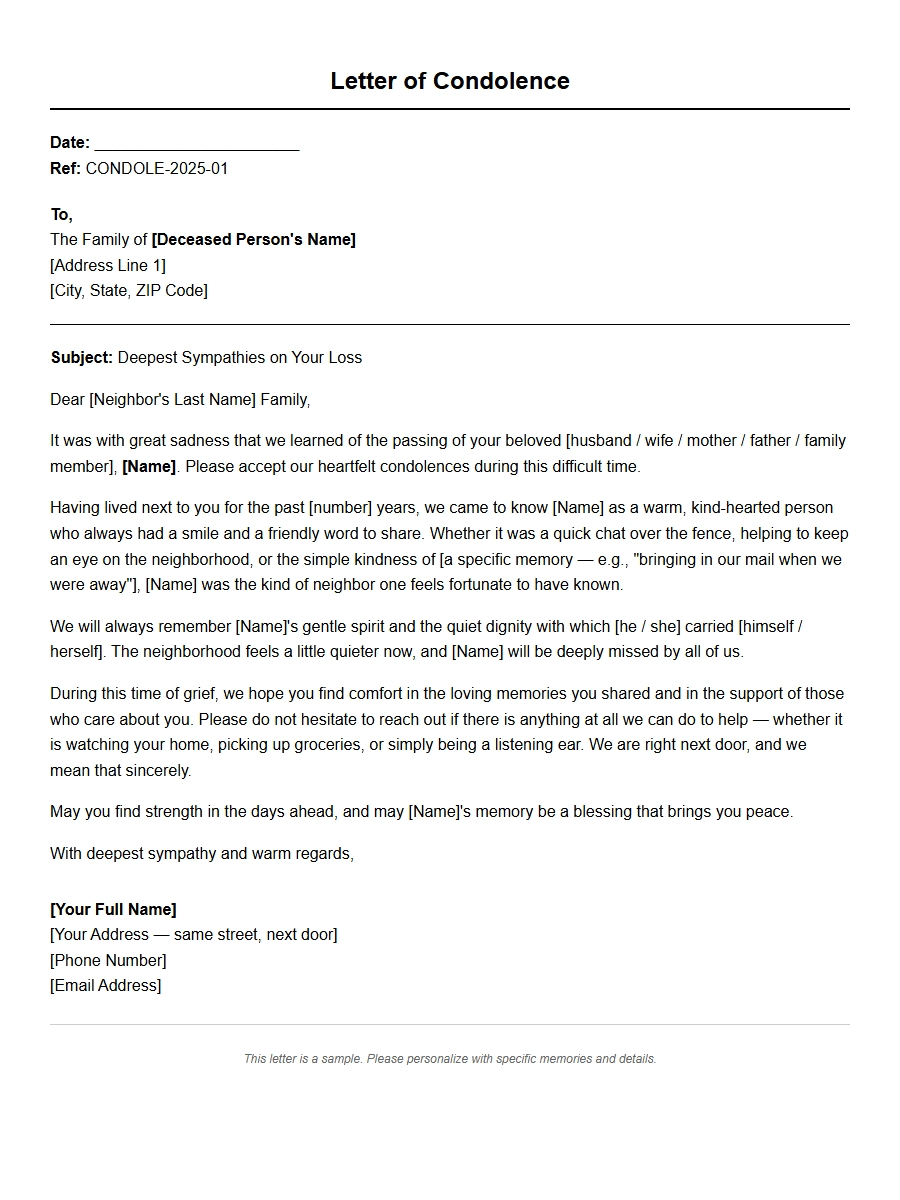 Condolence Letter Sample for a Neighbor
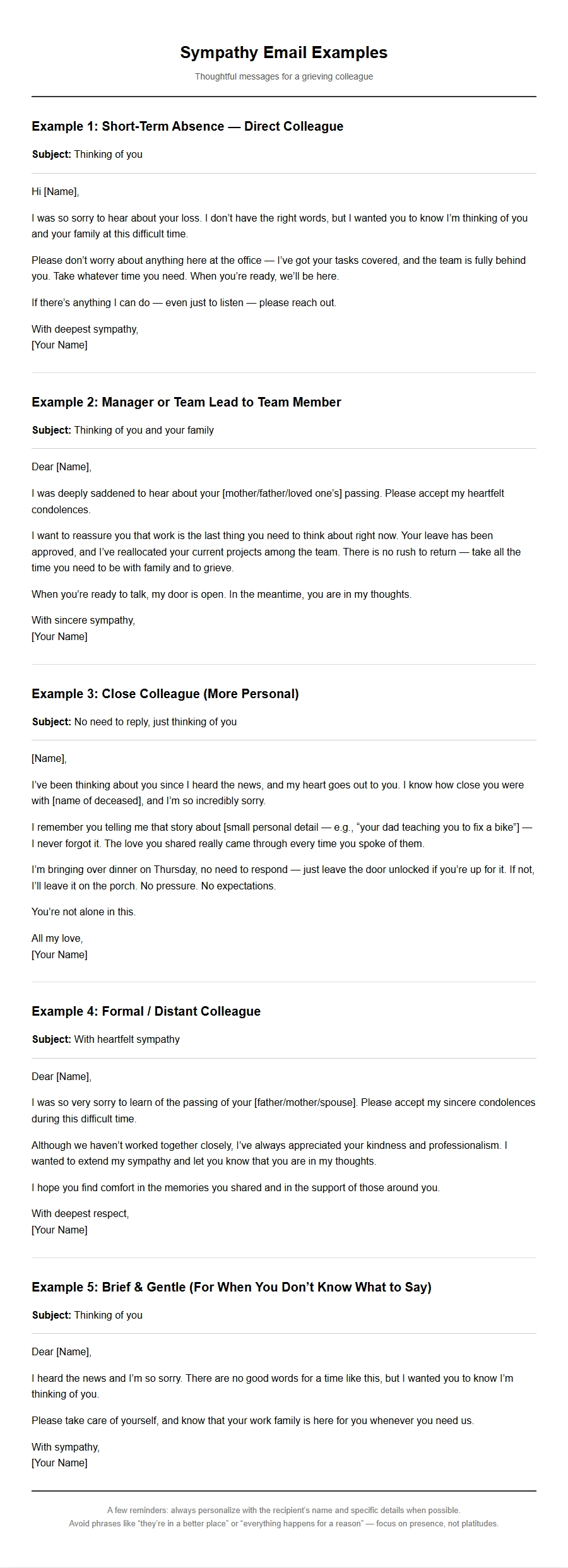 Sympathy Email Examples for a Grieving Colleague
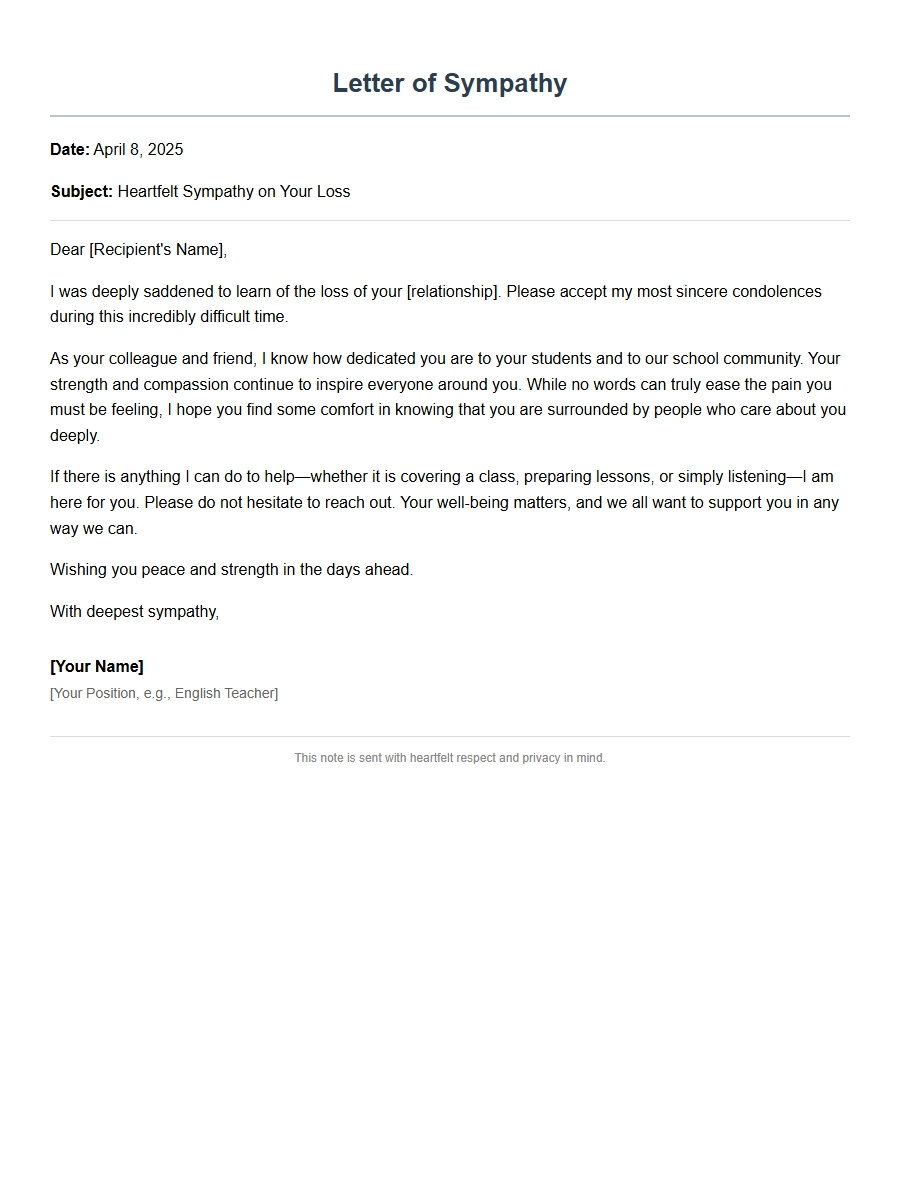 Condolence Words for a Teacher