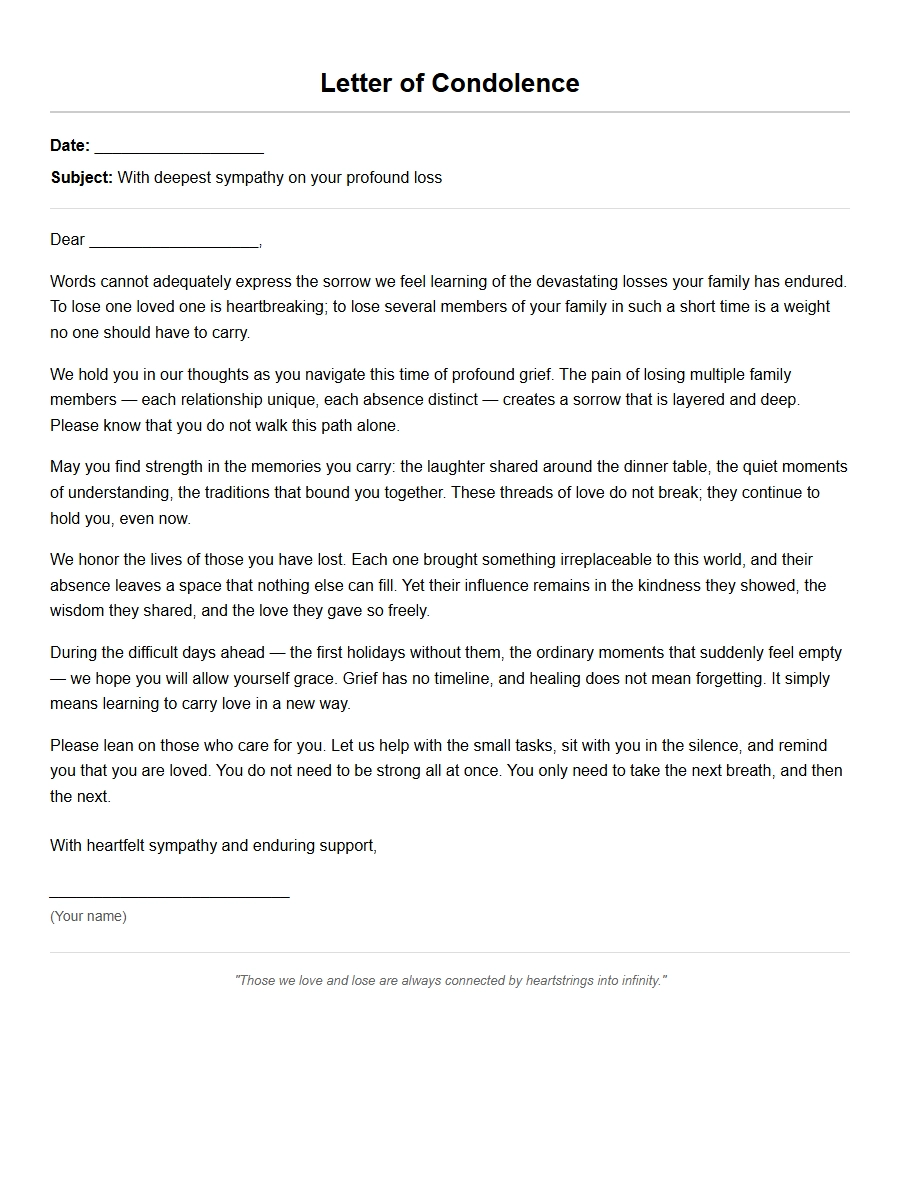
When you hear that a family has lost not one but two or more loved ones in a short period, finding the right words can feel nearly impossible. You want to acknowledge the profound weight of their grief without adding more pain. That blank page stares back at you, and suddenly nothing sounds right. You’re not alone—most people feel frozen in moments like this. The good news is that a carefully chosen condolence wording sample can turn that anxiety into a thoughtful, sincere message in minutes.
Using a letter template for such a delicate situation isn’t cheating—it’s a smart way to start. A sample gives you a structure that respects traditional letter writing etiquette, a tone that’s warm but not intrusive, and key phrases you can build on. You then personalize it to fit the specific loss and your relationship. Think of it as a scaffold: it holds everything up while you bring your own voice into the house.
Category: Condolence Letters
Why a sample helps when grief is complicated
Multiple losses—say, a parent and sibling in the same accident, or a spouse and child within weeks—make ordinary sympathy notes feel inadequate. You need to honor each person without making the note feel like a list. A good sample shows you how to weave acknowledgments together naturally. It also reminds you to follow basic professional correspondence principles: clear salutation, respectful closing, and a concise body. Even in a personal letter, applying a formal writing tip like using the recipient’s name correctly shows you care enough to get the details right.
Choosing the right level of formality
Not every condolence letter needs to be stiff. If you’re writing to a close friend, a conversational tone works best. For a colleague or a distant relative, a more structured business letter format might feel safer. A sample should help you decide. Look for one that matches your relationship and the setting. For instance, if the loss happened in a workplace context, you’ll want language that’s appropriate—neither too cold nor too familiar. Our guide on appropriate language for death in an office setting covers this well.
How to adapt a sample without losing your voice
Start by changing the sample’s opening paragraph to reflect something specific about the family or the loss. Instead of “I’m so sorry for your loss,” try “I was heartbroken to hear about your mother and father passing so close together.” This small shift makes the letter feel personal right away. Then keep the sample’s structure but swap out generic phrases for your own. Common mistakes include using outdated salutations like “To Whom It May Concern” (never right for a condolence) or ignoring the difference between a printed letter and an email. In a digital letter format, keep the subject line clear, like “Thinking of you in your loss.” If you’re mailing a physical card, consider a simple letterhead design if you want to add a formal touch.
Tailoring the opening to grab attention—with respect
The first sentence is crucial. Don’t start with “I know how you feel” because you don’t. Instead, name the specific people who died or the situation. For example: “Learning that you lost your sister and her husband in the same week was devastating to hear.” That shows you are present and paying attention. Then express your own shock or sadness honestly. You can also mention a memory—but keep it short. If you didn’t know the deceased well, simply say, “I know this must be an unimaginable time for your family.” Avoid clichés like “They’re in a better place” unless you’re certain the recipient shares that belief.
Mistakes to watch out for
One of the biggest traps is trying to explain or rationalize multiple deaths. Don’t say “everything happens for a reason” or “at least they didn’t suffer long.” Those phrases can cause more pain. Instead, focus on offering specific support: a meal, a listening ear, or simply “I’ll keep you in my thoughts.” Also, proofreading matters more than ever. A typo in a condolence letter can feel careless. Read it aloud to catch awkward phrasing. Check your salutation and closing—are they consistent with the tone? For a friend, “With love” works; for a colleague, “Sincerely” is safer.
When you can’t attend the service
If you cannot be there in person, your letter carries even more weight. Acknowledge your absence and express your desire to be present. You can say, “I wish I could be there to support you in person, but please know I’m thinking of you.” This is a common situation, and we have more details in how to send condolences when you cannot attend the service.
Special cases: ex-spouse, anxious friends, and opening lines
Every loss has its own context. Writing to an ex-spouse about a shared child or a former in-law requires careful tone. A sample tailored for that situation helps you avoid old tensions—see sample letter for loss of ex-spouse connection. If your friend is already managing anxiety, a comforting email might need extra gentleness; check comforting email for friend with anxiety during grief. And if you’re stuck on the very first line, our guide on how to start a condolence letter opening offers several approaches.
Use the sample as a springboard
The best condolence letters feel both professional (in structure) and deeply personal (in content). A sample gives you a safe starting point, but your own words make it matter. After you write a few, you’ll find the process gets faster. You’ll develop a natural instinct for what to say. Until then, lean on the sample. Customize it. Read it once more with fresh eyes. Then send it with confidence, knowing you offered something real when words were hardest to find.
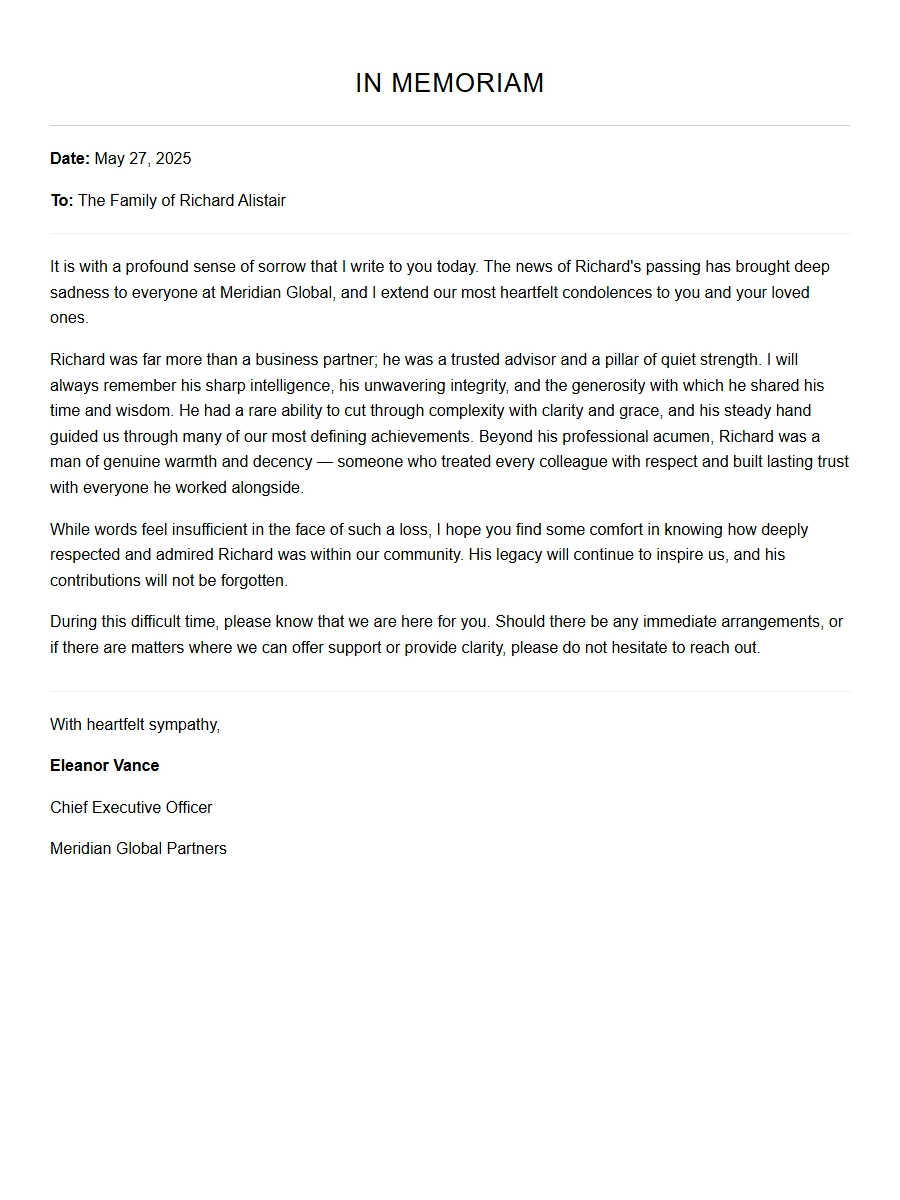 Formal Condolence Message for a Business Partner
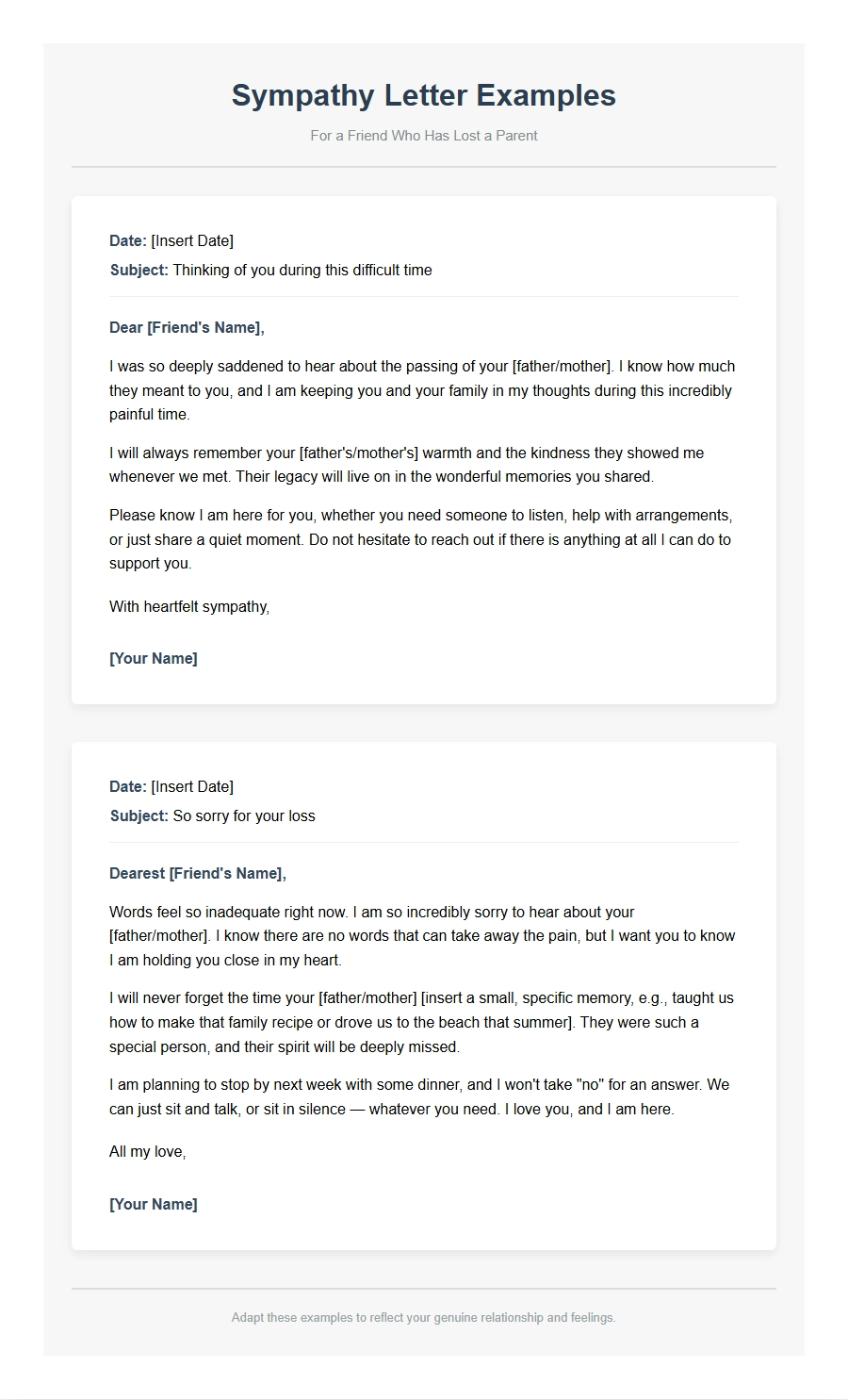 Sympathy Letter Examples for a Friend Who Lost a Parent
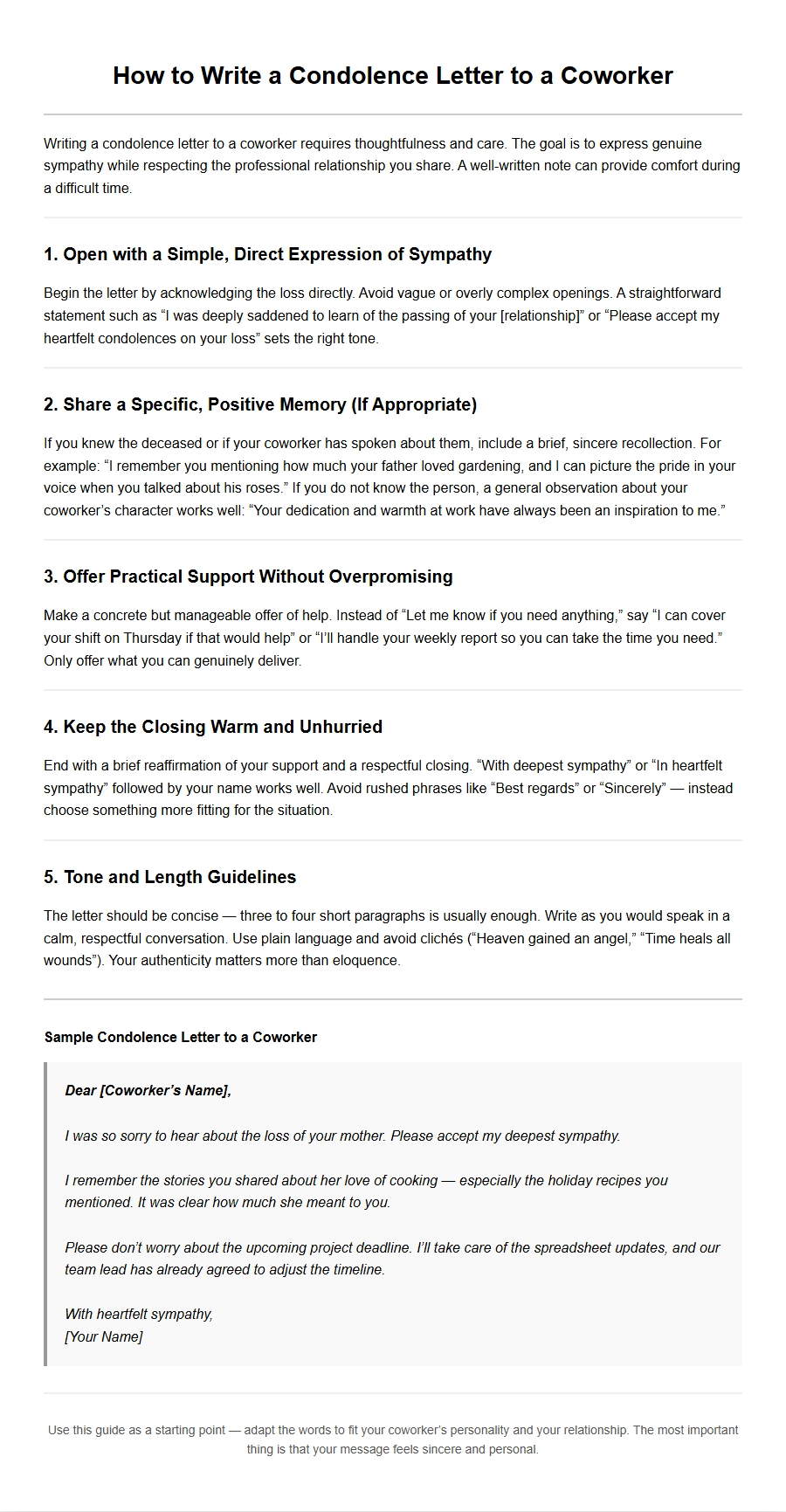 How to Write a Condolence Letter to a Coworker
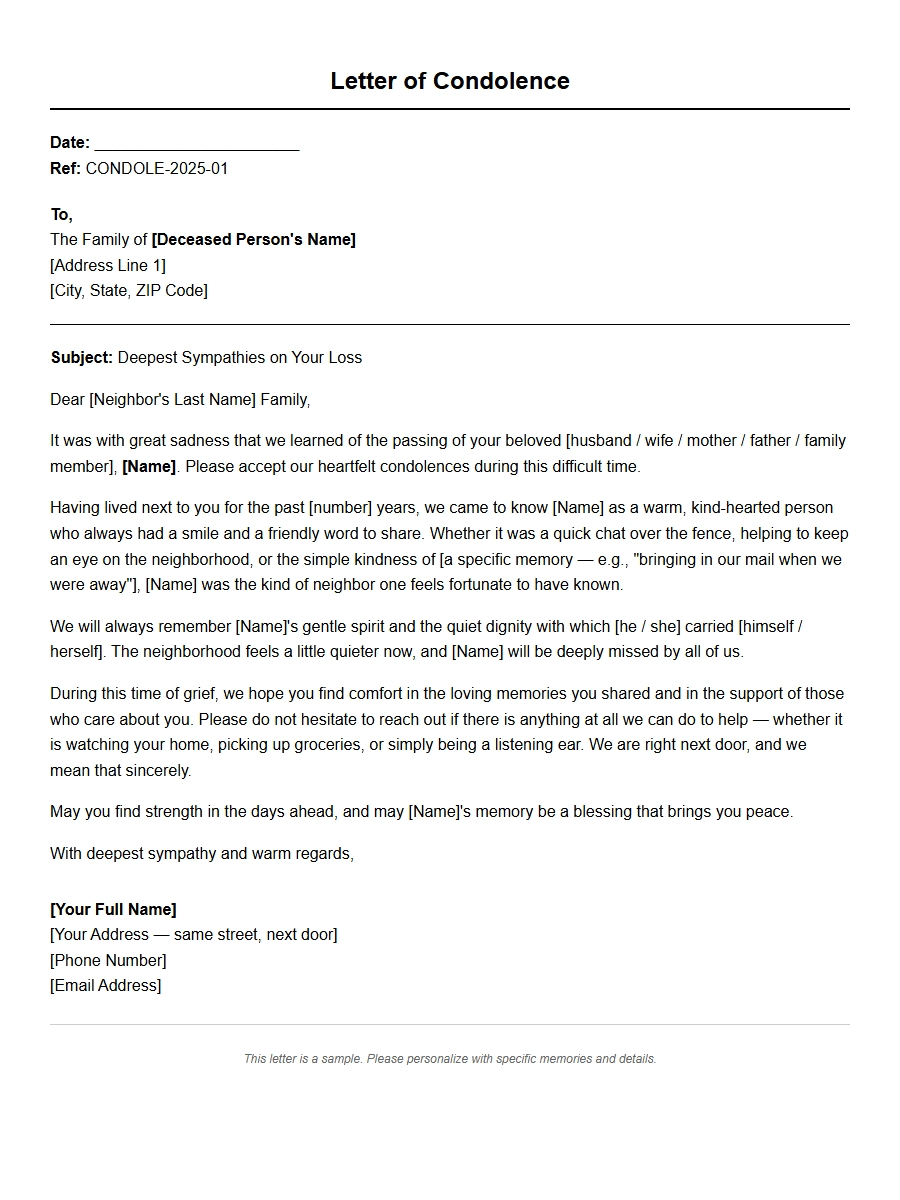 Condolence Letter Sample for a Neighbor
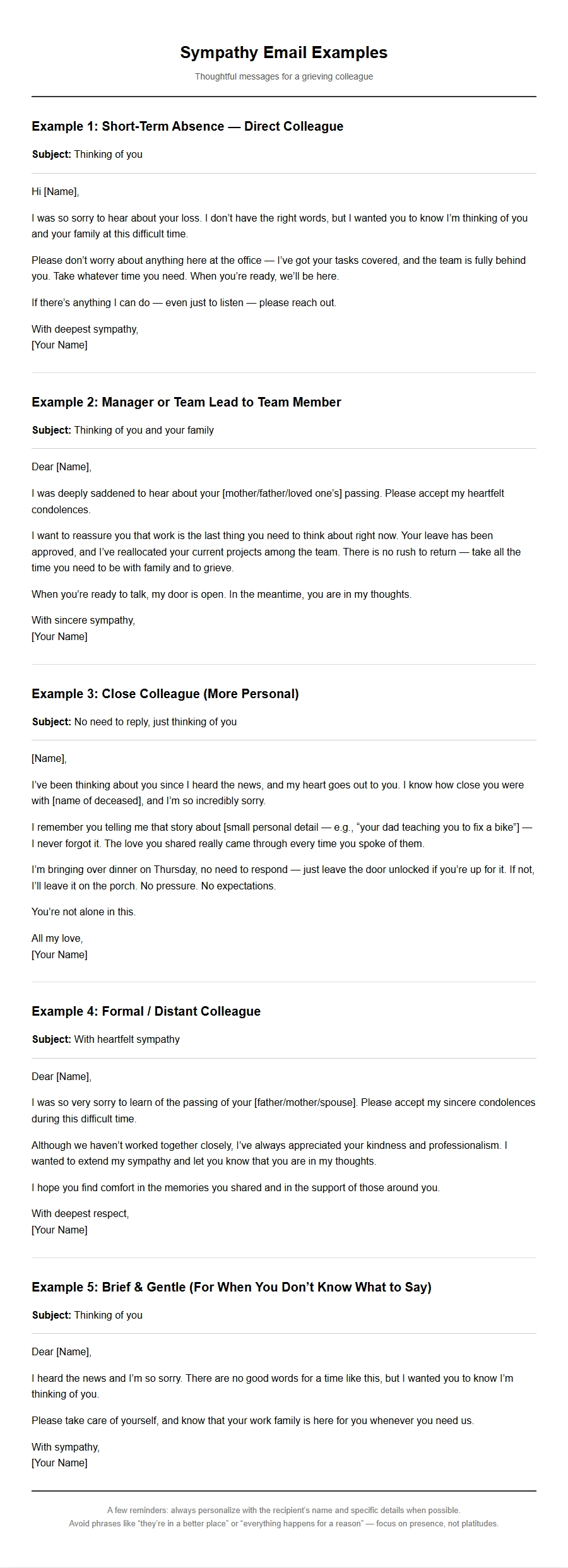 Sympathy Email Examples for a Grieving Colleague
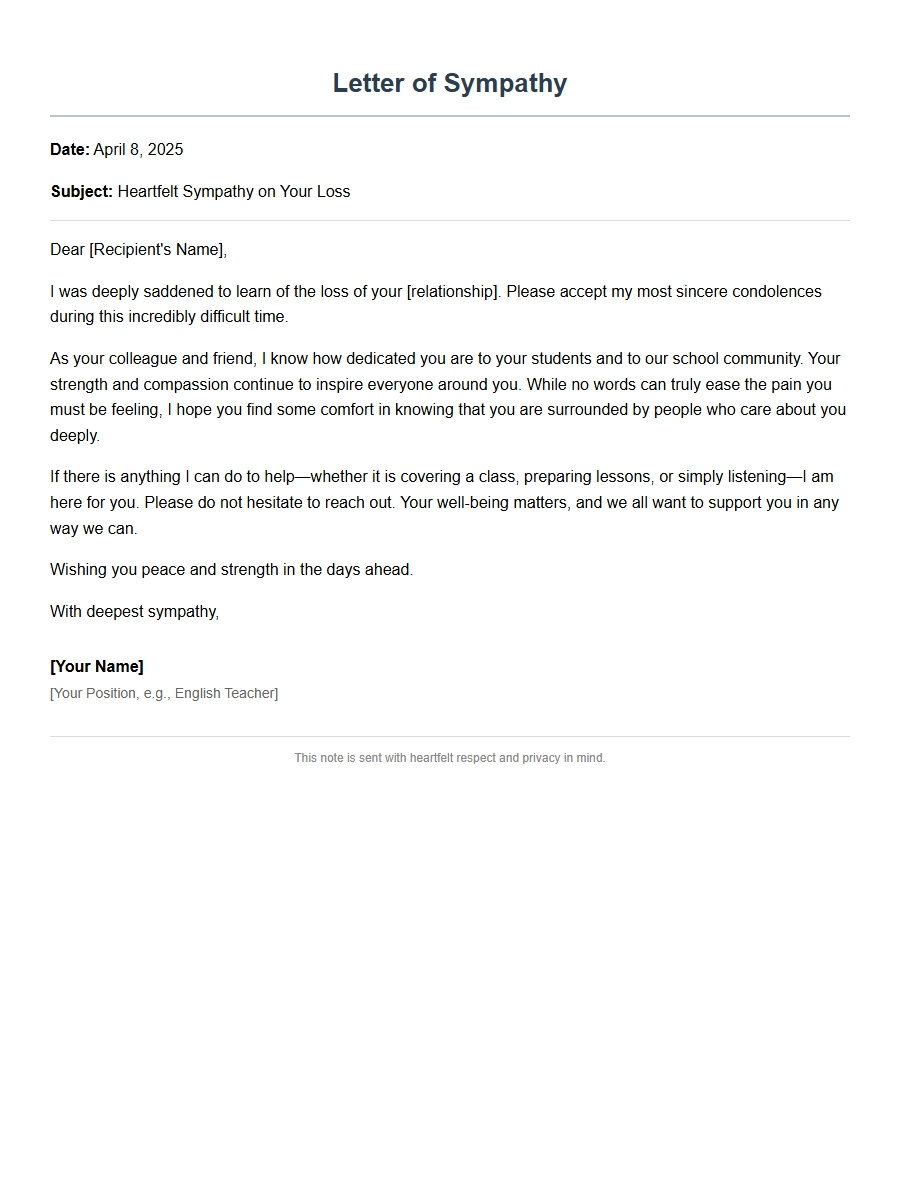 Condolence Words for a Teacher