Navigating Cultural Differences in Condolence Letters
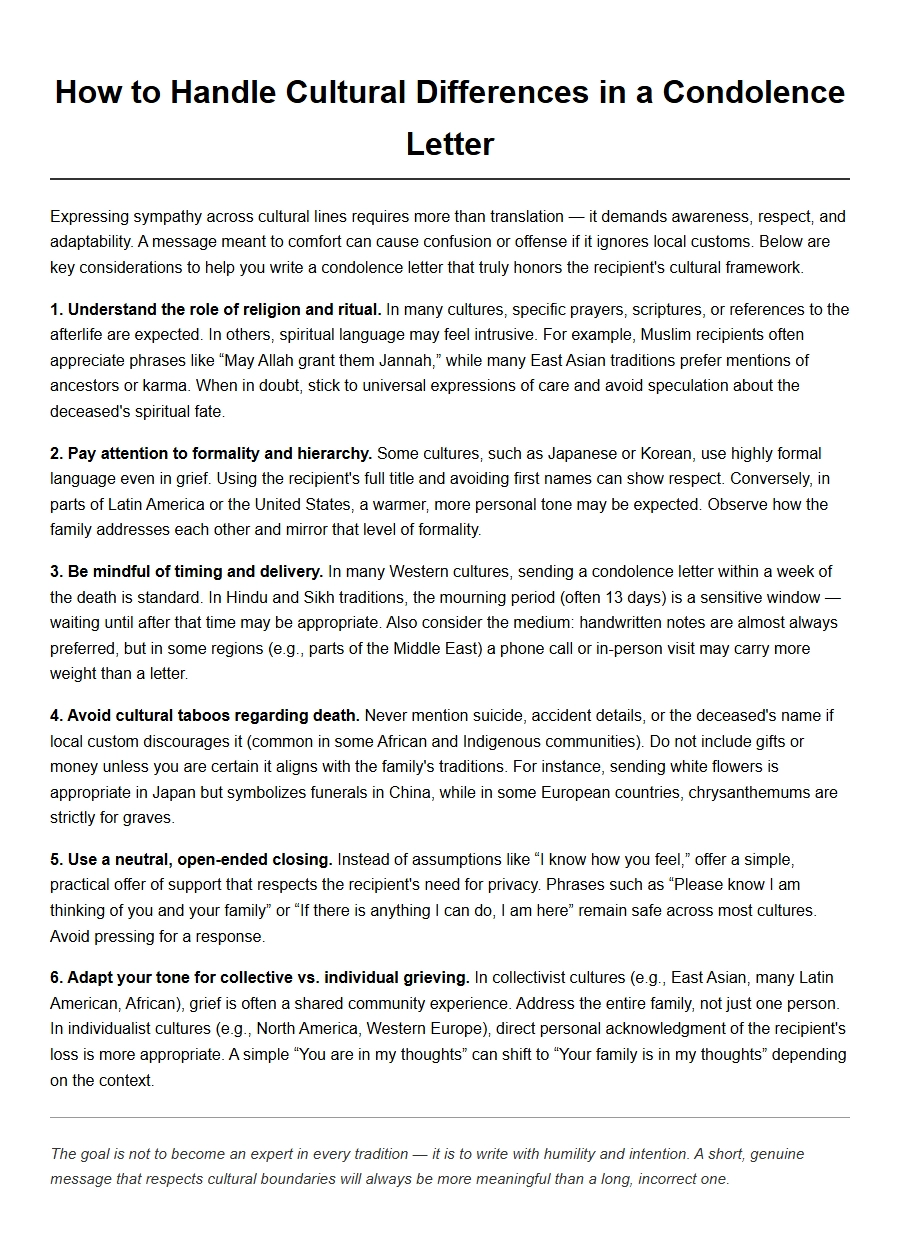
You’ve just learned someone passed away, and you want to reach out—but you freeze. What if your words accidentally offend? What if the tone you think is respectful feels cold in their culture? Staring at a blank page when you need to write a condolence letter across cultures can feel paralyzing. The right sample doesn’t erase that anxiety, but it gives you a proven structure so you can focus on the heartfelt details instead of worrying about basic etiquette.
Using a condolence letter template isn’t “cheating.” It’s a smart, time-saving way to understand what the recipient expects. Samples show you the salutation and closing that fit the cultural context, the tone in writing that feels appropriate (subdued vs. more emotional), and the key phrases that work across different traditions. Then you fill in the personal touches—their name, your shared memory—so the letter becomes yours.
What does “cultural differences” really mean in a condolence letter?
It’s more than just translating “I’m sorry for your loss.” Different cultures have distinct norms around expressing grief, acknowledging death, and offering support. For example, in many East Asian traditions, direct mentions of death are avoided; phrases like “they have passed on” or “resting peacefully” are preferred. In some Middle Eastern and South Asian communities, religious phrasing (e.g., “May God grant them paradise”) is expected. Meanwhile, Western secular contexts often value open emotional expression. If you default to your own cultural style, you risk coming across as insensitive—or worse, causing additional pain.
This is where a well-chosen sample becomes your guide. Look for templates that specify the cultural context (e.g., “Condolence letter for a Hindu family” or “Formal condolence for a Japanese colleague”). If you can’t find one, start with a neutral, formal letter format—formal writing tips often emphasize deference, which is safer across many cultures than casual warmth.
How to choose the right sample for the situation
Not every condolence letter should look the same. Ask yourself: Is this for a close friend from a different background, or a professional contact? If it’s a business associate, lean toward more professional correspondence—use the person’s full name, a standard salutation like “Dear Mr. Tanaka,” and a closing like “With deepest sympathy.” For a personal acquaintance, you can soften the tone, but still check cultural signals. For instance, in many African Diaspora traditions, community plays a big role; you might reference “our shared sorrow” or offer practical help.
Once you pick a sample, adapt it without losing your own voice. Keep the structure—opening, acknowledgment of loss, a memory or positive quality, offer of support, closing—but swap phrases that feel unnatural. A common mistake is to copy the sample word-for-word; instead, read it aloud and adjust until it sounds like you. If the sample says “I was deeply saddened to learn of your loss,” and that feels stiff for a close friend, change it to “I was so sorry to hear that your father has passed.”
Another mistake: using an outdated salutation. “To whom it may concern” has no place in a condolence letter. Always address the person directly. And if the letter will be sent via email (common in international business), remember the digital letter format—keep the subject line simple, like “With sympathy for your loss,” and avoid flashy fonts or colors.
Tailor the opening paragraph to grab attention—the right way
The first few sentences set the tone. In cross-cultural condolence letters, it’s often best to state your sympathy simply and respectfully at the start. Avoid long preambles or “I don’t know what to say” apologies. Example: “Please accept my heartfelt condolences on the passing of your mother. I have such fond memories of her kindness when I visited your home.” This works across many cultures because it’s direct, personal, and warm without overstepping.
Common cultural pitfalls and how to avoid them
One big trap: using humor or overly positive framing. What you might intend as “they lived a full life” can sound dismissive to someone who believes life was cut short. In cultures that emphasize mourning rituals (like Jewish shiva or Latin American novenas), offering practical support (meals, help with arrangements) is more welcome than philosophical observations. Always err on the side of humility and simplicity.
Another pitfall: ignoring religious or spiritual context. If you know the family’s faith, include appropriate references. If you’re unsure, stick to universal themes like “peace,” “memory,” and “love.” Avoid assuming everyone is Christian or secular. A simple “You are in my thoughts” is safe across most traditions.
Let the sample guide your letter writing etiquette without making it robotic
Your sample should teach you the expected length (often 3–5 paragraphs for a condolence letter), the best way to close (e.g., “With deepest sympathy” vs. “In loving memory”), and whether a postscript is acceptable. But don’t let the structure strangle your authenticity. If you knew the deceased well, share a specific memory—it’s more meaningful than generic praise. If you barely knew them, keep it brief and focus on supporting the bereaved.
After you write the letter, proofread it. A single typo can weaken the sincerity. Check the salutation and closing carefully—mistakes like misspelling the recipient’s name or using the wrong title (Mr./Mrs./Dr.) are especially jarring during grief. If you’re printing it, consider simple letterhead design (your name and contact info at the top) only for business contexts; personal letters can just use plain paper.
Your next step: write with confidence, revise with care
The best condolence letter feels both professional and personal. It honors the loss while respecting the recipient’s cultural framework. Use a sample as a springboard, not a crutch. The more you practice adapting these templates, the faster and more naturally they’ll come. Next time you face that blank page, you’ll know exactly how to start—and your words will carry the weight of genuine comfort.
Navigating Cultural Differences in Condolence Letters
Writing to a Japanese Colleague
When writing a condolence letter to someone from Japan, it is essential to respect their customs of restraint and humility. Avoid overly emotional language. Instead, use phrases like "I am deeply sorry for your loss" (Goshūshō-sama is a formal honorific). Keep the letter brief and formal, typically one page. Do not mention the cause of death unless it was natural causes, as accidents or illness details are considered private. Include a small monetary gift (kōden) only if you are close, and send it separately. Avoid direct references to religion unless you know the family is Buddhist or Shinto. Conclude with wishes for peace and tranquility.
Use formal titles: -sama or -san
Do not use red ink or bright colors for envelopes
Send the letter within a week of the death
Avoid mentioning the word "four" (shi) as it sounds like death
Example close: "May your memories bring you strength in this time of sorrow."
Addressing a Muslim Family
In Muslim culture, condolence letters should acknowledge the deceased’s life and express faith in Allah’s will. Begin with a phrase like "Inna lillahi wa inna ilayhi raji'un" (To Allah we belong and to Him we return). Avoid any mention of the afterlife as a certain destination (e.g., "he is in heaven") unless you are certain of the family's beliefs. Instead, pray for Allah’s mercy and patience for the bereaved. Keep the tone dignified and supportive, not overly sentimental. Avoid sending flowers; many Muslims prefer donations to charity or practical offers of help. If you are not Muslim, respect that alcohol and pork should never be offered. End with "May Allah grant them Jannah and give you sabr (patience)."
Do
Don't
Use Islamic phrases
Mention drinking or partying
Offer specific help (food, transportation)
Send flowers or music
Keep letter respectful, not flowery
Say "I understand your pain" unless you lost the same relation
Observant Jewish Mourners
For a Jewish family observing shiva (the seven-day mourning period), condolence letters should be brief and focus on expressing sympathy without trying to explain the loss. Begin with "Baruch Dayan HaEmet" (Blessed is the True Judge) if you are Jewish; otherwise, simply say "I am so sorry for your loss." Avoid stating that the deceased is in a better place — Jewish tradition focuses on the loss to the living. Do not suggest that the death was God's will. Offer specific practical help, such as bringing meals (check kosher dietary laws) or sitting shiva with the mourners. End with "May you be comforted among the mourners of Zion and Jerusalem." Keep the envelope plain; no decorative cards. It is customary to visit the family, but letters should not be overly elaborate.
Reference the deceased’s good deeds, not their suffering
Do not mention the cause of death unless asked
If you are close, mention a positive memory
Conclude with traditional words of comfort: “HaMakom Yenachem”
Hindu Custom and Reincarnation
In Hindu tradition, death is seen as a transition of the soul (atman) to a new body. A condolence letter should acknowledge this belief with phrases like "May the soul attain Moksha through peace." Avoid sadness or guilt; focus on the soul’s journey. You can say "Om Shanti" (peace) multiple times. Do not praise the deceased's worldly accomplishments excessively — spiritual qualities are more important. Avoid offering food or gifts to the family during the mourning period (usually 13 days). Many Hindus prefer donations to charity in the deceased’s name. The letter should be short and respectful, often written on white or yellow paper (avoid black or red). End with "May you find strength in the cycle of life and faith." Include a mention of prayers and rituals if you are of the same faith.
Use white or yellow paper
Do not mention death anniversary celebrations unless invited
Offer help with funeral arrangements if close
Christian Condolences with Denominational Nuance
Christian condolence letters vary by denomination. For evangelical Protestants, emphasize hope in the resurrection and eternal life. Catholic letters can include prayers for the deceased’s soul and a request for the intercession of saints. Orthodox Christians may focus on the deceased’s faith and ask for God's mercy. Always avoid empty clichés like "God needed another angel" which can offend those who believe in a distinct afterlife. Instead, say "May you find comfort in the promise of eternal life through Christ." Offer specific support, such as attending the funeral or helping with meals. Respect the family's mourning traditions, which may include a wake, viewing, or rosary. If you are of a different faith, acknowledge your respect for their beliefs.
Denomination
Key Phrase
Protestant
“He is with the Lord.”
Catholic
“May perpetual light shine upon him.”
Orthodox
“Memory eternal.”
Always sign with a simple “With deepest sympathy in Christ.”
African American Spiritual Tradition
Condolence letters to someone in the African American community often reflect a strong spiritual tradition, blending Christian faith with cultural expressions of resilience. Use warm, heartfelt language that acknowledges the pain but also celebrates the deceased’s life. Phrases like "God will take care of you" or "Weeping may endure for a night, but joy comes in the morning" are common. It is acceptable to share a personal memory or mention how the person impacted others. Avoid being too distant; the tone should be personal and supportive. Offer practical help, such as bringing a meal or assisting with childcare. Recognize the importance of the family reunion and community gathering. You may include a line like "Standing on the promises of God." Avoid any implication that the death is a punishment or test.
Include a Bible verse if both are Christian (e.g., Psalm 23, John 14:1-3)
Don't minimize the loss (e.g., “At least they’re not in pain”)
Offer specific assistance
End with love and strength
Hispanic/Latino Expressions of Grief
In many Hispanic cultures, death is met with visible expressions of grief but also strong family support. Condolence letters should be warm and personal. Common phrases include "Mi más sentido pésame" (my deepest sympathy) and "Que en paz descanse" (may he/she rest in peace). Acknowledge the deceased's good qualities and the family's loss. It is appropriate to mention how much the person will be missed. Do not avoid discussing the deceased's life; share a positive memory if you have one. Offer to help with funeral costs or bring food (especially traditional dishes like tamales or arroz con pollo). Respect Catholic traditions such as novenas. Avoid writing in a cold, business-like tone; be warm and familial. End with "Con cariño" (with affection) and your name.
Spanish Phrase
English Meaning
Les acompaño en su dolor
I accompany you in your pain
Descanse en paz
Rest in peace
Un abrazo fuerte
A big hug
Chinese Filial Piety and Respect
In Chinese culture, a condolence letter should show deep respect for the deceased and the family, especially elders. Use formal address and avoid mentioning the cause of death directly. Phrases like "节哀顺变" (restrain grief and accept the change) or “深感悲痛” (deeply grieved) are appropriate. Do not mention the number four or a broken object (symbol of shattered life). If the family is Buddhist, you may say “愿往生西方极乐世界” (may they be reborn in the Western Pure Land). Avoid red ink; use black or white. Offer help with funeral arrangements or monetary contributions in a white envelope. Keep the letter concise, focusing on the virtues of the deceased. Do not ask personal questions. End with a wish for peace and tranquility.
Refer to the deceased by their formal title (e.g., Mr. Wang)
Do not use bright colors or decorations
If you are not Chinese, acknowledge the customs respectfully
Buddhist Emphasis on Impermanence
For a Buddhist mourner, the condolence letter should reflect the teaching of anicca (impermanence). Avoid expressing excessive attachment or grief; instead, offer words that encourage the deceased’s journey toward a favorable rebirth. Phrases like "May you be free from suffering" or "May the deceased be reborn in a pure land" are welcome. If you are not Buddhist, it is better to say "I hold you in compassion" rather than speculate about the afterlife. Do not attempt to explain the cause of death as karma — it may seem judgmental. Offer to support meditation or chanting activities. Keep the tone calm and contemplative. You can mention a short sutta quote, like "Life is uncertain; death is certain." End with "With metta (loving-kindness)," and your name. Avoid any violent imagery or anger.
Focus on impermanence and mindfulness
Do not say “They’re in a better place” (implies attachment to a place)
Offer to help with chanting or meditation sessions
Use simple, peaceful language
Multicultural Business Colleague
When writing a condolence letter to a business colleague from a different culture, err on the side of formality and brevity. Begin by expressing sympathy without overfamiliarity. Avoid assumptions about the person's beliefs. Use inclusive language such as "Our thoughts are with you and your family during this difficult time." Stick to three paragraphs: acknowledge the loss, offer a genuine sentiment (e.g., "We appreciate the contributions [deceased] made"), and end with an offer of support. Do not include cultural or religious phrases unless you are certain they align with the recipient's beliefs. Avoid humor, jargon, or mentioning business matters. Keep the letter on plain, neutral stationery. Sign with your full name and title. You may include a short table of appropriate phrases for different contexts.
Context
Safe Phrase
Unknown religion
“With deepest sympathy”
Possible Christian
“May peace be with you”
Possible Muslim
“May Allah grant you patience” (only if certain)
When in doubt, omit religious references. A simple, heartfelt letter transcends cultural boundaries.
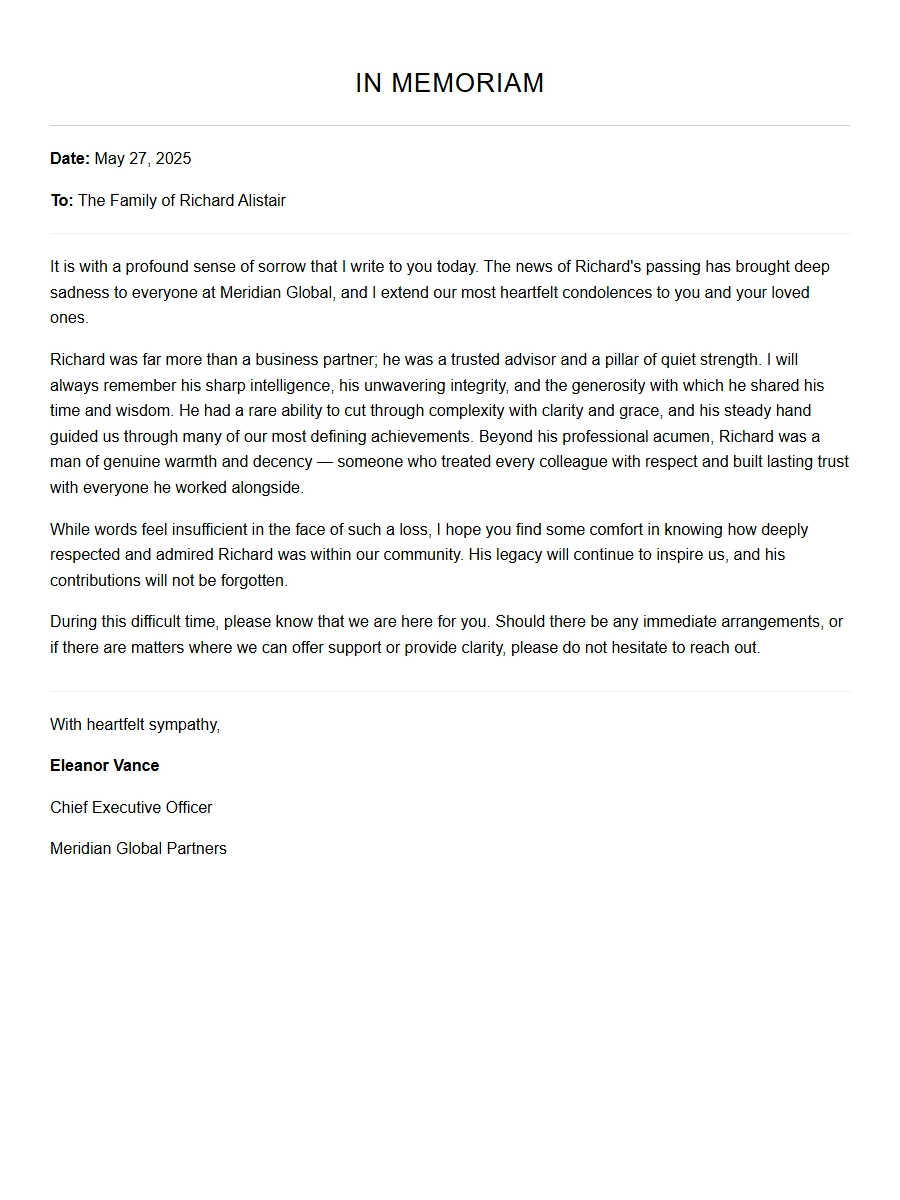 Formal Condolence Message for a Business Partner
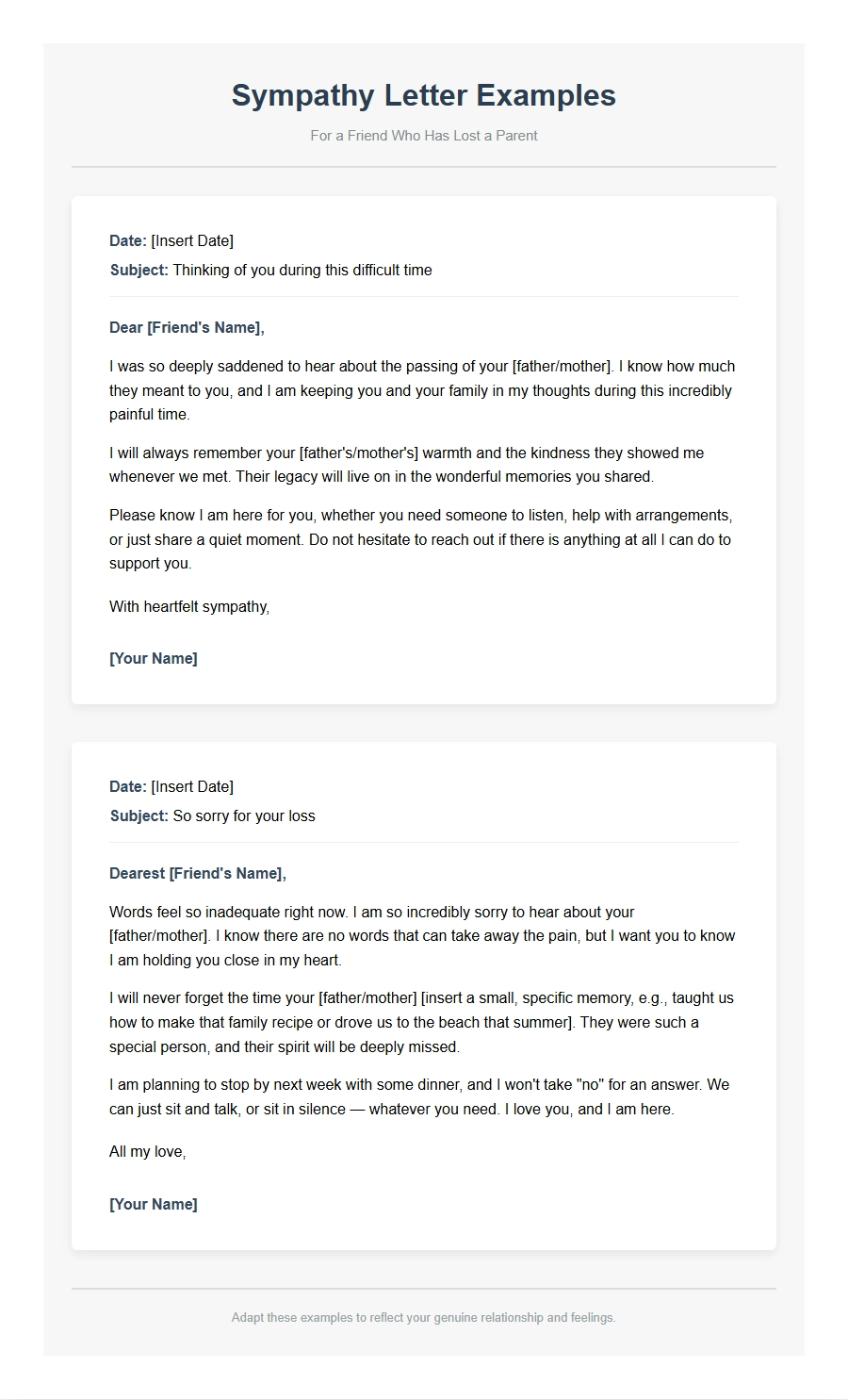 Sympathy Letter Examples for a Friend Who Lost a Parent
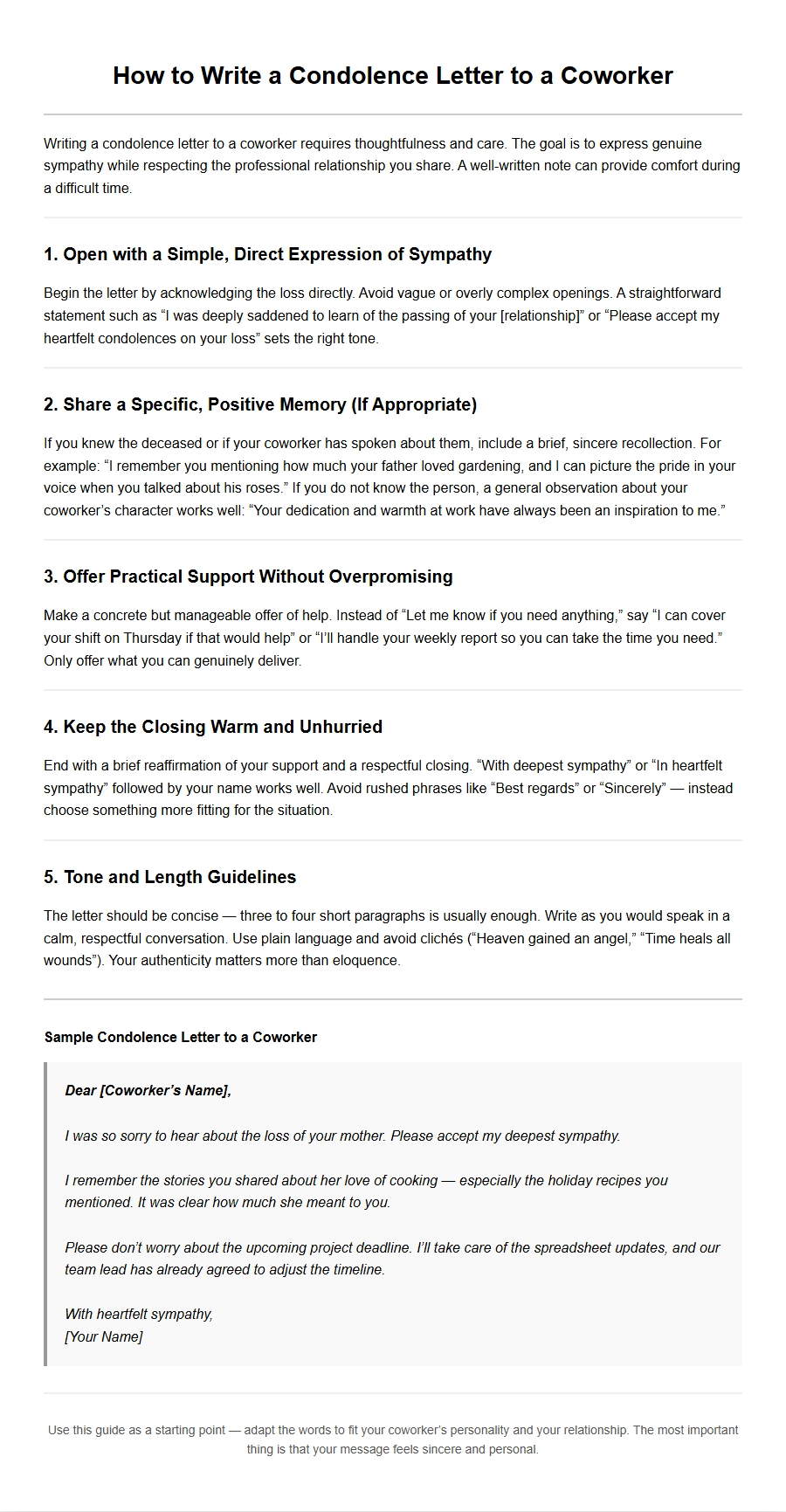 How to Write a Condolence Letter to a Coworker
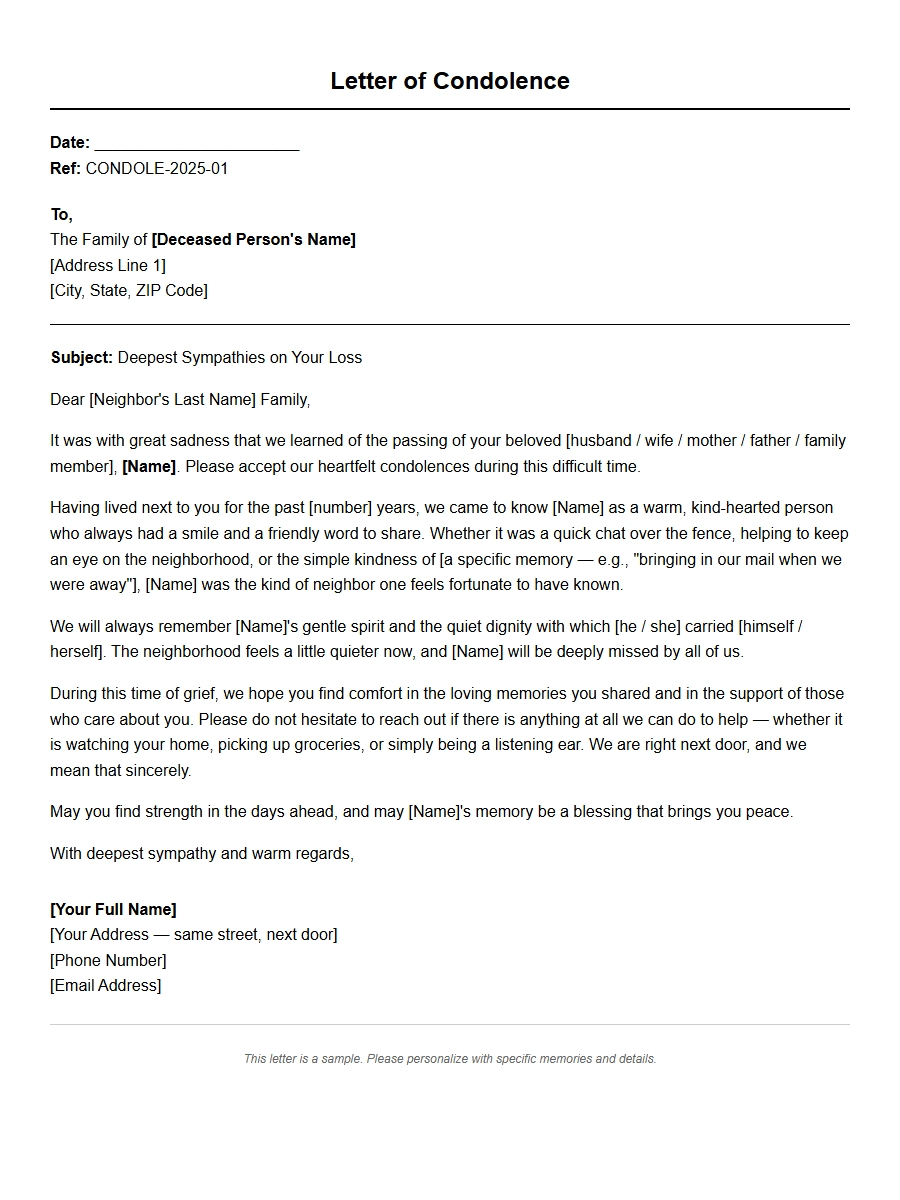 Condolence Letter Sample for a Neighbor
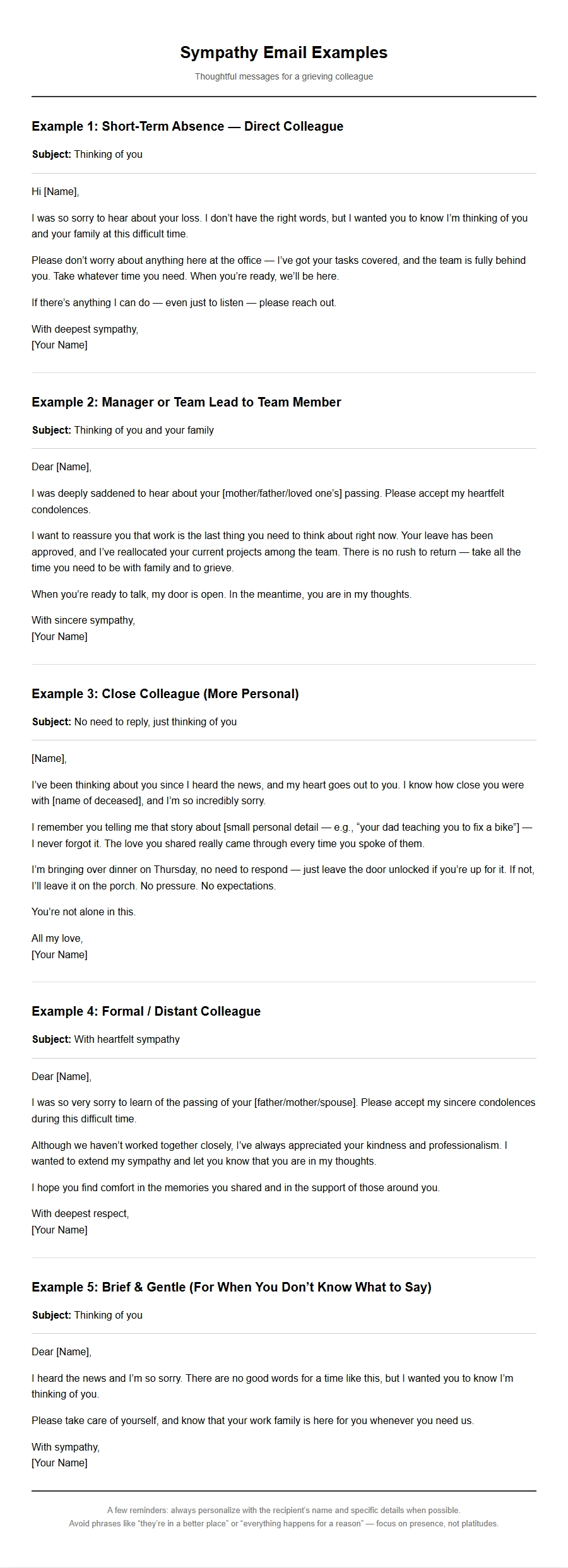 Sympathy Email Examples for a Grieving Colleague
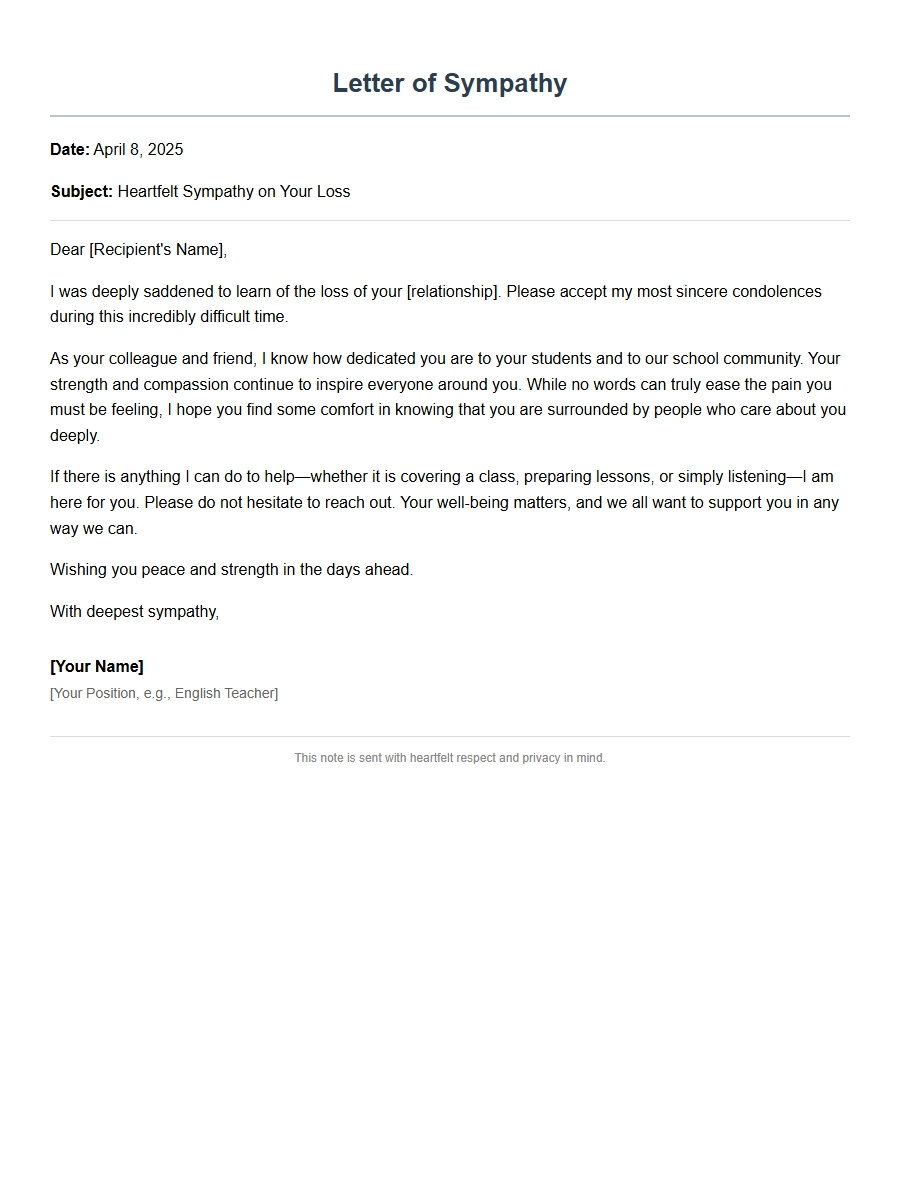 Condolence Words for a Teacher