Heartfelt Message for Coworker Attending a Funeral
You just found out your coworker is attending a funeral. Maybe it’s for a parent, a sibling, or a close friend. Your first instinct is to say something supportive—but then the blank screen stares back at you. What do you write without sounding awkward or intrusive? That hesitation is completely normal. A thoughtful message doesn’t have to be original or poetic. Using a sample or a letter template as a starting point isn’t cheating—it’s a smart shortcut. It gives you the structure, tone, and key phrases you need, leaving room for your own personal touch.
This type of message falls under the category of workplace condolences, where you need to balance professionalism with genuine empathy. Whether you’re sending a printed card, an email, or a quick Slack message, the core goal is the same: let your coworker know you care without adding pressure or forcing a conversation.
Start with a simple salutation and a clear purpose
The opening of your message doesn’t need to be elaborate. A direct, kind salutation works best—“Dear [Name],” or “Hi [Name],” if you’re on email terms. Then state your purpose plainly: “I heard you’ll be attending the funeral for your [relation] and wanted to send you my sincere sympathy.” Avoid rambling or hedging. Your coworker is likely overwhelmed already; a clear, warm opening is a relief.
Choose the right tone based on your relationship
If you’re close colleagues who joke around daily, you can be a bit warmer—use their first name, mention a specific memory if it fits, and keep the tone conversational. For a more formal or distant coworker, stick with professional correspondence style: “Please accept my deepest condolences during this difficult time.” The key is to match the level of formality you already use at work. If you wouldn’t call them “dude” in a meeting, don’t do it here. For more on balancing tone, see our guidelines for writing meaningful grief correspondence.
Personalize without overstepping
This is where the sample becomes your springboard. Take a basic phrase like “thinking of you” and add one specific detail. For example: “Thinking of you and your family this week. I remember you mentioning how much your dad loved fishing—I hope that memory brings some comfort.” That shows you listened and cares, without pretending to know their grief. If you don’t have a personal detail, a simple “I’m sorry you have to go through this” is enough. Never press for details or ask intrusive questions—keep the focus on support, not curiosity.
Common mistakes to avoid: using outdated salutations like “To whom it may concern” (you know their name), ignoring the medium (a printed letter has different formatting than an email—see our tips on opening condolence letters), and forgetting to proofread. A typo in a sympathy note can feel careless. Read it aloud once before sending.
Offer specific, low-effort help if you’re close
If your coworker will be out of the office for the funeral, a short note like “Let me know if you need anything covered while you’re away—happy to handle your part of the project” is practical and kind. But don’t say “let me know if you need anything” as a throwaway line—it puts the burden on them. Instead, suggest something concrete: “I’ll bring lunch by the office next Tuesday if you’re back.” That’s actionable and shows real care. For more on workplace etiquette during bereavement, check our guide on appropriate language for death in an office setting.
End with a gentle closing
Close on a note that respects their space. “With sympathy,” “Thinking of you,” or “Warmly” work well. Avoid overly cheerful phrases like “Best wishes” or “Hope you’re okay soon.” Grief isn’t on a timeline. A simple closing followed by your full name (or just first name, depending on your relationship) is clean and respectful.
You might also need to write a message for a coworker who lost a childhood friend—that situation feels different. We have a sample letter for loss of a childhood friend that can help you adjust the tone accordingly. And if the coworker is a step-sibling or blended family member, the same principles apply—just acknowledge the relationship specifically: “I’m so sorry for the loss of your stepbrother.” See our condolence letter for step-sibling loss for phrasing ideas.
Remember: your message doesn’t need to be perfect. Your coworker isn’t grading it. They’ll appreciate that you took the time to acknowledge their loss and their absence. Use a sample to beat the blank-page anxiety, then add your own genuine warmth. Next time you need to write something similar, it’ll feel less daunting—and you’ll already have a template you trust.
Helpful Examples
Heartfelt Message for Coworker Attending a Funeral
Condolence Message from Team Lead
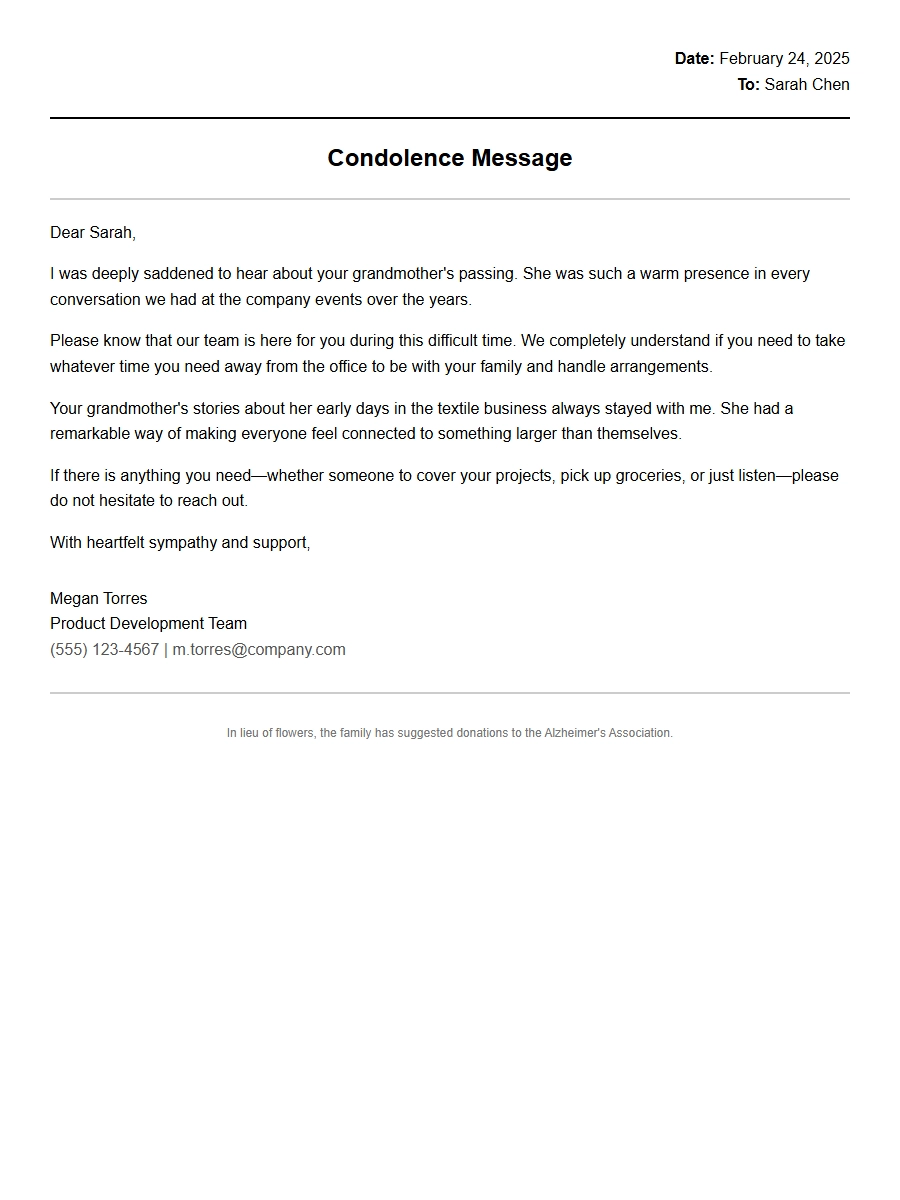
Dear [Coworker's Name],
On behalf of the entire team, please accept our deepest sympathies during this difficult time. We understand that losing a loved one is never easy, and we want you to know that you are not alone.
We have arranged for [Name] to cover your key deadlines for the next week. Please do not worry about work – your well-being is our priority. If you need additional time off, please refer to the bereavement leave policy summarized below:
Leave Type
Duration
Notes
Bereavement
3 days
Paid, can be extended with PTO
Personal Days
As needed
Please coordinate with HR
We have also set up a meal train and a fund for any support you may require. Do not hesitate to reach out. You are in our thoughts.
With heartfelt sympathy, [Your Name]
From a Close Peer
Hi [Name],
I was so saddened to hear about your loss. I remember when you told me about the fun times you had with [deceased's name] – your stories always brought a smile. I can only imagine how much you will miss them.
Please know that I am here for you – whether you need someone to talk to, help with a project, or just a distraction. I have already cleared my schedule for the afternoon if you want to grab coffee or take a walk. No pressure, of course.
I've also compiled a short list of things I can help with while you are away:
Answering emails from clients
Running updates on the quarterly report
Coordinating with the design team
Take all the time you need. We will manage. Sending you strength and peace.
Warmly, [Your Name]
From the Department Heads
Dear [Coworker's Name],
On behalf of the entire department leadership, we extend our heartfelt condolences to you and your family. Losing someone you love is a profound experience, and we want to support you in any way we can.
Please find below the bereavement options available to you:
Option
Details
Bereavement leave
Up to 5 paid days, extendable with manager approval
Flexible work schedule
Work from home or adjust hours for up to 2 weeks
Employee Assistance Program
Free counseling sessions (see attached brochure)
Please let us know if there is anything specific we can do – from covering meetings to arranging floral tributes. Your presence is missed, but your rest and recovery are more important.
With deepest sympathy, The Department Management Team
To a Coworker Who Lost a Parent
Dear [Name],
I was deeply sorry to learn of your father's passing. The loss of a parent is a unique and heavy grief. I hope you find comfort in the many memories you shared with him.
To help you during this time, we have compiled some resources that might be useful:
Resource
Contact / Link
GriefShare support group
meets Tuesdays 7pm – griefshare.org
Employee Assistance Program
1-800-555-0199 (24/7)
Bereavement leave coordinator
HR@company.com or ext. 4201
We have also arranged for a plant to be sent to the service, and a few of us are planning to contribute to a memorial donation in your father's name – please let us know which charity he cared about.
Take the time you need. We are all thinking of you.
With sympathy, [Your Name] and the team
When the Funeral is for a Spouse
Dear [Coworker's Name],
Words cannot express how sorry I am for the loss of your spouse. I know that no message can ease this pain, but please know that you are in my thoughts and prayers.
During such a difficult time, practical support can be a lifeline. Here are a few ways I and others in the office can help:
Meal delivery: We have set up a MealTrain – sign up link in this email.
Children care: If you need help with school pickup or babysitting, [Name] has offered to coordinate.
Errands: I can pick up groceries or run other errands on weekends.
Work coverage: I have already spoken to your manager about taking over your projects for the next two weeks.
Please do not hesitate to ask for anything, no matter how small. You are not alone. We will get through this together.
With deepest condolences, [Your Name]
From a Colleague in Another Office
Hi [Name],
I was shocked and saddened to hear of your loss. Even though we work in different cities, I have always appreciated your collaboration and kindness. Please accept my heartfelt sympathy.
While you are away, I will take care of the following items that involve our cross-office project:
Task
Status
New Owner
Vendor contract review
In progress
Handled by [Name]
Monthly stats report
Pending
I will complete by Friday
Client presentation slides
Draft ready
I will finalize after your feedback (no rush)
There is absolutely no urgency to respond to this. I just wanted you to know that your responsibilities are covered. Please focus on yourself and your family.
Thinking of you from across the miles.
Warmly, [Your Name]
Short Message from a Team
Dear [Coworker's Name],
We were all so sorry to hear about your loss. Please know we are thinking of you. Each of us wanted to share a quick personal note:
Sarah: "I'll miss seeing your smile at the morning stand-up. Take all the time you need."
Mike: "If you need someone to talk to about anything – work or not – I'm just a call away."
Priya: "I've organized a card for you; stop by whenever to pick it up or I'll drop it off."
David: "The team has your back. We've rearranged the project board so nothing falls through the cracks."
We've also contributed to a charity of your choice – just let us know which one. You are loved and supported.
With sympathy from all of us, Your team at [Company Name]
Offering Practical Help
Dear [Coworker's Name],
I cannot imagine what you are going through. During this time, the last thing you should worry about is logistics. Please allow us to ease your burden in a few practical ways.
Below is a list of immediate offers from your colleagues. Feel free to take advantage of any of them:
Shift coverage: [Name] and [Name] will cover your shifts for the next 2 workdays.
Pet care: I can walk your dog or feed your cat – just send me details.
Transport: If you need a ride to the service, [Name] is available.
Children's activities: [Name] can host a playdate this weekend.
To coordinate, please reach out to [Contact Person] at [email/phone]. We have also created a shared spreadsheet to organize help without overwhelming you. Rest assured, everything is under control.
You are not alone. Lean on us.
With unwavering support, [Your Name]
Message for a Coworker Attending a Friend's Funeral
Dear [Coworker's Name],
I was sorry to hear that you are attending a funeral for your close friend. The loss of a friend can be just as profound as losing family, and it is important to allow yourself to grieve.
I want to remind you that you have bereavement leave available for such occasions. Please refer to the table below for a quick overview:
Type
Days
Eligibility
Non-family bereavement
1-2 days
Manager approval needed
Personal day
Use as needed
No questions asked
If you need more time, just let me know and we can adjust your schedule. I have already asked [Name] to handle your afternoon calls tomorrow so you can leave early if needed.
Take care of yourself. And when you return, we are here to listen if you want to share memories of your friend.
With sympathy, [Your Name]
Sample Condolence Email with Leave Details
Subject: Condolences and Leave Information
Dear [Coworker's Name],
On behalf of the whole company, please accept our sincere condolences. We understand this is a difficult time, and we want to ensure you have everything you need to take care of yourself and your family.
Below is a detailed overview of the bereavement leave options available to you, along with a checklist of things you may want to consider:
Leave Option
Duration
Pay Status
Notes
Immediate bereavement
3 days
Full pay
No need to use PTO
Extended leave
Up to 2 weeks
Partial pay + PTO
Requires HR approval
Flexible hours
As needed
Normal pay
Work from home option
Checklist for your time off:
Notify your direct supervisor (already done – they are aware)
Set up an out-of-office reply (template attached)
Delegate urgent tasks to [Name] (she has the list)
Check in with EAP counselor at ext. 555
You are in our thoughts. Take all the time you need.
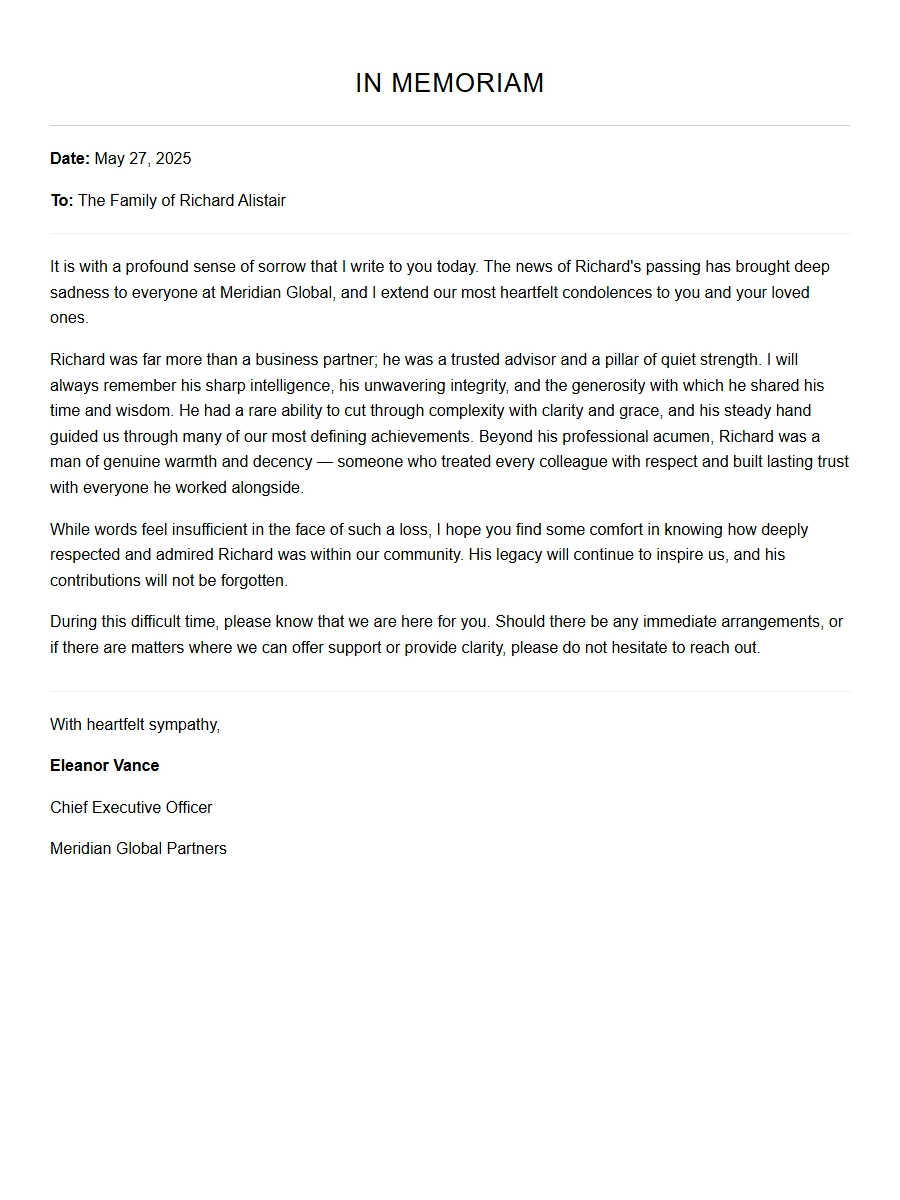 Formal Condolence Message for a Business Partner
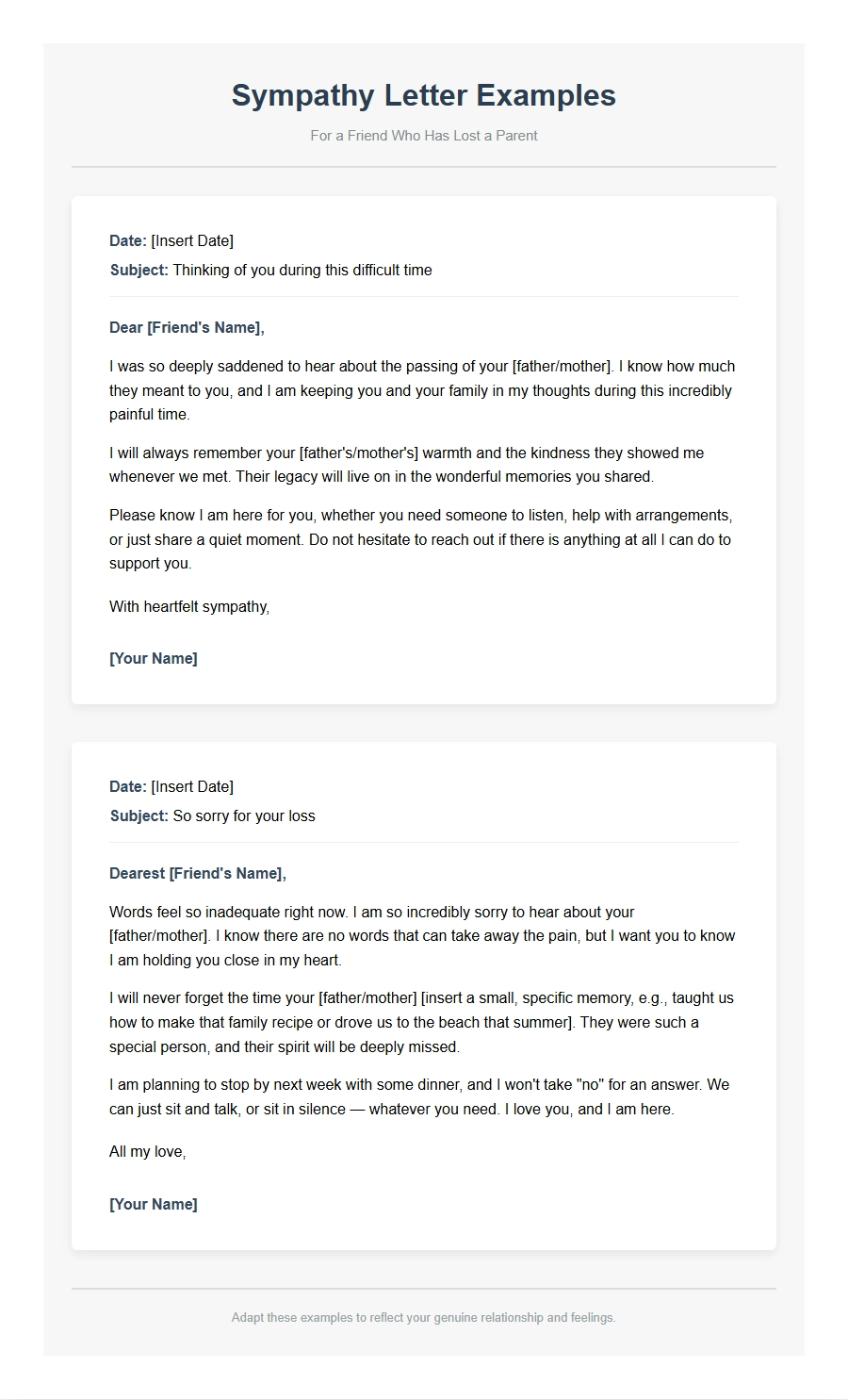 Sympathy Letter Examples for a Friend Who Lost a Parent
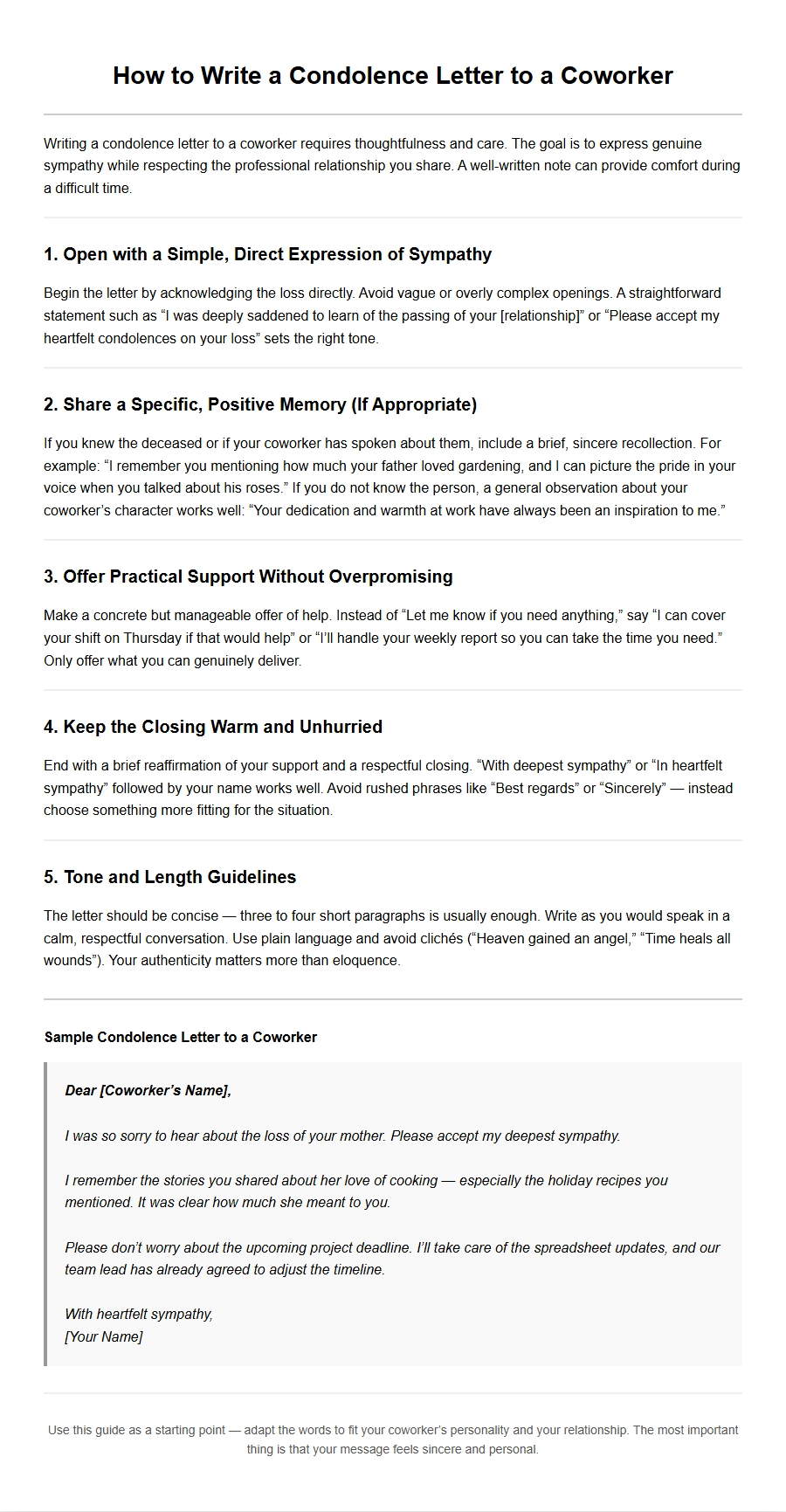 How to Write a Condolence Letter to a Coworker
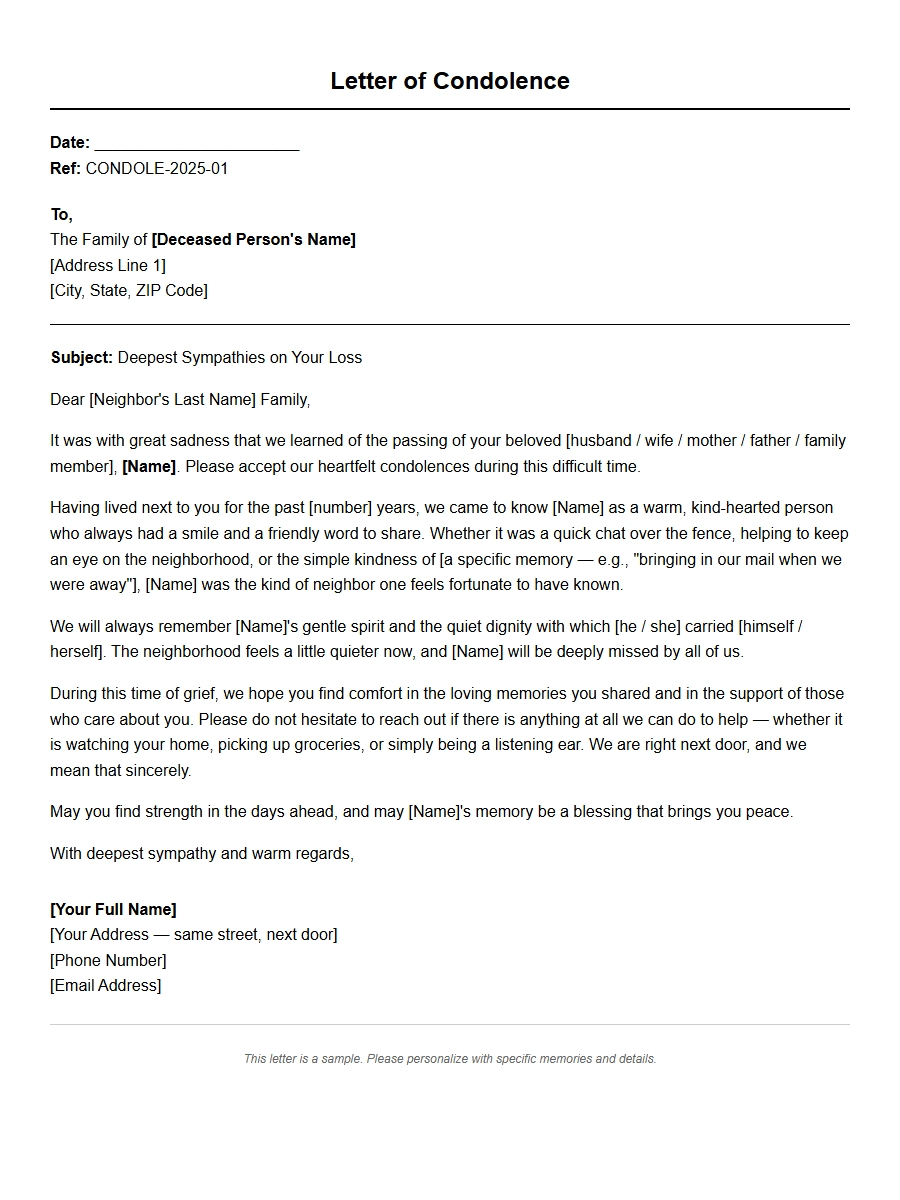 Condolence Letter Sample for a Neighbor
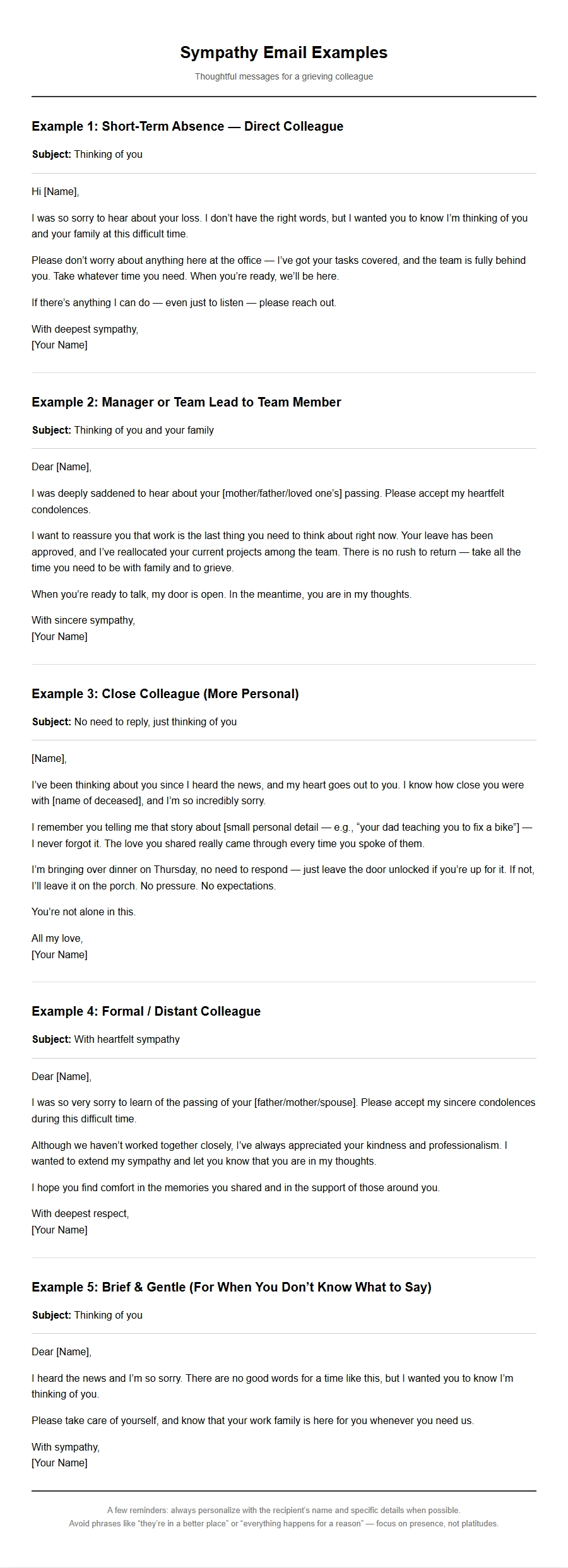 Sympathy Email Examples for a Grieving Colleague
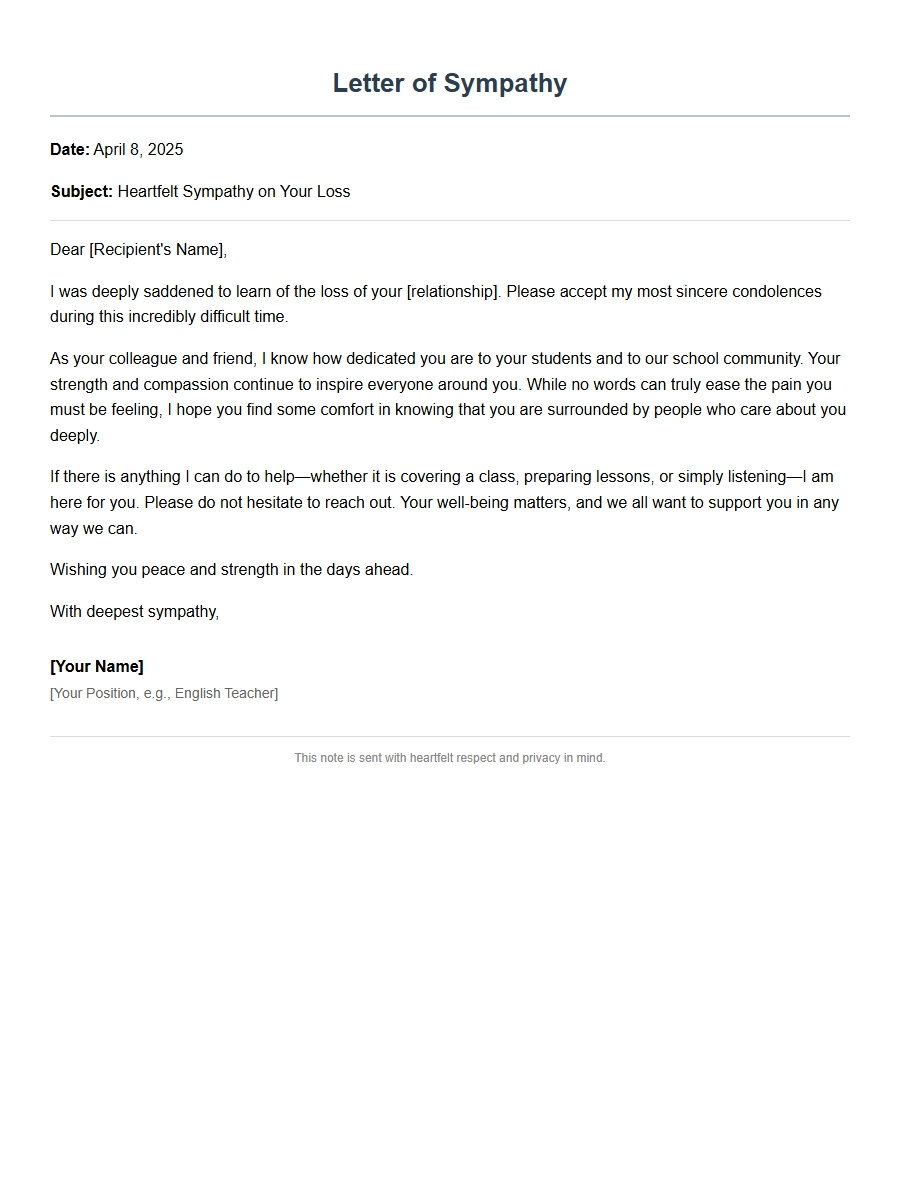 Condolence Words for a Teacher