You need to send a letter about a difficult loss but the words won’t come. Maybe it’s a condolence note to a colleague whose parent passed away. Or a tribute message for a late boss. The pressure to say the right thing without sounding cold or clichéd is real. And that blank cursor just stares back.
Here’s the truth: using a sample isn’t cheating. It’s a smart shortcut. A well-written template gives you a solid structure, a respectful tone, and phrasing you can build on. It saves you from staring at the screen too long, and it frees up mental energy to focus on the personal details that matter most. Customizable letter templates are everywhere — the skill is in choosing the right one and adapting it so it sounds like you.
Why “dead” isn’t the only word you need
When you’re writing a letter that addresses loss, the obvious word might feel too blunt. But professional correspondence about grief doesn’t have to be vague or stiff. You can use phrases like “passed away,” “we lost,” “our deepest sympathy,” or “with great sadness.” The goal is clarity and compassion. A letter template for condolence letters often already avoids harsh language — it’s built around empathy and salutation and closing conventions that comfort rather than shock.
Ever received a note that felt too formal or too distant? The tone in writing matters more here than almost anywhere else. You want warmth without sentimentality, sincerity without drama.
How to choose the right sample for your situation
First, match the formality to your relationship. A digital letter format for an email to a coworker is different from a printed card for a close friend’s family. Look for a letter structure that fits: a simple condolence letter sample works for most situations, but if you’re writing a tribute to a late boss, you’ll want something slightly more professional. Pay attention to the opening lines — they set the tone. Avoid outdated salutations like “To whom it may concern” in personal letters.
Adapt the sample without losing your voice
Take the template and replace generic phrases with specific memories or qualities. Instead of “They will be missed,” say “I’ll always remember how she made everyone laugh during Monday meetings.” Keep the skeleton but swap the words. This is where letter writing etiquette meets authenticity. Also, check the letterhead design if you’re printing — a simple, clean look avoids distractions.
Common mistakes to avoid
Using clichés like “passed on” too many times can feel robotic. Mix up your phrasing. Don’t ignore formatting differences: an email needs a subject line, shorter paragraphs, and no fancy letterhead. Proofreading letter drafts is critical — a typo in a sensitive message can feel careless. And never copy a sample word-for-word without personalizing it. The recipient will notice.
Another pitfall: not tailoring the opening paragraph. If you start with a generic “I was sorry to hear,” it’s fine, but adding a line like “John spoke so fondly of your father’s garden” makes the letter unforgettable.
Most business letter format rules work here: date, salutation, body, closing. But for emotional letters, you can soften the structure. Start with your feeling, then share a memory, then offer support. End with a forward-looking closing like “Thinking of you in the days ahead.” Avoid closing with “If you need anything” — it’s overused. Instead, be specific: “I’ll bring dinner on Thursday if that helps.”
When you write a letter without using the word “dead,” you’re not hiding from reality — you’re choosing language that allows the reader to feel seen without being jolted. For cultural differences in how loss is discussed, how to handle cultural differences in condolence letter guides can help you adjust tone and phrasing respectfully.
Make the sample your springboard, not your script
The best professional correspondence feels both personal and polished. After you finish drafting, set it aside for a few minutes. Then read it aloud. Does it sound like you? Would you feel comforted receiving it? If yes, you’re done. If not, tweak the tone.
Practice makes this process faster. Next time you need to write a best practices for sending condolence letter or a tribute, you’ll have a mental library of what works. And that blank page? It won’t scare you anymore.
Remember: a sample gives you the map. You supply the heart.
Useful Writing Samples
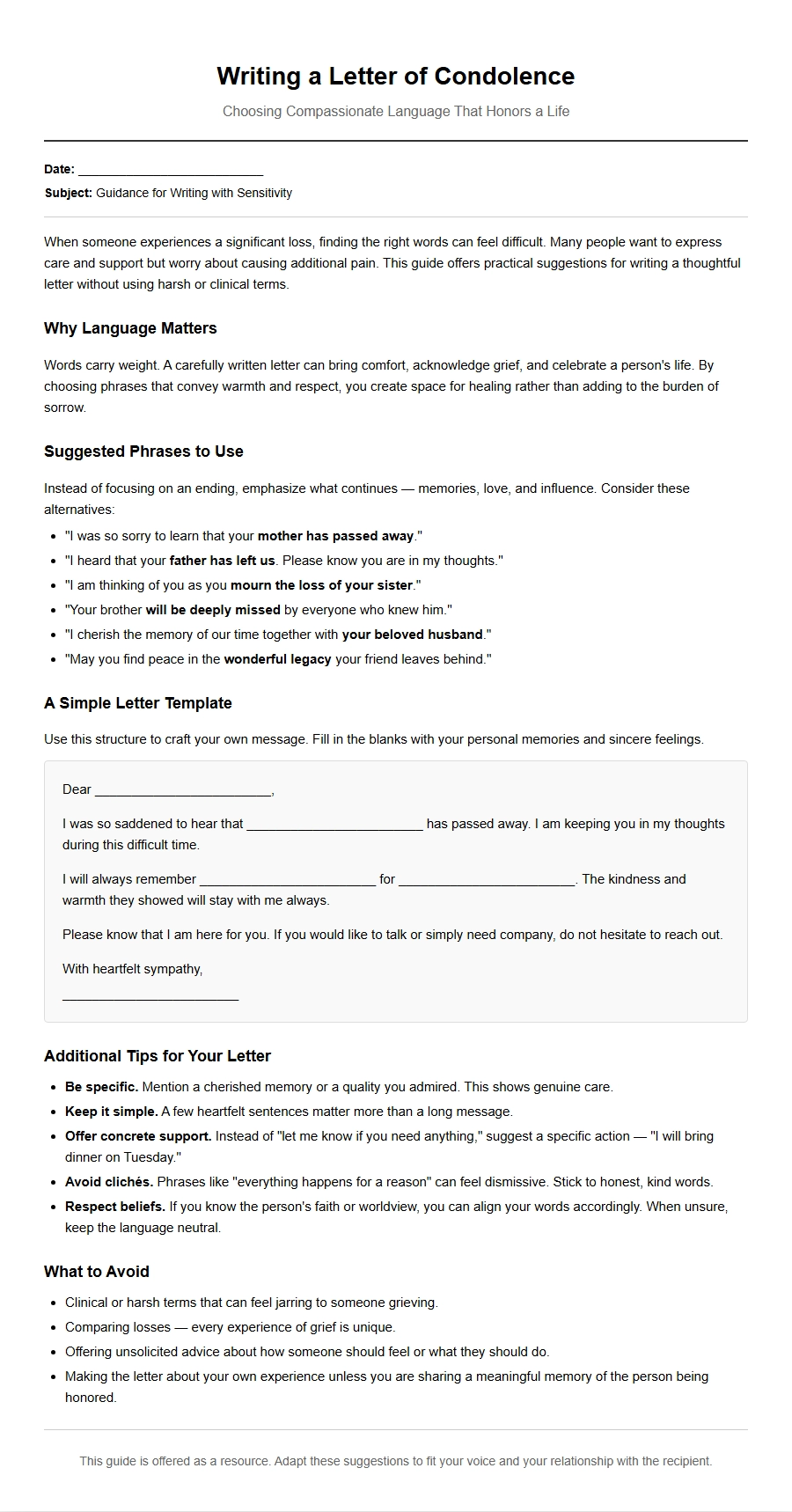
How to Write a Condolence Letter with Sensitivity
Letter to a Friend on the Loss of a Parent
Dear John,
I was deeply saddened to hear that your mother has departed from this world. She was a woman of great warmth and generosity, and I remember how she always welcomed us into her home with a smile and freshly baked cookies. Her gentle spirit and wise words will remain with us always.
Please know that you are in my thoughts during this time of sorrow. I hope you find comfort in the cherished memories you shared. If you need someone to talk to or help with any arrangements, I am here for you.
With heartfelt sympathy,
Sarah
Letter to a Colleague Who Lost a Sibling
Dear Mark,
I was shocked to learn about your brother's passing from our team this morning. Though I never had the chance to meet him, your stories about his adventurous spirit and humor made him feel like part of our work family. It is clear he brought great joy to your life.
Take all the time you need to grieve and be with your family. We have arranged for your tasks to be covered, and there is no rush to return. If you would like, I can share some of the photos your brother posted—they capture him doing what he loved, and I think you would enjoy seeing them.
You have my deepest condolences.
Warmly,
Linda
Letter to a Neighbor Mourning a Spouse
Dear Mrs. Henderson,
We were so sorry to learn that your husband has left this world. He was a pillar of our neighborhood—always ready to lend a tool, offer gardening advice, or share a laugh over the fence. His kindness touched many lives.
The neighborhood feels quieter without his cheerful greeting. We will plant a rose bush in his memory near the community garden, a place he tended so lovingly. If you need assistance with groceries or errands, please do not hesitate to call us. We are neighbors, and we care.
You are in our prayers.
With sympathy,
The Johnsons
Letter to a Relative Who Lost a Child
Dear Aunt Clara,
Words cannot express how heartbroken I am to hear that little Mia is no longer with us. Her laughter brought light to every family gathering, and her curiosity about the world was a gift. I remember how she would sit on my lap, asking endless questions about butterflies and stars.
The loss of a child is beyond comprehension. Please know that we are holding you close in our hearts. I will bring dinner on Tuesday and Thursday this week, and I am happy to help care for your other children anytime.
Mia's spirit will always be a part of our family story. She is loved and missed.
With all my love,
Your niece, Rachel
Condolence Note for a Sympathy Card
Dear Daniel,
I was so sorry to learn that your grandfather has gone from this life. He was a man of great wisdom and quiet strength, and I will never forget the stories he told about his youth. His legacy lives on in the kindness you show others.
May you find peace in the memories you hold dear.
Thinking of you,
Chris
Letter to a Pet Lover on the Loss of a Companion
Dear Emily,
I was saddened to hear that your beloved dog, Max, has departed this world. He was more than a pet—he was your faithful friend, your running partner, and the one who always greeted you with tail wags and unconditional love. I remember how he would rest his head on your lap during difficult days.
It is okay to grieve deeply. He was a special soul. If you would like, we can create a small photo album of your adventures together. I believe he is now running free in a sunny meadow, waiting for you.
With heartfelt sympathy,
Your friend, Mike
Letter Offering Practical Help (with Meal Schedule)
Dear Peterson Family,
We are so sorry for your loss. Your mother was a wonderful woman who always made us feel welcome. To help during this difficult time, we have organized a meal schedule. Please let us know if you have dietary preferences or allergy concerns.
Day
Meal
Delivered by
Monday
Chicken casserole & salad
Smith family
Tuesday
Vegetarian lasagna
Jones family
Wednesday
Soup and bread
Lee family
Thursday
Pasta with marinara
Brown family
We will drop meals at your front door around 5pm to avoid disturbing you. You are in our thoughts.
With love,
The Block Association
Letter with a Memory List
Dear Gomez Family,
We are thinking of you as you mourn the passing of your father. He was a remarkable man, and we want to share some memories that capture his spirit:
His booming laugh that filled every room during family dinners.
The way he would tell the same joke every year at Thanksgiving, and laugh just as hard each time.
His dedication to the community garden—he taught dozens of children how to plant tomatoes.
How he would secretly slip extra spending money into his grandchildren’s pockets.
These memories are treasures that will keep him alive in our hearts. May they bring you some comfort.
With deepest sympathy,
Your friends, the Morales family
Letter from a Church or Club to the Family
Dear Mrs. Harris,
On behalf of the Riverside Book Club, we extend our heartfelt sympathy on the passing of your husband, Robert. He was a cherished member of our group for over a decade, always bringing insightful commentary and a warm sense of humor to our meetings.
We will dedicate our next reading in his honor—a collection of poetry he loved. A memorial bookmark will be created with his name and placed in our club library. Please know that we are here for you; many members have offered to visit, run errands, or simply listen.
Robert’s contributions to our club will not be forgotten. He enriched our lives immeasurably.
In sympathy and fellowship,
The Riverside Book Club Board
Letter to a Mentee from a Teacher
Dear Chris,
I was deeply saddened to hear that your grandmother has left this world. She was your greatest cheerleader, and I remember how she would attend every school event, sitting proudly in the front row. Her eyes would shine when she spoke of your achievements.
I know how much she meant to you. Her wisdom and love shaped the person you are becoming. Grief takes time, and it is okay to feel lost. I am here if you want to talk, or if you just need a quiet place to sit. You can also visit my classroom after school—the door is always open.
She is gone from our sight, but never from our hearts.
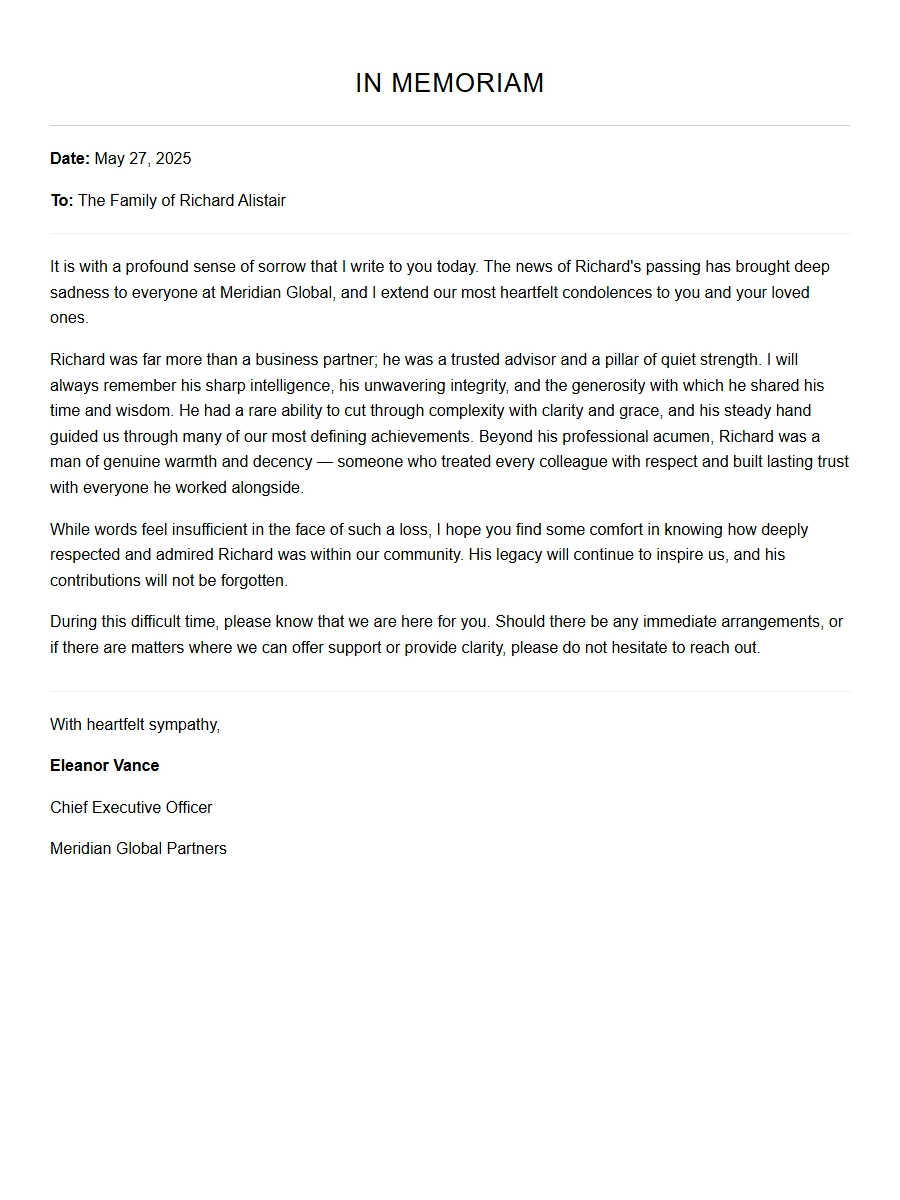 Formal Condolence Message for a Business Partner
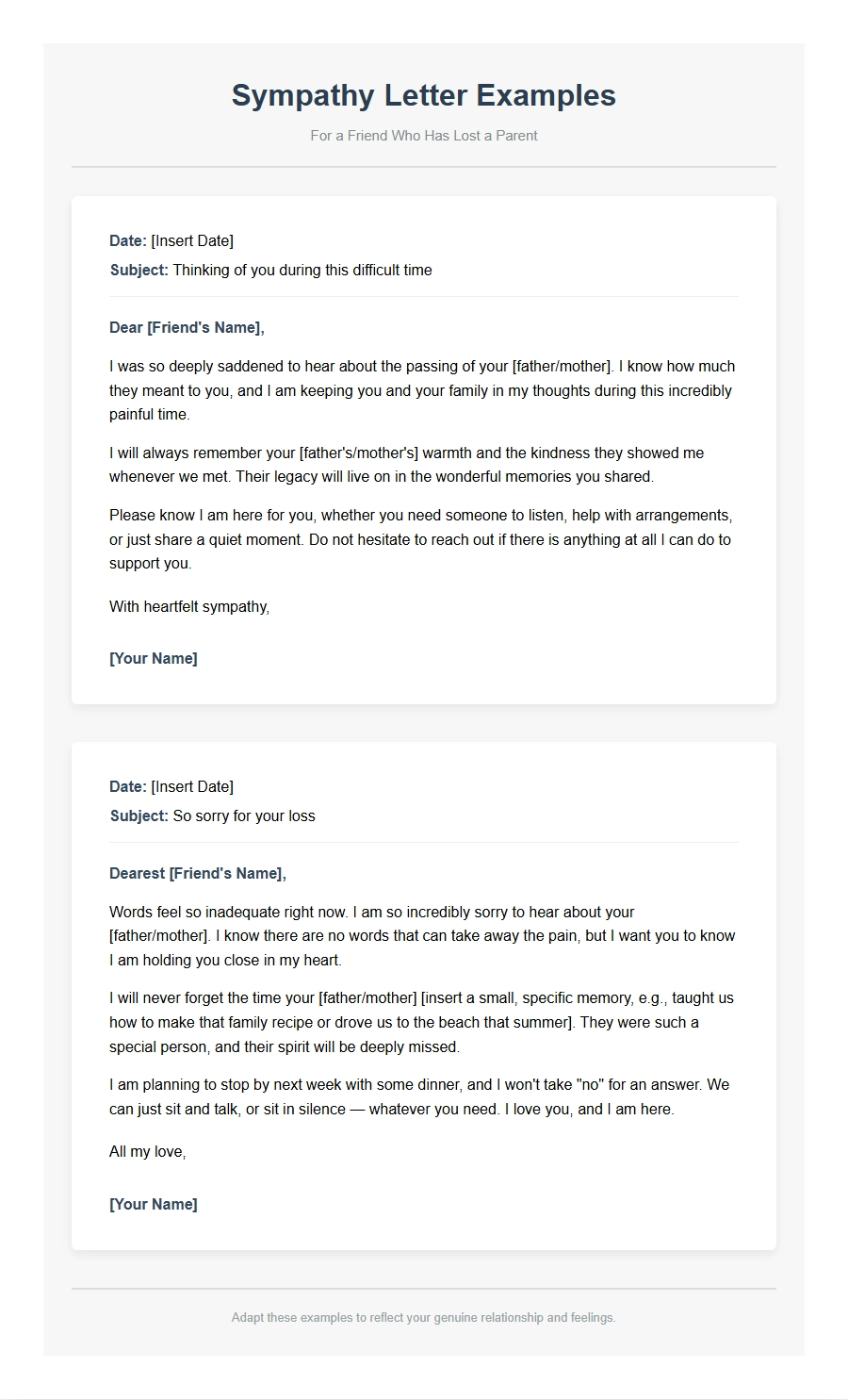 Sympathy Letter Examples for a Friend Who Lost a Parent
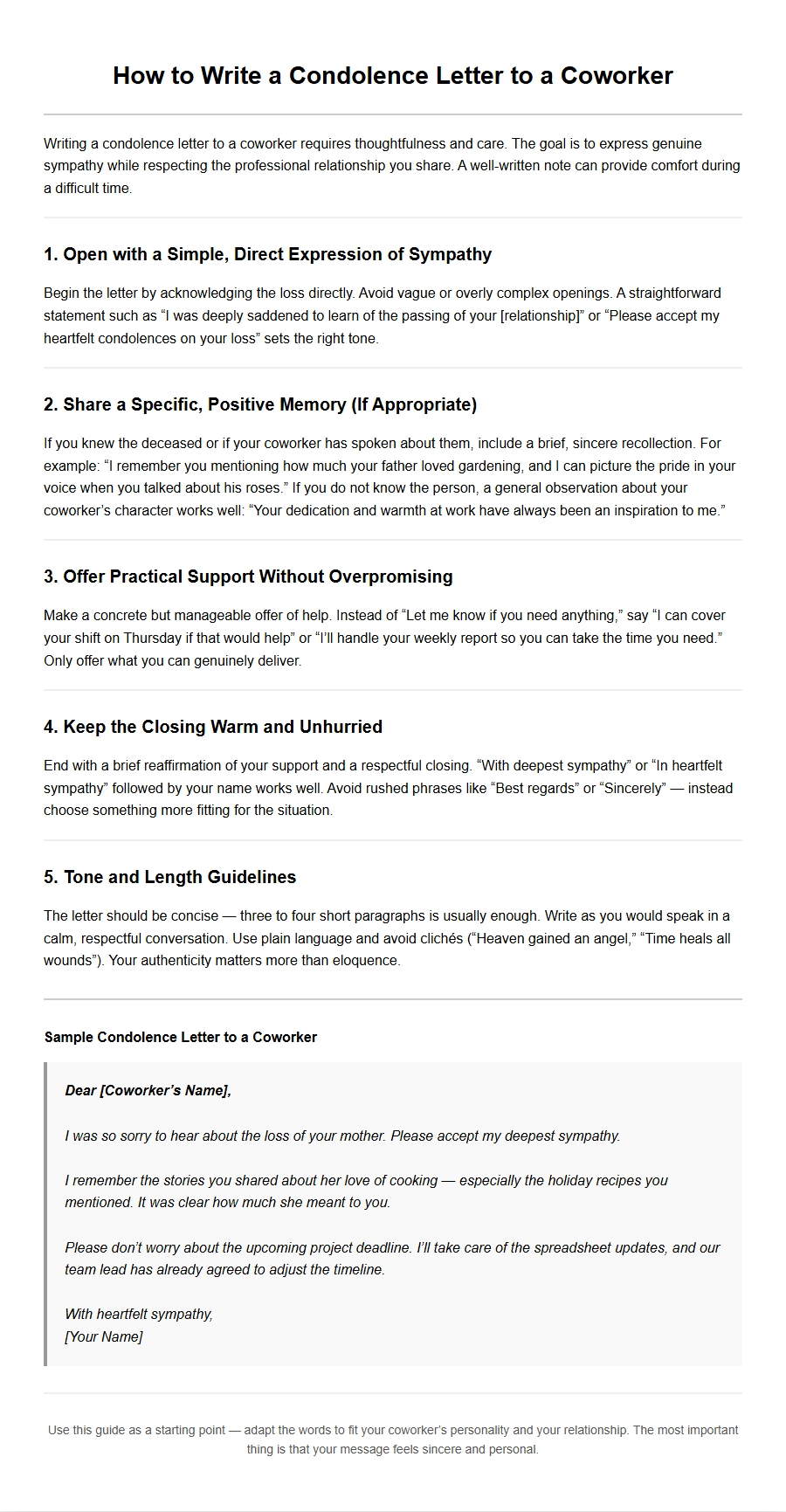 How to Write a Condolence Letter to a Coworker
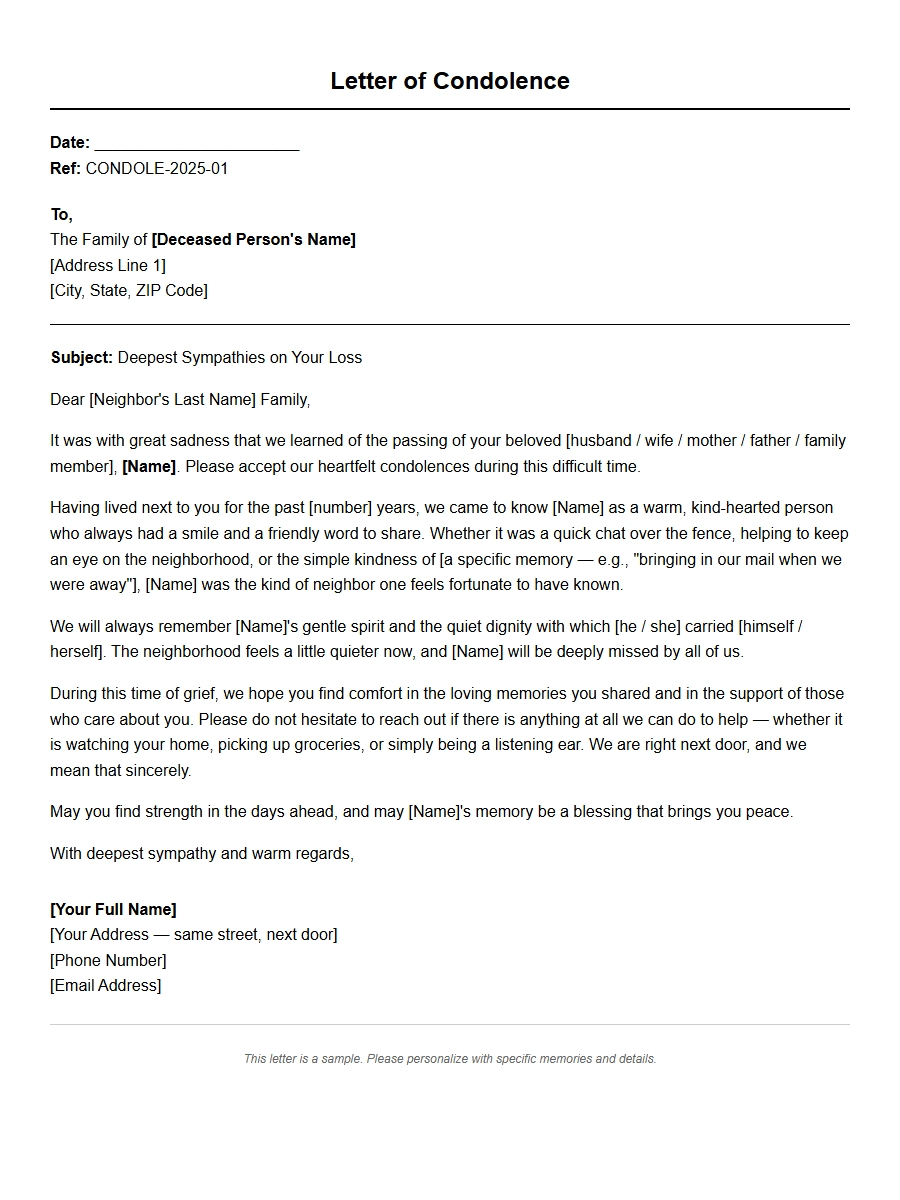 Condolence Letter Sample for a Neighbor
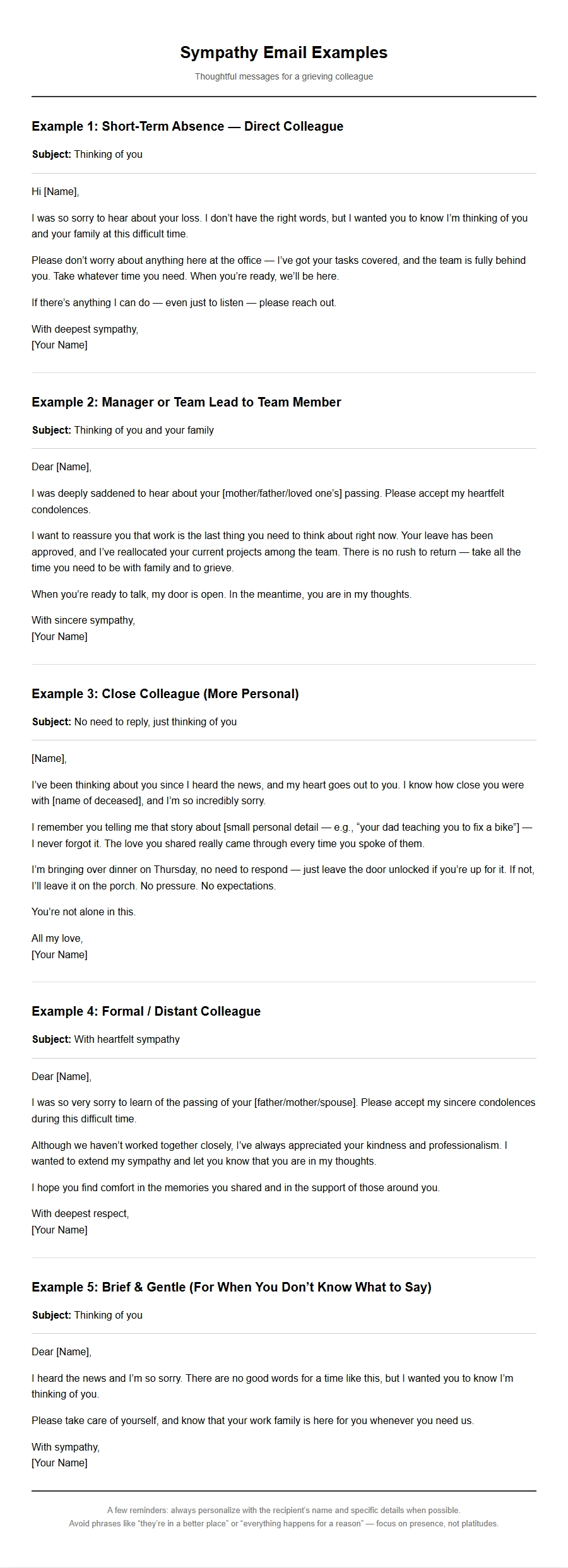 Sympathy Email Examples for a Grieving Colleague
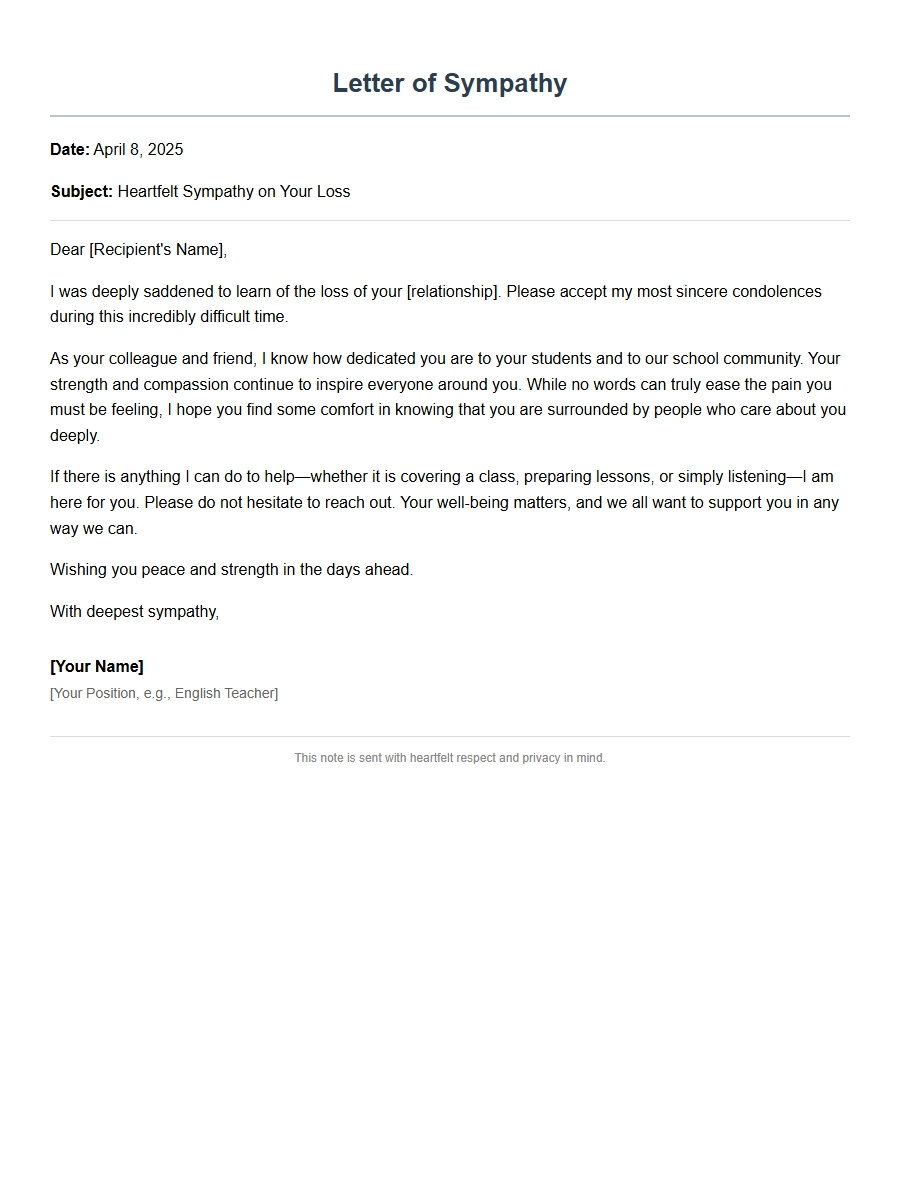 Condolence Words for a Teacher