The moment you hear the news, your mind races. You want to say something, but every word feels either too heavy or too light. Writing a condolence message for miscarriage support is uniquely difficult. The grief is often private, and we’re terrified of accidentally making it worse.
Category: Condolence Letters
This is exactly why looking at a thoughtful example or a simple structure isn't cheating. It’s smart. A solid framework gives you a container for your empathy. It handles the basic letter structure and letter writing etiquette, so your brain is free to focus on the genuine emotion you want to convey. You’re not searching for the right format; you’re just filling the space with warmth.
Why a standard "business" format feels wrong (and what to use instead)
Forget stiff professional correspondence here. This isn’t a cover letter or a resignation letter sample. A miscarriage condolence needs a softer touch. The tone in writing should mirror a quiet conversation, not a corporate memo. If you’re writing to a colleague, a digital letter format via email is fine. Just skip the formal letterhead design and keep the salutation and closing warm and simple. “Dear Sarah,” is perfect. “To Whom It May Concern” is not.
How to adapt a sample without losing your authentic voice
Think of a letter template as a starting point. You can take its structure—a direct opening, an acknowledgment of the loss, an offer of support—and inject your specific memory or feeling. The goal is a customizable message that feels like you.
Start by acknowledging the loss directly. “I was so heartbroken to hear about your miscarriage.” It’s direct, honest, and validates their pain. Avoid clichés like “Everything happens for a reason.” Instead, offer a specific, light-touch commitment. “I’m going to drop off dinner on Tuesday. No need to reply.” This is far more supportive than “Let me know if you need anything.”
Common pitfalls to skip
A big mistake is minimizing the loss. Saying “It was early” or “You can try again” dismisses their grief. Understanding what to avoid in a sympathy letter is often more important than finding the perfect words. Don’t compare their journey to someone else’s, and avoid giving unsolicited medical or spiritual advice. This is their loss, not a problem for you to solve.
If you’re unsure how to address them, our guide on appropriate greetings for bereavement communication can help you find the right opening words. Getting that first line right sets a respectful tone for the rest of the message.
Practical steps for writing your message
Here is a simple framework you can follow. It handles the formal writing tips without sounding stiff.
1. Acknowledge the specific loss.
Name the baby if they had a name. “I’m so deeply sorry for the loss of your little one.”
2. Validate their feelings.
“I cannot imagine how difficult this must be. Please know I am thinking of you.”
3. Offer concrete support.
If the family is facing medical bills, you might later find our specific guide on asking for medical bills support useful, but for this initial message, keep the offer simple. “I’d love to bring you lunch this week. What day works for you?”
4. Close with quiet warmth.
“With deepest sympathy,” or “Holding you in my thoughts,” followed by your name. A simple, clean closing avoids the awkwardness of oversharing.
Different relationships call for different nuances. For instance, writing to a military family has its own context, much like our guide offering condolences for military service member death covers unique protocols. Adjust your message to your specific relationship, but keep the core empathy consistent.
Before you hit send
Take a moment for proofreading letter checks. Read it out loud. Does it sound like you? Remove any corporate jargon or generic phrases. The best condolence messages feel both professional in their clarity and personal in their warmth.
If you’re writing a thank-you note later for the support you receive, our guide on how to write a thank you note for sympathy gifts can help you navigate that step gracefully.
You don’t have to have perfect words. You just have to show up. Use these structures as a springboard, not a crutch. The more you practice writing from a place of genuine care, the faster it becomes a natural extension of your support. And in the end, knowing you showed up for someone in their pain matters far more than having a flawless draft.
Writing Examples
Sample Condolence Message for Miscarriage Support
For a Dear Friend
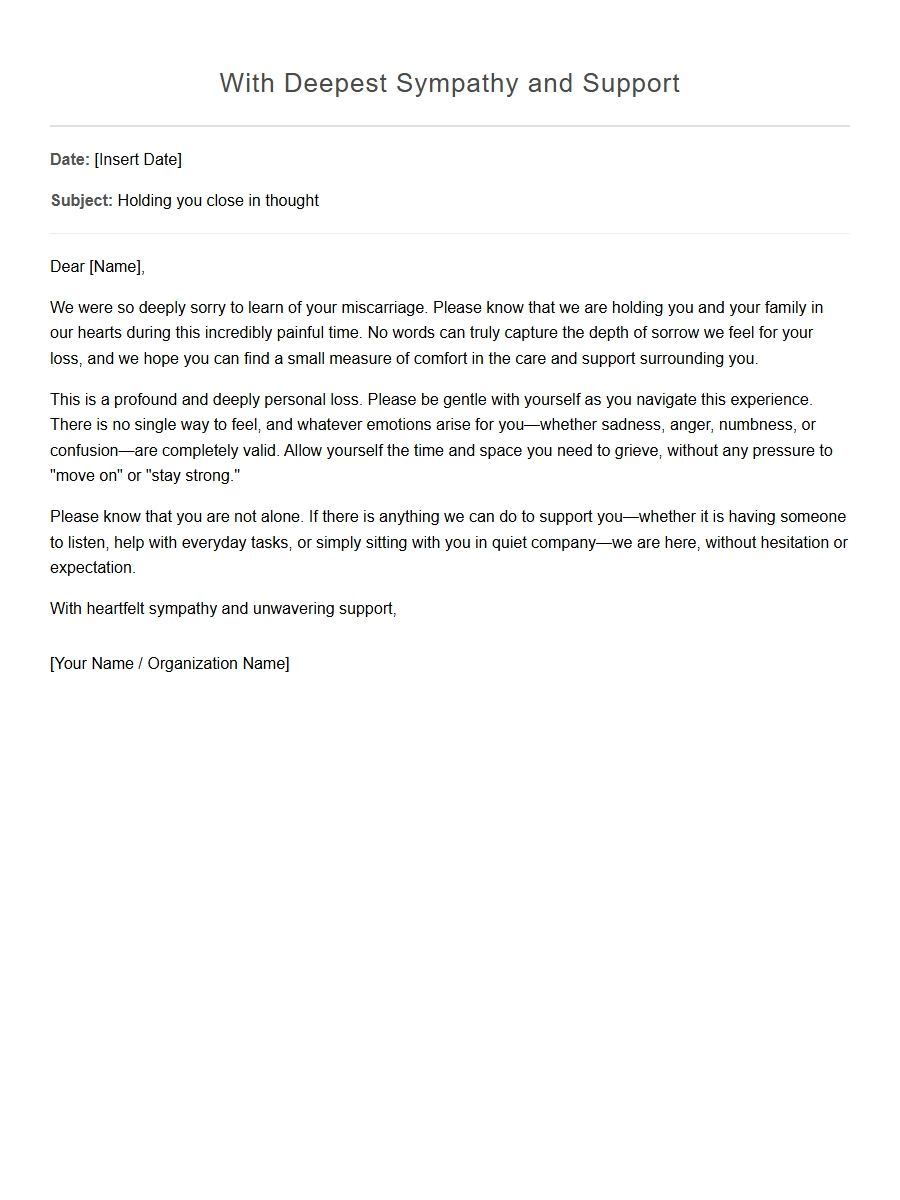
I was heartbroken to hear about your loss. Please know that I am holding you close in my thoughts during this incredibly difficult time.
There are no words that can truly ease the pain, but I want you to know that I am here for you—whether you need to talk, cry, or simply sit in silence together. Grief has no timeline, and your feelings are completely valid.
If there is anything at all I can do to support you—bringing over a meal, running an errand, or just keeping you company—please don't hesitate to ask. You don't have to go through this alone.
With all my love, [Your Name]
Longer Letter of Support
Dearest [Name],
I am writing with a heavy heart after learning of the loss of your precious baby. The depth of your sorrow must be overwhelming, and I want you to know that your feelings are sacred and deserve to be honored.
I remember how excited you were when you shared the news, and how carefully you planned for this little one's arrival. That love continues to exist, even in the midst of this profound grief. It is okay to feel angry, sad, numb, or all of these at once. There is no right or wrong way to mourn.
Please give yourself permission to take all the time you need. Your body and heart need gentle care. If you find comfort in journaling, in lighting a candle, or in planting a small tree in memory, know that those acts are beautiful ways to honor your child.
Remember that you are not alone. I will check in on you regularly, but never hesitate to reach out in between. Sending you strength and tenderness.
With deepest sympathy, [Your Name]
For a Colleague
Dear [Name],
I am so sorry to hear about your miscarriage. Please accept my heartfelt condolences during this painful time.
I understand that this is a deeply personal loss, and I respect that you may need space or time away from work. Please know that your team fully supports you, and we are ready to cover any tasks while you focus on healing.
Below are a few resources that might offer comfort or guidance:
Miscarriage Association support line: [Phone or website]
Books on pregnancy loss recommended by counselors
Local in-person or virtual grief support groups
Whenever you feel ready to return, we will be here with open arms. Until then, take every moment you need.
With sympathy, [Your Name]
For a Family Member
Dearest [Name],
Our family is heartbroken over the loss of your precious little one. Please know that we are all thinking of you and wrapping you in love from afar.
If you would like to talk, cry, or simply be together in remembrance, we are here. We can gather for a quiet meal, light candles, or create a small memory box. Whatever feels right for you, we will support it.
We have also put together a small list of family members who can help with daily tasks during this time:
Family Member
Can Help With
Contact
Aunt Mary
Meals, grocery runs
[Phone]
Cousin Joe
Childcare for older kids
[Phone]
Sister Sarah
Errands, rides to appointments
[Phone]
Please don't hesitate to call on any of us. You are so loved.
With all my love, [Your Name]
Sympathy Card Wording
Thinking of you as you navigate this heartbreaking loss.
May you find moments of peace amid the sorrow, and may the love surrounding you help carry you through.
Your baby was so wanted and so loved—their brief life has touched ours deeply.
With deepest sympathy, [Your Name]
Letter Offering Practical Help
Dear [Name],
I am so incredibly sorry for your loss. I know that words cannot undo the pain, but I want to offer concrete support to ease some of the burden during this time.
Here are a few ways I can help—please choose what suits you best, or suggest something else:
Bring a pre-made dinner on [day]
Take your other children to the park for an afternoon
Help with laundry or housecleaning
Drive you to a doctor's appointment if needed
Handle phone calls or emails you'd rather not manage
I have also put together a small list of local services that offer postpartum and loss support:
Service
Type of Support
Contact
[Crisis Line]
24/7 emotional support
[Phone]
[Center]
Individual counseling
[Phone/website]
[Group]
Peer support meetings
[Phone/website]
You only need to reach out. I am here.
With care, [Your Name]
For Both Parents
Dear [Name1] and [Name2],
We were deeply saddened to learn of your loss. Please accept our sincere condolences to both of you as you grieve the precious life you imagined together.
We know that this kind of grief affects partners in different ways, and we want to honor both of your experiences. It can be hard when one person needs to talk and the other needs quiet—please be gentle with yourselves and each other.
If you ever want to share stories, look at ultrasound photos, or simply be silent together in a safe space, we are here. You are not alone in this sorrow, and your baby's memory matters deeply.
With love and solidarity, [Your Name]
For a Second Miscarriage
Dear [Name],
My heart breaks for you to learn that you have suffered another miscarriage. I know how much hope and courage it took to try again, and the weight of this repeated loss is beyond words.
Please know that your feelings of devastation, anger, and fear are completely valid. There is no such thing as 'just another miscarriage'—each loss is unique and deserves its own grief.
I want you to know that you are not alone. There are support groups specifically for recurrent pregnancy loss, such as:
[Recurrent Loss Support Group name]
[Online forum for multiple miscarriages]
[Local therapist specializing in reproductive grief]
Whenever you are ready, I am here to listen without judgment. You are strong for enduring this, but you don't have to be strong all the time. Let yourself grieve, and let us love you through it.
With deepest empathy, [Your Name]
From a Healthcare Provider
Dear [Patient Name],
I am writing to express my deepest sympathy for the loss of your pregnancy. I know that the hope and excitement you carried now feels replaced by profound sorrow, and I want to acknowledge the gravity of your grief.
As your healthcare provider, I want to remind you that you are not alone. The following resources are available to support you emotionally and physically during this time:
Resource
Description
Availability
Bereavement Counselor
One-on-one support via our clinic
M-F 9am-5pm
Support Hotline
24/7 peer support for pregnancy loss
[Phone]
Online Support Group
Weekly virtual meetings
Thursdays 7pm
Please feel free to reach out to my office if you have any medical concerns or simply need guidance. Your well-being is our priority, and we are here to walk this path with you.
With compassion, [Doctor/Nurse Name]
Spiritual / Faith Perspective
Dear [Name],
I was so saddened to hear about your miscarriage. I am holding you in prayer and asking for comfort to surround you during this time of deep loss.
While we may not understand why such sorrow comes, I believe that your precious baby is now in a place of peace and light. The love you carried for them is eternal, and that bond can never be broken.
If you would like, I can arrange for a quiet blessing or a small memorial ceremony at [Church/Spiritual Center]. You might also find solace in these practices:
Reading comforting passages from [Scripture/Text]
Lighting a candle in memory each evening
Planting a flower or tree as a living tribute
Talking to a trusted spiritual leader
May you feel a gentle presence carrying you through your grief. You are loved, and your child is remembered.
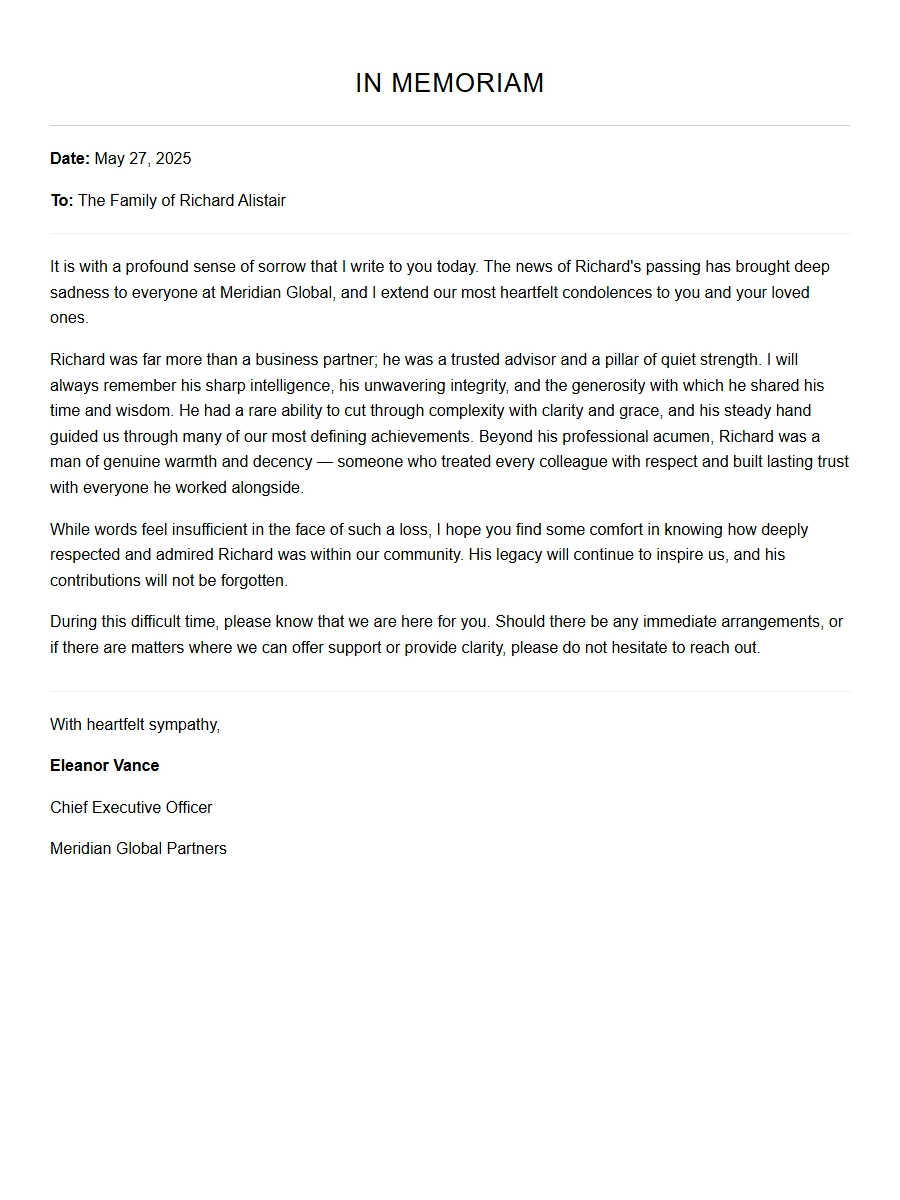 Formal Condolence Message for a Business Partner
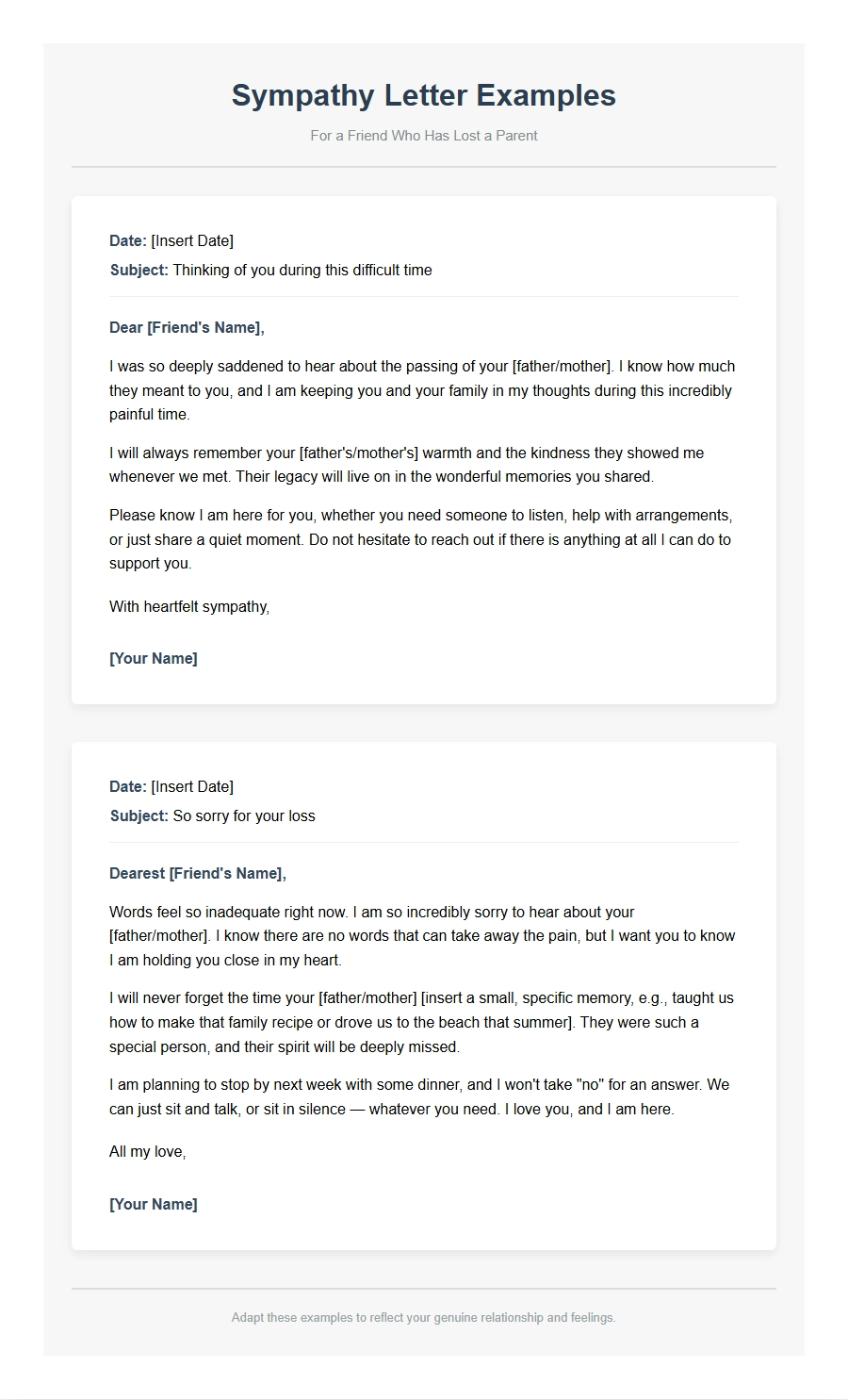 Sympathy Letter Examples for a Friend Who Lost a Parent
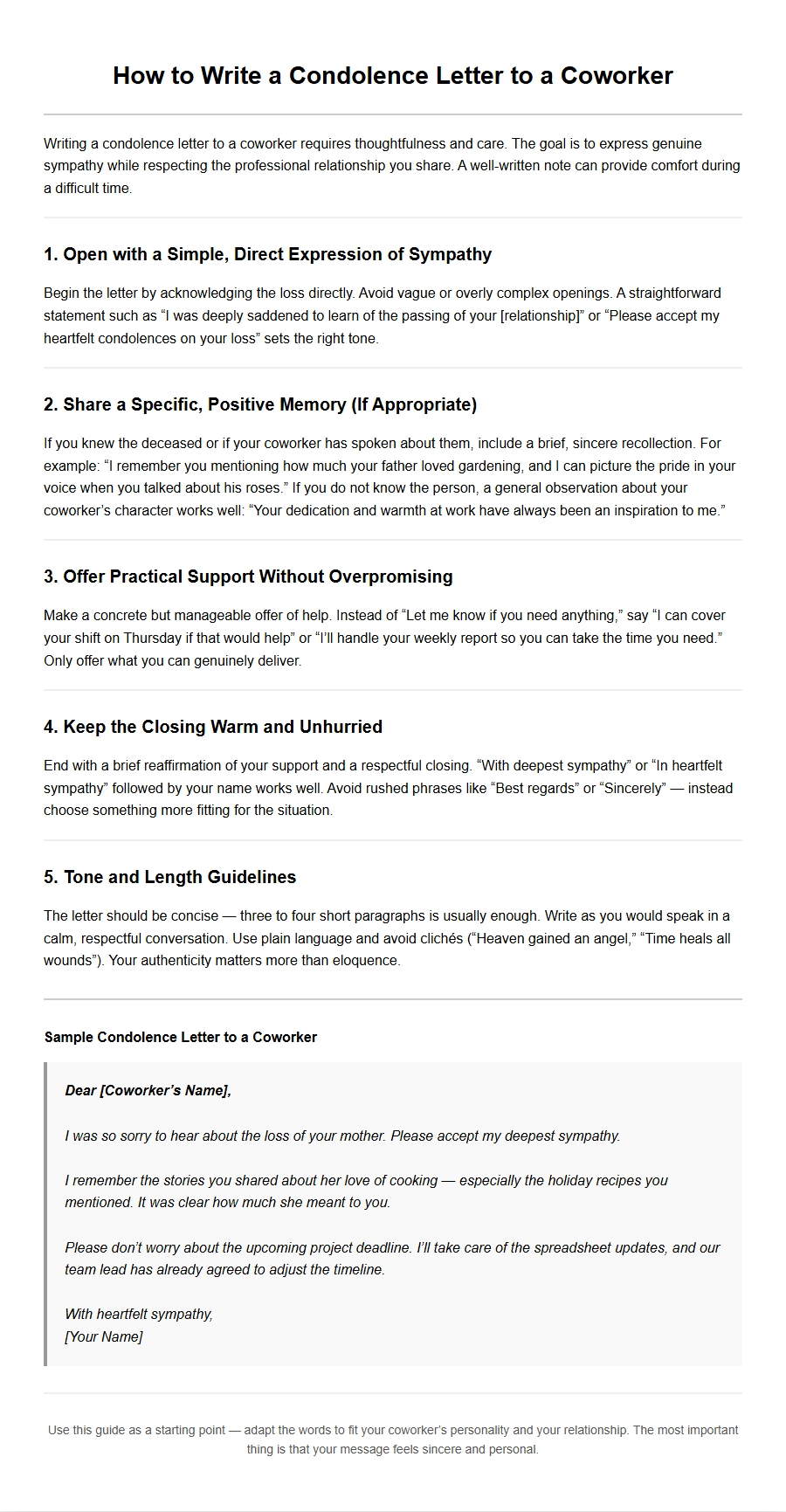 How to Write a Condolence Letter to a Coworker
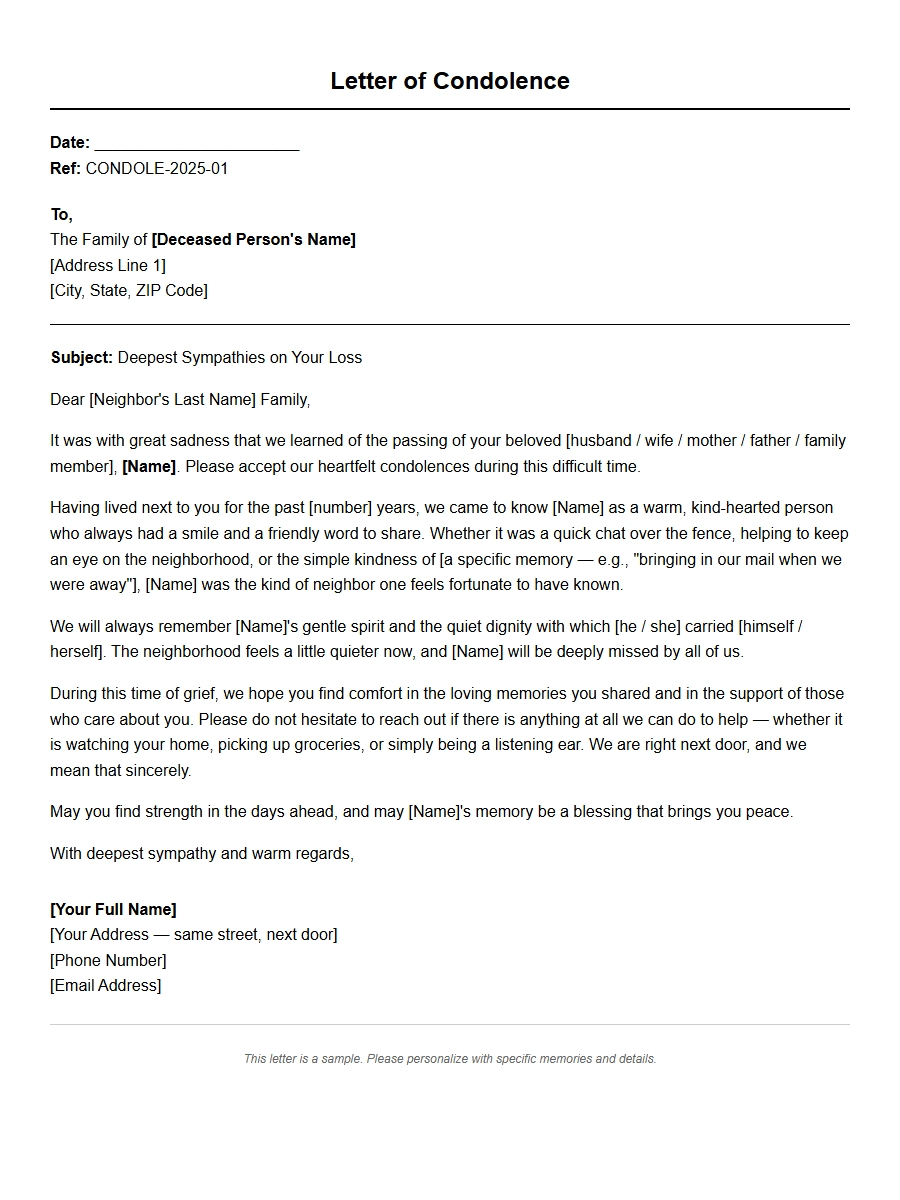 Condolence Letter Sample for a Neighbor
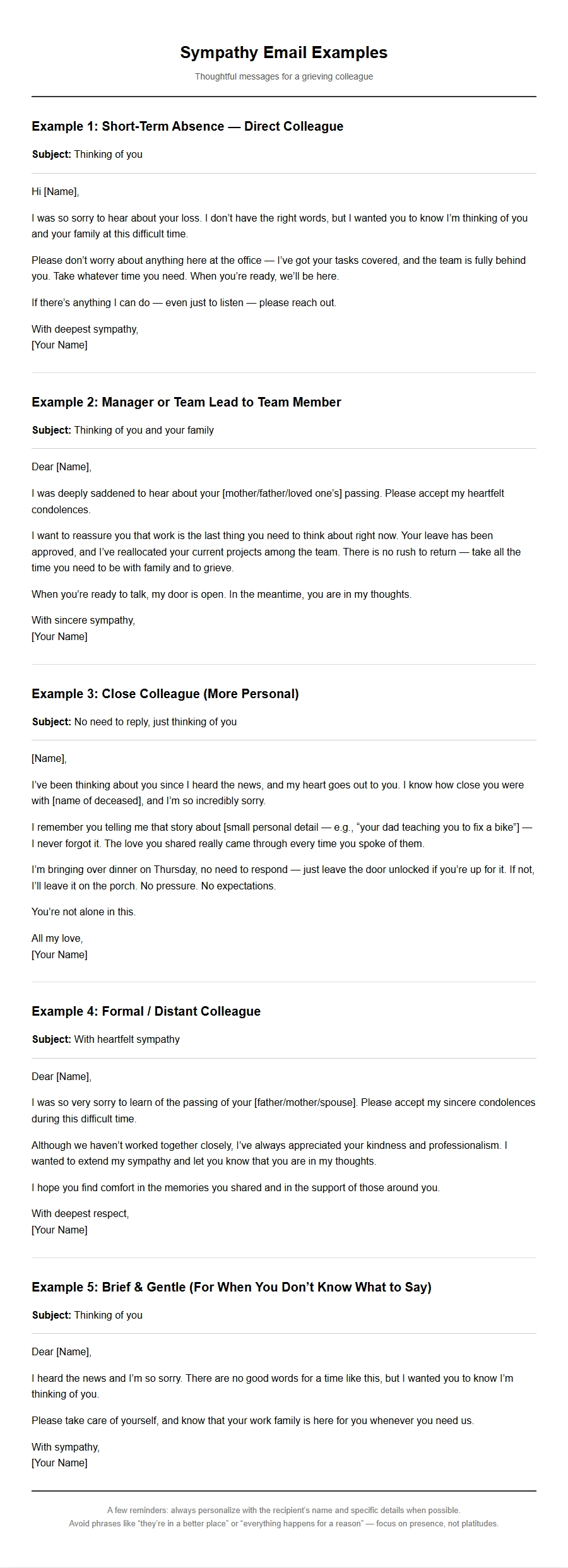 Sympathy Email Examples for a Grieving Colleague
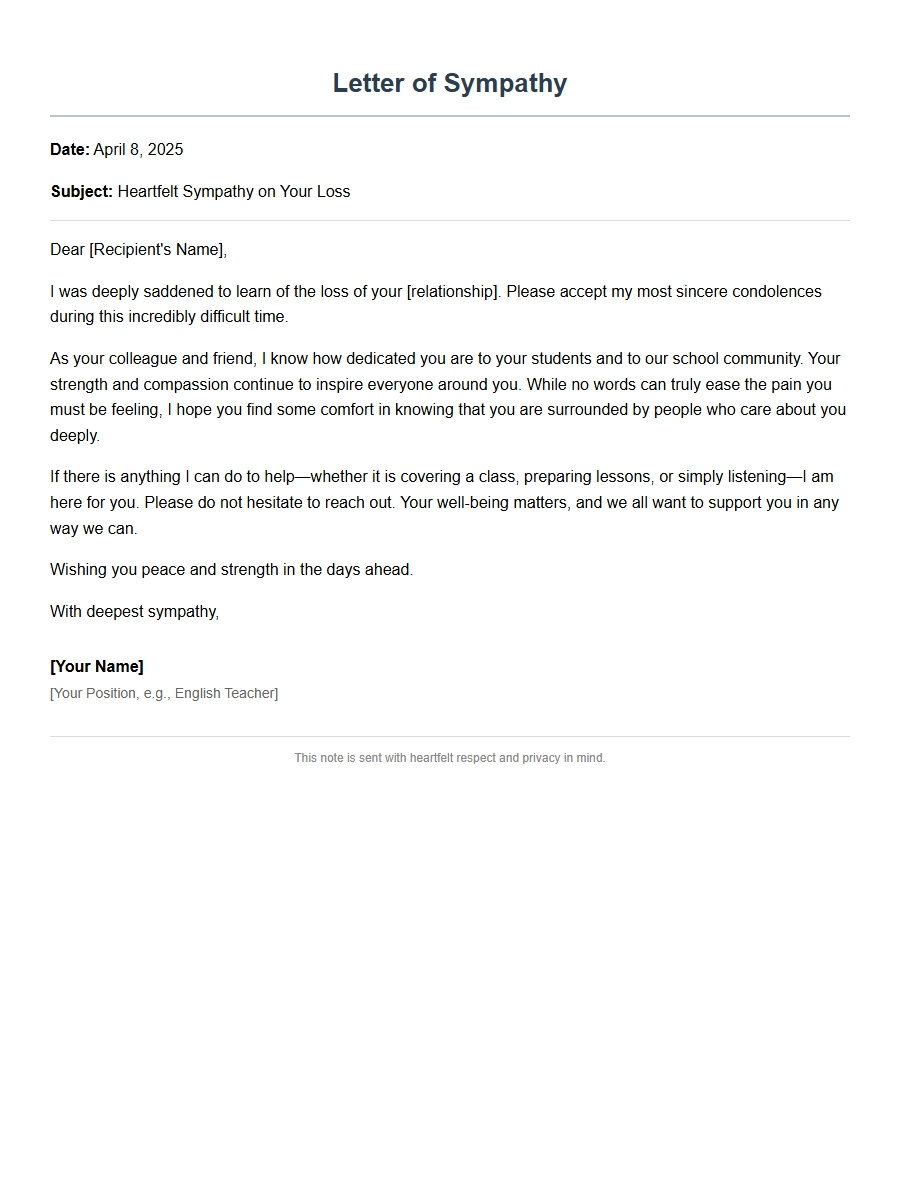 Condolence Words for a Teacher