You’re staring at a blank page, trying to find words for someone who just lost a loved one. Your mind goes blank. Every opening feels too stiff or too blunt. That’s completely normal—condolence letters are one of the hardest pieces of personal correspondence to start. But you don’t have to invent those first sentences from scratch. A well-chosen sample gives you a proven structure, the right tone, and key phrases while leaving plenty of room for your own voice.
Using a letter template isn’t cheating. It’s a smart time-saving strategy that professional writers use all the time. Think of it as a starting point. You take a solid framework, swap in your specific details, and adjust the language until it sounds like you. The result is a letter that feels both polished and personal—exactly what someone grieving needs to receive.
Category: Condolence Letters
Why the opening matters most
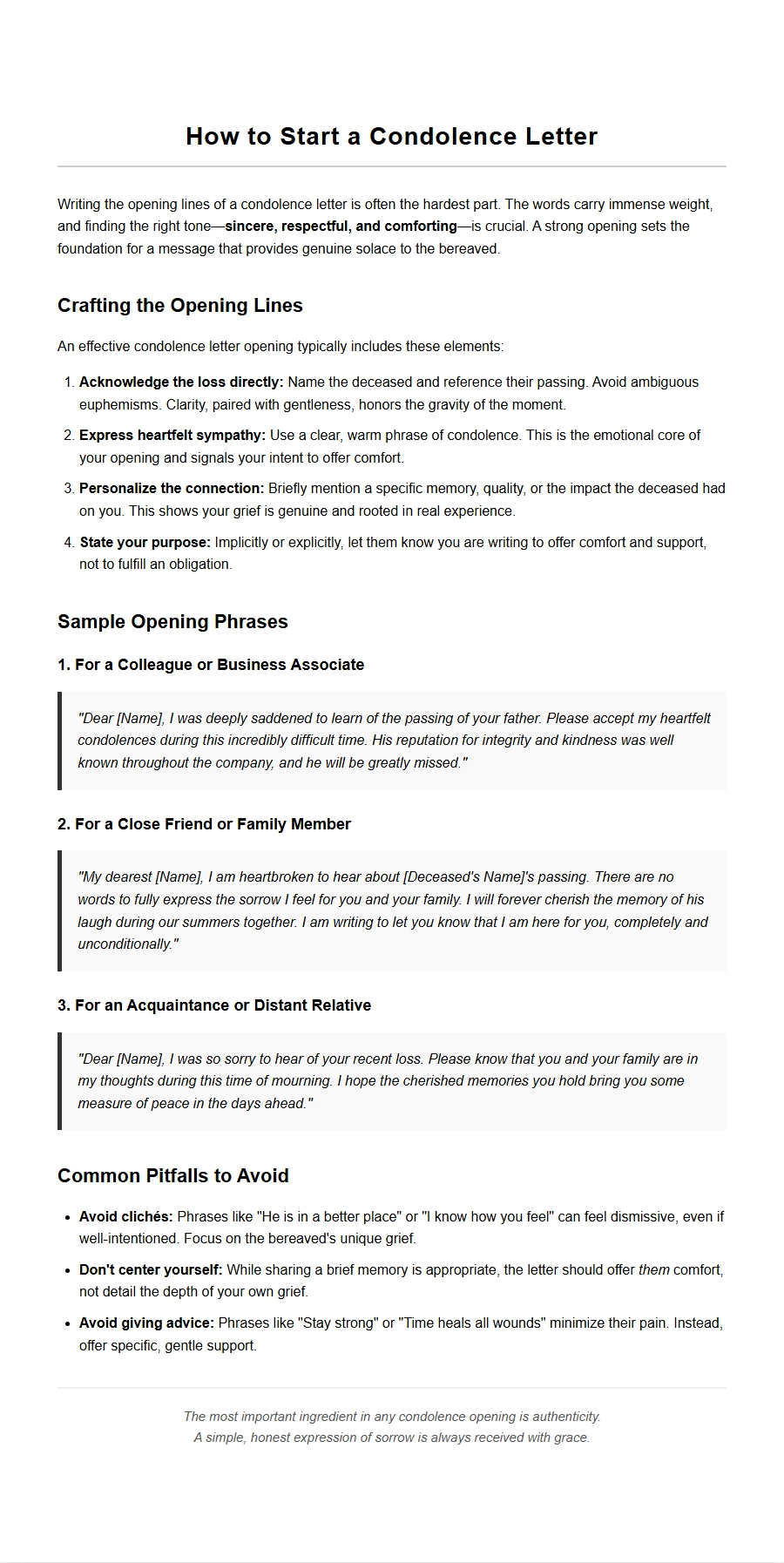
The first two or three sentences set the entire tone. Get them right, and the rest of the letter flows naturally. Get them wrong—too formal, too casual, too vague—and the reader may feel you’re reciting a script. A good condolence letter opening does two things: it acknowledges the loss clearly and it shows genuine empathy. For example, “I was so sorry to learn that your father passed away. I’ll always remember his kindness when I volunteered with you at the community center.” That’s specific, respectful, and personal.
Choose the right sample for your situation
Not all condolence letters are the same. The format and tone should match your relationship with the grieving person and the deceased. If you’re writing to an elderly parent, the closeness calls for a warmer tone. Our guide for sympathy letter to elderly parents walks you through phrases that acknowledge a long life while honoring deep grief. For a coworker, the relationship is professional but still personal. You might look at examples of sympathy emails for a grieving colleague for ideas on balancing formality with warmth.
When the deceased served in the military, the context carries unique customs and language that show respect for that service. Our page on condolences for military service member death covers appropriate wording and salutations. For a church member, the letter often includes shared faith and community memories. Use our sympathy letter format for church member to get the structure right. And if you’re honoring a late boss, keep it professional but sincere—our advice on how to write a tribute letter to late boss can help you strike that balance.
Adapt the sample without losing your voice
The best letter samples are like a scaffolding. They hold up the structure, but you fill in the walls. Start by reading the sample aloud. Does it sound like something you’d say? If a phrase feels too formal, rewrite it in your own words. For example, the sample might say “extend my deepest sympathies,” but you’d rather say “I’m so sorry for your loss.” That’s fine. The goal is to keep the structure—the opening, the memory, the offer of support, the closing—while using language that feels natural to you.
A common mistake is copying a sample word for word without personalizing it. The recipient can tell when a letter is generic. Add one specific memory or detail that shows you knew the person who died. That simple act transforms a template into a true letter of sympathy.
Tailor the opening paragraph to grab attention (gently)
In a condolence letter, “grabbing attention” doesn’t mean shocking or surprising. It means making the reader feel seen. Start by naming the loss directly, then share a brief personal connection or feeling. Avoid generic openings like “I was saddened to hear the news.” Instead, try “I learned about your mother’s passing from Sarah, and it brought back all those wonderful memories of her baking cookies for our book club.” The specificity shows you care enough to remember.
Watch out for common letter writing mistakes
Even with a sample, it’s easy to stumble on small but important details. One mistake is using outdated salutations like “To whom it may concern” in a condolence letter. Always address the recipient by name. Another is ignoring the format difference between a printed letter and an email. A printed letter traditionally uses your address and date at the top, plus a letterhead if it’s on company stationery. An email should have a clear subject line (e.g., “Thinking of you”) and a simpler opening. Digital letter format often skips the date and address, but still includes a proper salutation and closing.
Proofreading is non-negotiable. A typo in a condolence letter can feel careless, especially when tone in writing matters so much. Read the letter twice. Once for meaning, once for spelling and grammar. If possible, have someone else glance at it. A fresh pair of eyes catches awkward phrasing.
Use the sample as a springboard, not a crutch
The best condolence letters feel both professional and personal. A sample gives you the confidence to start, but your own words carry the real weight. With practice, you’ll find you rely less on templates and more on your instincts. Next time you need to write a sympathy note, you’ll know exactly how to begin: directly, honestly, and with a specific memory. That’s the kind of letter that brings comfort—and that’s what this is all about.
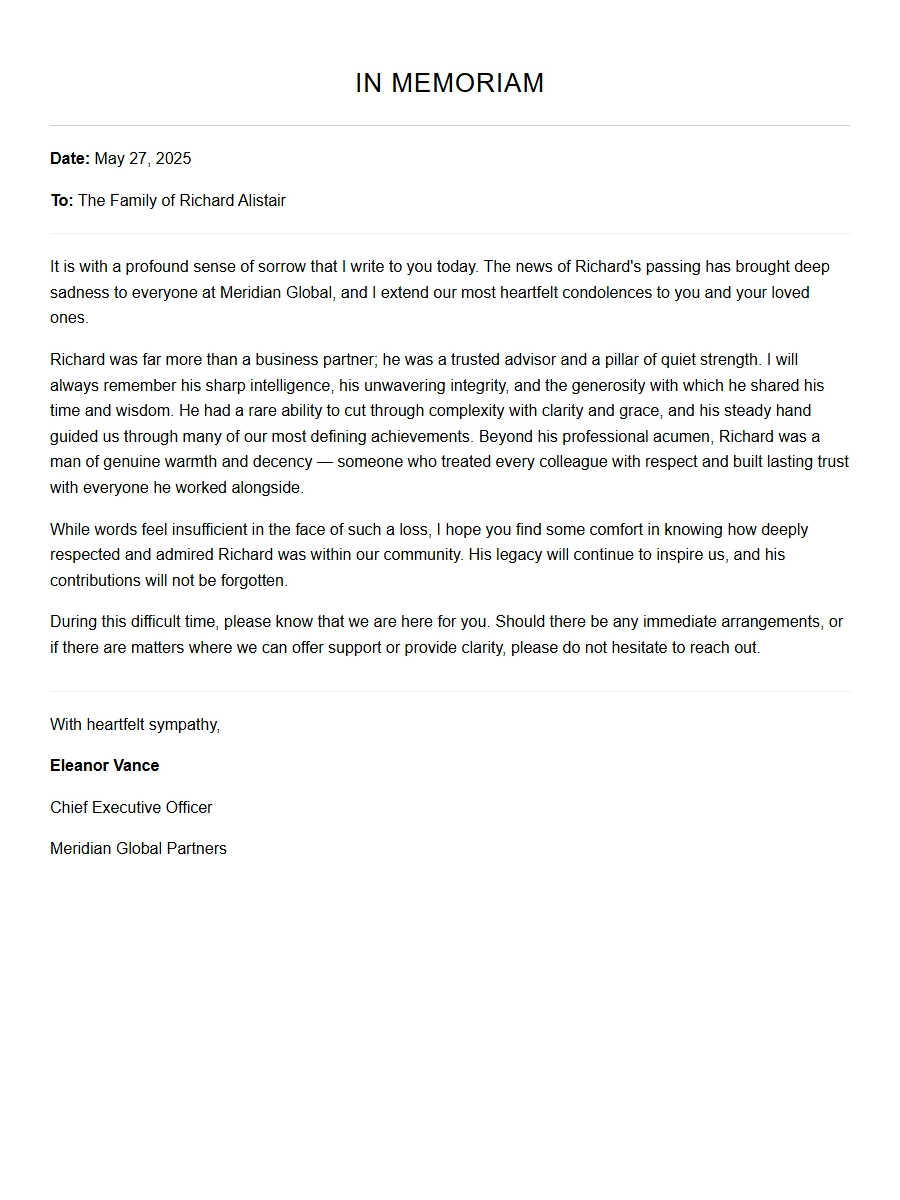 Formal Condolence Message for a Business Partner
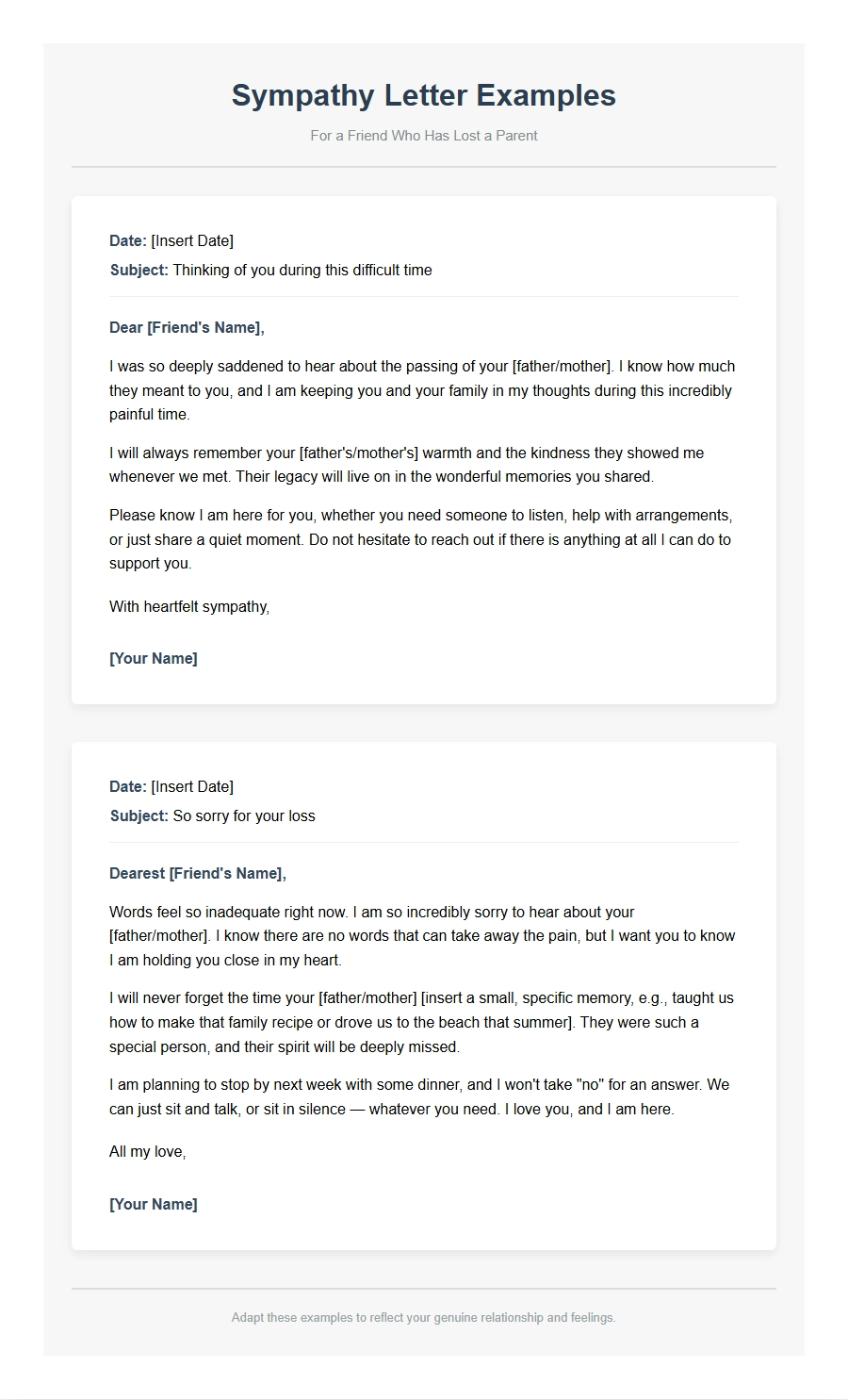 Sympathy Letter Examples for a Friend Who Lost a Parent
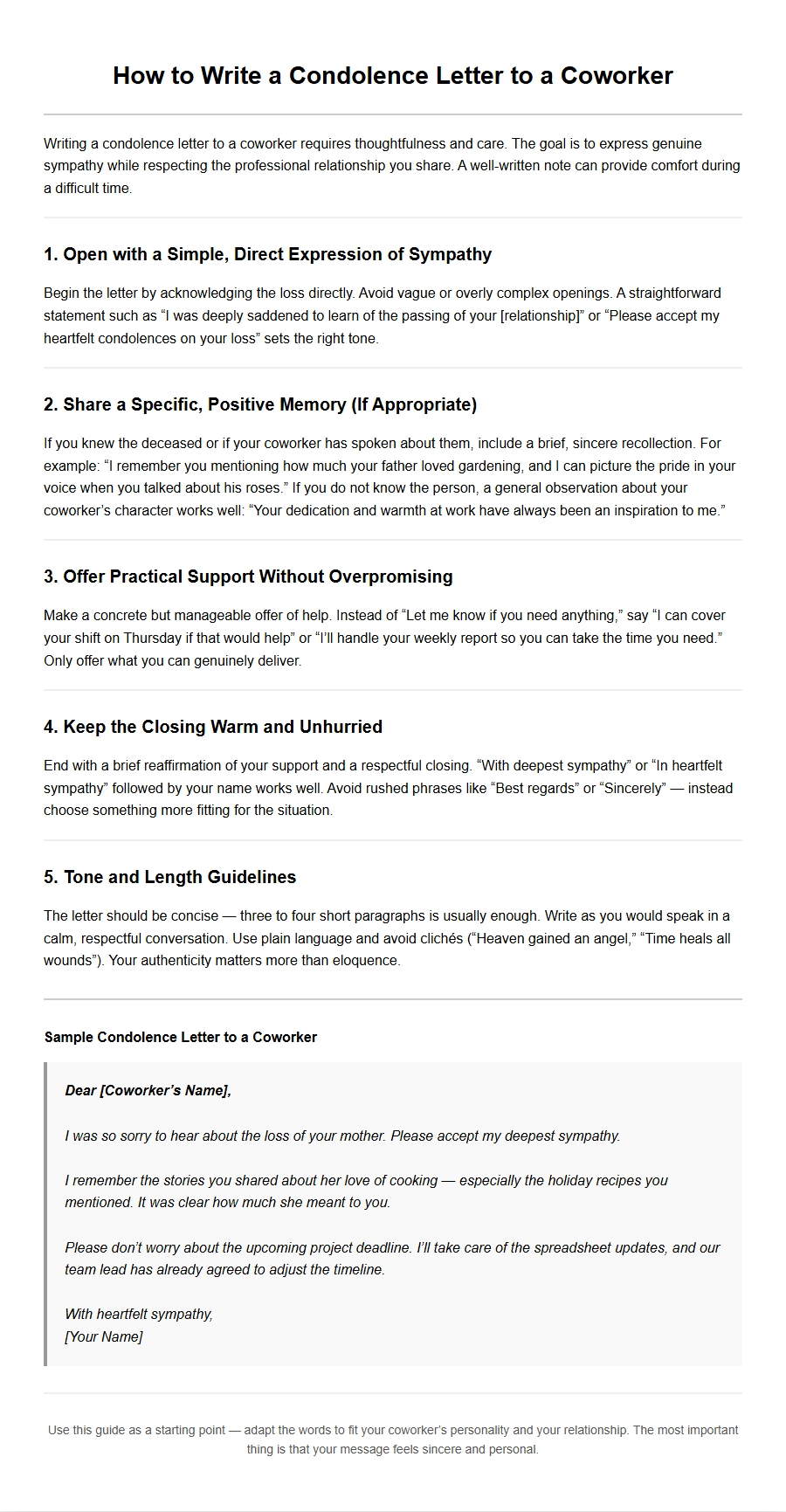 How to Write a Condolence Letter to a Coworker
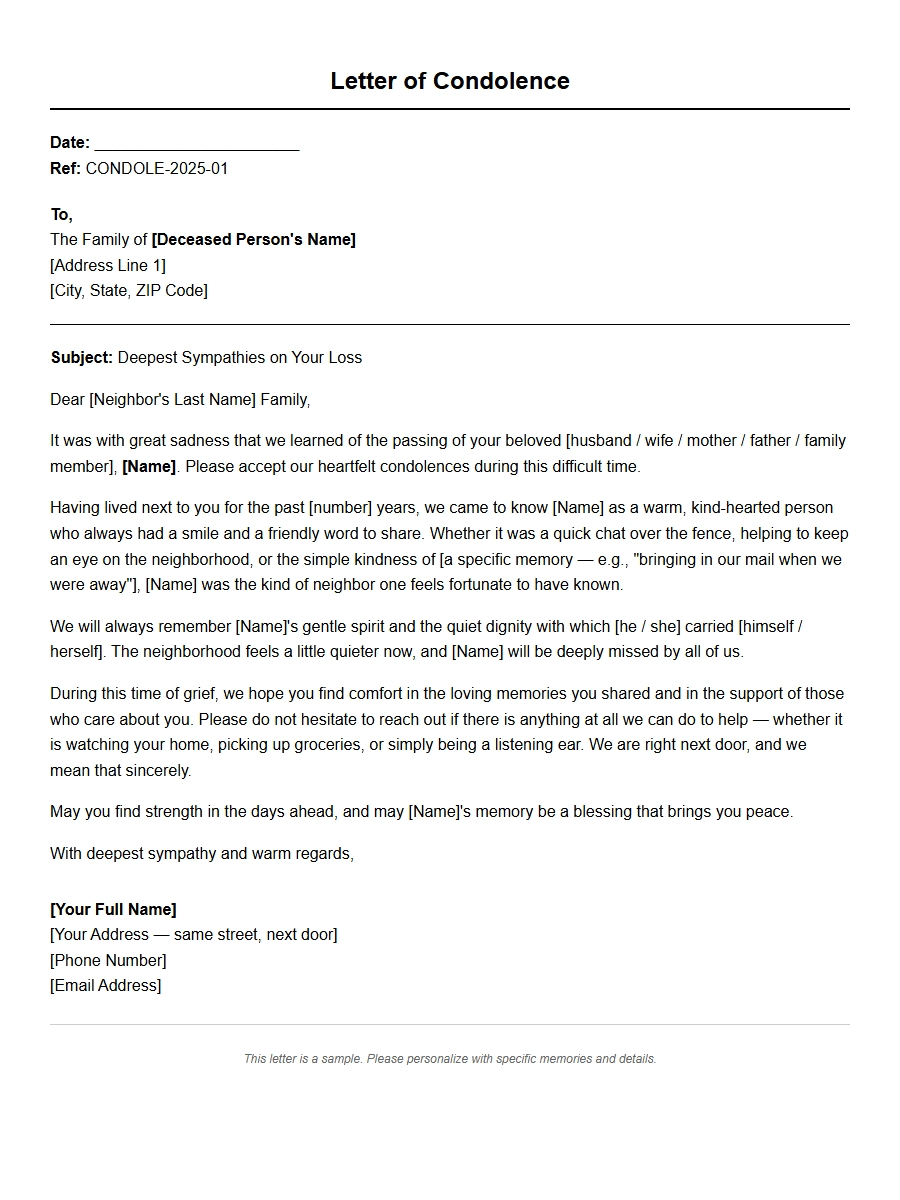 Condolence Letter Sample for a Neighbor
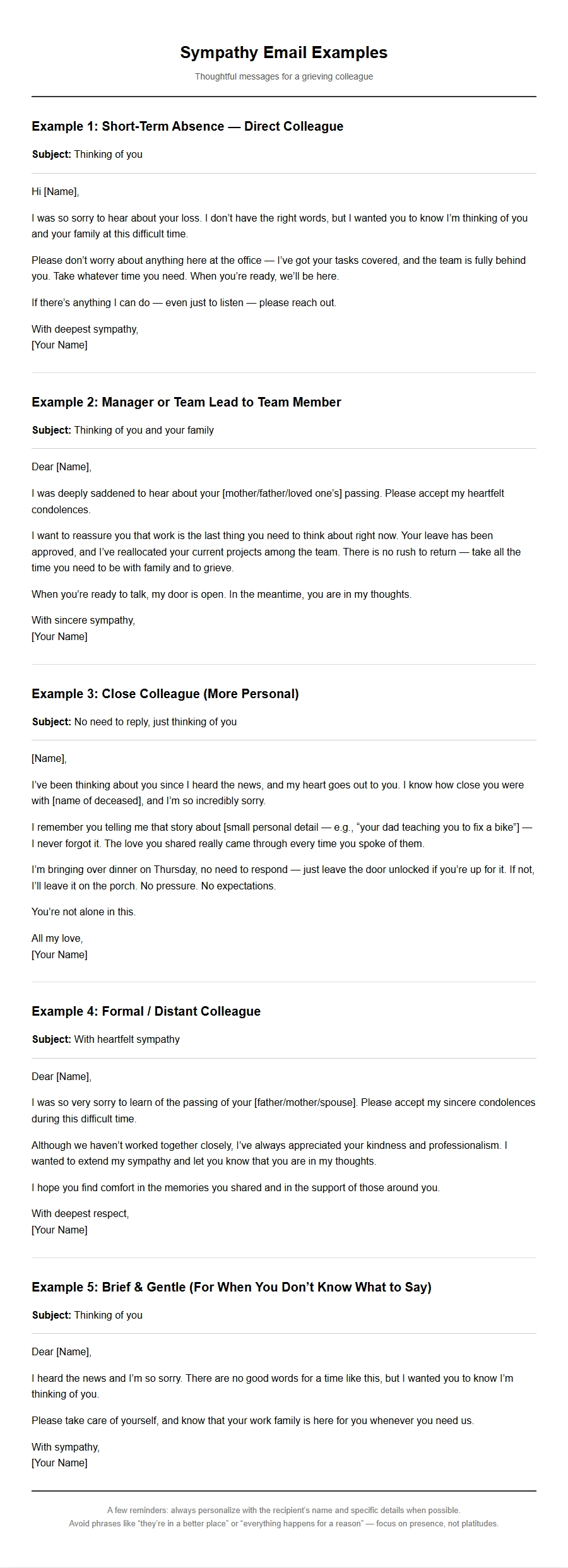 Sympathy Email Examples for a Grieving Colleague
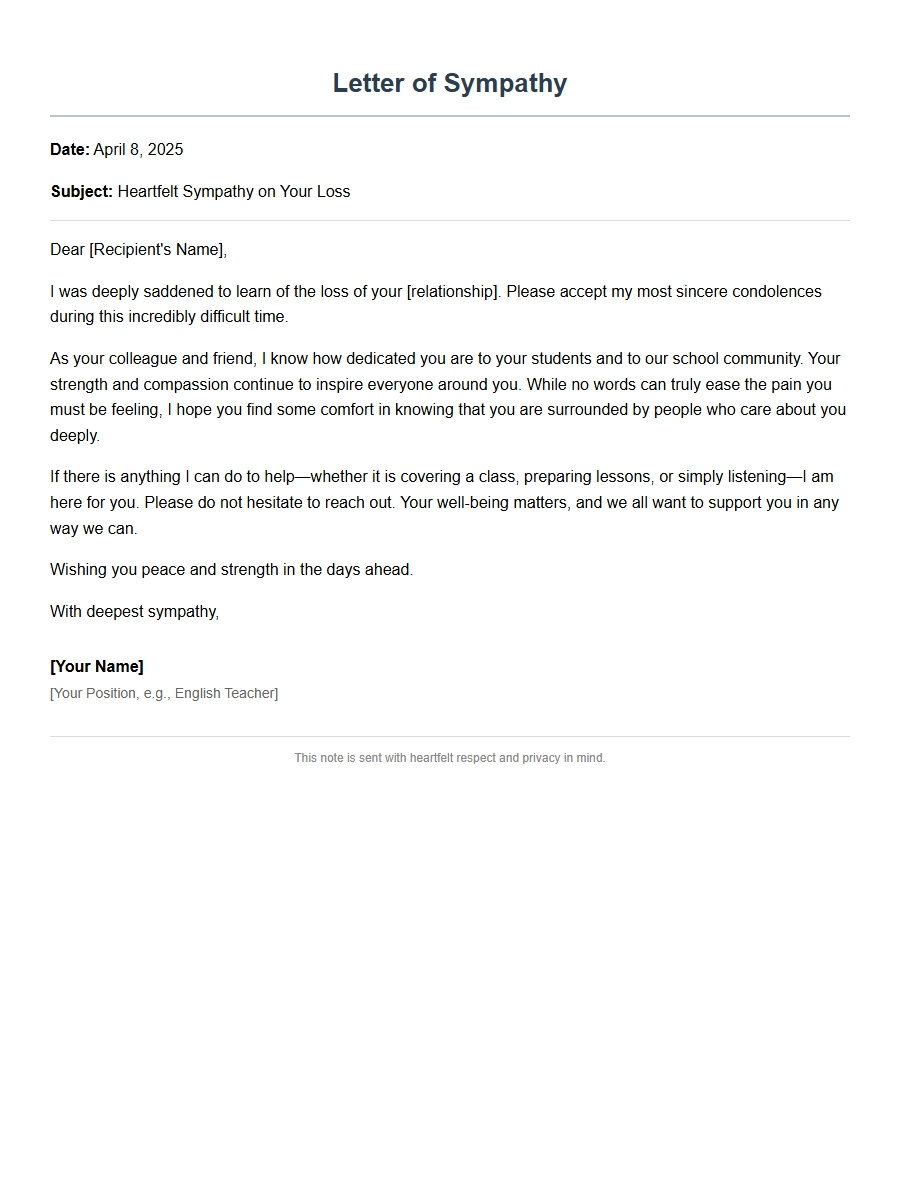 Condolence Words for a Teacher