Finding the Right Closing Sentiments for Sympathy Cards
You’ve chosen the right words for the body of your sympathy card, and now you’re staring at the blank space before your signature. That closing line can feel heavier than it should. A warm closing sentence for a sympathy card does more than end the message — it leaves the reader with a final feeling of comfort and respect.
What makes a closing sentence work?
A strong closing matches the tone you’ve already set. If your message was personal and heartfelt, don’t switch to stiff formality. If you kept it brief and respectful, your closing should mirror that. The goal is to reinforce your care without adding pressure on the grieving person to respond.
Here’s the thing: there’s no single “right” closing. What works for a close friend might feel too intimate for a coworker. And what fits a bereaved parent may not suit someone who lost a neighbor. That’s where having a few go-to options — and knowing how to tweak them — makes all the difference.
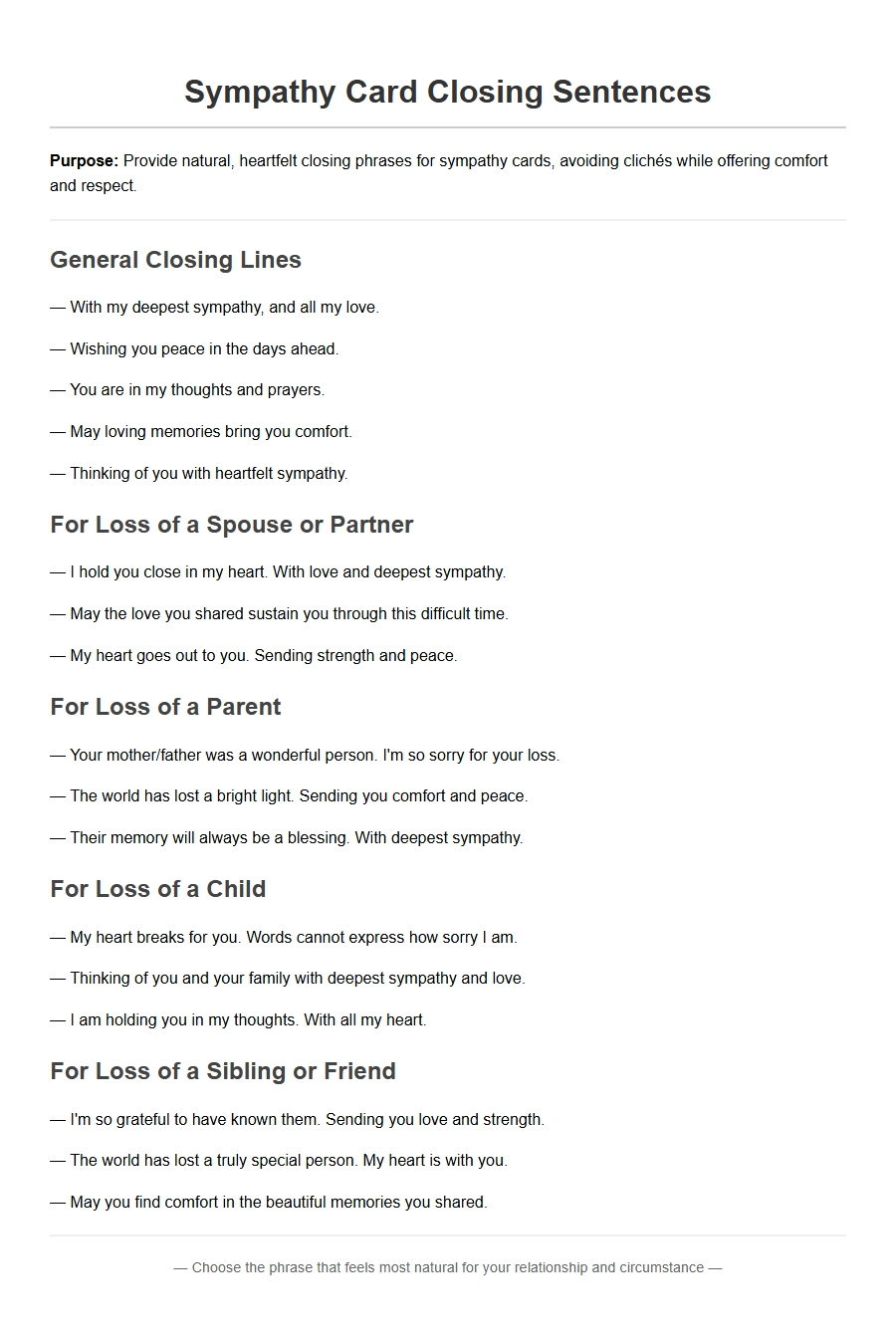
Simple, sincere closing phrases
Sometimes the simplest words carry the most weight. Closings like “With deepest sympathy”, “Thinking of you”, or “With love and remembrance” are classic because they’re honest. They don’t try to fix anything. They just show you’re present.
For a slightly more personal touch, try adding a brief thought: “Wishing you peace in the days ahead” or “May you find comfort in your memories.” These work well because they look forward without dismissing the pain.
Matching the closing to your relationship
The distance between you and the recipient matters. For a formal colleague or acquaintance, stick with “With sincere condolences” or “Respectfully yours.” For a close friend or family member, you can say “All my love” or “I’m here for you always.” Notice how the tone shifts naturally — that’s what makes a closing feel genuine.
A common mistake is using the same closing for every card. An overly formal sign-off can feel cold to a grieving sibling. A too-casual one can seem dismissive to a bereaved parent. Think about your specific reader and what they need to hear from you right now.
What to avoid in a sympathy card closing
Avoid lines that sound like a to-do list: “Take care” or “Let me know if you need anything.” Those can feel empty or burden the recipient. Also skip vague religious phrases if you’re not sure of the person’s beliefs — unless you already know they share your faith. If you do want to include faith, it’s worth reading how to mention religion in a condolence letter gracefully.
Adapting a sample without losing your voice
It’s not cheating to use a sample closing. The best writers borrow structure and personalize the emotion. Start with a condolence letter sample for a neighbor or another situation that’s close to yours. Then swap out the generic words for specific memories or qualities you admired about the deceased. Keep the rhythm, make it yours.
For example, a sample might say “With heartfelt sympathy.” You could change it to “With heartfelt sympathy for your loss of John, a man who always made time to listen.” That small addition turns a template into a personal note.
If you’re writing for someone who lost a patient, like a hospice professional, the approach shifts slightly. You want to acknowledge the caregiver’s role too. A closing like “With gratitude for the comfort you provided” works well. For more on that, see writing comfort letters for a recently departed patient.
Formatting and final details
Practical matters matter. If you’re handwriting the card, leave enough space so the closing doesn’t feel crammed. For a digital message, keep the closing on its own line. Always proofread — a misspelled name in a signature erodes the warmth you’ve just built.
And remember the bigger picture: your closing is the last thing they read. A thoughtful sentence — even a short one — can sit with them long after the card is put away. It’s not about being clever. It’s about being human.
When in doubt, revisit a closing sentence for sympathy cards that felt right in a similar situation. You can also explore more closing sentences for sympathy cards to find the exact words. Over time, you’ll learn which tones fit different relationships — and the process will feel less daunting.
For survivors of a suicide loss, the closing needs extra gentleness. Avoid platitudes. Something like “I am holding you in my thoughts with tenderness” can be more appropriate. If you need guidance, check sympathy messages for suicide loss survivors.
Your closing is a small but powerful part of your message. Use it to reflect the care you’ve already shown in your words. The right ending lets the recipient feel seen, not alone — and that’s the whole point.
Practical Writing Samples
Finding the Right Closing Sentiments for Sympathy Cards
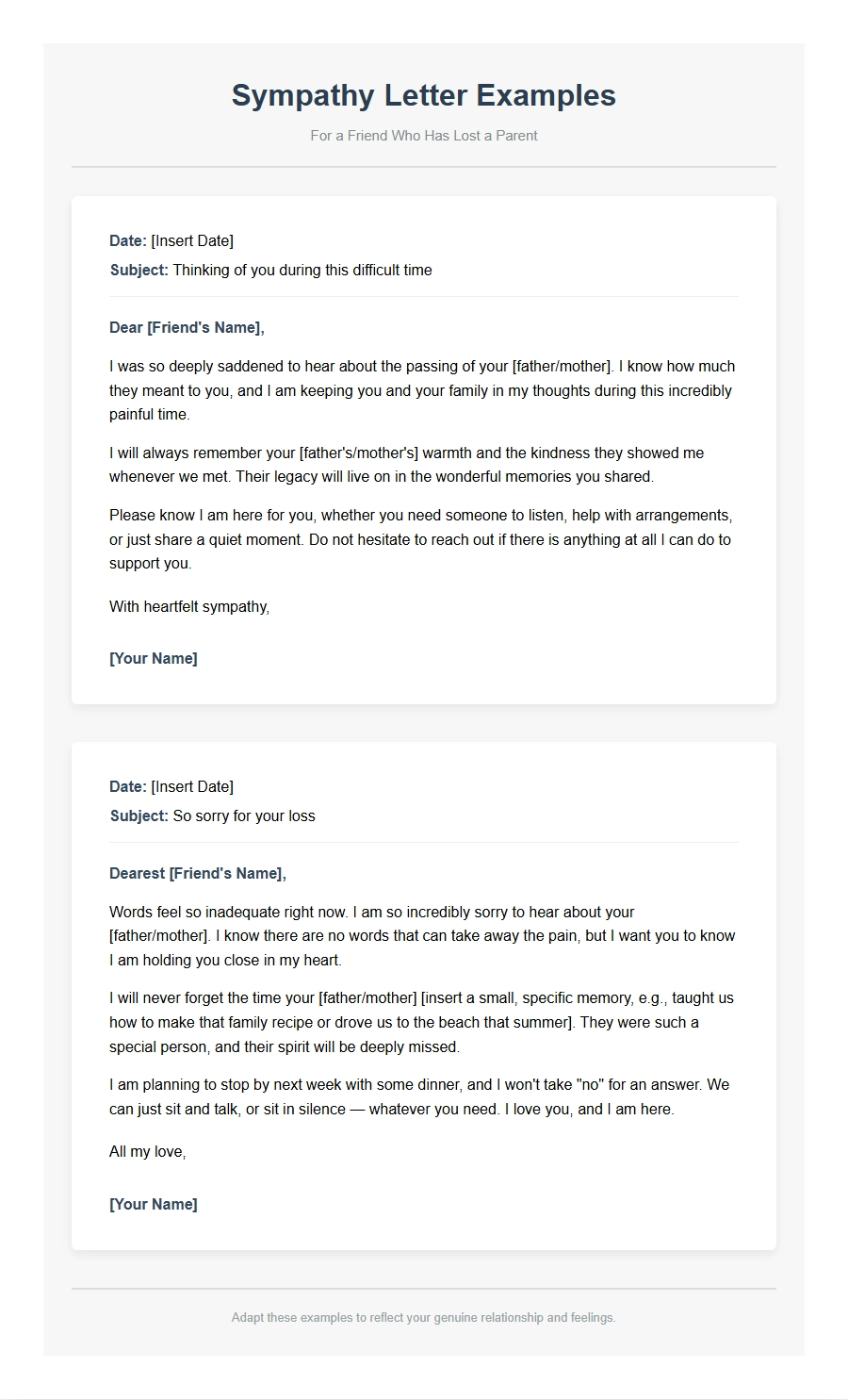
Closing for a Close Friend
When writing a condolence letter to a close friend, the closing should reflect your deep bond and personal loss. It is important to convey that you are there for them beyond the letter. Consider these closing sentences:
"With all my love and deepest sympathy, I am here for you always."
"Thinking of you with a heavy heart, and sending you strength every step of the way."
"May the memories of your loved one bring you comfort. With enduring friendship and sympathy."
You might also add a postscript offering specific help, such as: "Please call me anytime—I mean it." The goal is to leave no doubt about your unwavering support.
Professional Closing for a Colleague
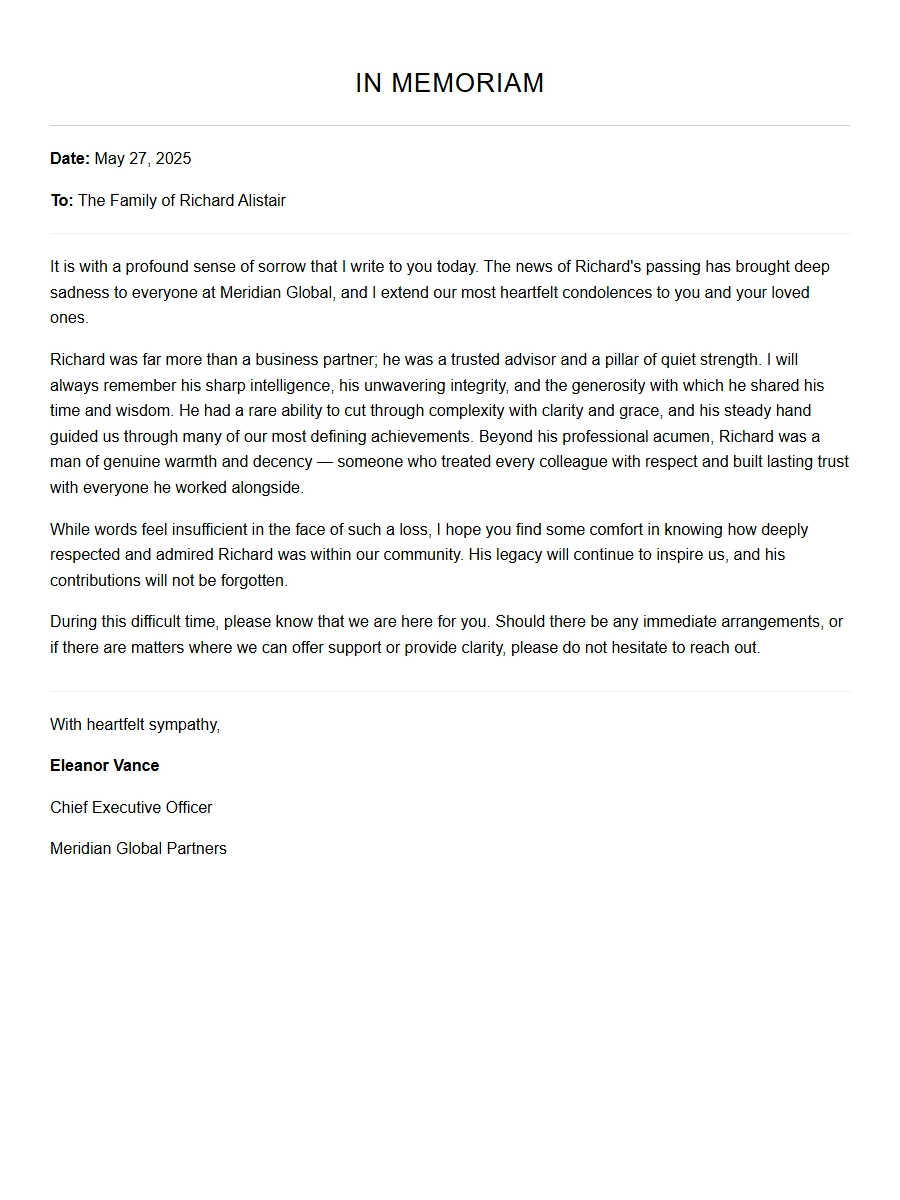
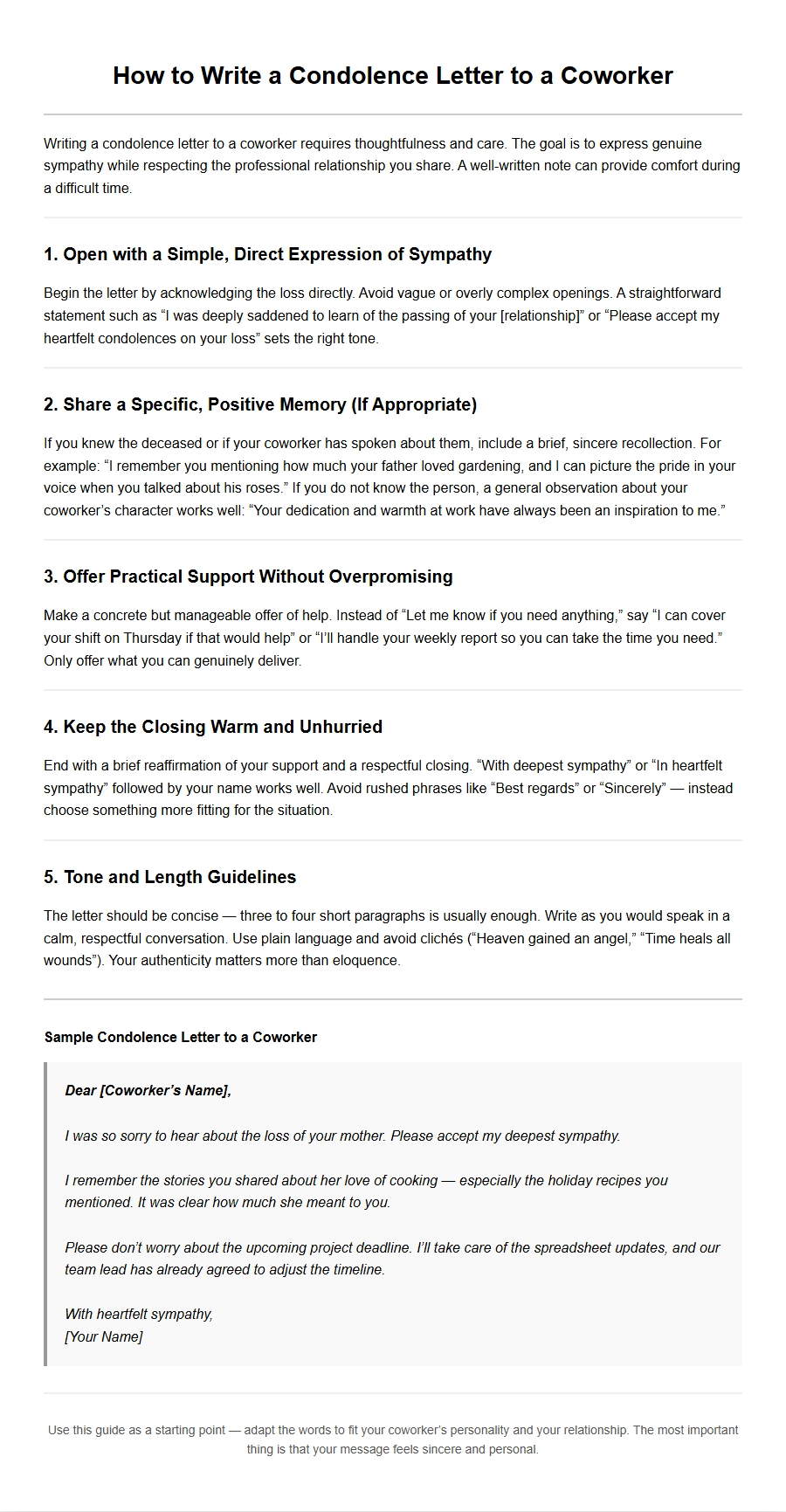
In a professional condolence letter to a colleague or business associate, the closing should be respectful and restrained while still showing genuine care. Use phrases that acknowledge the loss without overstepping workplace boundaries. Suggested closings:
"Please accept my heartfelt condolences during this difficult time."
"With sincere sympathy and respect for your loss."
"Our team extends our deepest sympathies to you and your family."
These closings work well when followed by a brief note about taking time off or that work matters are handled. Keep the tone warm but professional, avoiding overly personal endearments.
Closing for a Loss of a Parent
When grieving the loss of a parent, the closing should honor the unique relationship and the role the parent played. Use lines that acknowledge both the parent's importance and the child's grief. Examples:
"May your father's legacy of kindness live on in you. With deepest sympathy."
"Your mother was a remarkable woman, and her love remains with you always. Thinking of you."
"Holding you close in thought as you navigate this profound loss. With love and sympathy."
You can also include a brief memory of the parent if appropriate. The closing should feel like a gentle embrace, acknowledging the life that was lived and the strength of the griever.
Religious Closing for a Believer
For recipients who are people of faith, a closing that invokes spiritual comfort can be deeply meaningful. Choose phrases that align with their beliefs. Here are some options:
"May God's peace that surpasses all understanding be with you and your family."
"Praying for you as you rest in the arms of the Lord during this time."
"In the sure hope of resurrection, we send our deepest sympathy and love."
You might also include a brief scripture reference (e.g., Psalm 34:18) but keep it within the closing sentence. Avoid overloading with religious language if you are unsure of the person's specific denomination. The key is to offer comfort grounded in shared faith.
Closing for a Loss of a Spouse
The loss of a spouse is one of the most devastating losses. The closing of a condolence letter should acknowledge the depth of the partnership and the loneliness ahead. Consider these sentences:
"I cannot imagine the depth of your loss. May you find moments of peace amidst the sorrow."
"Your love story will always be a beautiful example. Sending you strength and sympathy."
"With heartfelt sympathy for the loss of your beloved partner. I am here for you."
It can be helpful to add a line about honoring the spouse's memory, such as: "May the cherished memories you built together sustain you." Avoid platitudes like "he/she is in a better place" unless you know that belief is shared.
Short and Simple Closing
Some occasions call for a brief yet meaningful closing. These are suitable for sympathy cards where space is limited or when you want to keep the message simple. Examples:
Situation
Closing Sentence
General
"With deepest sympathy and love."
Acquaintance
"Thinking of you with heartfelt sympathy."
Colleague
"Please accept our sincere condolences."
Family friend
"With love and remembrance."
These short closings work well when the letter itself is longer, or when writing to someone you don't know intimately. They leave a gentle impression without becoming verbose.
Closing for a Loss of a Child
Losing a child is an unimaginable tragedy. The closing of a condolence letter must be exceptionally tender and devoid of any attempt to explain or rationalize. Use language that simply acknowledges the pain and offers presence. Suggested closings:
"No words can ease your pain, but please know I am holding you in my heart."
"Your angel will never be forgotten. With deepest sympathy and love."
"I am so sorry for your loss. I am here to listen whenever you need."
You may include a quote about the strength of a parent's love, but keep it brief. Avoid saying "time heals"—instead, focus on your ongoing support. End with a simple, heartfelt farewell.
Closing for a Distant Acquaintance
When you know the bereaved only distantly, the closing should be polite and respectful without implying a closeness that doesn't exist. Use these options:
"With sincere sympathy and warm regards."
"May you find strength in the support of those around you. Sincerely, [Your Name]."
"Please accept my condolences on your recent loss. With respect."
These closings are appropriate for someone like a neighbor, a casual work contact, or a friend of a friend. They convey care without overstepping. You might add a short sentence expressing hope they are surrounded by comfort, but keep it general.
Closing That Offers Ongoing Support
Sometimes the most comforting closing is one that explicitly promises continued presence and help. These sentences go beyond the card and invite the bereaved to reach out. Examples:
"I will check in on you again next week. With love and support."
"Please let me know if I can watch the kids, bring a meal, or just sit with you. Thinking of you."
"You are not alone in this. I am only a phone call away. With deepest sympathy."
It's important to follow through on such promises. If you cannot actually provide the support you offer, choose a different closing. The tone should be gentle and sincere, not overwhelming.
Closing for a Cultural or Non-Religious Context
For individuals who do not hold religious beliefs or who come from a non-Western cultural background, the closing should be universal and respectful. Focus on human connection and the value of the life lived. Suggestions:
"May the love of those around you bring you comfort. With heartfelt sympathy."
"Your loved one's spirit will live on in the hearts they touched. Thinking of you."
"I share in your sorrow and send you peace."
You can also acknowledge cultural practices if known, such as a wish for the ancestors' blessing or a reference to the circle of life. Avoid any mention of heaven, God, or afterlife unless you know they are welcome. Keep the closing grounded in the present moment of grief.
 Formal Condolence Message for a Business Partner
 Sympathy Letter Examples for a Friend Who Lost a Parent
 How to Write a Condolence Letter to a Coworker
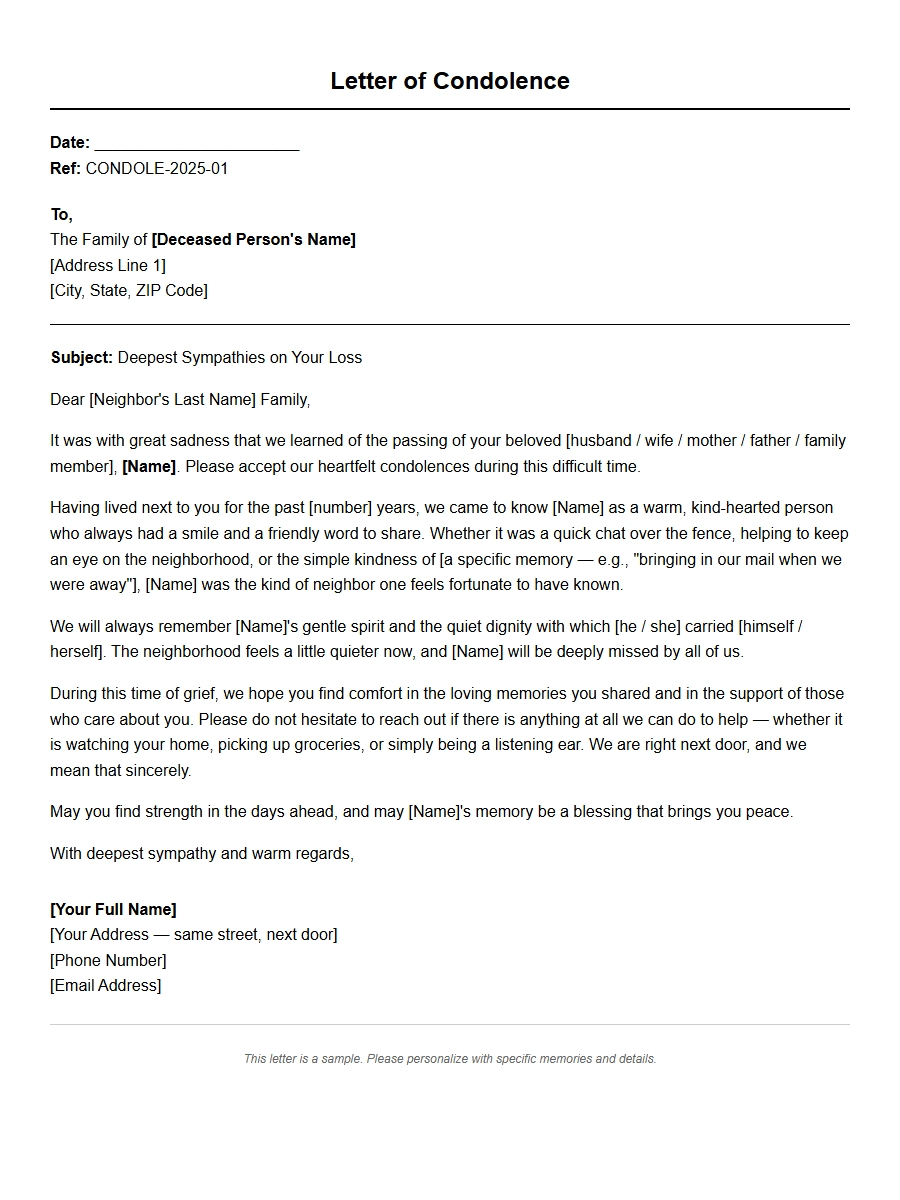 Condolence Letter Sample for a Neighbor
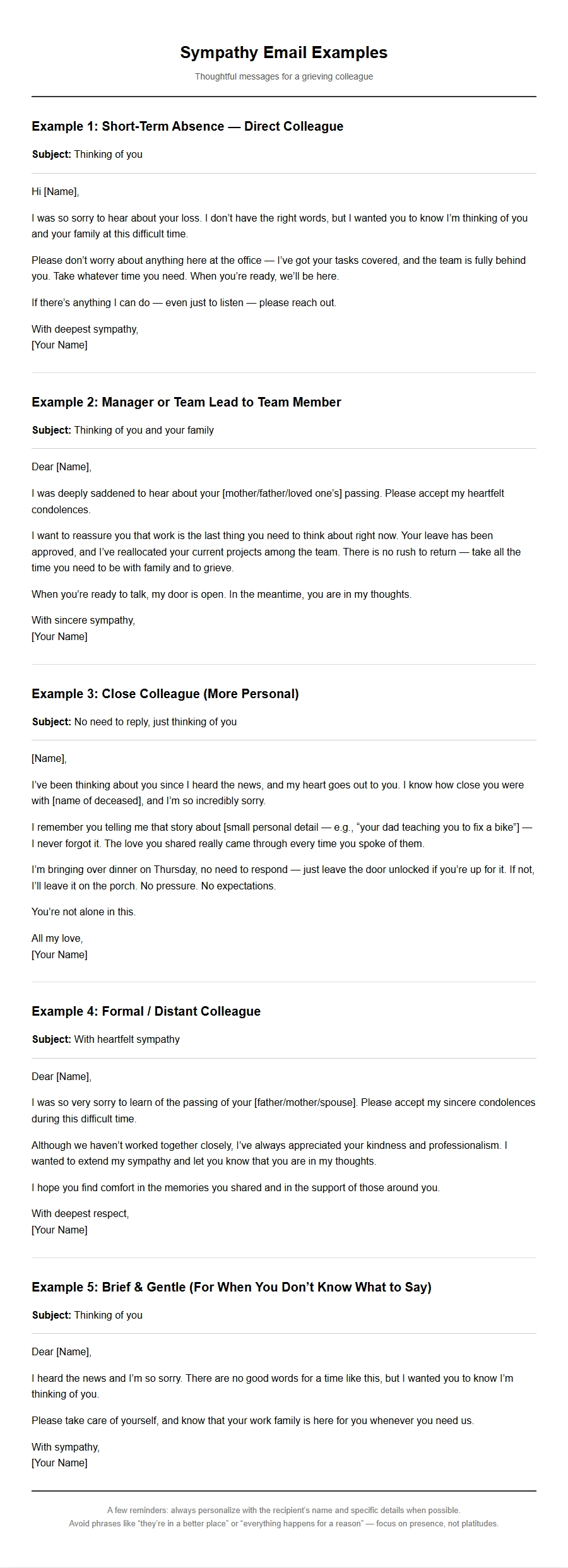 Sympathy Email Examples for a Grieving Colleague
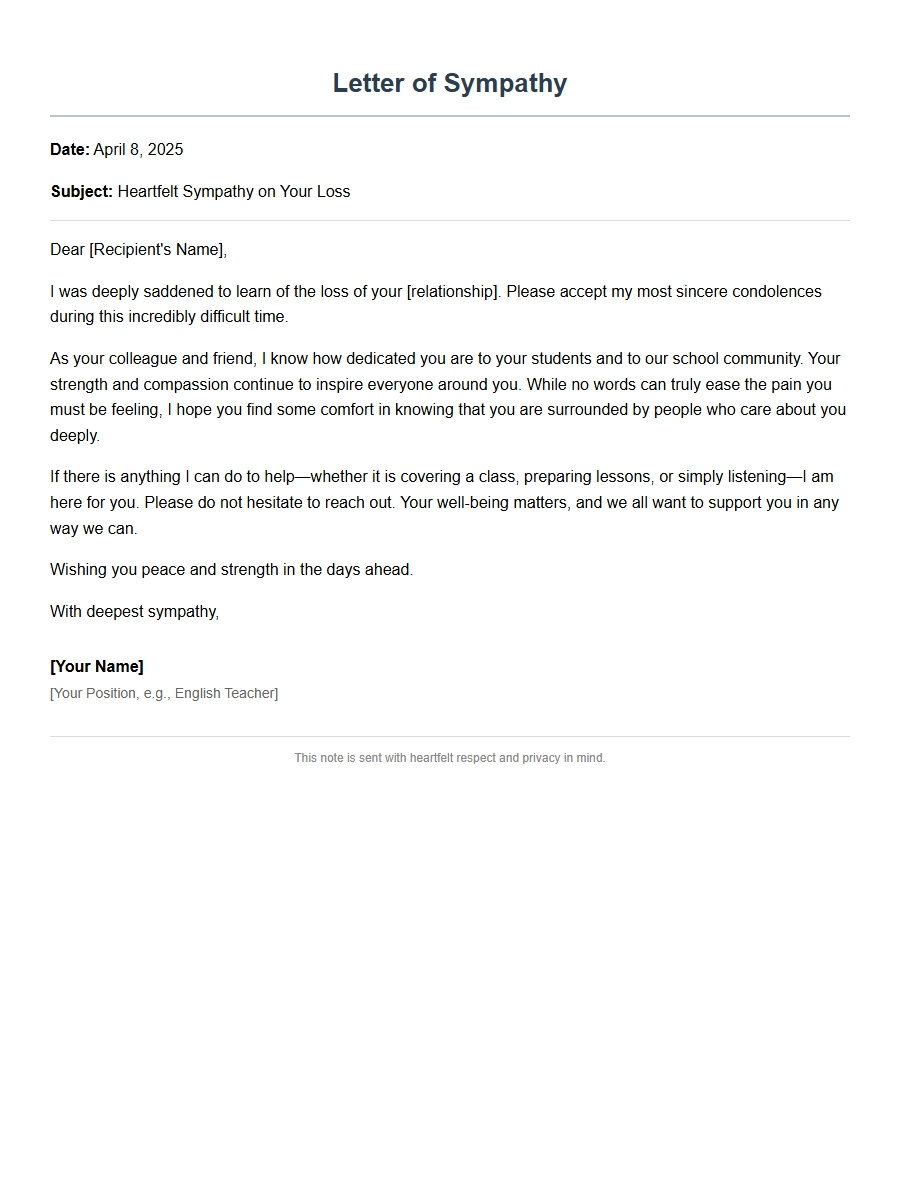 Condolence Words for a Teacher