Staring at a blank screen when you need to write a condolence letter to a grieving spouse is one of the hardest things you’ll ever do. You want to say something meaningful, but every word feels too small or too clumsy. That paralysis is normal. It’s also avoidable.
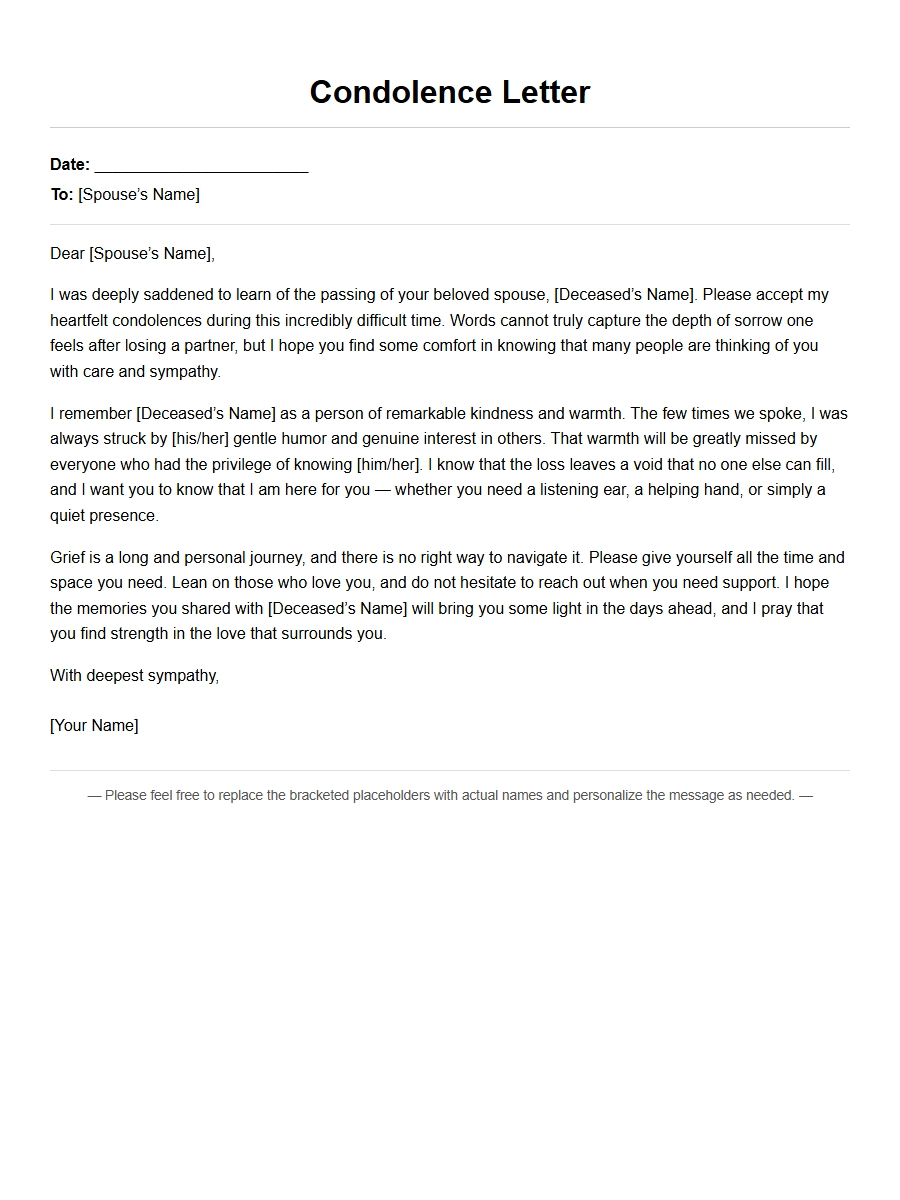
You don’t need to invent the perfect sentence from scratch. A good sample gives you a structure and a tone that’s already respectful. Using one isn’t cheating. It’s a smart way to get past the fear of saying the wrong thing so you can focus on what actually matters: your personal message. A letter template handles the business letter format and the salutation and closing, leaving you free to write something that sounds like you.
A condolence letter to a spouse is a form of professional correspondence, even if it feels deeply personal. The spouse is, in many ways, the CEO of the household. They’re suddenly handling everything alone. Your letter should acknowledge that weight without adding to it. This is where tone in writing becomes critical. You need warmth without sentimentality, and support without commands like “stay strong.”
What to actually say to a grieving spouse
Start by naming the loss directly. “I was so sorry to hear about Tom’s passing.” That’s it. Don’t dance around it with euphemisms like “passed on” or “lost her battle.” A spouse has heard those phrases a dozen times already. Directness honors the reality of their grief.
Then, share a specific memory. “I’ll never forget the way Tom helped me fix my fence that summer. He showed up without being asked and stayed until it was done.” A concrete memory is worth more than a dozen generic compliments. It tells the spouse that their loved one mattered to others, too. If you don’t have a memory, say something honest like, “I only met Susan a few times, but her kindness at the office party stayed with me.”
Offer practical, low-pressure support. Instead of “let me know if you need anything,” try something specific: “I’m dropping off dinner on Tuesday—I’ll leave it on the porch.” Or, “I can walk your dog on Thursdays for the next month.” A grieving spouse is often too overwhelmed to ask for help. Specific offers remove that burden.
Mistakes to avoid: Don’t compare their loss to someone else’s. Don’t say “you’re so strong” or “he’s in a better place.” These examples of brief condolence statements can feel dismissive. Also, avoid long apologies for any past disagreements or unfinished business. If you need to apologize, that’s a separate conversation—not something to mix into a condolence letter.
If the death was sudden or the spouse missed the funeral, you’ll want to address that gently. Read our advice on how to apologize for missing a funeral via letter without making the apology the main focus of the message.
How to tailor the letter to your relationship and format
Your relationship with the spouse determines the letter structure. If you’re a close friend or family member, a handwritten note is best. If you’re a colleague, manager, or business associate, a typed letter on plain paper or letterhead design is appropriate. The tone should match: formal but warm for a work relationship, more personal for a friend.
For an executive or someone you report to, the professional greeting for executive bereavement team condolence letters starts with “Dear [Name],” and keeps the opening direct. You can express your condolences without overstating your closeness. A simple “I was deeply saddened to hear about your loss” works well. Then share how their spouse’s work or presence was valued.
If you’re writing to a step-sibling who lost their spouse, the dynamic can be complicated. Our guide on condolence letter for step sibling loss offers phrasing that acknowledges the relationship without forcing a closeness that isn’t there.
Always include your return address and a clear signature. If you’re sending a digital letter format via email, keep the subject line simple: “With sympathy for your loss.” Avoid attachments—paste the letter into the body of the email. Printed letters should be mailed, not slipped under a door. Spouses often keep these letters, and the physical act of receiving mail matters.
Common pitfalls with formatting and proofreading
Don’t use outdated salutations like “To whom it may concern.” You know who you’re writing to. Use their name. For the closing, “With deepest sympathy,” “With love and sympathy,” or “Yours sincerely” are safe choices. Avoid “Sincerely yours” in a condolence letter—it sounds transactional.
Proofreading your letter is essential before sending it. A typo might feel minor to you, but to someone in shock or grief, it can read as careless. Read it out loud. Check for run-on sentences. Ask someone else to glance at it if you’re unsure. This is not the time for creative formatting or unusual fonts. Stick to a standard font like Times New Roman or Garamond, size 12.
If you’re unsure about the overall structure, review our best practices for sending condolence letters. That page covers timing, how to sign on behalf of a group, and what to do if you don’t have the spouse’s home address.
Use the sample, but make it yours
Templates save you time and reduce anxiety. But the best letters feel personal. Take the cover letter examples or resignation letter sample you might use at work—they give you a framework, not a script. Treat a condolence sample the same way. Swap out generic phrases for your own. Change “he was a great man” to “he was the guy who always made sure everyone had coffee.” That small shift turns a form letter into a genuine tribute.
Think of the letter writing etiquette here: you are offering comfort, not completing a task. A perfectly formatted letter that sounds robotic is worse than a slightly messy note that feels real. Prioritize honesty over polish.
Writing to a spouse who has lost their partner is hard. It will never feel easy. But a sample gives you a starting point, and your own memory or observation gives the letter its soul. Start with the structure, add your voice, and send it. That act alone—sitting down, writing it, mailing it—is a kindness the spouse will remember.
You don’t need to get it perfect. You just need to do it. The spouse will appreciate the effort more than the eloquence. Once it’s in the mail, you can stop worrying about whether it was enough. It is. Because you showed up.
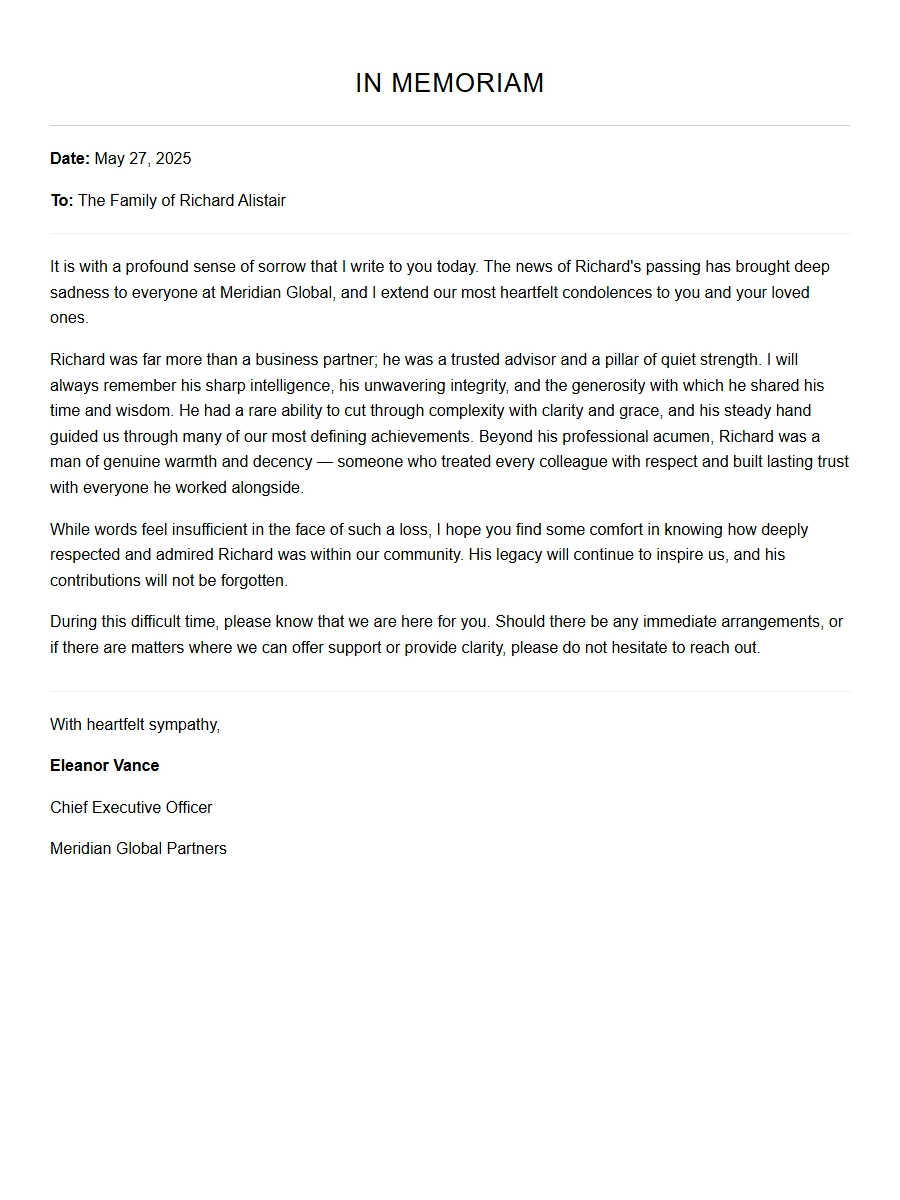 Formal Condolence Message for a Business Partner
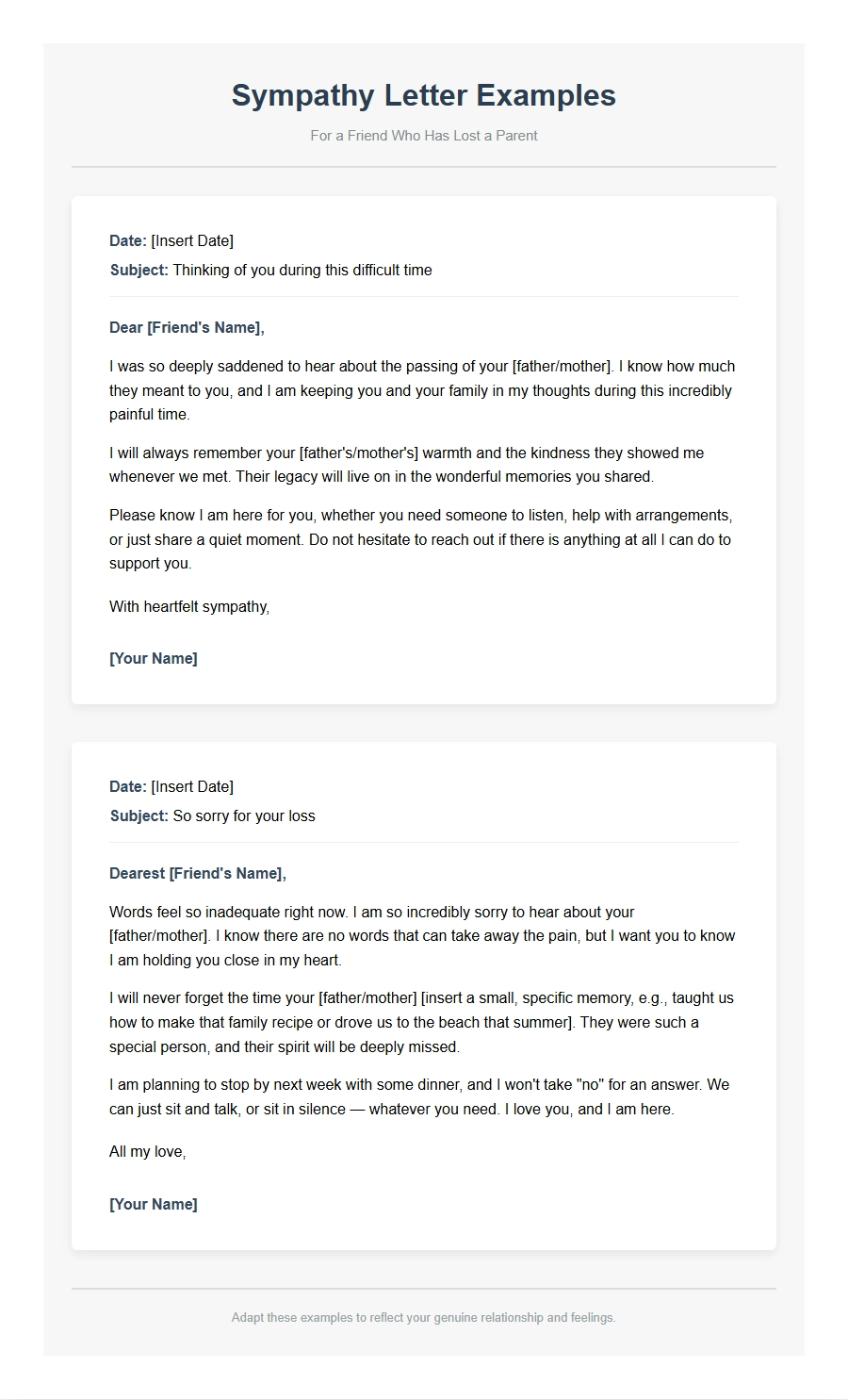 Sympathy Letter Examples for a Friend Who Lost a Parent
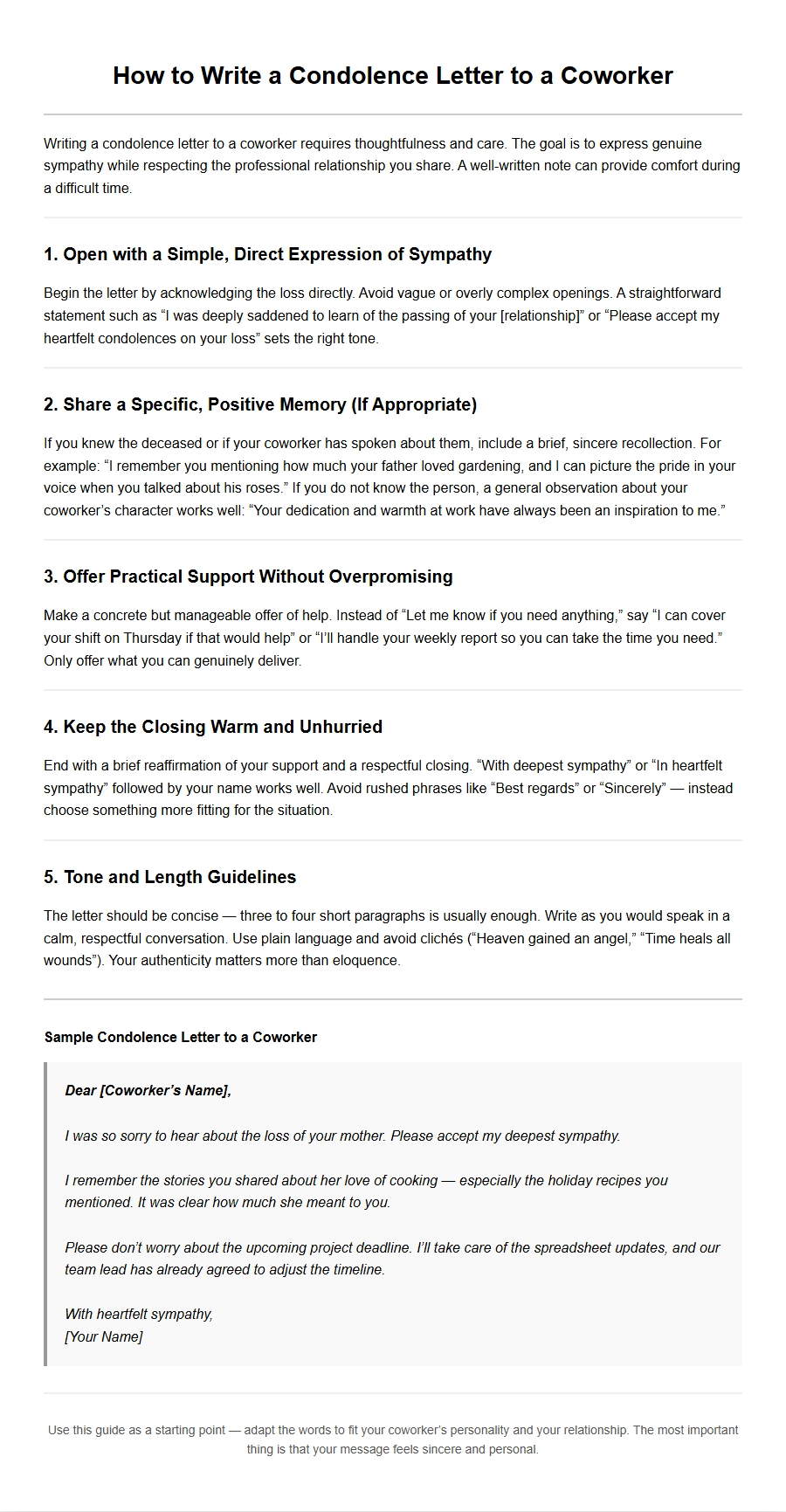 How to Write a Condolence Letter to a Coworker
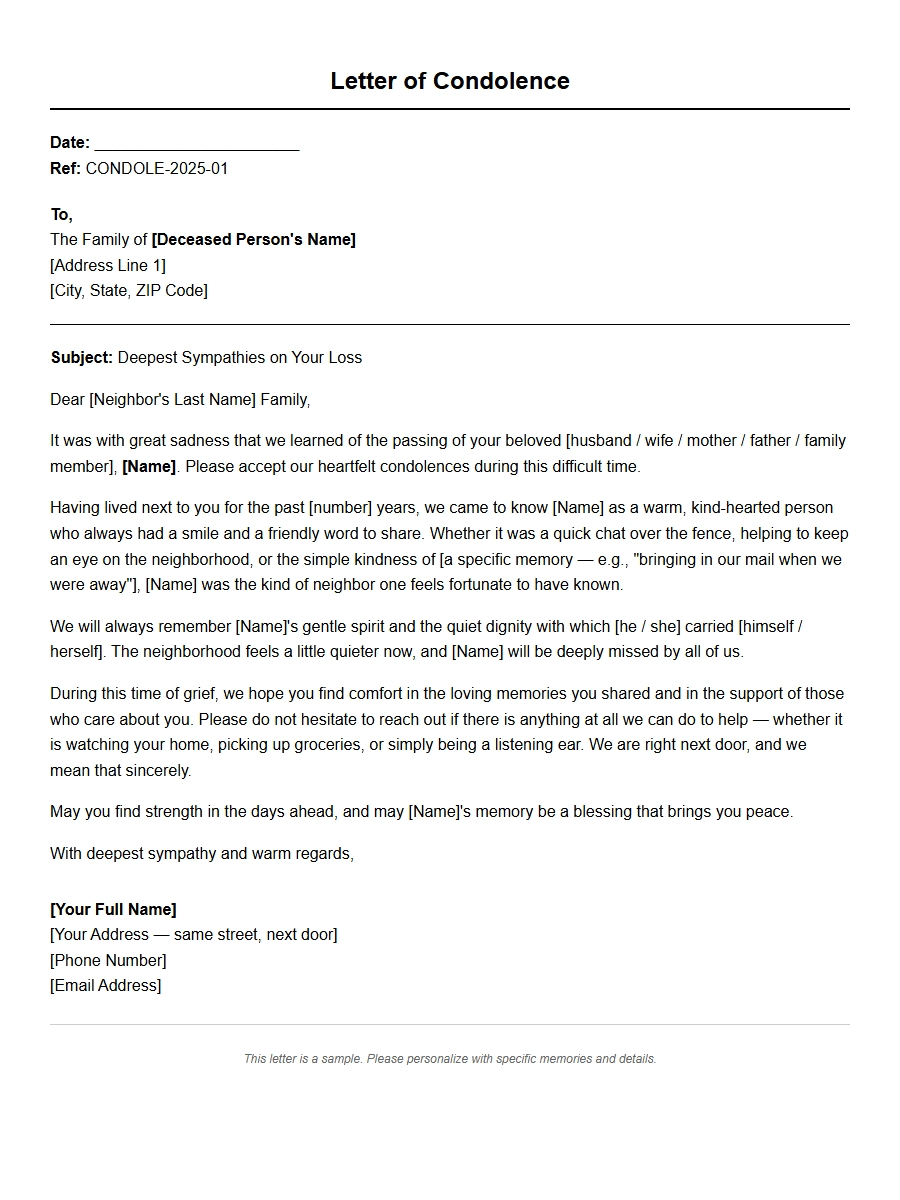 Condolence Letter Sample for a Neighbor
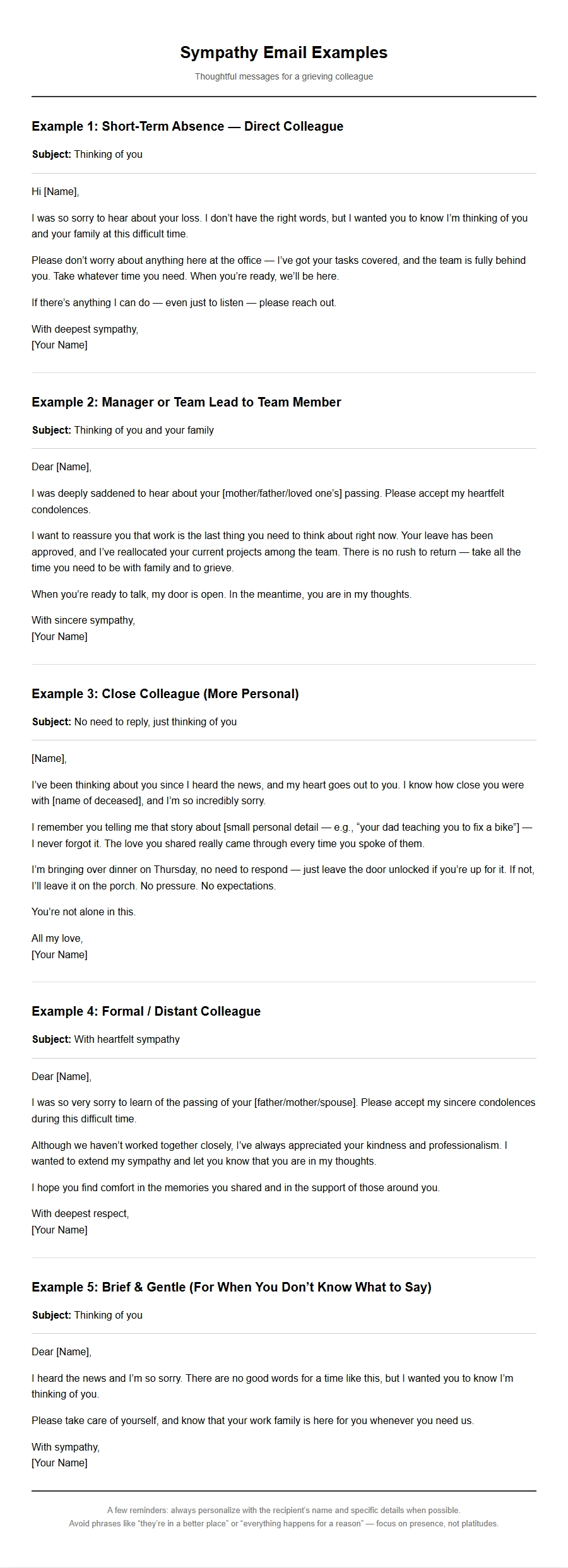 Sympathy Email Examples for a Grieving Colleague
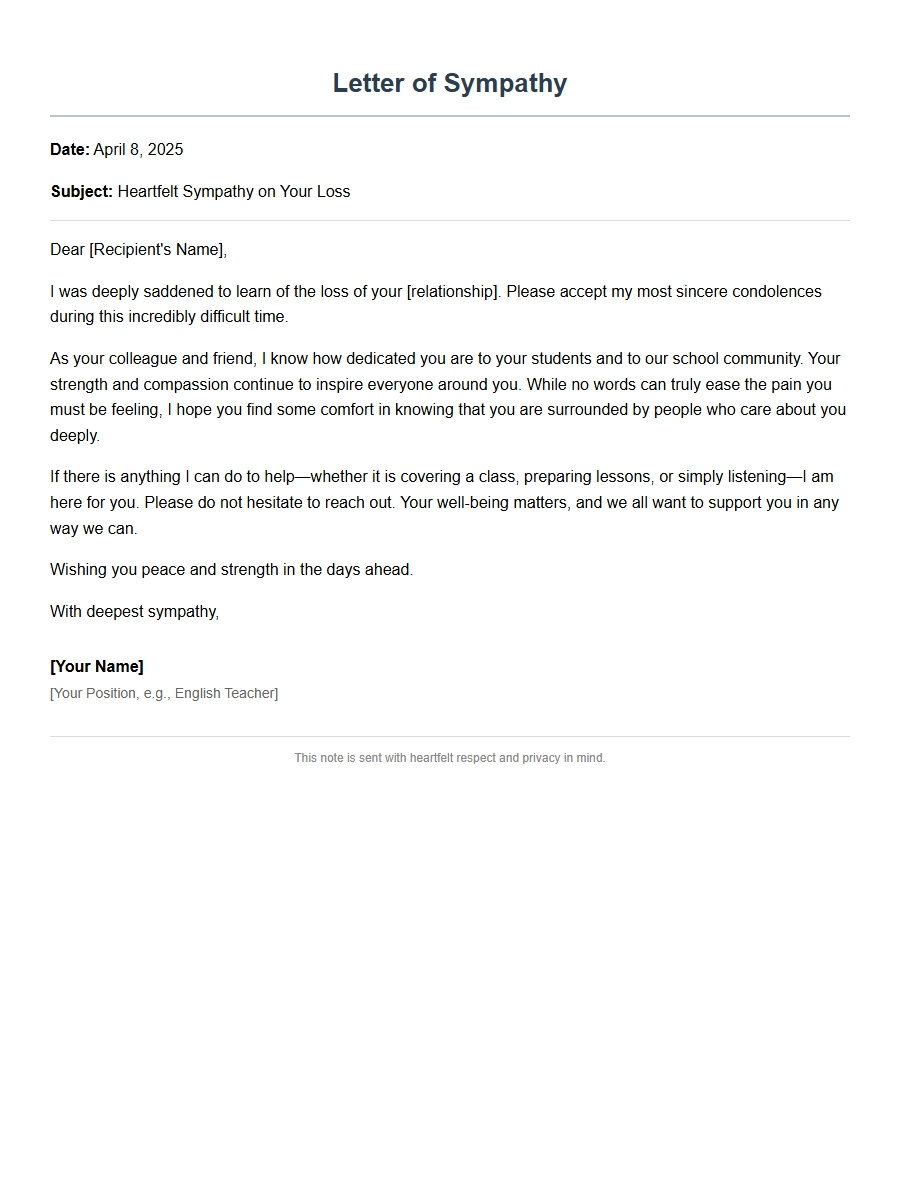 Condolence Words for a Teacher