Staring at a blank card or email when you need to write a sympathy message for the loss of a twin sibling can feel paralyzing. The bond between twins is unlike any other—a mirror, a constant, half of a whole. How do you acknowledge that depth without saying the wrong thing? A well-chosen sample can turn that anxiety into a draft you can personalize with confidence.
Using a condolence letter template isn’t cheating. It’s a smart way to start. A good sample gives you the structure, tone, and key phrases you need, while leaving room for your own memories and voice. You don’t have to reinvent the wheel when you’re already grieving or trying to support someone who is.
Category: Condolence Letters
When you’re writing a sympathy message for the loss of a twin sibling, choose a sample that matches your relationship with the bereaved. A formal business letter format works if you’re a colleague or distant acquaintance. Something more conversational and warm fits a close friend or family member. Pay attention to the salutation and closing in the example—these set the emotional tone. For instance, “Dear [Name]” followed by “With deepest sympathy” feels respectful, while “Dearest [Name]” and “With love” is more intimate.
Once you pick a customizable letter sample, don’t just copy and paste. Read it through, then rewrite parts in your own words. The first paragraph is your chance to be specific. Instead of “I’m sorry for your loss,” try “I keep thinking about the way you and Jamie would finish each other’s sentences. There’s no replacing that.” When you’re unsure how to express sympathy after a sudden death, starting with a shared memory can feel more honest than a generic phrase.
Common mistakes trip people up even with a good template. Using outdated salutations like “To Whom It May Concern” in a personal condolence note feels cold. Forgetting to adjust the format for email versus a printed letter is another. In an email, use a clear subject line (e.g., “Thinking of you and Mark”) and skip the inside address. For a handwritten note, letter writing etiquette suggests a simple date and salutation, then your message, then a handwritten signature. Always proofread carefully—one typo can distract from your heartfelt intent.
Pay attention to tone in writing as well. You want to be warm but not overly cheerful, formal but not stiff. A good condolence letter sample will show you how to balance compassion with respect. If you’re writing on behalf of an organization, keep the tone professional yet human. If it’s a personal note, let your own voice come through—the sample is just a scaffolding.
Finding words that don’t feel blunt or clinical is often the hardest part. Instead of “died,” you can say “passed away,” “left us,” or simply name the loss: “Losing Tom has left a hole that words can’t fill.” The sample you choose should help you navigate that language naturally. Avoid clichés like “they’re in a better place” unless you’re certain the recipient believes that.
A final tip: keep your message focused on the twin bond. Acknowledge that the grief is doubled because half of a duo is gone. Even a simple line like “I know you two were inseparable, and I’m so sorry you have to face this without them” can mean the world. Remember, the best sympathy messages feel both professional and personal. They show you took the time to think, not just to type.
Use the sample as a springboard, not a crutch. The more you practice, the easier it becomes to write from the heart. If you’re writing for a colleague on bereavement leave, a concise, warm note is often best. If you’re honoring a mentor who was also a twin, you might mention something specific they taught you. No matter the situation, start with a sample, adapt it, and then send it with kindness. That’s all anyone really needs.
Helpful Reference Samples
Sympathy Message for the Loss of a Twin Sibling
To a Grieving Friend
Dear Jamie,
I was heartbroken to learn of the loss of your twin, Alex. There are no words to ease the pain of losing a part of yourself, especially one who shared your journey from the very beginning. Please know that I am holding you in my thoughts and sending all my love.
I remember the stories you told me about your childhood – the secret language, the pranks, the way you two could communicate with just a glance. That bond was truly unique and beautiful. It is okay to feel shattered; it is okay to grieve in your own time and way.
If you need someone to sit with in silence, to reminisce, or to help with daily errands, I am here. You do not have to face this alone. I will check in regularly and would love to bring over a meal or run an errand whenever it helps. Below is a quick list of things I can do – just let me know what you need.
Pick up groceries or pharmacy items
Walk your dog or water plants
Drive you to appointments
Help with correspondence or notifications
With heartfelt sympathy,
Maya
Condolence for a Colleague
Dear Chris,
I was so sorry to hear of the passing of your twin brother, Sam. While I never had the chance to meet him, I always felt I knew him through the stories you shared during our coffee breaks. The love and pride you had for each other were evident in every word.
Losing a twin is an indescribable loss. Please do not worry about work right now – we have your tasks covered and there is no deadline that cannot wait. Your wellbeing is our priority. When you feel ready to return, we are here to support you with a flexible schedule and any adjustments you need.
I know talk of work may feel trivial now, but I wanted you to know that your team has you covered. If you would like, I can coordinate with HR about bereavement leave and any paperwork. Just send me a text any time.
Support Option
Contact
Bereavement leave details
HR – Maria (ext. 204)
Meal delivery sign-up
Our team spreadsheet
Errand assistance
I can arrange volunteers
Thinking of you and your family during this difficult time.
With deepest sympathy,
Jordan
From a Neighbor
Dear Taylor,
I was so saddened to learn about the loss of your twin, Riley. Although we only exchanged friendly waves from across the street, I know how close you two were. I often saw you both gardening together or heading out for walks. The neighborhood feels quieter now, and I can only imagine how empty your home must feel.
Please accept my heartfelt condolences. I live just two doors down, so if you need anything at all – even just someone to sit with or a hand with daily tasks – please do not hesitate to knock. I mean that sincerely. Here are a few things I can help with right away:
Mow your lawn or shovel snow
Take in your mail and newspapers
Pick up groceries or prescriptions
Watch your pets if needed
Sometimes it is the little practical things that help us through. I will check on you in a day or two. No need to reply now – just rest and take care of yourself.
With sympathy,
Morgan
Memory-Focused Letter
Dear Casey,
I am writing with a heavy heart after hearing about the loss of your twin, Drew. I will never forget the summer we all spent at camp – you two were inseparable, finishing each other’s sentences, and always laughing. One memory that still makes me smile is when you both convinced the counselors you had telepathy. The joy and mischief you shared were truly special.
That bond does not disappear. Drew’s spirit will always be part of your story, part of your own heart. It is okay to cry, to be angry, and to feel lost. There is no timeline for grief, especially for a twin. Let yourself feel whatever comes.
I would love to come over next week and look through old photo albums with you, if that feels comfortable. Or we could just sit and talk about nothing at all. Whatever you need, I am here. You are not alone.
With love and deepest sympathy,
Alex
Practical Offer of Help
Dear Jordan,
I was devastated to hear about the loss of your twin, Pat. You are in my thoughts constantly. At times like this, the daily necessities can feel overwhelming, so I want to make a concrete offer of help. Please let me coordinate some practical support for you and your family.
Below is a list of tasks I can arrange with a group of friends who are eager to help. Simply let me know which ones you need, and I will take care of the rest.
Task
Available Days
Contact Person
Cooked meals delivery (frozen or fresh)
Any day
Pat’s neighbor Sam
Childcare or pet sitting
Weekdays until 6pm
Jordan’s sister
Transportation to appointments
Flexible
Me (call or text)
Errands (grocery, pharmacy, post office)
Daily 9am-5pm
Volunteer from church
I will be in touch in a few days to check in. No need to respond now – just take all the time you need. I am here for you.
With love and support,
Riley
Religious Condolence
Dear Avery,
Please accept my deepest sympathy on the loss of your beloved twin, Morgan. I know that words cannot heal the ache of such a profound loss, but I pray that you may find comfort in the knowledge that Morgan is now at peace in the arms of God. The bond you shared was a gift from above, and that love never dies.
May the Lord hold you close and give you strength each day. Let the memories of your time together bring you light in this darkness. I will be praying for you and your family, especially during this season of grief.
If you would like, I can arrange for our pastor to visit you, or I can bring a meal from the church fellowship. We are all holding you in prayer. Do not hesitate to reach out if you need someone to talk to or simply to sit beside you.
Below are the times for our weekly prayer group – you are welcome anytime.
Wednesday evenings at 7pm
Saturday morning 10am
Sunday after service
With faith and sympathy,
Pastor Kim
From a Support Group
Dear Quinn,
On behalf of the Twinless Twins Support Network, I want to extend our heartfelt condolences on the loss of your twin, Skyler. We understand the unique, indescribable pain of losing a twin – a part of your identity and your soul. You are not alone in this journey.
We offer several resources that may help you navigate this time. Below is a quick overview of our support options.
Resource
Details
Online support groups
Weekly Zoom meetings – see schedule on our website
Peer matching
Connect one-on-one with someone who lost a twin
Bereavement library
Articles, books, and podcasts specific to twin loss
Local meetups
In-person gatherings in your region
Please take all the time you need. Grief has no timeline, and we welcome you to join our community whenever you feel ready – whether that is tomorrow or months from now. You can also call our helpline any time at 555-1234.
With understanding and compassion,
Support Team
From a Former Classmate
Dear Reagan,
I was so sorry to learn about the loss of your twin, Sage. We were in the same high school homeroom, and I will always remember how you two would trade desks seamlessly to confuse the teachers. That playful bond was amazing. I can only imagine the hole this leaves in your life.
Although we have not stayed in close touch, I wanted you to know that I am thinking of you. If you ever want to reminisce about old times – that disastrous senior prank, or the time you both memorized the entire class schedule – I would love to hear from you. Sometimes sharing memories can be a small comfort.
I have also put together a small list of contacts from our graduating class who asked me to pass along their condolences. Let me know if you would like their messages forwarded.
Tracy: “I’ll never forget Sage’s laugh.”
Marcus: “He was the best lab partner I ever had.”
Jamie: “Sending you all my love, R.”
Take care of yourself, Reagan.
With sympathy,
Morgan
From a Distant Relative
Dear Harper,
I was deeply saddened to hear of the passing of your twin, Rowan. Although we live far apart and have not seen each other in years, the family ties remain strong. I remember visiting when you were both children – you two were like two halves of a whole, always finishing each other’s puzzles. My heart aches for you.
Please accept our sincere condolences from me and the whole extended family. We are keeping you in our thoughts and prayers. If there is any way we can help from a distance – whether it is financial assistance, coordinating with other relatives, or simply someone to talk to – please do not hesitate to call. I can also help with notifying other family members if you need that done.
Below is a list of family members I have already contacted on your behalf.
Aunt Pat and Uncle Sam – will send a card
Cousin Taylor – plans to visit next month
Grandma Lea – would love a phone call when you are ready
You are in my heart.
With love and deepest sympathy,
Great-Aunt Wren
Brief Note of Sympathy
Dear Skyler,
I was devastated to hear about the loss of your twin, Jamie. Words fail at a time like this. I know that the bond between twins is like no other – you shared a lifetime of inside jokes, silent understandings, and a unique love. That bond is eternal.
Please do not hesitate to reach out if you need a listening ear, a distraction, or help with anything at all. I can arrange for a meal drop-off or drive you wherever you need to go. Sometimes just sitting together in silence can be enough. I am here for you, day or night.
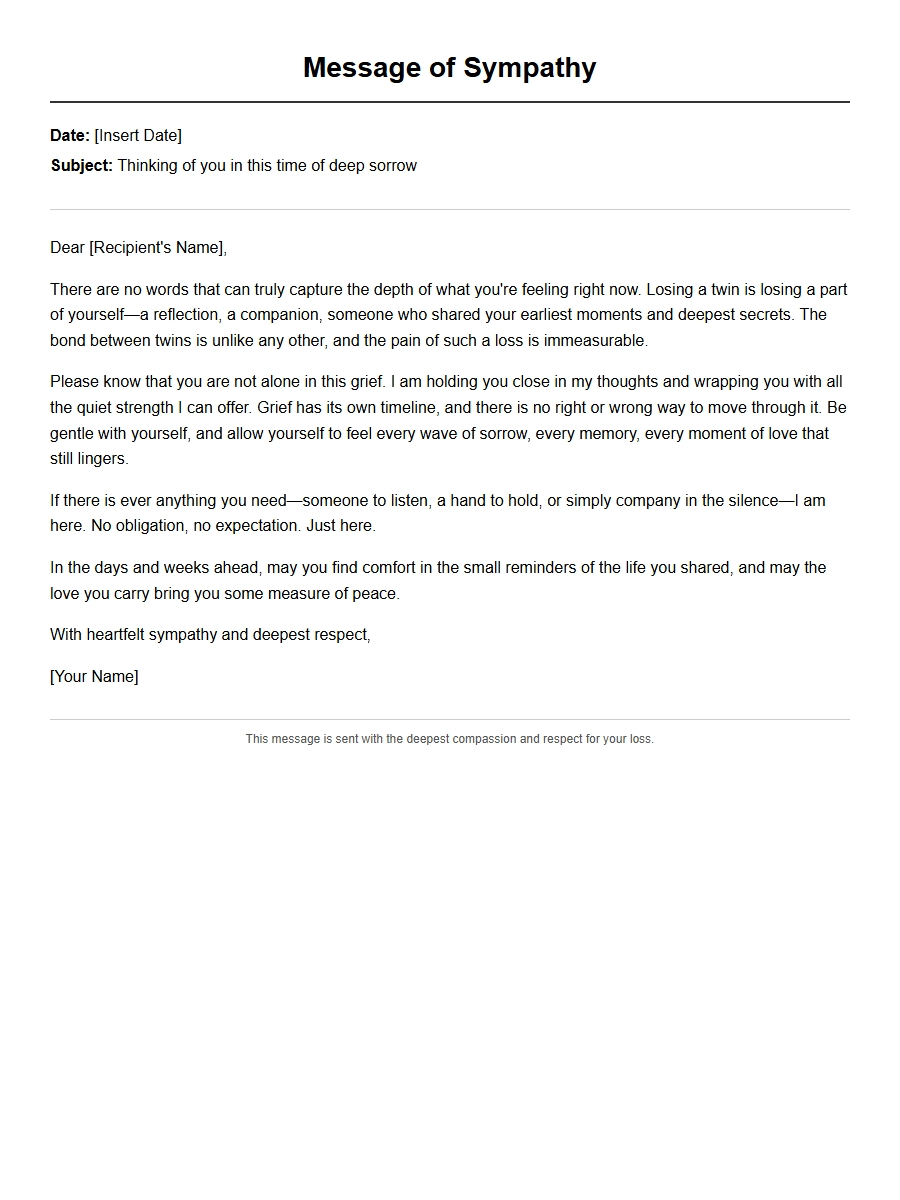
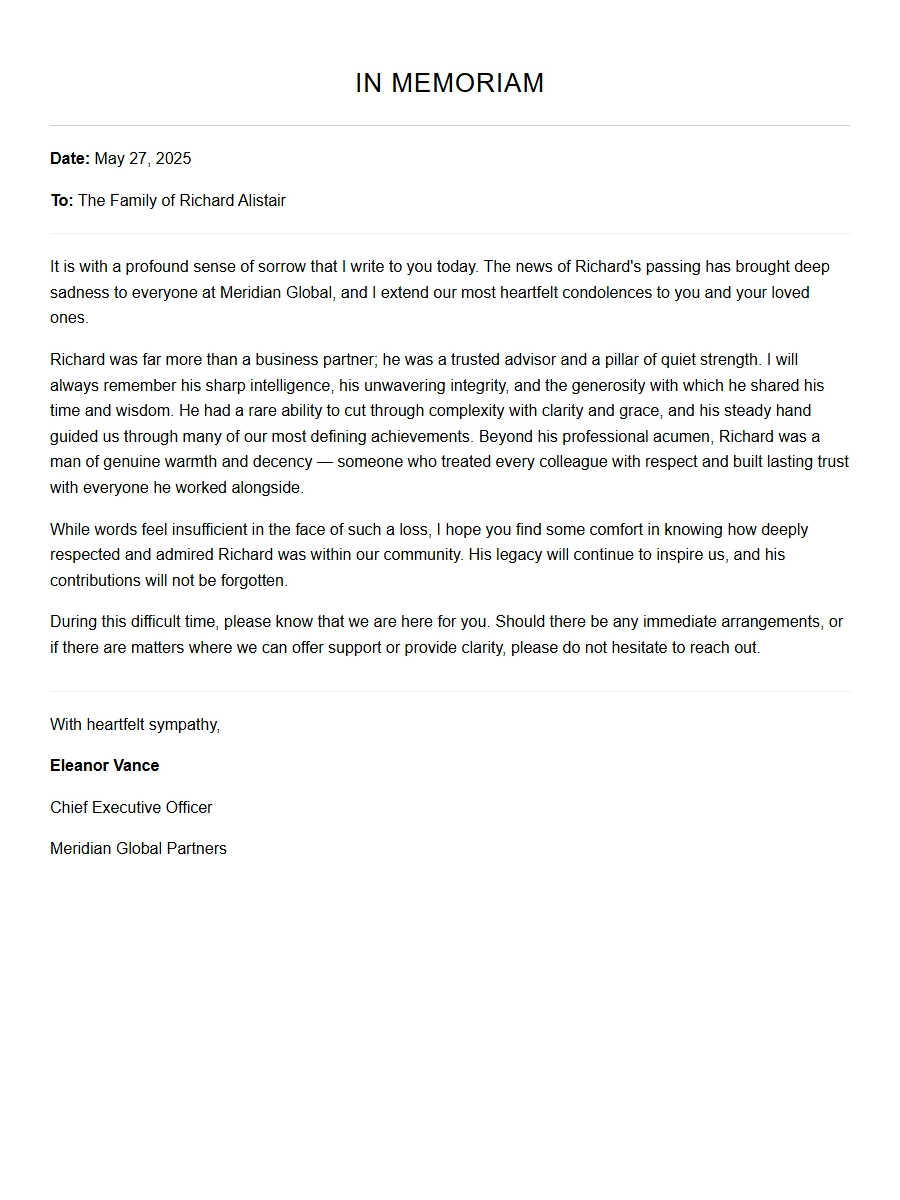 Formal Condolence Message for a Business Partner
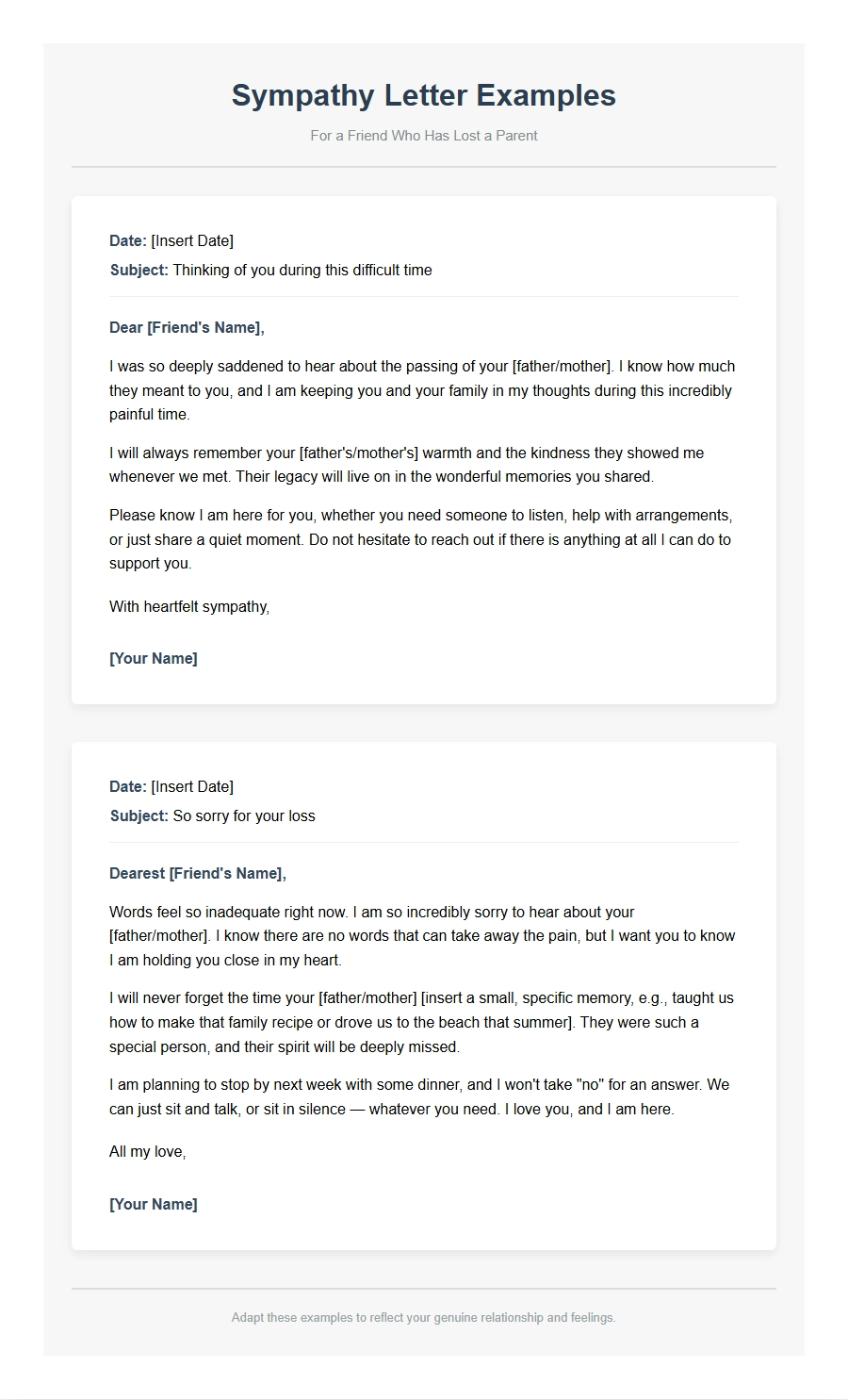 Sympathy Letter Examples for a Friend Who Lost a Parent
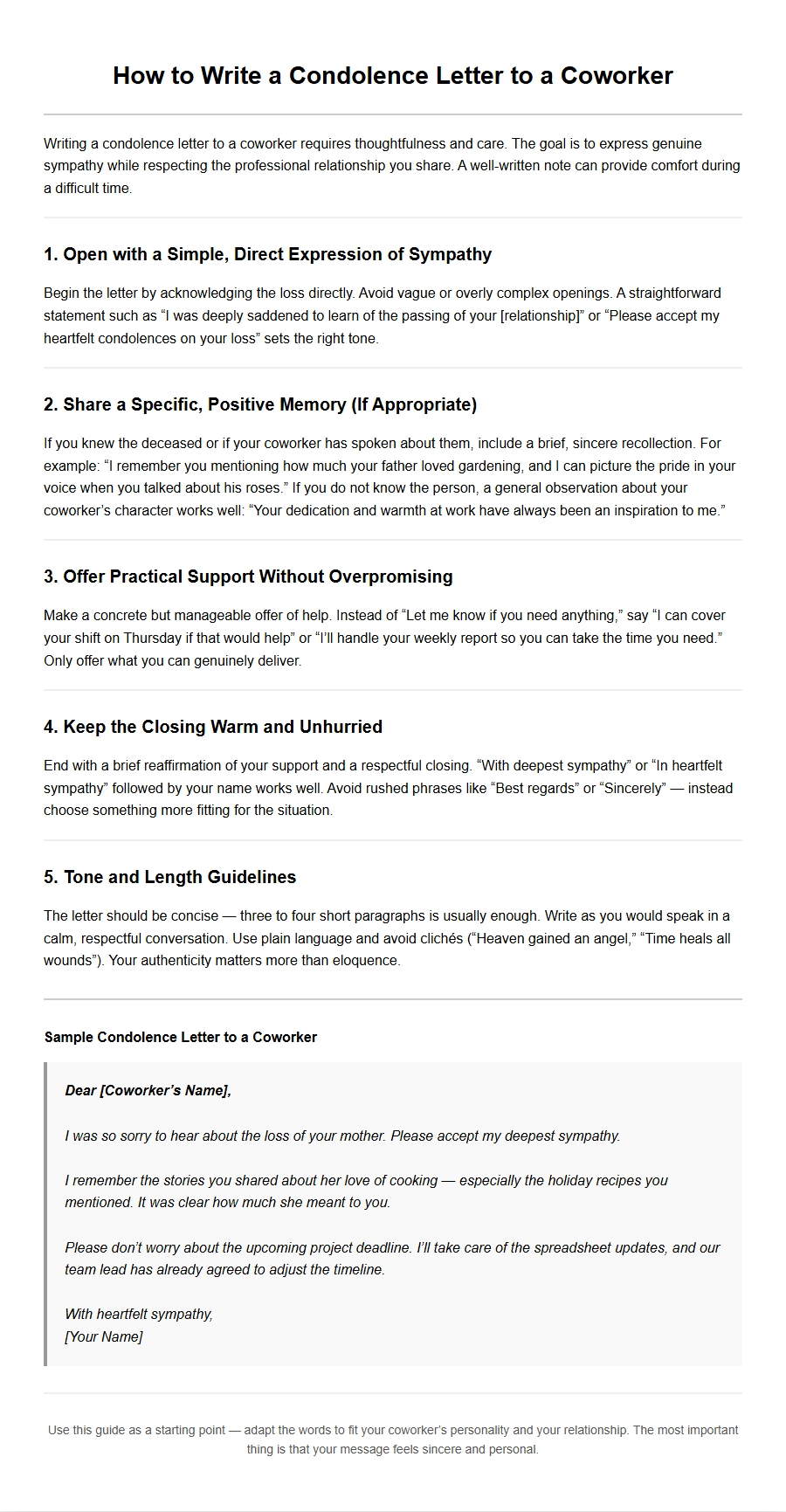 How to Write a Condolence Letter to a Coworker
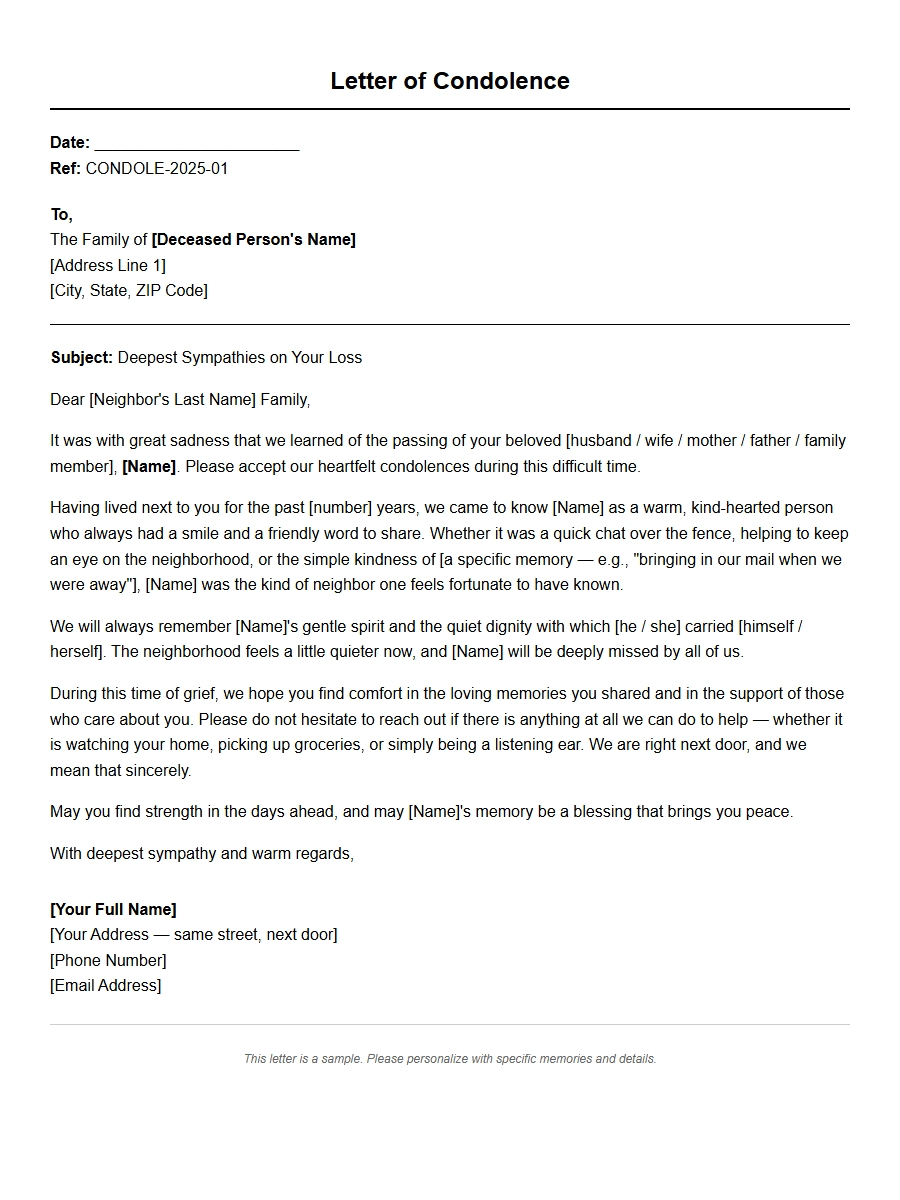 Condolence Letter Sample for a Neighbor
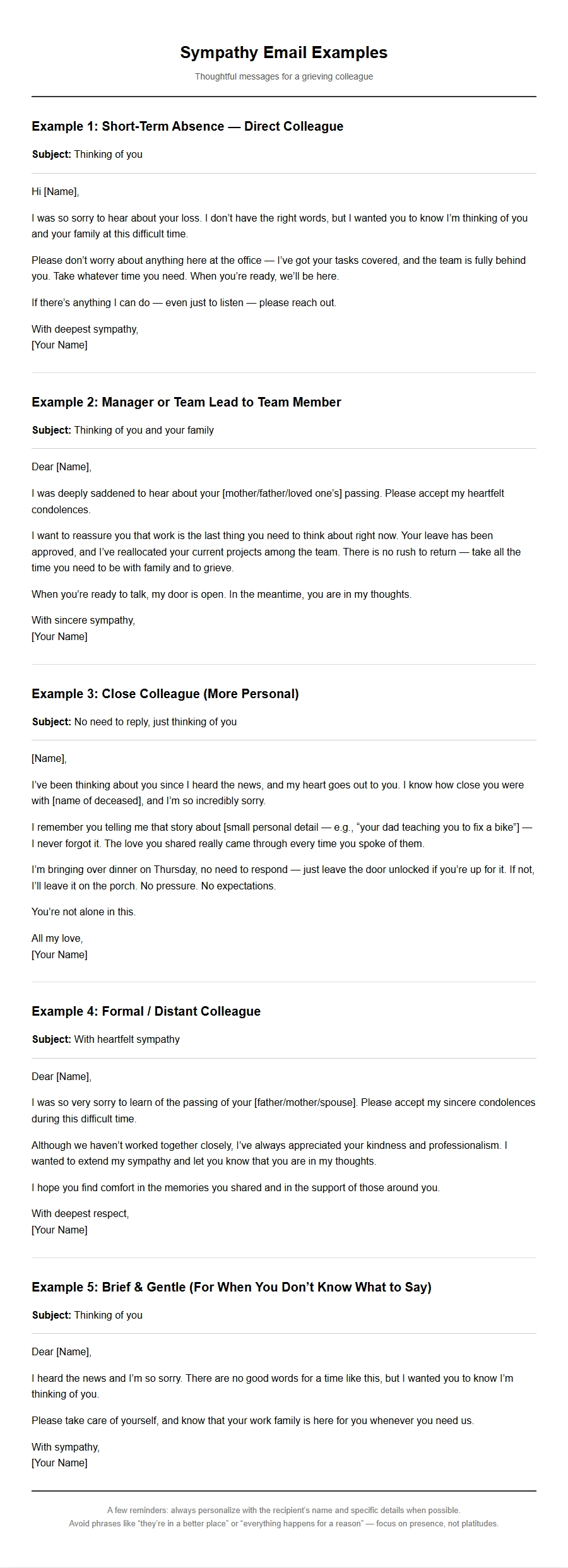 Sympathy Email Examples for a Grieving Colleague
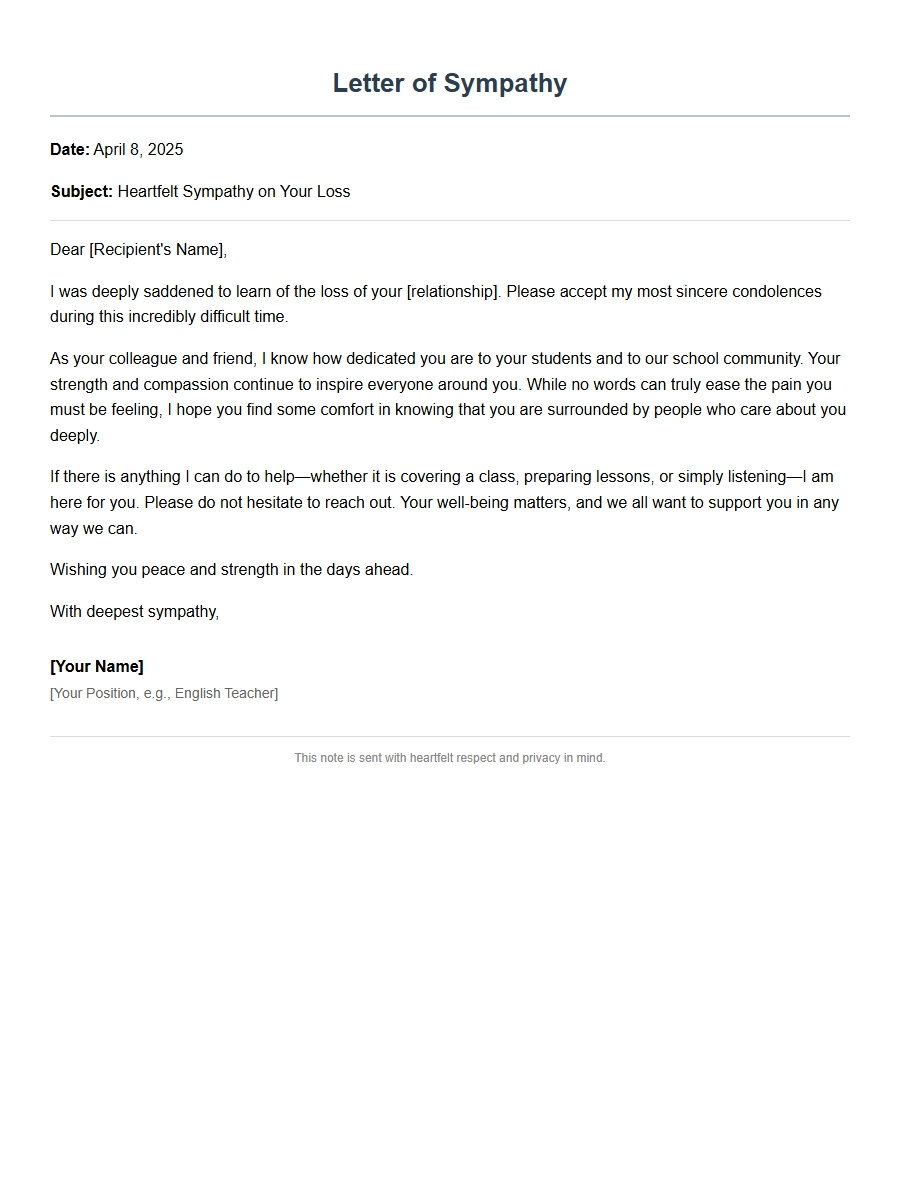 Condolence Words for a Teacher