You’ve picked a date, booked the venue, and now you need to let people know—but writing that save the date letter feels surprisingly tricky. Too formal and it sounds like a legal notice; too casual and it might not carry enough weight. The good news is that a well-chosen sample can turn that hesitation into a clear, thoughtful message in minutes. Using a template isn’t cheating—it’s a smart way to borrow structure, tone, and proven phrasing while leaving room for your own voice.
Think of a save the date letter as a courtesy heads-up, not a full invitation. The etiquette revolves around three things: timing, clarity, and tone. Send it too late and people have already made plans; too early and they might forget. A solid rule is six to eight weeks before the event, or even earlier for destination events. The letter itself should be warm but direct, including the date, location, and a note that a formal invitation will follow. Avoid going overboard with details—save the menu and dress code for the main invite.
Category: Save the Date Letter Etiquette
How to Choose the Right Sample for Your Situation
Not all save the date letters are the same. A wedding save the date feels different from one for a milestone birthday party or a corporate event. Look for a letter template that matches the formality of your occasion. For example, if you’re hosting a first birthday party, you want playful wording that still hits the key details. A sample like wording for a first birthday party invitation gives you a lighthearted structure you can adapt. For a volunteer recruitment drive, the tone shifts to appreciative and action-oriented—check volunteer recruitment drive invitation wording for ideas on striking that balance.
When you find a sample that fits, don’t copy it word for word. Read it through, then rewrite the opening to reflect your personality. If the sample says “We’re thrilled to announce,” but you’re more low-key, switch to “We’re excited to let you know.” The best professional correspondence sounds like a real person wrote it—not a robot.
Tailoring the Tone Without Losing Your Voice
One common mistake is treating the sample as a fill-in-the-blank worksheet. Instead, use it as a guide for letter structure and salutation and closing. For a formal event, “Dear Mr. and Mrs. Smith” still works, but for close friends, “Dear Sarah and Tom” is fine. The closing should match: “Sincerely” for formal, “Warmly” or “See you there” for casual. Ever received a letter that felt too stiff or too casual? That’s usually because the tone didn’t match the relationship.
Another key is tone in writing. Save the dates are brief, so every word counts. If you’re inviting a mix of ages and formality levels, lean slightly toward the formal side—it’s easier to soften than to stiffen later. For a music festival attendee invite, you might use energetic language that still includes all essential details. Look at this music festival attendee invitation draft for how to keep excitement high without losing clarity.
Formatting and Digital Etiquette
Whether you send the letter by email or print it, the business letter format principles still apply: clear subject line or envelope, proper date block, and a logical flow. For digital letters, use a clean font, avoid excessive colors, and include a plain-text version for accessibility. If you’re printing, consider letterhead design that matches your event’s style—simple is better than busy. Many people now send save the dates as a PDF attachment or via an online service. Make sure the file is easy to open and the text is not locked; recipients appreciate being able to copy the date into their calendar.
A quick tip on the opening paragraph: grab attention by stating the purpose immediately. “We’re saving the date for our milestone birthday celebration on May 10th” is clearer than “We hope this letter finds you well.” For a milestone birthday, you can find inspiration in this milestone birthday invitation draft.
Common Mistakes to Avoid
One big error is using outdated salutations like “To Whom It May Concern” in a save the date. You know these people—address them by name. Another is ignoring the difference between email and printed letters. An email save the date should have a clear subject line like “Save the Date: Claire’s Graduation – June 12” so it’s not buried. For printed letters, double-check the letter writing etiquette for spacing and margins. A cramped letter feels rushed, no matter how nice the paper.
Also, don’t forget to proofread the letter. A typo in the date can cause chaos. Read it aloud, or better, ask a friend to glance at it. If you’re customizing a sample, be careful not to accidentally leave placeholder text like “[Event Name]” in the final version.
Using Samples as a Springboard
Treat the customizable letter as a starting point, not a final product. The best letters feel both professional and personal. For a Valentine’s dinner date invitation, you might want romantic yet clear wording—this Valentine dinner date invitation sample can help you strike that note. Over time, you’ll develop your own go-to phrases and structure, making the process faster. Practice truly does make it easier. Next time you need to send a save the date, you’ll know exactly where to start—and how to make it sound like you.
Browse Sample Ideas
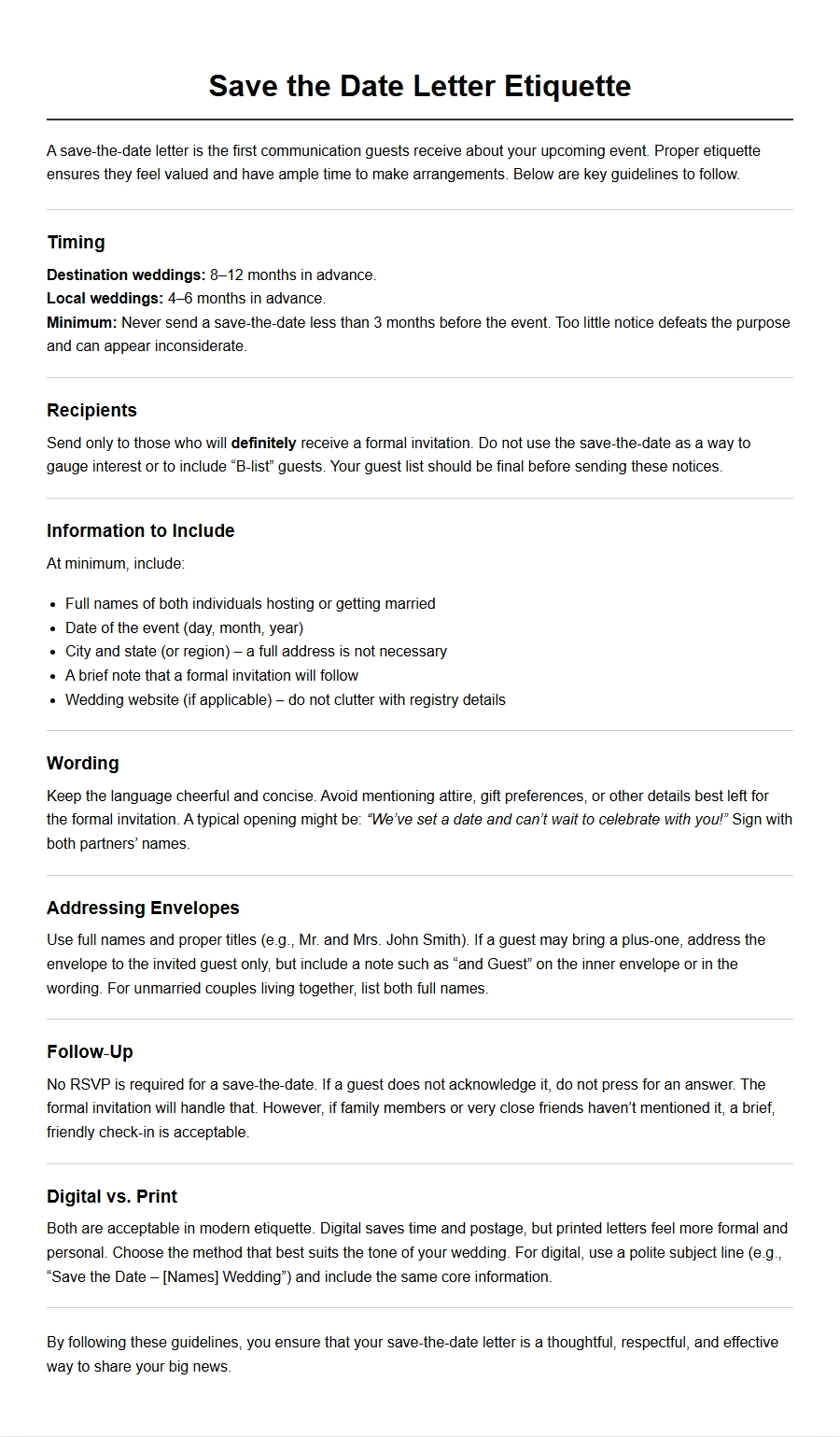
Save the Date Letter Etiquette: Sending Tips
Timing Your Save the Date
The golden rule for sending save the dates is to give guests 6 to 8 months notice for most weddings, and up to 12 months for destination events. The table below outlines recommended timelines based on event type.
Event Type
Send Date Range
Local wedding
4-6 months before
Destination wedding
8-12 months before
Holiday weekend wedding
6-9 months before
Elopement with reception later
3-4 months before reception
Sending too early can cause guests to forget; sending too late defeats the purpose of giving them time to plan. Aim for a date that lands after you've secured your venue and vendor contracts, so details are firm.
Addressing Save the Date Envelopes
Envelope etiquette sets the tone for your wedding correspondence. Follow these guidelines for different guest scenarios:
Married couple (same surname): Mr. and Mrs. John Smith
Married couple (different surnames): Ms. Jane Doe and Mr. John Smith
Unmarried couple living together: Ms. Jane Doe and Mr. John Smith (list alphabetically)
Single person with a guest: Ms. Jane Doe and Guest
Family with children under 18: Mr. and Mrs. John Smith and Family (or list children if known)
Widow or widower: Mrs. Jane Smith (or Mr. John Smith) – use their married name unless corrected
Divorced woman: Ms. Jane Smith (or her maiden name if she prefers)
Always use full names and avoid nicknames unless you are certain the recipient prefers one. For same-sex couples, use the same format as opposite-sex couples, listing names alphabetically if needed.
Wording and Tone
Your save the date wording sets the formality level. Below are two approaches – formal and casual – with sample phrases.
Formal:
"Mr. and Mrs. Robert Bennett request the pleasure of your company at their daughter Sarah's marriage to Mr. James Lee…"
Include full names, no nicknames, and use third-person phrasing.
Casual:
"We're getting hitched! Join us as we say ‘I do’ in the mountains. Save the date – more details to follow."
Use first names, exclamation points, and a relaxed tone.
Key elements to always include:
Your names (the couple)
Date (or at least month and year)
City or general location
A note that a formal invitation will follow
Avoid listing registry information or requesting RSVPs on save the dates – those belong on the invitation.
Digital vs. Printed Save the Dates
Choosing between electronic and printed save the dates depends on your budget, formality, and guest list. The table below compares both options.
Aspect
Digital (Email)
Printed (Mail)
Cost
Free or low-cost
Printing + postage
Delivery speed
Instant
5-10 business days
Formality impression
Casual / modern
Traditional / elegant
Keepsake value
Low
High
Ease of updating details
Easy (resend)
Impractical after mailing
Environment
Zero paper waste
Paper & ink
Etiquette now accepts digital save the dates for casual or intimate weddings. For a black-tie affair, printed is typically expected. You may also do both – send a digital version and follow up with a printed invitation.
Who Should Receive a Save the Date?
Send a save the date to everyone you plan to invite to the wedding proper. This includes:
All invited adults – including plus-ones you have already confirmed
Children of invited guests – only if you intend to invite them to the ceremony and reception
Out-of-town guests – they need the most advance notice
VIPs – parents, siblings, wedding party
Do not send to:
People you are still undecided about – wait until you have a final guest list
Guests you will only invite to the ceremony but not reception (though this is rare)
Anyone you might “un-invite” later – save the dates imply an invitation
When in doubt, wait until your guest list is locked. It is better to send save the dates later than to send them to the wrong people and cause hurt feelings.
Mentioning Registry on Save the Dates
Traditional etiquette strictly forbids listing registry information on save the dates – it can appear gift-grabby. However, modern practices have relaxed this rule slightly. Consider the following points:
Still the safest approach: Omit registry details entirely. Let guests find your registry through a wedding website or word of mouth.
If you must include it: Add a line such as “We are registered at [store name]” only on a very casual, digital save the date – never on a printed card.
Better alternative: Include a link to your wedding website, which then lists registry information (along with travel info, etc.).
For destination weddings: Some couples include a note that “no gifts are expected, but if you wish, our registry is [link]” – only if you are close with guests.
When in doubt, follow the traditional rule: keep registry off the save the date and save it for the invitation or website.
Follow-Up Timeline After Save the Dates
Once your save the dates are sent, plan a clear timeline for the remaining wedding correspondence. The table below shows a standard schedule.
Event
Timing
Send save the dates
6-8 months before wedding
Launch wedding website
Same day as save the dates
Send formal invitations
6-8 weeks before wedding
RSVP deadline
3-4 weeks before wedding
Send final details (if needed)
1-2 weeks before wedding
Important notes:
If you used a digital save the date, you can send reminder emails as the date approaches.
Do not send the formal invitation before the save the date has been out for at least a month – guests need time to decide.
For destination weddings, consider sending a “final notice” postcard or email 3 months before to confirm attendance.
RSVP Etiquette on Save the Dates
Standard etiquette says do not request an RSVP on a save the date. Its purpose is to alert guests, not to confirm attendance. Here's why and when you might break the rule:
Typical practice: The save the date simply says “Formal invitation to follow with RSVP details.”
Exception for destination weddings: You may ask for a “preliminary intention to attend” to help with headcount for deposits. Use a separate card or online form with a soft deadline.
What to avoid: Including “RSVP by [date]” or requiring a response on the save the date itself. This confuses guests and violates traditional sequence.
If you must collect early responses: Clearly mark it as “non-binding” to avoid pressure. For example, “Please let us know if you are planning to join us so we can reserve rooms. A formal invitation will arrive later.”
When in doubt, stick with the standard: no RSVP on the save the date.
Save the Dates for Destination Weddings
Destination weddings require extra care with save the dates because guests need more time to book travel and accommodations. Follow these etiquette guidelines:
Send 10-12 months in advance – especially for international destinations or holiday weeks.
Include destination and travel hints – list the city/country and mention that a block of hotel rooms is being reserved.
Consider a “mailing group” – send a first notice to VIPs and a later one to casual friends, but be careful not to make anyone feel less important.
Mention passport or visa needs – a simple line like “International travel required – ensure your passport is valid” is helpful.
Provide a wedding website link – where guests can find flight deals, hotel blocks, and a tentative itinerary.
Give a rough budget indicator – “We’re planning a tropical weekend getaway” versus “Black-tie affair in Paris” sets expectations.
Keep the design and tone aligned with the destination – a beach wedding might use playful fonts, while a European city wedding stays elegant.
Correcting Mistakes After Sending Save the Dates
If you discover an error after mailing save the dates (wrong date, venue change, missing name), handle it gracefully. Here is a step-by-step approach:
Assess who is affected. If only a few people received incorrect information, you can contact them individually.
Send a correction card or email. Use a card that says “Oops! Please note the corrected details:” in the same style as your save the date. Or send a polite email.
For a date change: Explain clearly: “We have moved our wedding to [new date] due to [reason]. We hope you can still join us.”
For a venue change within the same city: Send a simple update: “We will now be celebrating at [new venue name], same date and time.”
For a name misspelling: Apologize and send a corrected save the date or a thoughtful note along with the formal invitation.
If you must rescind a save the date: This is extremely awkward. Call the guest personally, apologize, and be honest without going into detail.
Remember, most guests understand small mistakes. The key is to communicate promptly and with genuine regret.
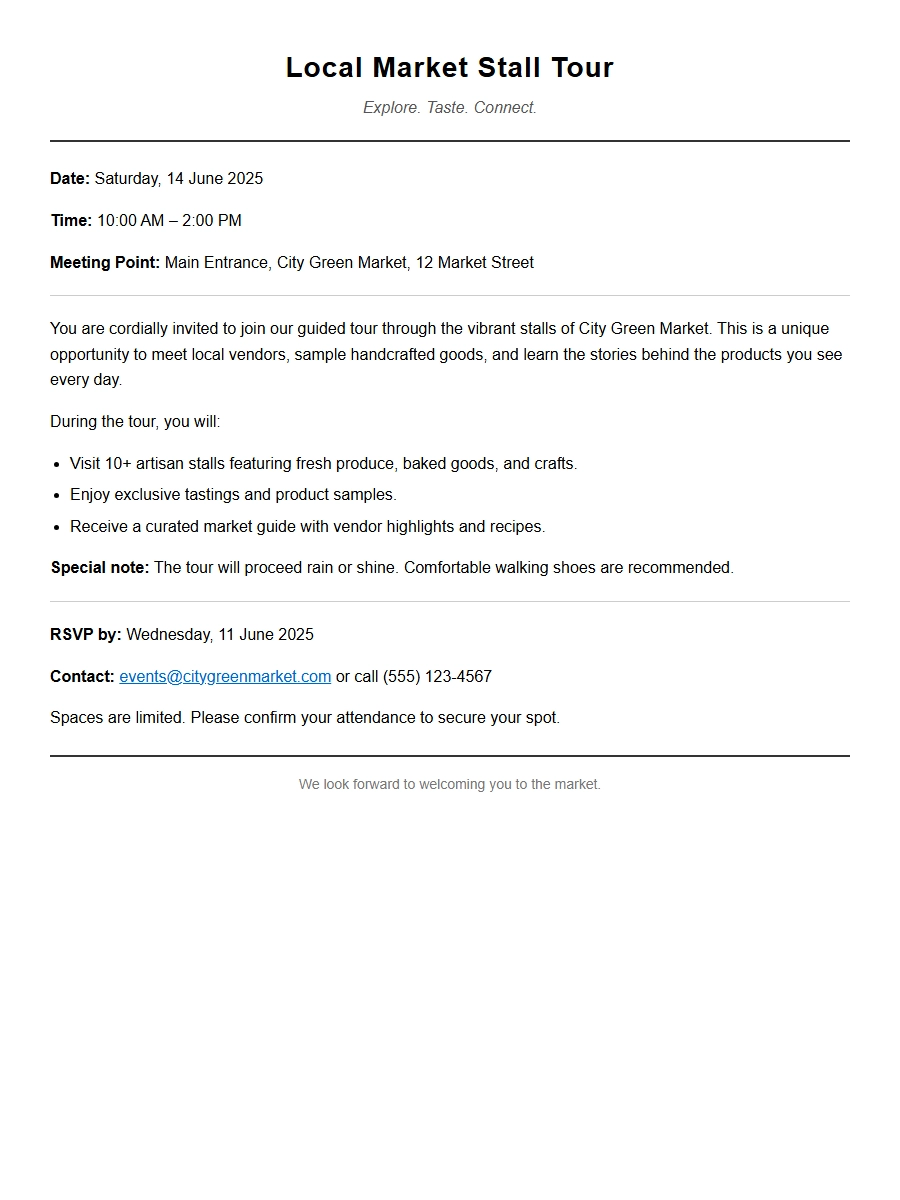 sample invitation for local market stall tour - Invitation Letters
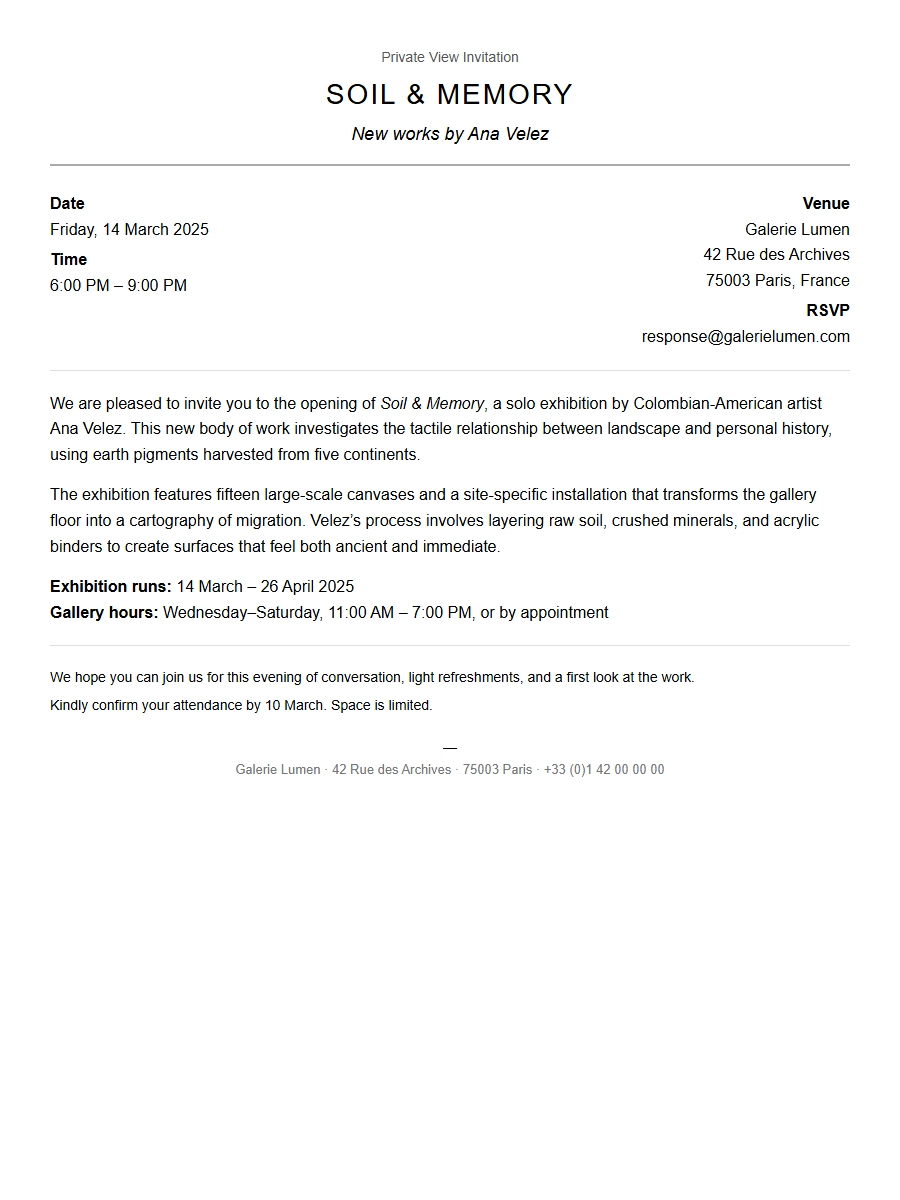 Art Exhibition Opening Invitation Wording Ideas
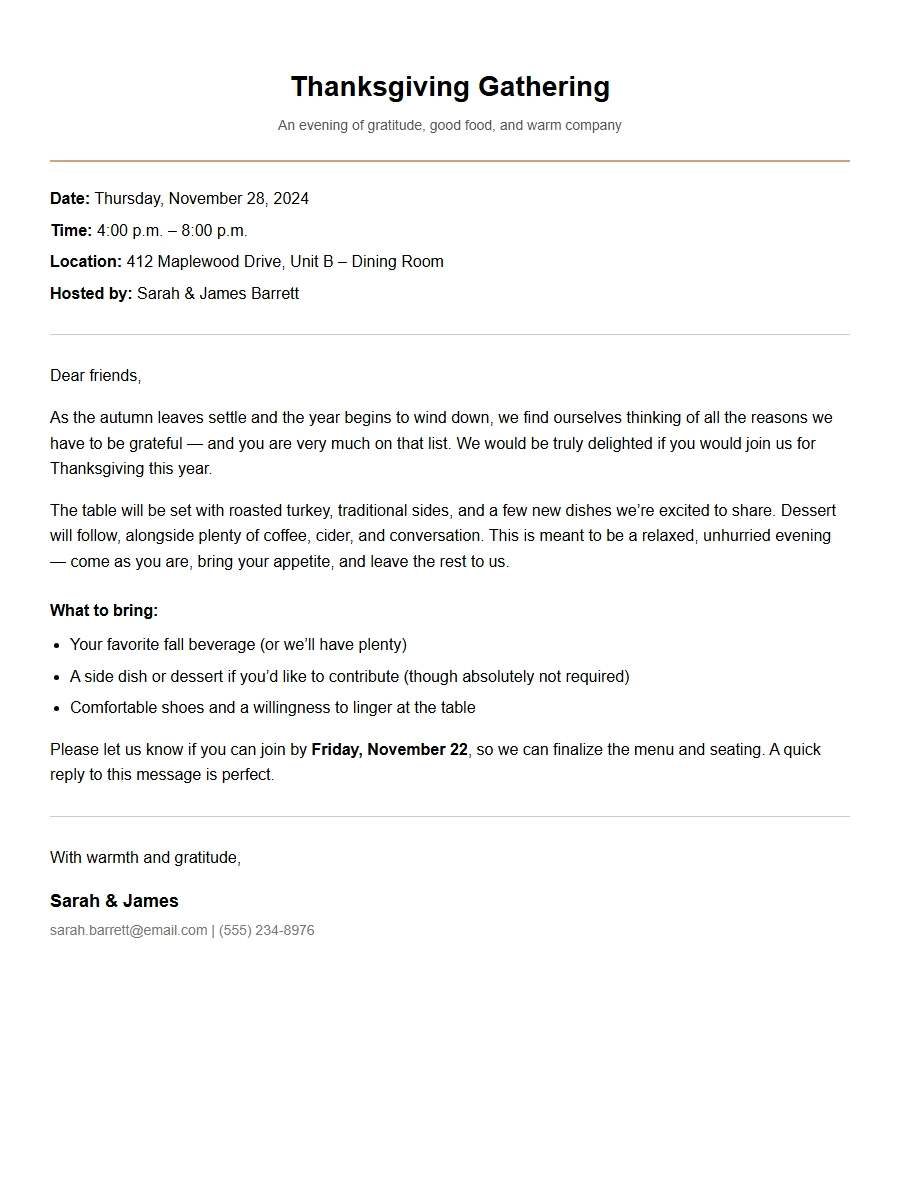 Thanksgiving Meal Gathering Invitation Text
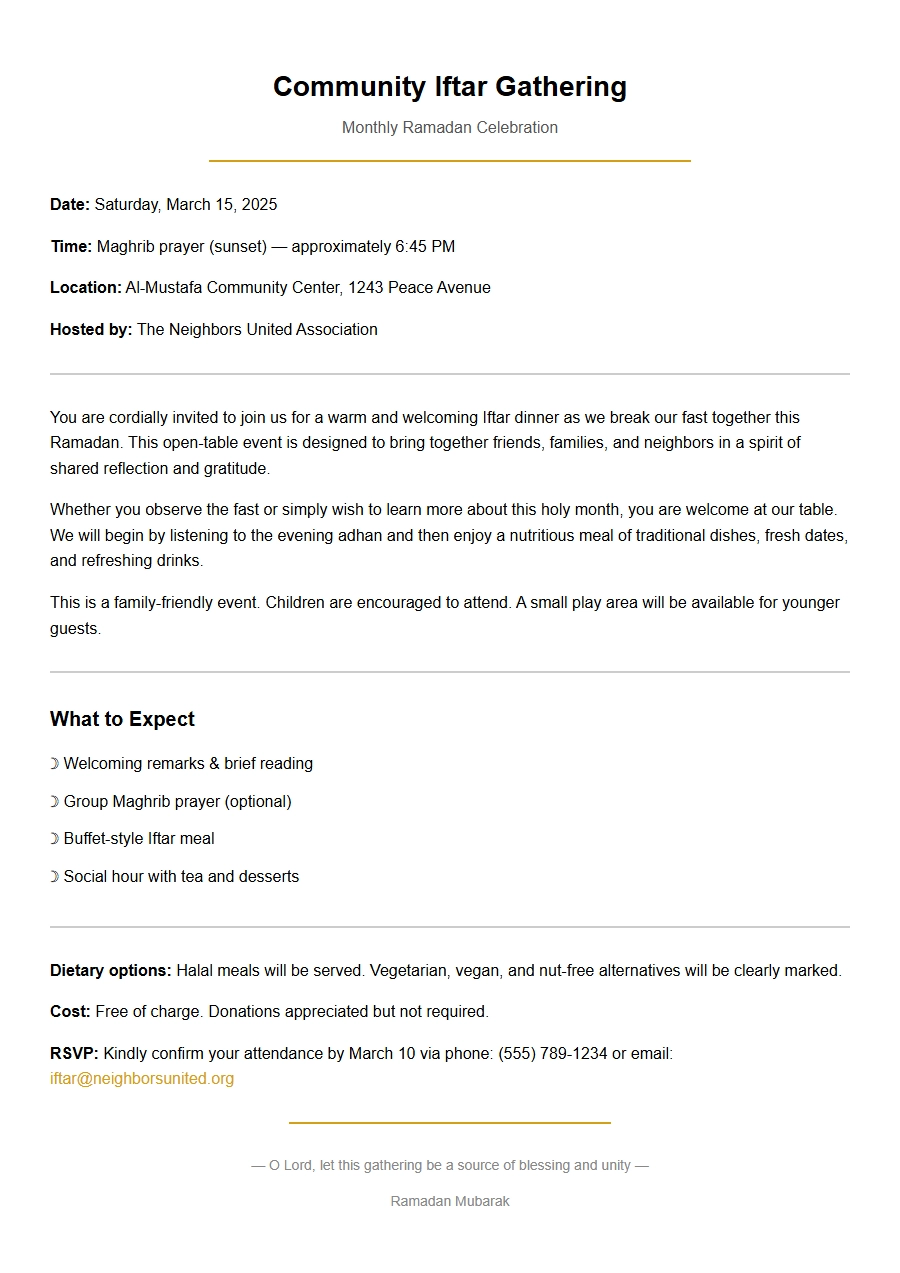 Ramadan Iftar Community Event Invitation
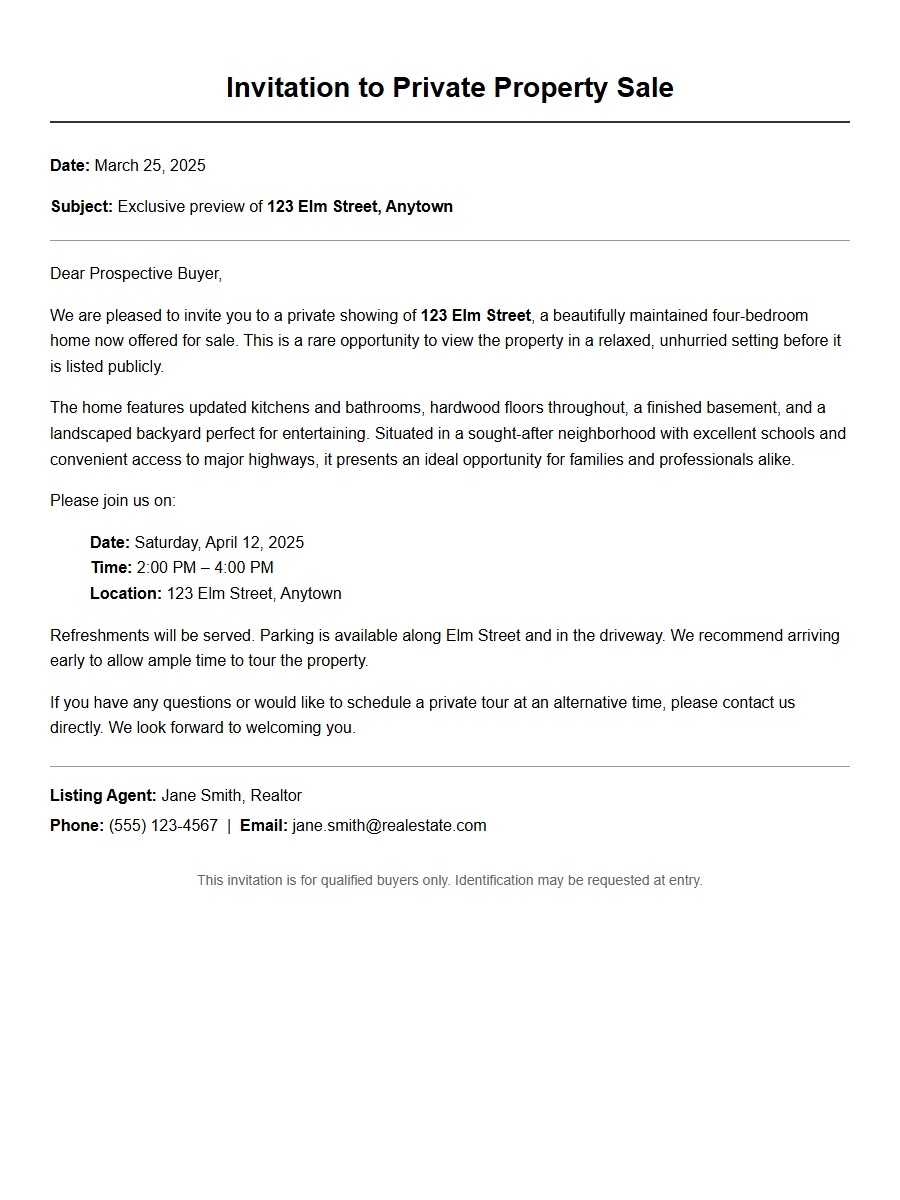 Sample Wording for Property Sale Invitations
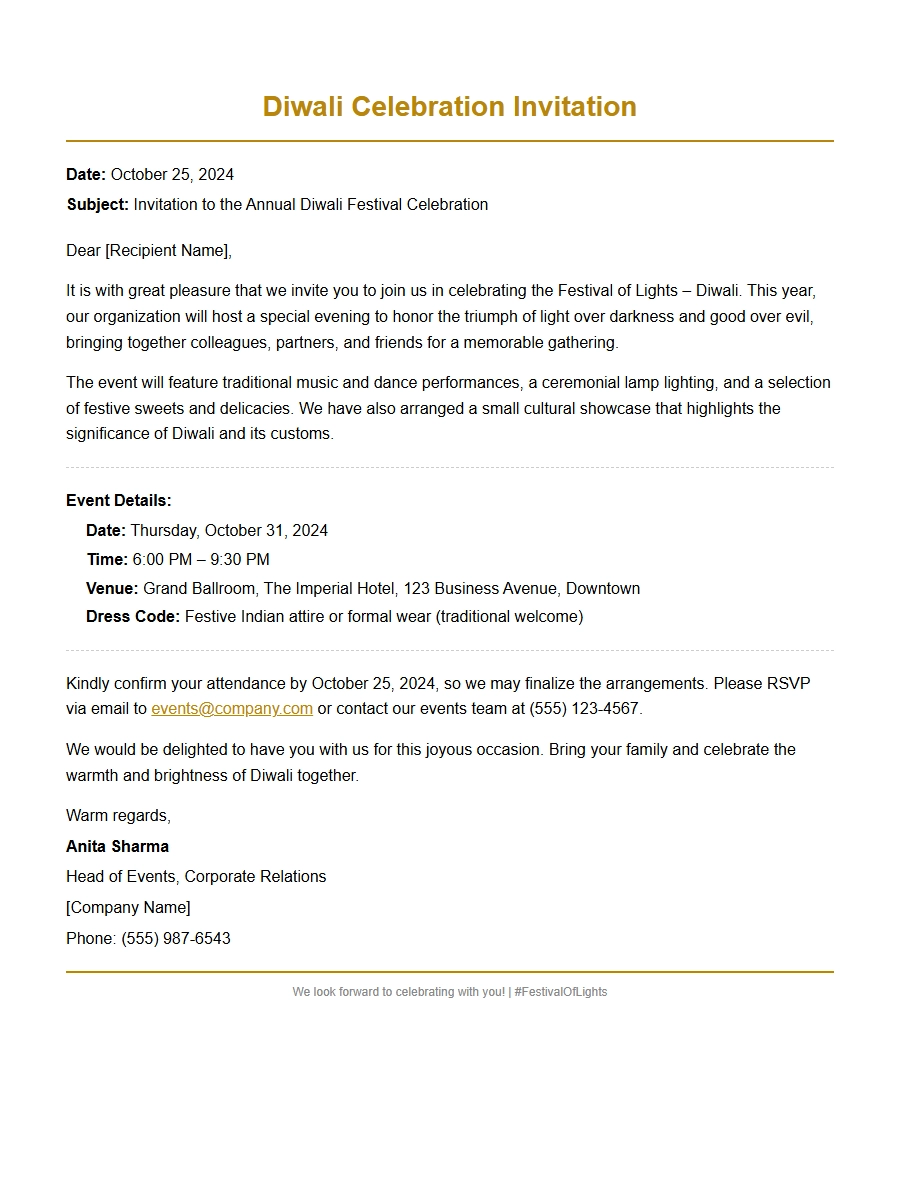 Diwali Festival Celebration Invitation Draft