Compassionate Wording Examples for Grief Letters
Simple Examples
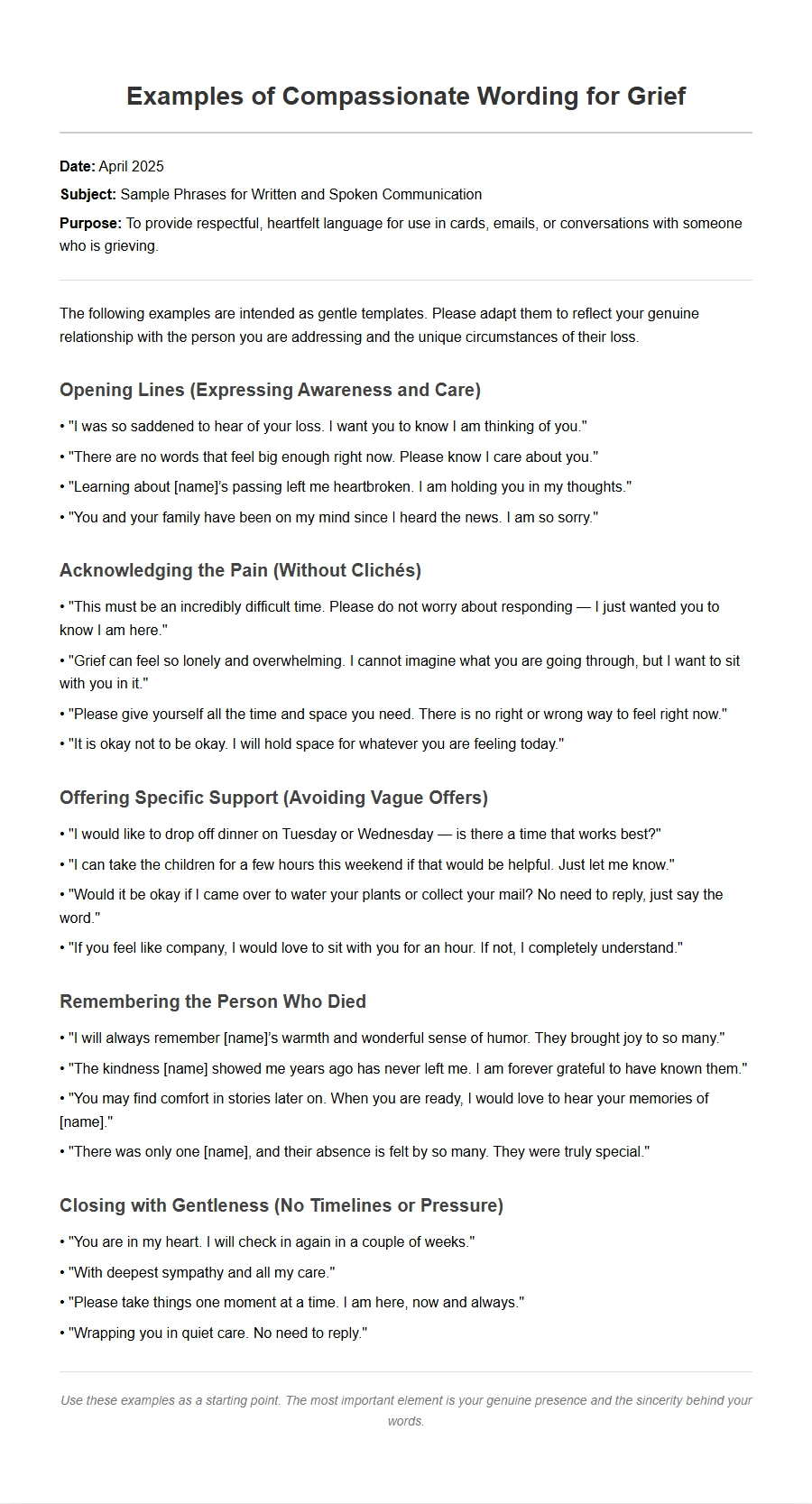
For a Colleague Who Lost a Parent
Dear [Colleague's Name],
I was deeply saddened to hear about the passing of your [mother/father]. Please know that you are in my thoughts during this difficult time.
Losing a parent is one of life’s hardest moments. I remember you speaking so fondly of the time you spent together, and I can only imagine how much you will miss them.
While I know no words can ease your pain, I want you to feel supported. Please take whatever time you need. Your team is ready to cover your responsibilities while you’re away.
If you ever feel like talking, my door is open. Otherwise, just know I am holding you in my thoughts.
With sympathy,
[Your Name]
For a Friend After a Miscarriage
Dearest [Friend's Name],
My heart broke when I learned of your loss. I am so deeply sorry that you have to walk through this sorrow. There are no right words, only the ache of knowing you are hurting.
Please know that your grief is valid — this was a life you loved and dreamed of. Take all the time you need to feel whatever comes. You do not have to be strong for anyone.
I want to help in any way that feels right for you. That might mean bringing dinner, sitting with you in silence, or simply being a presence.
I am here, always your friend,
[Your Name]
For a Neighbor Who Lost a Spouse
Dear [Neighbor's Name],
I was so sorry to hear about the passing of your [husband/wife]. I know that the two of you shared so many beautiful years together, and I can only imagine how much you miss them.
Please let me know if you need anything — I mean that sincerely. Whether it’s picking up groceries, walking your dog, or just having someone to sit with, I am here.
I will always remember the way they whistled while gardening and how they always had a kind word for everyone on the street. They brought so much warmth to our neighborhood.
You are in my thoughts, and I am holding you gently in this difficult time.
With love,
[Your Name]
For a Close Friend Who Lost a Child
My dear [Friend's Name],
I am writing this with tears in my eyes. I cannot begin to fathom the depth of your loss. [Child's Name] was such a bright light — full of laughter, curiosity, and joy. The world is dimmer without them.
Please know that there is no timeline for grief. You do not need to “get better” or “move on.” All your feelings — anger, numbness, sorrow — are allowed here. I just want you to survive this moment, and then the next.
I will be by your side in whatever way you need. I can bring meals, run errands, or simply stay on the phone while you cry. You are not alone.
With all my love,
[Your Name]
For a Supervisor Who Lost a Partner
Dear [Supervisor's Name],
On behalf of the entire team, I want to express our deepest condolences on the loss of your [partner's name]. We are all thinking of you during this incredibly difficult time.
You have always been such a steady, caring leader, and we want to support you just as you have supported us. Please do not hesitate to delegate any tasks or take the time you need to grieve and be with family.
We remember how warmly you spoke of your adventures together — the hiking trips, the quiet weekend mornings. Those memories will always be a part of you.
If there is anything we can do to lighten your load, please let us know. You are truly in our hearts.
With sincere sympathy,
[Your Name] and Team
For a Bereaved Parent of an Adult Child
Dear [Name],
Words cannot express how sorry I am to learn of the loss of your beloved [son/daughter]. No parent should ever have to outlive their child, and my heart aches for you.
[Their Name] was such a wonderful person — kind, generous, and full of life. I will never forget the way they made everyone feel seen and heard. You raised them with so much love, and that love will never leave you.
Please know that I am here for you, whether you need someone to hold your hand, run an errand, or simply listen to your memories. Grief takes its own path, and you deserve to walk it without pressure or timelines.
With deepest sympathy,
[Your Name]
For a Client Who Experienced a Loss
Dear [Client's Name],
I was so sorry to hear about your recent loss. On behalf of our entire team, I want to extend our heartfelt condolences to you and your family.
We understand that during this time, business matters may be the last thing on your mind. Please feel free to reach out whenever you are ready, and we will be happy to adjust any deadlines or schedules to accommodate your needs.
We value you not just as a client, but as a person. If there is anything we can do to support you during this transition, please let us know.
You are in our thoughts, and we wish you moments of peace and comfort.
With sincere sympathy,
[Your Name]
For a Family Member After a Long Illness
Dear [Family Member's Name],
I know that while there is relief that [loved one's name] is no longer in pain, there is also a new, heavy emptiness. My heart is with you as you navigate this complicated grief.
The long journey of caregiving — the hospital visits, the quiet worries, the small acts of love — all of that was an incredible tribute to them. They knew how much you cared, and they felt your devotion every step.
Now it is time for you to rest. Please let me help with anything: bringing meals, helping around the house, or just sitting with you. You don’t have to do this alone.
I am holding you in my heart, always.
With love,
[Your Name]
For a Pet Owner Who Lost a Beloved Pet
Dear [Owner's Name],
I am so sorry to hear about the passing of your dear [pet's name]. I know how much joy and comfort they brought into your life — they were truly a member of your family.
It is okay to grieve deeply. The love we share with our animals is pure and unconditional, and losing that presence leaves a huge space. Take all the time you need to remember the good times: the morning walks, the silly antics, the quiet cuddles.
If you ever want to share memories or just have someone who understands, I am here. And if you need a distraction, I’m happy to go for a coffee or a walk.
You gave them a beautiful life, full of love. That is everything.
With understanding,
[Your Name]
For a Military Family After a Loss
Dear [Family Name],
I write to you with the deepest respect and sorrow on the loss of your [loved one's name/rank]. Their service and sacrifice will never be forgotten.
They stood for something greater than themselves, and in doing so, they protected all of us. We owe them an immeasurable debt of gratitude — but more than that, we owe them our compassion as you navigate this profound loss.
Please know that you are not alone. Our community stands ready to support you in any way we can. Whether you need help with daily tasks, a listening ear, or simply a quiet presence, we are here.
You are in our thoughts and prayers. With heartfelt gratitude and sympathy,
[Your Name]
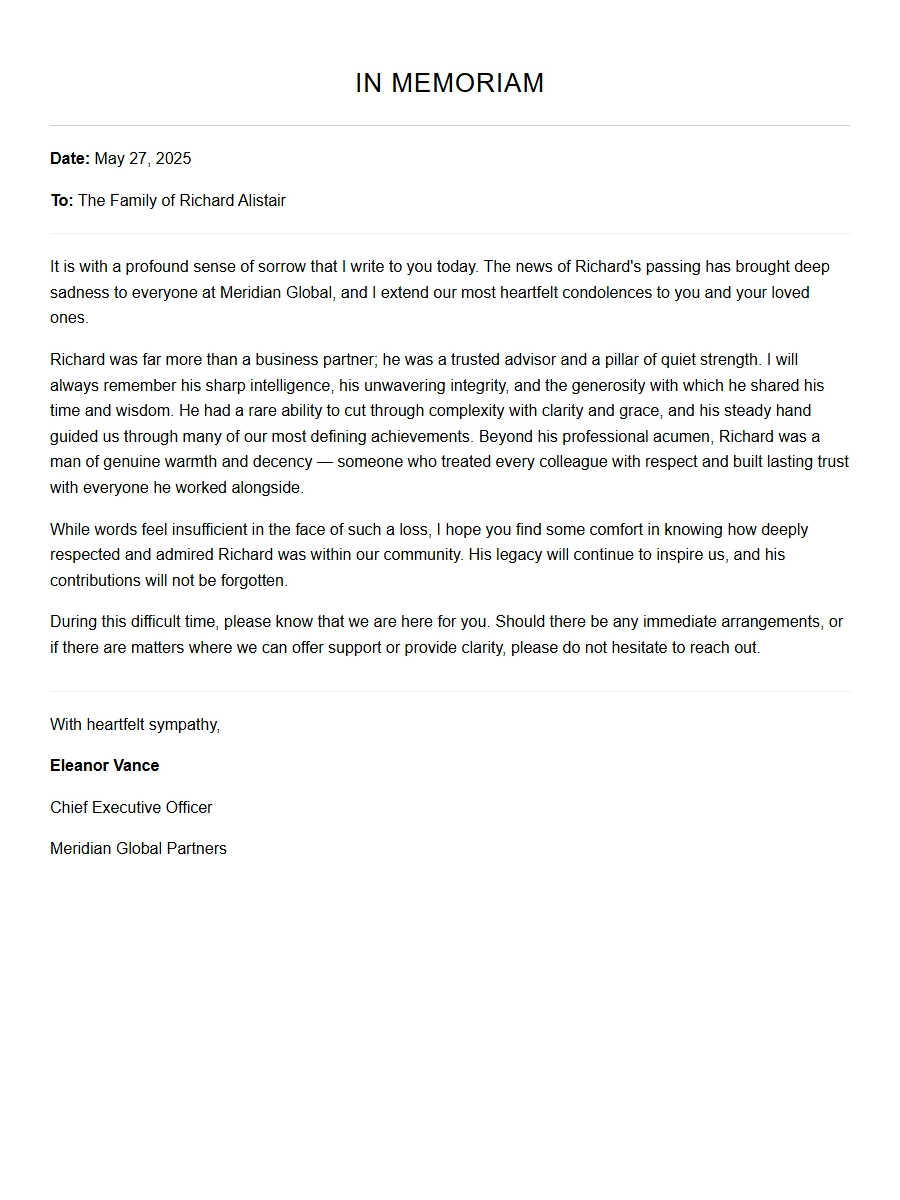 Formal Condolence Message for a Business Partner
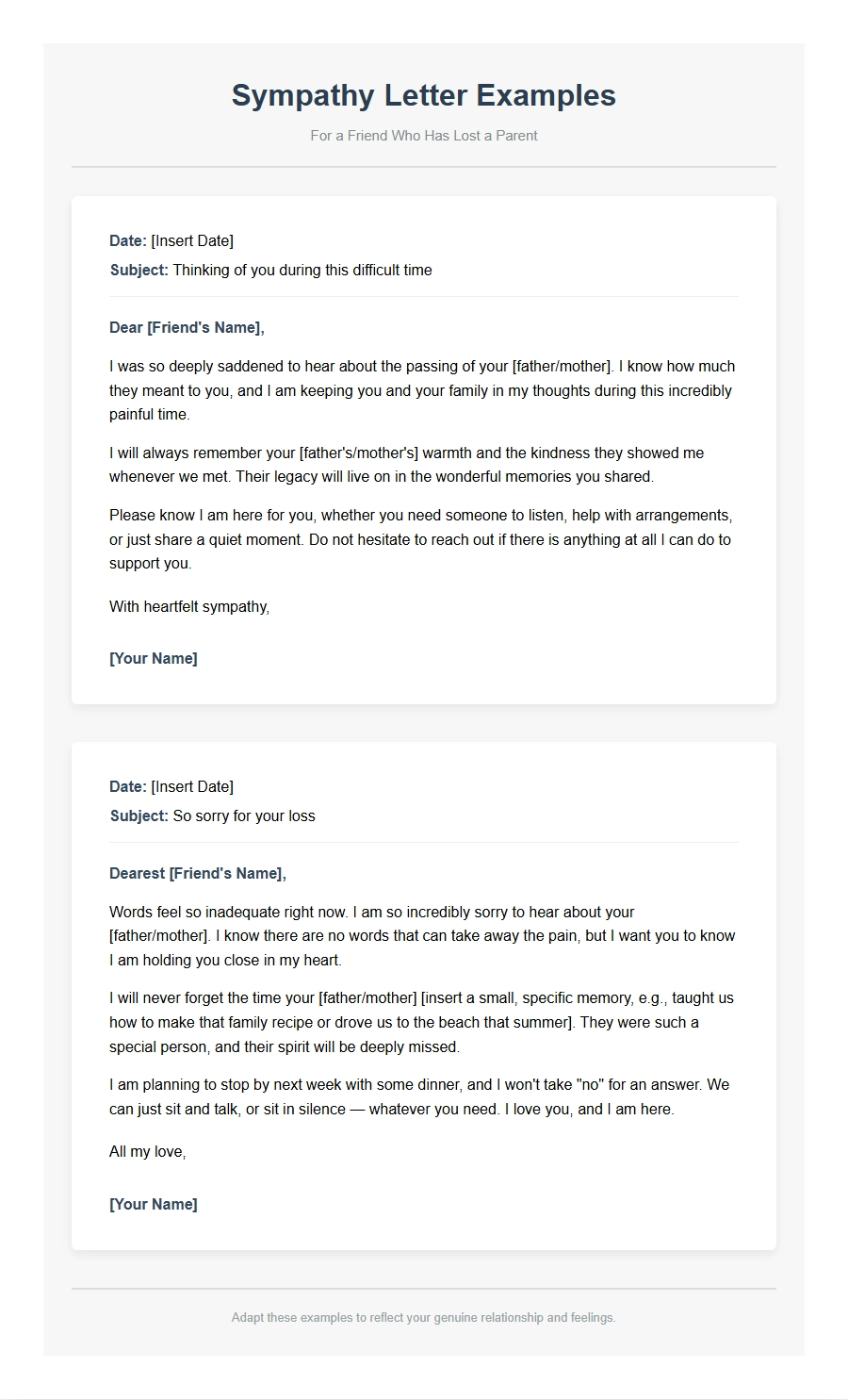 Sympathy Letter Examples for a Friend Who Lost a Parent
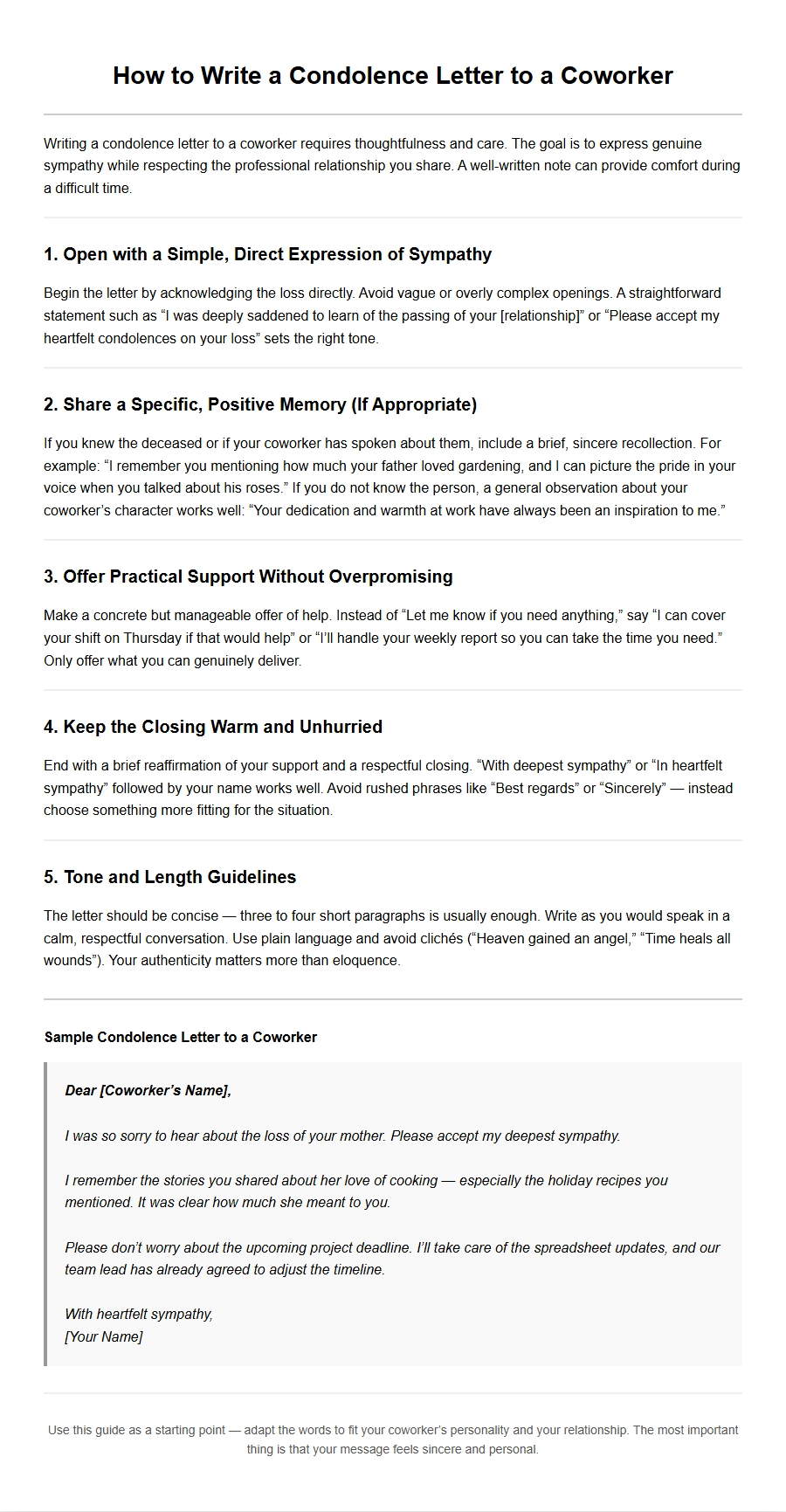 How to Write a Condolence Letter to a Coworker
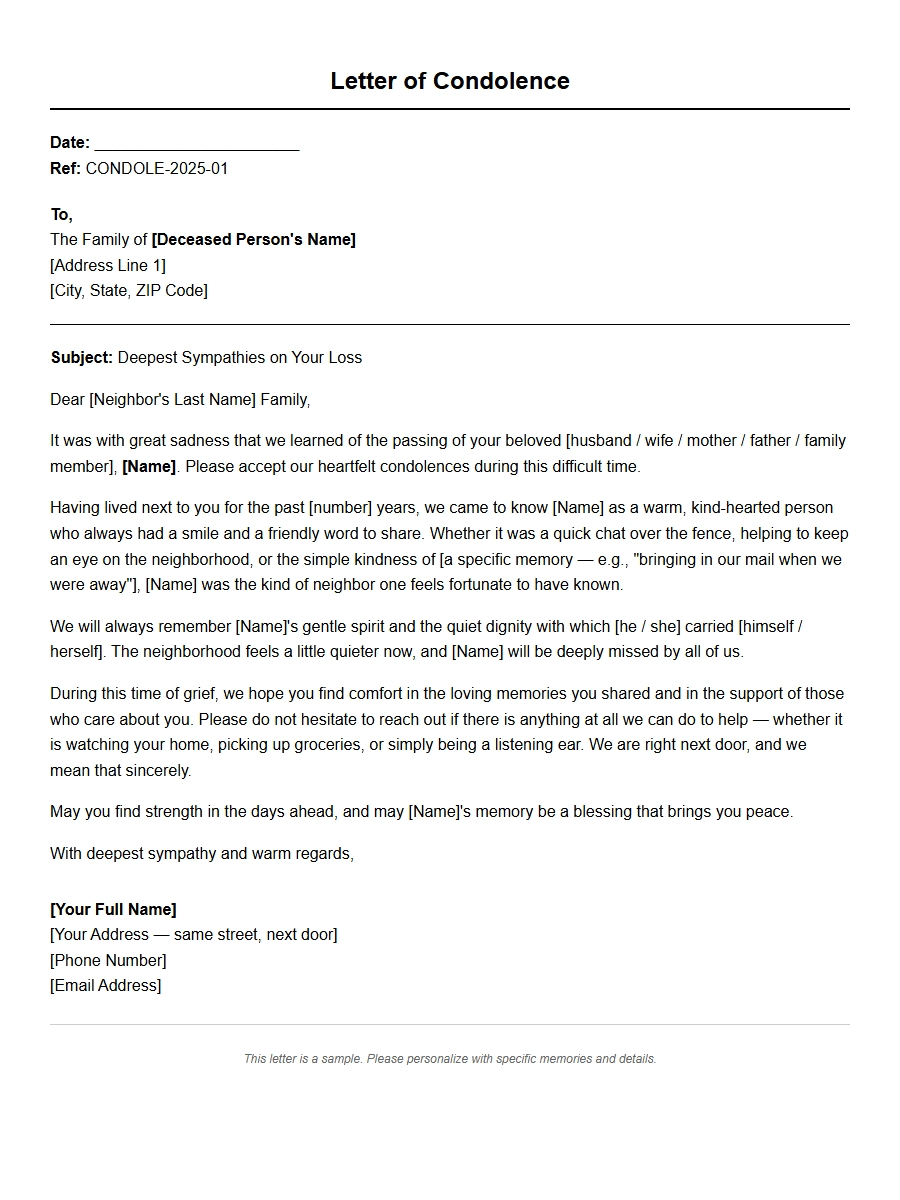 Condolence Letter Sample for a Neighbor
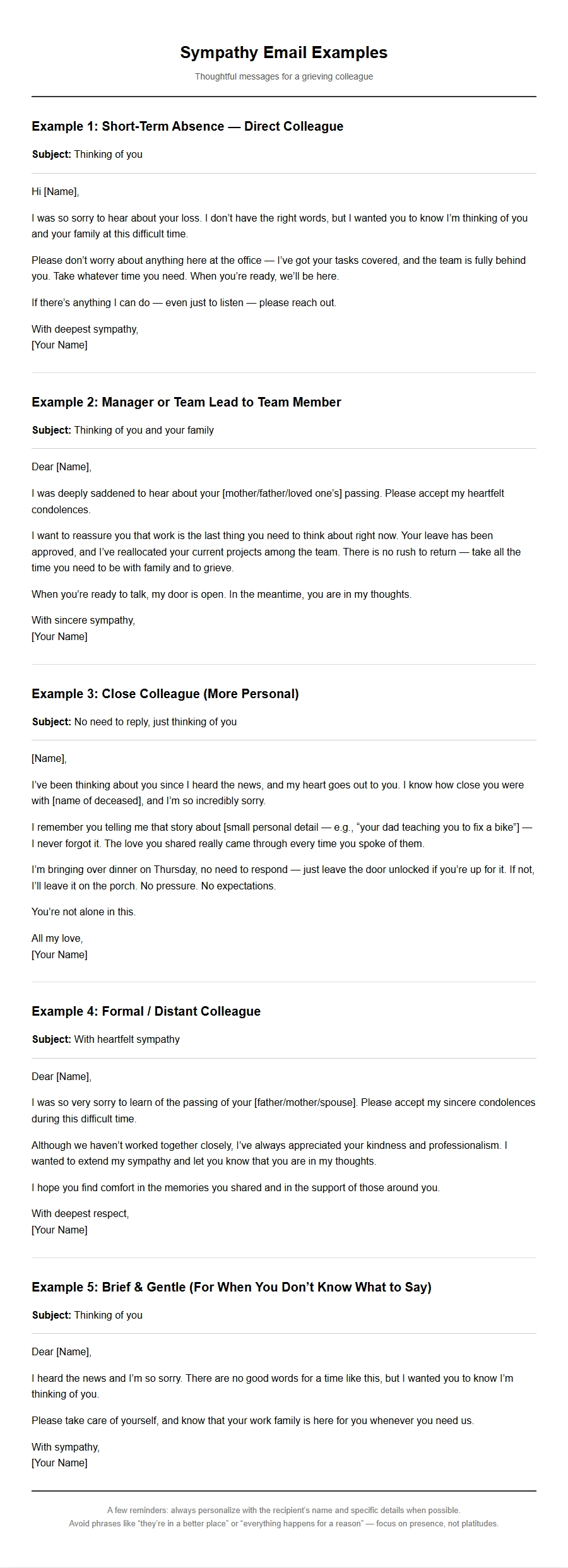 Sympathy Email Examples for a Grieving Colleague
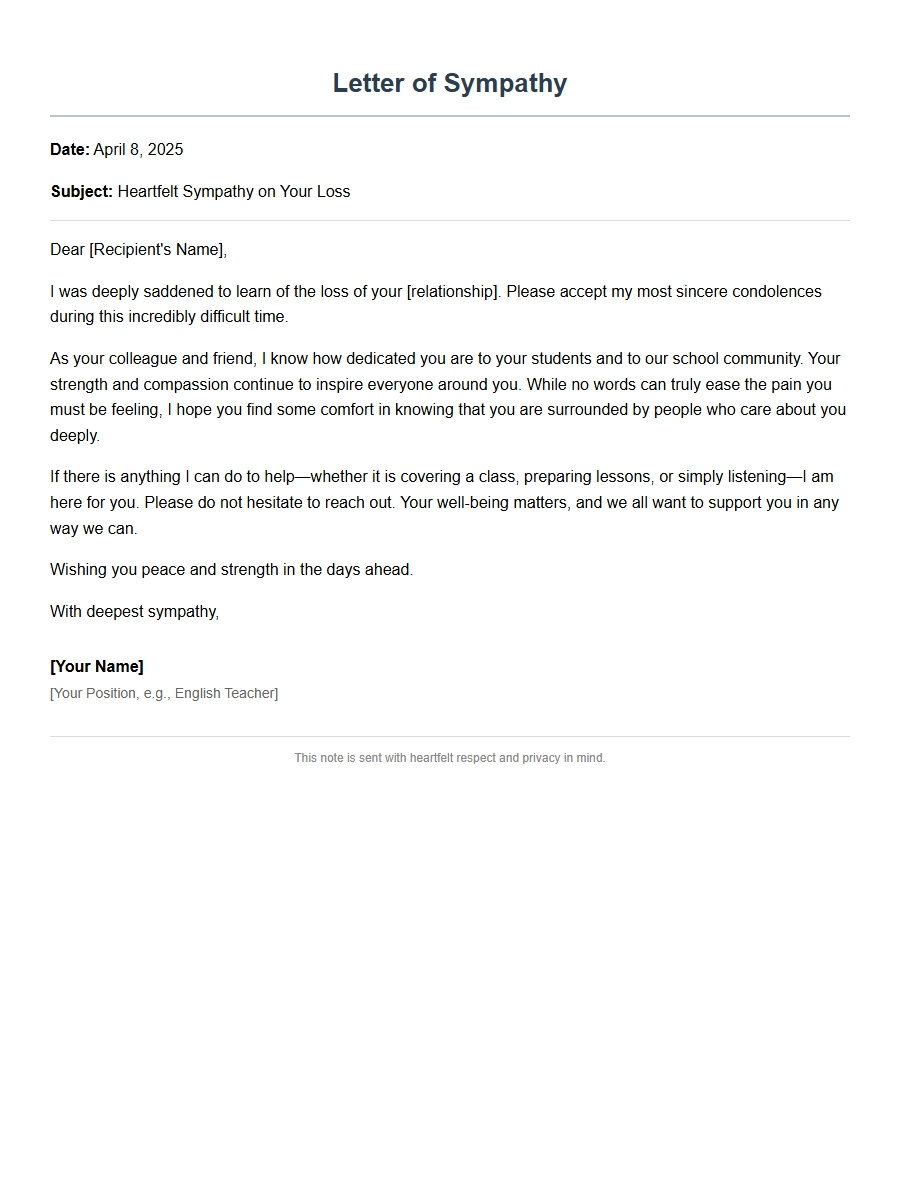 Condolence Words for a Teacher