When you're trying to write a sympathy card for pregnancy loss, the blank page can feel impossible. You want to say something meaningful, but you're terrified of saying the wrong thing. Most people freeze because they don't know the right words for a loss that often goes unacknowledged. Here's the truth: the best message is simple, honest, and acknowledges the baby's existence.
Why a sample is your best starting point
Using a sample or a letter template isn't cheating. It's how you learn the structure and tone of professional correspondence. When you're dealing with grief, you don't have the mental energy to invent everything from scratch. A good sample gives you a framework. You fill in the personal details, adjust the tone, and make it yours. That's smart writing, not lazy writing.
This is especially true for a sympathy card for pregnancy loss. Unlike other forms of condolence, this situation has specific unspoken rules. You need to balance acknowledging the depth of the loss without making assumptions about the parents' feelings. A sample helps you hit that balance.
What to say in a sympathy card for pregnancy loss
The core message is straightforward: "I am so sorry for your loss." You can add a sentence about the baby. For example, "I was so sad to hear about the loss of your little one." If you knew the baby's name, use it. Names matter. They confirm that this child existed and is being mourned.
Avoid phrases like "everything happens for a reason" or "you can try again." These dismiss the current loss. Instead, keep your focus on the present moment. Something like, "I'm thinking of you during this incredibly difficult time" is safe and kind.
How to tailor your message
The relationship determines the details. For a close friend, you can be more direct. Try something like, "I'm heartbroken for you and [partner's name]. I'm bringing dinner over Thursday, no need to respond." This combines sympathy with a concrete offer of help.
For a colleague or an acquaintance, keep it shorter. "I was so sorry to learn of your loss. Please know I'm thinking of you and your family." That's enough. You don't need a long explanation. A simple, sincere sentence does more than a long, awkward paragraph.
A common mistake is ignoring the recipient's faith or beliefs. If you know they are religious, a brief mention like "praying for your peace" is fine. If you don't know, stick to neutral language. This is letter writing etiquette in a high-stakes scenario: sympathy overrides everything else.
Common mistakes to avoid
The biggest error is saying nothing at all. Silence feels like indifference. Even a short note is better than avoiding the topic. Another mistake is making it about your own feelings. Don't write "I don't know what to say." That shifts the burden to the grieving parent. Just say the simple thing directly.
Watch your salutation and closing. For a formal letter, use "Dear [Name]," and close with "Sincerely" or "With deepest sympathy." For a more personal note, "With love" or "Thinking of you" works. Handwritten notes are always warmer for this kind of loss than a digital letter format, unless you cannot deliver it in person.
Finally, don't ask questions. "How are you?" or "Is there anything I can do?" puts pressure on the recipient to respond. It's better to make a specific offer, like "I'll drop off a meal on Tuesday." That removes the decision-making burden from them.
Sample message for pregnancy loss
Here is a simple, customizable example you can use. I've included brackets for personal details. Fill them in and you have a complete note.
"Dear [Name], I was so saddened to hear about the loss of your precious [son/daughter/baby]. I cannot imagine how difficult this must be. Please know you are in my thoughts. I will reach out next week to see if you need anything. With deepest sympathy, [Your Name]"
This works for a printed letter or an email. It acknowledges the child, offers empathy without demands, and includes a practical follow-up. Good formal writing tips always include a clear next step. It's polite but not pressuring.
What to do after you send the card
Send the card soon after you hear the news. Delay makes the sender look unsure. After you send it, follow through on any offer you made. If you said you'd bring dinner, do it. If you said you'd check in, send a simple text a week later: "Still thinking of you. No need to reply."
Also, remember anniversaries. The due date, the loss date, or the baby's brief birthday are hard moments. A second card or a simple email a few months later shows real, lasting support. This is where proofreading letter content for a second message matters just as much as the first one.
This kind of loss needs tone in writing to be gentle and direct. You are not solving anything. You are simply showing up. That's the most helpful thing you can do.
Supporting someone after pregnancy loss
If you want to do more than write a card, you can also offer practical support. Sometimes the best help is a quiet presence. For caregivers or partners who are also grieving, offering specific help like childcare for other children or picking up groceries is invaluable. You can find more examples of how to offer help in our guide on supportive notes for caregiver burnout.
For parents who are grieving, writing a longer letter can be a meaningful gesture. It acknowledges the depth of the loss. If you are close to the family, you might also consider how to word a letter for other types of loss, especially if the family has experienced multiple losses. For more specific phrasing, look at our heartfelt sympathy message examples for different relationships.
If you cannot attend the service or memorial, do not let that stop you from sending a card. It is thoughtful to acknowledge the loss even from a distance. You can read our advice on how to send condolences when you cannot attend the service for specific wording. Grief is already isolating. A card helps break that isolation.
This kind of loss is unique because the baby is not always publicly known or named. Your card is a powerful act of recognizing that this child existed and mattered. It is a small thing that makes a very large difference.
Use the sample as a springboard. Write your card today. Say the baby's name. Say you are sorry. That is the whole point of letter structure and tone in writing for a grief card. Everything else is just details.
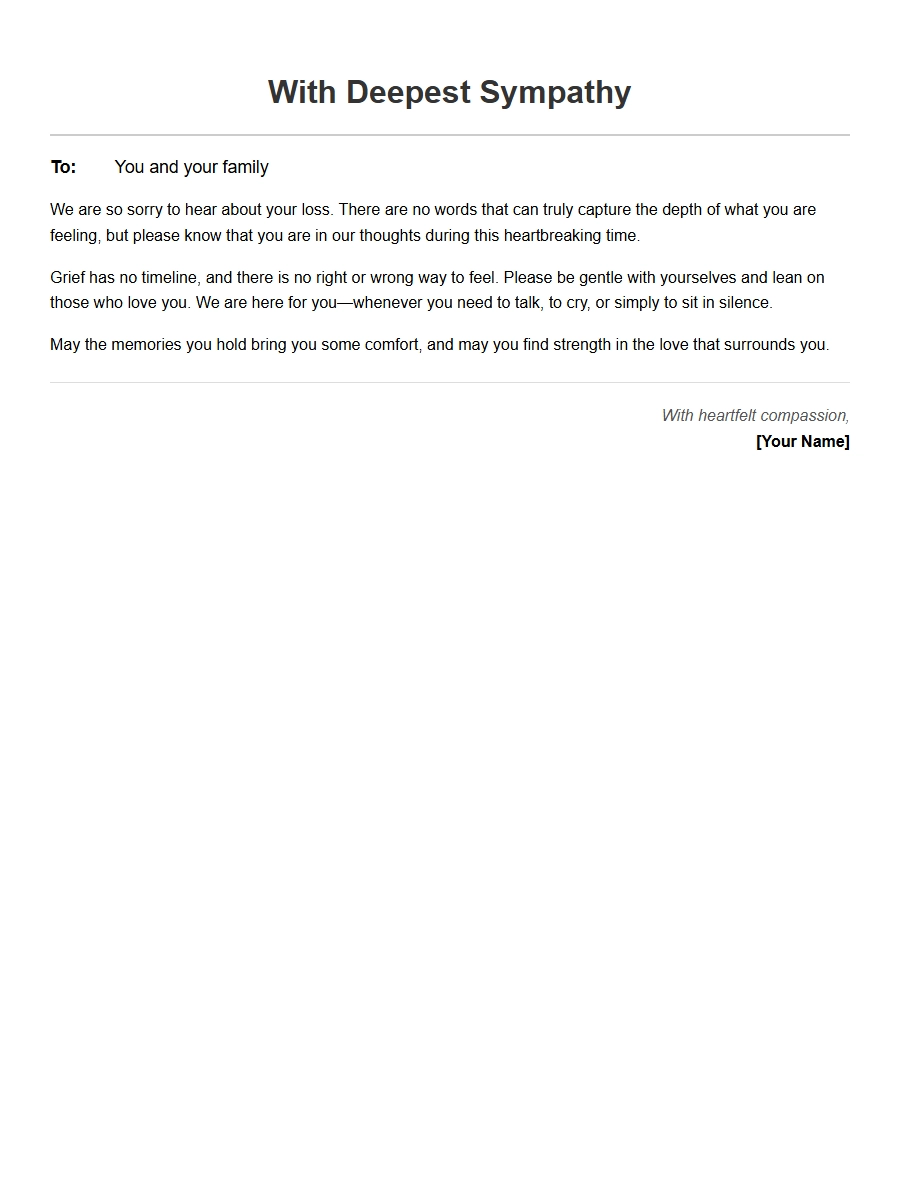
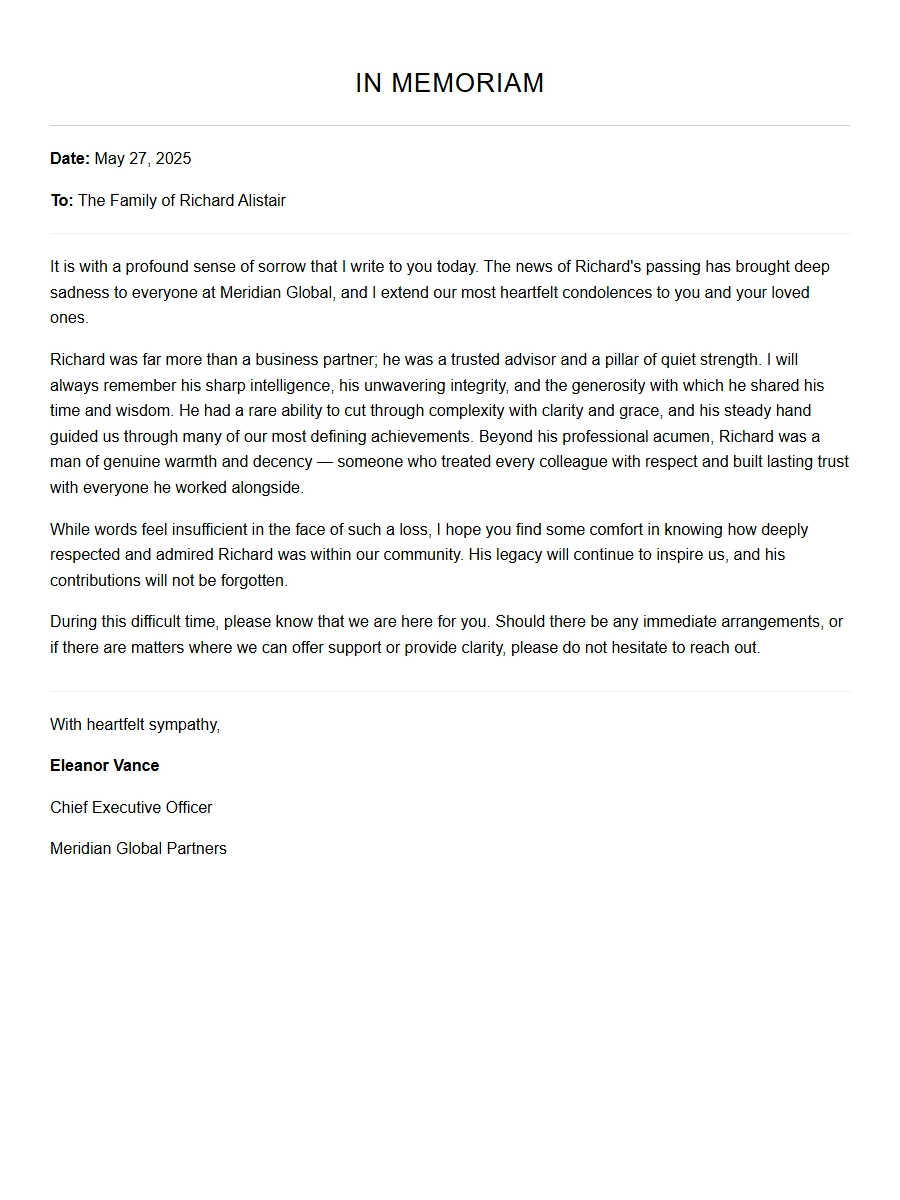 Formal Condolence Message for a Business Partner
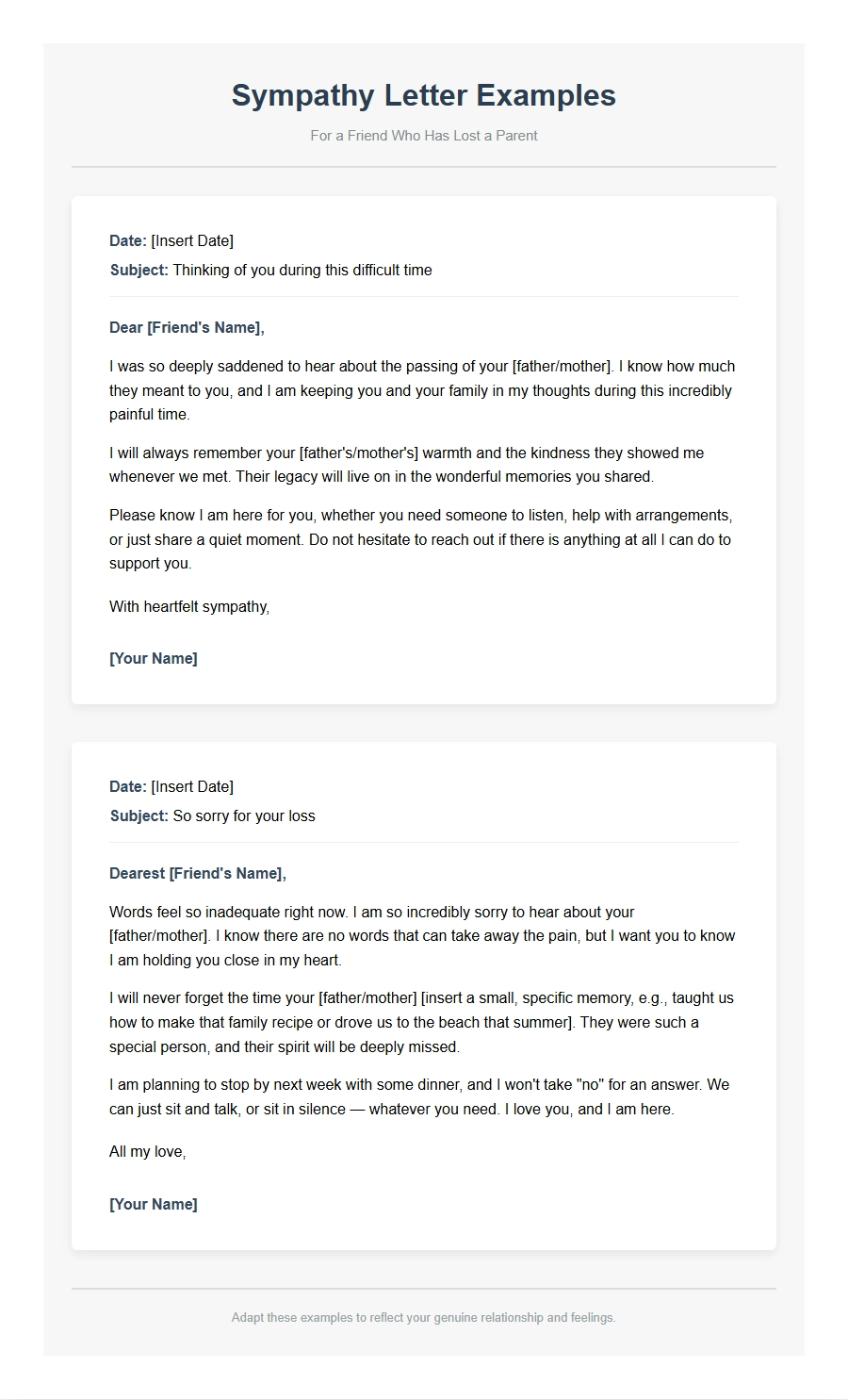 Sympathy Letter Examples for a Friend Who Lost a Parent
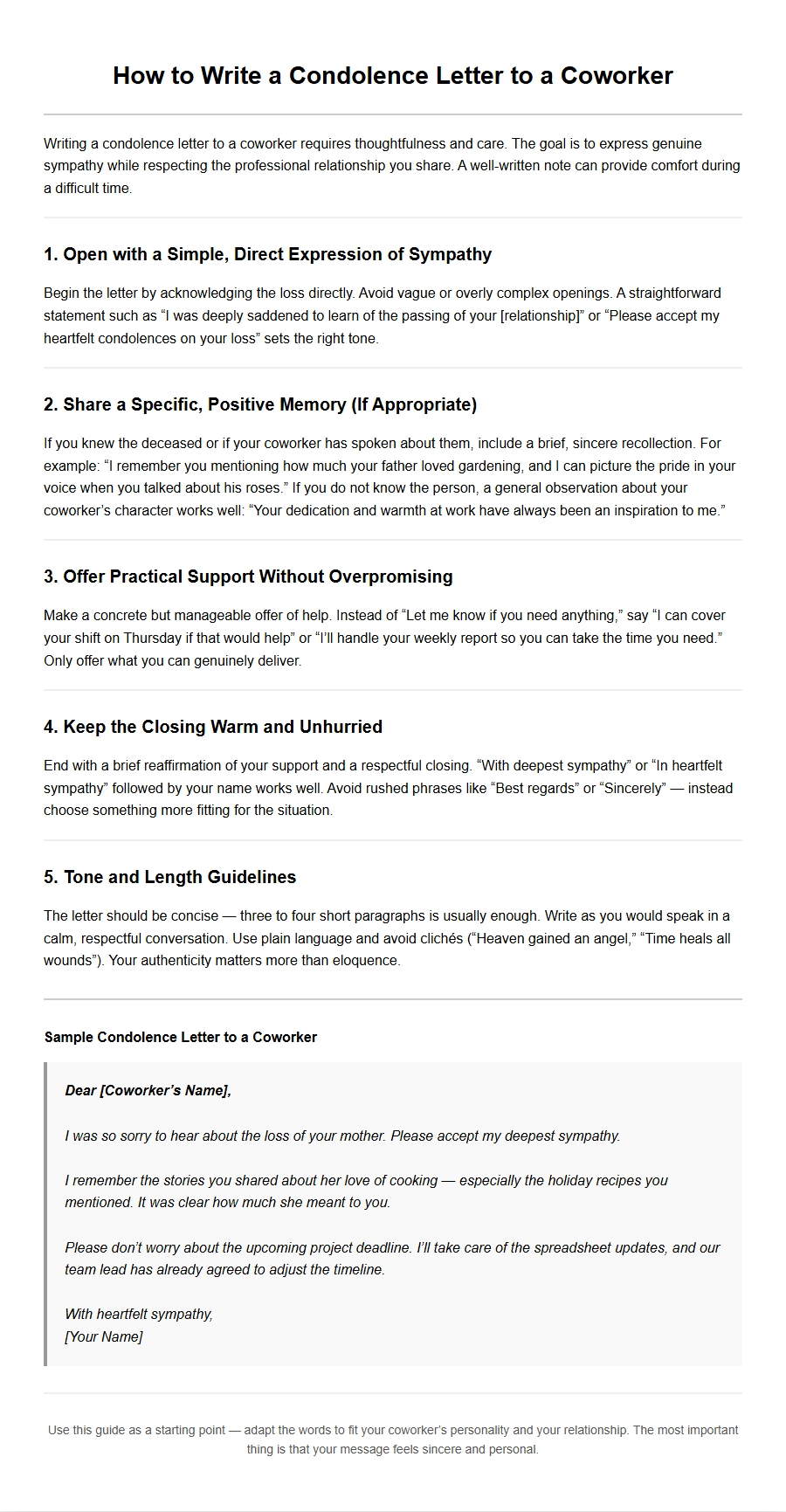 How to Write a Condolence Letter to a Coworker
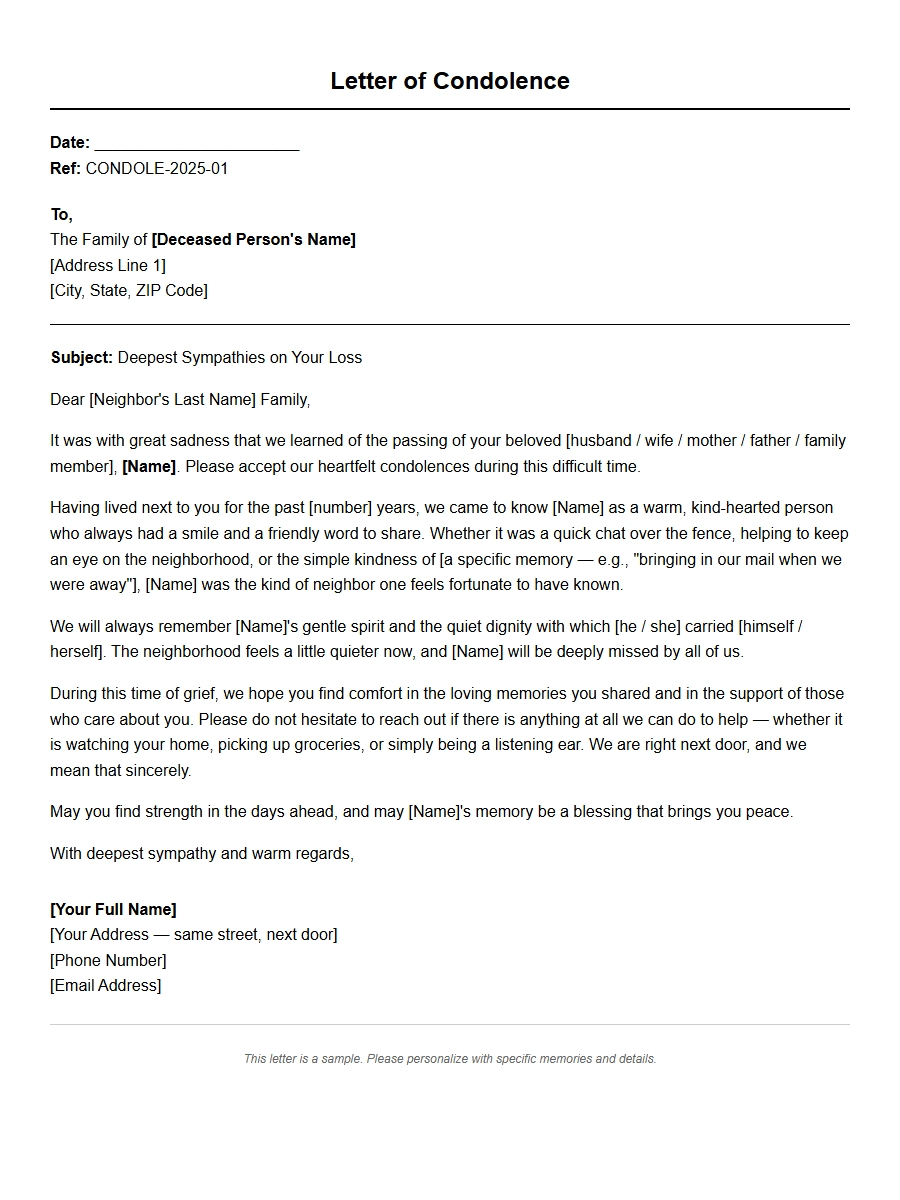 Condolence Letter Sample for a Neighbor
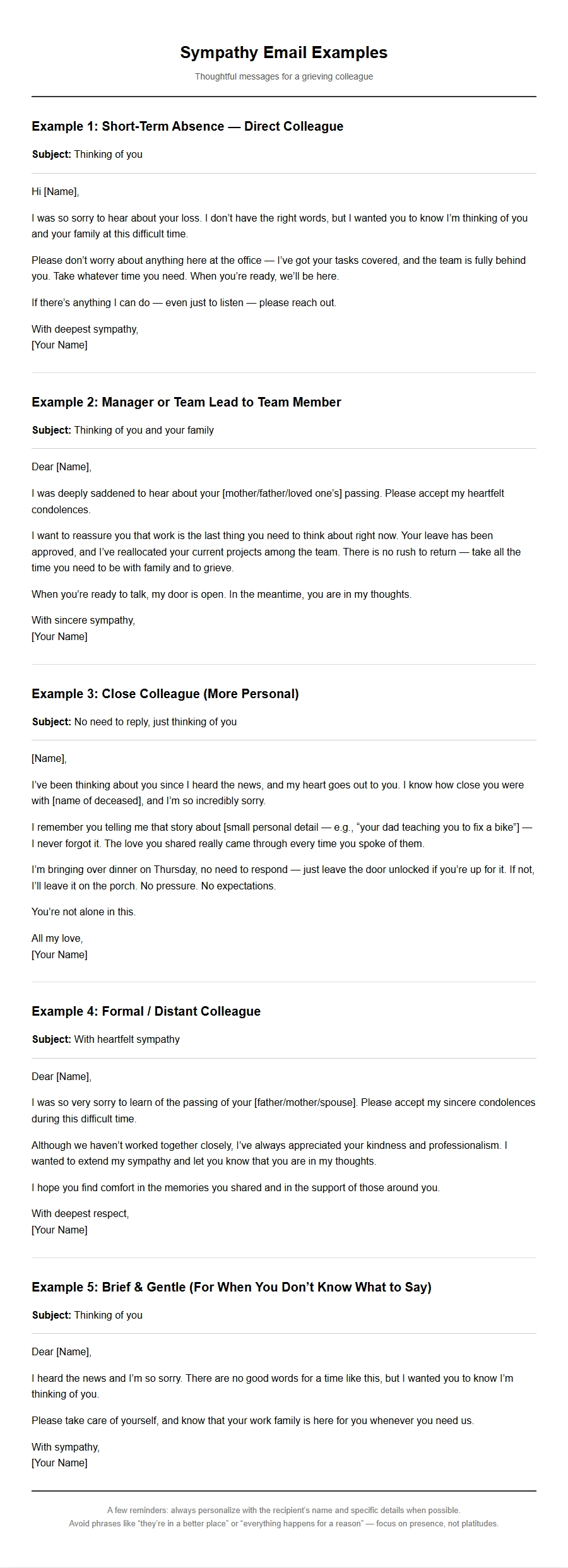 Sympathy Email Examples for a Grieving Colleague
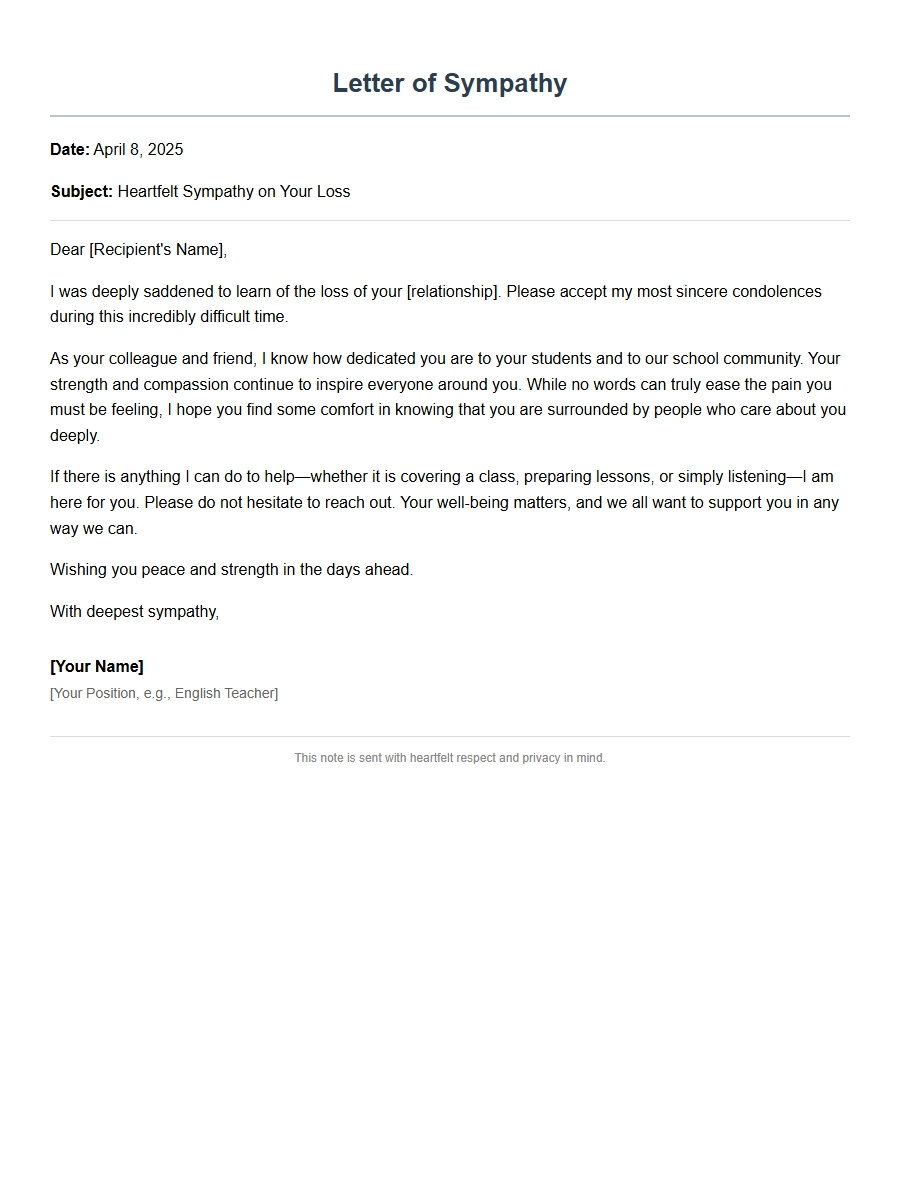 Condolence Words for a Teacher