You're staring at a blank card or an empty email, and the words just won't come. When someone you care about has lost a loved one, finding the right thing to say can feel impossible. You worry about saying the wrong thing, or worse, saying nothing at all. That's where a good sample comes in—not as a script to copy, but as a starting point that gives you structure and confidence.
Why a sympathy message sample isn't cheating
Using a sample is a smart, time-saving strategy. It's not about being lazy. It's about having a solid foundation so you can focus on what matters most: making your message personal and genuine. A well-written sample gives you the letter structure, appropriate tone in writing, and key phrases that strike the right balance between warmth and respect. You get to skip the awkwardness of figuring out where to start and instead spend your energy on tailoring it to your relationship with the bereaved.
Start with the right salutation and closing
Before you write a single word of the body, think about your salutation and closing. These set the tone for the entire message. If you're writing to a close friend, "Dear Sarah" is fine. For a colleague or acquaintance, "Dear Mr. and Mrs. Thompson" shows more formality. The closing matters just as much. "With deepest sympathy" is a safe, respectful choice. "With love and remembrance" works for a family member or very close friend. Avoid overly dramatic or vague closings like "Thinking of you" without adding a personal touch.
Adapting a sample without losing your voice
The best letter templates give you a framework you can personalize. Start with a sample that feels close to your situation. If you knew the person who passed well, your message should reflect specific memories. If you're writing because you knew the grieving person, focus on your relationship with them. The most effective wording for sympathy card inside message often follows a simple structure: acknowledge the loss, share a brief memory or quality, offer support, and close warmly. Take the sample's structure but replace general phrases with your own details. Instead of "I was saddened to hear about your loss," try "I'll never forget how your mother made everyone feel welcome at family dinners." That one change makes the message yours.
Express sorrow without feeling awkward
Many people worry about how to express sorrow without being awkward. The secret is to keep it simple and direct. You don't need flowery language or long explanations. A straightforward sentence like "My heart broke when I heard about John's passing" is honest and clear. Avoid platitudes like "He's in a better place" unless you're certain the recipient shares that belief. Instead, focus on what you genuinely feel. If you're unsure what to say, it's okay to admit that too: "I'm struggling to find the right words, but I wanted you to know I'm thinking of you." That honesty often resonates more than a polished but impersonal message.
Category: Sympathy Letters and Condolence Correspondence
Avoid common mistakes in your message
One of the biggest errors people make is using outdated or overly formal language. "We were grieved to learn of your bereavement" sounds like a Victorian novel. Write the way you speak. Another mistake is ignoring the format. If you're sending an email, the subject line should be clear and respectful, like "With deepest sympathy" or "Thinking of you and your family." For a handwritten card, take care with your handwriting and avoid crossing out words. Also, pay attention to appropriate timing for sending condolence correspondence. The sooner the better, but it's never too late. A message sent weeks or even months later can still mean a great deal, especially if you explain the delay briefly.
If you need guidance on a specific situation, you might find these resources helpful. When writing to someone who has lost a grandparent, reading a sympathy letter for loss of grandparent can give you a good starting point. If you knew the deceased well, you'll want to focus on shared memories, and a guide on how to write a letter when you knew them well can help you strike the right balance. For shorter messages, checking out options for wording for sympathy card inside message can give you concise, heartfelt ideas.
Proofreading and final touches
Before you send your message, read it out loud. This helps you catch awkward phrasing and ensures the tone in writing matches your intention. Check for typos and missing words. A simple error can distract from your intention. If you're mailing a physical letter, consider using letterhead design that's simple and respectful, but don't let fancy paper distract from the message itself. For digital messages, keep the formatting clean and easy to read. Avoid overly fancy fonts or bright colors. The focus should stay on your words, not the presentation.
Treat your sample as a springboard, not a crutch. The best sympathy messages feel both professional and personal. They acknowledge loss sincerely and offer comfort without trying to fix anything. With practice, you'll get faster and more confident at writing these difficult messages. But even the first one, with a little help from a good sample, can be something you're proud to send.
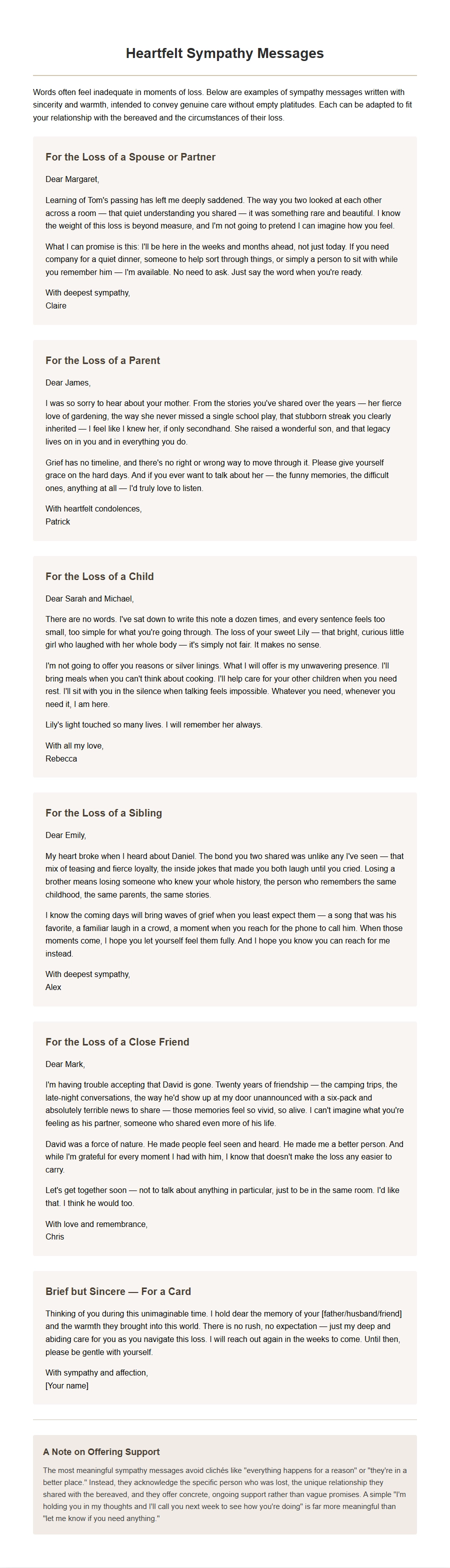
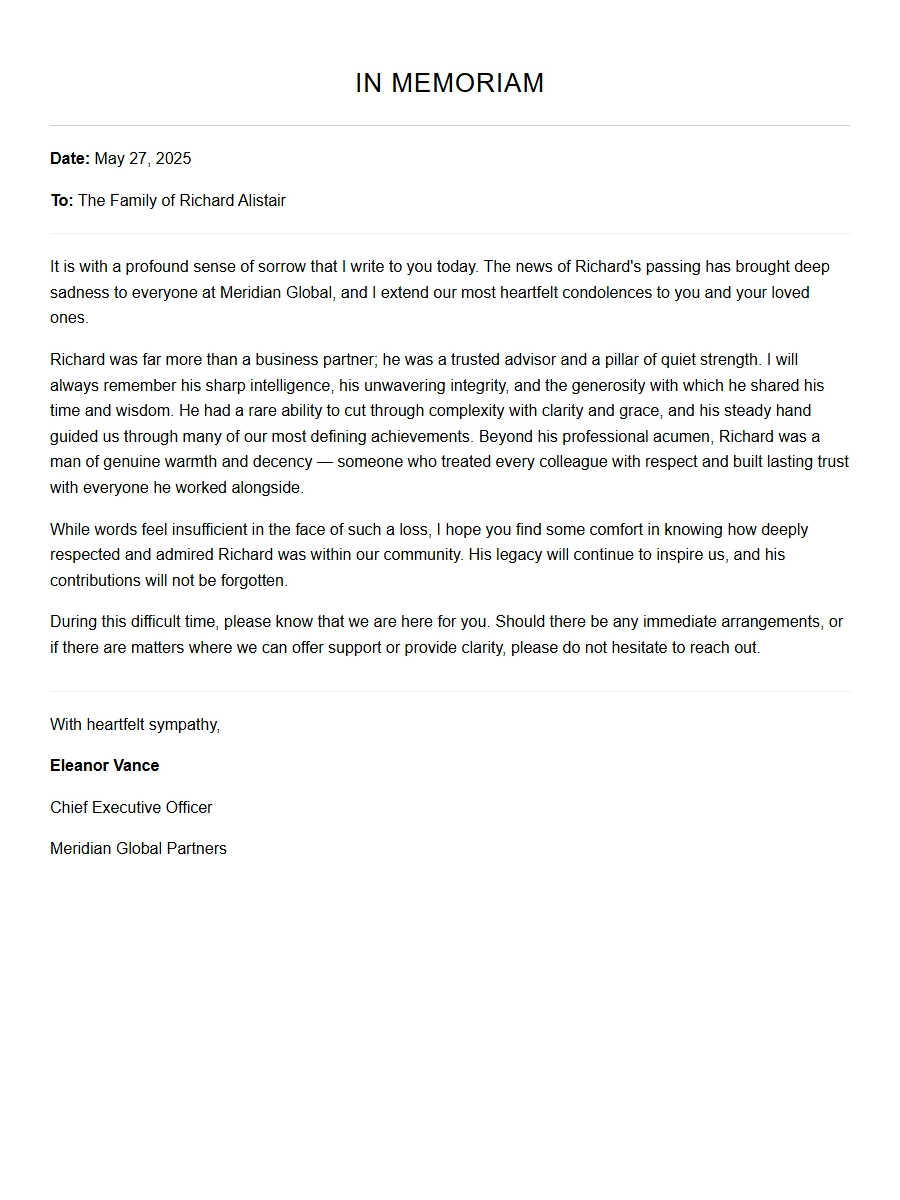 Formal Condolence Message for a Business Partner
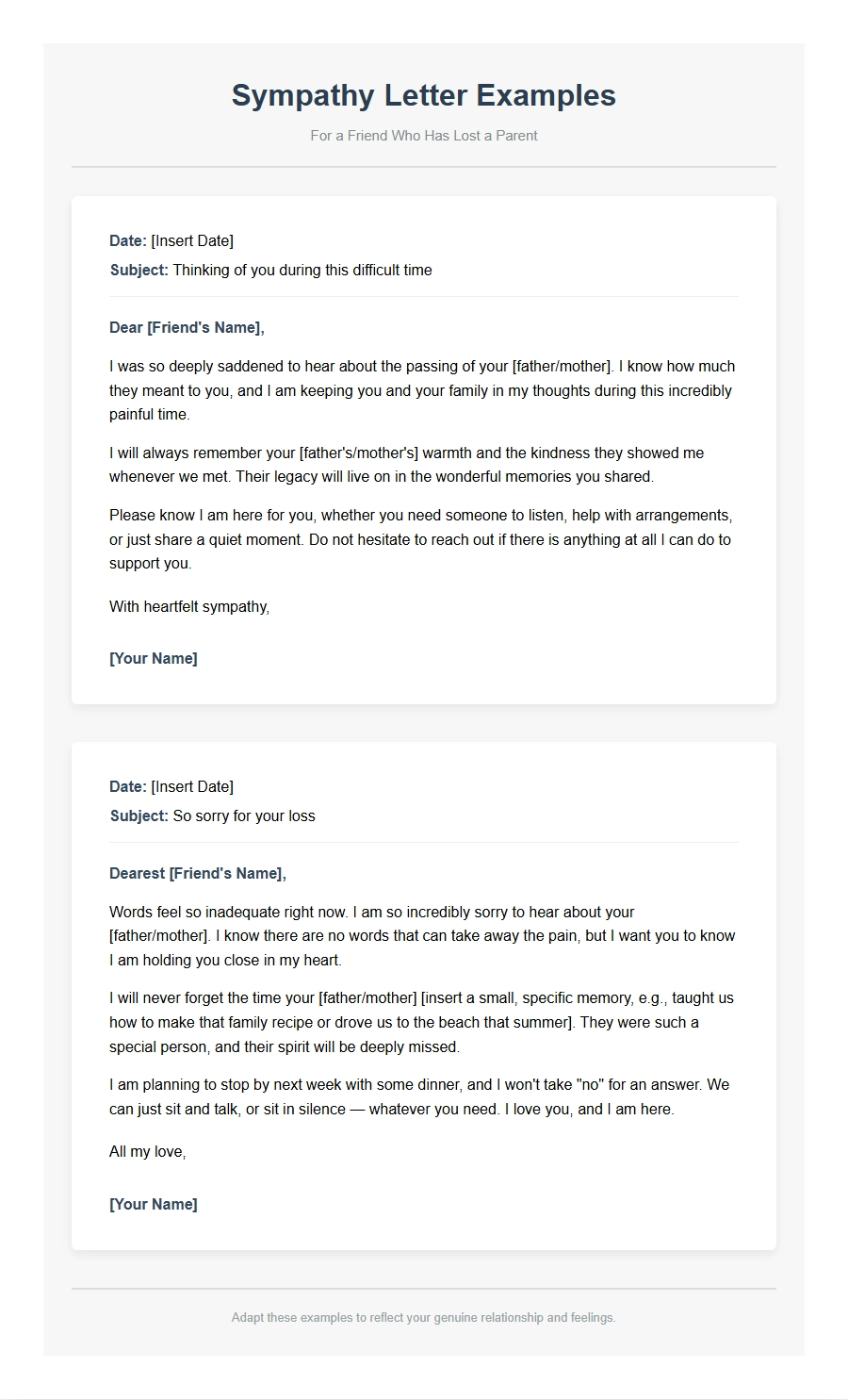 Sympathy Letter Examples for a Friend Who Lost a Parent
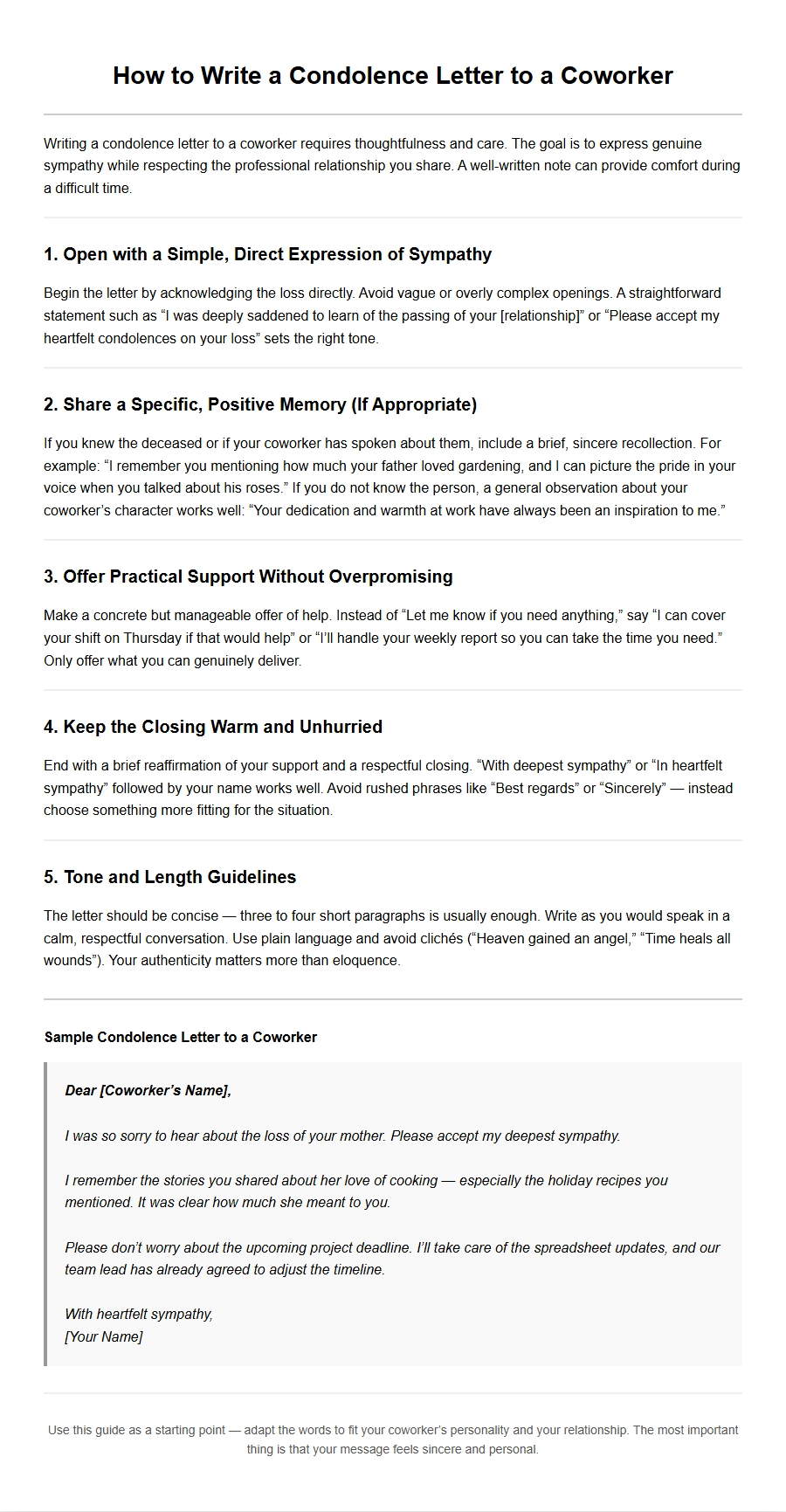 How to Write a Condolence Letter to a Coworker
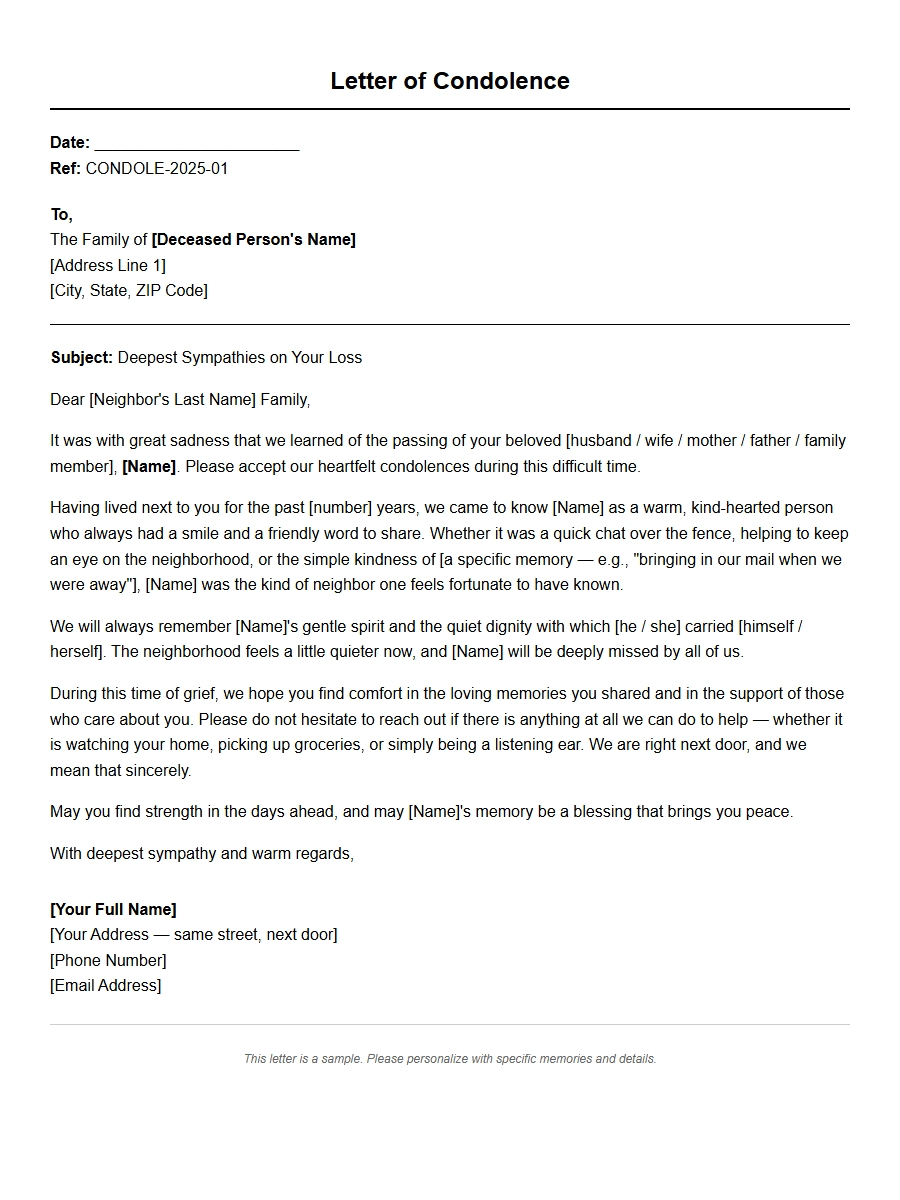 Condolence Letter Sample for a Neighbor
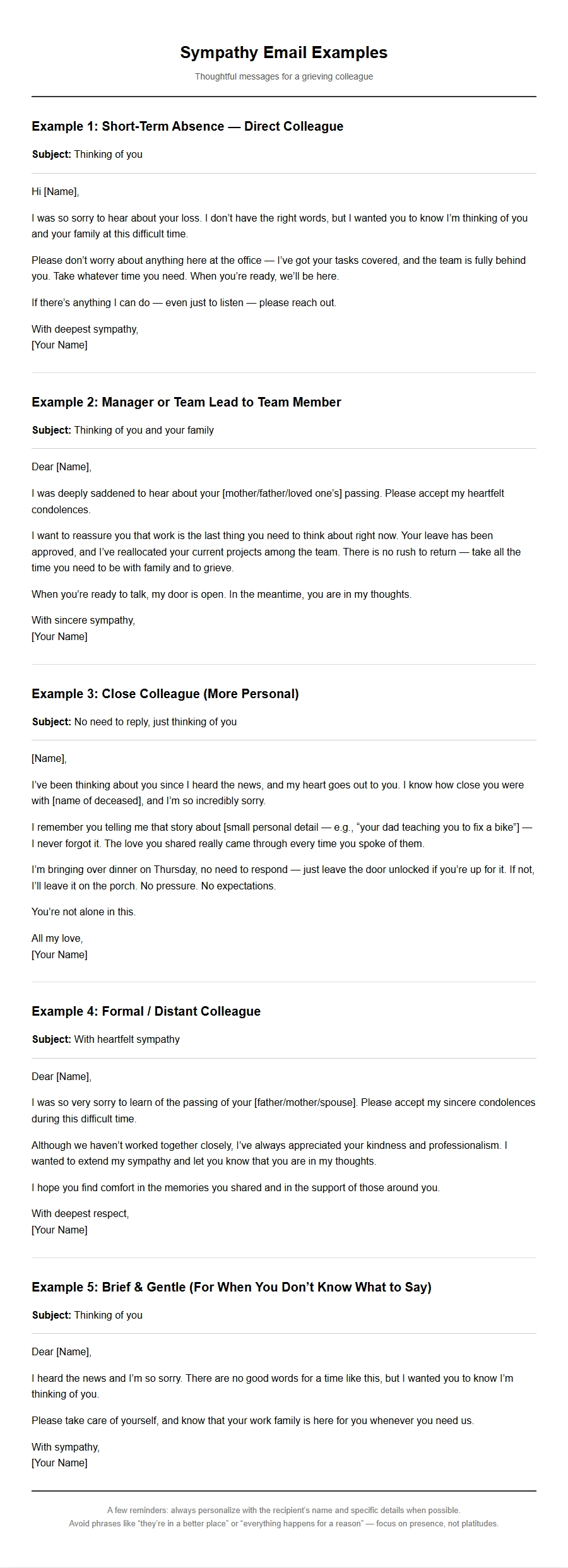 Sympathy Email Examples for a Grieving Colleague
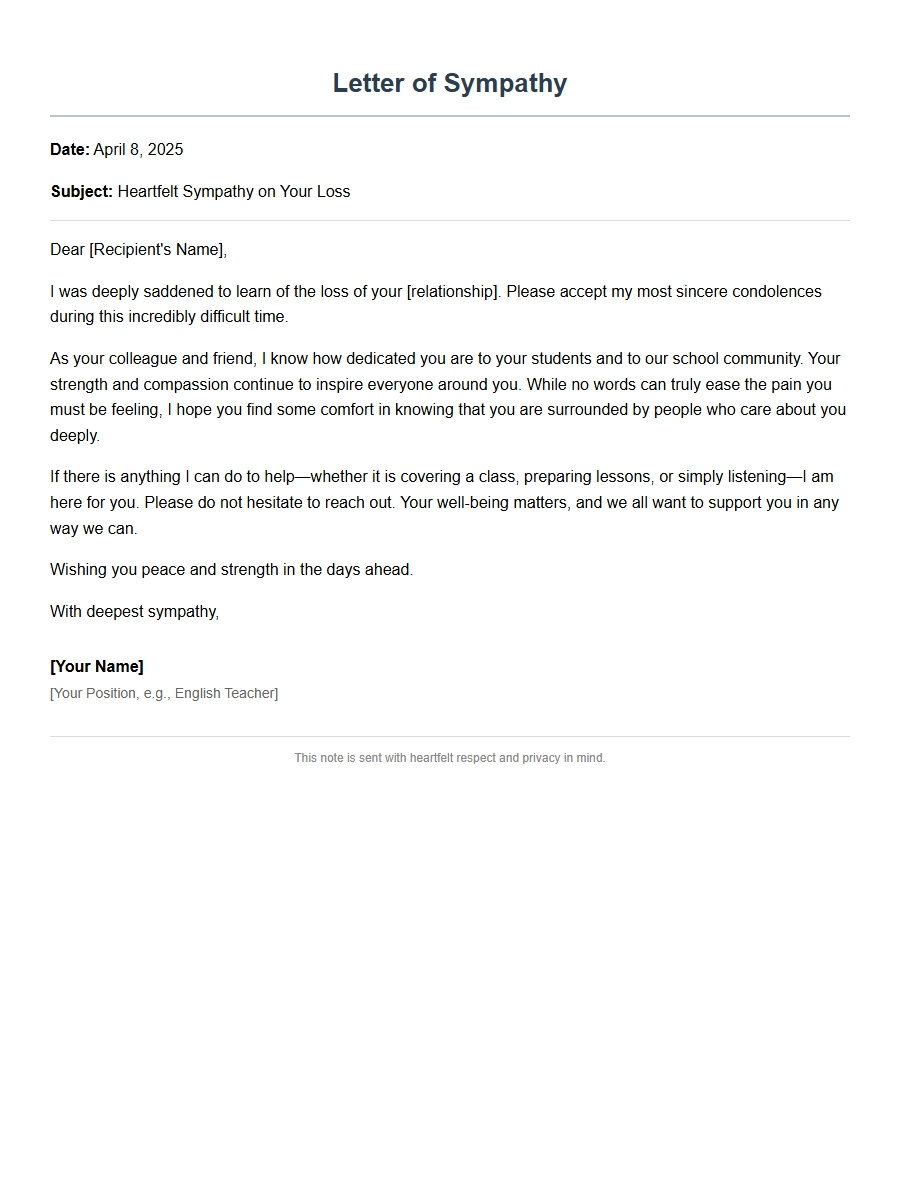 Condolence Words for a Teacher