You get the news and your first instinct is to reach out—but the moment you open a text, the words vanish. Typing “I’m so sorry for your loss” feels too short, yet writing a long paragraph seems intrusive when someone is grieving. That blank message box is a heavy thing to face, especially when you want to be helpful, not hollow.
There’s nothing wrong with using a short condolence text message for grief as a starting point. In fact, a simple, kind sample often shows more respect than a long message that tries to say too much. Think of it as a framework: you borrow the structure, but pour your own honesty and relationship into it.
(Category: Practical condolence writing guide)
Why a short condolence text works better than you think
A grieving person may have a flooded inbox, a foggy mind, or simply no energy to read a long note. A short message respects that. It says, “I remember you, I care, and I’m not asking for a reply.” The best texts feel like a quiet hand on the shoulder—not a speech.
A condolence message template gives you a safe path when your own words feel clumsy. You adjust the tone based on how close you are. For a colleague, keep it professional but warm: “So sorry to hear about your loss. Thinking of you and your family.” For a close friend, you can add a brief personal memory: “Can’t believe she’s gone. I still remember her laugh. I’m here if you need anything.”
How to choose the right sample for your situation
Not all grief is the same, and your relationship with the person matters. A short condolence text for a neighbor whose parent died should not sound the same as one for a sibling who lost a twin. The sympathy message for loss of twin sibling requires acknowledging a unique bond, while a message for an elderly parent might focus on a long life lived well.
If the person is a professional acquaintance, stick to a neutral but kind letter writing etiquette: “Deeply saddened by your loss. Wishing you strength in the days ahead.” If you’re writing to someone who was a patient (for example, a hospice worker sending a note), you might use a softer tone found in comfort letters for recently departed patient.
Common mistake: Using clichés like “They’re in a better place” when you don’t know the person’s beliefs. Stick to simple empathy. “I’m so sorry” never fails because it’s honest.
Adapting a sample without losing your voice
A sample is a scaffold, not a script. Read it, then rewrite it in your own words. Keep the salutation and closing natural. Start with the person’s name if you usually do. End with something that feels like you: “Sending love,” “Take care,” “Thinking of you.”
If you’re texting, digital letter format matters less, but still avoid all caps or too many emojis. A single gentle emoji (like a small heart) can soften the tone if that’s your style. But keep it to one—grief isn’t the time for a string of sparkles.
Quick tip: Open with the person’s name, then the condolence, then an offer of support. Example: “Hi Maria. I’m heartbroken to hear about your brother. I’m bringing dinner over on Thursday unless you tell me otherwise.” That small action shows care more than a paragraph of adjectives.
What tone feels right for a grief text?
It depends on your relationship and the circumstances. For a sudden death, your tone can be quietly shocked. For an expected loss after a long illness, you might focus on relief from suffering. The personal touch in a sympathy letter for a close friend often includes a memory that makes the person smile through tears.
If you’re not sure about tone, err on the side of simple and warm. Avoid over-explaining why you’re sorry—just be sorry. Avoid giving advice on how to grieve. Avoid “at least” statements (“At least they’re not in pain anymore” can feel dismissive).
One more mistake: skipping the proofreading step. A typo in a condolence message can feel careless. Read it out loud before you hit send. If it sounds like you, it’s ready.
Using a condolence text when you also want to share a memory
Sometimes a short message isn’t enough because you have a specific memory you want to offer. That’s fine—send the short text first, then follow up with a longer note later. Or combine it: “I still remember that time she made us all laugh at the picnic. I’m so sorry. Missing her with you.” The letter to share a memory of the deceased works beautifully as a separate message a week later, when the initial shock has faded.
Remember: your message is a springboard, not a final draft. The goal is to make the grieving person feel seen, not to deliver a perfect essay. A short condolence text message for grief that comes from an honest place is almost always the right length.
So open your phone. Pick the simplest sample you can find. Change two or three words to make it yours. Press send. Then let yourself off the hook—you’ve done the hard part, and you’ve done it with kindness.
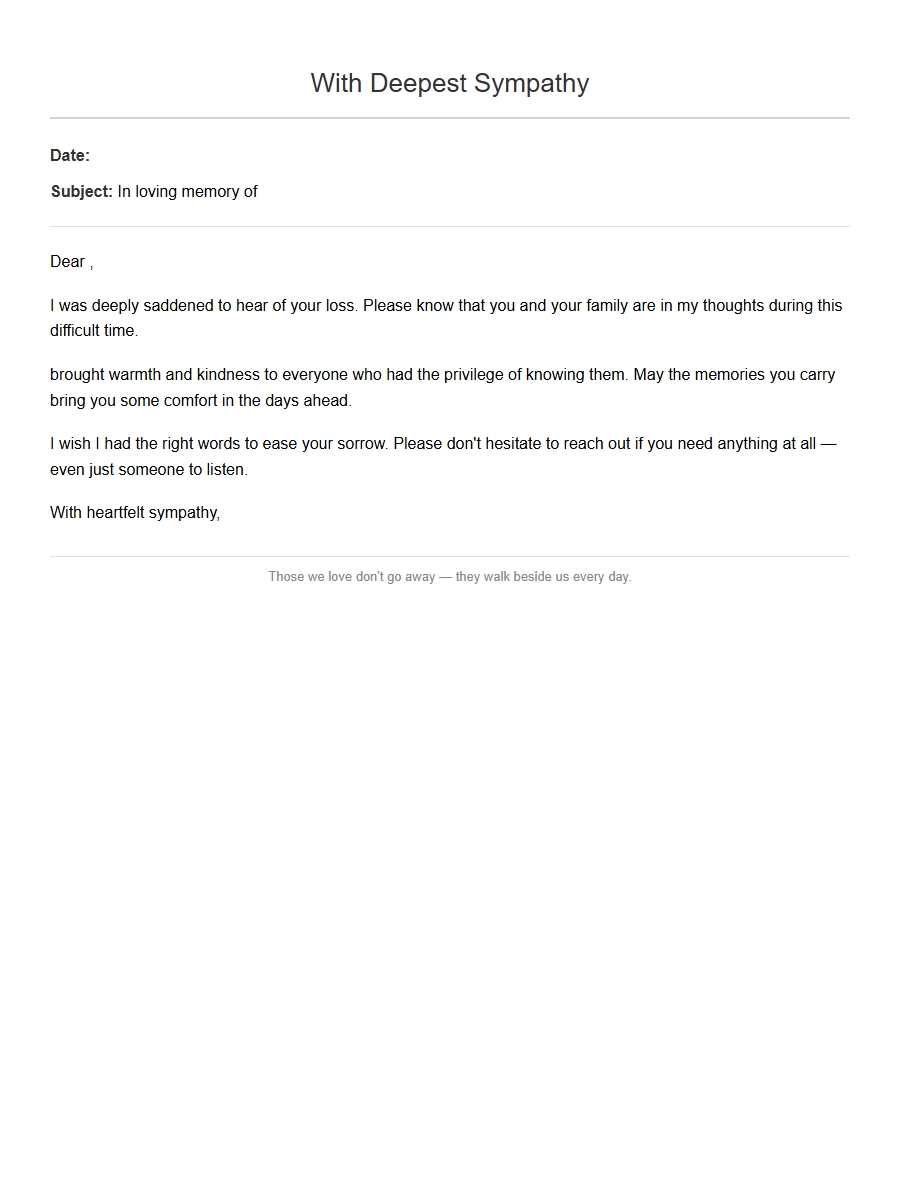
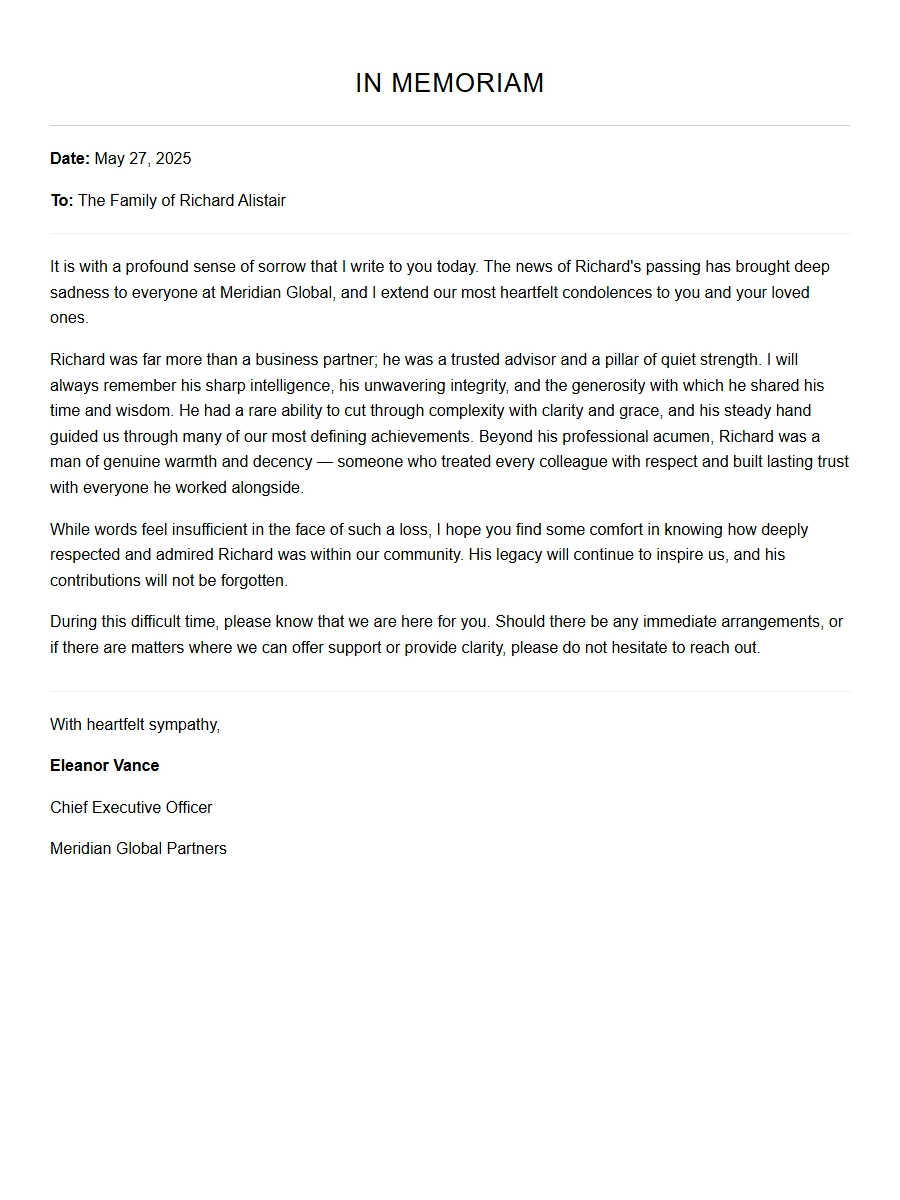 Formal Condolence Message for a Business Partner
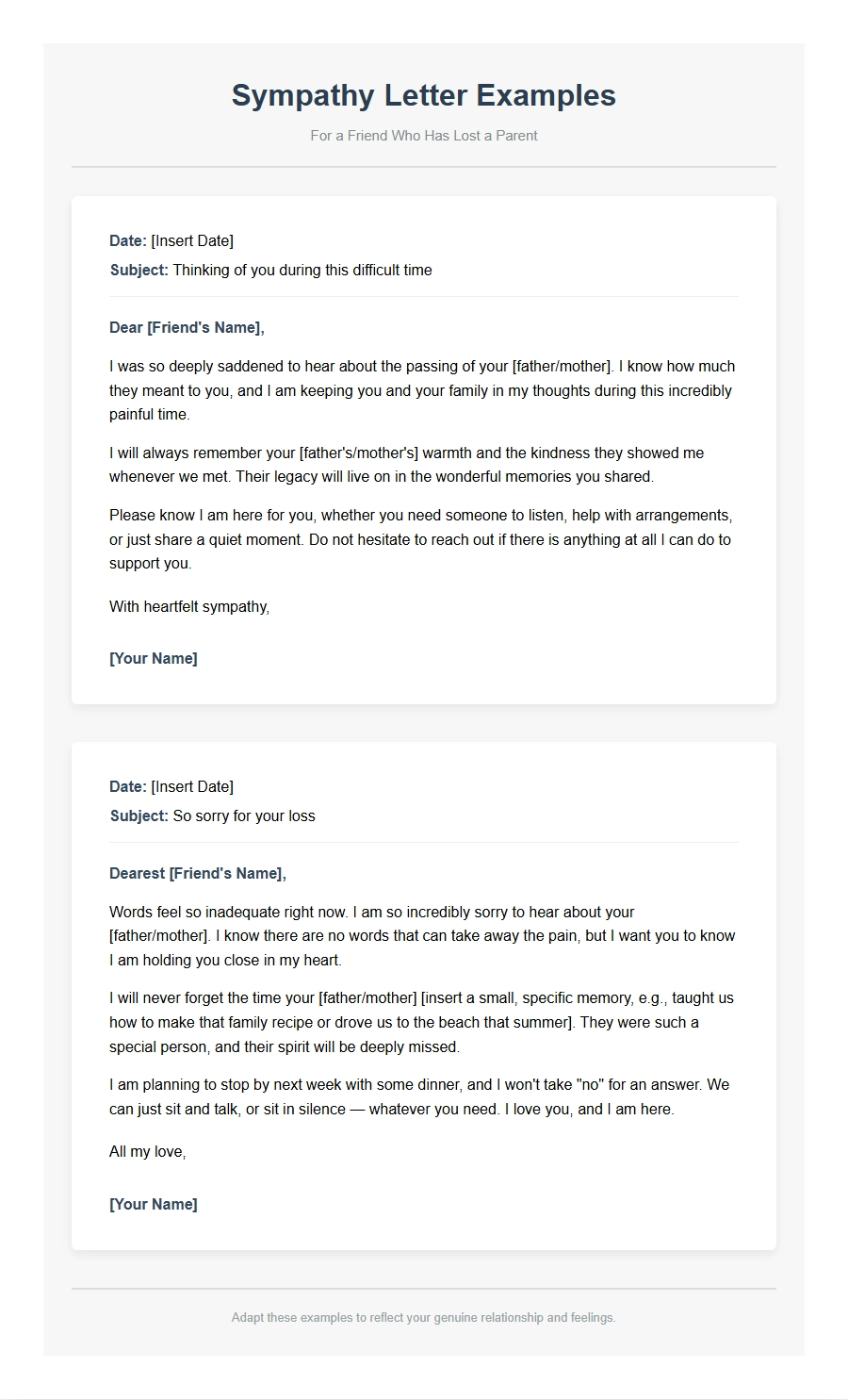 Sympathy Letter Examples for a Friend Who Lost a Parent
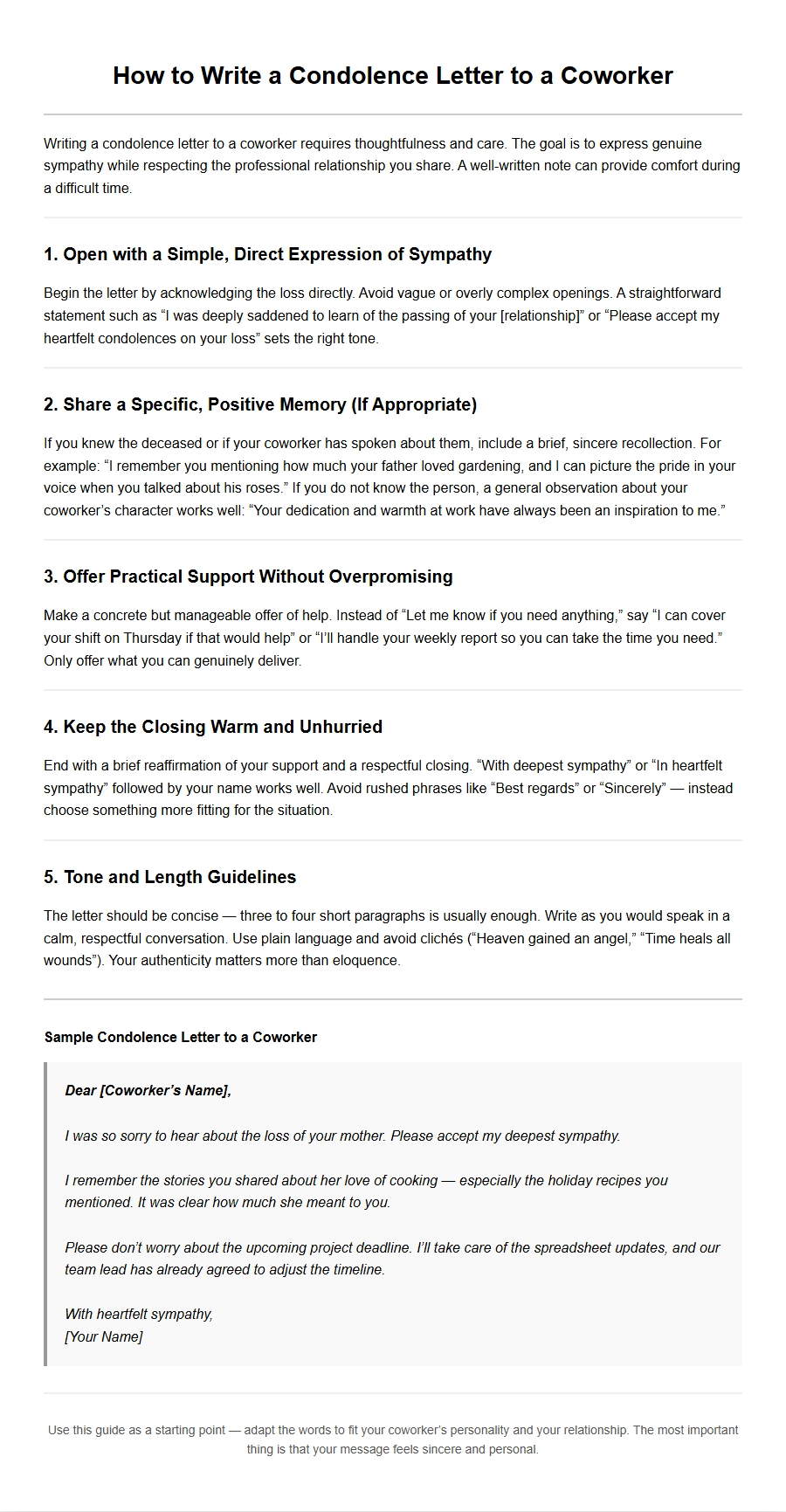 How to Write a Condolence Letter to a Coworker
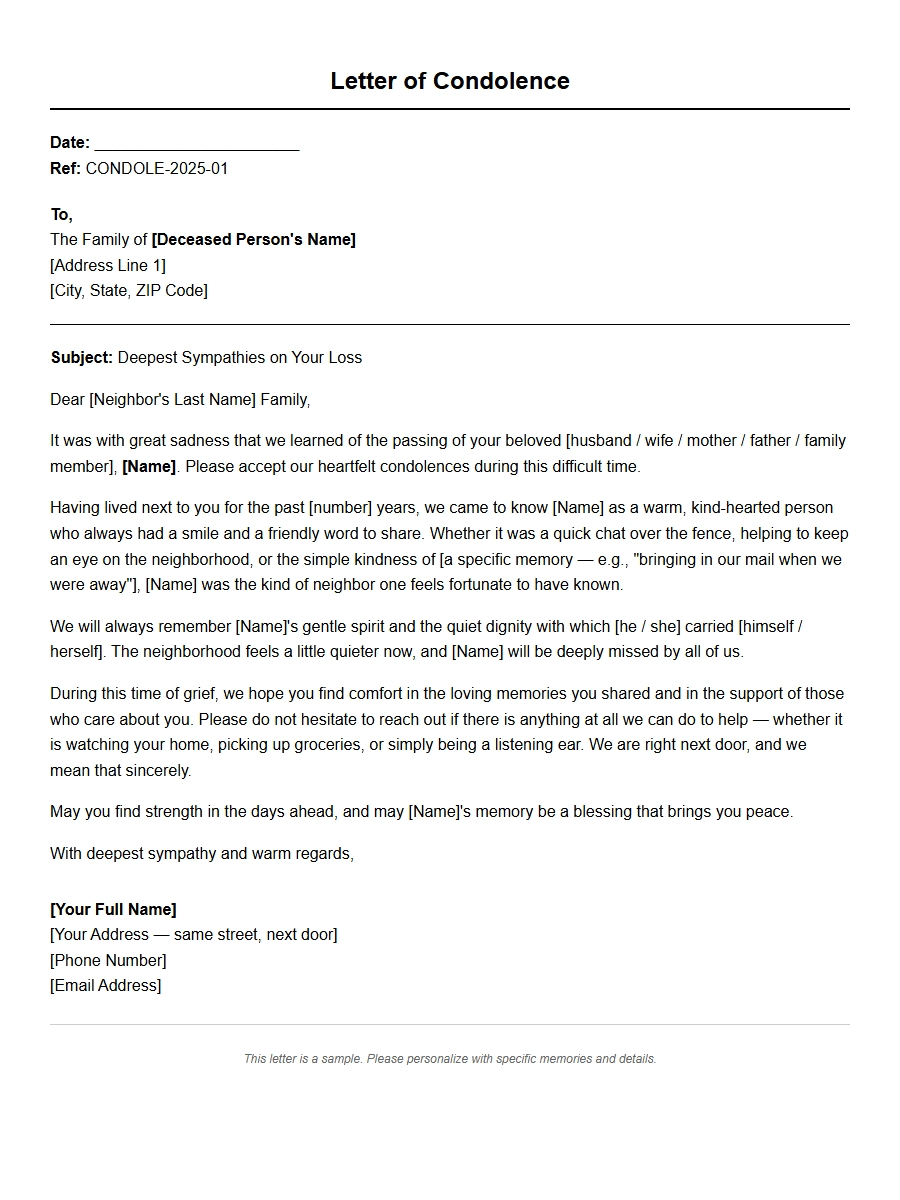 Condolence Letter Sample for a Neighbor
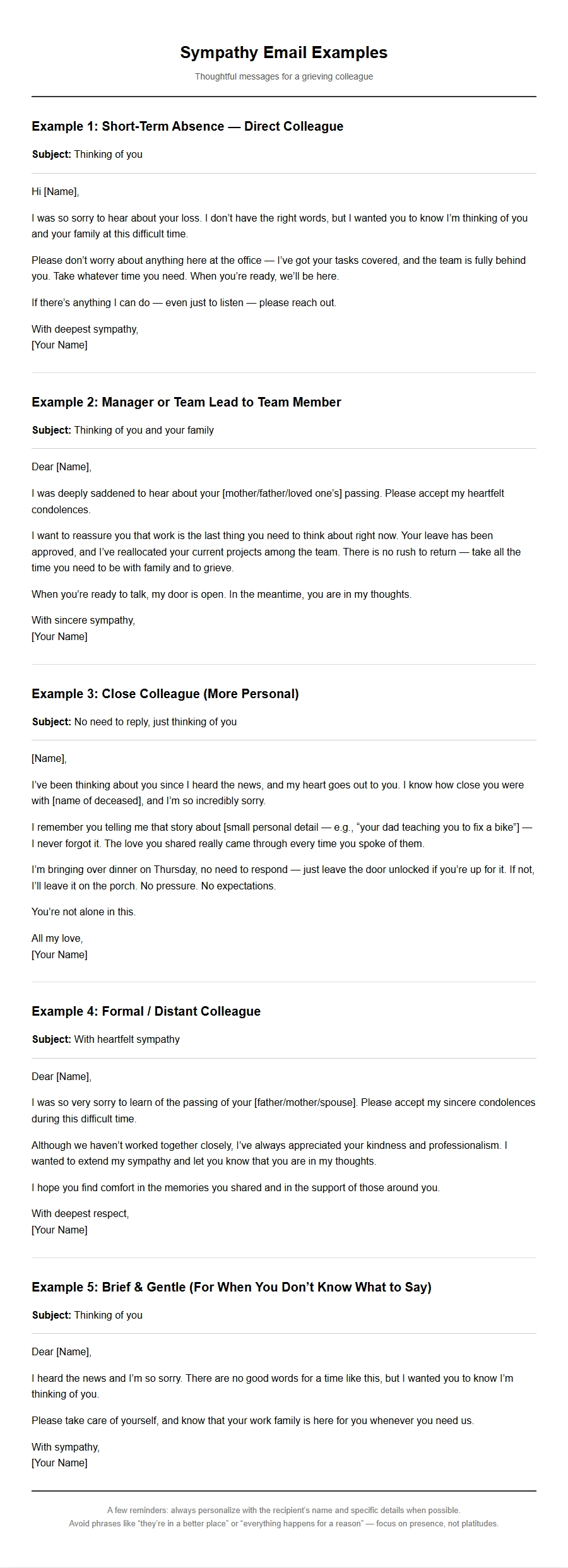 Sympathy Email Examples for a Grieving Colleague
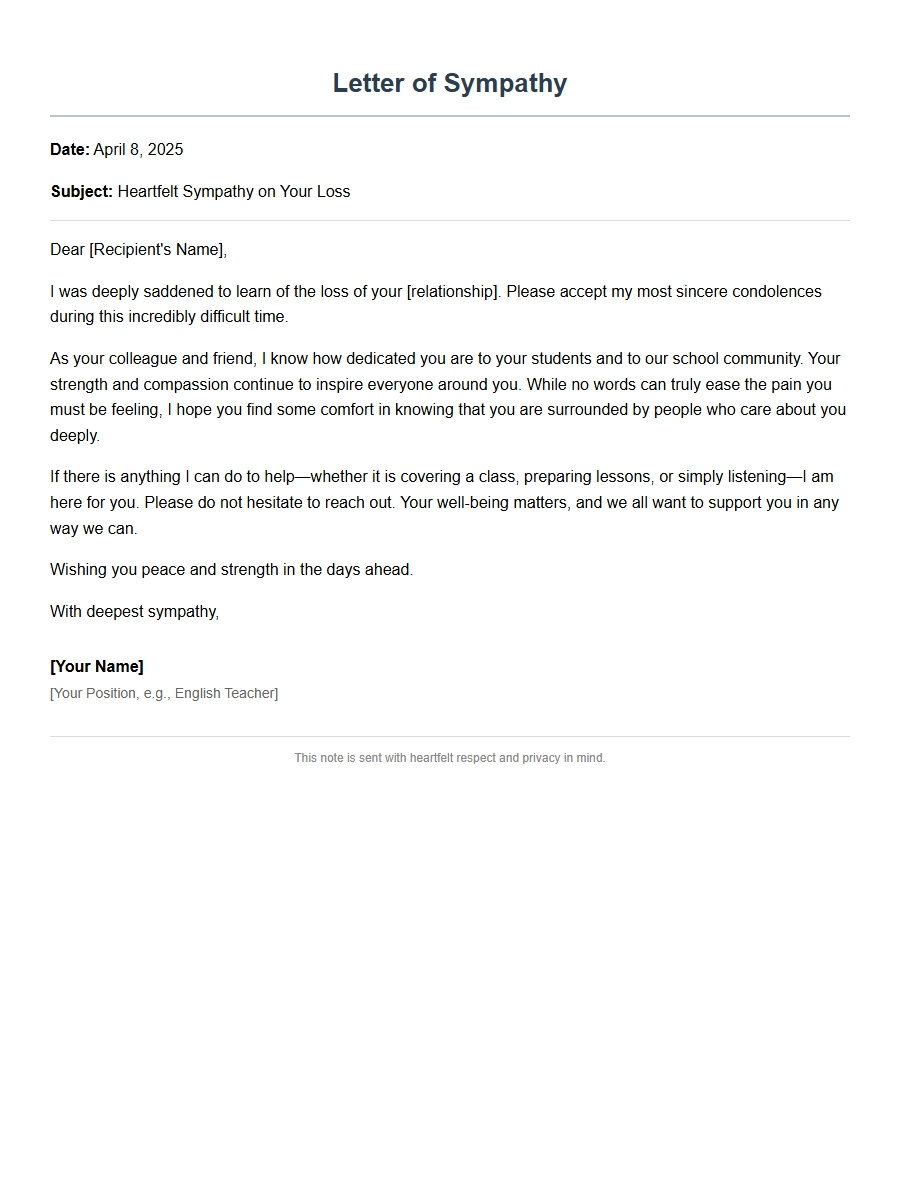 Condolence Words for a Teacher