Legally Binding Notice Phrasing for Breach of Contract
You’ve got a contract, and someone isn’t holding up their end. Maybe they missed a payment, failed to deliver work, or ignored a deadline. Now you need to send a formal notice that does more than vent—it needs to protect your legal rights. Getting the phrasing wrong can weaken your position or even invalidate the notice. But getting it right isn’t as complicated as it seems.
What “legally binding notice” actually means
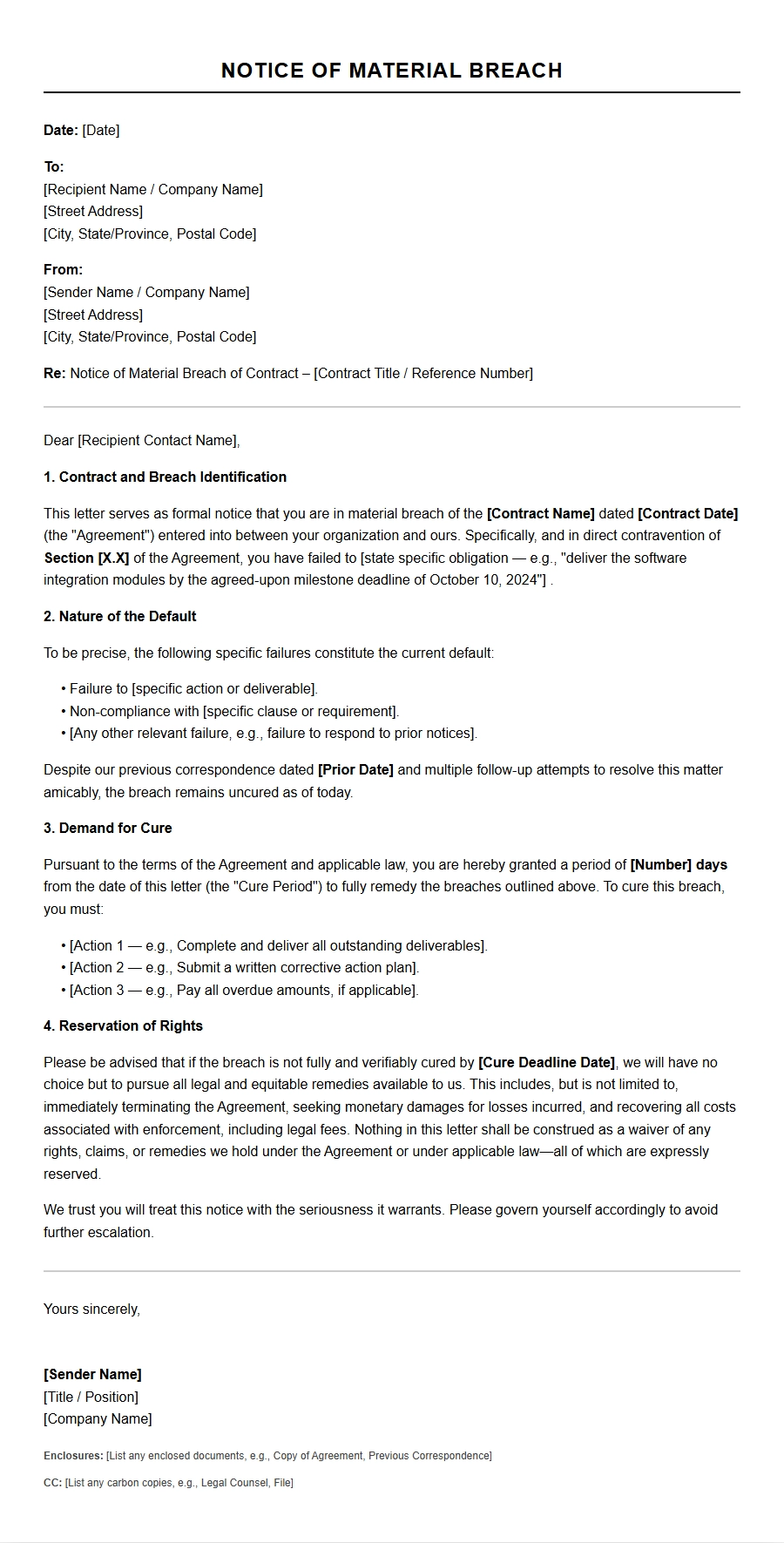
A breach of contract notice is a formal written statement that tells the other party they’ve violated the agreement. It also gives them a chance to fix it, or it starts the clock for legal action. Courts look for specific elements in these letters: clear identification of the breach, reference to the specific contract clause, a demand for remedy, and a reasonable deadline.
This isn’t just angry email territory. You need professional correspondence that shows you understand your rights and are serious about enforcing them.
Why a sample letter isn’t cheating
When you’re upset about a breach, it’s easy to write an emotional mess or a vague complaint that gets ignored. A letter template gives you structure—where to state the facts, how to reference the contract, and what to say about consequences. It keeps you focused. You can customize every part, but you don’t have to reinvent letter writing etiquette from scratch.
Good cover letter examples for contracts work the same way. They show you the business letter format that courts and companies take seriously. You’ll learn proper salutation and closing conventions, and how to maintain the right tone in writing—firm but not hostile, clear but not rude.
Category: Breach of Contract Notice
What to include in your notice
Start with the date and the parties involved. Reference the contract by date, title, and relevant clause numbers. Describe the breach specifically—don’t say “you failed to perform.” Say “you did not deliver the 100 units by March 15 as required in Section 4.2.”
State what you want: payment, corrected work, or termination of the agreement. Give a clear deadline. Explain what happens if they don’t comply—like legal action or termination. End with your signature and contact information.
Common mistakes that ruin a notice
Using vague language. Saying “you’ve been difficult” instead of “you missed three consecutive monthly payments.” That doesn’t hold up.
Ignoring the correct digital letter format when sending by email. If your contract requires written notice by mail, an email might not count. Check your agreement first.
Using outdated salutations like “To Whom It May Concern” when you know the person’s name. It looks lazy. You’ll also want to spend time on proofreading letter content—a typo in a contract clause reference can cause confusion.
Forgetting to keep a copy. Always send via certified mail or with a read receipt, and keep the proof. Letterhead design isn’t strictly necessary, but it adds credibility—especially if you’re a business.
How to adapt a sample without sounding fake
Don’t copy a template word for word. Read it, understand the structure, then rewrite the facts in your natural voice. If you usually write directly, don’t force formal language like “hereinafter.” That’s not you. The key is tone in writing that matches your relationship with the other party.
If you’re writing to a long-term client, you can be more conversational. If it’s a first-time vendor who ghosted you, stay formal. Every customizable letter needs to fit the real situation.
Tailoring the opening paragraph
The first sentence should state the purpose immediately. “This letter serves as formal notice of your breach of the Service Agreement dated January 10, 2024.” Don’t bury it. The reader should know what this is about in the first five seconds.
When to use different samples
A resignation letter sample won’t help you here. You need a breach notice, not a goodbye. But you can look at letter of recommendation structures for how to organize paragraphs logically—just flip the tone from positive to corrective.
Believe it or not, even a hotel booking confirmation can involve a contract breach. If the hotel cancels your guaranteed reservation, you have rights. Our guide on grievance regarding hotel room booking confirmation shows how to demand compensation or alternative accommodation using the same principle of clear, referenced notice.
Use the sample as a springboard
A good notice is both professional and personal. It follows the rules of formal writing tips but speaks in your real voice. The first time you write one, it might feel clunky. That’s okay. The second time will be faster. The third time, you’ll know exactly what to say. That’s the whole point of having a solid letter structure to start from.
Helpful Examples
Legally Binding Notice Phrasing for Breach of Contract
Notice of Payment Default Under Service Agreement
Date: November 1, 2023
To: Precision Marketing Inc. From: Crestview Digital Solutions Re: Breach of Contract for Non-Payment under Agreement dated March 15, 2023
This letter serves as formal notice that you have failed to remit payment for services rendered in the amount of $12,450.00 (Invoice #2023-047, due October 1, 2023). Your non-payment constitutes a material breach of Section 4.2 of the Agreement.
Pursuant to Section 8.1 (Cure Period), you have 10 calendar days from receipt of this notice to cure the breach by submitting the full overdue amount. Failure to do so will result in:
Immediate suspension of all services
Acceleration of any remaining payments due under the contract
Legal action to recover damages, plus interest at 1.5% per month as allowed by the Agreement
We demand full payment of $12,450.00 by November 11, 2023.
Invoice #
Amount Due
Due Date
2023-047
$12,450.00
October 1, 2023
This notice is without prejudice to any other rights we may hold under the contract or at law.
Breach of Confidentiality – Cease and Desist Demand
Date: October 28, 2023 To: Greenleaf Partners LLC From: Apex Biotech Corp. Re: Material Breach of Non-Disclosure Agreement dated January 10, 2022
We have received credible evidence that Greenleaf Partners disclosed our proprietary formulation data (“Data”) to a third party on October 15, 2023, in violation of Section 3.1 of the NDA. This disclosure constitutes a material and irreparable breach.
You are hereby required to:
Immediately cease any further disclosure or use of the Data.
Return or destroy all copies of the Data within 5 business days, certifying such action in writing.
Provide a full written account of the disclosure, including recipient identity and date.
Failure to comply will result in a lawsuit seeking injunctive relief and damages under the Defend Trade Secrets Act. Additionally, we reserve the right to terminate all existing agreements with your firm.
This notice is sent pursuant to Section 6.2 of the NDA and does not waive any claims for past or future breaches.
Demand for Cure Deadline: November 3, 2023
Notice of Failure to Deliver Specified Goods
Date: November 3, 2023 To: EuroParts GmbH From: Metro Assembly Inc. Re: Breach of Supply Contract #SP-4521 – Undelivered Components
According to our contract, you were obligated to deliver 500 units of Model X actuator assemblies by October 20, 2023 (Order #1012). To date, only 120 units have been received. The shortfall of 380 units constitutes a material breach of Schedule A, Section 2.
We are exercising our rights under Clause 12.1. You have 7 days to cure the breach by delivering the remaining 380 units at no additional cost. If you fail to cure:
We will cover the purchase with an alternative supplier and hold you liable for price difference and expedited shipping costs.
We will claim consequential damages for production delays, estimated at $4,500 per day.
Item
Contracted
Received
Shortfall
Model X Actuator Assembly
500
120
380
This notice is final. Cure by November 10, 2023, or we will pursue all available remedies.
Demand for Payment Under Equipment Lease
Date: October 25, 2023 To: Belltower Construction Co. From: RentalPro Group Re: Breach of Lease Agreement #L-889 – Past Due Rent
We regret to inform you that your account is delinquent for equipment leased under Agreement #L-889. The following amounts remain unpaid as of October 25, 2023:
Invoice
Period
Amount Due
Days Overdue
INV-Oct-001
September 1-30
$5,200.00
25
INV-Oct-002
October 1-15
$2,600.00
10
Total
$7,800.00
Under Section 6.3 of the Lease, failure to pay rent within 10 days of the due date is a material breach. We hereby demand immediate payment of the full $7,800.00. If not received by November 1, 2023, we will:
Declare the entire remaining lease balance immediately due and payable (acceleration).
Repossess all equipment at your cost.
Pursue legal action for collection plus attorney fees as provided in Section 9.4.
This notice is sent under reservation of all rights.
Notice of Breach – Failure to Perform Contractual Services
Date: November 5, 2023 To: CloudServ IT Solutions From: Horizon Financial Group Re: Service Level Agreement Breach – Managed IT Services
We refer to the Managed Services Agreement executed on June 1, 2023. Under Section 3.1, you guaranteed a system uptime of 99.9% monthly. Our monitoring shows that for October 2023, actual uptime was 96.8%, resulting in 14.4 hours of unscheduled downtime.
Additionally, you failed to respond to critical incident tickets within the agreed 1-hour window on three separate occasions (Incident IDs: #1023, #1028, #1041). This repeated failure constitutes a material breach.
Pursuant to Section 7.2 (Remedies), we require:
A service credit of 20% on the October monthly fee ($15,000 × 20% = $3,000).
A written corrective action plan to be submitted within 5 business days.
If the breach is not cured within 15 days, we will terminate the contract and seek damages for lost productivity estimated at $1,200 per hour of downtime.
SLA Metric
Required
Actual
Breach
Uptime
99.9%
96.8%
Yes
Critical Response Time
≤1 hour
2.5, 3.1, 1.8 hours
Yes
We expect your prompt attention.
Notice of Unauthorized Assignment of Contract Rights
Date: November 2, 2023 To: Summit Education Inc. From: Evergreen Training Partners Re: Material Breach – Unauthorized Assignment of Training Agreement
We have learned that on October 20, 2023, you assigned your rights and obligations under the Training Services Agreement (dated March 1, 2023) to SubLearn Corp. without our prior written consent. This action violates Section 10.1 of the Agreement, which expressly prohibits assignment without the other party’s approval.
Such assignment is null and void. You are required to:
Immediately revoke the assignment and notify SubLearn Corp. in writing.
Provide us with proof of revocation within 7 calendar days.
Confirm in writing that no future assignments will occur without consent.
Failure to cure this breach by November 9, 2023, will result in termination of the entire Agreement and a claim for damages, including any costs incurred by us from dealing with an unauthorized third party.
This notice does not waive our right to seek specific performance or injunctive relief.
Breach of Warranty – Defective Products Delivered
Date: October 30, 2023 To: SafeGuard Coatings Ltd. From: Bridgeway Manufacturing Re: Breach of Express Warranty – Purchase Order #PO-776
On September 12, 2023, we received 1,000 gallons of epoxy coating under your standard terms. The product was warranted to be free from defects and conform to specifications. However, independent testing shows that 340 gallons (Batch #E-2210) contain 15% excess solvent, rendering the coating unusable for our application. This constitutes a breach of warranty under Section 6.2.
We reject the non-conforming batch and demand the following cure within 10 business days:
Replace the entire 340 gallons with compliant product at no cost.
Reimburse our testing expenses ($1,200) and the cost of production delays ($3,800).
If you fail to cure, we will cover replacement from another supplier and hold you liable for all associated costs, including storage fees for the defective batch.
Batch
Gallons
Defect
Claimed Amount
E-2210
340
Excess solvent
Replacement value: $8,500
This notice is without prejudice to any rights you may have against your own supplier.
Notice of Breach of Non-Compete Clause (Employment)
Date: November 4, 2023 To: James Whittaker From: DataSafe Corporation Re: Breach of Employment Agreement – Non-Compete Provision
Dear Mr. Whittaker,
Your Employment Agreement with DataSafe, signed January 5, 2020, includes a 12-month post-termination non-compete clause (Section 8.1) barring you from working for direct competitors within a 50-mile radius. On October 20, 2023, you accepted a position with SecureSync LLC, a company that provides nearly identical data security solutions. This constitutes a clear breach.
We hereby demand that you:
Resign from SecureSync LLC immediately.
Provide written confirmation of resignation within 5 business days.
Cease all competitive activity and return any DataSafe property or confidential information.
If not cured by November 13, 2023, we will seek a temporary restraining order and damages, including the loss of client relationships valued at over $50,000.
This notice is sent without prejudice and does not waive any other provisions of the Agreement.
Notice of Construction Delays and Liquidated Damages
Date: October 31, 2023 To: StoneBridge Builders LLC From: Cityview Properties Re: Breach of Construction Contract – Failure to Meet Milestone Dates
Under Contract #CITY-2023-122, you were required to complete the foundation pour by October 15, 2023. As of this notice, only 30% of the foundation is complete. This delay beyond the contractual milestone triggers the liquidated damages clause (Section 5.3).
You are now in default. We demand that you provide a revised schedule demonstrating how the project will be completed by the original completion date of March 1, 2024. Additionally, you must pay liquidated damages of $500 per day for the period from October 16 through the date of cure.
Running total liquidated damages as of October 31 (16 days): $8,000.
Milestone
Required Date
Status
Days Late
Foundation Pour
Oct 15, 2023
30% complete
16
If you fail to submit an acceptable schedule within 10 days, we will terminate the contract and pursue a replacement contractor, charging you the cost difference.
Final Notice Before Legal Action for Breach of Franchise Agreement
Date: November 6, 2023 To: CartWheels Franchisee #122 – Bob Sinclair From: CartWheels Franchisor LLC Re: Final Notice of Material Breach – Violation of Operations Manual Standards
Dear Mr. Sinclair,
This is a final formal notice under Section 14.2 of your Franchise Agreement. On inspections conducted October 25 and 30, 2023, we found three recurring violations:
Unauthorized substitution of approved suppliers (using “QuickBite” instead of designated “ProSource”).
Failure to pay monthly royalty fees for September and October ($3,500 total).
These breaches are material and ongoing. You have 5 business days from receipt of this notice to cure all three items, including full payment of royalties plus a $250 late fee per Section 6.4. If not cured by November 13, 2023, we will:
Terminate the franchise effective immediately.
Demand you de-identify the premises within 24 hours.
Seek damages for lost brand value and unpaid fees.
This is your last opportunity to avoid litigation.
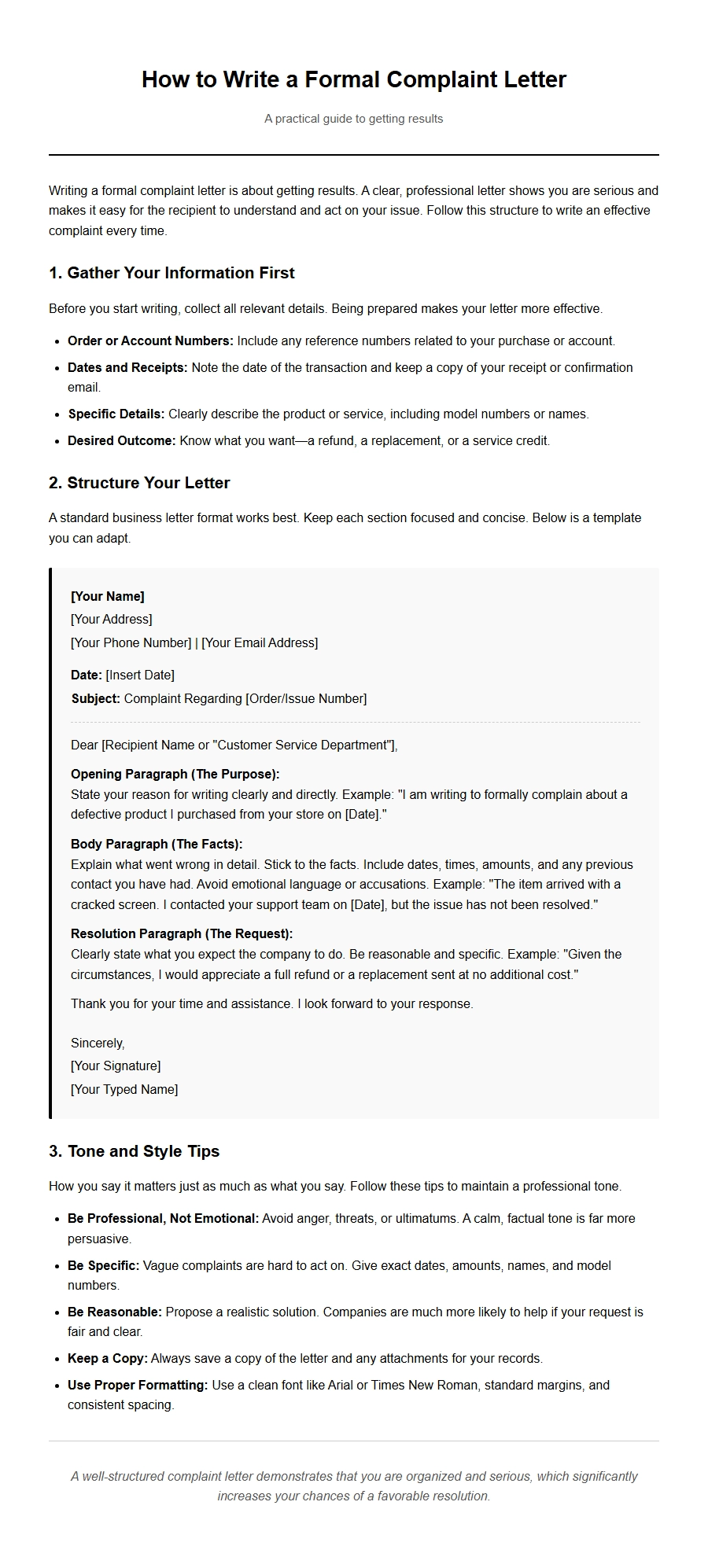 How to Write a Formal Complaint Letter
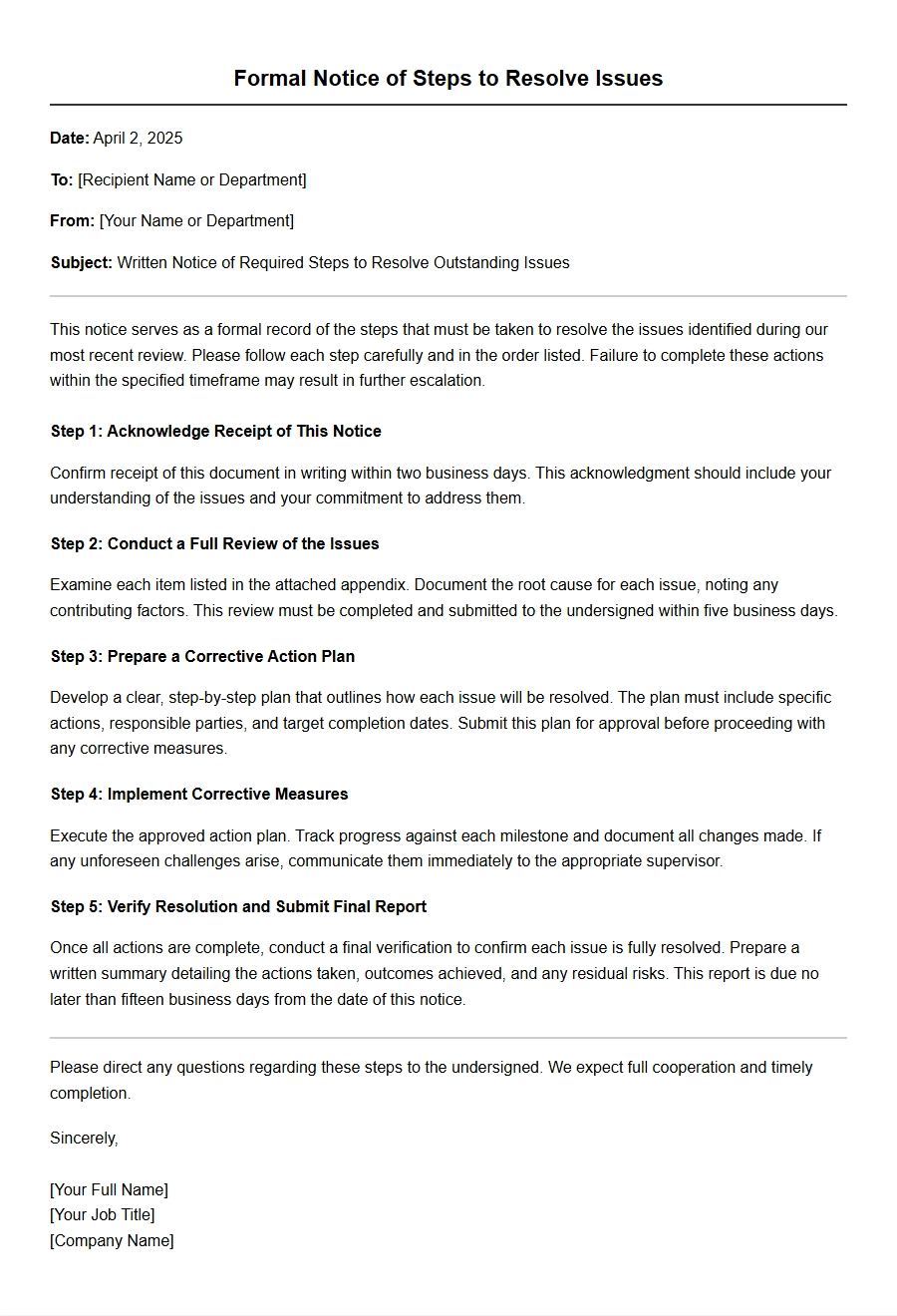 Steps to Resolve Issues via Written Notice
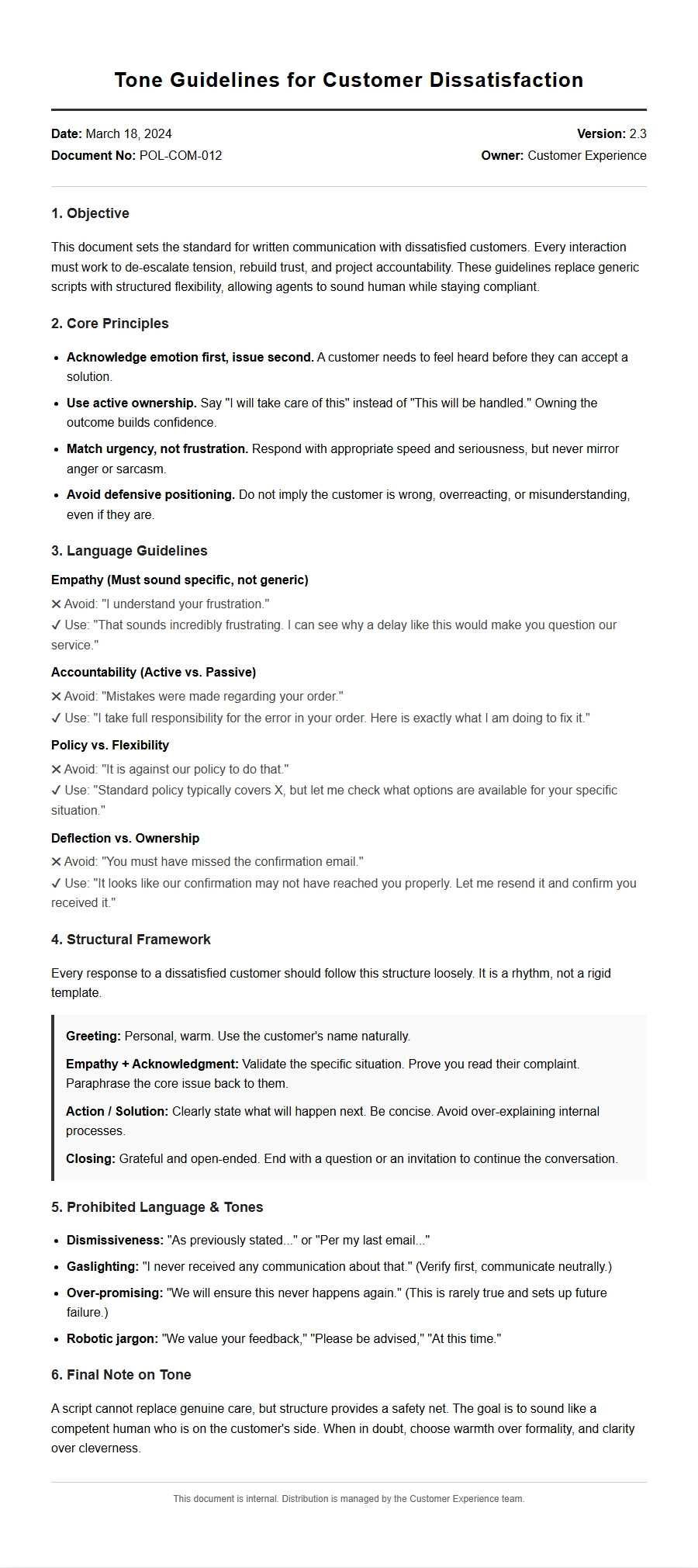 Tone Guidelines for Dissatisfied Customer Letters
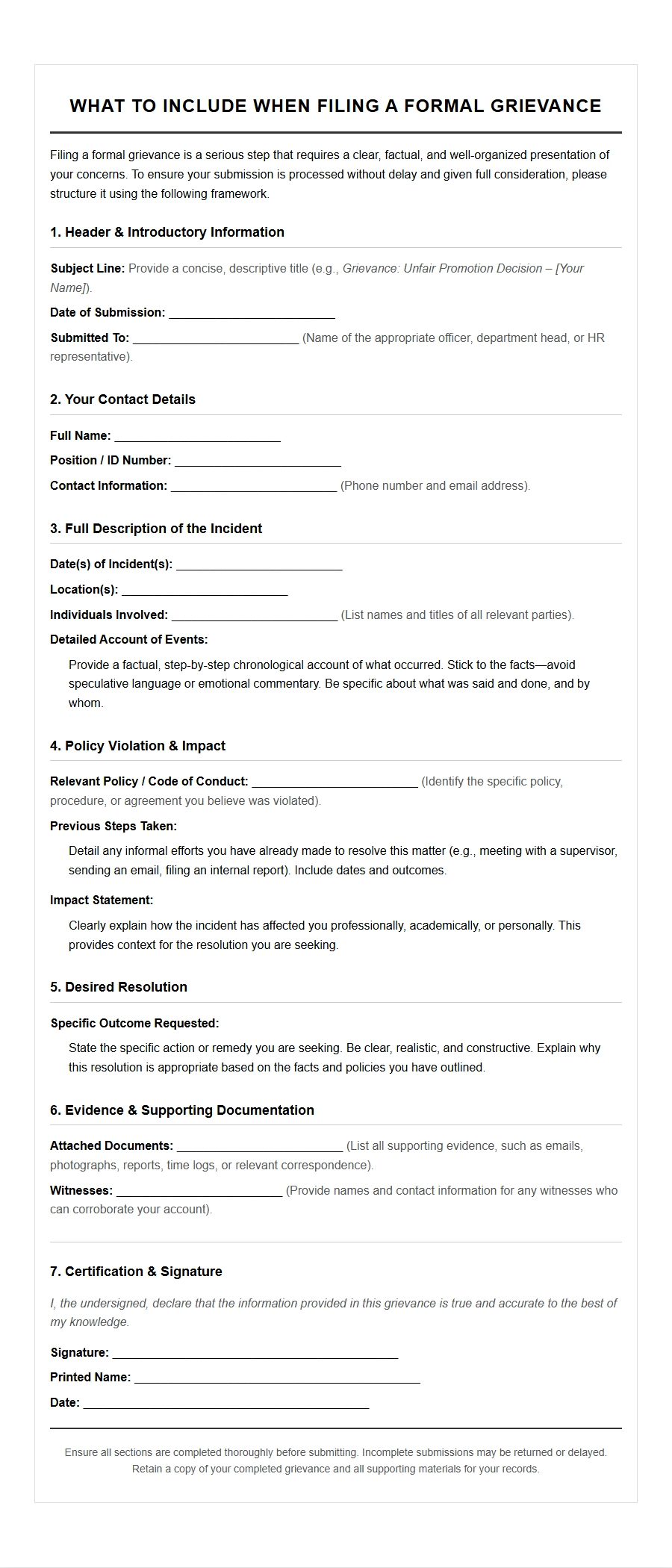 What to Include in a Formal Grievance Letter
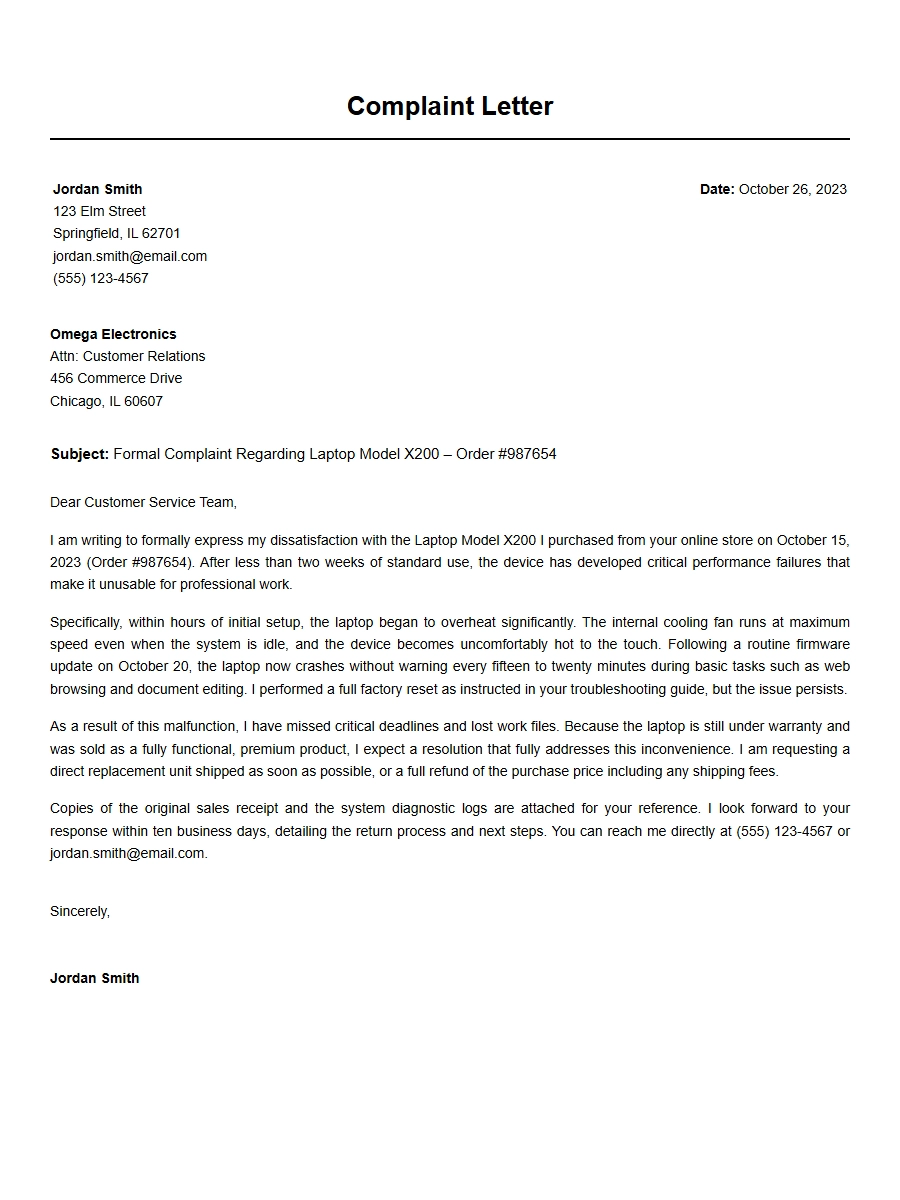 Structure of an Effective Complaint Letter
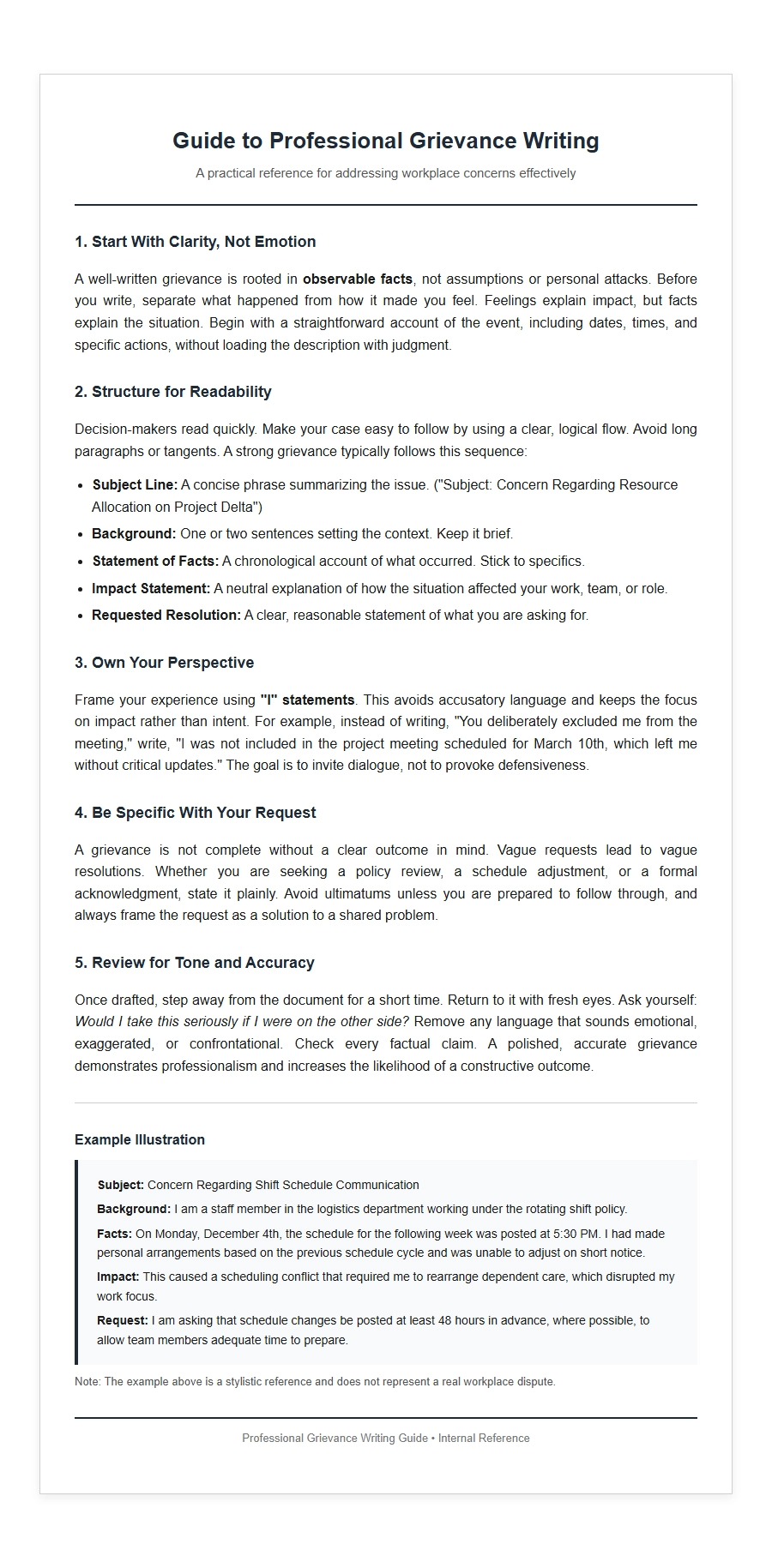 Best Practices for Writing Professional Grievance Letters