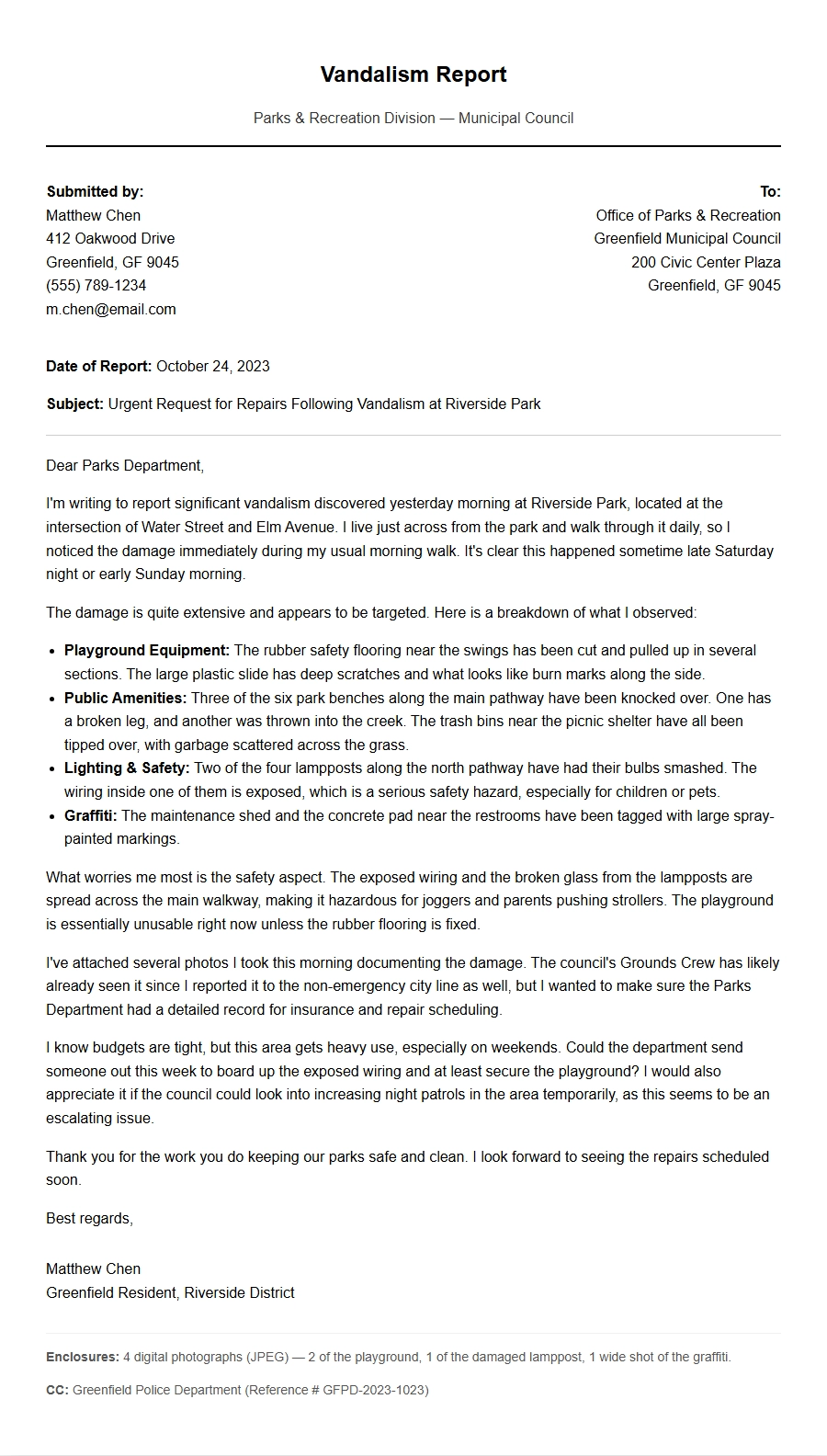
You saw it happen—or maybe you discovered the damage the morning after. Someone spray-painted graffiti on the picnic shelter, smashed a bench, or ripped out newly planted bushes. Now you need to report the vandalism to your municipal council, but the blank page stares back at you. You’re not sure how formal the letter should be, what details to include, or who to address it to. That frustration is completely normal. The good news? A well-written sample can turn that anxiety into a confident, polished draft in minutes.
Using a letter sample isn’t cheating. It’s a smart shortcut. A good sample gives you the right structure, a professional tone, and the key phrases you need—while leaving plenty of room for your own specifics. Think of it as a template for your professional correspondence, not a script to copy blindly. Once you see how formal writing tips apply to a complaint about park damage, you can apply the same logic to other letters too.
Category: Complaint Letters
Which sample fits your situation?
Not all vandalism reports are the same. If you’re writing as a concerned citizen and don’t know the park supervisor’s name, a semi-formal letter to “Parks and Recreation Department” works fine. If you represent a neighborhood association, you’ll want a more formal business letter format with your organization’s letterhead design. If you’re emailing the report, use a digital letter format — still include a clear subject line like “Vandalism at Maple Park – Request for Repairs,” but skip fancy letterhead. The key is matching the sample’s formality to your audience.
How to adapt a sample without losing your voice
Start with the sample’s skeleton: date, recipient’s contact, salutation, body, closing. Then swap in your own words. For the opening paragraph, be direct: “I am writing to report vandalism discovered on March 15 at the playground near the main entrance.” Avoid fluff like “I hope this message finds you well.” The council needs facts quickly. For letter writing etiquette, use a proper salutation and closing. “Dear Director of Parks” is safe if you don’t have a name. End with “Sincerely” or “Respectfully.” Don’t guess at titles—if you’re unsure, stick with the department name.
Adjust the tone in writing to be firm but polite. You’re upset about the damage, but accusing the council of neglect won’t help. Instead, say “I’m concerned about the safety impact” or “This type of damage discourages families from using the park.” That gets attention without sounding hostile.
Common mistakes that weaken your letter
One big error: using an outdated salutation like “To Whom It May Concern” when you could write “Dear Parks Department.” Another: forgetting to include your contact information and the best time to reach you. And if you’re sending an email, don’t treat it like a text—use proper paragraphs and a professional subject line. Proofreading letter is essential. Read it aloud or have a friend check it. A typo in the date or location could delay action. Also, if you mention previous correspondence (like a phone call you made), say when it happened. The council may have a record.
Tailor the opening to grab attention
Your first sentence should highlight urgency. Instead of “I would like to report something,” try “Vandalism at Oak Park on April 22 has left the children’s play area unsafe.” That signals this isn’t a minor complaint. If you have photos, mention that you’ve attached them. Visual evidence strengthens your case and shows you’re serious. For more examples of structuring a complaint, check out our guide on the formal register for corporate governance complaints—the same principles of clear language and documentation apply here.
One more tip: if you’ve had other issues with neighborhood garbage collection, you’ll notice the same need for specific dates and descriptions. The letter structure (who, what, when, where, why) is identical. Keep a copy of every letter you send. The council may ask for follow-up details, and you’ll want to reference your original report.
Use the sample as a springboard, not a crutch
The best letters feel both professional and personal. Once you’ve written a few reports, you’ll internalize the process. The next time you need to write a dispute about incorrect shipping charges or contest a speeding ticket, you’ll already know how to organize your thoughts. Practice makes the whole process faster. Your park vandalism letter isn’t just about fixing one bench—it’s about showing the council that residents are watching and that public spaces matter.
So grab a sample, write your draft, then set it aside for an hour. Come back and read it with fresh eyes. You’ll catch places where you can tighten the language or add a missing detail. And if you’re ever unsure about letter writing etiquette for a formal complaint, remember that directness and politeness never go out of style. Your voice matters. The sample just gives you a clear runway to take off from.
Practical Writing Samples
Reporting Park Vandalism to Municipal Council
Report of Broken Benches in Riverside Park
Date: 2025-04-07
To: Municipal Council, Parks & Recreation Department
From: Ms. Helen Garcia, 12 Oak Lane, Riverside
I am writing to report vandalism to the wooden benches near the main playground in Riverside Park. On the morning of April 5, I noticed that three benches had their slats smashed, leaving sharp splinters and exposed nails. The damage appears intentional and poses a safety risk, especially to children and elderly visitors.
Details of Damage:
Three benches completely unusable
Wood splinters scattered around the seating area
One bench frame cracked beyond simple repair
This is the second incident in two months. I request that the council repair the benches promptly and consider installing more durable metal seating to prevent future destruction. Furthermore, increased patrols or security cameras may deter vandals.
I would be happy to provide photographs upon request. Please confirm receipt of this complaint and provide an estimated timeline for repairs.
Sincerely, Helen Garcia
Graffiti on Children’s Playground Equipment
Date: 2025-04-07
To: Municipal Council – Graffiti Abatement Unit
From: Mr. David Chen, 45 Maple Drive
I am reporting extensive graffiti vandalism at the Elm Street Community Playground. Sometime between April 3 and April 5, unknown persons spray‑painted obscene symbols and tags on the slide, swing set, and the rubber safety surface.
Affected Equipment:
Item
Color
Area Covered
Slide
Red & black
Entire chute
Swing set frame
Blue
Support posts
Rubber matting
Black
Approx. 10 sq ft
The graffiti is offensive and sets a poor example for children using the playground. I urge the council to arrange cleaning or repainting as soon as possible. Additionally, trimming overgrown bushes near the fence would improve visibility and discourage vandals.
Thank you for your prompt attention to this matter.
Littering and Dumping in Central Park
Date: 2025-04-07
To: Municipal Council – Sanitation & Parks
From: Mr. James O’Brien, 78 Hillcrest Rd
For the past week, I have observed repeated illegal dumping of household waste and construction debris near the picnic area of Central Park. Bags of trash, broken furniture, and discarded tires have accumulated around the barbecue pits, attracting rats and creating a health hazard.
List of Observed Waste:
5 black plastic bags (unknown contents)
2 broken wooden chairs
3 old tires from a car
Assorted food wrappers and beverage cans
This is not only unsightly but also dangerous for families who use the park. I request immediate cleanup and placement of “No Dumping” signs with penalty warnings. Could the council also consider installing a public waste bin near the entrance? Regular patrols would help deter future incidents.
Please let me know what actions you plan to take.
Damaged Path Lights Creating Safety Hazards
Date: 2025-04-07
To: Municipal Council – Street Lighting & Parks
From: Mrs. Linda Kowalski, 23 Birch Street
I am writing to report vandalism of the solar‑powered path lights along the walking trail in Willow Park. On April 6, I noticed that four light poles were bent at the base, and the solar panels on two units had been smashed. The bulbs are shattered, and wires are exposed.
Damage Summary:
Pole ID
Status
Risk
W‑07
Pole bent
Tripping hazard
W‑08
Panel smashed
Sharp glass
W‑09
Bulb broken
Exposed wiring
W‑10
Pole snapped
Sharp metal edge
This creates a serious safety issue for evening walkers and denies light to a popular trail. I request immediate repair or replacement. Please also consider installing brighter, vandal‑resistant fixtures and increasing security presence after dark.
Thank you for your prompt response.
Destroyed Flower Beds in Memorial Garden
Date: 2025-04-07
To: Municipal Council – Horticulture Division
From: Ms. Patricia Nguyen, 89 Cedar Lane
I am devastated to report that the flower beds in the Memorial Garden at Oakwood Park have been deliberately uprooted and trampled. On April 4, I discovered that at least eight beds had their perennials torn out, shrubs broken, and soil scattered across the pathways. The damage appears to have occurred overnight.
Estimated Losses:
12 rose bushes (some rare varieties)
6 lavender plants
5 hostas and ornamental grasses
Drip irrigation tubing cut in two sections
These gardens are a tribute to community veterans and are maintained by volunteers. The loss is not only financial but also emotional. I request that the council replace the plants and reinforce the garden fencing. Consider installing motion‑activated lights and a sign warning of prosecution for vandalism.
Please advise how we can assist in the restoration effort.
Vandalized Information Board and Trail Signage
Date: 2025-04-07
To: Municipal Council – Park Facilities
From: Mr. Robert Evans, 34 Pineview Way
I am writing to report that the park map and trail sign at the entrance of Bayside Park have been damaged. Sometime in the past week, the glass cover of the information board was smashed, and the trail direction signpost was snapped off at the base. The map itself is now missing, likely taken by vandals.
Status of Affected Items:
Item
Damage
Location
Main information board
Glass shattered, map stolen
Main entrance kiosk
Trail sign (Loop A)
Post broken, sign missing
Junction near lake
Waste bin
Lid wrenched off
Near signpost
Visitors, especially tourists, are now unable to navigate the trails. I request replacement of both the board and the signpost. Additionally, could anti‑graffiti coatings be considered for new installations?
Thank you for addressing this promptly.
Broken Water Fountains and Restroom Fixtures
Date: 2025-04-07
To: Municipal Council – Facilities Maintenance
From: Ms. Doreen Walsh, 55 Sunflower Avenue
I visited Hillside Park on April 6 and discovered severe vandalism in the public restrooms and at the drinking fountains. Both water fountains near the main lawn had their spouts torn off, causing water to gush continuously. The restrooms had the faucets wrenched loose, mirrors shattered, and soap dispensers ripped from the wall.
Detailed Damage Report:
Two drinking fountains – spouts missing, valves broken
Men’s restroom – both sinks unusable, one toilet bowl cracked
This not only wastes water but denies basic amenities to families, joggers, and dog walkers. I request urgent repairs and a temporary shutdown of the water supply to prevent flooding. Please also secure the restroom doors after hours to discourage further vandalism.
I look forward to hearing about the repair schedule.
Theft of Park Bench and Picnic Table
Date: 2025-04-07
To: Municipal Council – Asset Protection & Parks
From: Mr. Samuel Wright, 12 Fir Road
I am reporting the theft of park fixtures from West End Community Park. Sometime between April 2 and April 4, an entire metal bench and a wooden picnic table were removed from their concrete footings. The theft appears to have been carried out using bolt cutters and likely a vehicle to transport the items.
Stolen Items:
Item
Material
Location
Approx. Value
Bench (model B‑200)
Cast iron & wood slats
Near pond
$800
Picnic table (model PT‑5)
Pressure‑treated pine
BBQ area
$1,200
These were the only seating options in that section of the park. Their removal has left the area unusable for families. I request an immediate inventory of remaining fixtures and replacement of the stolen items. Could the council also consider bolting down or chaining future installations to prevent easy removal?
Thank you for your urgent attention.
Repeated Vandalism by Youth Groups on Weekends
Date: 2025-04-07
To: Municipal Council – Community Safety & Parks
From: Mrs. Helen Torres, 77 Parkview Drive
I am writing concerning repeated vandalism incidents in Sunset Park that occur every weekend, apparently by groups of teenagers. Over the past month, I have documented the following acts:
Incident Log (March – April 2025):
March 15 – Spray painting on restroom walls
March 22 – Broken bottle glass on basketball court
March 29 – Benches overturned, trash scattered
April 5 – Fence near entrance cut open; flower pots smashed
These actions make the park unsafe, especially for younger children and the elderly. I request that the council increase weekend patrols, install clearly visible security cameras, and consider a curfew for the park after 9 PM. Community outreach programs with youth centers could also redirect negative behavior.
Please share your plan to curb this escalating problem. I am happy to collaborate with other residents to form a neighborhood watch.
Vandalism to Basketball Court and Sports Equipment
Date: 2025-04-07
To: Municipal Council – Recreation Facilities
From: Mr. Leo Martinez, 88 Sports Way
I am reporting extensive vandalism to the basketball court at Lincoln Park Recreation Area. On April 5, I found that the backboards of both hoops had been shattered, the nets torn off, and the court floor spray‑painted with vulgar slogans. The fenced enclosure had its gate hinges broken, making the court accessible at all times.
Damage Details:
Item
Description
Repair Estimate
Backboard (north)
Shredded acrylic
$350
Backboard (south)
Cracked polycarbonate
$250
Court surface
Graffiti covering 30 sq ft
$200
Gate hinges
Rusted and snapped
$80
The court is heavily used by local youth leagues. I request immediate board replacement and court resurfacing. Please also install a stronger lock on the gate and improve nighttime lighting to deter further vandalism.
Kindly provide a timeline for repairs and consider involving the neighborhood association in prevention efforts.
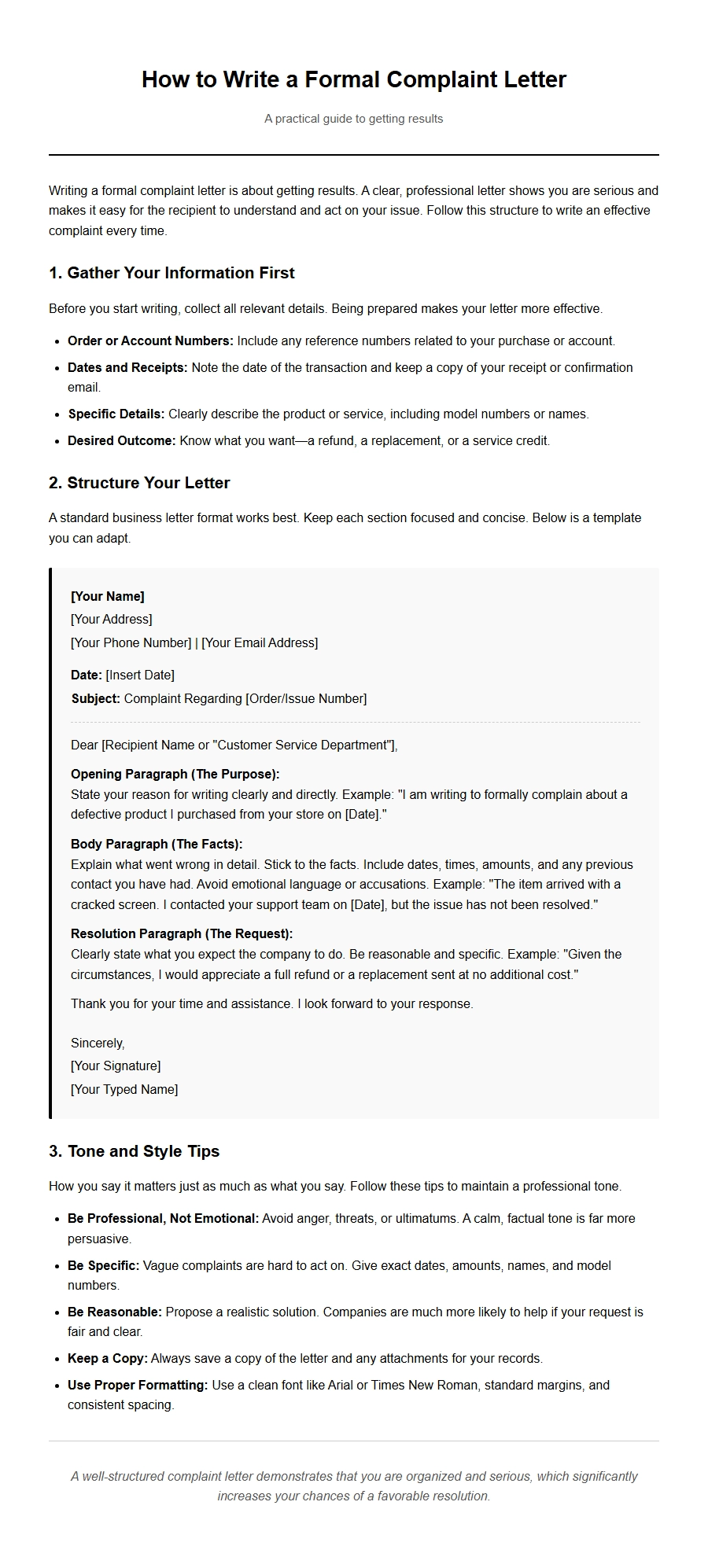 How to Write a Formal Complaint Letter
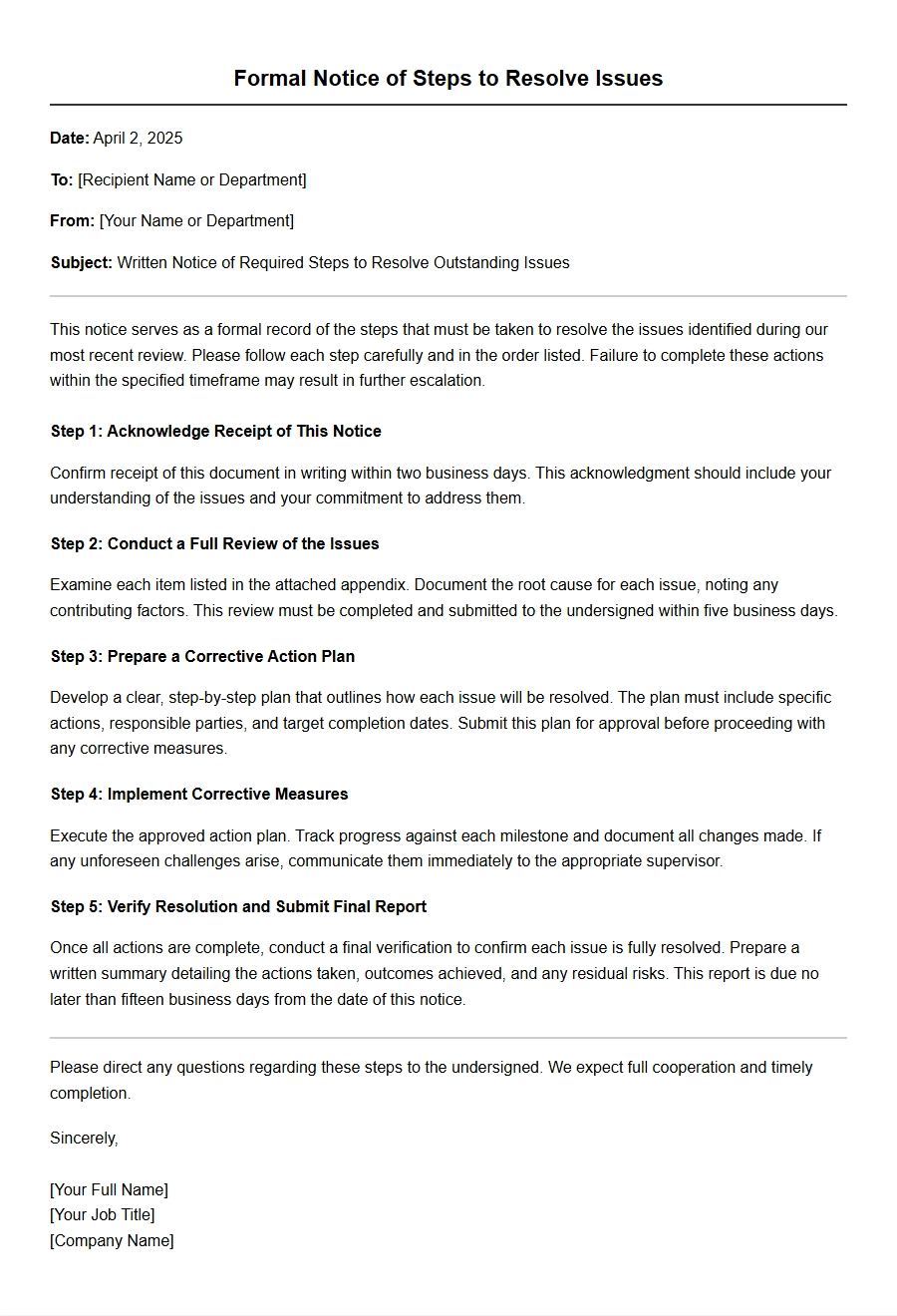 Steps to Resolve Issues via Written Notice
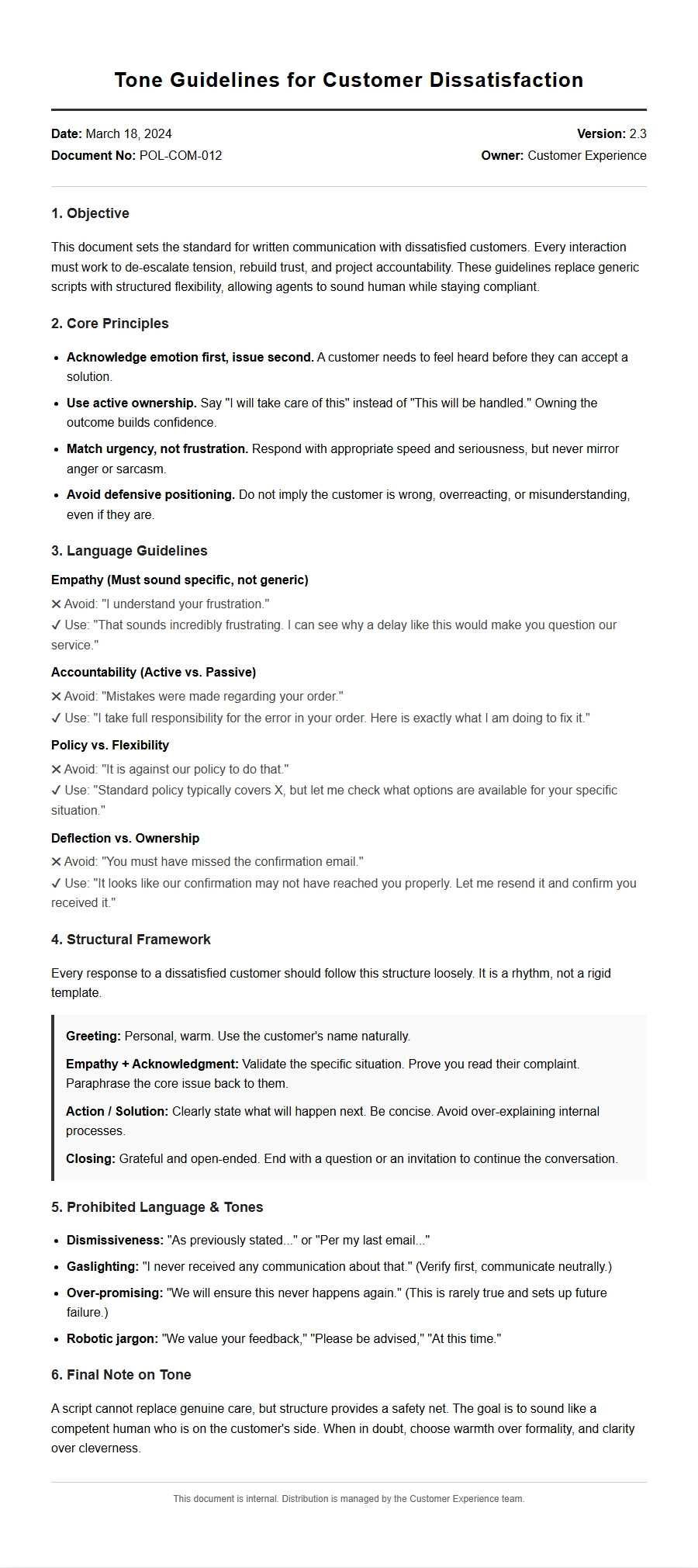 Tone Guidelines for Dissatisfied Customer Letters
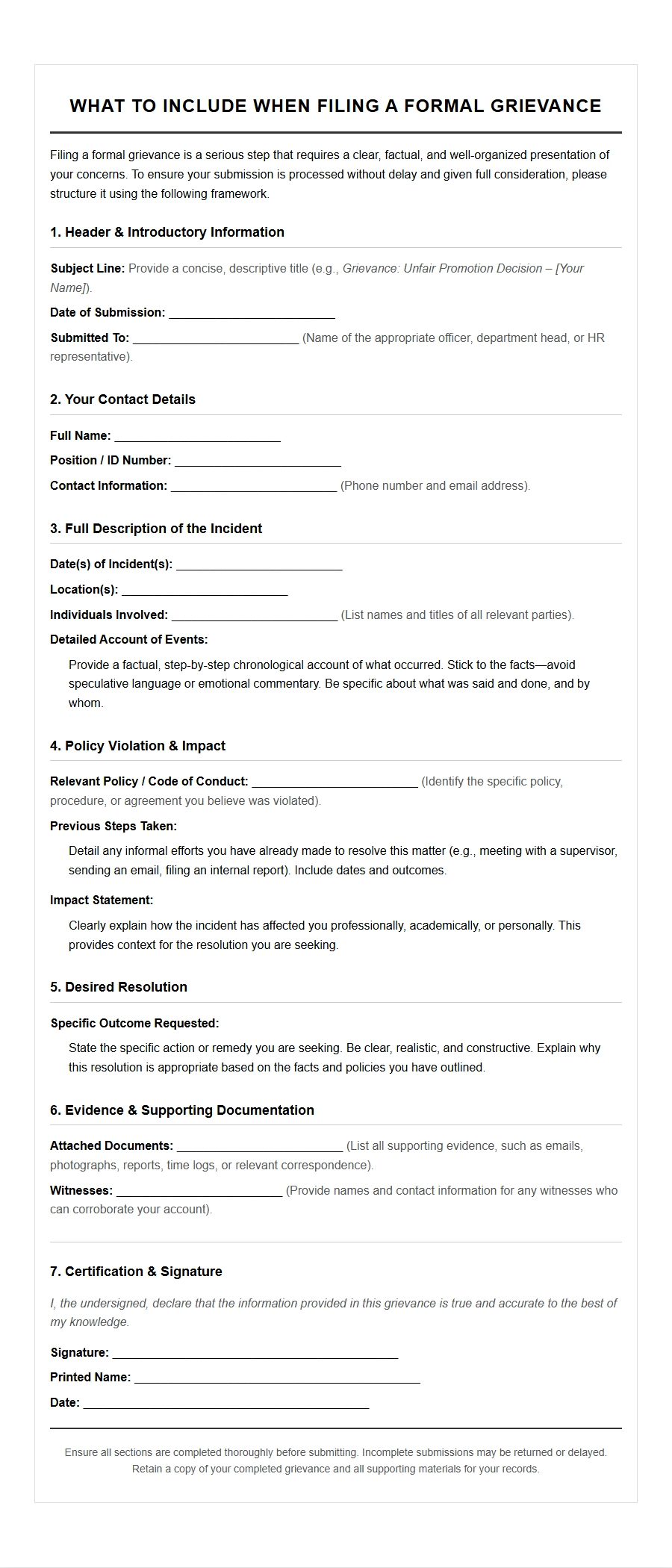 What to Include in a Formal Grievance Letter
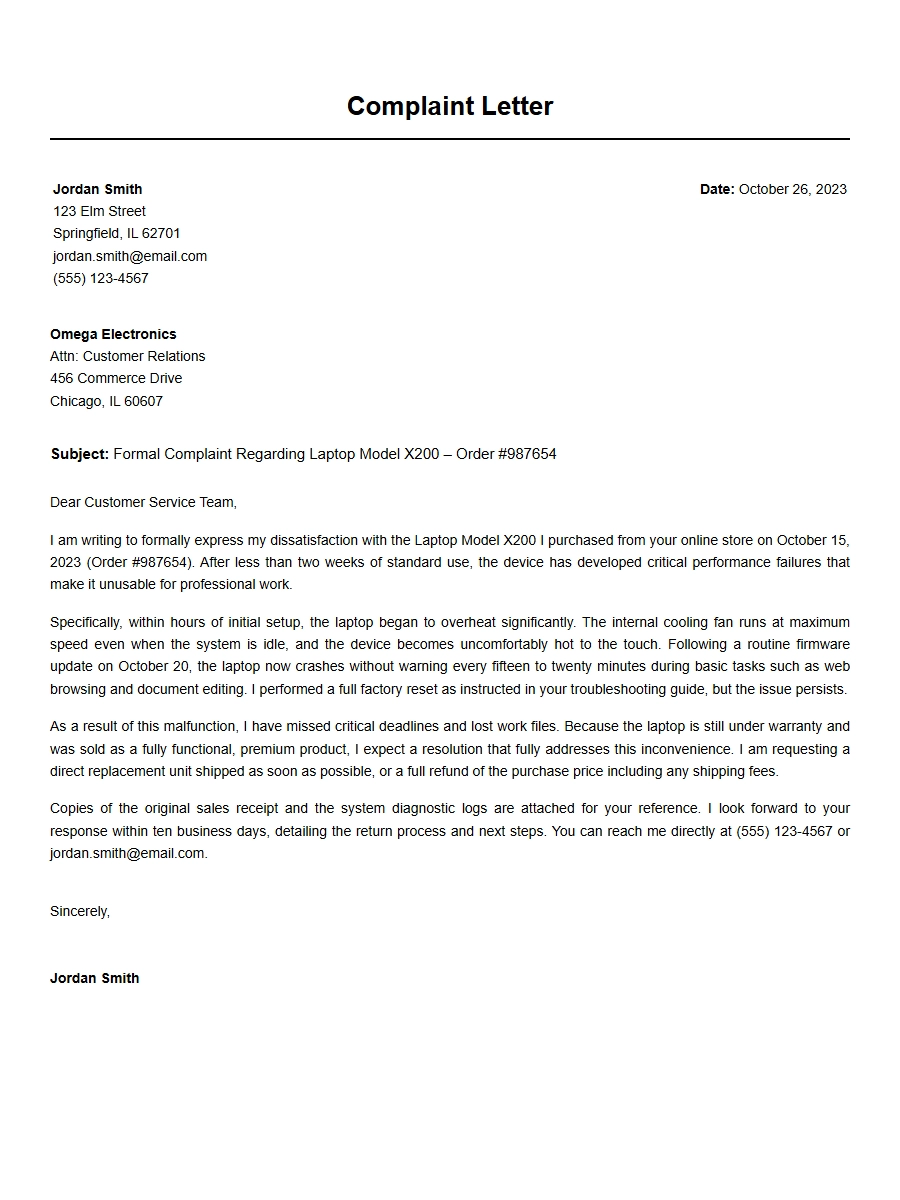 Structure of an Effective Complaint Letter
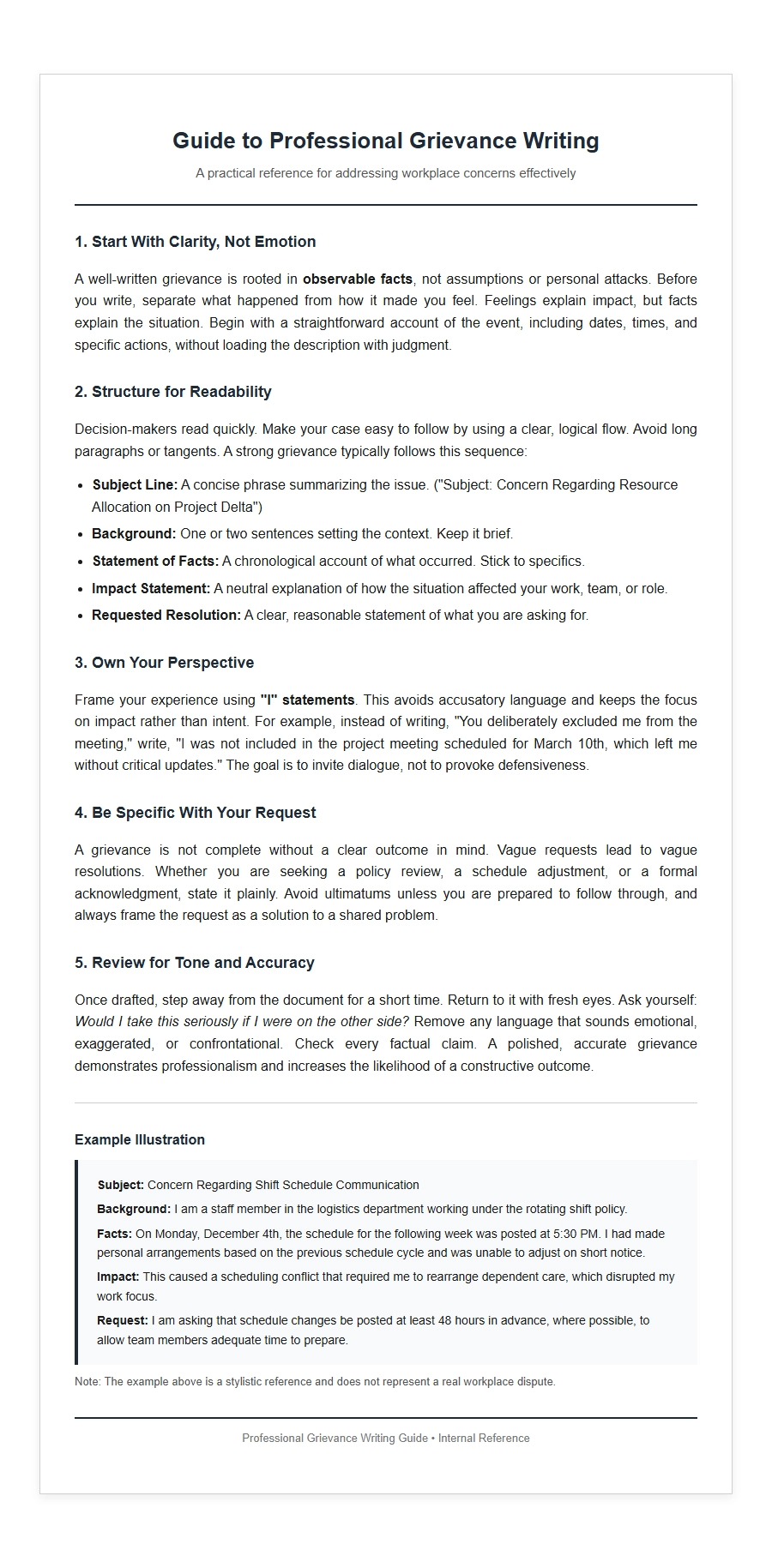 Best Practices for Writing Professional Grievance Letters