Staring at a blank page when you need to write a professional letter can feel paralyzing—but the right sample turns that anxiety into a confident, polished draft in minutes. You might be dealing with a vendor who didn't deliver, a client who won't pay, or a neighbor whose noise is out of control. A business dispute letter needs to be firm, factual, and fair. Getting the tone wrong can escalate things. Getting the structure wrong can make you look unprofessional. That’s why knowing the key elements is so important.
Using a letter sample isn’t cheating. It’s a smart way to save time and avoid common mistakes. A good sample gives you a proven business letter format, a letter template you can customize, and the right salutation and closing for professional correspondence. You still bring your own voice and specific details. Think of it as a map—you still do the driving.
Category: Business Dispute Letters
What makes a business dispute letter work?
A business dispute letter has one job: state the problem clearly, show you’ve done your homework, and propose a fair solution. If it’s too emotional, you lose credibility. Too vague, and the other side can ignore it. The best letters are direct but polite, with a structure that makes it easy for the reader to understand and respond.
Start with a clear subject line. For email, something like “Invoice #123 – Payment Dispute” or “Noise Complaint – Unit 4B.” In a printed letter, use a reference line below the date. This tells the reader immediately what the letter is about.
Then write a professional salutation. “Dear Mr. Smith” or “Dear Customer Service Team” works. Avoid outdated phrases like “To Whom It May Concern” unless you truly don’t know who will read it. If you’ve been dealing with a specific person, use their name.
What to include in the body
The body should have three clear parts. First, state the issue factually. Include dates, order numbers, amounts, and any previous conversations. For example: “On March 10, I ordered item #789 from your website. It arrived damaged on March 15. I called your customer service on March 16 and was promised a replacement, but it never arrived.”
Second, explain why this matters. How has it affected you? Lost time? Extra cost? Frustration? Keep it brief and objective. “Because the replacement didn’t arrive, I had to buy the item elsewhere at a higher price.”
Third, state what you want. A refund? A replacement? A deadline for action? Be specific. “I request a full refund of $150 by April 10. If I do not receive it, I will dispute the charge with my credit card company.”
This is where tone in writing really matters. You want to sound firm but not threatening. Phrases like “I expect” or “I request” are better than “You must” or “I demand.” Stick to facts and avoid personal attacks.
Common mistakes to avoid
One big mistake is ignoring the format for digital letter format versus printed letters. If you’re sending an email, keep paragraphs short and use a clear subject line. If you’re printing, use letterhead design (your name and contact info at the top) and add a signature block. Also, always proofread before hitting send. A typo in a dispute letter can make you look careless.
Another mistake is using an outdated salutation like “Dear Sir or Madam.” It sounds robotic. If you’re unsure of the recipient’s name, use a job title like “Dear Accounts Payable Manager.” For more on proper letter writing etiquette, check our guide on what to include when filing a formal grievance.
How to adapt a sample without losing your voice
When you find a customizable letter sample, don’t just copy it word for word. Read it through, then rewrite the opening to sound like you. If you’re naturally direct, keep it concise. If you’re more detailed, add a sentence or two of context. The letter structure stays the same, but the words should feel yours.
For example, if the sample says “I am writing to express my dissatisfaction,” you might write “I’m disappointed that our agreement wasn’t followed.” Both are professional, but the second sounds more human. Use contractions like “I’m” or “you’ll” if it fits your style. It’s still professional correspondence, but it doesn’t have to be stuffy.
When to include evidence and references
If you have supporting documents—receipts, photos, emails—mention them in the letter. “Attached are copies of the invoice and my previous email.” This backs up your claim and shows you’re organized. For examples of how to reference specific complaints, see our letter for noise pollution from neighbors or garbage collection issues.
If the dispute involves a service or product, include the order number and date. This helps the recipient look up the details quickly.
Closing and next steps
End with a polite salutation and closing like “Sincerely” or “Best regards.” Then include your full name, phone number, and email. Give the reader a clear way to reach you. And if you’ve set a deadline, restate it: “I look forward to your response by April 10.”
Before you send, proofread the letter out loud. You’ll catch awkward phrasing and missing words. Ask someone else to read it if possible. A second pair of eyes can spot a tone that’s too harsh or a fact that’s unclear.
Use the sample as a springboard
A business dispute letter sample is a starting point, not a finished product. It gives you the formal writing tips and structure you need, but your specific situation makes it real. The more you write these letters, the faster and easier it becomes. You learn what works and what doesn’t.
Remember: the goal isn’t to win an argument in writing. It’s to get the problem solved. A clear, fair, and well-structured letter does exactly that.
Templates and Samples
Key Elements of a Business Dispute Letter
Breach of Contract Complaint
Date: January 15, 2025
To: Acme Supplies Ltd. Reference: Contract #2024-0456
We write to formally dispute your non-performance under the supply agreement signed on June 1, 2024. The contract required delivery of 500 units of Model X by December 15, 2024. You delivered only 320 units on January 5, 2025, with the remaining 180 units still outstanding. Below is a comparison of the agreed terms versus actual performance:
Clause
Agreed Terms
Actual Performance
Delivery Date
Dec 15, 2024
Jan 5, 2025
Quantity
500 units
320 units
Quality Spec
ASTM Grade A
ASTM Grade B
These breaches have caused production delays at our facility. We demand full delivery of the remaining units within 10 days and compensation for resulting losses. Please respond by January 25, 2025.
Late Payment Dispute Letter
Date: February 20, 2025
To: GlobalTech Solutions Re: Invoice #2025-007
We are writing to dispute the non-payment of Invoice #2025-007. According to our records, the following amounts are past due:
Invoice #
Issued Date
Due Date
Amount (USD)
2025-007
Jan 10, 2025
Feb 9, 2025
$12,450.00
2025-009
Jan 20, 2025
Feb 19, 2025
$6,780.00
We have sent three prior reminders without response. Your contract states payment terms of net 30 days. We kindly demand immediate settlement of both invoices. If payment is not received by March 2, 2025, we will impose a late fee of 1.5% per month as per our agreement. Please remit via wire transfer to our account or contact us to resolve any discrepancies.
Defective Goods Complaint
Date: March 5, 2025
To: Reliable Parts Inc. Order #: PO-2025-112
We received delivery of 200 circuit boards on February 28, 2025. Upon inspection, we found that 47 units are defective (faulty soldering and incorrect resistor values). The table below compares what was ordered versus what was received:
Item
Ordered
Received
Defective
Circuit Board - Model B2
200
200
47
Spec: 10kΩ resistors
Yes
Mixed (5kΩ / 10kΩ)
N/A
We request replacement of all defective units within 14 days. We also reserve the right to claim costs incurred for re-testing accepted units. Please provide a return authorization number and instructions for shipping the defective boards back at your expense. We look forward to your prompt action.
Service Level Agreement Violation
Date: April 12, 2025
To: CloudHost Services Account: ACC-8876
This letter concerns repeated violations of our Service Level Agreement (SLA) in March 2025. The SLA guarantees 99.9% uptime, response time under 2 hours for critical tickets, and monthly performance reports. Actual metrics were as follows:
SLA Metric
Guaranteed
Actual (March 2025)
Uptime
99.9%
98.2%
Critical Ticket Response
< 2 hrs
Average 3.5 hrs
Monthly Report Delivery
By 5th of month
Not received
These failures have negatively impacted our operations. We demand a credit of 15% of the monthly fee as per Section 6 of the SLA. Please provide a corrective action plan within 5 business days and resume reporting. We value your service but cannot continue without compliance.
Partnership Profit Sharing Dispute
Date: May 8, 2025
To: Jameson & Co. Partners Re: Fiscal Year 2024 Distribution
We are disputing the profit allocation for FY2024. The partnership agreement states profits are split 60/40 based on capital contribution and active management. Our records indicate the following discrepancies:
Contribution: We contributed $250,000 vs. your $150,000 (actual ratio 62.5/37.5).
Active hours: We provided 1,200 hours; you provided 800 hours, yet you claimed equal management credit.
Distribution received: You took $90,000; we received $110,000. Based on our reading, we should have received $130,000.
We request a re-audit of the accounts and a corrected distribution within 30 days. If you disagree, please propose arbitration as per Clause 14. We aim to resolve this amicably to preserve our partnership.
Intellectual Property Infringement Notice
Date: June 1, 2025
To: NextGen Software Inc. Re: Unauthorized use of our patented algorithms
We have identified that your product “DataFlow Pro” incorporates our patented compression technology (US Patent 9,876,543) without license. Below are the specific infringements:
Patent 9,876,543 – Claims 1-5: Your tool uses the same iterative compression method described in our patent.
Registered Trademark “CompressX” – Your marketing materials use a confusingly similar mark.
Copyrighted source code – Reverse engineering suggests portions of our library were copied.
We demand you cease all use immediately, remove the product from your website, and provide a written response by June 15, 2025. We are prepared to pursue legal remedies if necessary. A full list of IP assets is enclosed.
Dispute Over Contract Termination
Date: July 3, 2025
To: Pacific Logistics Re: Termination Notice #TRM-2025-44
We dispute your termination of our logistics contract effective August 1, 2025. Your notice cites “repeated delays,” but we believe the delays were caused by your failure to provide accurate shipping labels. Below is a timeline of key events:
Date
Event
Our Position
Jan 15
Contract signed (12-month term)
In effect
Mar 10
First delay claim by you
Label error on your side
May 5
Second warning
Resolved with corrected labels
Jun 20
Termination notice sent
No material breach per clause 9.1
We request you withdraw the termination and adhere to the 90-day cure period. Please confirm receipt and provide evidence of any uncured breach. We look forward to continuing our partnership.
Price Discrepancy Dispute
Date: August 10, 2025
To: OfficePlus Ltd. Order #: ORD-5521
We received your invoice #INV-8890 on August 5, 2025, but the prices charged do not match the purchase order we agreed upon. The table below shows the discrepancies:
Item
PO Price (each)
Invoice Price (each)
Qty
Difference
Ergonomic Chair
$350.00
$395.00
20
$900.00
Standing Desk
$725.00
$780.00
10
$550.00
Monitor Arm
$85.00
$99.00
30
$420.00
Total overcharge: $1,870.00. We request a corrected invoice reflecting the PO prices. Additionally, we expect a credit note for the difference within 10 business days. Please confirm your agreement to this adjustment or provide documentation justifying the higher prices.
Non-Disclosure Agreement Breach
Date: September 14, 2025
To: DataSecure Corp Re: Breach of NDA signed Jan 3, 2025
We have evidence that your company disclosed our confidential product roadmap to a third party (Vertex Innovations) on August 20, 2025. The NDA covered the following information:
Product Roadmap – milestones for Q3–Q4 2025
Pricing Strategy – margin targets and discount models
Customer Lists – top 50 client names
This disclosure has damaged our competitive advantage. We demand an immediate written explanation, return of all confidential materials, and a certification that no further disclosure will occur. We also seek damages of $50,000 as per Section 8 of the NDA. Please respond by September 28, 2025 to avoid legal action.
Scope of Work Dispute
Date: October 5, 2025
To: BuildRight Construction Project: Warehouse Renovation #2025-09
We dispute your claim that the project is 90% complete and your request for an additional $15,000 for “unforeseen work.” Our signed scope of work (SOW) clearly defines the deliverables. Status of key tasks:
Task
SOW Description
Status
Our Assessment
Electrical Rewiring
All floor outlets and main panel
75% done
Missing 6 outlets per plan
HVAC Installation
2 units, ductwork, controls
Installed but not tested
No commissioning report
Flooring
Vinyl plank entire warehouse
Not started
Still awaiting materials
We consider the project no more than 65% complete. We reject the extra cost request as it falls within the original SOW. Please provide a revised completion schedule and adhere to the contracted price. We expect a meeting next week to clarify scope boundaries.
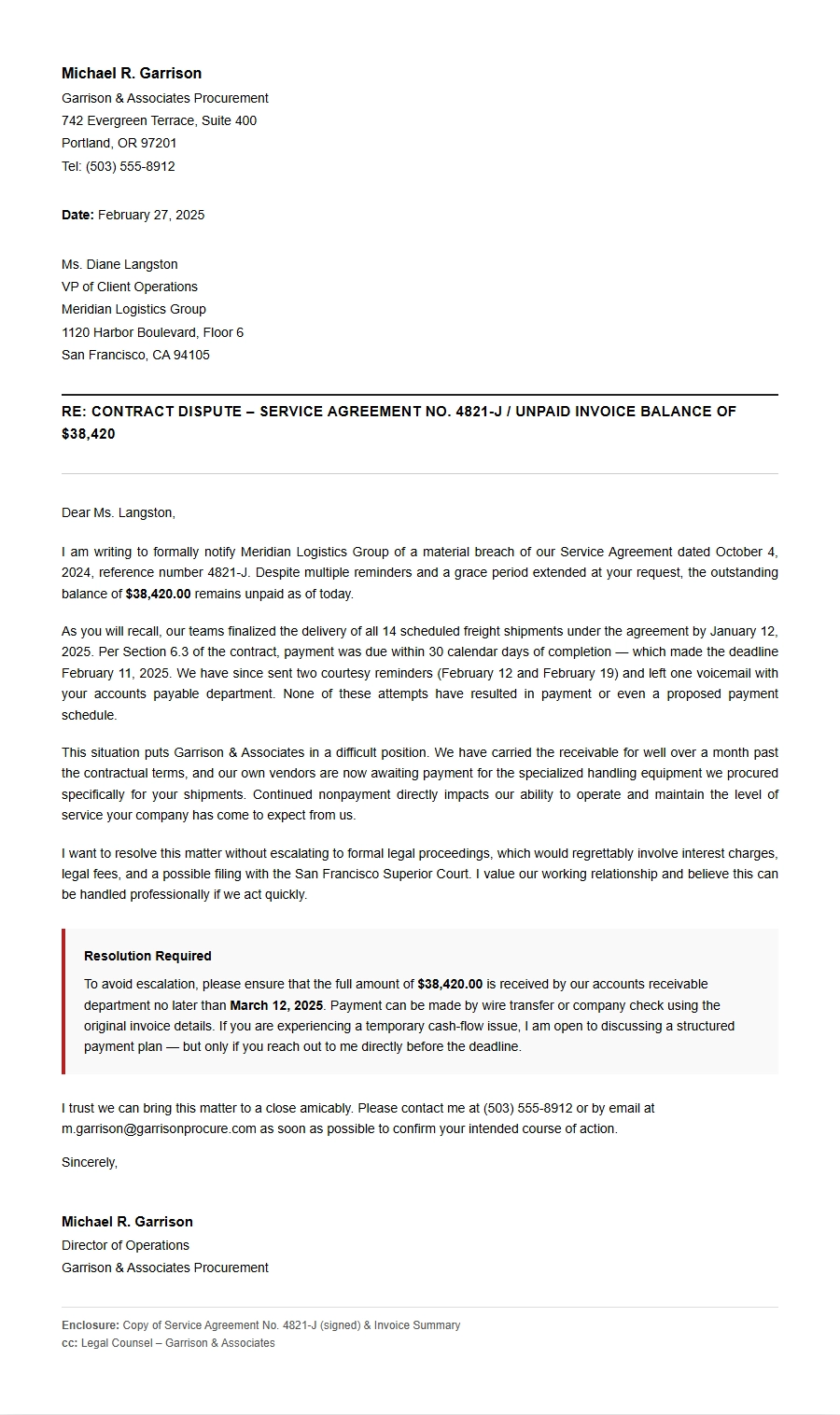
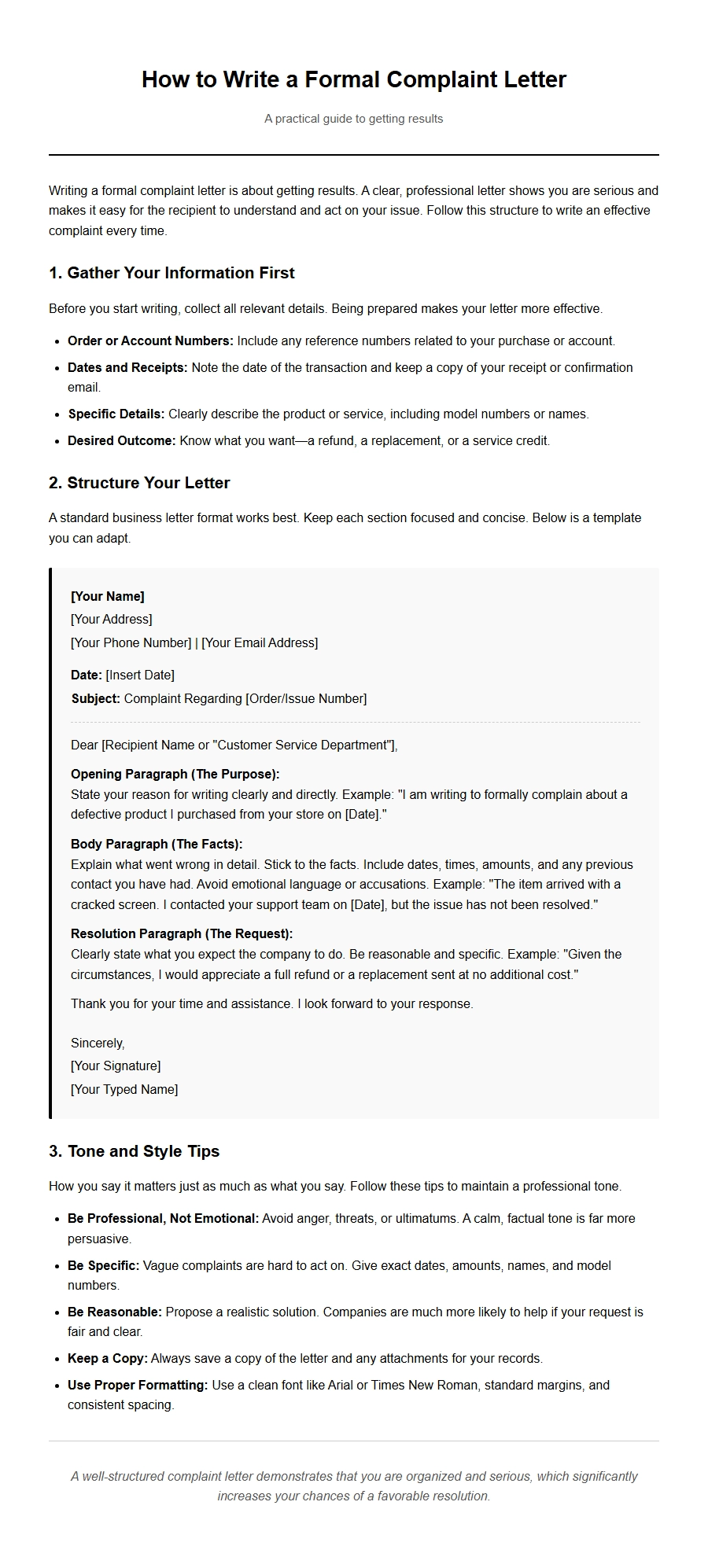 How to Write a Formal Complaint Letter
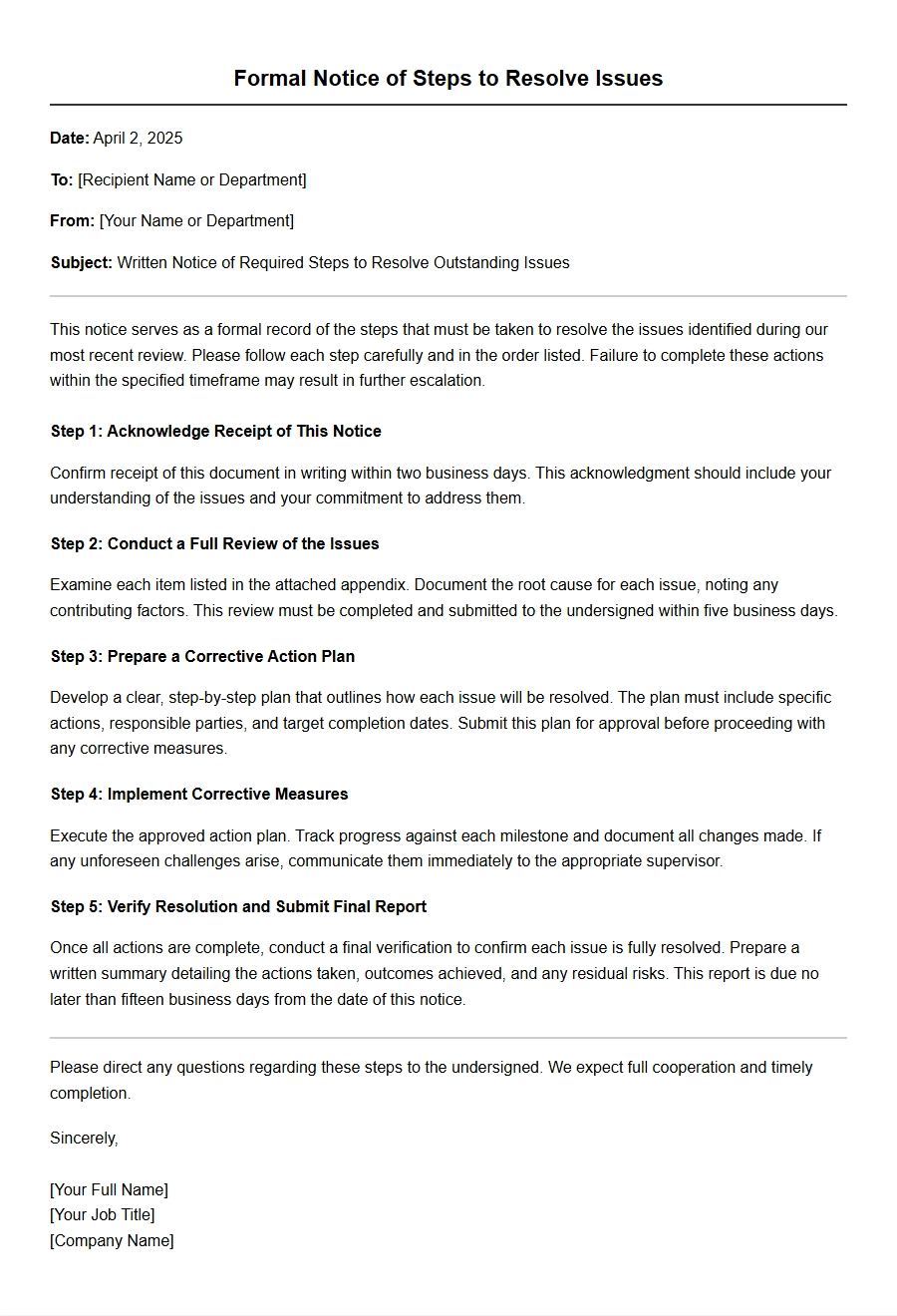 Steps to Resolve Issues via Written Notice
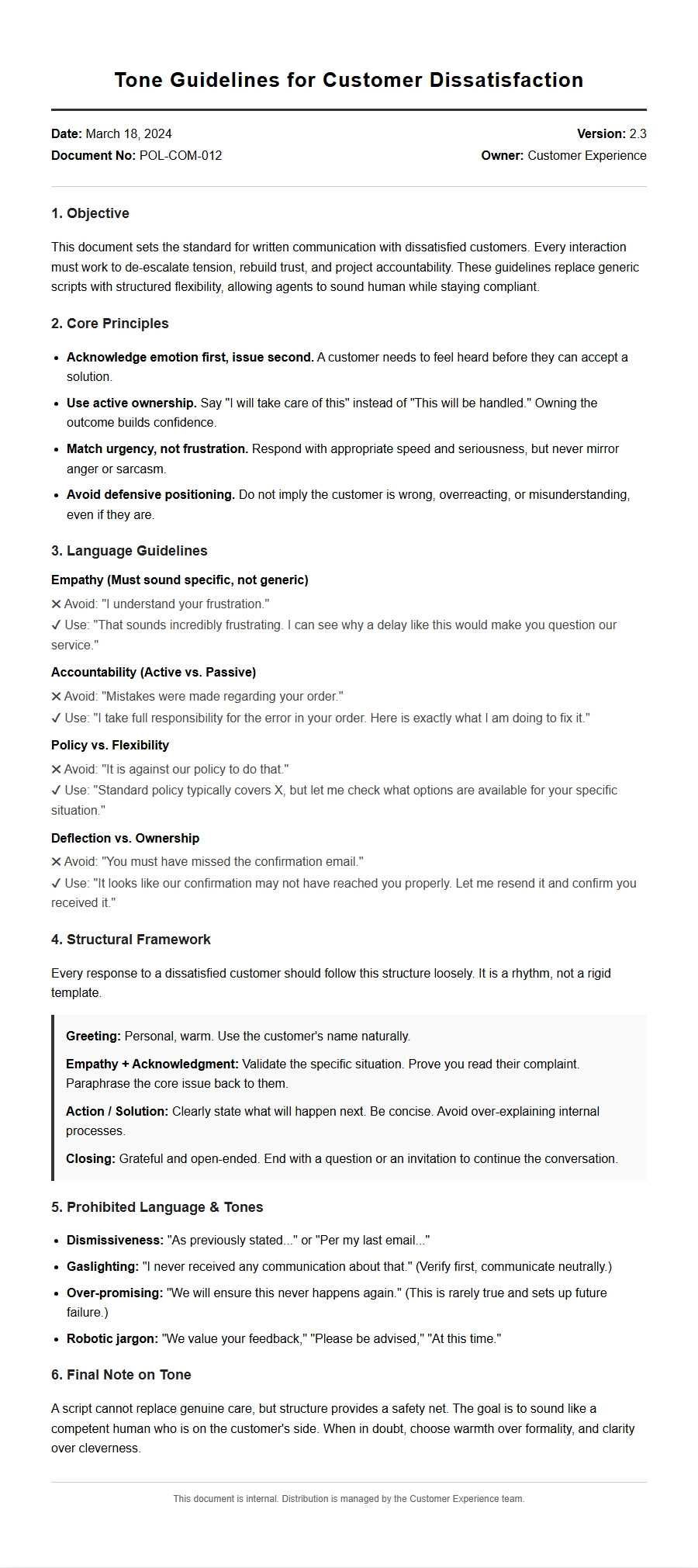 Tone Guidelines for Dissatisfied Customer Letters
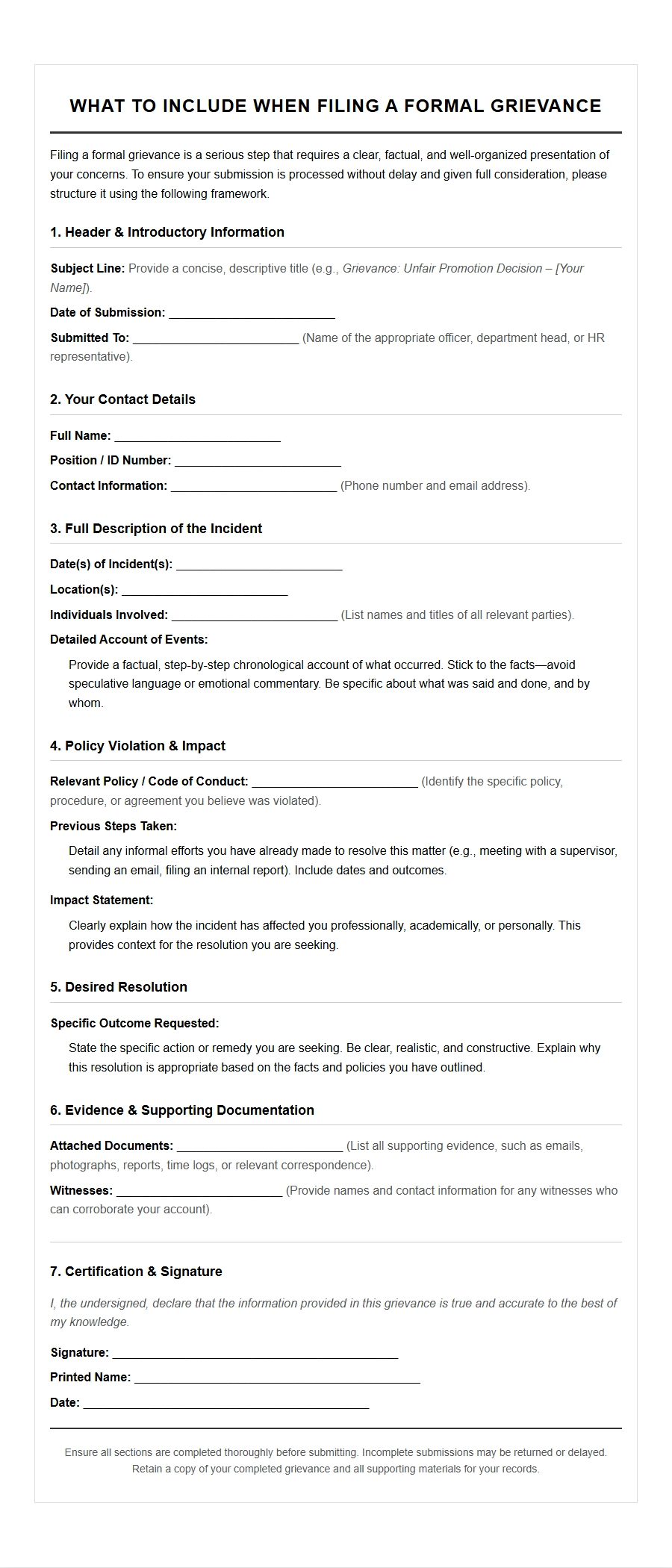 What to Include in a Formal Grievance Letter
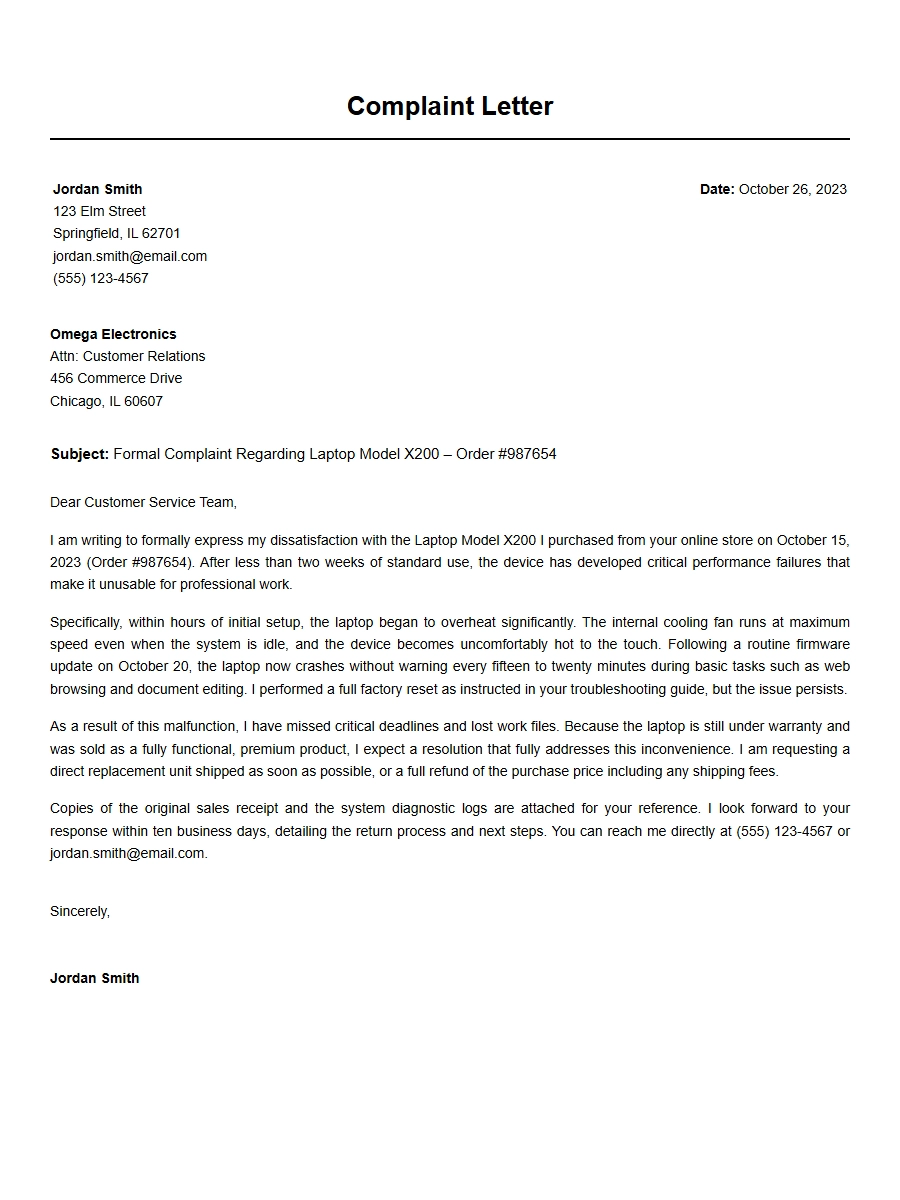 Structure of an Effective Complaint Letter
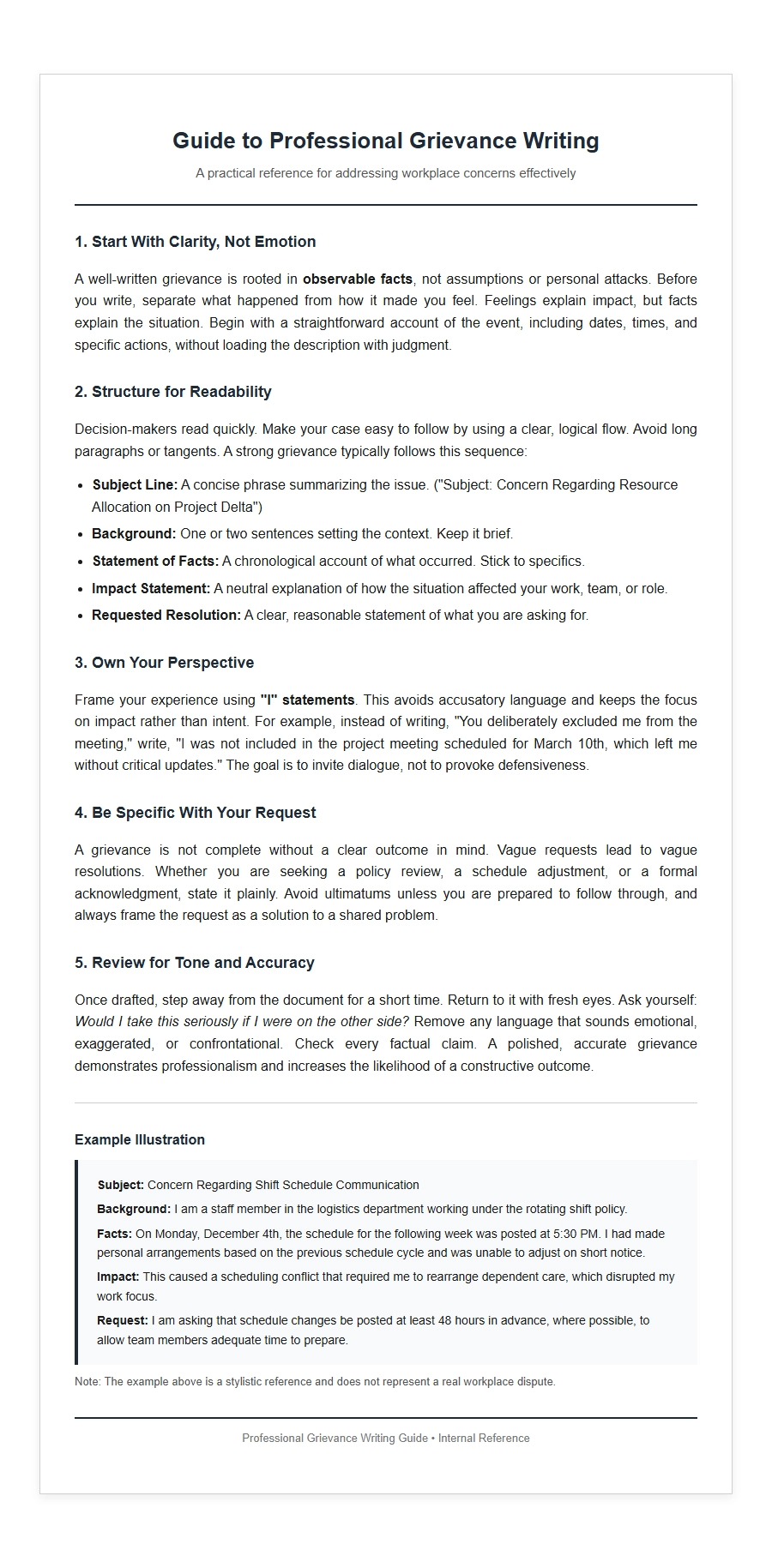 Best Practices for Writing Professional Grievance Letters