notifying pharmacy of prescription dispensing error - Complaint Letters
You've just picked up your prescription, but something feels off. Maybe the dosage is wrong, the medication name is different, or the quantity doesn't match what the doctor ordered. Your heart sinks. Now you need to notify the pharmacy of this dispensing error—and fast. But writing that formal notification can feel awkward. You don't want to sound accusatory, but you need to be clear. Staring at a blank page when you need to communicate a mistake can be paralyzing. A good sample turns that anxiety into a confident, polished message in minutes.
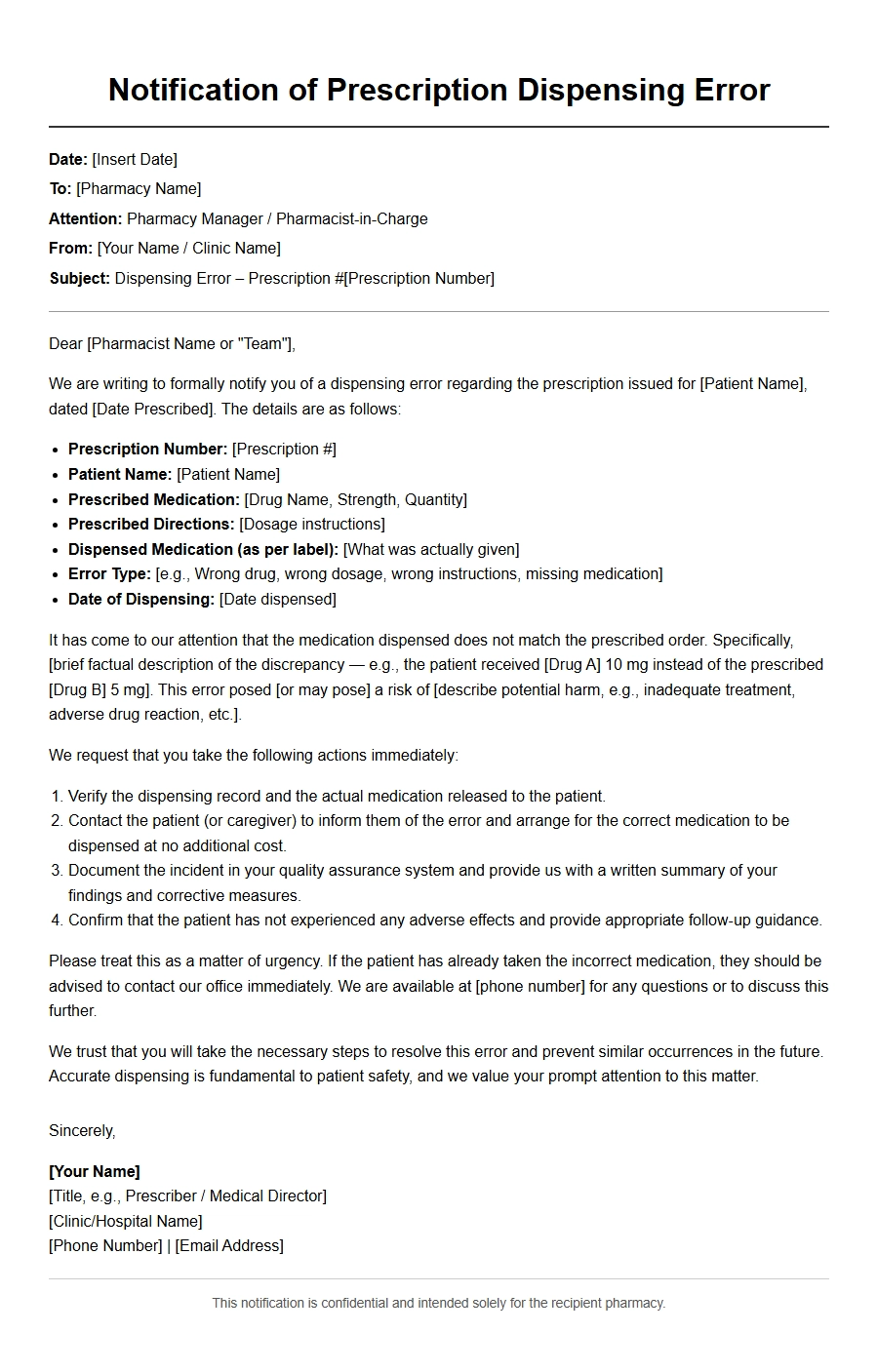
Using a letter template isn't cheating. It's a smart way to ensure you cover all the key details: prescription number, error description, and your request for correction. A well-structured professional correspondence saves time and reduces stress. You'll find that adapting a template to your situation is straightforward. It gives you a ready-made letter structure so you can focus on the facts rather than worrying about salutation and closing or the right tone in writing.
Category: Pharmacy Error Notification
What Should Your Notification Include?
Start with your name, contact information, and the prescription number. State clearly what the error is: “I received prescription #12345 for Metformin 500mg, but the bottle contains 1000mg tablets.” Be factual, not emotional. Include the date you picked it up and what you expect the pharmacy to do—correct the prescription, provide a replacement, or document the mistake for safety.
Follow formal writing tips here: use a standard business letter format if you're mailing a physical letter. For email, a polite subject line like “Dispensing Error – Prescription #12345” works well. Remember letter writing etiquette—address the pharmacist directly if you know their name, otherwise “To Whom It May Concern” is acceptable. Keep your paragraphs short and your tone respectful.
Mistakes to Avoid When Notifying Your Pharmacy
Don't assume bad intent. Most dispensing errors are honest mistakes. Avoid aggressive language. Instead, write as if you're giving them a chance to fix it. Another common slip is leaving out the prescription number—without it, the pharmacy has to search, slowing things down. Also, skip outdated salutations like “Dear Sir” unless you're sure. A simple “Dear Pharmacist” or “Dear [Name]” works.
Proofreading your letter is essential. A typo in the prescription number could cause more confusion. Read it aloud or have someone else glance at it. If you're sending it digitally, consider digital letter format—a PDF is better than a plain text email because it preserves your layout and letterhead design if you use one.
How to Adapt a Sample Without Sounding Robotic
Think of a sample as a skeleton. You add the meat—your specific details, your voice. For example, if the error was minor (e.g., wrong quantity), you can be more casual: “I noticed you gave me 30 tablets instead of 60. Could you please adjust the record and provide the rest?” For serious errors (e.g., wrong drug), be more formal and request a written confirmation of the correction.
Just like a cover letter example helps you tailor your job application, a pharmacy error sample lets you customize the message to fit your situation. If the pharmacy has a good customer service history, you might mention that. If not, you can still be firm without being rude. Your customizable letter should feel like you—professional but not stiff.
Remember, the sample is a springboard, not a crutch. The best notification letters blend standard format with your own honest voice. With a little practice, you'll be able to write these notices quickly and confidently—and get the mistake fixed without unnecessary stress.
Browse Sample Ideas
notifying pharmacy of prescription dispensing error - Complaint Letters
Formal Complaint: Incorrect Dosage Dispensed
Date: October 26, 2023
To: Pharmacy Manager, CarePlus Pharmacy
From: Dr. Emily Torres, MD
I am writing to formally notify your pharmacy of a dispensing error regarding my patient, James Whitfield (DOB: 04/12/1960). The prescription for Metformin 500 mg (Rx # 3421) was filled on October 24, 2023, but the bottle dispensed contained Metformin 1000 mg tablets.
The error details are as follows:
Prescribed
Dispensed
Metformin 500 mg, 1 tablet twice daily
Metformin 1000 mg tablets (full bottle)
This could have resulted in double the intended dose for a patient with stable diabetes. I request immediate correction and a written explanation of your quality checks. Please call my office to arrange the medication exchange.
Sincerely, Dr. Emily Torres
Patient Complaint: Wrong Drug Name on Label
Subject: Dispensing error at Main Street Pharmacy
Date: November 2, 2023
To the Pharmacy Manager,
On October 30, I filled a prescription for Lisinopril 10 mg (Rx # 7890). When I reviewed the bag at home, the label clearly read “Atorvastatin 20 mg.” The actual pills inside were indeed Lisinopril, but the incorrect label is unacceptable and dangerous.
Key observations:
Labeled drug: Atorvastatin 20 mg
Actual drug in bottle: Lisinopril 10 mg
Prescriber: Dr. Alan Reed (NPI: 1234567890)
I am notifying you so that your system can be corrected and other patients are not at risk. Please confirm receipt of this complaint and provide the corrected label within 24 hours. I expect a follow-up call from the pharmacist-in-charge.
Thank you, Martha Klein
Hospital Pharmacy Notification: Wrong Patient Fill
Interoffice Memorandum
To: Pharmacy Department, St. Luke's Hospital From: Nursing Supervisor, Ward 3B Re: Dispensing error on 11/01/2023
This is to notify you of a serious dispensing error discovered during evening medication rounds. A dose of Warfarin 5 mg intended for Mr. Henry Lucas (Room 312, DOB: 05/08/1941) was found in the medication drawer of Mrs. Irene Shaw (Room 311, DOB: 02/14/1952). Both patients have similar last names.
The incident timeline:
Pharmacy dispensed Warfarin 5 mg for Mr. Lucas at 16:30.
Nurse found the drug cup labeled “Lucas” in Mrs. Shaw’s bin.
Medication was not administered; patient safety maintained.
Please investigate how the wrong patient’s medication reached the unit. Immediate corrective action, including staff retraining on patient ID verification, is required. Incident report #IR-2023-042 is attached.
Request for Written Acknowledgment: Quantity Error
Date: November 5, 2023
To: Pharmacy Manager, Wellness Pharmacy
Re: Error in quantity dispensed for Rx # 4567 – Amoxicillin 500 mg
I am notifying you that on November 3, my prescription for Amoxicillin 500 mg was filled with 30 capsules instead of the prescribed 20 capsules. The over-dispensing poses a risk of incorrect dosing duration.
Details:
Field
Prescribed
Dispensed
Quantity
20
30
Directions
1 capsule 3 times daily for 7 days
Same, but 30 dispensed
I returned the extra 10 capsules to the pharmacy counter today. Please provide a written acknowledgment of this error and confirm that you have updated your inventory records. A copy of this notification should be kept in your quality assurance log.
Respectfully, Robert Chen
Urgent Notice: Substitution Without Consent
Priority Notice
To: Pharmacy Compliance Officer, CityMed Pharmacy From: Dr. Sarah Al-Hassan, MD
I am filing this complaint regarding a dispensing error involving my patient Anna Bell (DOB: 09/22/1988). Prescription # 5612 was written for Brand-name Synthroid 75 mcg, with a clear “DAW” (Dispense As Written) indication. However, a generic levothyroxine substitute was dispensed without my consent or the patient’s knowledge.
Critical points:
Prescriber explicitly marked “DAW” on the hard copy.
Pharmacist substituted generic without consultation.
Patient noticed the different pill appearance and called my office.
This violates state pharmacy regulations. I request an immediate review and a formal response within 48 hours. A corrective action plan must be submitted to my office. Failure to comply will result in a report to the state board.
Sincerely, Dr. Sarah Al-Hassan
Patient Complaint: Expired Medication Dispensed
Subject: Dispensing error – expired product
Date: November 8, 2023
Dear Pharmacy Manager,
I am writing to notify you of a serious error concerning my recent fill at your Mountainview branch. On November 6, I picked up Albuterol HFA inhaler (Rx # 9021). Upon checking the package at home, I discovered the expiration date was August 2023 — meaning the product was already expired when dispensed.
Pertinent information:
Rx filled: November 6, 2023
Expiration on box: August 2023
Prescriber: Dr. Linda Park
An expired inhaler may provide unreliable dosing during an asthma attack. I expect a replacement with a properly dated product and a full refund of my copay. Please also explain how your stock rotation process failed. I will wait for your call before returning the faulty item.
To: Pharmacy Director, Children’s Health Pharmacy From: Dr. Rachel Kim, Pediatrician Re: Dispensing error for patient Eli Carter
I am formally notifying your pharmacy of a critical error. Prescription # 334 was for Amoxicillin 250 mg/5 mL suspension for a 10 kg child. The bottle dispensed on November 4 contained Amoxicillin 400 mg/5 mL suspension.
Error details:
Prescribed Strength
Dispensed Strength
Dose Error
250 mg/5 mL
400 mg/5 mL
60% overdose per dose
The parent noticed the different color before first use and contacted my office. No medication was given. This error could have caused severe side effects in a toddler. I require a full written investigation and evidence of updated double-check procedures. Expect a call from my office to discuss the corrective plan.
Sincerely, Dr. Rachel Kim
Broken Seal Notification: Tamper Evidence
Date: November 10, 2023
To: Pharmacy Manager, Eastside Pharmacy From: Patricia Nguyen
I am notifying you that upon receiving my prescription for Gabapentin 300 mg (Rx # 6701) on November 9, I noticed the bottle had a broken tamper-evident seal. The inner foil was partially open, and two capsules were loose at the bottom.
Observations:
Outer seal appeared intact, but inner seal was broken.
Two capsules were outside the sealed blister.
Lot number: GBN-78322
I have not taken any medication. This is a quality and safety concern. I request a replacement with a fully sealed container and a written explanation of your handling protocol. Please contact me to arrange the return of the compromised bottle. A copy of this complaint is being sent to your corporate office.
Thank you, Patricia Nguyen
Insurance Billing Error: Wrong Drug Code Used
Subject: Notification of billing/dispensing mismatch
Date: November 12, 2023
To the Billing Compliance Team,
I received my prescription for Atorvastatin 20 mg on November 10 (Rx # 8234). However, my insurance Explanation of Benefits shows a claim filed for Rosuvastatin 10 mg — a completely different medication. This indicates a dispensing or billing error.
Details:
Field
What I Received
What Was Billed
Drug
Atorvastatin 20 mg
Rosuvastatin 10 mg
NDC
00093-2345-01
00093-6789-01
Copay Charged
$10
$10
This incorrect claim could affect my insurance history and future authorization. Please correct the claim with my insurer immediately and provide me with confirmation. I also want assurance that my actual medication was correctly dispensed. Kindly investigate and respond in writing within 5 business days.
Respectfully, Mark Johnson
Follow-Up Complaint: No Response to Initial Notification
Date: November 15, 2023
To: Pharmacy Manager, Oakwood Pharmacy
Re: Unresolved dispensing error – initial complaint sent October 30
This is a follow-up to my letter dated October 30 regarding a dispensing error where I received Metoprolol 50 mg instead of Metoprolol 25 mg (Rx # 2345). I have not received any acknowledgment or corrective action from your pharmacy.
Summary of original complaint:
Prescribed: Metoprolol 25 mg, 1 tablet daily
Dispensed: Metoprolol 50 mg (double strength)
Prescriber: Dr. Jane Morris
I am disappointed by the silence. Please note that if I do not receive a written response and a corrected prescription within 7 days, I will file a formal grievance with the state pharmacy board. Patient safety demands timely action. I expect this matter to be treated with urgency.
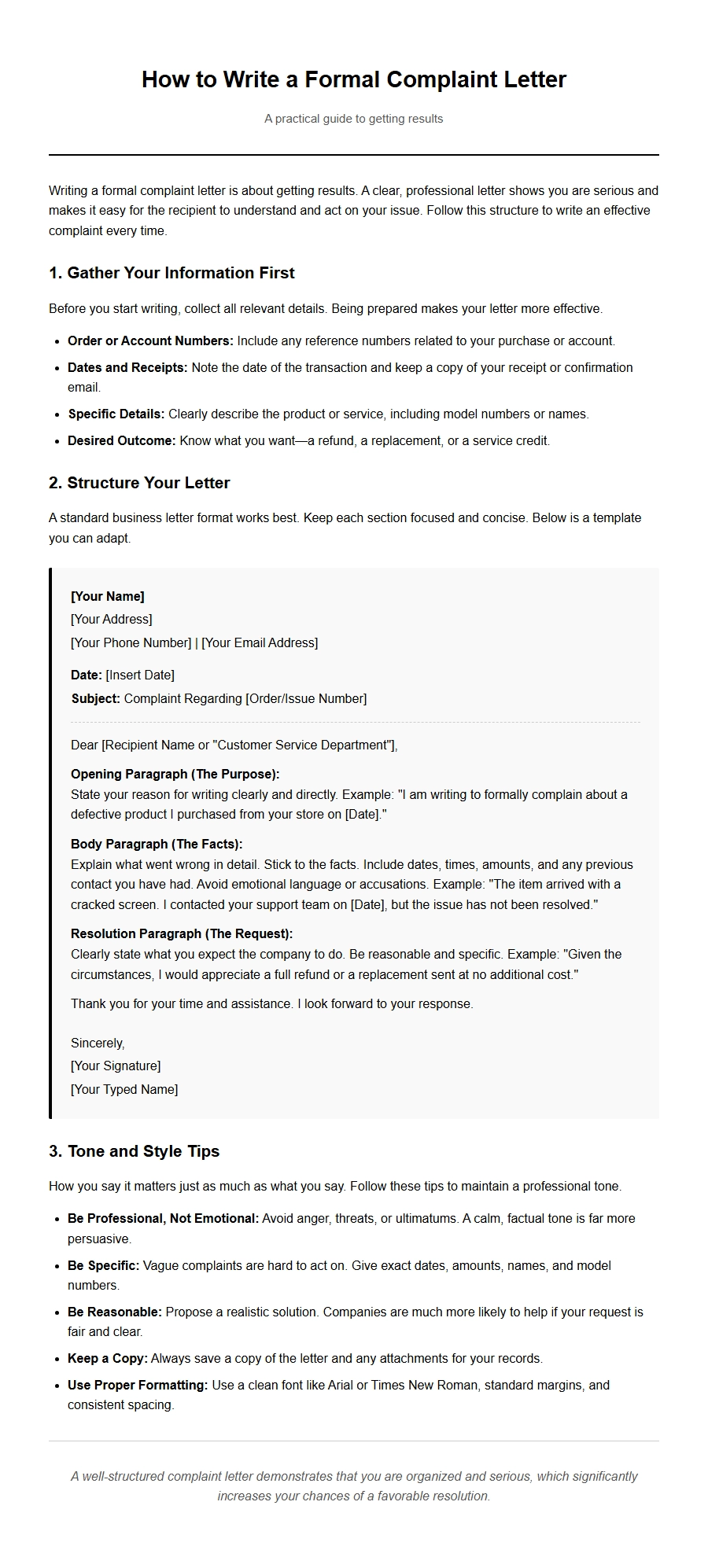 How to Write a Formal Complaint Letter
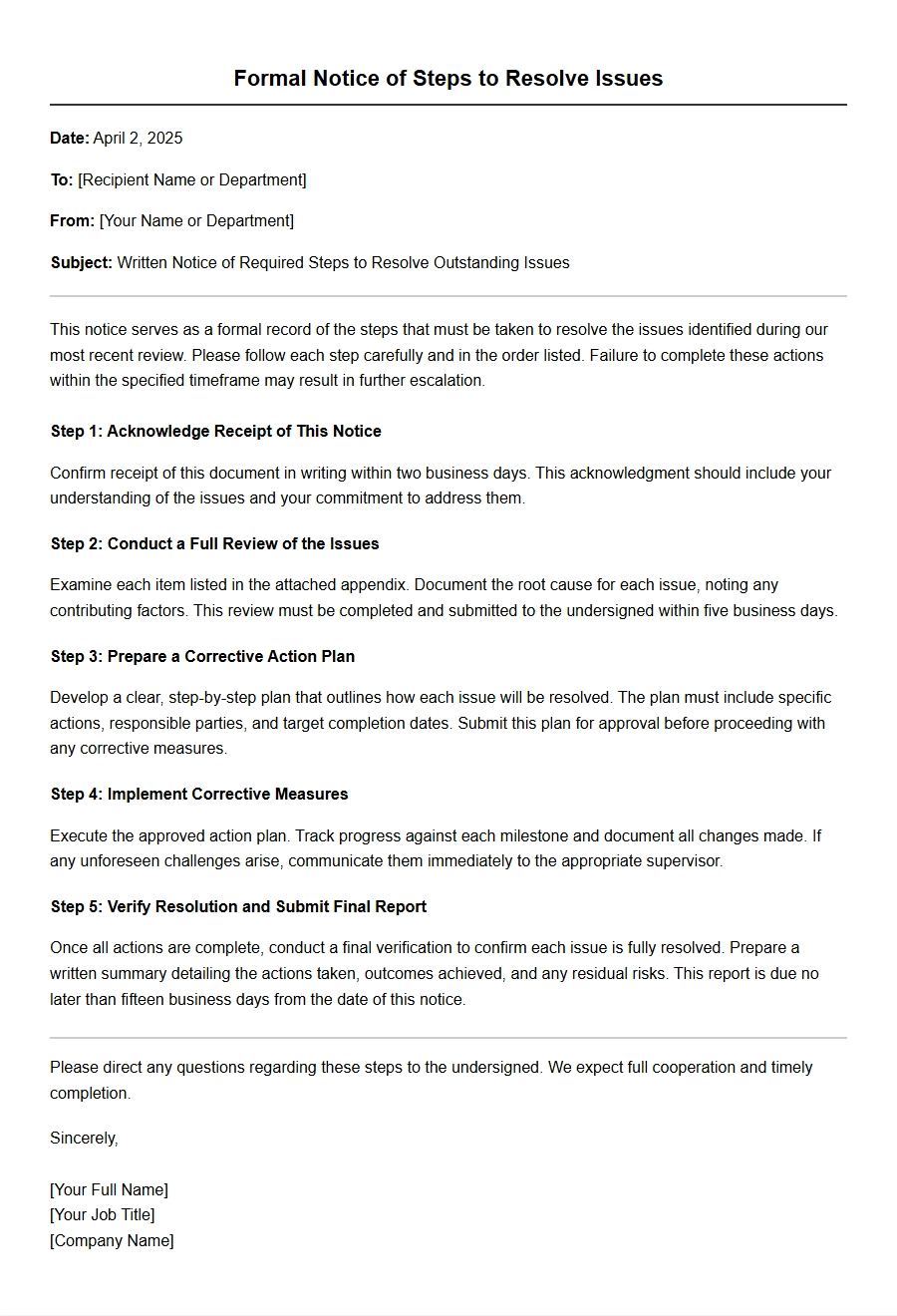 Steps to Resolve Issues via Written Notice
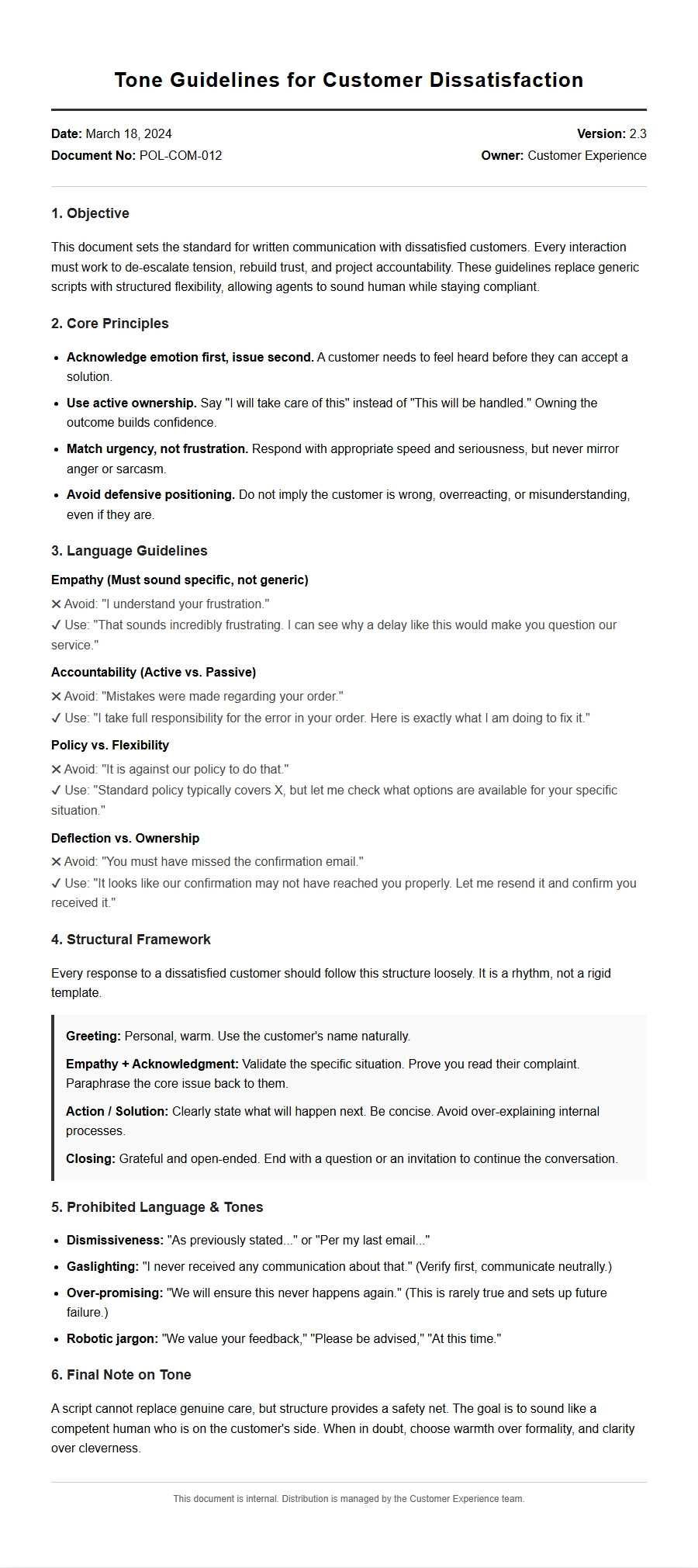 Tone Guidelines for Dissatisfied Customer Letters
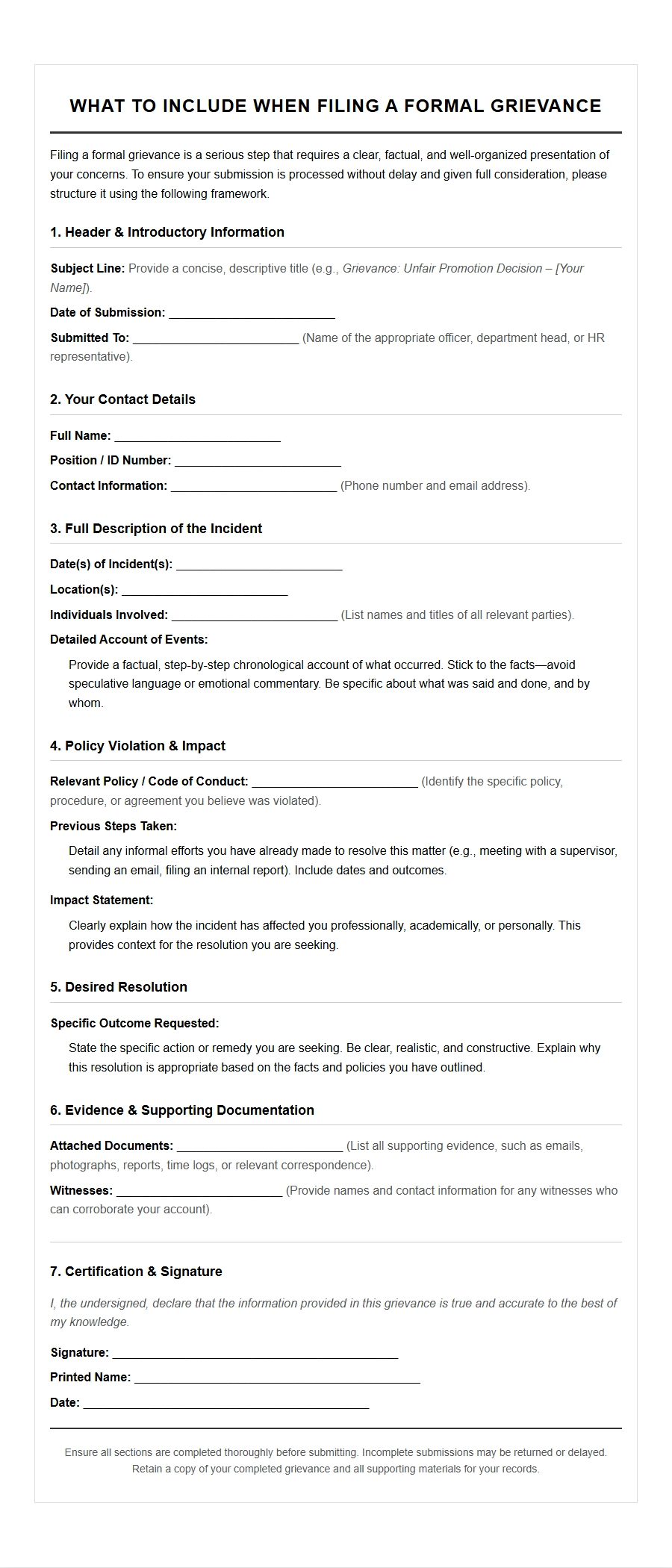 What to Include in a Formal Grievance Letter
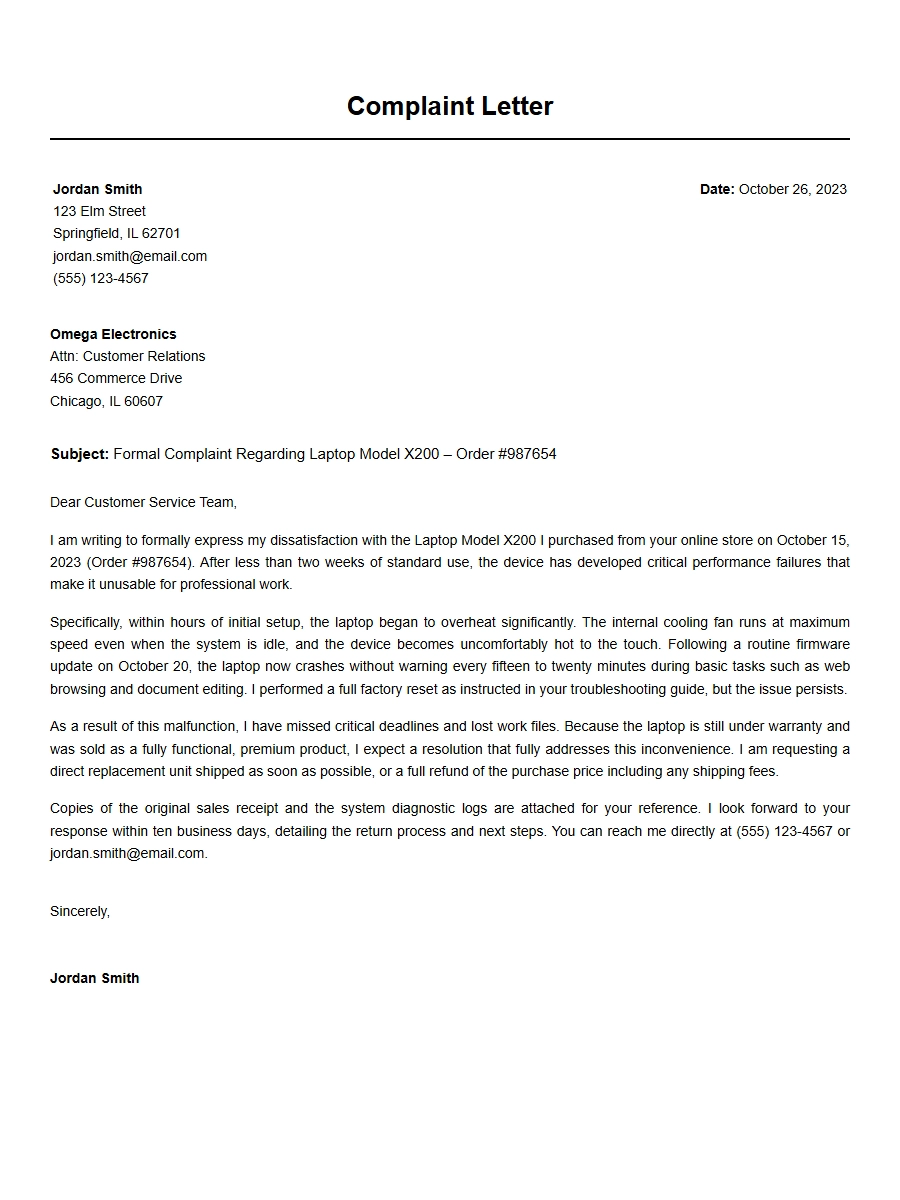 Structure of an Effective Complaint Letter
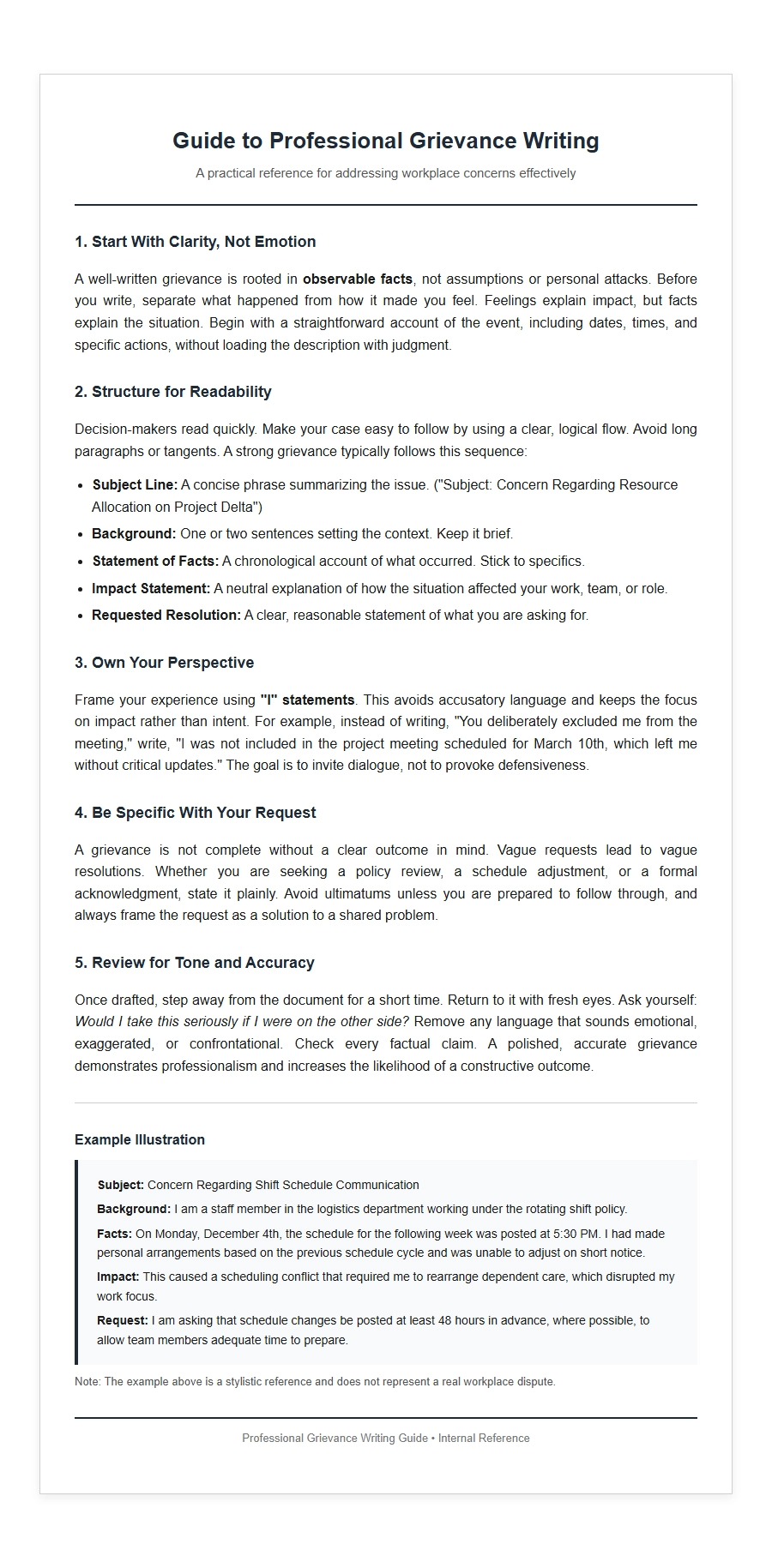 Best Practices for Writing Professional Grievance Letters