You sit down to write a sympathy letter for a close friend, and the blank page stares back at you. Your heart is heavy, but the words won’t come. You want to say something that truly comforts them, but everything sounds either too formal or too flat. That’s normal. Grief makes writing harder, especially when the bond is deep.
Using a letter template isn’t cheating. It’s a smart way to get past the paralysis. A good sample gives you the structure—the right salutation, a proper closing, the natural flow of professional correspondence—while leaving plenty of space for your own memories and voice. Think of it as a steady hand on the paper while you fill in the heart.
Sympathy letters for close friends sit somewhere between a formal condolence note and a personal message. You don’t need stiff language or corporate tone. But you also don’t want to be so casual that it feels like a text message. The best approach is to choose a sample that matches the closeness you shared. A letter for a best friend should read differently than one for a colleague. The structure may look similar, but the words you choose make all the difference.
How to pick the right sample for your situation
Look for a letter template that feels natural to you. It should have a warm opening, a middle paragraph where you can insert a specific memory, and a closing that offers ongoing support. Avoid templates that sound like a legal document or a generic card. You want something that lets you be honest without overthinking the format.
The key is personalization. Start with the template’s opening, then swap out generic phrases with real details. Instead of “I’m sorry for your loss,” try “I still remember the way they laughed at your jokes.” That one line turns a professional correspondence into something deeply personal. Keep your own speaking style—if you usually call your friend by a nickname, use it. The tone should sound like you, not a distant relative.
Pay attention to salutation and closing. For a close friend, “Dear [Friend’s Name]” is fine. You don’t need “Mr.” or “Ms.” For the closing, “With all my love” or “Thinking of you always” works better than “Sincerely.” The tone in writing should match your real relationship.
Common mistakes to avoid
One big mistake is using outdated language. “We are saddened to learn” sounds like a corporate memo. Keep it simple. Another is ignoring the medium. If you’re sending an email, don’t copy a printed letter’s letterhead design—just a warm subject line and your name at the bottom is enough. For a printed card, neat handwriting matters more than fancy digital letter format.
Always proofread your letter. A typo in a sympathy note can feel careless. Read it aloud to catch awkward phrases. If you mention a shared memory, double-check the details. Small mistakes can sting when emotions are raw.
The first few sentences set the tone. Don’t start with “I heard about your loss.” That feels distant. Instead, lead with a feeling: “I can’t imagine how you’re feeling right now, but I want you to know I’m here.” Then immediately show you know them: “You and your mother were so close—I’ll never forget how she brought soup when you were sick.” That mix of empathy and specificity grabs attention in the best way.
Once you’ve written a few drafts, you’ll notice the process gets easier. The template helps you start, but your own words carry the message. Don’t worry if the first version feels wooden. Revise it. Swap a formal phrase for a memory. Change a letter structure until it flows like a conversation.
Your friend won’t critique your grammar. They’ll feel the effort you made to reach out. That’s what matters. The more you write these letters, the more natural they become. And when you need to write one again—because life keeps happening—you’ll have a reference point that feels like your own.
Go ahead. Take that sample, make it yours, and send it. Your friend is waiting to hear from you.
Everyday Writing Examples
A Personal Touch Sympathy Letter for Your Friend
Remembering Kindness We Shared
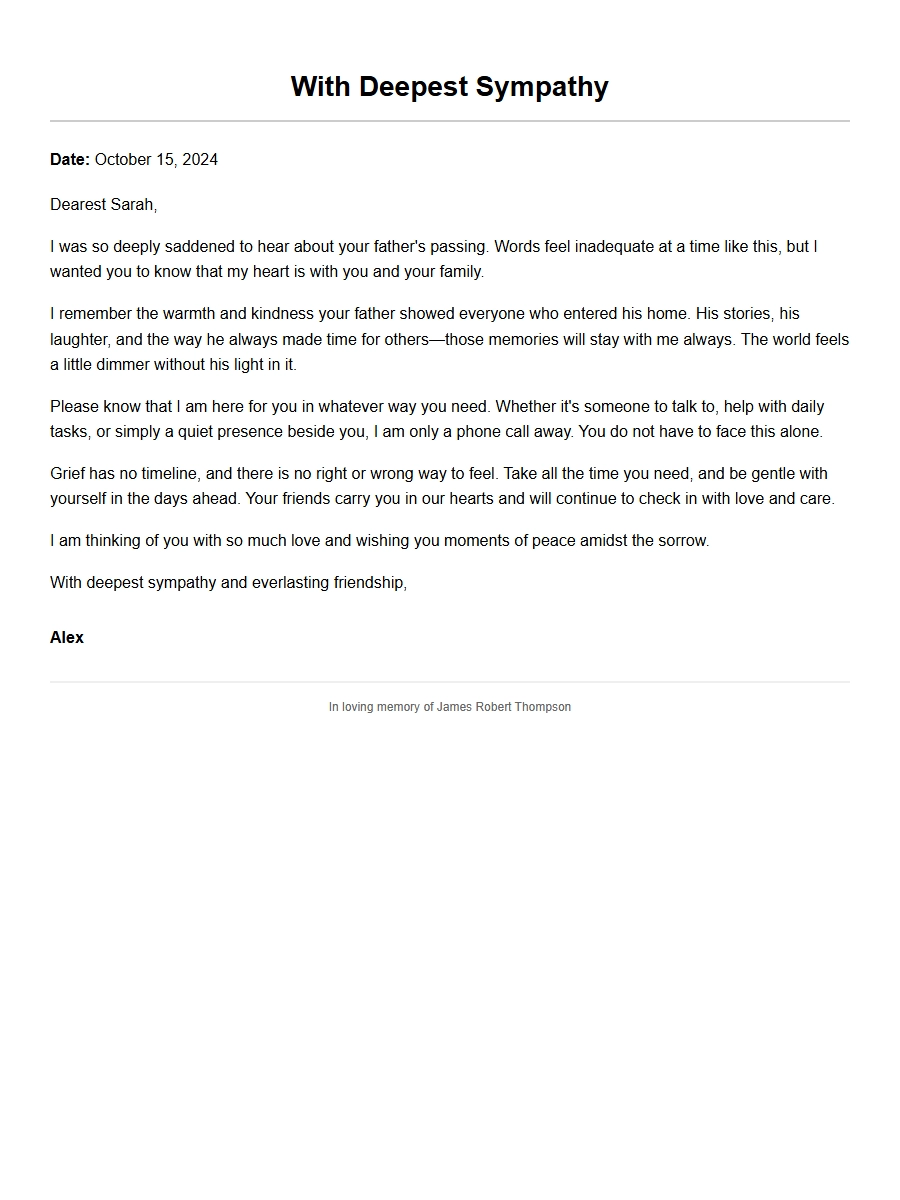
My dearest friend,
I am so deeply sorry for your loss. Words feel so inadequate right now. I keep thinking back to the time we all shared that unforgettable weekend by the lake, and how your loved one’s laughter was the heart of every conversation. That unique ability to make everyone feel included was a rare gift.
Please know that I am holding you in my thoughts and am here for anything you need — even if that is just to sit in silence together.
A warm meal dropped off this week
Help with daily errands or calls
A long walk to clear your mind
You are not alone in this. With all my love and deepest sympathy.
A Shoulder to Lean On
My dear friend,
I heard the heartbreaking news this morning and my heart just sank. We have been through so much together — triumphs, heartaches, and countless late-night talks. This sorrow is now part of that shared story, and I want you to know I am right here beside you.
Your loved one was such a warm, generous soul. I will never forget how they always remembered my birthday with a simple, thoughtful card. Those small gestures showed such a big heart.
How I Can Help
My Availability
Pick up groceries or meds
Any afternoon this week
Watch the kids for a few hours
Saturday or Sunday
Just listen on the phone
Anytime, day or night
Please lean on me. You don’t have to carry this alone. With heartfelt sympathy.
Memories of a Gentle Soul
My beloved friend,
I am shattered by the news of your loss. Your loved one was one of the gentlest people I have ever known. I will always treasure the memory of them patiently teaching me how to garden — their hands in the soil, eyes smiling under that old straw hat. They had a way of making even the simplest moments feel sacred.
I am thinking of you during this impossible time. Grief has no timeline, and there is no right way to feel. Please give yourself grace.
Monday: I’ll bring over soup and bread
Wednesday: Let’s take a quiet walk in the park
Friday: I’ll help you sort through photos if you’d like
You are so loved. I am holding you close in my heart.
Through the Hardest Days
My dear friend,
There are no words to ease the ache you must be feeling right now. I just wanted you to know that I am thinking of you constantly. Your loved one was a pillar of strength and kindness, and their loss leaves a void that is impossible to fill.
I remember the way they always asked about my family, remembered every name, and sent little notes of encouragement. That kind of care is rare and precious. I am so grateful to have known them.
Please do not hesitate to reach out when the nights feel long or the mornings feel heavy. I will bring coffee, tissues, or just quiet company.
With all my love and deepest sympathy.
A Shared Love of Laughter
My precious friend,
I am so incredibly sorry. Your loved one had such a wonderful sense of humor — I can still hear their laugh echoing in my mind. That time they pranked me with the rubber chicken during our dinner party is something I will cherish forever. They knew how to bring joy into every room.
I know the silence must feel deafening now, but I hope the laughter you shared brings you comfort in time. I am here to laugh with you when you are ready, and to cry with you until then.
Please call me anytime, even at 3 a.m.
I will set up a meal train for the next two weeks
Let me handle the thank-you notes if you wish
You are not alone. With deepest sympathy and love.
Walking Beside You in Grief
My dear friend,
I was heartbroken to learn about your loss. Please know that I am holding you close in my thoughts and sending all my love your way. Your loved one was a beautiful soul — patient, wise, and always ready with a warm hug. I will miss them dearly.
I know grief can feel isolating, but I want you to know that you have a whole community around you who cares. Let me be your anchor when the waves feel too strong.
Offer
Details
Home-cooked meals
Will deliver every other day this week
Childcare or pet care
Available any time, just text
Company for errands
Let’s go together this weekend
You are so loved. With heartfelt sympathy.
When Words Fall Short
My dearest friend,
I am sitting here trying to find the right thing to say, but everything feels inadequate. Your loved one was a bright light in this world — their kindness touched so many lives. I will never forget the way they always brought extra cookies to our book club, just because they knew someone might need a smile.
I am so sorry you have to carry this weight. Please remember that you are surrounded by people who adore you. I am only a phone call away, ready to listen without judgment or advice.
Let me bring you breakfast tomorrow morning
I’ll water your plants and grab your mail
We can watch your favorite movies in silence
You are in my heart. With all my love and deepest sympathy.
Honoring a Beautiful Life
My dear friend,
I am so deeply sorry for the passing of your beloved one. They were a person of such grace and warmth, and their memory will live on in the countless lives they touched. I will always cherish the way they lit up when they talked about you and the pride they had in your accomplishments.
I know the coming days will be hard. Let me help carry some of the load so you can have space to grieve and honor their life.
Task
I Can Take Care Of
Notify friends & family
Yes, just give me a list
Arrange flowers or donations
I’ll coordinate with the funeral home
Keep the house tidy
I will stop by weekly
You are so brave, and you are so loved. With my deepest sympathy.
A Promise to Remember
My treasured friend,
I am overwhelmed with sorrow for your loss. Your loved one was a remarkable person — generous, thoughtful, and endlessly supportive. I will never forget the long conversations we had about poetry and life under the stars. They had a way of making everyone feel seen and valued.
I promise to keep their memory alive by sharing stories and celebrating the beautiful person they were. And I promise to be by your side through every step of this journey.
I’ll save a seat for you at our weekly coffee
Let’s plant a small garden in their honor
I will light a candle for them every month
You are not alone. With all my love, now and always.
Holding Space for You
My dear friend,
I am writing this through tears, just thinking about the depth of your pain. Your loved one was a source of such steady comfort and joy. I will always remember their quiet strength and the way they listened without rushing to fix things. They taught me so much about patience and love.
Right now, I know there are no answers. There is only the ache. Please let me sit with you in that ache. I will hold space for you, whether that means a long hug, a shared meal, or simply being present while you cry.
You are the dearest friend I have ever known, and I will see you through this. With endless love and deepest sympathy.
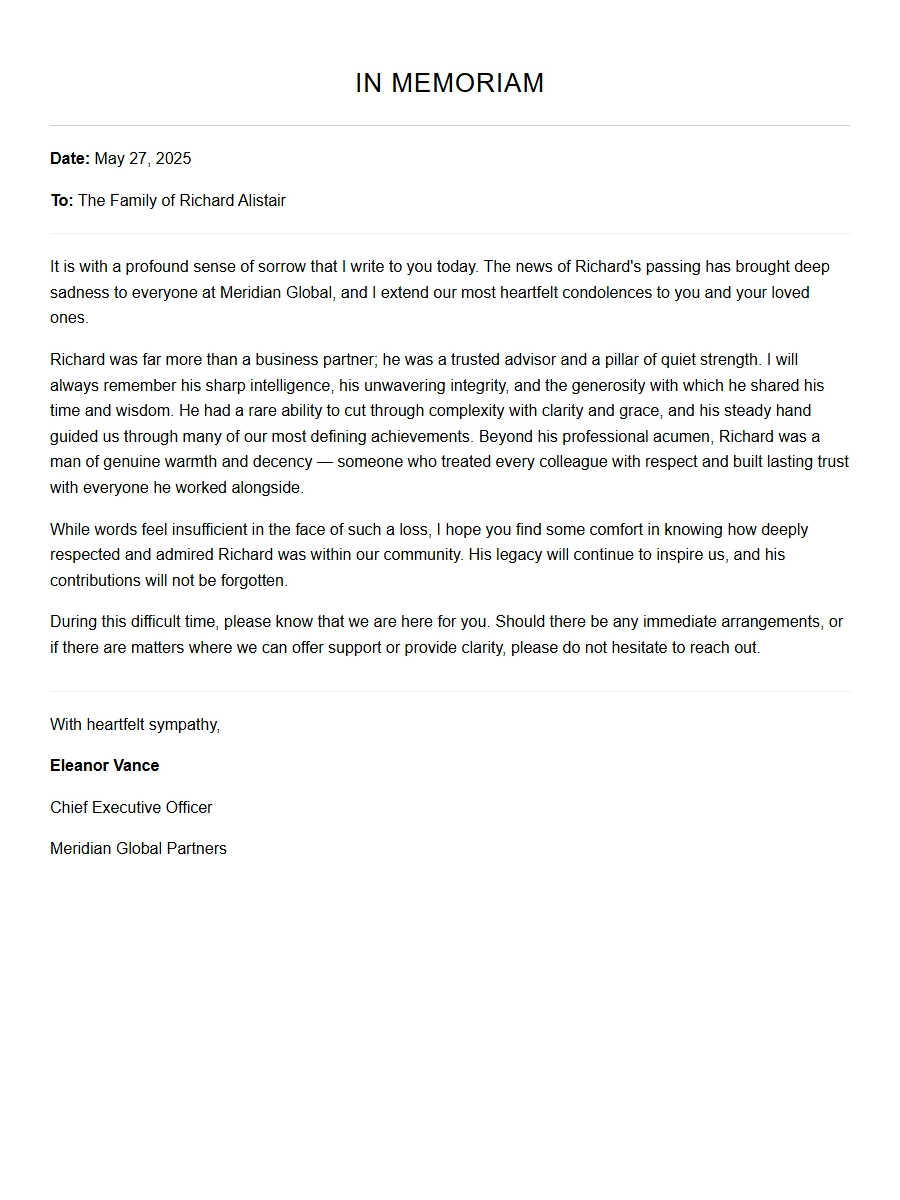 Formal Condolence Message for a Business Partner
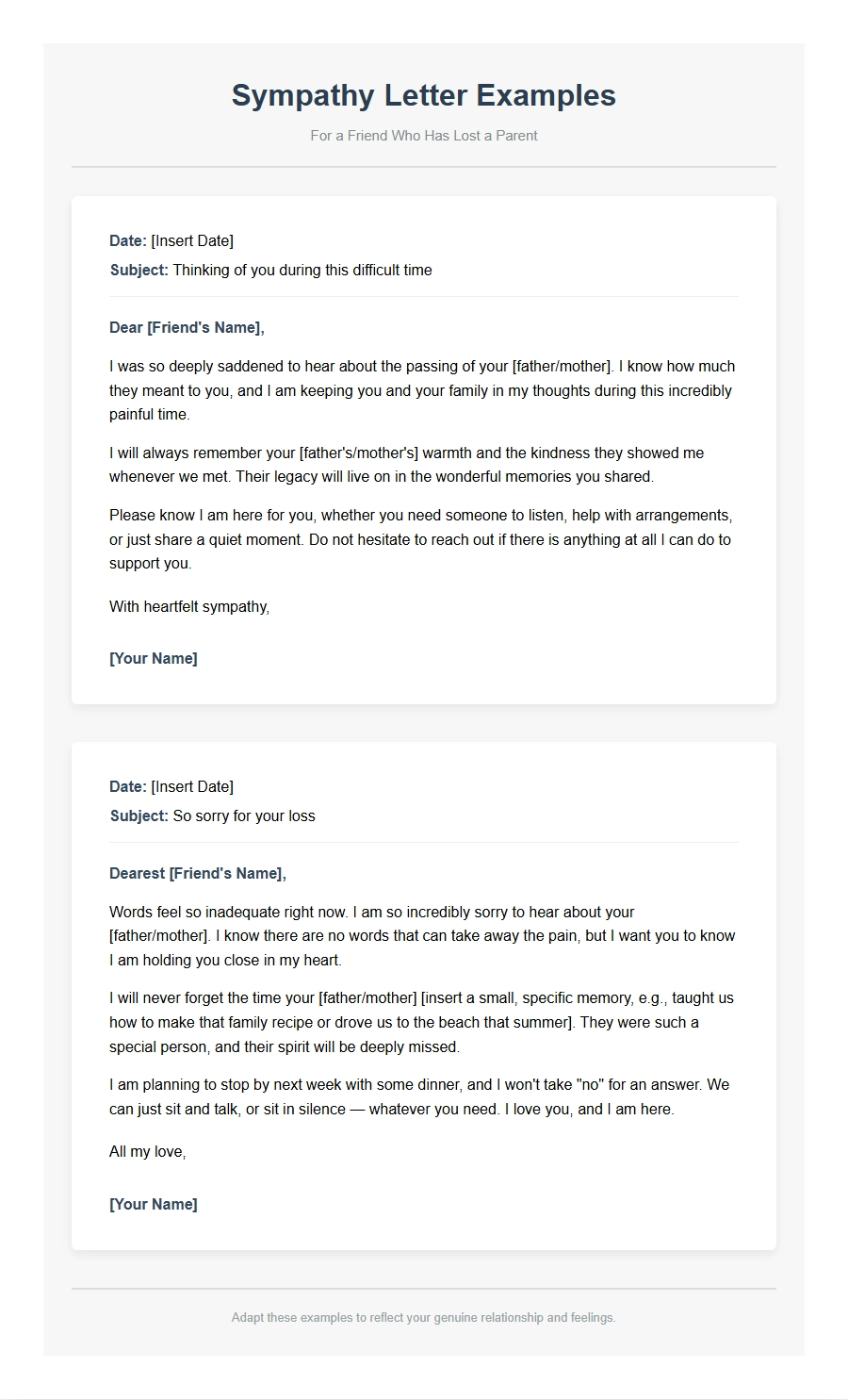 Sympathy Letter Examples for a Friend Who Lost a Parent
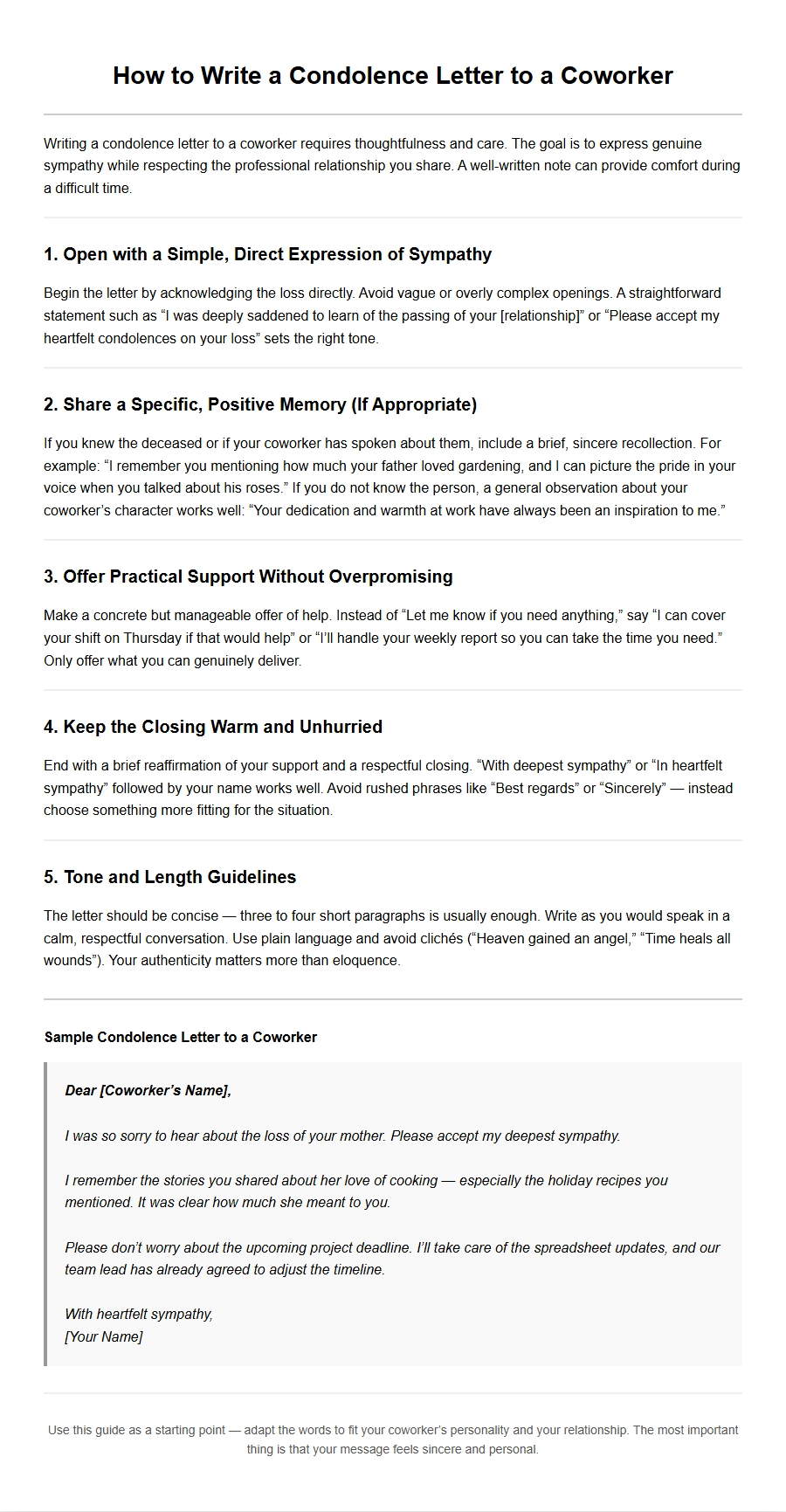 How to Write a Condolence Letter to a Coworker
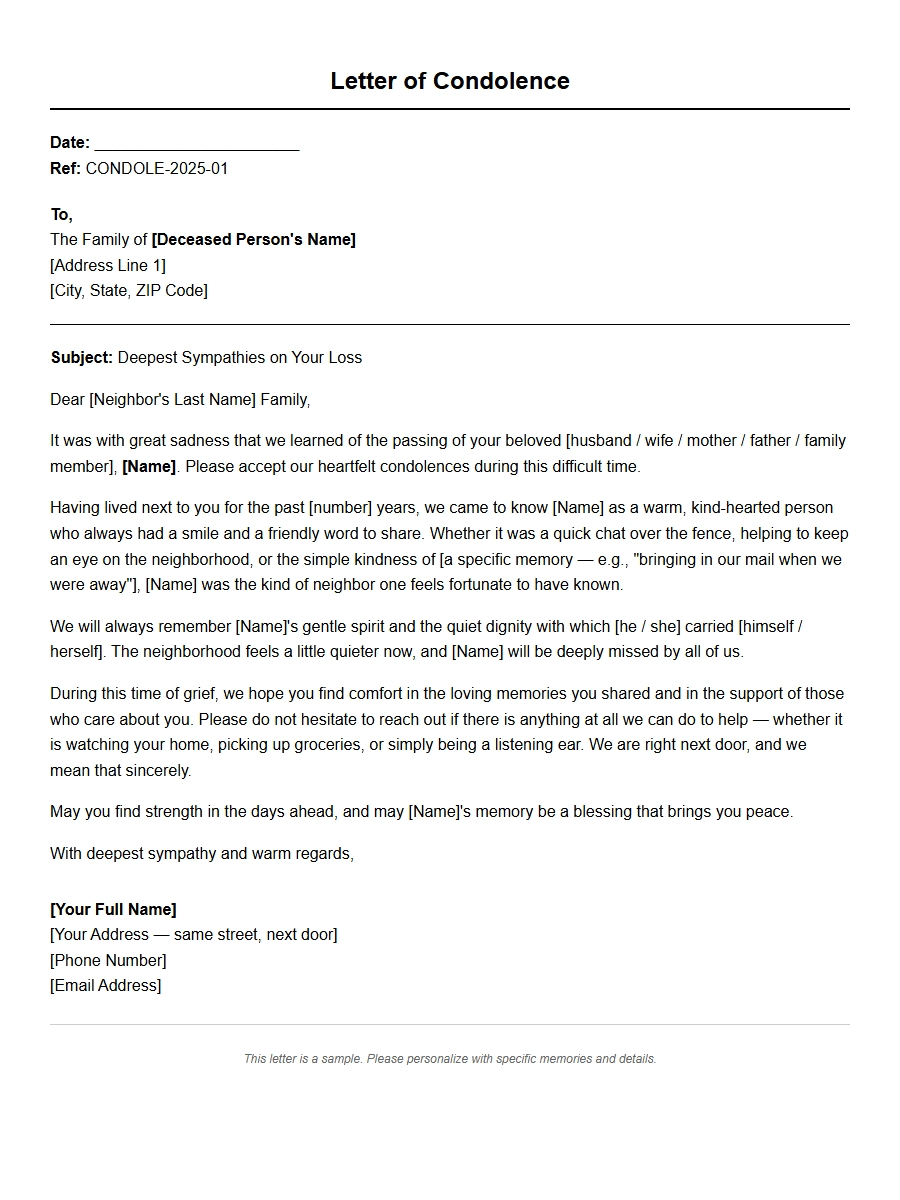 Condolence Letter Sample for a Neighbor
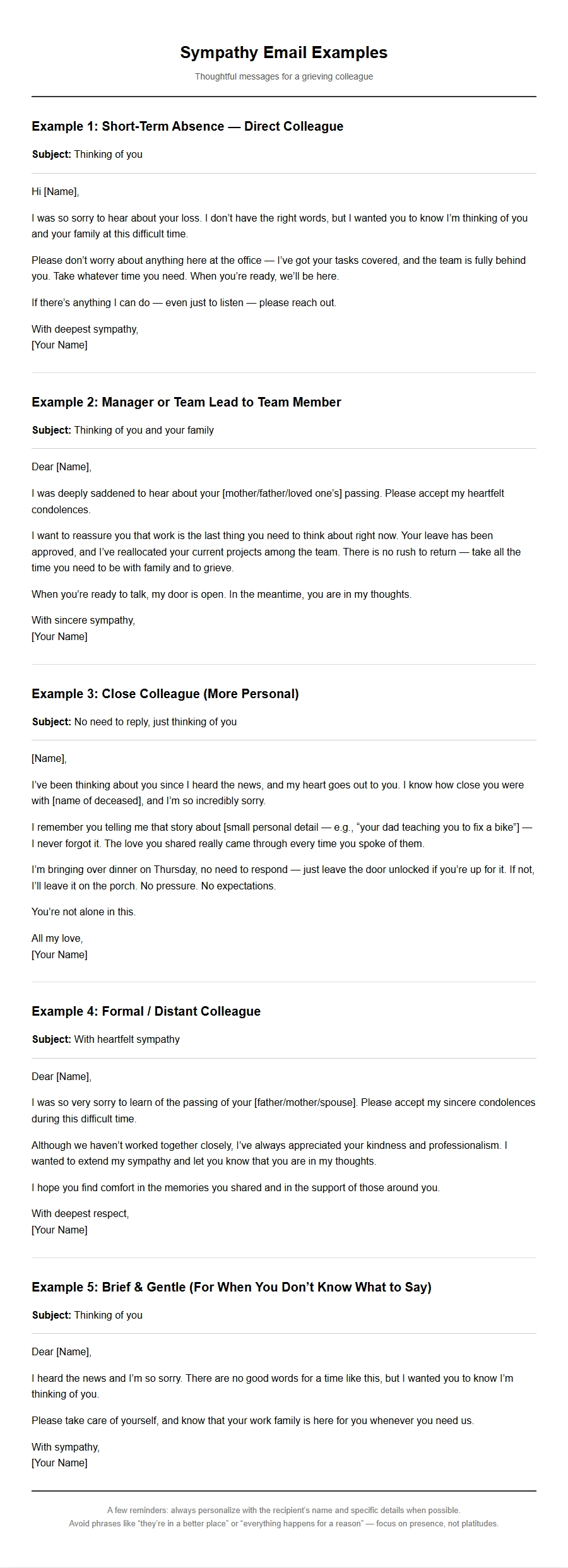 Sympathy Email Examples for a Grieving Colleague
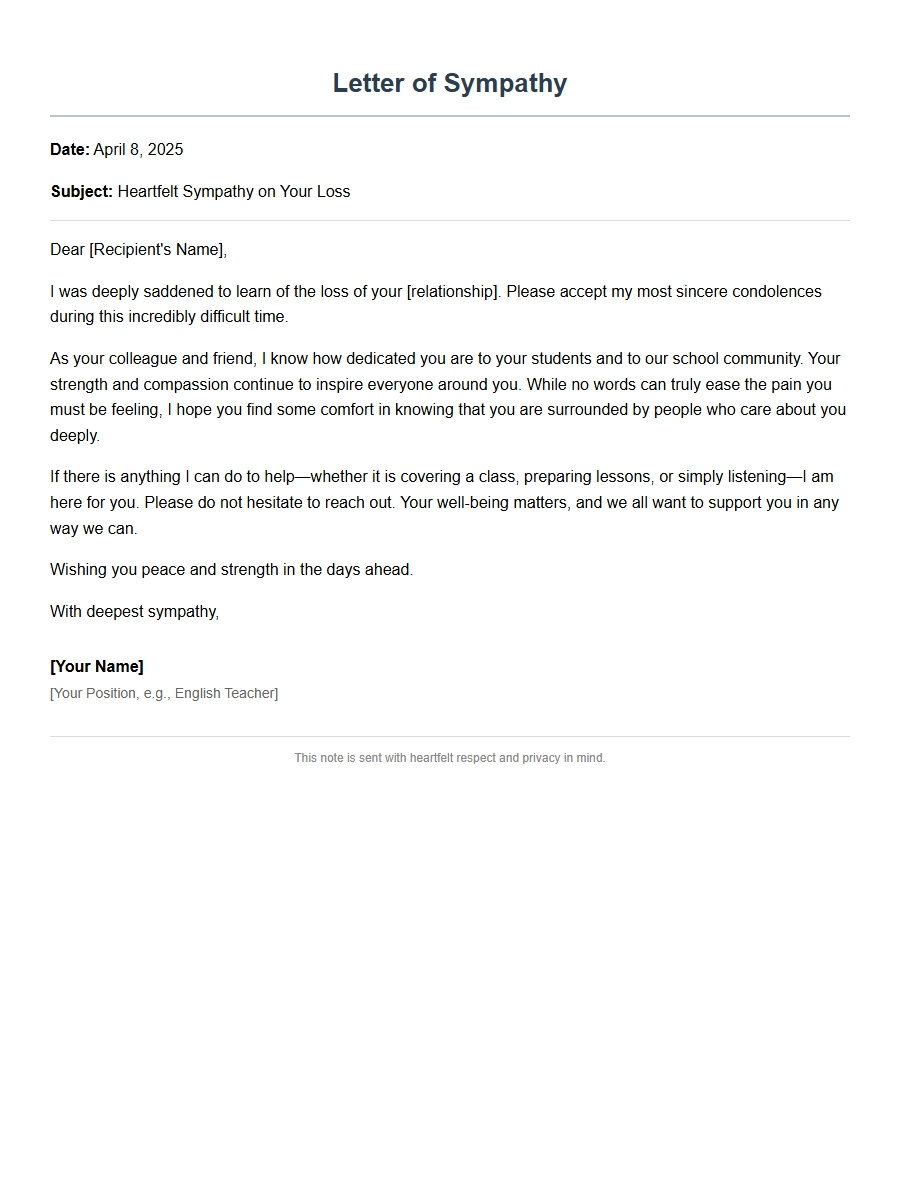 Condolence Words for a Teacher