You’ve just learned someone you care about lost their father. You want to say something, but every word you try feels hollow or clumsy. That blank screen or empty card stares back. You’re not alone—this is one of the hardest messages to write. The right message example can bridge that gap between silence and comfort.
Why using a condolence message example is a smart move
Some people worry that using a sample feels insincere. It’s not. Even experienced writers start from a structure. A good condolence letter template gives you the tone and phrasing you need, leaving room for your personal touch. It’s a time-saver when emotions are raw, and you need to get words down without overthinking. Think of it as a warm-up sketch, not a carbon copy.
Category: Condolence Letters
Finding the right tone for loss of a father
Loss of a father hits differently depending on the relationship and the person you’re writing to. A colleague who lost their dad might need a more formal tone—something like “I was deeply saddened to hear about your father’s passing. Please accept my sincere condolences.” A close friend, on the other hand, will appreciate something warmer: “I’m so sorry. Your dad was such a kind man, and I’ll miss his laugh at family gatherings.”
When you browse message examples for loss of father, look for samples that match your relationship. If you’re writing to a grieving client or a distant relative, lean toward sympathy card wording that is respectful but not overly familiar. For a friend, you can be more personal and specific.
How to personalize a condolence letter sample without losing your voice
Start with a sample that feels right. Then change three things: the salutation, the memory, and the closing. For example, if the example says “I remember your father’s stories,” replace it with a real memory. “I’ll never forget the time your dad helped me fix my bike when I was ten.” That one sentence makes the whole message authentic.
Avoid copying a long block of text. Instead, take the structure—opening, expression of sympathy, personal memory, offer of support, closing—and fill it with your own words. This keeps the letter structure strong while letting your voice come through.
Common mistakes when writing a sympathy message for a father’s death
One big mistake is using religious language when you’re not sure of the recipient’s beliefs. Phrases like “He’s in a better place” can sting if the person doesn’t share that faith. Stick to universal sentiments: “I’m thinking of you,” “I’m here if you need anything,” “He will be missed.”
Another error is making it about you. While sharing a memory is fine, don’t turn the letter into your own grief story. Keep the focus on the person who lost their father.
Also, check your salutation and closing. “To whom it may concern” is too cold for a condolence note. Use the recipient’s name. For closing, “With deepest sympathy” or “With love” works, depending on your relationship.
Adapting your message for email vs. handwritten card
If you’re sending a digital letter format by email, keep the subject line simple: “Thinking of you” or “With sympathy.” The body can be a bit shorter than a handwritten note. For a printed card, you have more room for a longer message, but don’t ramble. Two to four paragraphs is plenty.
Always proofread. A typo in a sympathy message can feel careless. Read it aloud, or have someone else glance at it. Proofreading letter content matters extra here because the message carries emotional weight.
Let the sample be your starting point, not your script
You’ll never regret sending a thoughtful message. The person grieving will remember that you reached out, not that your wording wasn’t perfect. Use the sample as a springboard. Write what feels true to you. The more you practice, the easier it gets—and next time, you might not need an example at all. For now, take that first step. Your words matter more than you think.
Useful Formats
Condolence Message Examples for Loss of Father
A Letter of Shared Memories
Dear [Name],
I was deeply saddened to learn about the passing of your father. He was a man I remember with great fondness from the times we shared in the neighborhood. I often think of his booming laugh on summer evenings and how he would always lend a hand to anyone who needed it.
There was one particular afternoon when he spent hours helping me fix my bicycle, patiently explaining each step. That kindness is something I have never forgotten.
I know no words can truly ease your pain, but I hope you find comfort in knowing how much he was respected and loved. His legacy of generosity lives on in all the lives he touched.
With heartfelt sympathy, [Your Name]
A Formal Condolence Note
Dear [Family Name] Family,
On behalf of everyone at [Company/Organization Name], I extend our most sincere condolences on the passing of your beloved father, [Father's Name]. He was a pillar of strength and wisdom, and his contributions to our community were immeasurable.
We remember him as a man of integrity and warmth, always willing to share his vast knowledge. His professional legacy serves as an inspiration to us all.
In recognition of his profound impact, we have made a donation to [Charity Name] in his memory. We hope this small gesture brings you some peace during this difficult time.
You are in our thoughts and prayers.
With deepest respect, [Your Full Name] [Your Title]
A Short Sympathy Message
[Friend's First Name],
I am so sorry to hear about your dad. He was a wonderful man, and I know how much he meant to you.
I will always remember his gentle spirit and the pride he had in his family. There is a quote that reminds me of him: "Those we love don't go away; they walk beside us every day."
Please know that I am here for you, whatever you need. Whether it is a coffee, a walk, or simply some quiet company, do not hesitate to reach out.
Thinking of you, [Your Name]
Condolence Letter from a Close Friend
My Dearest [Friend's Name],
My heart broke when I heard the news. Your father was like a second father to me. I cannot count the number of times he welcomed me into your home with open arms and a warm meal.
He taught us both so much about resilience and kindness. I will never forget the camping trips we took together and the fishing lessons he gave us at the lake. Those are treasured memories I will hold forever.
This pain is immense, but you do not have to carry it alone. We are a family of friends, and we will walk this path together. I am just a phone call away, day or night.
All my love and strength, [Your Name]
A Religious Condolence Message
Dear [Name],
We are so sorry to learn of your father's passing. May you find comfort in your faith and in the knowledge that he is now at peace in the loving arms of our Creator.
We pray that the Lord grants you strength, peace, and solace during this time of mourning. Your father lived a life of faith and service, and his example will continue to guide you.
Please hold onto the promise that you will be reunited one day in a place where there is no more sorrow or pain.
You and your family are in our daily prayers.
In faith and sympathy, [Your Name]
Condolence for a Colleague
Dear [Colleague's Name],
I was so sorry to hear about your father's passing. Please accept my deepest condolences during this incredibly difficult time.
I know your father was very proud of your accomplishments here at work. You often spoke of him with such admiration, and it was clear that he was a major influence on the person you are today.
Please do not worry about work. The team has everything covered. Take all the time you need to be with your family. We are thinking of you.
With sincere sympathy, [Your Name]
Condolence from a Neighbor
Dear [Name] and Family,
We were heartbroken to hear about the loss of your father. He was the kind of neighbor everyone wishes for—always ready with a friendly wave, a helping hand, or a listening ear.
I will miss seeing him in his garden every morning, tending to his roses with such care. He shared cuttings from those roses with our entire street, bringing beauty to everyone's life.
If you need anything at all—a meal, someone to watch the house, or just someone to talk to—please know our door is always open. He will be deeply missed by our entire community.
With heartfelt sympathy, [Your Name] and family
A Letter Honoring His Legacy
Dear [Family Name],
I am writing to express my deepest sorrow upon learning of your father's passing. He was an extraordinary man whose legacy will live on through the countless lives he touched.
Here are just a few of the ways he influenced our community:
He founded the local youth mentorship program, guiding over 100 young people.
He volunteered at the food bank every Saturday for 15 years.
He was a tireless advocate for literacy in our schools.
His dedication was an inspiration to us all. May you find strength in the beautiful memories you shared and in the knowledge that his life made a profound difference.
With deepest gratitude and sympathy, [Your Name]
Condolence with a Poem
Dear [Name],
Words cannot fully express how sorry I am to hear about your father. He was a gentle soul who left a beautiful mark on this world.
I remember how he would always say that life is about the little moments. He was right. The memory of his smile will always be a little light in the darkness.
In his honor, I recall these lines:
"Do not stand at my grave and weep, I am not there; I do not sleep. I am a thousand winds that blow. I am the diamond glints on snow."
He is with you always, in the wind and the sunshine. I am thinking of you.
With love, [Your Name]
A Brief Condolence Note
Dear [Name],
I am so very sorry for your loss. Your father was a wonderful man, and I feel privileged to have known him.
His kindness, wisdom, and gentle humor will never be forgotten. I hope that the love of your family and friends surrounds you with comfort and peace.
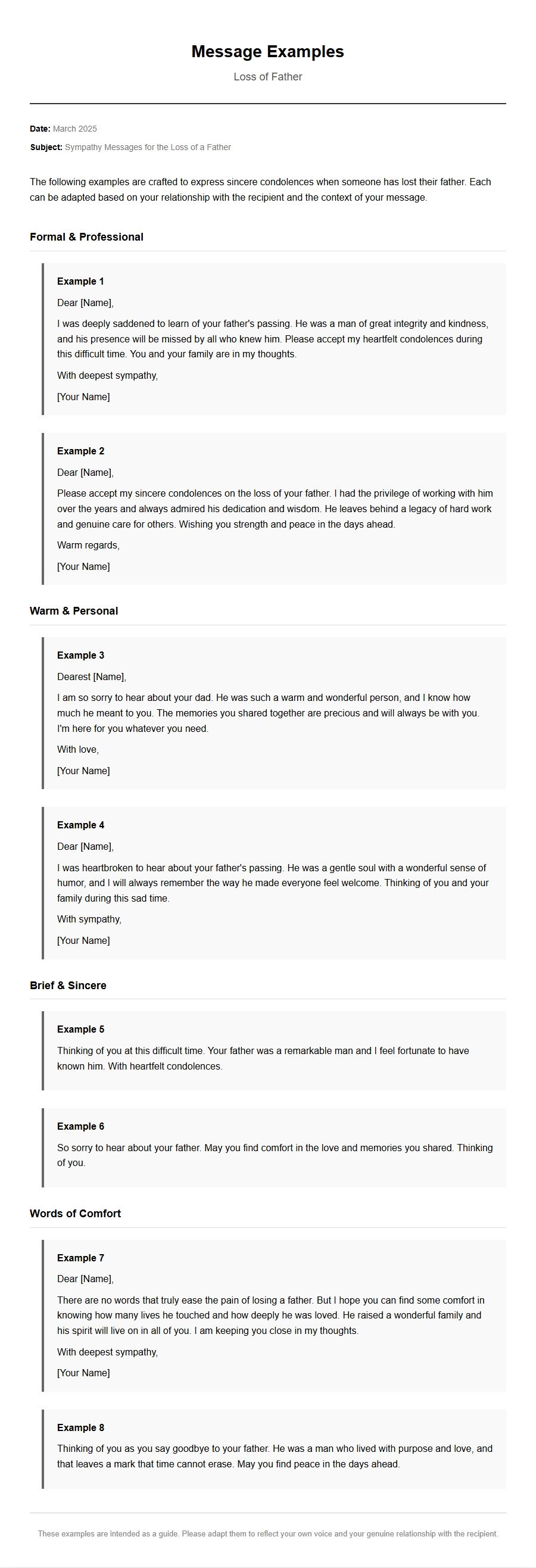
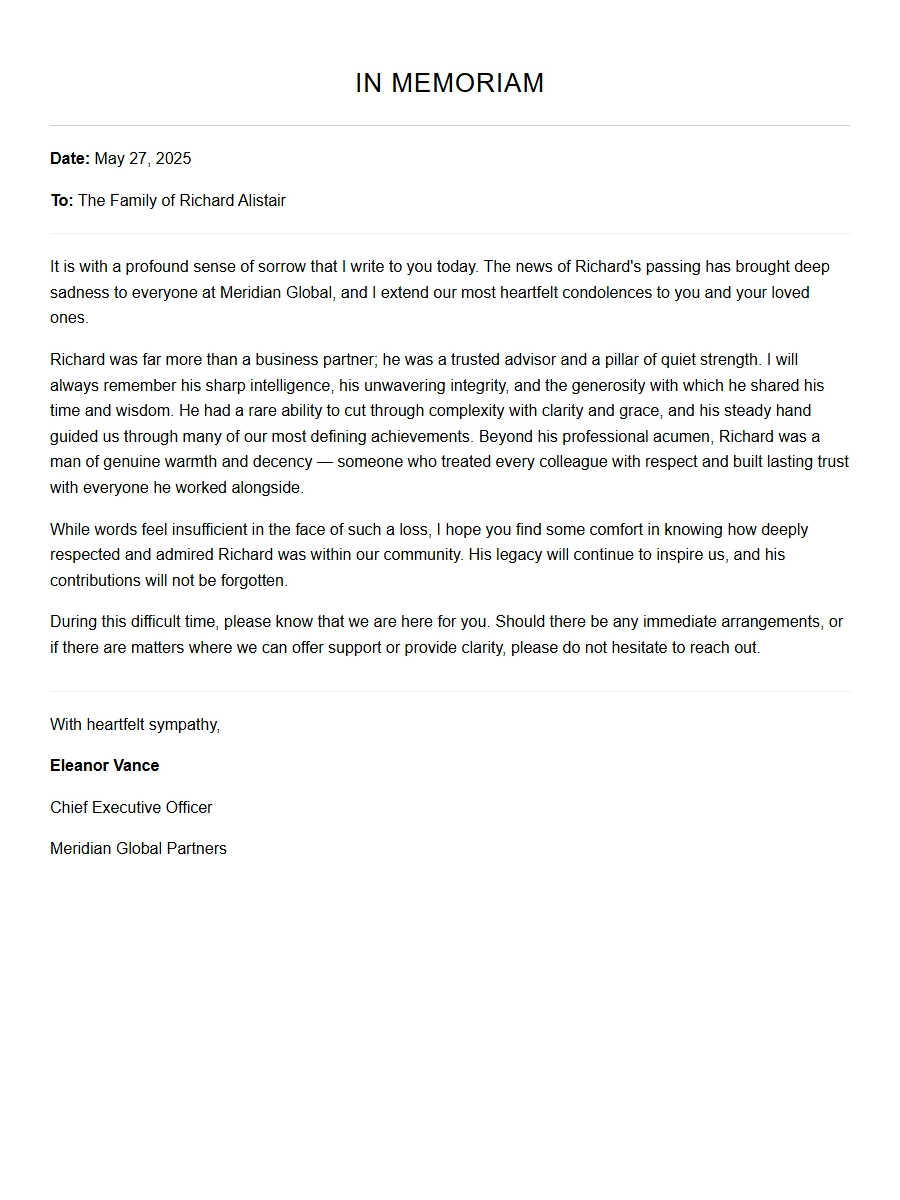 Formal Condolence Message for a Business Partner
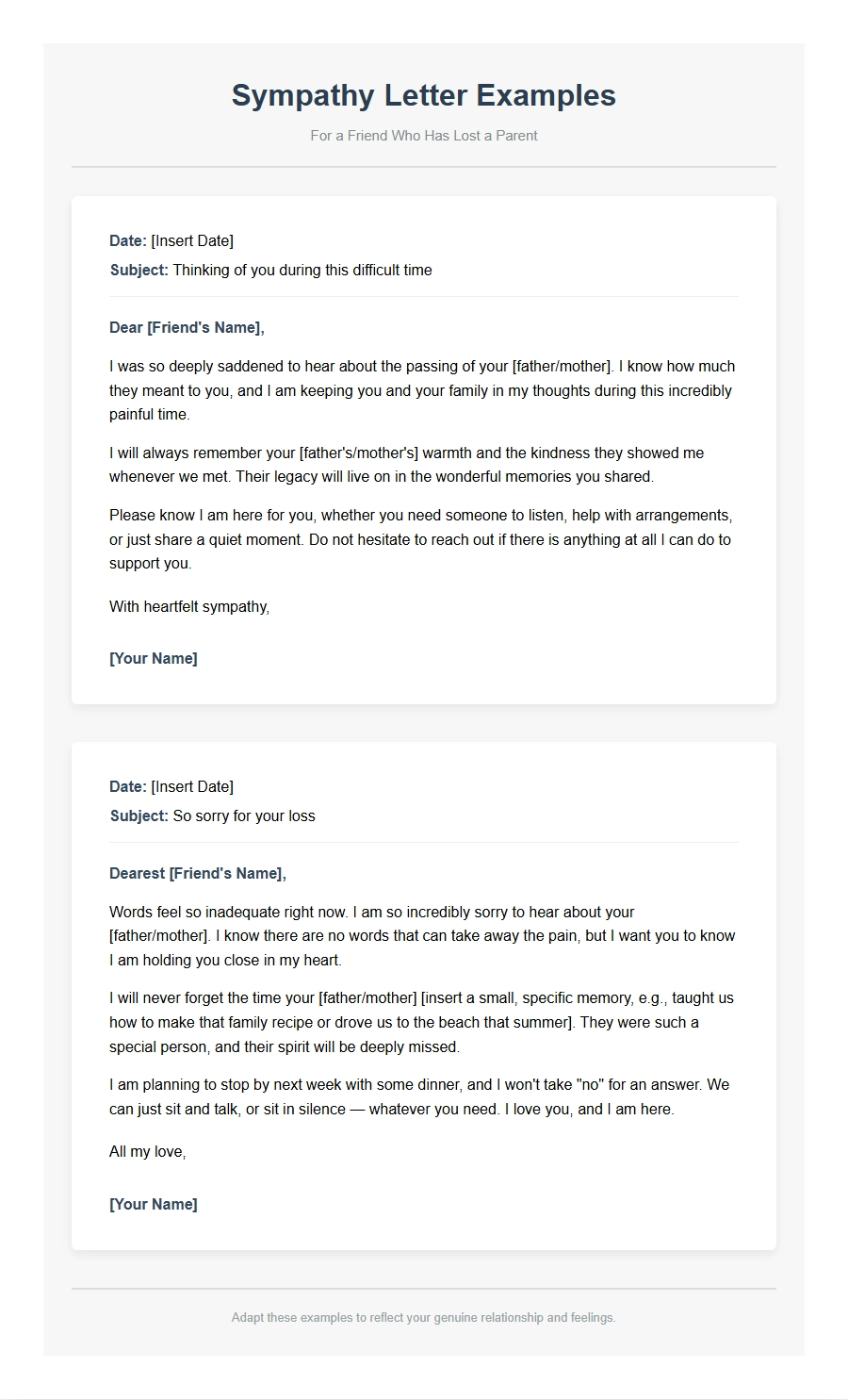 Sympathy Letter Examples for a Friend Who Lost a Parent
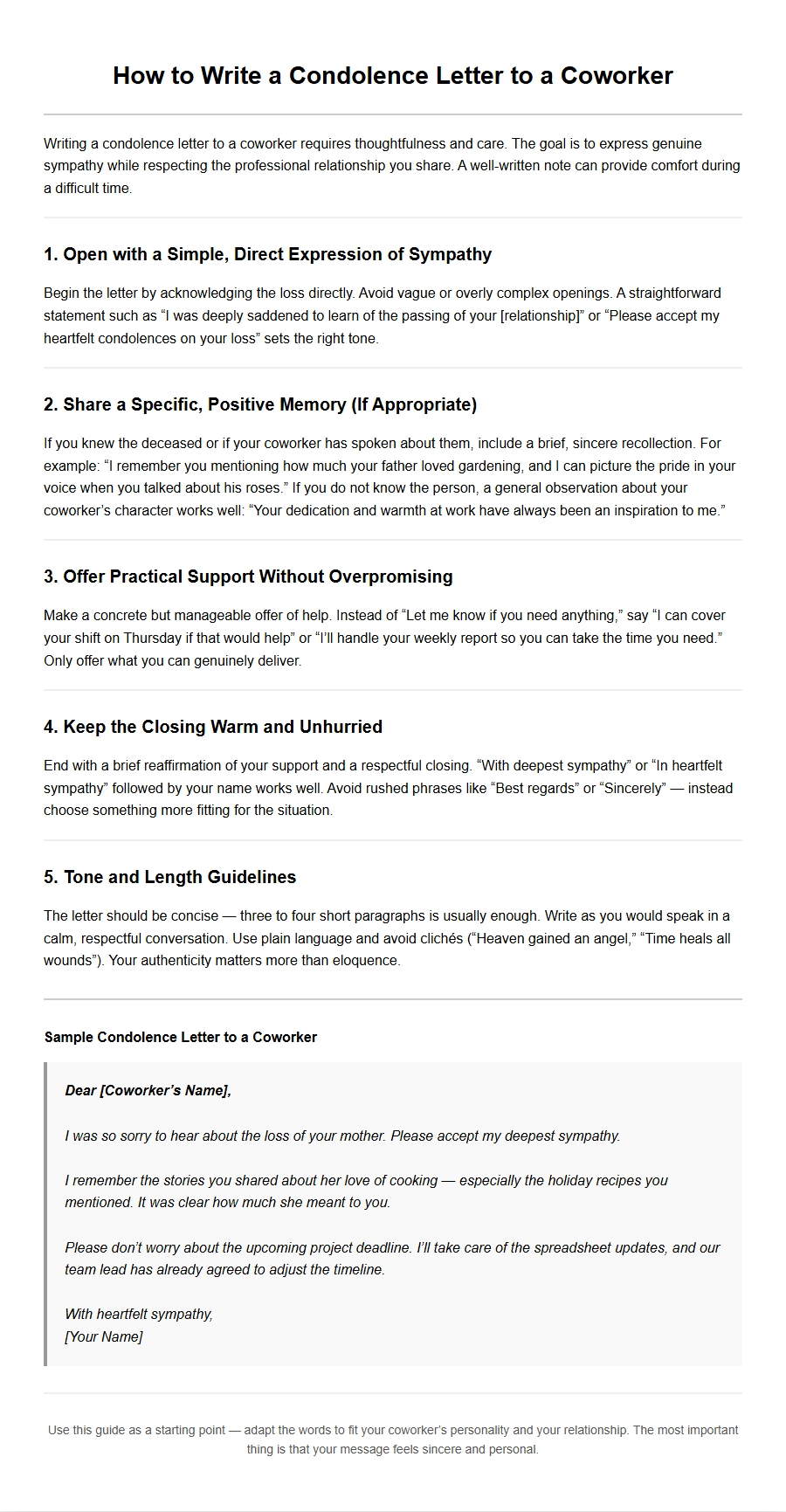 How to Write a Condolence Letter to a Coworker
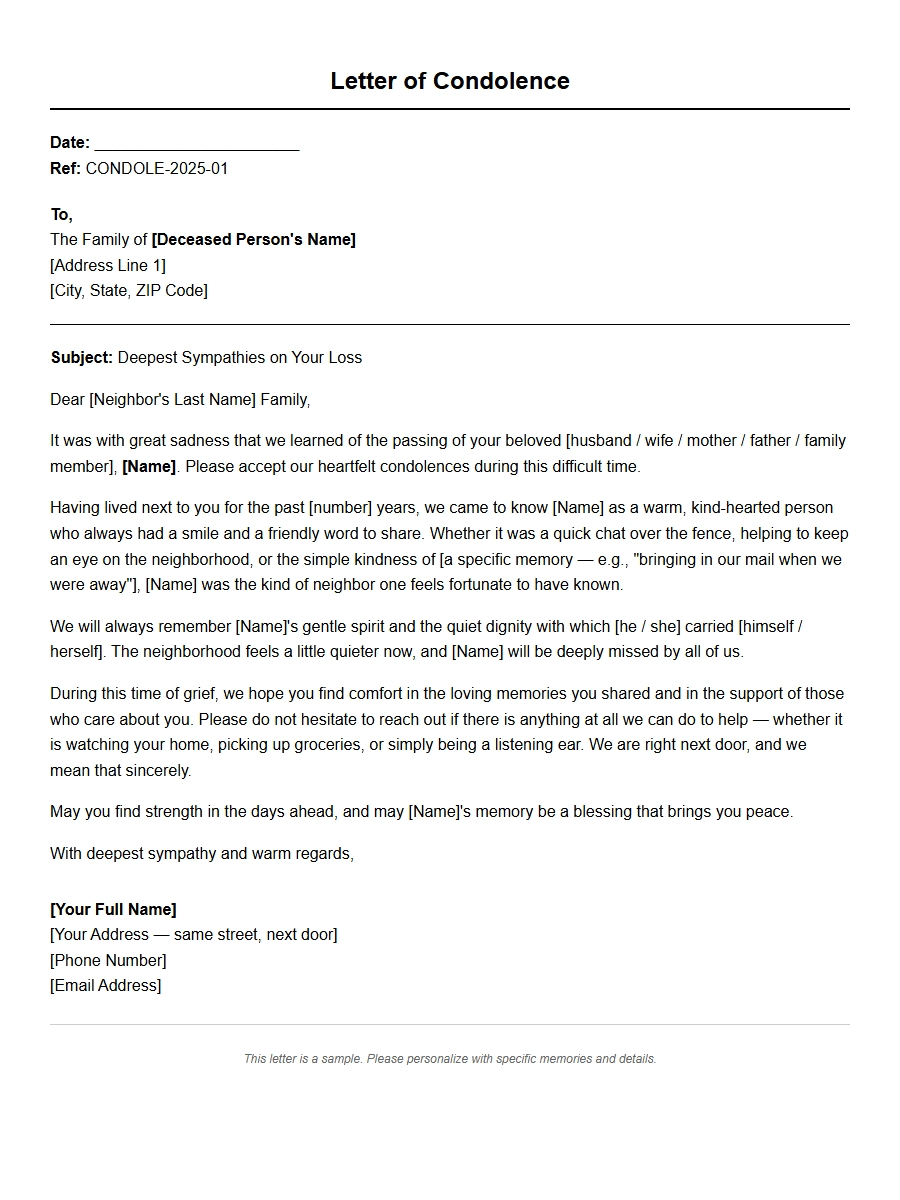 Condolence Letter Sample for a Neighbor
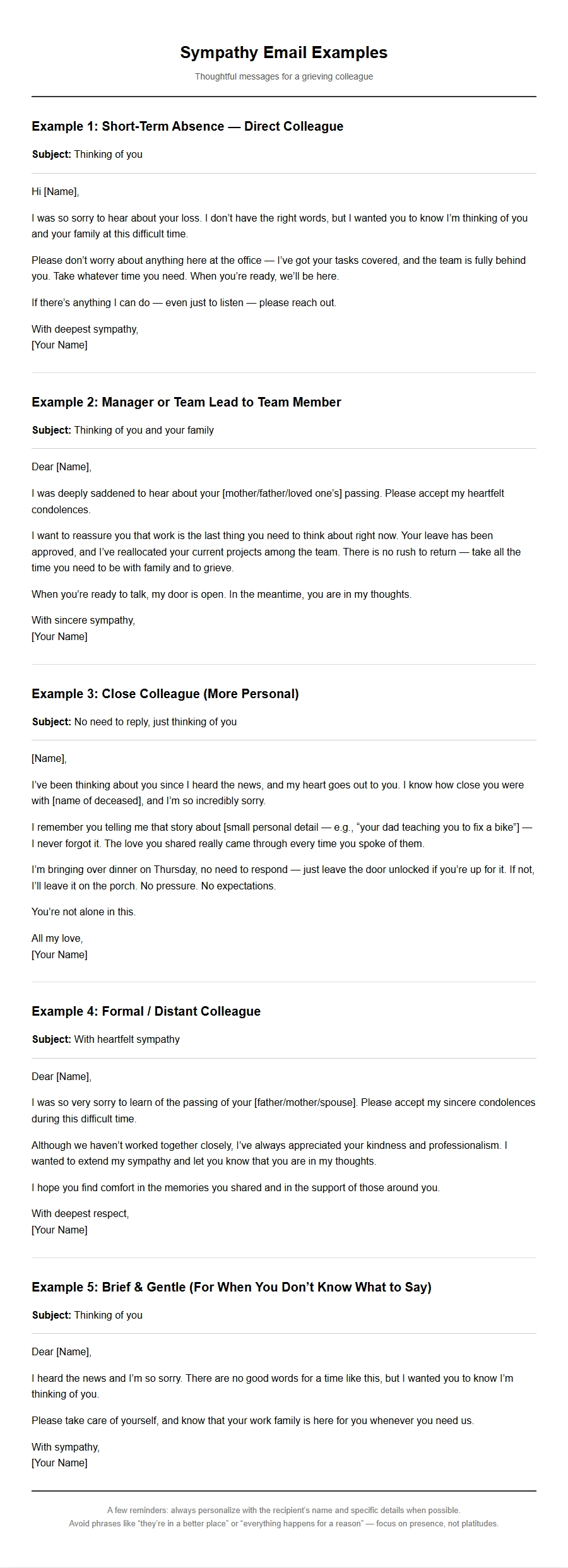 Sympathy Email Examples for a Grieving Colleague
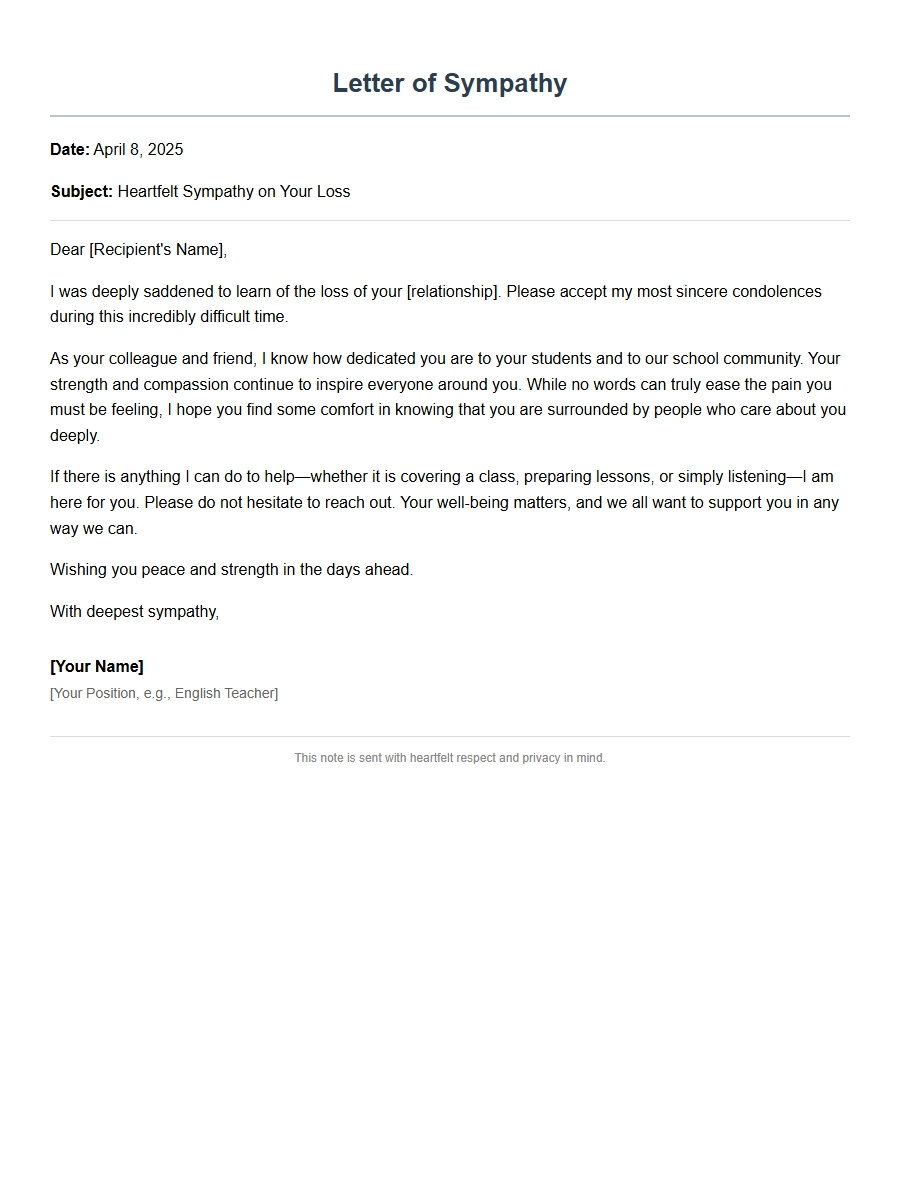 Condolence Words for a Teacher