Finding the right words when a beloved uncle or aunt passes away can feel impossible. Grief is already hard enough without the added pressure of writing a condolence message. You want it to be sincere, comforting, and appropriate for the unique spot they held in your life. If the blank page is staring back at you, you aren't alone. It helps to have a solid starting point.
Using a carefully written sample isn't cheating. It's a smart way to overcome writer's block while ensuring your message has a proper structure and the right tone. A good template captures the essential elements of a condolence note—empathy, a shared memory, support—and leaves you room to personalize it. Think of it as a blueprint, not a final script.
Category: Sympathy & Condolence Writing
How to Match the Tone to Your Relationship
Your connection with your uncle or aunt shapes everything. Were they a second parent, a fun weekend escape, or a formal, respected relative? The tone of your message should reflect this reality.
For a close uncle or aunt, a warm, conversational voice works best. You might say, "I can still hear her laughter during our card games," or "He taught me how to change a tire." These personal touches breathe life into your customizable letter. For a more formal relationship, or if you're writing on behalf of your family, a respectful tone in writing is safer. Focus on their character and the legacy they left behind.
Choosing the right language can be tricky. Just like finding appropriate sympathy words for a teacher requires a specific approach, tailoring your message for an uncle or aunt means reflecting your shared family history. If you're unsure where to start, looking at a short condolence text message for grief can help you capture the basic sentiment you want to convey.
Build Your Message with a Simple Structure
You don't need to write a long letter. A clean letter structure helps you communicate clearly without rambling. Start with the salutation and closing appropriate for your relationship.
Express your sorrow directly. "I was so saddened to learn of Uncle Tom's passing." Then share a specific, positive memory. "I'll always treasure the day he took us fishing." This is the heart of your message. It shows you saw them as a person.
Offer comfort without giving advice. Avoid saying "they are in a better place" unless you know they'd agree. Instead, say "He lived a life full of love, and that will carry on through you." Close with a simple offer of support. "Thinking of you." A typo in a sympathy card can sting, so take a moment for proofreading letter before you send it.
Don't Forget the Format
Today, a sympathy message might be handwritten in a card, sent as an email, or written in a social media post. The format changes a few things. For an email, a clear subject line helps. For a printed card, your handwriting adds a layer of personal warmth.
If you're sending a digital letter format, keep the paragraphs short for easy reading. A formal letterhead design isn't usually needed for a personal condolence, but a clean, simple layout is always appreciated. Pay attention to letter writing etiquette—send it promptly after the news, or even the funeral announcement.
Avoid These Common Mistakes
One of the biggest missteps is making the message too much about your own grief. While you are sad, the primary purpose is to comfort them. Balance your sadness with support for the recipient.
Another mistake is being too vague. A generic "sorry for your loss" feels hollow compared to "I'll never forget how she made me feel welcome every holiday." To see how different tones work, looking at various examples of compassionate wording for grief can help you find the voice that feels most natural to you.
The specific dynamics matter. For example, a sympathy message for loss of twin sibling focuses on a unique bond. Similarly, your message for your uncle or aunt should highlight your specific connection. Some losses require incredibly delicate care, like writing a sympathy message for loss of unborn child. While less complex, your message to your cousin about their parent should still feel carefully considered and gentle.
The goal isn't to write a masterpiece. It's to connect. It's to say, "I see your loss, I share your sadness, and I remember their life." That connection matters far more than perfect grammar or structure. By starting with a solid sample and infusing it with your own memories, you create a message that will be genuinely treasured. Use the sample as a springboard, not a crutch. The more you practice this, the more natural and confident you will feel.
Samples to Guide You
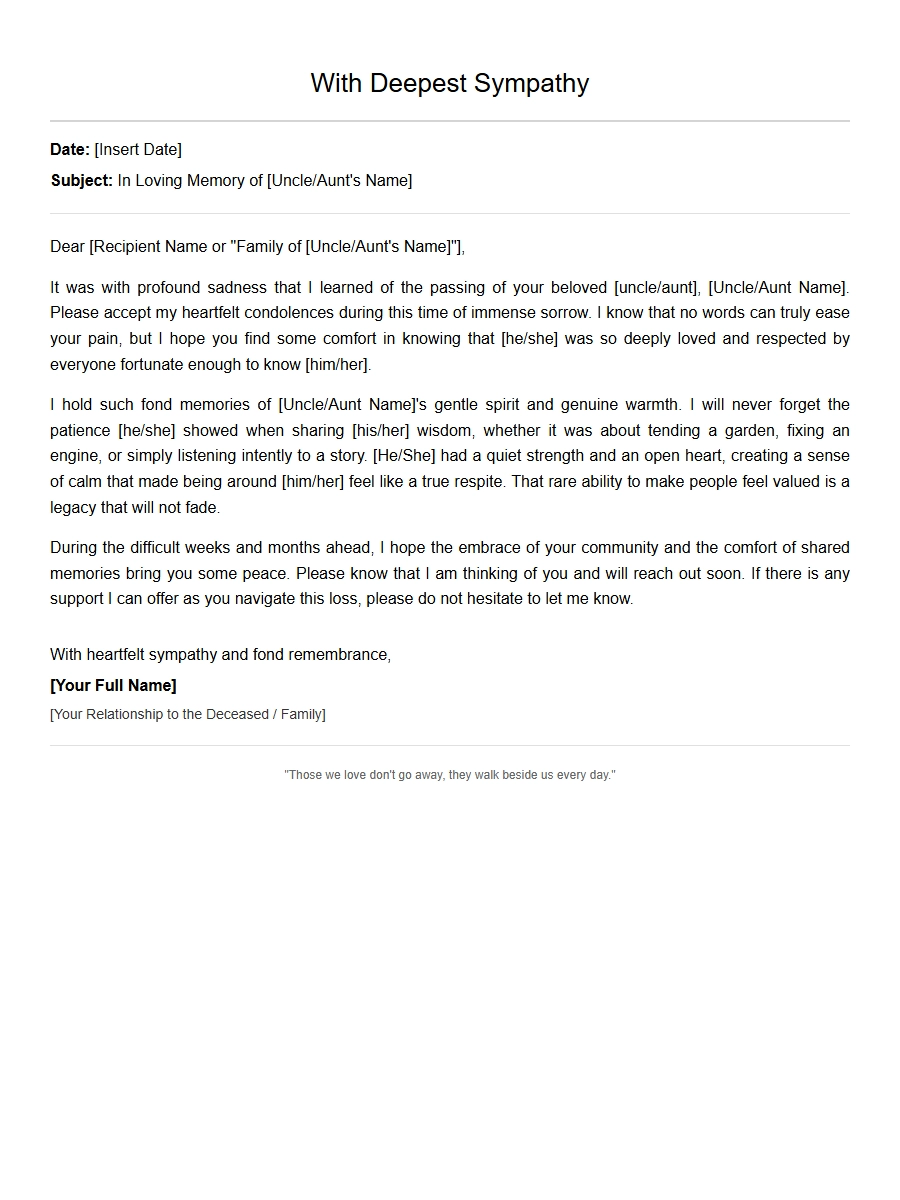
Condolence Letter for Loss of Uncle or Aunt
A Nephew's Heartfelt Tribute
Dear Aunt Mary,
I was deeply saddened to learn of Uncle John’s passing. He was more than an uncle to me; he was a mentor, a storyteller, and the reason I love fishing. I will never forget the summer afternoons we spent by the lake, listening to his tales of adventure.
Please know that you and the family are in my thoughts. If there is anything I can do—whether it’s running errands or just sitting with you—please don’t hesitate to call.
With love and sympathy, Your nephew, Michael
A Niece’s Fond Memories
Dearest Uncle Tom,
I cannot believe you are gone. You were the rock of our family—always with a joke, a warm hug, and the best advice. I still remember the way you taught me to ride a bike, running behind me until I found my balance.
Aunt Linda, I am so sorry for your loss. I hope you find comfort in the beautiful years you shared with him. I will always be here to help with whatever you need.
Things I will always cherish:
Your Sunday morning pancakes
The way you whistled while gardening
Your endless patience with my questions
You are loved and missed beyond words.
From a Friend of the Family
Dear [Family Name],
I was heartbroken to hear about the passing of your dear aunt, Mrs. Helen Carter. She was such a gracious and kind soul, always welcoming me into your home with a warm smile and a cup of tea. I will miss her gentle laughter and her thoughtful questions about my life.
She touched so many lives, and I feel privileged to have known her. Please accept my deepest condolences. May you find strength in the love and support of those around you.
With sincere sympathy, Your neighbor, Sarah
A Grand-Nephew’s Condolence
Great-Aunt Emma,
We are all so sad to hear that Great-Uncle Frank has passed away. He was a giant in our family history—a man who lived through so much and always shared his wisdom with us younger ones.
I will always treasure the stories he told about growing up on the farm. He taught me that hard work and honesty were the keys to a good life. Please know that his legacy lives on in each of us.
With deepest sympathy, Your great-nephew, James
For the Loss of an Aunt – Spouse’s Perspective
Dear Uncle Robert,
My wife and I were devastated to hear about Aunt Susan’s passing. She was not just your wife; she was the heart of our family gatherings, the one who organized every holiday meal and remembered everyone’s birthday.
I remember how she taught our children to bake cookies and how she always had time to listen. We will miss her dearly. Please accept our heartfelt condolences and know that we are here for you, now and always.
With love, Your nephew, David & family
A Formal Condolence Letter
Dear [Family Name],
Please accept my sincere condolences on the loss of your beloved uncle, Mr. James Whitfield. I had the privilege of working alongside him for many years, and his integrity, dedication, and warmth left a lasting impression on everyone who knew him.
He was a man of great character, and his contributions to our community will not be forgotten. During this difficult time, I hope you find peace in the memories you shared.
In memory of James Whitfield:
Quality
Example
Generosity
Always donated to the local food bank
Wisdom
Mentored young professionals
Humor
Brightened every meeting with a joke
With deepest sympathy, Your colleague, Mark
Religious Sympathy for an Aunt
Dear [Name],
I am praying for you and your family as you mourn the loss of your dear aunt, Maria. She was a woman of deep faith, and I am certain that she is now at peace in the arms of our Lord.
I will always remember her leading the choir at church and the way her voice filled the sanctuary with joy. Let us take comfort in the promise of eternal life. May God grant you strength and solace in these sorrowful days.
Scripture for comfort: “Blessed are those who mourn, for they shall be comforted.” – Matthew 5:4
With prayers and sympathy, Your pastor, Reverend Thomas
A Note to a Close Friend Who Lost an Uncle
Dear Jenna,
I am so sorry to hear about your Uncle Tony. I know how close you were to him—he was like a second father to you. Your stories about his crazy road trips and his infamous barbecues always made me smile.
I can’t imagine how hard this is for you, but please know I’m only a phone call away. Let’s get together this weekend, even just for a walk and a chat. You don’t have to go through this alone.
All my love, Your friend, Rebecca
Condolence from a Colleague of the Deceased Aunt
Dear [Family],
I was deeply saddened to learn of the passing of your aunt, Mrs. Patricia Lane. I had the honor of working with her at the library for over a decade. She was a dedicated librarian, a mentor to many, and a friend to all who walked through our doors.
Patricia’s passion for reading and her kindness touched countless lives. She will be remembered not only for her work but for her generous spirit. Please accept my heartfelt sympathy during this time of loss.
With respect and sorrow, Her former colleague, Linda
A Short Poem of Remembrance (for an Uncle)
To the family of Uncle George,
In loving memory of a man who taught us to laugh, to dream, and to be brave. His hand was always open, his heart full of grace. Though he is gone, his light remains in every smile we share.
What we will hold dear:
The way he hummed old songs while fixing things
His stubborn love for his garden tomatoes
His unwavering belief in second chances
May these memories bring you comfort. You are in my thoughts.
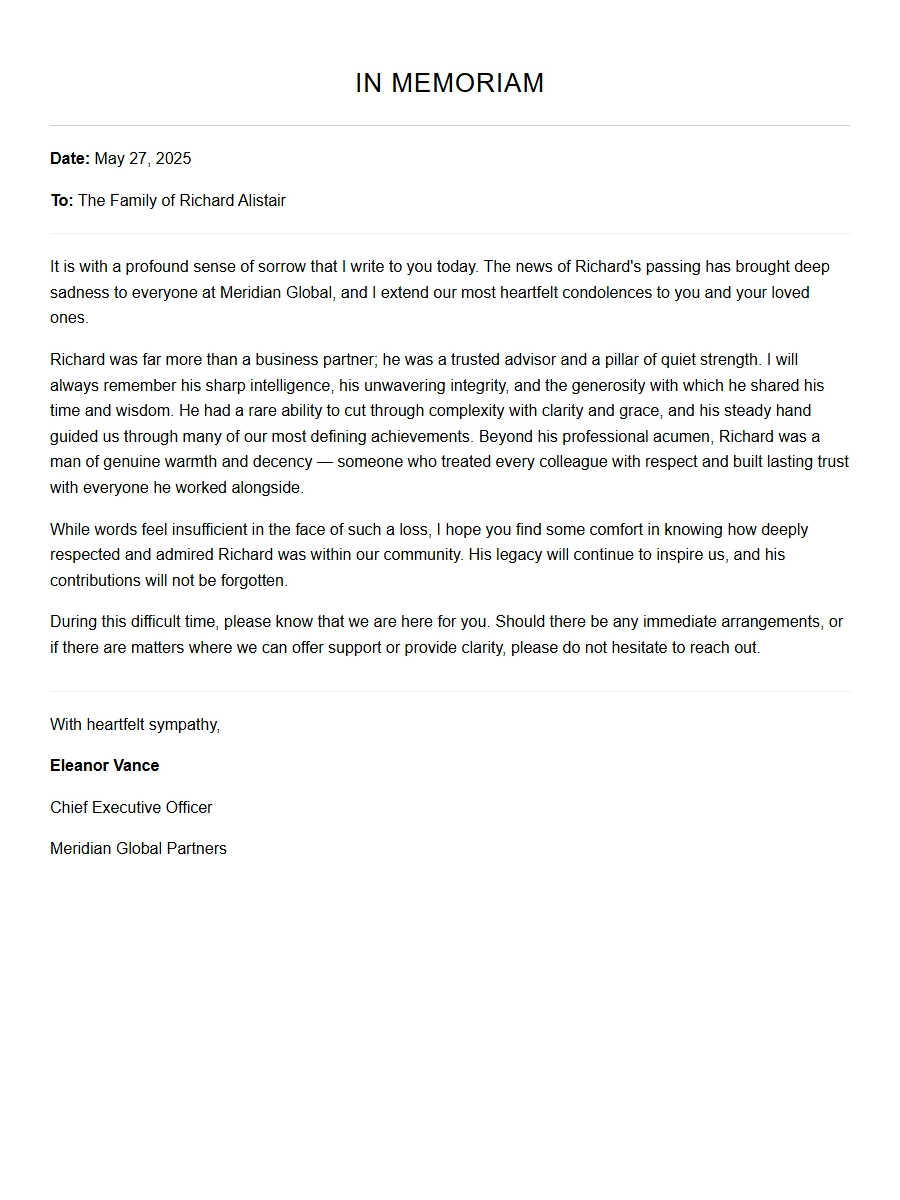 Formal Condolence Message for a Business Partner
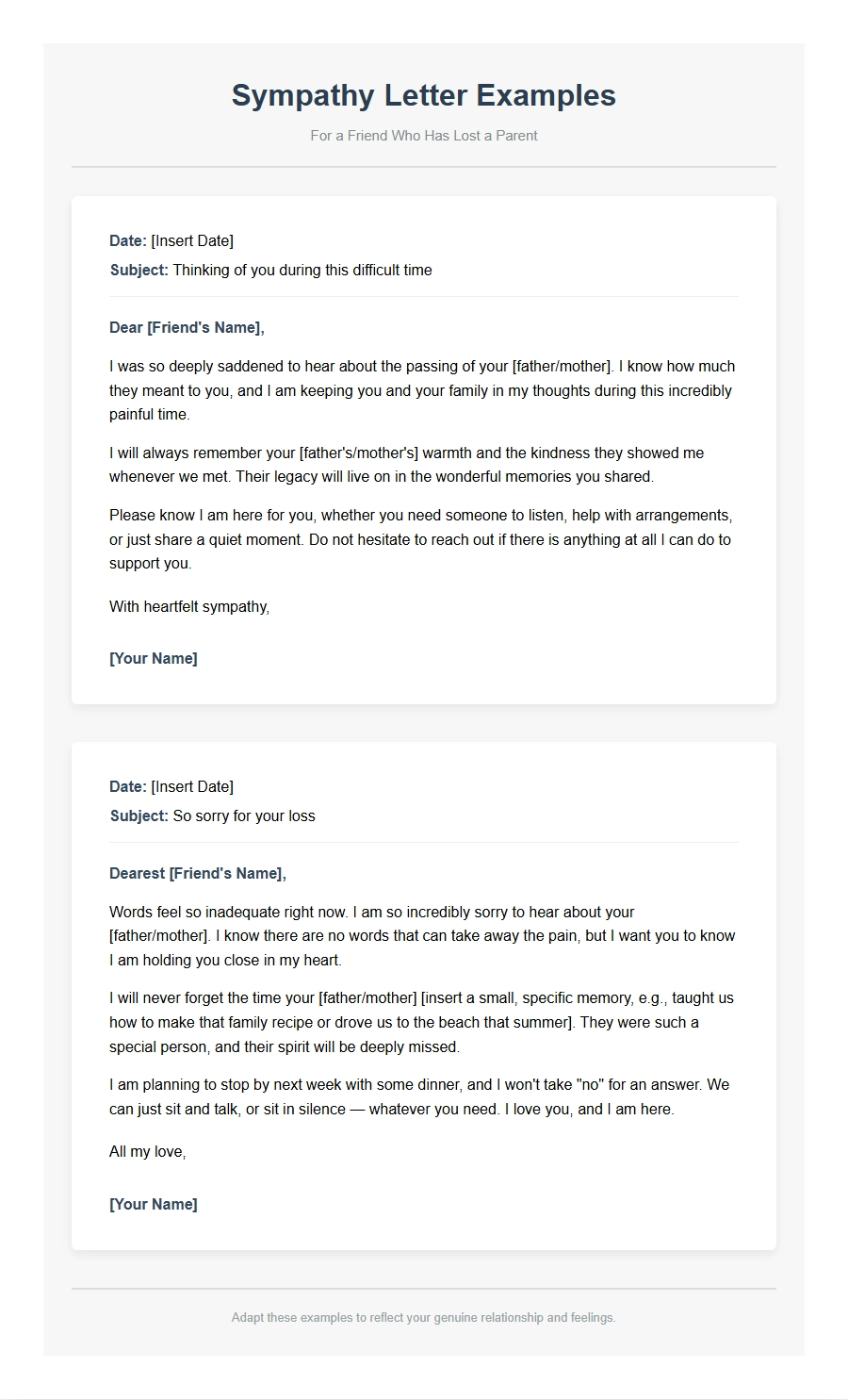 Sympathy Letter Examples for a Friend Who Lost a Parent
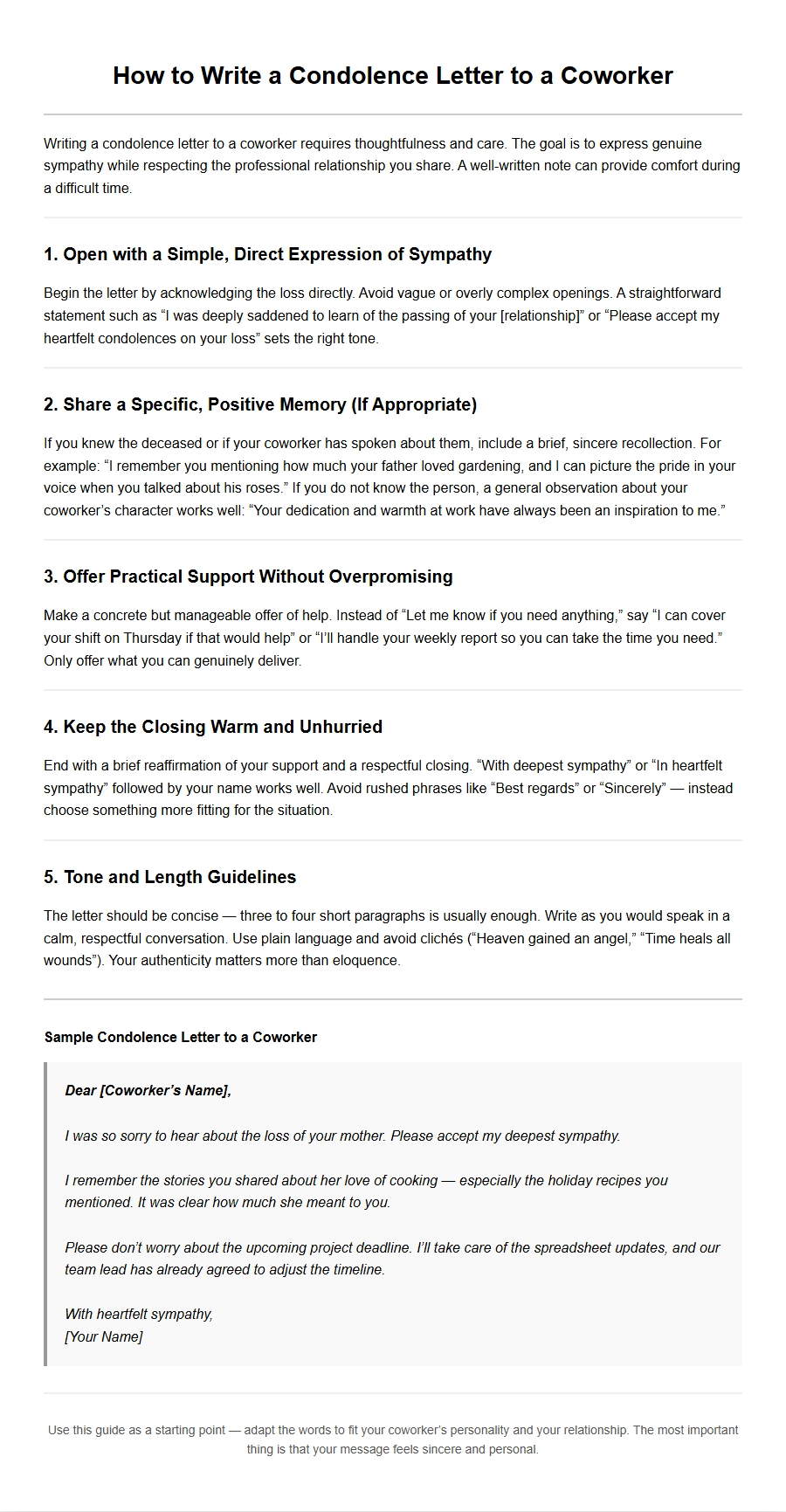 How to Write a Condolence Letter to a Coworker
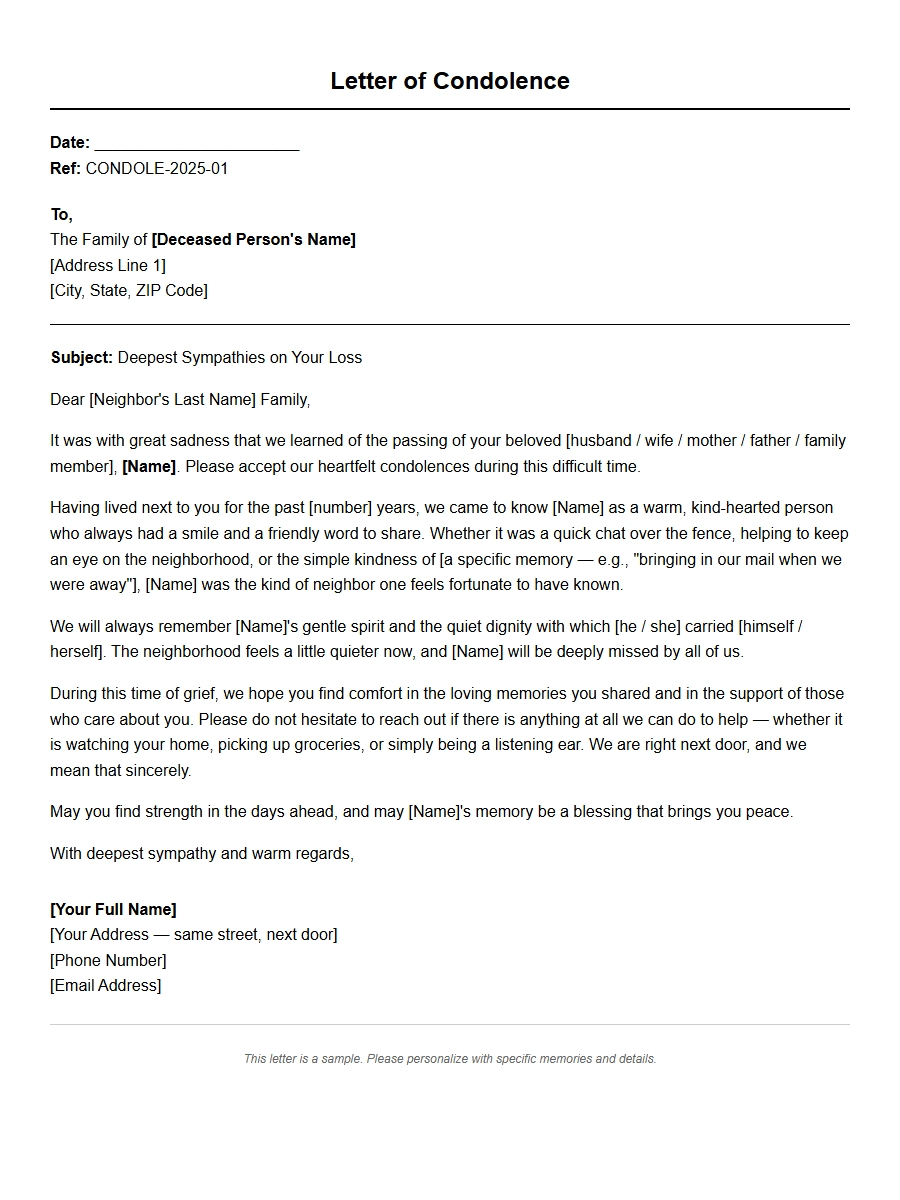 Condolence Letter Sample for a Neighbor
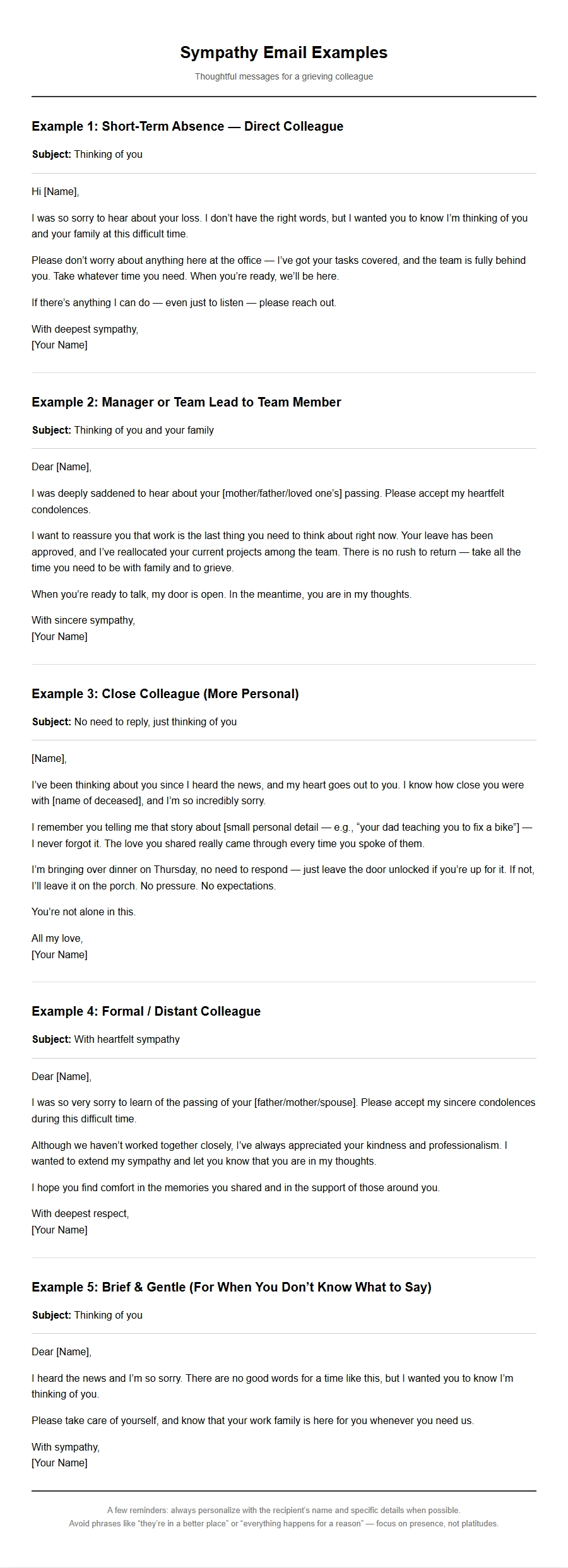 Sympathy Email Examples for a Grieving Colleague
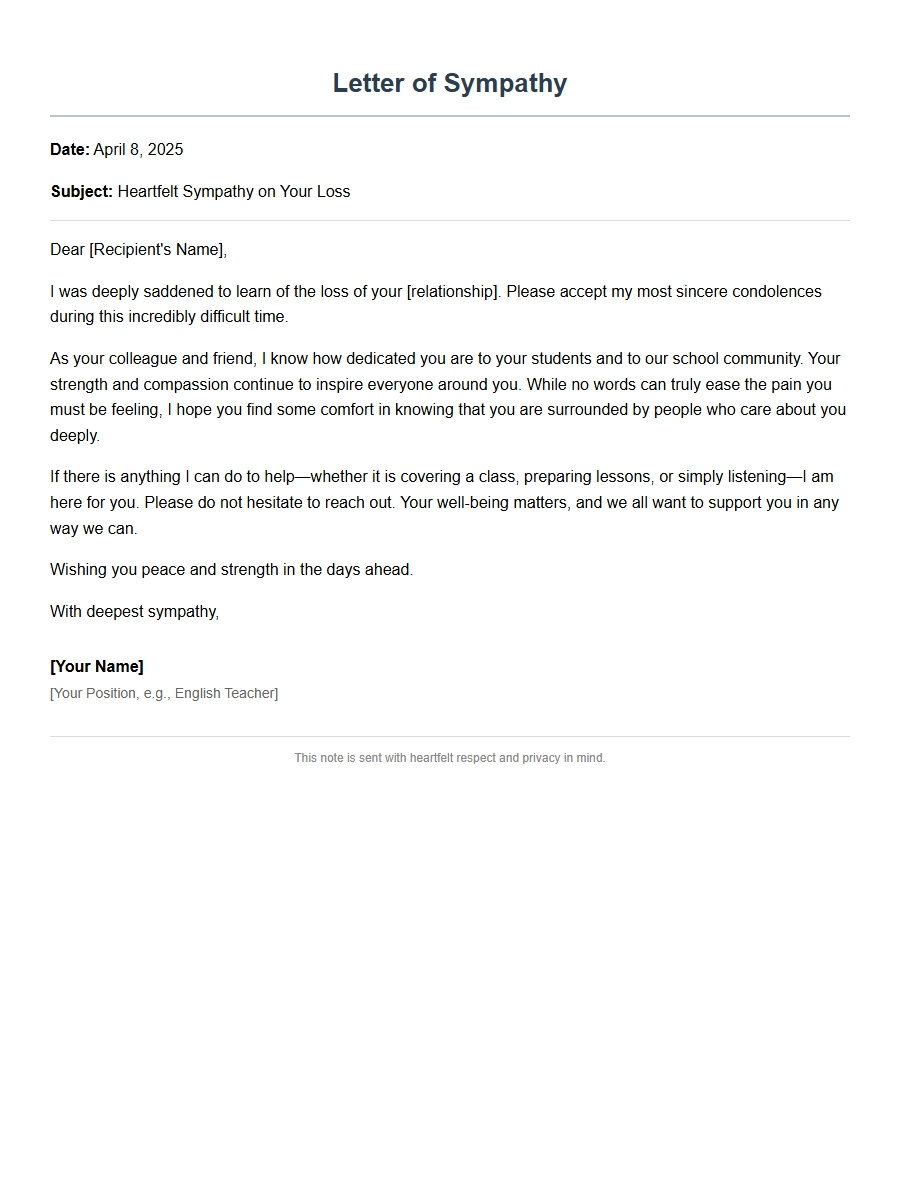 Condolence Words for a Teacher