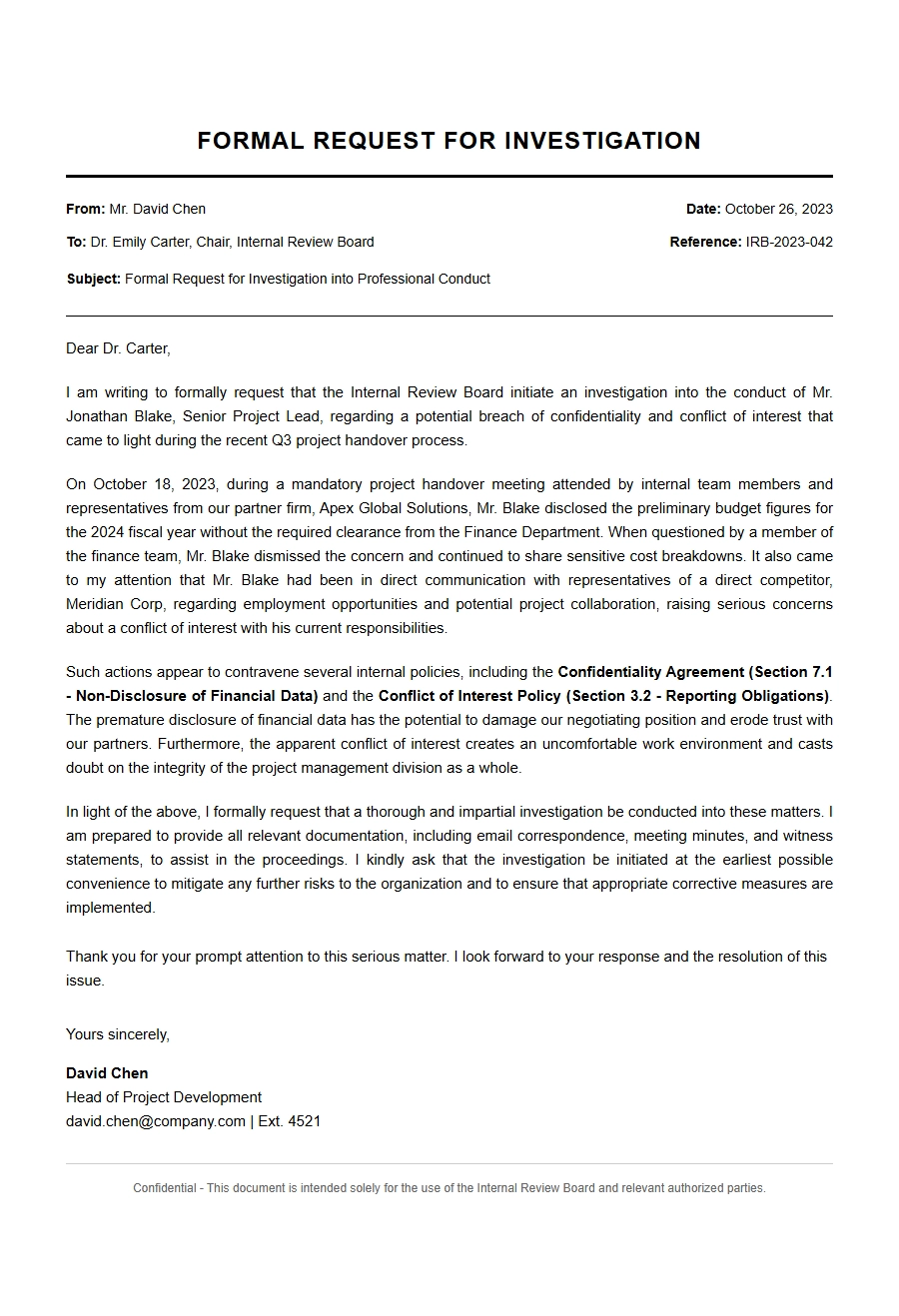
You’re staring at a blank page, trying to figure out how to formally request an investigation into someone’s conduct. It feels heavy. You want to be firm but fair, detailed but not petty. That tension usually leads to writer’s block. The good news? You don’t need to start from scratch. A solid sample cuts through the noise and gives you a clear path forward.
Using a letter template for a conduct investigation isn’t taking shortcuts. It’s strategic. Professional correspondence like this has an expected structure. A good sample gives you the bones—the right salutation, the formal writing tips for stating facts vs. opinions, and the proper closing. You get to fill in the muscle and skin with your specific story. It speeds things up and keeps you from missing key details.
Finding the Right Fit for Your Situation
The first step is picking the right foundation. A formal request for an investigation into a colleague’s behavior will look different from a formal notification of a consumer protection law violation, even though both are serious. You need to match the tone to the setting. Is this an internal HR matter? Or are you dealing with a vendor or legal issue? Your relationship with the recipient dictates how formal the language needs to be.
Once you have a sample that fits, resist the urge to just swap in names and hit send. Read it out loud. Does it sound like you? A stiff letter can undermine your credibility. Keep the letter structure, but make the language your own. Focus on specific, observable behaviors or events. Instead of “He was rude,” say “On March 12th, he interrupted the client meeting three times and raised his voice.” This is one of the most important formal writing tips you can follow.
The opening paragraph is where you hook the reader. State your purpose directly. “I am writing to formally request an investigation into the conduct of [Name] regarding [specific incident].” This is standard business letter format, but it works because it respects the reader’s time. Don’t bury the lead with background info.
Two Common Mistakes to Avoid
A big mistake people make is getting the salutation and closing wrong. “To Whom It May Concern” can feel dated if you know the person’s name. Use their full name and title if you have it. Similarly, proofreading your letter is non-negotiable. A typo in a formal request for investigation can make you look careless. If you’re sending it via email, the subject line matters. If it’s printed, proper letterhead design adds weight and authenticity.
Pay attention to digital letter format. A formal request sent as a PDF carries more weight than a quick email. But if you are sending it by email, keep the greeting respectful and the body concise. Don’t attach a 10-page PDF without a short, explanatory note in the email body. Always include your contact information.
Use It as a Springboard, Not a Crutch
Think of the sample as a springboard, not a crutch. The goal isn't to write the perfect letter on the first try. It's to get a clear, professional draft done so you can focus on what actually matters. Once you send it, the process moves forward. And like most things, the more you do it, the faster and more natural it feels. The best letters feel both professional and personal. That balance comes from practice and from using tools that free you up to focus on your actual story.
Realistic Samples
Formal Request for Investigation into Conduct
Workplace Harassment Complaint
I formally request an investigation into the conduct of my supervisor, Mark Thompson, regarding repeated instances of workplace harassment. Despite informal complaints, the behavior persists, creating a hostile environment.
The following incidents have been documented:
On March 3, 2024, Mr. Thompson made derogatory comments about my ethnic background during a team meeting.
On March 15, he sent an email excluding me from project updates without justification.
On April 2, he physically blocked my path in the corridor while raising his voice.
I have attached copies of the email, witness statements, and my previous complaint records. I request a thorough investigation and appropriate disciplinary measures. Please confirm receipt and the timeline for this inquiry.
Academic Misconduct Complaint
I, Professor Laura Chen, formally request an investigation into the conduct of student David Miller (ID: 78901) for suspected plagiarism and cheating in the final examination for BIOL 301. The evidence suggests a pattern of academic dishonesty.
Specific concerns include:
Two exam answers match verbatim those from a known online source.
His term paper shows extensive copying from an unpublished manuscript.
During the exam, he was observed using a hidden digital device.
Below is a summary of the evidence submitted:
Item
Source
Date
Exam answer sheet
Online database transcript
March 10, 2024
Term paper
Original manuscript by Dr. Ray
March 5, 2024
Proctor report
Exam room observation
March 8, 2024
I request the Academic Integrity Committee review this case and take appropriate action. A full dossier is available upon request.
Professional Ethics Complaint to Licensing Board
I hereby file a formal request for investigation into the conduct of licensed engineer Jane Peterson (License #PE-54321) regarding ethical violations in the Riverside Bridge Project. Her actions compromised public safety and professional standards.
The key issues are:
False representation: She signed off on structural calculations that were not independently verified.
Conflict of interest: She failed to disclose her financial ties to the concrete supplier used.
Noncompliance: She ignored building code requirements for seismic reinforcement.
Supporting documents include email correspondence, inspection reports, and a whistleblower affidavit. I request an official investigation and possible revocation of her license. Please provide the case number and next steps within 30 days as per regulation 12.3.
Neighbor Conduct Complaint to HOA
I formally request an investigation into the conduct of homeowner at 45 Oak Lane, Mr. Robert Hayes, for repeated violations of our HOA covenants. His actions have disrupted community peace and property values.
Violations include:
Excessive noise: Loud construction work before 7:00 AM and after 9:00 PM for three consecutive weeks.
Property neglect: Overgrown weeds exceeding 12 inches and trash accumulation visible from the street.
Unauthorized structure: A large tool shed built without HOA approval, encroaching on common area.
I have attached dated photographs and a log of occurrences since January 2024. I request the HOA board conduct an investigation and issue a formal warning or fine as per Section 4.2 of the governing documents. Please acknowledge this complaint within 10 days.
Vendor Fraud Complaint to Company Management
This is a formal request for investigation into the conduct of our vendor, TechSupply Corp., regarding fraudulent billing and delivery discrepancies discovered in the Q1 2024 quarter. As procurement manager, I have identified systemic irregularities.
Evidence summary:
Invoice #
Amount Charged
Actual Delivery
Discrepancy
INV-1024
$12,500
50 units
Short by 10 units
INV-1089
$8,200
30 units
Billed for 40
INV-1156
$5,000
None received
Full false billing
I request an internal audit and possible legal review. Please escalate to the compliance department and inform me of the investigation timeline. Supporting documents including packing slips and correspondence are attached.
Medical Board Complaint Against Doctor
I, patient Maria Santos, formally request an investigation into the conduct of Dr. Alan Grey (License #MD-88765) regarding negligent treatment and unprofessional behavior during my care at City Hospital. This complaint is based on specific incidents that may reflect a pattern of misconduct.
Details of concerns:
Misdiagnosis: On February 12, Dr. Grey diagnosed a tendon strain despite clear X-ray evidence of a fracture, delaying treatment for three days.
Improper communication: He failed to inform me about serious side effects of prescribed medication, which led to an adverse reaction.
Disrespectful conduct: He made dismissive comments about my pain level and refused to order further tests.
I have copies of medical records, pharmacy receipts, and a witness statement from a nurse. I request the Medical Board investigate and take corrective action to ensure patient safety. Please confirm receipt and provide a case reference number.
Police Officer Conduct Complaint to Internal Affairs
I, Alex Rivera, file a formal request for investigation into the conduct of Officer Jane Miller (Badge #4521) during a traffic stop on March 20, 2024, at the intersection of Main and 5th. I believe her actions constituted excessive force and racial profiling.
Incident details:
I was pulled over for a broken taillight; Officer Miller drew her weapon before approaching my vehicle without cause.
She ordered me out of the car at gunpoint, handcuffed me roughly, and searched my vehicle without consent or warrant.
She used derogatory slurs and threatened to "teach me a lesson" during the stop. No citation was issued.
I have the dashcam footage from my vehicle, copies of the incident report (case #T-3452), and contact information for two witnesses. I request a full internal review and appropriate disciplinary actions. I await your acknowledgement within five business days as per department policy.
Lawyer Misconduct Complaint to Bar Association
I formally request an investigation into the conduct of attorney Susan Blake (Bar #223344) regarding unethical behavior in representation of my estate matter. Her actions violate several rules of professional conduct.
Specific violations include:
Conflict of interest: She secretly represented my brother in a competing claim against the estate without disclosing this dual role.
Withholding funds: She retained $15,000 of estate proceeds for over six months without explanation or release.
Failure to communicate: She ignored multiple written requests for case updates from January to April 2024.
I have attached copies of her engagement letter, bank statements showing the withheld funds, and email correspondence. I request the Bar Association investigate and consider sanctions including disbarment. Please provide a case number and expected investigation timeline.
Teacher Conduct Complaint to School Board
As a parent, I formally request an investigation into the conduct of Mr. James Hartley (Grade 7 math teacher at Lincoln Middle School) regarding inappropriate behavior with students and insubordination toward administration.
Documented concerns:
Inappropriate comments: Mr. Hartley made sexually suggestive jokes in class, reported by three students on separate occasions.
Favoritism: He gave inflated grades to athletes, compromising academic integrity.
Defiance: He refused to implement new curriculum guidelines, telling students the principal was "wrong."
I have collected statements from five students and a previous complaint filed with the principal (which was not addressed). I request the School Board to launch an independent investigation and take disciplinary action if findings warrant. I expect a written response within 14 days.
Contractor Fraud Complaint to Consumer Protection
I formally request an investigation into the conduct of home improvement contractor, "Fix-It-Rite LLC" (License #12345), regarding fraudulent work and breach of contract on my kitchen remodel project (Project #K-2024).
Issues discovered:
Incomplete work: They abandoned the project after partial demolition despite full payment of $8,500.
Unlicensed subwork: The electrical wiring was done by an unlicensed individual, creating fire hazards.
False promises: They used inferior materials than specified in the contract and refused to correct defects.
Below is a summary of financial transactions and timeline:
Payment Date
Amount
Work Completed
Jan 15, 2024
$4,000
Demo only
Feb 1, 2024
$4,500
None
I have attached the signed contract, payment receipts, and photographs of incomplete unsafe work. I request a formal investigation and assistance in recovery of funds. Please acknowledge receipt of this complaint.
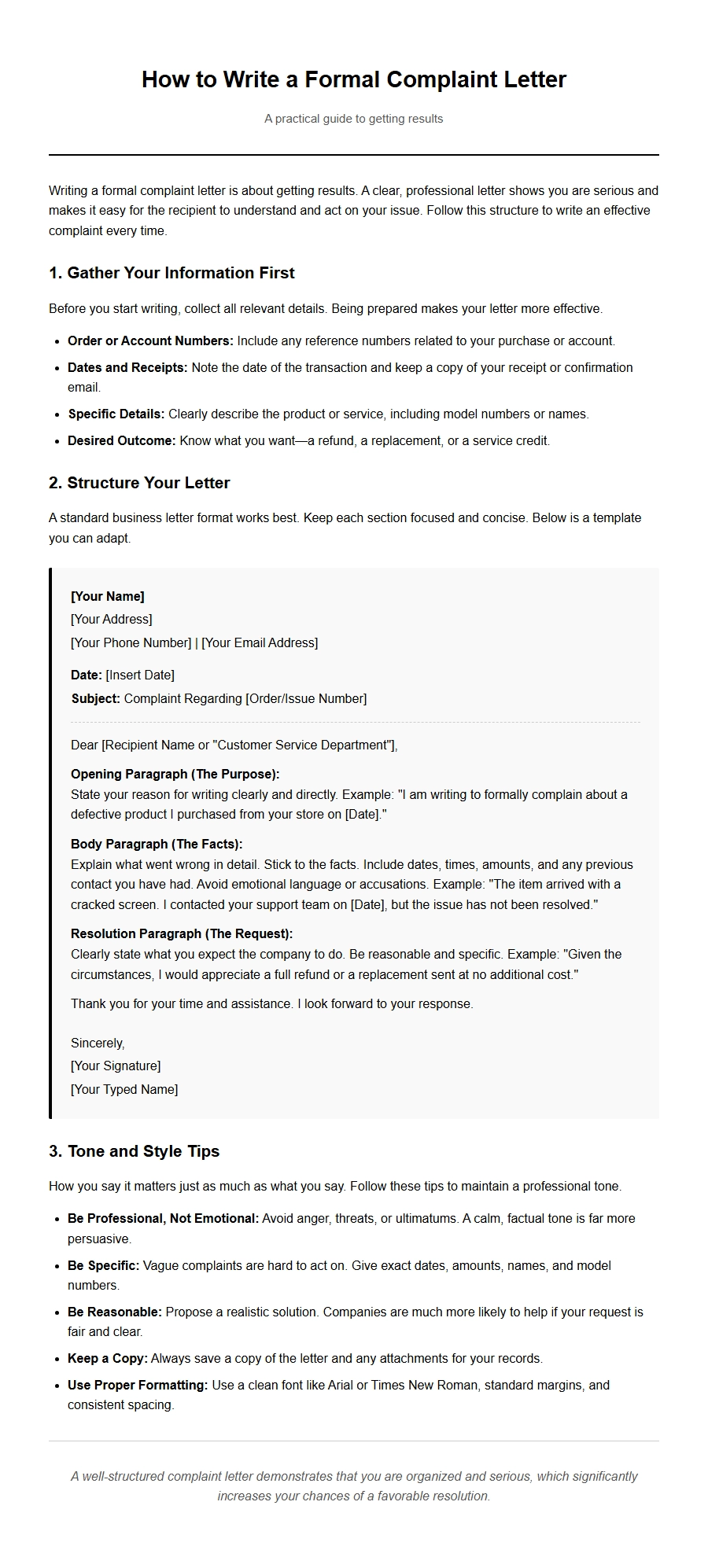 How to Write a Formal Complaint Letter
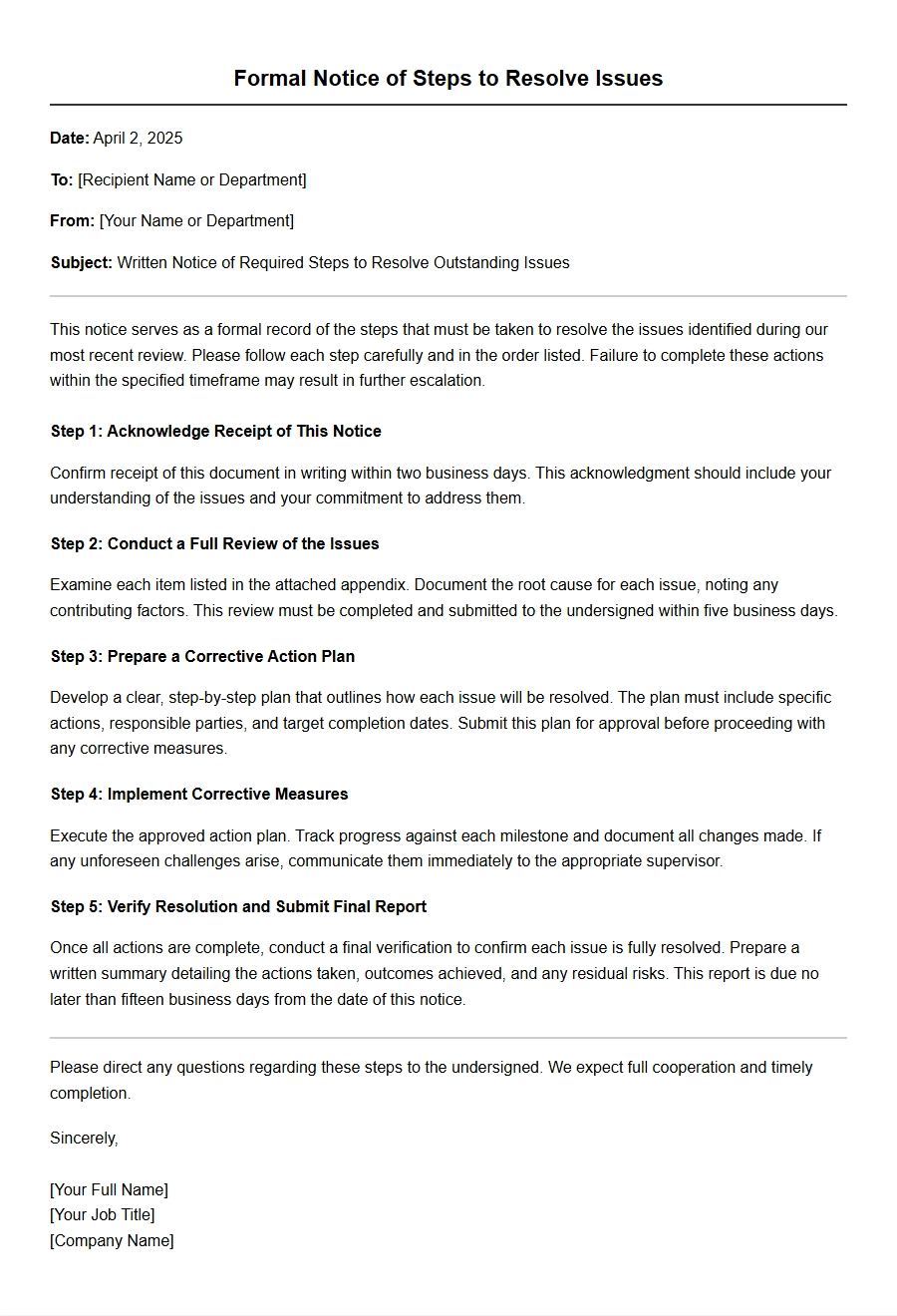 Steps to Resolve Issues via Written Notice
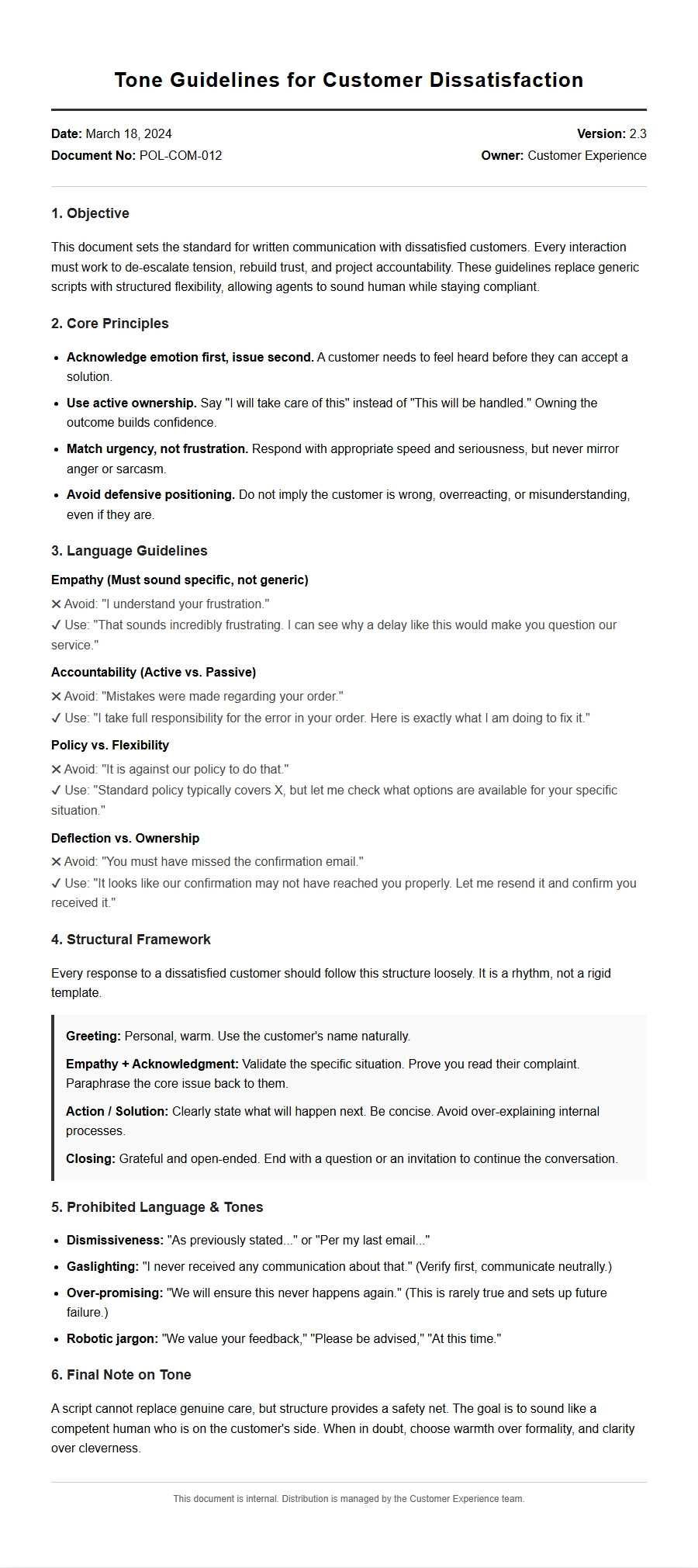 Tone Guidelines for Dissatisfied Customer Letters
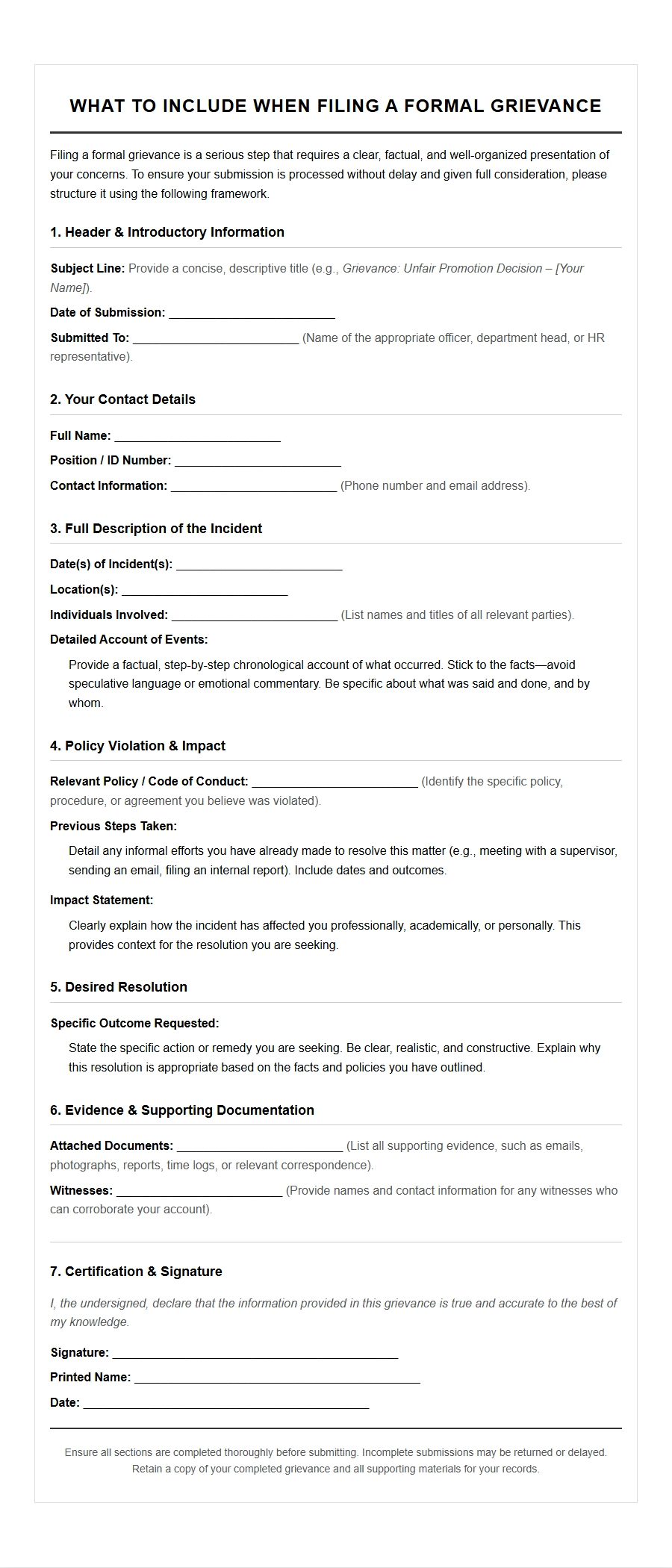 What to Include in a Formal Grievance Letter
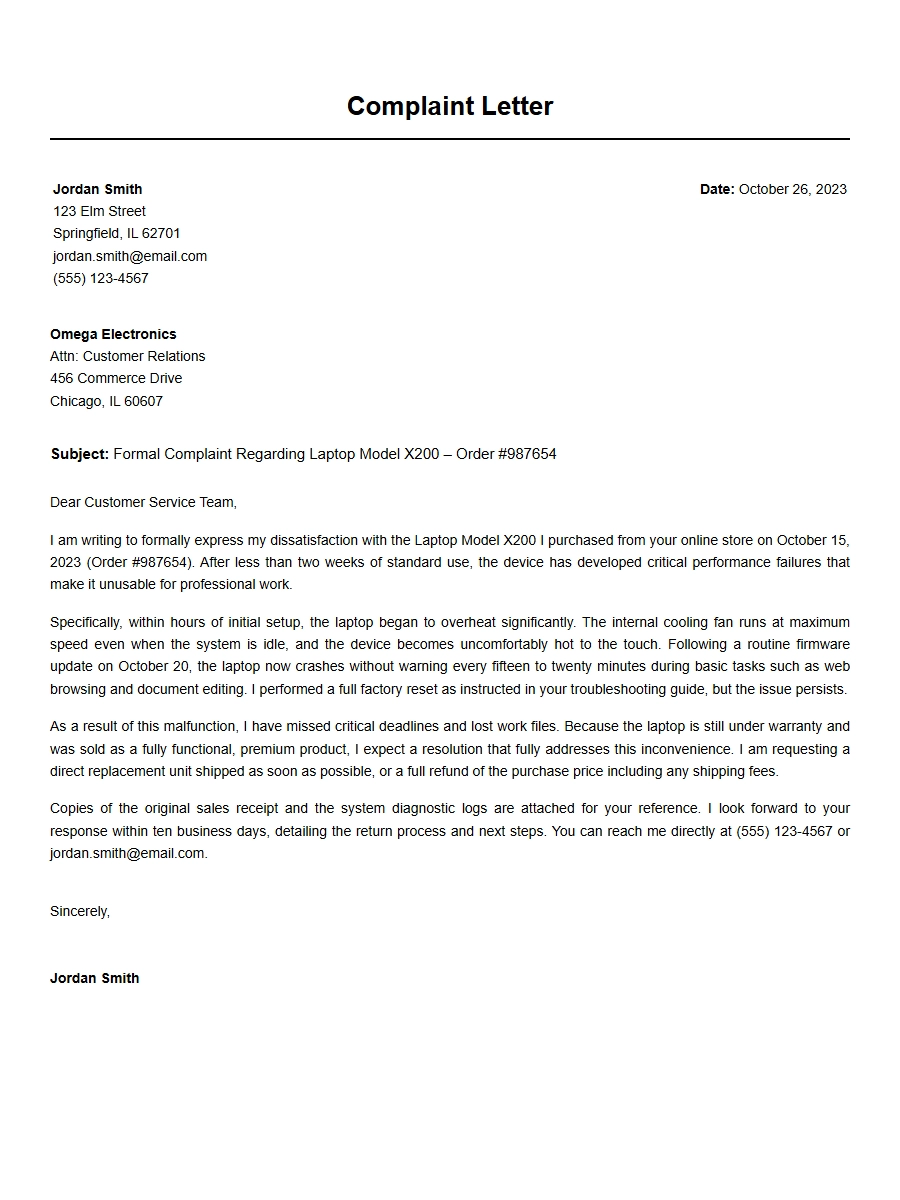 Structure of an Effective Complaint Letter
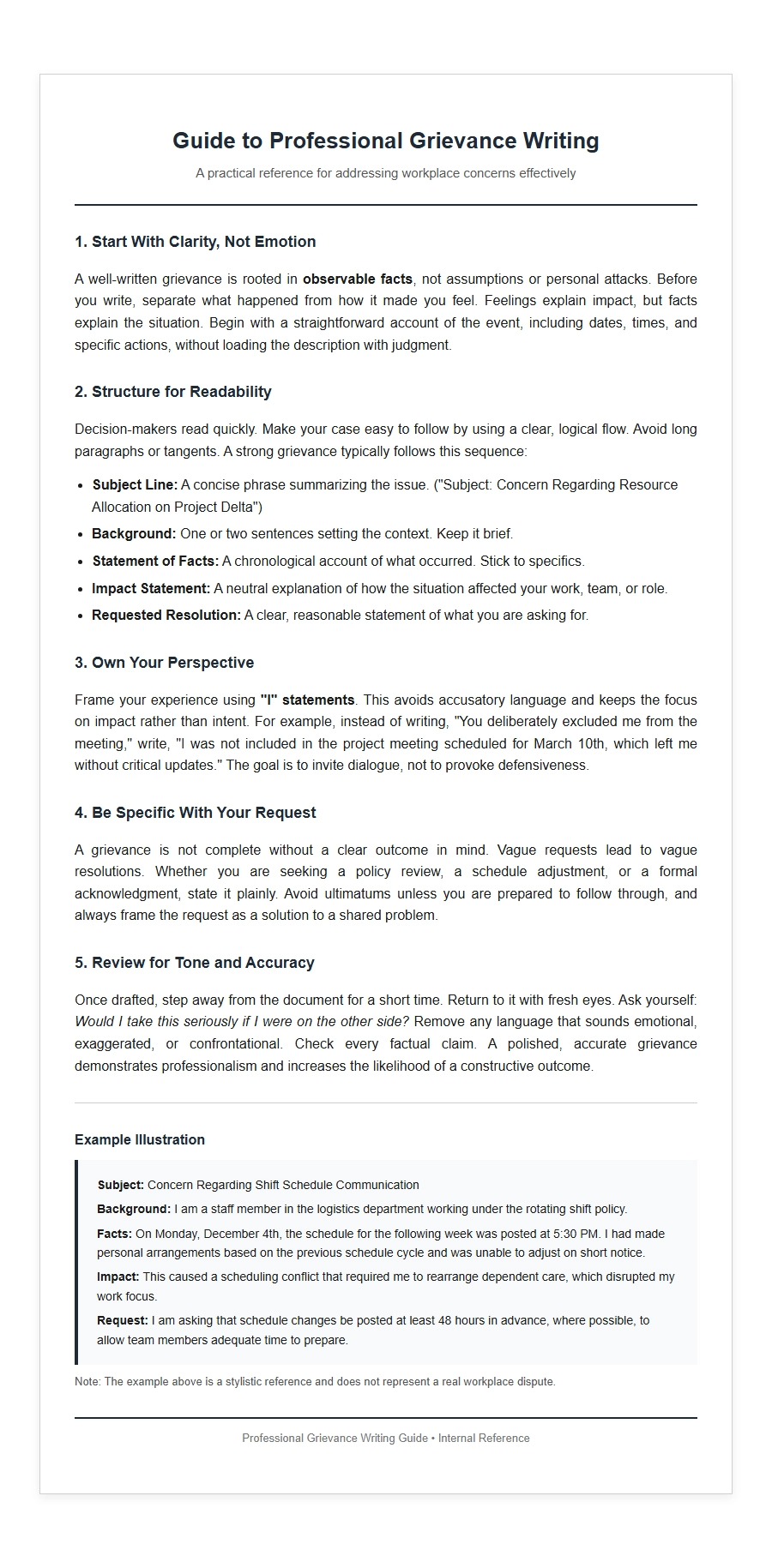 Best Practices for Writing Professional Grievance Letters