Writing Complaint Letters with Emotional Intelligence
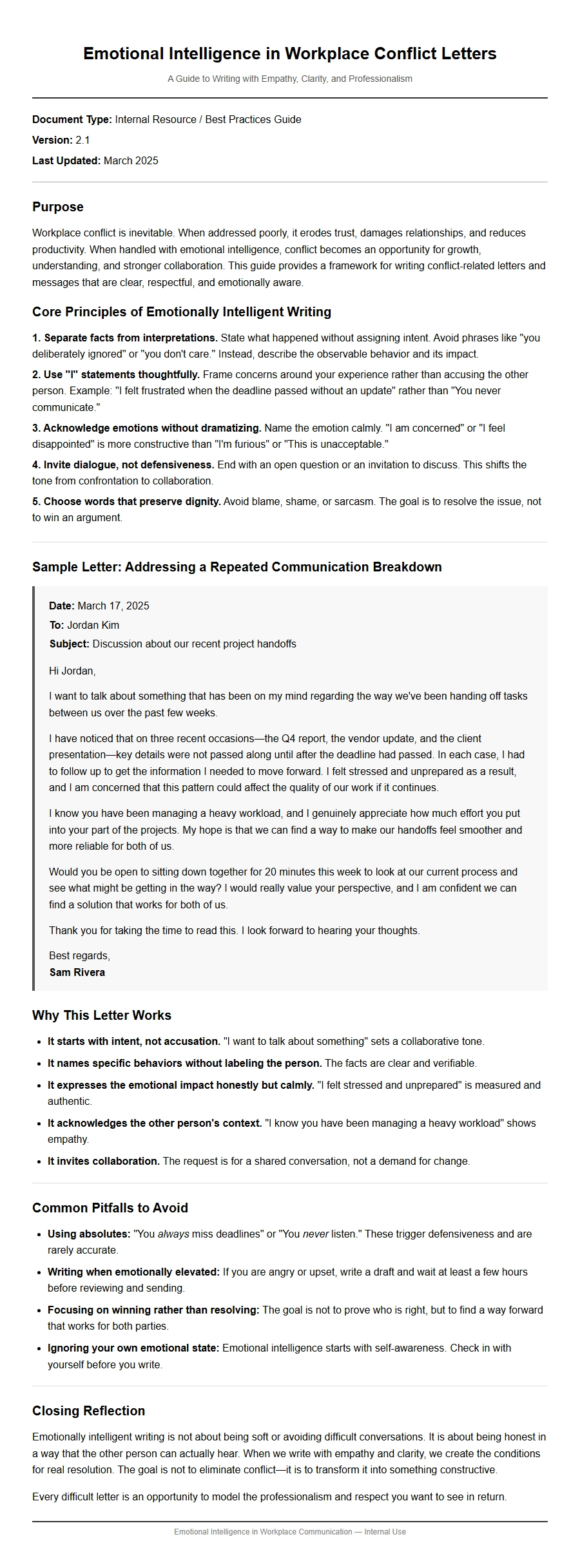
You’re staring at a blank page, trying to write a professional letter about a workplace conflict. It’s stressful. You want to be firm but fair, clear but not cold. The pressure to get it right can freeze you—especially when emotions are still fresh. That’s where emotional intelligence matters. And a good letter sample can be the anchor you need.
Using a sample isn’t cheating. It’s a smart way to get the letter structure and business letter format right so you can focus on tone. Samples give you a proven letter template for professional correspondence—a skeleton you can customize. The real skill is layering your own voice and emotional awareness onto that structure. Think of it as letter writing etiquette with a human touch.
Category: Workplace Conflict Letters
So how do you pick the right sample for your specific situation? Start by asking: Is this a formal complaint or a gentler request? A resignation letter sample will look very different from a complaint about unpaid work. For instance, if you’re dealing with an issue like unpaid overtime hours, you need a factual tone that sticks to dates and amounts—without sounding accusatory. Emotional intelligence here means choosing words that show you understand the other person’s constraints while stating your rights clearly.
Now, let’s talk about adapting a sample without losing your authentic voice. Don’t copy it word for word. Read the sample’s opening, then rewrite it in your own words. If the sample starts with “I am writing to formally notify you…” and that feels too stiff for your situation, try “I wanted to bring something to your attention…” The goal is to match the tone in writing to the relationship you have with the recipient. A letter to a boss you’ve worked with for years can be less formal than one to a HR department you’ve never met.
One common mistake is ignoring the format. If you’re sending via email, skip the letterhead design and use a clear subject line. That’s digital letter format 101. For printed letters, a simple header with your contact info and the date works. Also, check the salutation and closing. “Dear [Name]” is still standard, but if you’re unsure about the recipient’s gender or title, use the full name. End with “Sincerely” or “Best regards” unless the context calls for something warmer.
Another tip: tailor the opening paragraph to grab attention without being aggressive. Instead of “I am writing to complain about…”, try “I’d like to discuss an issue that came up last week.” This invites dialogue rather than defensiveness. If the conflict involves a request for disciplinary action against a staff member, keep the tone respectful but direct—acknowledge the person’s usual good performance before stating the concern.
Emotional intelligence in these letters is about reading the room on paper. You pick phrases that acknowledge the other person’s perspective while stating your case. For example, in a formal notification of a consumer protection violation, you can lead with the facts and then express a desire for a fair resolution. That balance shows you’re not just venting—you’re problem-solving.
Don’t forget to proofread your letter before sending. Typos undermine your credibility, especially in conflict situations. Read it aloud to catch awkward phrasing. And if the letter feels too harsh, set it aside for an hour. Emotional distance helps you revise with more clarity.
When you need an immediate response, an urgent demand letter can work—but keep the urgency in the subject line and body, not in aggressive language. Calm urgency is more persuasive than panic. Similarly, if the conflict involves an unlicensed tradesperson, your letter should focus on evidence and desired outcome, not emotional attacks.
Remember, a letter sample is a springboard, not a crutch. The best letters feel both professional and personal. They show you’ve thought about the other person’s experience while protecting your own. Practice writing a few versions, and soon the process will feel faster and more natural. You’ve got this.
Practical Writing Samples
Writing Complaint Letters with Emotional Intelligence
[
{
"title"
"Conflict Over Missed Deadline: Acknowledging Emotional Impact",
"body"
"
Subject: Missed Deadline and Its Impact on Our Team
Dear Marcus,
I appreciate you raising the issue of the missed deadline for the Q3 report. I recognize that this has caused frustration, and I want to acknowledge the emotional toll it may have taken on you and the team. I understand that deadlines are critical for our workflow, and my delay was not intentional—I was overwhelmed by competing priorities.
To address this, I suggest we implement a check-in process to flag potential delays early. Below is a brief summary of what I propose:
Action Item
Timeline
Owner
Weekly progress sync
Every Monday
Both
Shared task tracker update
Daily
Me
Escalation if at risk
48 hours before deadline
Both
Thank you for your patience. I am committed to rebuilding trust and ensuring smoother collaboration going forward.
Best regards, Jamie
"
},
{
"title"
"Responding to Harsh Feedback with Emotional Awareness",
"body"
"
Subject: Thinking About Your Feedback on the Presentation
Dear Alex,
I wanted to follow up on the feedback you gave during the meeting yesterday. I understand you were disappointed with the presentation, and I can sense that your frustration stems from a desire for excellence—something I respect deeply. However, the tone of your comments felt harsh, and I admit it affected my motivation.
To move forward constructively, I suggest we establish clearer feedback guidelines:
Timing: Give feedback in private, not during group settings.
Specificity: Highlight what worked before what didn\'t.
Emotional check: Pause to ask how the other person is receiving it.
I am open to revising the presentation based on your pointsKPIs, and I believe we can create a stronger result if we communicate with mutual respect.
Let\'s set up a short meeting to discuss this further.
Sincerely, Pat
"
},
{
"title"
"Addressing Repeated Interruptions During Team Meetings",
"body"
"
Subject: A Note About Our Meeting Dynamics
Hi Sam,
I’m writing to talk about something that’s been on my mind: the frequent interruptions that have been happening during our weekly team calls. I know we’re all passionate about our projects, but I’ve noticed it’s become harder for everyone to share ideas fully. I feel frustrated because some contributions get lost, and I suspect others feel the same.
To improve this, I’d like to propose a few ground rules:
One person speaks at a time—use the “raise hand” feature.
Build, don’t block—when someone is sharing, listen before responding.
Emotion check—if you feel the urge to interrupt, take a deep breath and write it down.
Emotional intelligence helps us listen better. Let’s try these for two weeks and then revisit.
Thanks for understanding. Jordan
"
},
{
"title"
"Resolving a Conflict About Credit for a Project Success",
"body"
"
Subject: Clarifying Project Contributions
Dear Taylor,
I’ve been reflecting on our conversation about who should receive credit for the recent client win. I know you put in significant effort on the proposal, and I value that. At the same time, I felt hurt when the recognition didn’t include my late nights on the data analysis. This isn’t about ego—it’s about feeling seen.
I suggest we clarify roles for future projects using a simple breakdown:
Role
Responsibility
Recognition Type
Proposal Lead
Drafting content and strategy
Client-facing credit
Data Analyst
Providing insights and models
Internal team mention
Project Manager
Coordination and deadlines
Acknowledged in summary
Let’s agree on a transparent system so everyone’s contribution is valued.
I’m open to discussing this in person.
Warmly, Morgan
"
},
{
"title"
"Apologizing After an Emotional Outburst in the Office",
"body"
"
Subject: My Apologies for Yesterday’s Outburst
Dear Chris,
I want to sincerely apologize for raising my voice during our discussion yesterday. It was unprofessional and unfair to you. I let stress from a personal matter spill into our work, and I regret the impact that had on your feelings and our working relationship.
I’ve taken steps to manage my emotions better, including scheduling a session with our Employee Assistance Program. Going forward, I will:
Take a 5-minute break if I feel tension rising.
Use “I feel” statements to express myself calmly.
Ask for a pause if I need to collect my thoughts.
Thank you for your professionalism. I hope we can reset and continue collaborating effectively.
Again, I’m sorry. Drew
"
},
{
"title"
"Navigating Disagreement Over Project Direction",
"body"
"
Subject: Let’s Realign on the Marketing Strategy
Hi Casey,
I’ve been thinking about our differing views on the new campaign direction. I understand your passion for a bold social media push, but I feel uneasy because the data suggests a more conservative approach. I worry we risk alienating our core audience. This isn’t about who is right—it’s about finding a path that honors both perspectives.
To resolve this constructively, I propose a compromise plan:
Element
Your Idea
My Suggestion
Compromise
Platform focus
Instagram
Email newsletter
Both (A/B test)
Budget
$5k on ads
$2k on content
$3.5k split
Timeline
Immediate
Next quarter
Start in 2 weeks
Can we meet to discuss this compromise? I value your input and want to move forward as a united team.
Best, Avery
"
},
{
"title"
"Addressing Passive-Aggressive Emails with Empathy",
"body"
"
Subject: A Conversation About Our Email Tone
Dear Riley,
I’ve noticed some tension in our recent email exchanges. For example, your message about the budget report said, “I trust you’ll get it right this time,” which felt indirect and left me uneasy. I understand you may have been frustrated, but the tone can be confusing.
Emotional intelligence means being direct yet kind. Let’s commit to clear, respectful communication. Here’s what I suggest:
Direct feedback: Say what needs to change without hidden remarks.
Assume good intent: I’ll give you the benefit of the doubt if something seems off.
Verbal check: If tone feels off, ask for clarification before reacting.
I value our collaboration and believe we can strengthen it with open dialogue. Let me know if you’d like to talk this week.
Thank you, Quinn
"
},
{
"title"
"Managing a Heated Dispute Over Resource Allocation",
"body"
"
Subject: Finding a Fair Way to Share Resources
Hi Jordan,
I know the last budget meeting became tense when we disagreed about allocating the design team’s time. I understand that your project needs urgent attention, and I respect that. However, I also feel protective of my team’s capacity because they are stretched thin.
To manage emotions and find a solution, I’ve outlined a fair allocation using a first-come, first-served plus urgency model:
Project
Urgency (1-5)
Requested Hours
Allocated Hours
Client A Launch
5
40
20
Internal Tool
3
20
10
Brand Refresh
4
30
15
Let’s discuss this calmly tomorrow. I’m committed to supporting both of our goals.
Best, Morgan
"
},
{
"title"
"Requesting a Mediation for Ongoing Conflict",
"body"
"
Subject: Request for Mediation to Improve Team Dynamics
Dear Team Lead,
I’m writing to request a mediated conversation regarding the ongoing friction between myself and a colleague. Over the past month, we’ve had several disagreements about task priorities, and I’ve noticed that emotions are escalating without resolution. I feel frustrated because I value harmony, but I also believe the conflict is affecting our productivity.
To prepare, I’ve listed the core issues:
Different work styles: They prefer structured plans, I adapt quickly.
Communication gaps: Misinterpreted emails have led to resentment.
Unspoken expectations: We haven’t clearly defined roles in joint tasks.
I believe a neutral third party can help us express our feelings safely and find a fair agreement. Thank you for supporting a healthier workplace.
Sincerely, Casey
"
},
{
"title"
"Responding to a Complaint About Microaggressions",
"body"
"
Subject: Addressing Your Concerns About Our Interactions
Dear Taylor,
Thank you for bringing to my attention how my comment during the meeting made you feel. I’m sorry for saying, “You’re so sensitive,” when you raised a valid point. It was dismissive and wrong. I now understand that it minimized your experience, and I deeply regret that.
I’ve started educating myself on microaggressions and emotional intelligence. Here’s my action plan:
Apologize directly without excuses.
Listen more and avoid defensive reactions.
Check in with you regularly to ensure mutual respect.
I want to rebuild trust. If there are other instances I need to address, please let me know. I’m committed to doing better.
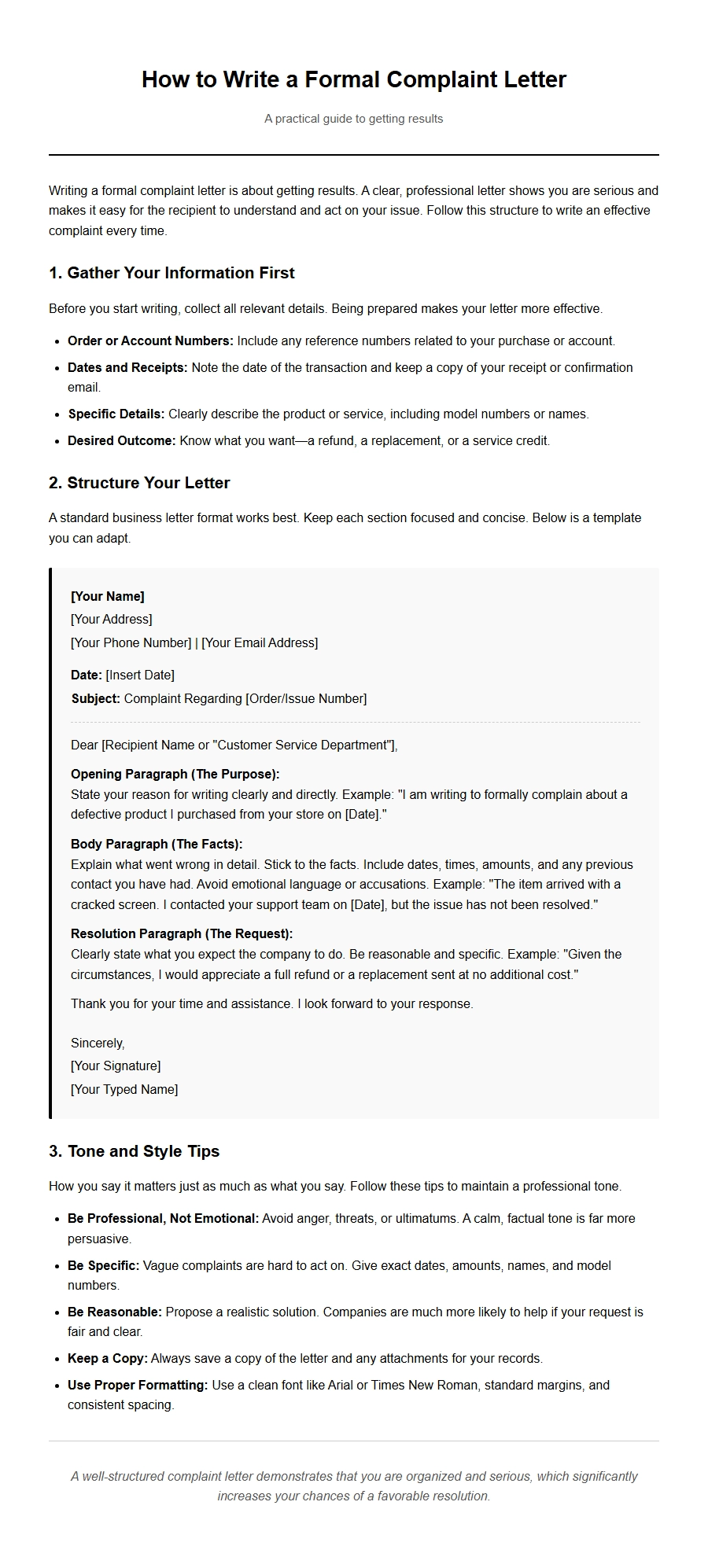 How to Write a Formal Complaint Letter
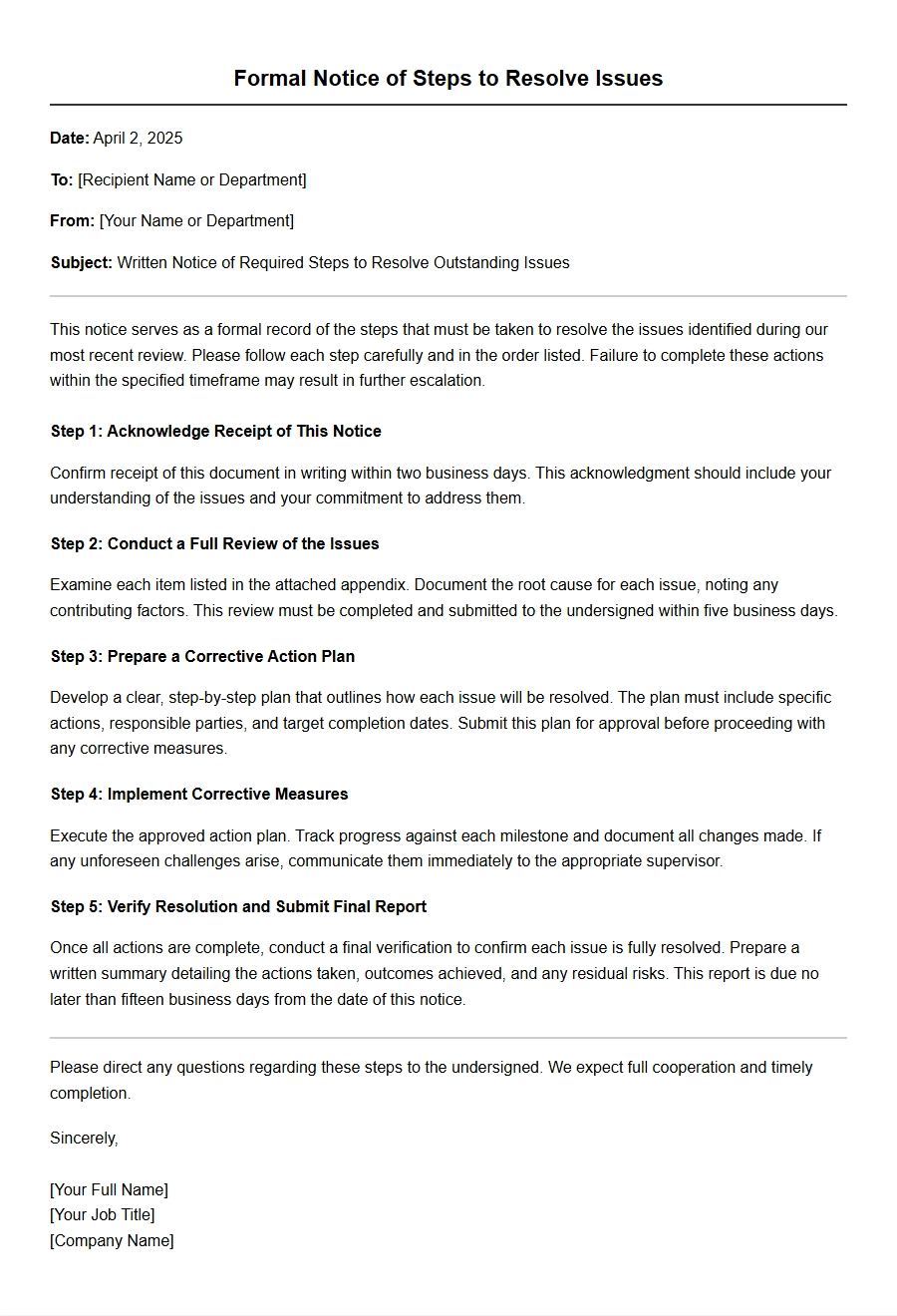 Steps to Resolve Issues via Written Notice
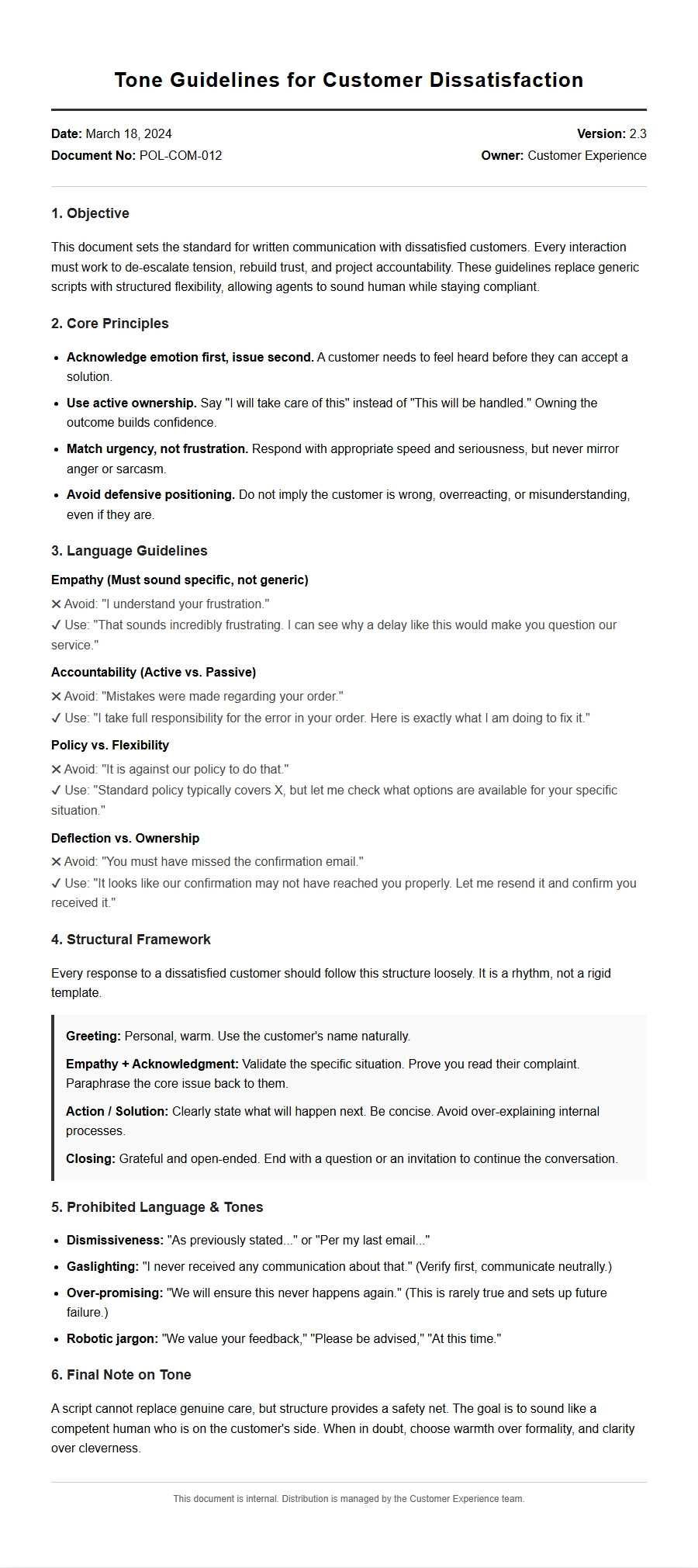 Tone Guidelines for Dissatisfied Customer Letters
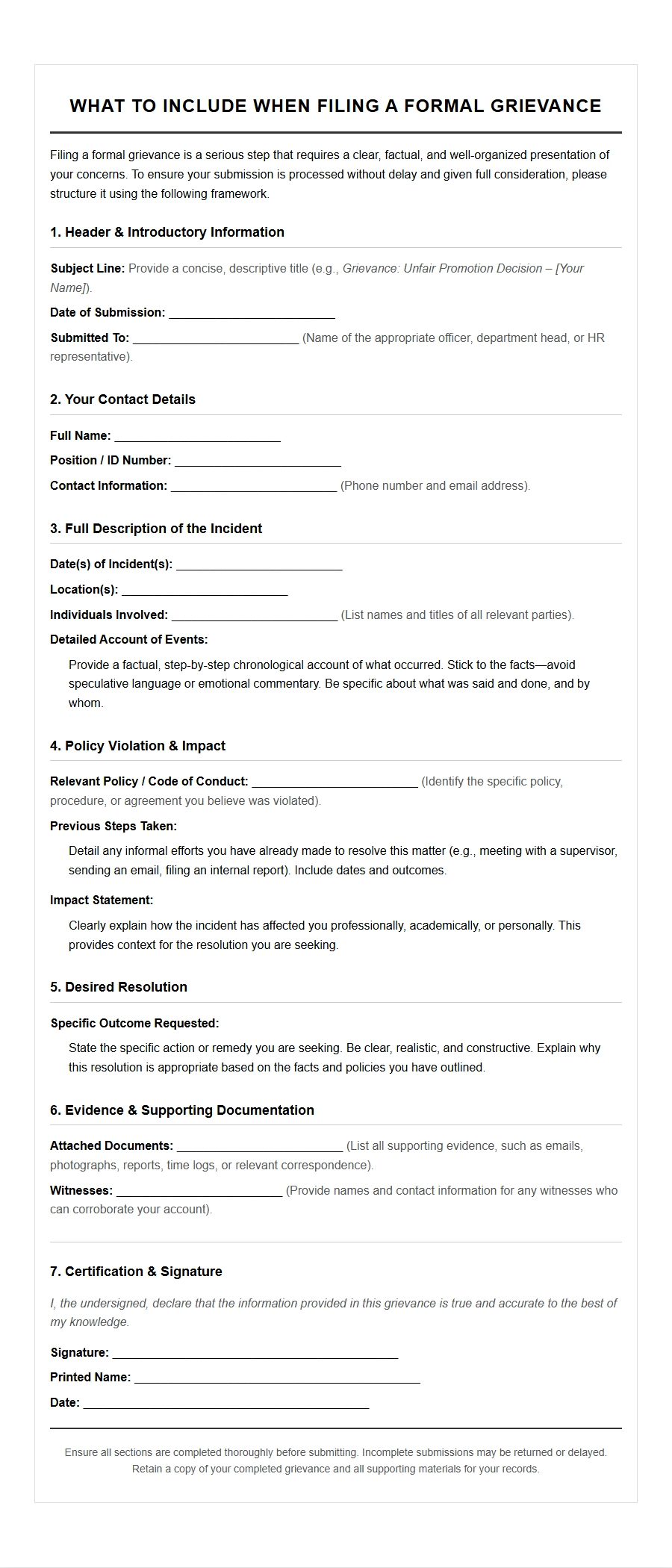 What to Include in a Formal Grievance Letter
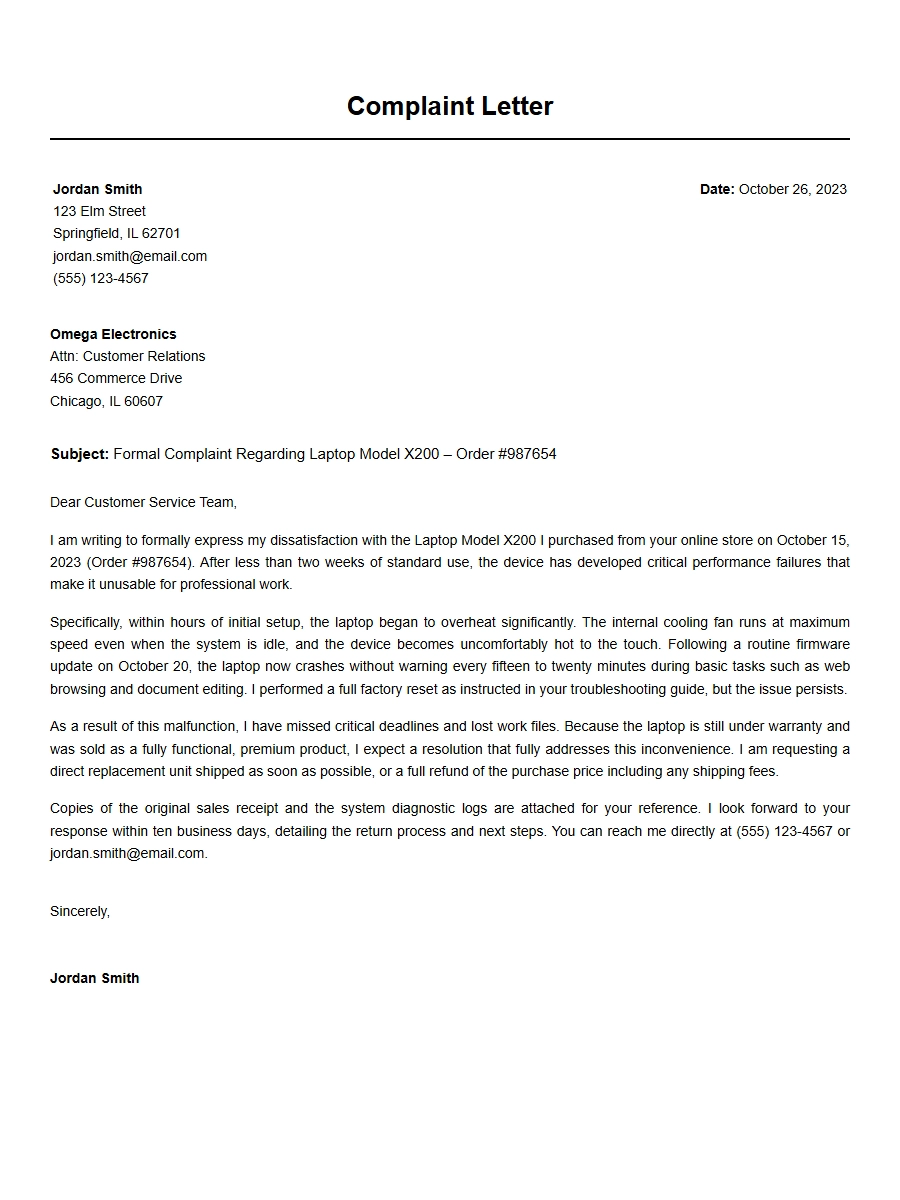 Structure of an Effective Complaint Letter
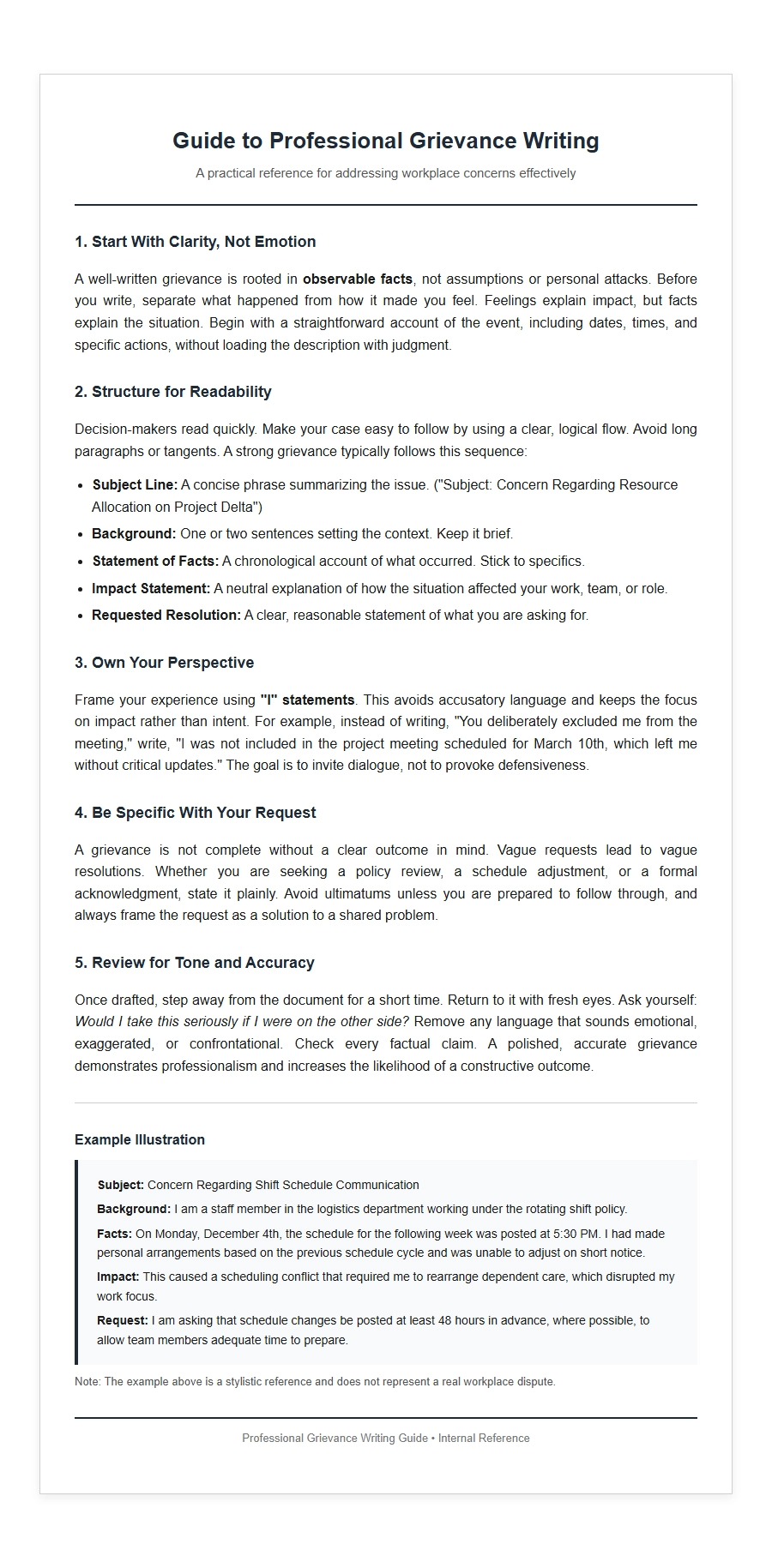 Best Practices for Writing Professional Grievance Letters