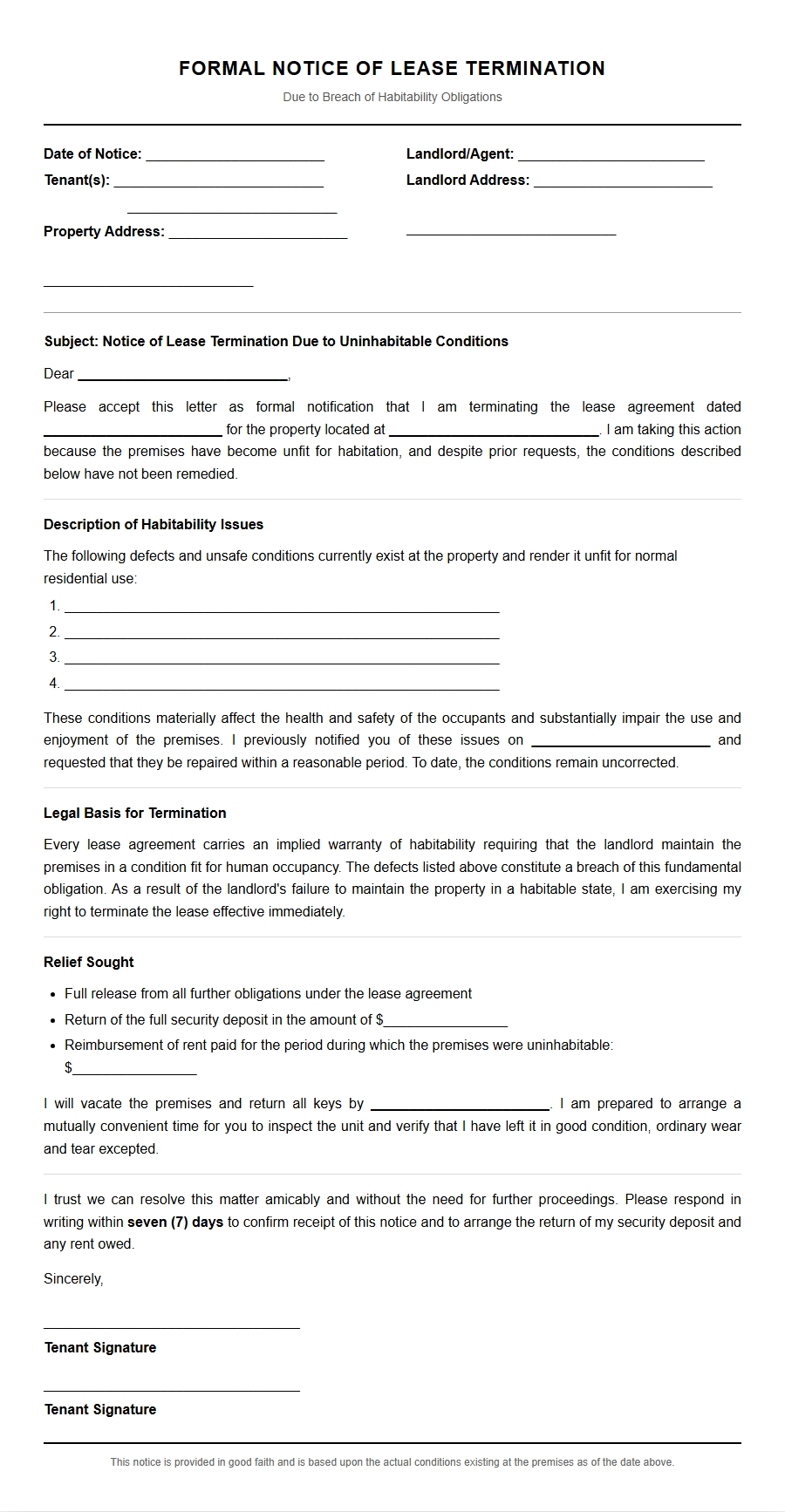
formal notice of lease termination due to habitability - Complaint Letters
A formal notice of lease termination due to habitability is your official way to tell your landlord you're leaving because the property is unsafe or unlivable.
Maybe you're dealing with broken heating in winter, mold spreading through the bedroom, or a plumbing issue the landlord has ignored for weeks. You need to get out, but you also want to protect your security deposit and avoid legal trouble. That's where a solid letter template saves the day.
Category: Lease & Rental Notices
Using a sample isn't cheating—it's smart. A good template gives you the right letter structure, the formal tone you need, and key legal phrases. Then you fill in your specific details. This keeps your professional correspondence clear and credible without you having to reinvent the wheel.
What makes a notice "formal" for habitability issues?
This isn't a casual text or a rant. A formal notice follows business letter format: date, your address, landlord's address, a clear subject line, and a respectful salutation and closing. The body states the specific habitability problem (e.g., "no heat since Nov. 15"), references the lease clause or local housing code, and gives the landlord a clear deadline to fix it or accept your termination.
Most states require you to give written notice before breaking a lease for health or safety reasons. The tone in writing here is firm but professional—you're stating facts, not attacking. Avoid emotional language like "disgusting" or "unacceptable." Instead, write: "The bathroom ceiling leak has caused mold growth, which poses a health risk."
How to pick and adapt a sample
Look for a letter template specific to your state—laws vary. Some templates include a section for "notice of breach" before termination. Others are direct termination notices. Choose the one that matches your situation. If you've already asked for repairs and they haven't been done, use a resignation letter sample adapted for lease termination.
Don't copy a template word for word. Change the details to reflect your real experience. For example, if the landlord verbally promised to fix the leak but never did, include a sentence: "Despite multiple requests on November 1 and 10, repairs were not completed." This shows you documented the issue, which strengthens your case.
A quick tip on the opening paragraph: start with the purpose. "I am writing to provide formal notice of lease termination due to uninhabitable conditions at [address]." Then immediately list the problem. That grabs attention and shows you're serious.
Common mistakes to avoid
One big error: using outdated salutation and closing like "Dear Sir" or "Sincerely yours" when you've never used those before. Stick with "Dear [Landlord Name]" and "Sincerely" or "Best regards." Another mistake is ignoring the digital letter format. If you send an email, include the full letter in the body, not as an attachment. Use a clear subject line like "Formal Notice of Lease Termination – 123 Main St." That helps with tracking.
Also, don't forget to proofreading letter before sending. A typo can make you look careless, and in a legal document, accuracy matters. Read it out loud or have a friend check it.
The best letters feel both professional and personal. After the factual summary, you can add a short line like, "I have enjoyed living here, but the ongoing safety issues have made it impossible to stay." That keeps the letter writing etiquette respectful.
If you're proofreading letter, check that your letterhead design (name, address, date) is consistent. For printed letters, use a clean font and leave white space. For digital, keep the format simple—no fancy colors.
Remember, a sample is your springboard, not your final draft. Practice writing a version that sounds like you. The more you do it, the easier it gets. Next time you face a tough professional correspondence, you'll know exactly how to structure it.
Realistic Samples
formal notice of lease termination due to habitability - Complaint Letters
Termination Notice – Toxic Mold
Date: March 15, 2025
To: [Landlord Name] Property Address: 123 Main St, Apt 4B, Springfield, IL 62701
This letter constitutes formal notice of lease termination due to uninhabitable conditions caused by extensive toxic mold. Despite repeated oral and written requests (see attached maintenance logs), the black mold in the bathroom ceiling and bedroom closet has not been remediated. The mold has caused persistent respiratory issues for my household, as documented by physician reports.
Under Illinois landlord-tenant law and the implied warranty of habitability, severe mold infestation renders the premises unfit for occupancy. I am therefore terminating the lease effective May 1, 2025. Below is a summary of outstanding violations:
Issue
Date Reported
Status
Bathroom ceiling mold
Jan 10, 2025
Unresolved
Bedroom closet mold
Feb 5, 2025
Unresolved
Musty odor & health complaints
Ongoing
Verified by doctor
Please return my security deposit in full within 30 days. I will arrange to vacate and hand over keys on April 30. If you dispute this notice, contact me in writing. I reserve the right to pursue legal remedies.
Sincerely, [Tenant Name]
Notice of Termination – No Heat in Winter
Date: January 20, 2025
To: [Landlord Name] Property: 456 Oak Ave, Unit 2, Chicago, IL 60614
This is formal notice that I am terminating my lease due to the lack of adequate heating, which violates the implied warranty of habitability. The furnace has been broken since December 1, 2024. You have sent repair technicians twice, but the system still cannot maintain a temperature above 55°F. Outdoor temperatures have repeatedly fallen below 20°F, making the apartment dangerously cold.
I have notified you on three separate occasions (dates below) and provided access for repairs, yet the condition persists. A functional heating system is an essential habitability requirement under Chicago Municipal Code § 5-12-110.
First report: Dec 2, 2024 – technician came Dec 5, no lasting fix.
Second report: Dec 20, 2024 – no action taken.
Third report: Jan 5, 2025 – temporary patch failed within 48 hours.
I am therefore vacating the apartment by February 1, 2025. I expect the full return of my $1,500 security deposit and a refund of January’s rent. Please confirm receipt of this notice in writing. If you do not comply, I will file a complaint with the Chicago Department of Buildings.
Regards, [Tenant Name]
Lease Termination – Broken Plumbing & Water Damage
Date: April 10, 2025
To: [Landlord Name] Property: 789 Birch St, Apartment 3C, Portland, OR 97201
Please accept this letter as formal notice of lease termination due to severe habitability issues arising from broken plumbing and resulting water damage. The kitchen sink has been clogged and leaking since March 20, and the bathroom toilet has been non-functional for over two weeks. Water from the leaks has damaged the subfloor, causing mold growth and a persistent foul odor.
I have contacted you via phone, text, and written maintenance requests. Below is a timeline of events:
Date
Issue
Action Taken
Mar 20
Kitchen sink clogged
Reported – no fix
Mar 25
Sink leaking onto floor
Second report
Apr 1
Toilet stopped flushing
Plumber visited but didn’t repair
Apr 5
Water damage visible
No response
Oregon landlord-tenant law requires landlords to maintain premises in habitable condition. These failures make the unit unfit for living. I intend to vacate by May 1, 2025. Please advise on key return and deposit refund. I will also provide photos of the damage.
Sincerely, [Tenant Name]
Notice to Terminate – Severe Pest Infestation
Date: May 18, 2025
To: [Landlord Name] Address: 210 Pine Rd, Apt 5A, Denver, CO 80202
This is formal notice of lease termination due to a severe rodent and cockroach infestation that renders the apartment uninhabitable. Despite timely rent payments and multiple requests for extermination, you have failed to provide effective pest control. The infestation has worsened, posing health risks and making daily life impossible.
I have documented the following evidence:
Rodent droppings in kitchen cabinets and under sink.
Cockroaches seen in bathroom and near appliances daily.
Holes in walls where pests enter, left unrepaired.
My child developed asthma symptoms, per pediatrician note.
Under Colorado Revised Statutes § 38-12-505, a landlord must maintain a pest‑free dwelling. Since you have not remedied the problem after reasonable notice, I am terminating the lease effective June 1, 2025. I request my security deposit of $1,200 in full. If you wish to dispute, please respond within 5 days.
Thank you, [Tenant Name]
Termination for Lack of Hot Water
Date: July 8, 2025
To: [Landlord Name] Property: 900 Lake View Dr, Unit 6, Austin, TX 78701
I hereby give formal notice terminating my lease because the water heater has been broken since June 15, 2025, leaving the apartment without hot water. This is a critical habitability failure under Texas Property Code § 92.052. You have been informed four times, but no repair has been completed.
Living without hot water affects hygiene, cleaning, and basic comfort. I have had to shower at a gym and wash dishes with cold water. Below is a record of my reports:
Date Reported
Method
Landlord Response
Jun 15
Phone call
"Will send someone" – no one came
Jun 20
Email
Promised repair next week
Jun 28
Written request
No reply
Jul 3
Certified mail
Ignored
I will vacate by July 31, 2025, and expect a full refund of my security deposit plus a pro‑rata rent refund for the period without hot water. Please confirm in writing.
Sincerely, [Tenant Name]
Lease Termination – Electrical Hazards
Date: August 1, 2025
To: [Landlord Name] Property: 34 Elm St, Apartment 2B, Columbus, OH 43215
This letter serves as formal notice of lease termination due to dangerous electrical conditions that make the apartment uninhabitable. Outlets spark when used, lights flicker constantly, and the circuit breaker trips daily. An electrician I consulted said the wiring is outdated and poses a fire risk.
I reported these issues starting July 5, 2025. You sent a handyman who claimed it was "normal." It is not. The Ohio Landlord‑Tenant Act requires safe electrical systems. Without correction, I cannot safely occupy the unit.
July 5 – reported flickering lights and dead outlets.
July 12 – breaker tripped, no action.
July 20 – outlet sparked when plugging in microwave.
July 28 – handyman visit, no real repair.
I am terminating the lease effective August 15, 2025. Please arrange for inspection and return of my $900 security deposit. I also reserve the right to withhold rent for the period of non‑habitability.
Regards, [Tenant Name]
Notice to Terminate – Structural Damage & Ceiling Collapse
Date: September 10, 2025
To: [Landlord Name] Property: 512 Cherry Ln, Unit 3, Nashville, TN 37203
I am providing formal notice of lease termination because the apartment has sustained significant structural damage, including a partial ceiling collapse in the living room on September 5, 2025. This makes the unit unsafe and uninhabitable. Debris and exposed wiring now pose physical hazards.
I notified you immediately via call and text, but you have not taken any remedial action beyond sending someone to "look" on September 7. The ceiling remains open and unstable.
Date
Event
Landlord Action
Sep 5
Ceiling collapsed (approx. 4x4 ft)
Phone call made
Sep 6
Follow‑up text with photos
No response
Sep 7
Maintenance worker visited
Only assessed, no repair
Tennessee law requires landlords to keep premises safe. A collapsed ceiling violates the warranty of habitability. I am vacating immediately and request full return of my security deposit plus reimbursement for moving expenses. Please confirm in writing by September 12.
Sincerely, [Tenant Name]
Termination Notice – Sewage Backup
Date: October 22, 2025
To: [Landlord Name] Property: 776 Maple Ave, First Floor, Miami, FL 33133
This is formal notice that I am terminating my lease due to repeated sewage backups in my unit. Raw sewage has flooded the bathroom floor twice in the past month, creating a biohazard and unbearable stench. Such conditions are clearly uninhabitable under Florida Statutes § 83.51.
I reported the first backup on October 5; a plumber snaked the line but the problem recurred on October 15 and again just yesterday. The carpet in the hallway is soaked and needs replacement. Your failure to permanently resolve the issue leaves me no choice but to move out.
October 5 – sewage overflow in bathroom.
October 10 – plumber visited, temporary fix.
October 15 – second backup, reported again.
October 21 – third backup with extensive damage.
I will vacate by November 5, 2025. I expect a full security deposit refund and compensation for damaged personal property (itemized list attached). Please contact me to arrange key handoff.
Thank you, [Tenant Name]
Lease Termination – Broken Windows & Security Risk
Date: November 12, 2025
To: [Landlord Name] Property: 1500 Cedar St, Apt 1A, Atlanta, GA 30309
I am serving formal notice of lease termination because the apartment has two broken windows that remain unrepaired, compromising both weatherproofing and security. The living room window was shattered by a storm on October 25, and the bedroom window has a large crack from an attempted break‑in. You have been notified multiple times but have done nothing.
Without functional windows, the unit is drafty, allows moisture intrusion, and is vulnerable to intruders. Georgia law requires landlords to maintain doors and windows in good repair for security and habitability.
Issue
Date Reported
Current State
Living room window broken
Oct 25
Boarded only; no replacement
Bedroom window cracked
Nov 1
Unrepaired
Security risk due to easy entry
Ongoing
Unaddressed
I am terminating the lease effective December 1, 2025. I expect my $1,000 security deposit returned in full. If you fail to respond, I will file a complaint with the Georgia Department of Community Affairs.
Regards, [Tenant Name]
Termination Notice – Lead Paint / Asbestos Hazard
Date: December 5, 2025
To: [Landlord Name] Property: 88 River Rd, Apt 2, Philadelphia, PA 19106
Please accept this as formal notice of lease termination due to the presence of lead paint dust and suspected asbestos in the insulation, which makes the apartment uninhabitable and dangerous. After my child was diagnosed with elevated blood lead levels on November 20, I hired a certified inspector who found lead paint in window sills and asbestos in attic ducts.
I informed you of the test results on November 22, but you have not taken any abatement steps. Under Pennsylvania law and the Lead Hazard Control Act, landlords must disclose and remediate known lead hazards.
Nov 20 – Child’s blood lead level test results (elevated).
Nov 22 – Certified inspection report provided to you.
Dec 1 – Follow‑up letter requesting abatement – ignored.
I am vacating immediately for health reasons and request full security deposit refund ($1,200), plus reimbursement for medical expenses and relocation costs. I will provide the inspection report and medical records. Please respond within 10 days.
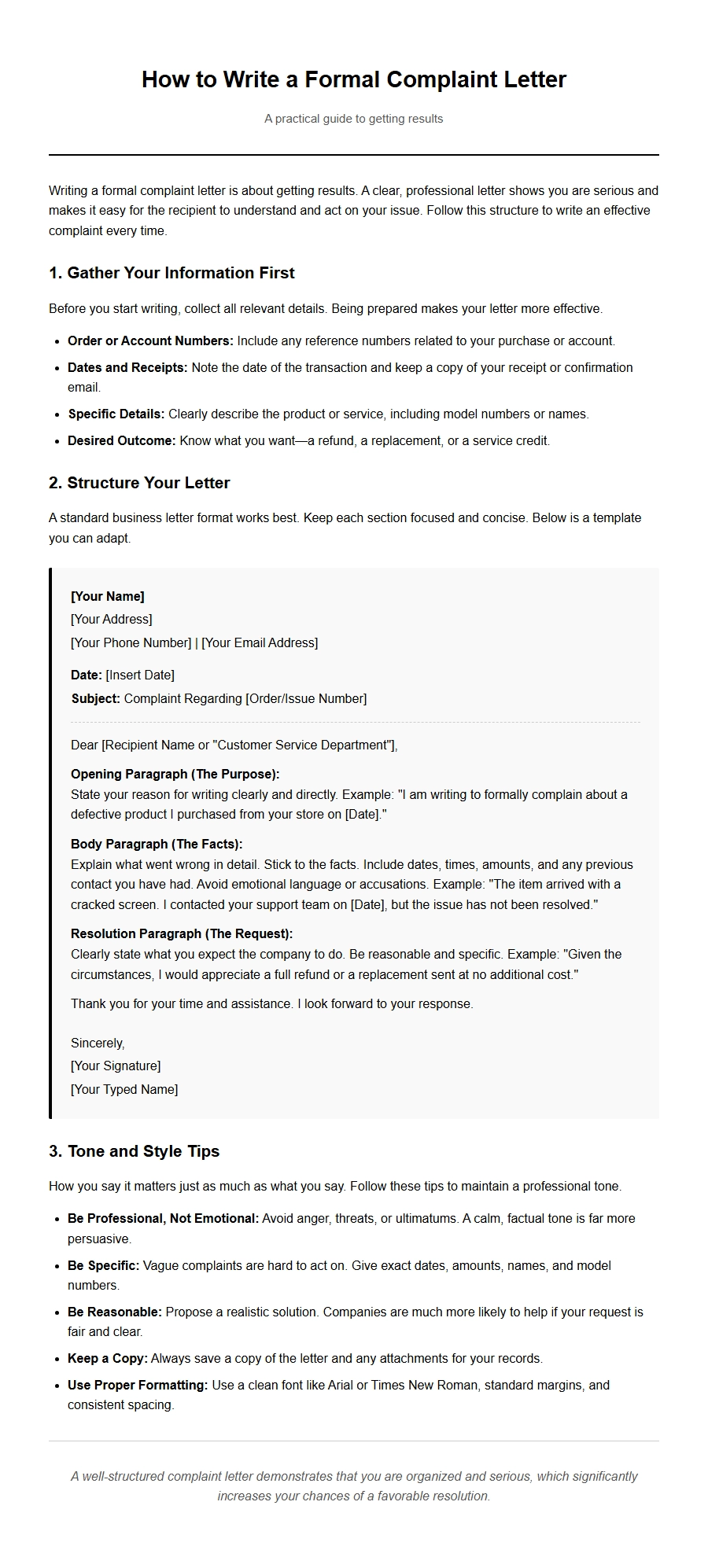 How to Write a Formal Complaint Letter
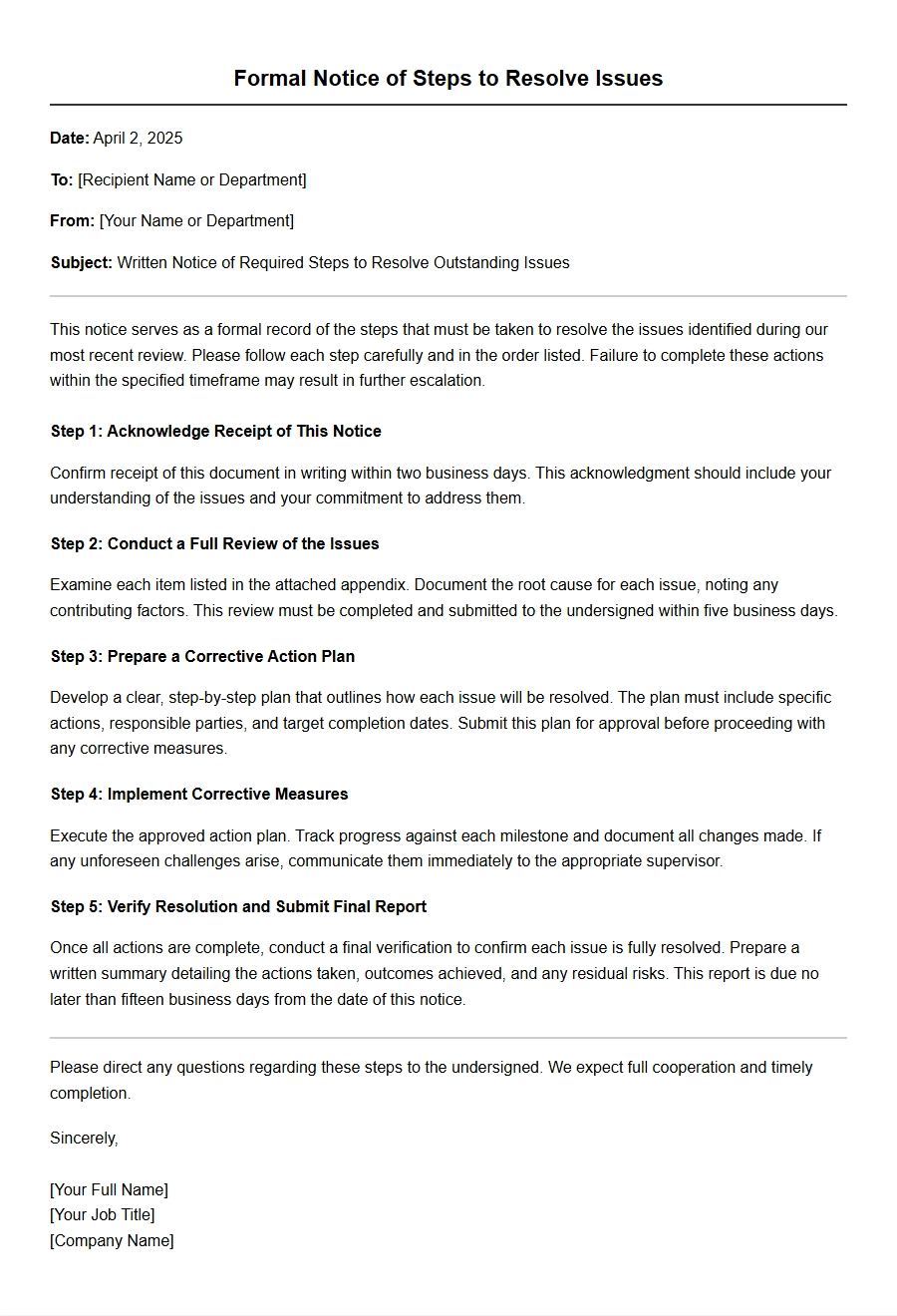 Steps to Resolve Issues via Written Notice
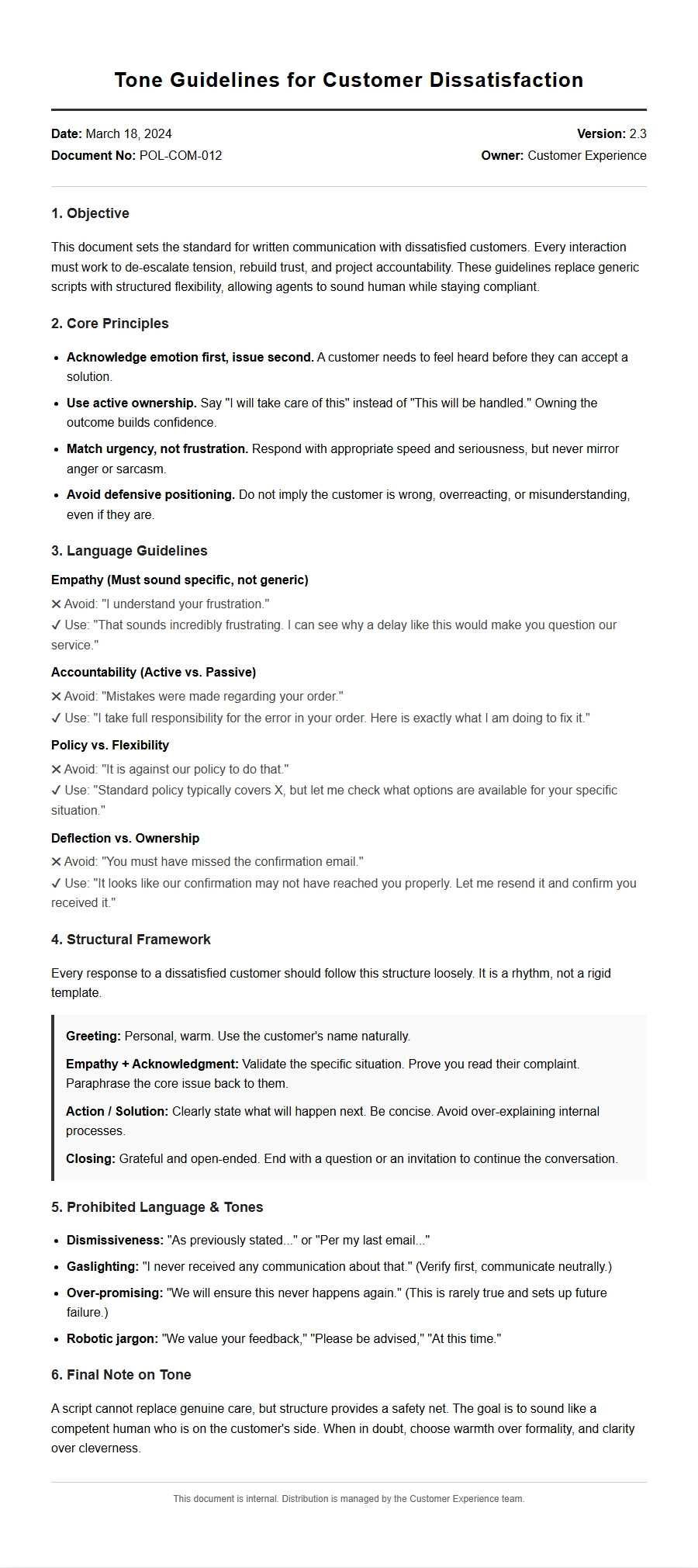 Tone Guidelines for Dissatisfied Customer Letters
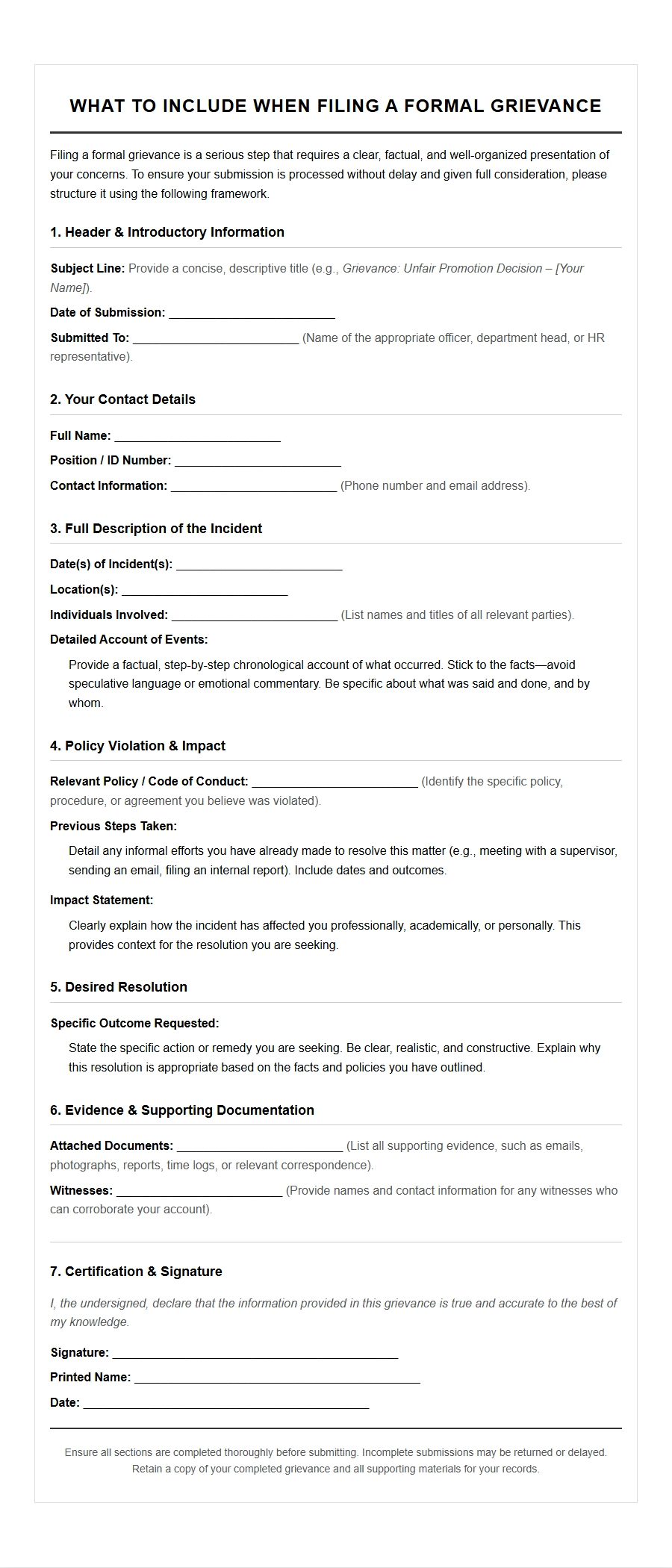 What to Include in a Formal Grievance Letter
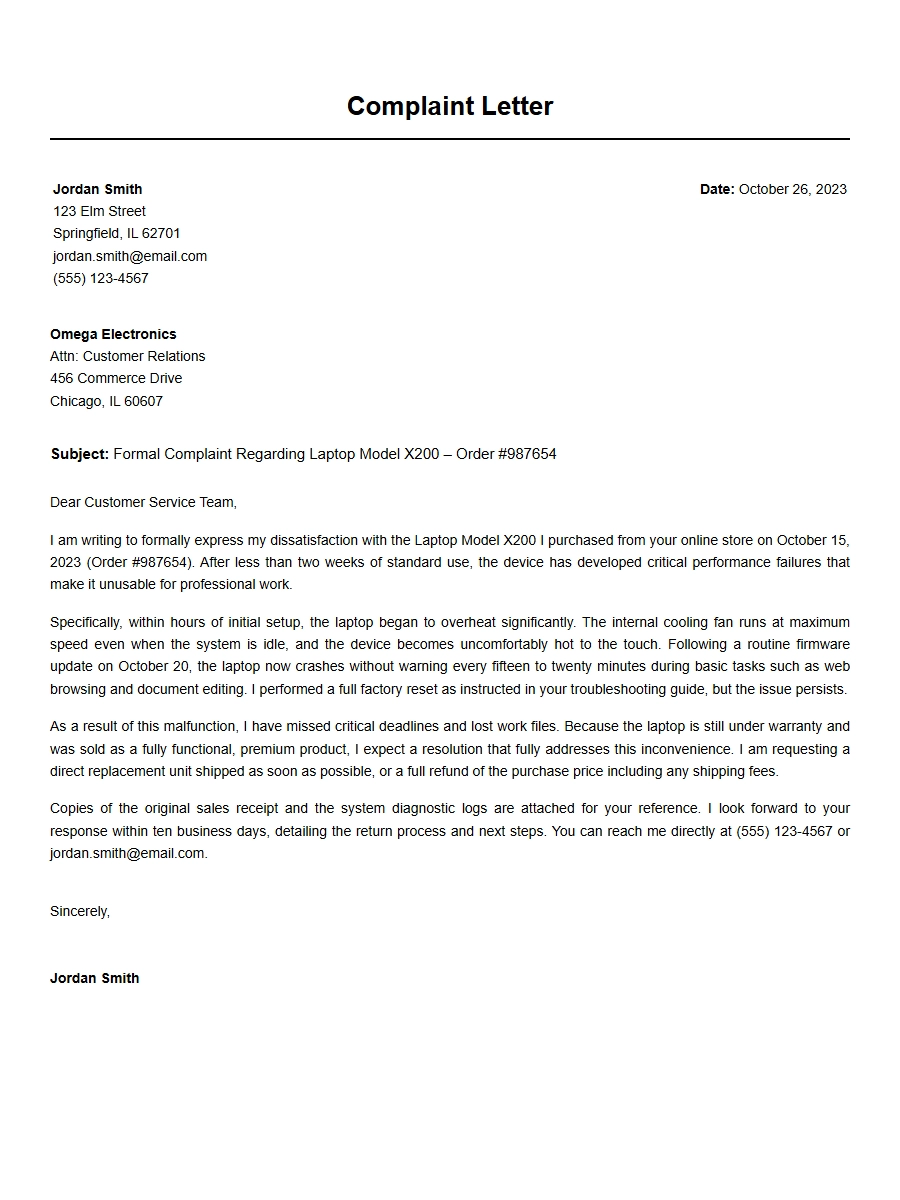 Structure of an Effective Complaint Letter
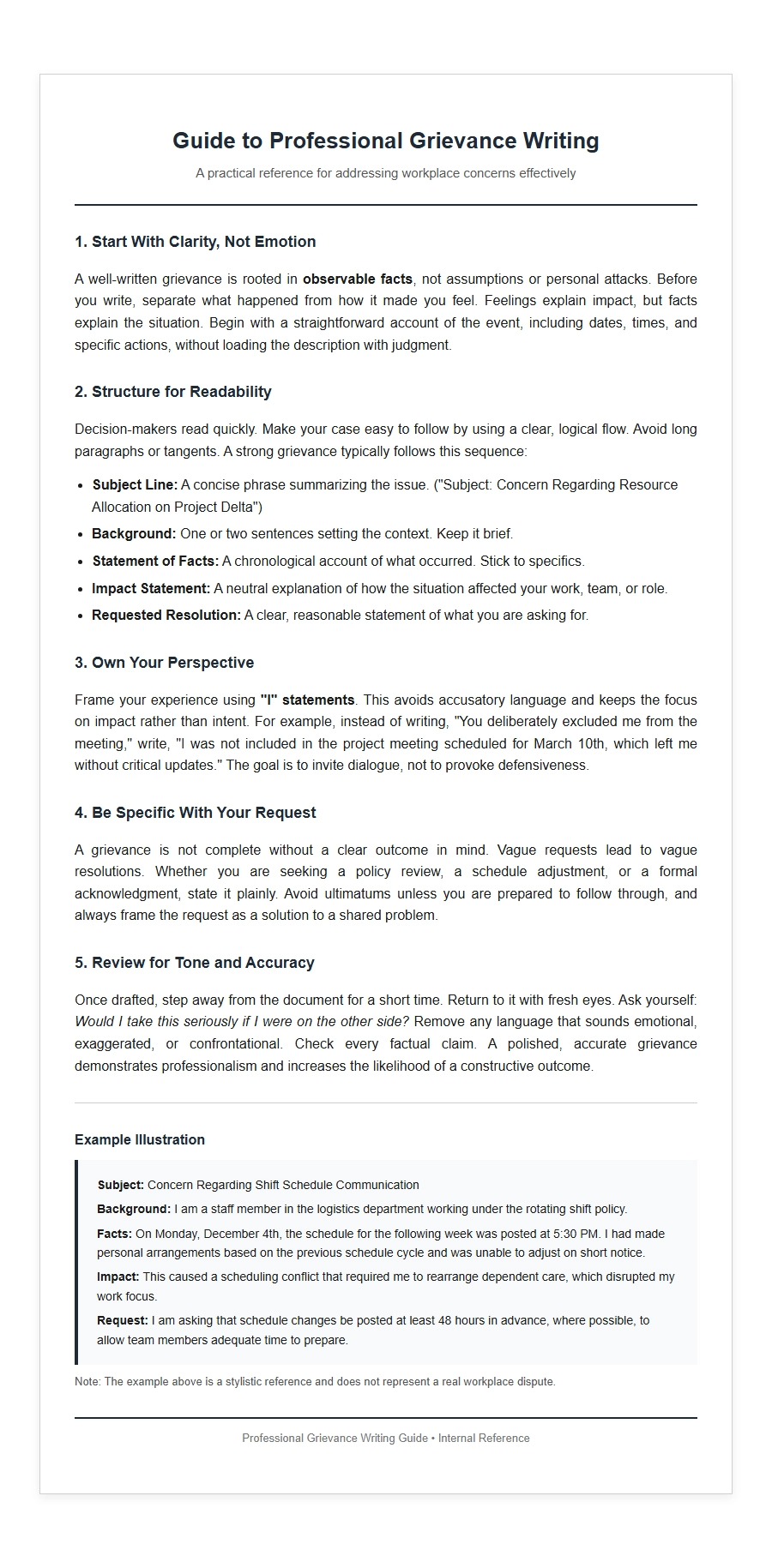 Best Practices for Writing Professional Grievance Letters