Sample Complaint Letter for Misleading Product Ads
You bought a product based on an ad that promised the world. It arrived, and the reality was completely different. The features didn’t match. The quality was nowhere close. That sinking feeling of being misled is frustrating, and now you need to write a complaint letter that actually gets results. The hardest part is starting that blank page. But with the right sample, you can turn that frustration into a clear, professional letter in minutes.
Category: Consumer Complaint Letters
Using a sample isn’t cheating. It’s a smart way to structure your thoughts quickly. A good sample gives you the right business letter format, shows you formal writing tips for tone, and includes key phrases you can adjust. You still make it your own. The sample is a springboard, not a crutch.
What should your complaint letter about misleading advertising look like?
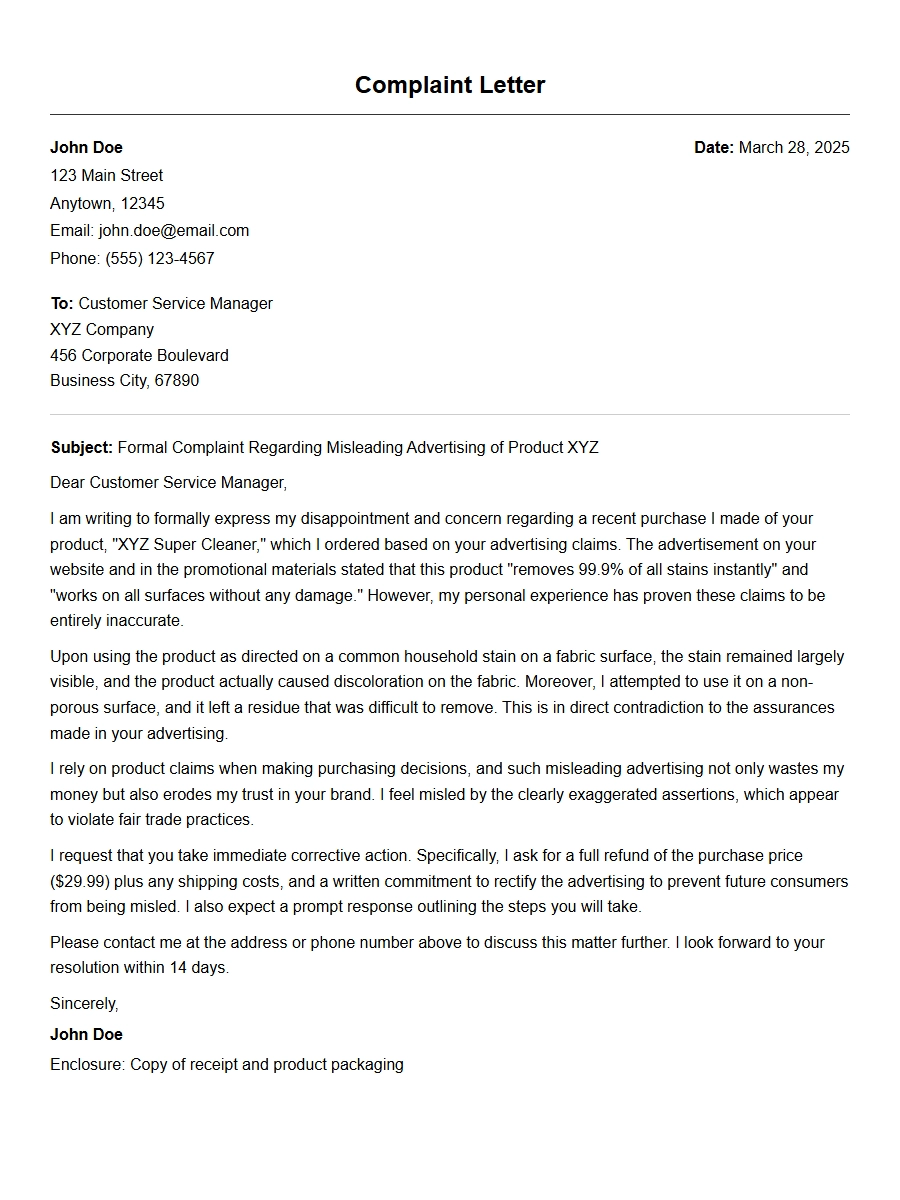
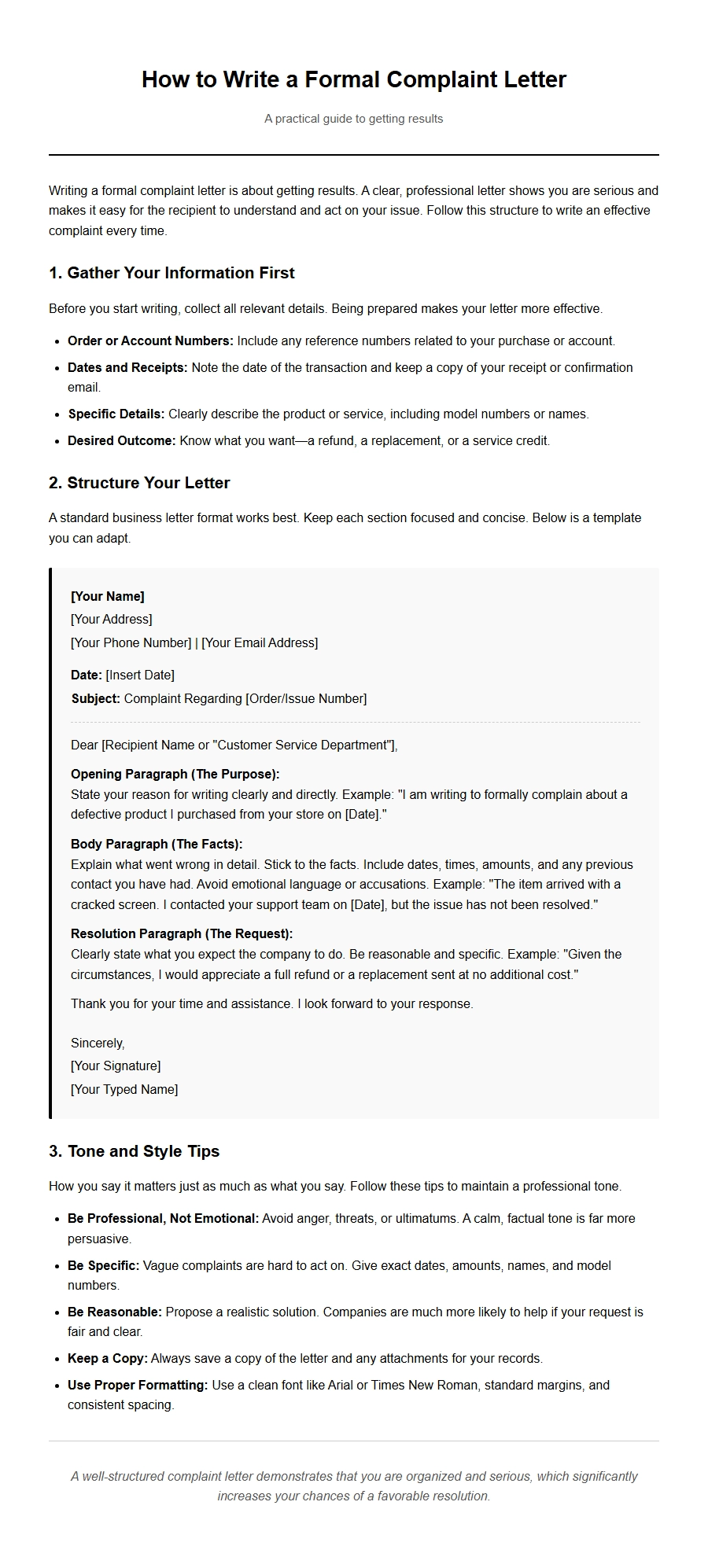
A complaint letter regarding misleading product advertising needs to be direct and factual. Start with your order details: product name, model, date purchased, and where you saw the ad. Then clearly state the discrepancy—for example, “The ad claimed the battery lasts 24 hours, but it dies in 6.” Stick to facts. Avoid emotional language like “I’m so angry.” Instead, write “This was not as advertised.”
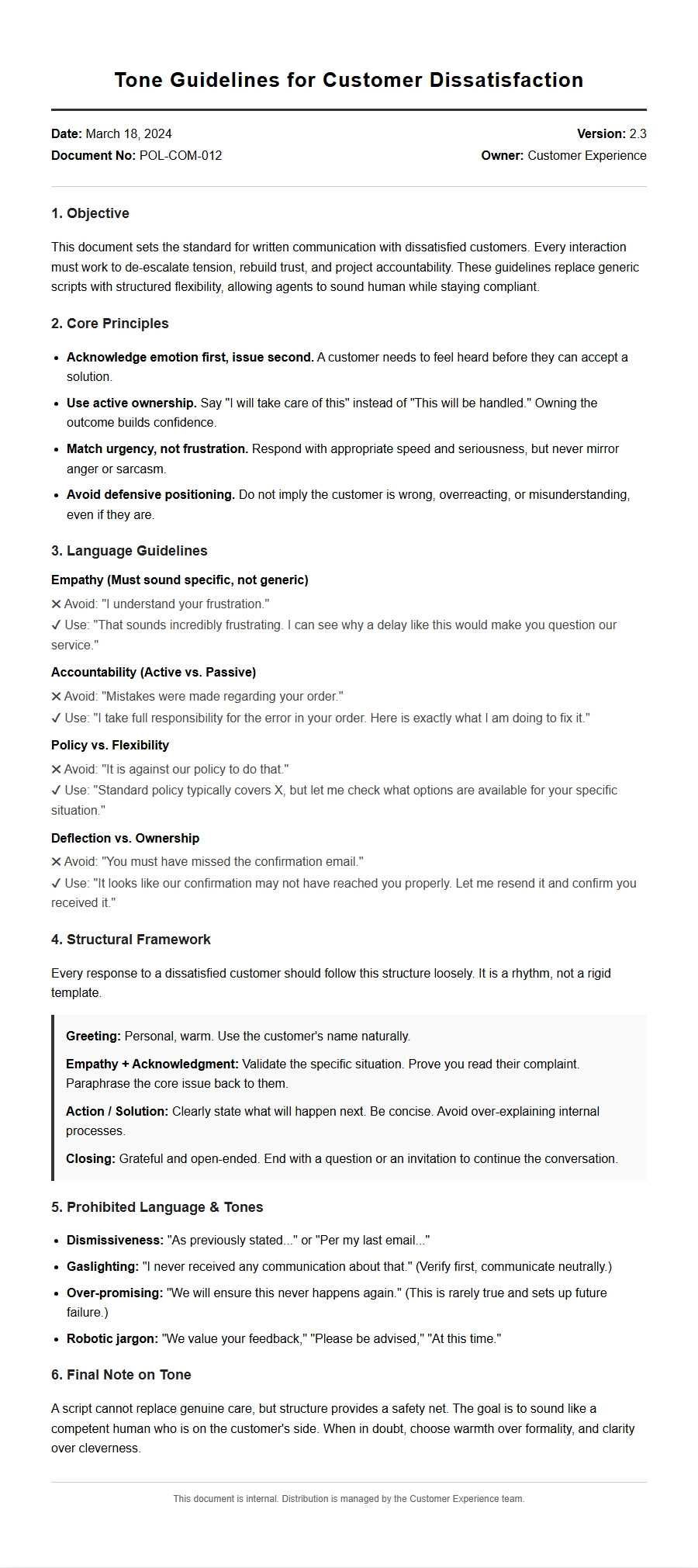
The tone matters. You want professional correspondence that sounds firm but not aggressive. Think of it as a business conversation. Use standard salutation and closing—Dear [Company Name] or To Whom It May Concern, then Sincerely or Best regards. That sets a respectful tone while still making your case.
How to choose and adapt a sample
Not all samples fit every situation. If the ad made a specific factual claim that was false, you may need a more formal approach. For example, if the product’s features were entirely fabricated, you might want to reference legally binding notice phrasing for breach of contract to show you’re serious. On the other hand, if it’s a smaller issue like a misleading photo, a standard letter template with a polite request for refund or replacement works fine.
When you adapt a sample, keep your authentic voice. Write as you would speak in a business meeting. If the sample uses overly complex words like “heretofore,” change them to “before.” The goal is a customizable letter that sounds like you. Pay attention to letter structure: opening paragraph (state the problem), middle paragraphs (details and what you want), closing (deadline and action).
Common mistakes that weaken your complaint
One big mistake is using outdated salutations like “Dear Sir” when you don’t know the recipient’s gender. Use “Dear Customer Service Team” or the specific person’s name if you have it. Another error is ignoring the format. If you’re sending by email, use a digital letter format with no fancy letterhead design—just a clean subject line and text. For a printed letter, you can use a simple letterhead with your contact details.
Also, don’t forget to proofread your letter. A typo can make you look careless and weaken your argument. Read it aloud or ask someone else to check. And remember letter writing etiquette: be polite even if you’re upset. You’re more likely to get a positive response if you sound reasonable.
When to escalate your complaint
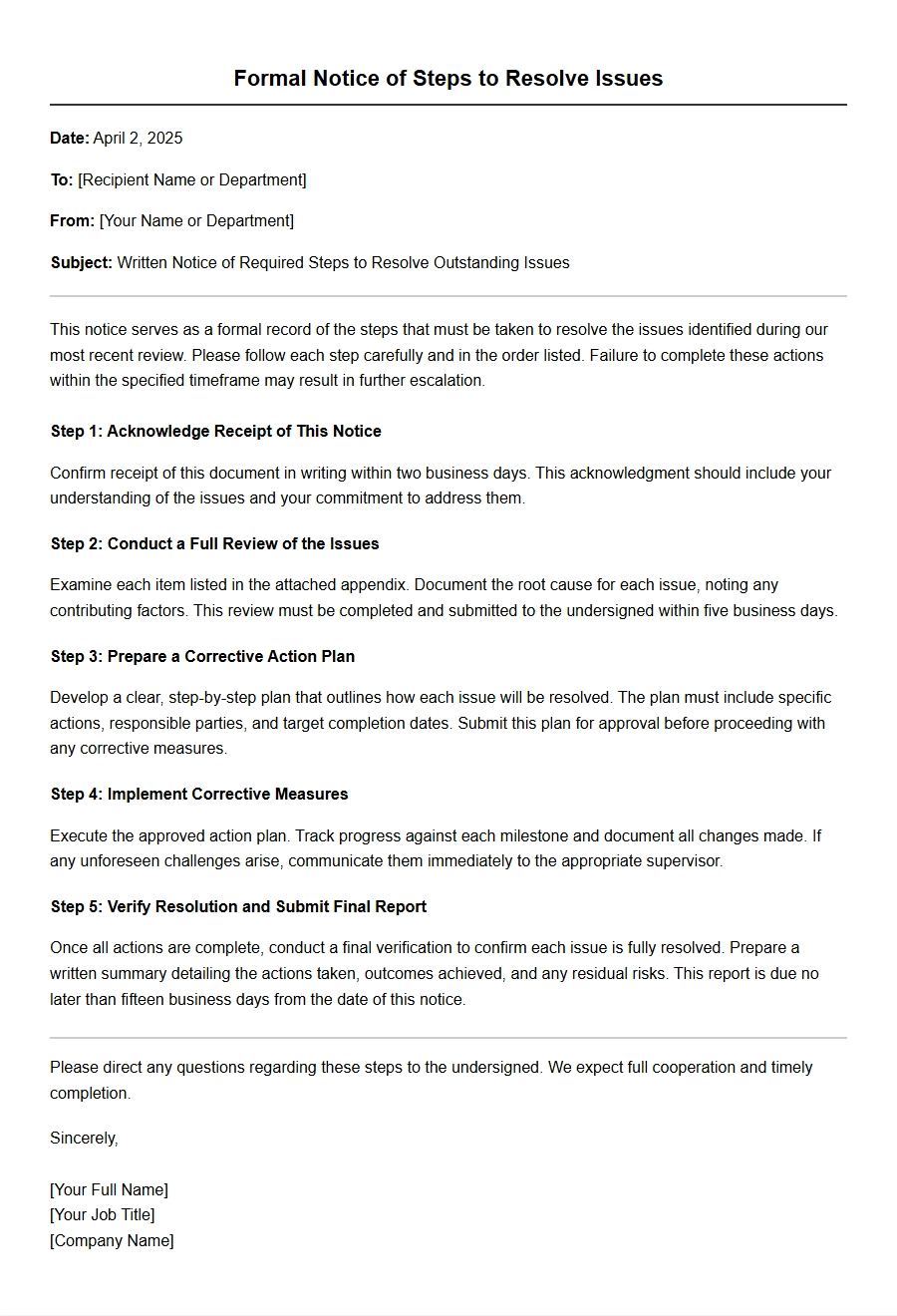
Sometimes a simple letter isn’t enough. If the company ignores you or gives a runaround, you may need to escalate. For example, you could escalate a customer service issue in writing by addressing a higher manager or using a formal notice. If the misleading ad involves a contract violation (like a service that didn’t deliver as promised), a formally worded complaint with legal notice phrasing can get faster attention.
Other scenarios: if the product is a leased item with habitability issues (like an apartment misrepresented), you might need a formal notice of lease termination due to habitability. If it’s about a medical service error, a grievance letter for a billing coding error follows similar principles. The key is to match the sample to the problem’s severity.
Make it personal, not robotic
The best complaint letters feel both professional and personal. After you adapt the sample, add a sentence that shows you’re a real person. Something like “I’ve been a loyal customer for three years and this was disappointing.” That human touch often gets a better outcome. Don’t copy the sample word for word. Change the details, adjust the tone, and make sure it reflects your specific situation.
Practice makes this process faster. The first time you write a complaint letter regarding misleading product advertising, it might take 30 minutes. The third time, maybe 10. Keep a few samples handy for different situations. Over time, you’ll learn what works and what doesn’t.
So next time an ad doesn’t deliver, don’t stare at a blank page. Grab a sample, customize it, and send it with confidence. You’ll get a better response—and you’ll feel better for having spoken up.
Ready-to-Use Examples
Sample Complaint Letter for Misleading Product Ads
Misleading Weight Loss Supplement Claims
Date: March 15, 2025
To: Customer Service Manager FitLife Nutrition Inc. 123 Wellness Ave, Los Angeles, CA 90001
Subject: Complaint Regarding Misleading Advertising of ‘SlimFast Extreme’
Dear Sir or Madam,
I purchased your ‘SlimFast Extreme’ supplement (Order #87921) based on advertisements claiming “Lose 10 pounds in one week without diet or exercise.” The packaging and online ads prominently displayed this statement. After using the product exactly as directed for three weeks, I lost only 1.5 pounds despite strict adherence. I reviewed the fine print on your website, which now says “results not typical,” but the main marketing materials never included this disclaimer.
This constitutes false advertising under FTC guidelines, as the core claim is not substantiated by scientific evidence. I demand:
A full refund of $59.99 plus shipping
Removal of the misleading statement from all advertisements
A written apology acknowledging the exaggeration
I have attached screenshots of the ads and my purchase receipt. If I do not receive a satisfactory response within 14 days, I will file a complaint with the Better Business Bureau and the FDA.
Sincerely, Jane Morrison jane.morrison@email.com | (555) 123-4567
Exaggerated Electronic Device Performance
Date: March 14, 2025
To: TechGadget Corp Support 456 Innovation Drive, San Jose, CA 95112
Subject: Deceptive Battery Life Claims for ‘PowerEar Pro’ Bluetooth Earbuds
Dear Support Team,
I bought the PowerEar Pro earbuds (Model PE-2024) after seeing ads that boasted “36 hours of continuous playtime with ANC on.” In reality, I get barely 8 hours before the case needs recharging. The earbuds themselves last 4 hours, contradicting every advertisement. Your website also lists “Quick charge: 10 minutes = 2 hours playback,” but my test showed 25 minutes of use from a 10-minute charge.
I created a simple comparison table based on your advertised specs versus actual performance:
Claim
Advertised
Actual
Total playtime (with case)
36 hours
12 hours
Earbud battery life
10 hours
4 hours
Quick charge yield
2 hours in 10 min
25 min
This is clearly misleading product advertising. I request a full refund ($129.99) or a replacement with accurate claims. Additionally, please correct your marketing materials. I expect a resolution by March 28, 2025, or I will escalate to the Consumer Product Safety Commission.
Regards, David Kim david.k@example.com | (555) 987-6543
Fake Discount / Inflated Original Price
Date: March 13, 2025
To: BargainHaven Online Store 789 Retail Row, New York, NY 10001
Subject: Complaint About False “50% Off” Sale on Home Decor
Dear Customer Care,
I purchased a “Soho Lamp” from your website during the “Mid-Season Clearance” sale. The product page showed: “Was $199.99, Now $99.99 – Save 50%!”
After receiving the lamp, I noticed the product tag printed by the manufacturer listed the MSRP as $89.99. The $199.99 “original price” was completely fabricated. This is a classic bait-and-switch tactic that artificially inflates savings to mislead consumers.
I have evidence:
Screenshot of the sales page (dated Feb 20, 2025)
Photo of the manufacturer’s tag with actual MSRP
Order confirmation (#LAMP4455) showing $99.99 charged
I expect the following corrective actions:
Full refund of $99.99 plus any shipping
Public correction of the false pricing
From you, a clear statement explaining how you chose that original price
If unresolved, I will report you to the Federal Trade Commission for deceptive pricing practices. Please respond within 10 business days.
Yours, Maria Santos maria.santos@mail.com | (555) 234-5678
Misrepresented Ingredients in Cosmetics
Date: March 12, 2025
To: GlowUp Cosmetics Ltd. 12 Beauty Lane, Paris, TX 75460
Subject: False ‘Organic & Natural’ Claims on ‘Purely You’ Moisturizer
Dear GlowUp Team,
I bought the “Purely You” Face Moisturizer because it was labeled “100% organic and natural ingredients.” However, upon reading the detailed ingredient list (disclosed on the box only after opening), the first three ingredients are: water, dimethicone (a synthetic silicone), and phenoxyethanol (a preservative). None of these are organic. Only two herbal extracts (aloe and chamomile) appear near the bottom, constituting less than 2% of the formula.
Your website banner says “Nature’s best in every drop!” – this is materially misleading. I rely on product labels to make informed choices about avoiding synthetic chemicals due to skin sensitivities. Below is a quick breakdown:
Ingredient
Claimed
Actual category
Dimethicone
natural? (not listed)
Synthetic silicone
Phenoxyethanol
natural? (not listed)
Synthetic preservative
Aloe barbadensis
organic? (
Trace & not certified organic
I request a refund ($34.99) and that you correct the product labeling and advertising to accurately reflect ingredient sourcing. Please confirm by April 1, 2025, or I will contact the FDA and file a false advertising complaint.
To: Ageless Beauty Co. 88 Fountain Road, Miami, FL 33101
Subject: Complaint Regarding Deceptive Before/After Photos for ‘Youth Lift Serum’
Dear Marketing Department,
I ordered the Youth Lift Serum after seeing dramatic before-and-after photos on your website and Instagram. The “after” image showed an obvious reduction in fine lines and skin tightening after “only 7 days.” As a graphic designer, I immediately noticed the images were digitally altered: the lighting, skin texture, and even the background shadows are inconsistent. Upon enlargement, there are clear signs of Photoshop blurring and frequency separation filtering.
Your product is not a miracle cure; the photos are false advertising. I used the serum for three weeks and saw zero visible change. The feeling of being tricked is frustrating. Here are my demands:
Full refund of $49.99 + $6.99 shipping
A public statement acknowledging the use of retouched images
Discontinuation of the deceptive photo series
I have saved the original ad images and will share them with the National Advertising Division if needed. You have 15 days to respond.
Sincerely, Alex Rivera alex.r@designer.com | (555) 554-3210
Hidden Fees in Service Advertising
Date: March 10, 2025
To: ClearNet Internet Services 200 Data Lane, Denver, CO 80202
Subject: Misleading Ad for $29.99/mo Internet Plan with Undisclosed Fees
Dear Billing Department,
I signed up for your “Lightning 100” plan after seeing a television ad promising “$29.99 per month for one year – no hidden fees!” When my first bill arrived, the total was $57.48. The breakdown included: a $9.99 “service fee,” a $12.50 “network enhancement surcharge,” and a $5.00 administrative fee. None of these were mentioned in the advertisement or during the sign-up call.
Your ad specifically says “no hidden fees” – this is the opposite of truthful. I made a list of the extra charges that were hidden:
Service fee: $9.99/month – not disclosed
Network surcharge: $12.50/month – buried in fine print
Admin fee: $5.00/month – never mentioned
I am requesting immediate removal of these surcharges to align with the advertised price of $29.99, or cancellation without penalty. You must also revise your advertising to disclose all mandatory fees. I will file a complaint with the FCC and the Colorado Attorney General’s office if this is not resolved by March 25, 2025.
Waiting for your prompt action, James Chen jchen@email.com | (555) 321-0987
Deceptive ‘Free Trial’ Subscription Trap
Date: March 9, 2025
To: SkinGlow Box LLC 1 Sample Street, Los Angeles, CA 90012
Subject: Complaint Regarding Misleading “Free Trial” for Beauty Box Subscription
Dear Customer Service,
On February 10, I signed up for a free trial of your “Glow Starter Kit” advertised as “Try 5 full-size products for free – pay only $4.95 shipping.” Nowhere in the advertisement was it mentioned that after 14 days, I would be automatically charged $89.99 every month for a subscription. On March 1, I was charged $89.99 without any prior reminder or renewal warning. The email confirmation I received (attached) only addressed the free trial and shipping fee, not the recurring billing.
This is a classic dark pattern: a free trial that tricks customers into a paid subscription. I have read the terms and conditions that were linked in tiny font, but the advertising itself did not fairly disclose the auto-renewal. I request:
Immediate refund of the $89.99 charge
Cancellation of my subscription
Clear disclosure in your ads that a paid subscription follows the trial
If not resolved within 7 days, I will report you to the Federal Trade Commission and file a chargeback with my credit card company.
Disappointed, Sarah Lee sarah.lee@consumer.org | (555) 443-2211
Fabricated Customer Testimonials
Date: March 8, 2025
To: PureLeaf Wellness 456 Green Street, Portland, OR 97201
Subject: Misleading Advertising – Fake Testimonials for ‘SleepWell Tea’
Dear PureLeaf Team,
I recently purchased your “SleepWell Chamomile Tea” after being swayed by glowing testimonials on your website. One quote read: “After just one cup, I slept through the night for the first time in years – Angela R., verified buyer.” I recognized the name and photo: it was actually a stock image from a free photo site, and the name is a pseudonym. I reverse-image searched the picture and found it on multiple generic websites. Several other testimonials appear to be fabricated as well, using similar stock photos with fake names like “Michael T.” and “Jennifer L.”
Using fake reviews is a deceptive trade practice. Your advertising misled me into believing real customers had success. I demand a full refund of $24.99 for the tea, and I request that you immediately remove all fake testimonials and replace them with verified customer reviews only. I have documented the stock photo matches and the testimonial pages.
Please respond within 14 days. If not, I will lodge a complaint with the FTC and the Better Business Bureau, and spread awareness on consumer forums.
Sincerely, Emma Watson emma.w@consumerwatch.org | (555) 665-4321
Product Quantity / Size Misrepresentation
Date: March 7, 2025
To: MegaSave Warehouse 1000 Bulk Drive, Chicago, IL 60607
Subject: Complaint About Misleading “Family Size” Label on Cereal Box
Dear Management,
I purchased your store brand “Crunchy Oats” cereal labeled as “Family Size (24 oz)” for $5.99. The box is large and the nutrition panel says “servings: 12,” but upon weighing at home the actual net weight is only 16.2 ounces. The box is deliberately oversized to give the impression of more product. The “24 oz” on the front is printed in bold, while the actual weight appears in tiny font on the side panel. This is a clear case of slack-fill – non-functional empty space that deceives consumers.
I compared your claims with reality:
Claim
Label/Ad
Actual
Net weight
24 oz
16.2 oz
Servings per container
12
8
Package volume
Seems large
Partly empty (22% slack-fill)
I request a refund of $5.99 and that you redesign the packaging to accurately represent the quantity. Additionally, your advertising emphasizes “generous family size” – this should be corrected. I will contact the FDA and the National Advertising Division if I do not receive a satisfactory reply within two weeks.
Thank you, Robert Brown rbrown@foodtruth.com | (555) 778-9900
False Environmental / Green Claims
Date: March 6, 2025
To: EcoPack Solutions 55 Planet Drive, Boulder, CO 80301
Subject: Misleading “100% Biodegradable & Compostable” Claims on Packaging
Dear Green Team,
I bought your “EcoCutlery Set” because the packaging boasted “100% biodegradable, compostable, and made from plant-based materials.” In small text on the bottom, it says “biodegradable in industrial composting facilities only.” Not only is this a qualifier that contradicts the front claim, but your set includes a plastic-like fork that, after 60 days in my home compost bin, shows no signs of decomposition. I contacted a materials scientist who identified the fork as being made from PLA blended with conventional polypropylene – the latter is not biodegradable at all.
Your environmental claims are greenwashing. Here is the breakdown:
Front label: “100% biodegradable” – false
Fine print: “industrial composting” – contradictory
Actual material: 30% non-biodegradable plastic
I demand a full refund ($12.99), plus that you remove the deceptive claims from your product and marketing. If this is not addressed by March 20, I will file a complaint with the Federal Trade Commission’s Green Guides and with my state attorney general for false environmental marketing.
Yours for real sustainability, Liam O’Brien liam.o@ecoactivist.org | (555) 112-3344
 How to Write a Formal Complaint Letter
 Steps to Resolve Issues via Written Notice
 Tone Guidelines for Dissatisfied Customer Letters
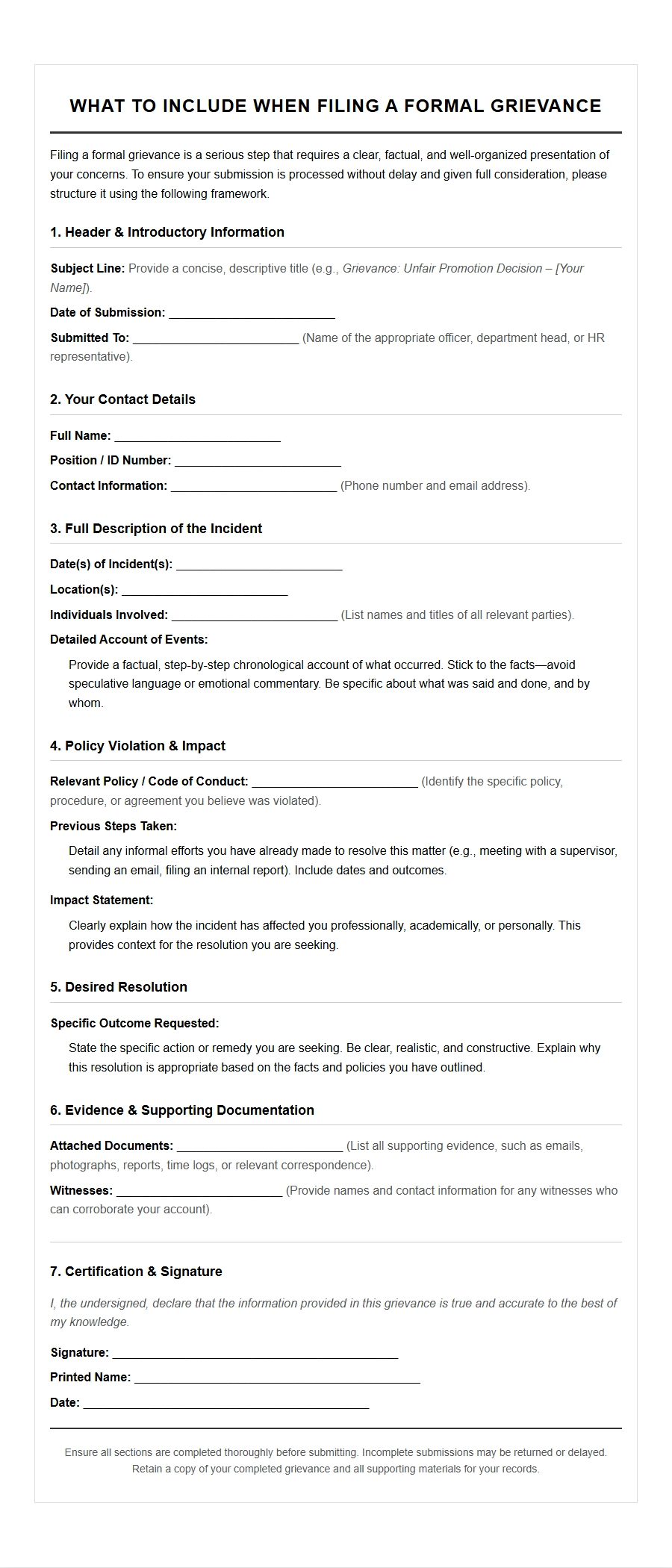 What to Include in a Formal Grievance Letter
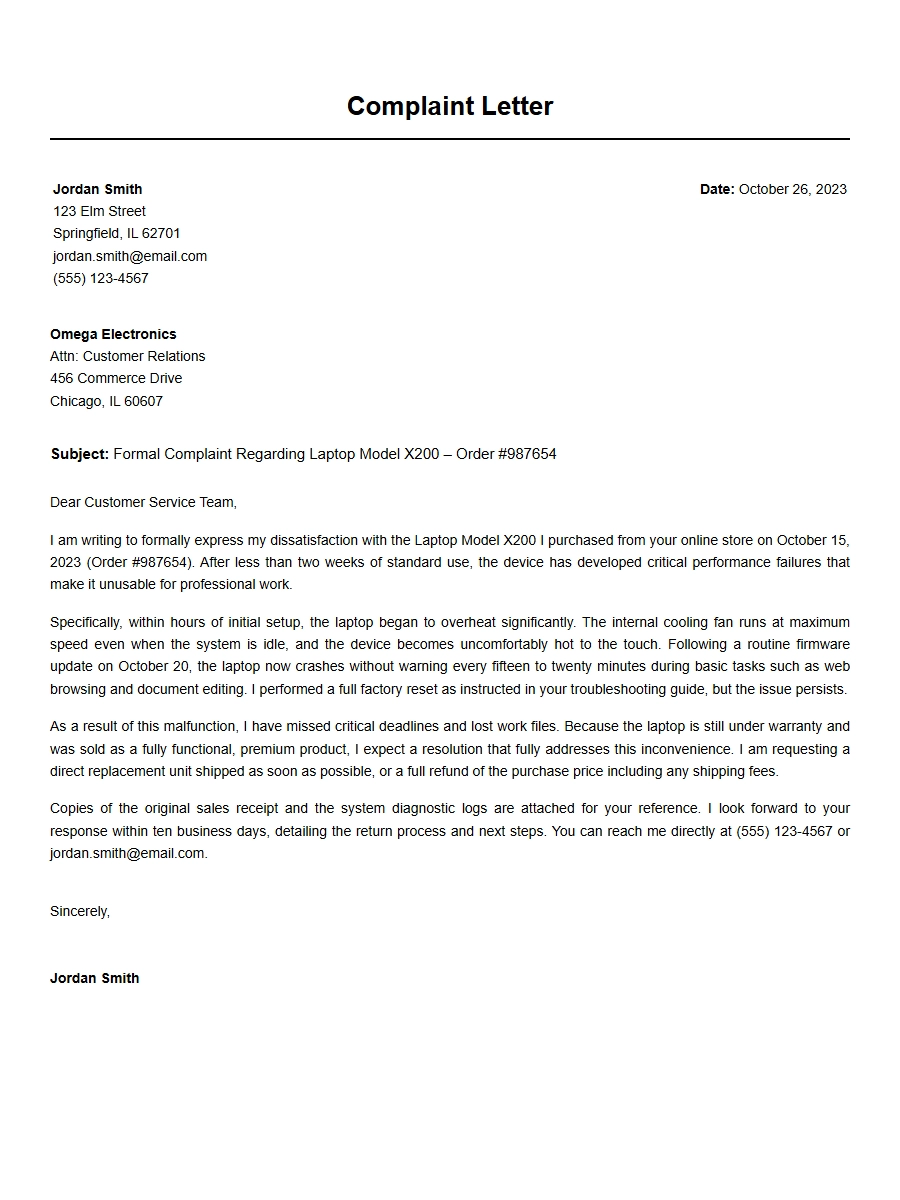 Structure of an Effective Complaint Letter
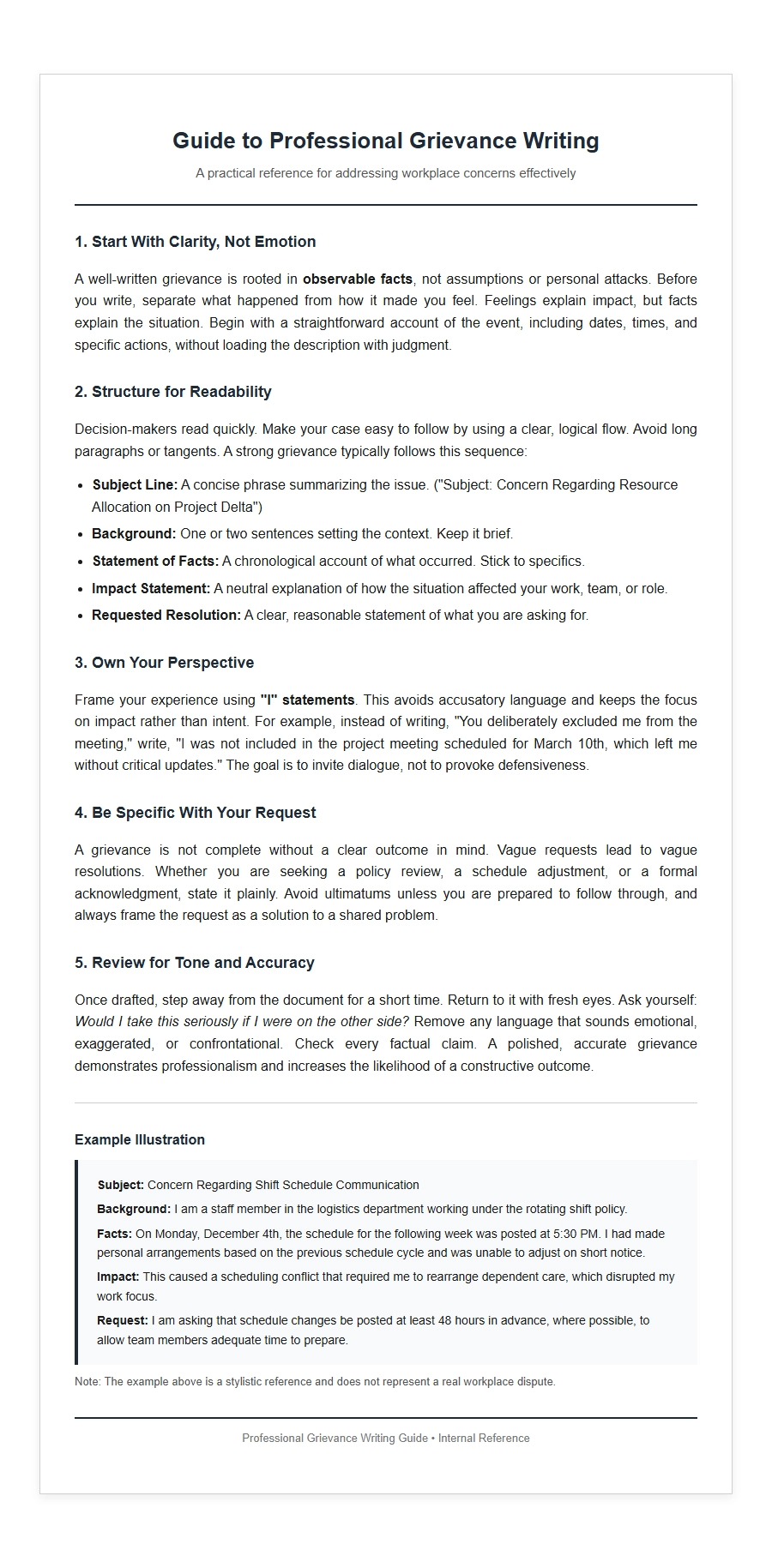 Best Practices for Writing Professional Grievance Letters