You’re holding a broken toaster that’s three weeks old, and the store manager just shrugged. Or maybe your landlord ignored your written request to fix the mold in the bathroom for the third time. That tight feeling in your chest? That’s the frustration that should go into a formal notification of consumer protection law violation. Getting the tone right matters. Too angry and you sound unreasonable. Too polite and they’ll ignore you again. A good letter sample helps you hit that exact balance without starting from zero.
Using a sample for this kind of professional correspondence isn’t cutting corners. It’s smart. You get the structure, the formal writing tips, and the key legal phrases that signal you mean business. The best part? You still make it your own. Swap in your specific dates, product details, and frustration level. The sample handles the business letter format and the proper salutation and closing so you can focus on the facts that matter.
What goes into a strong violation notice?
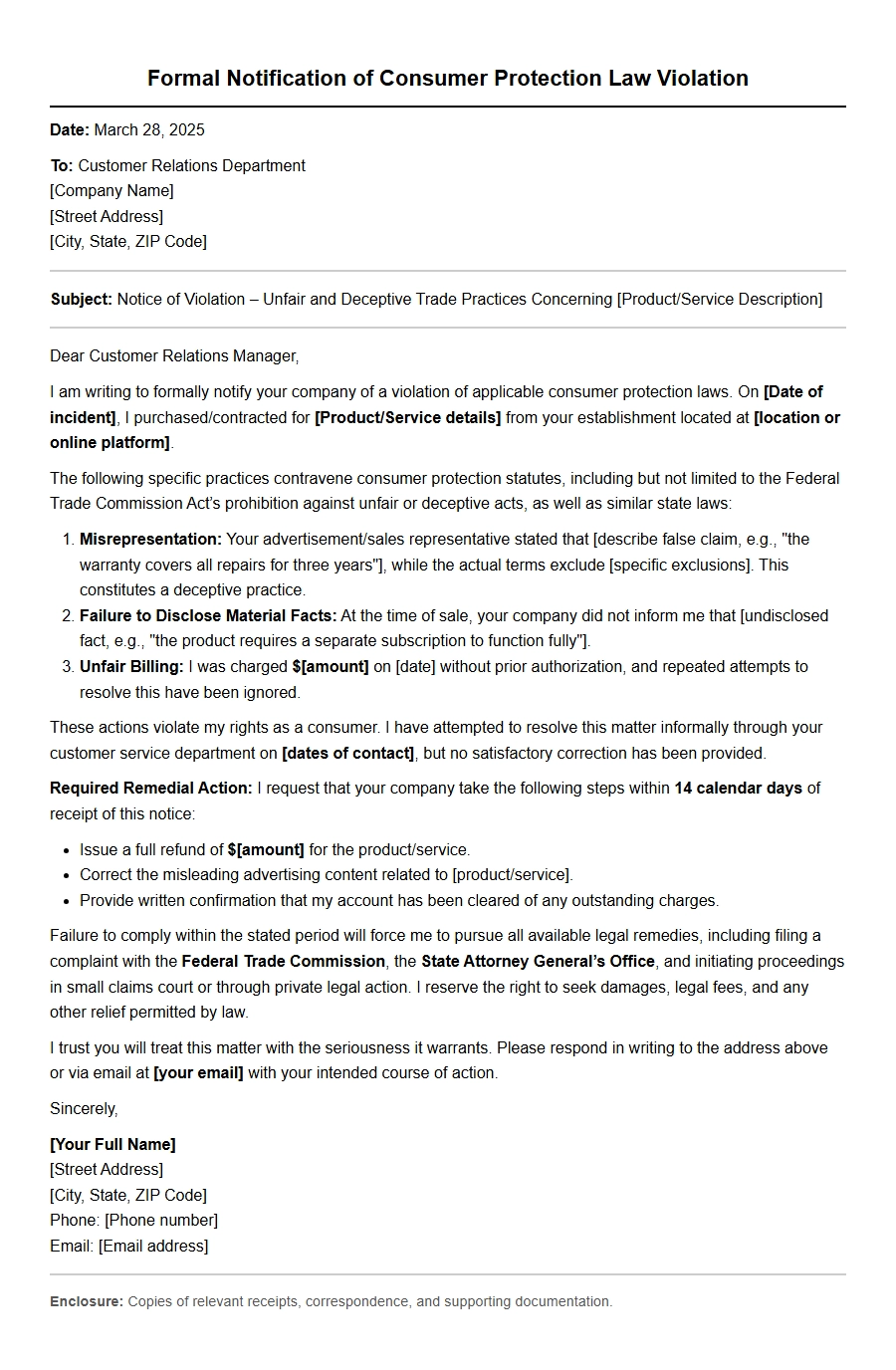
A formal notification of consumer protection law violation does three things. First, it states the problem clearly: what you bought, when, and what went wrong. Second, it mentions the specific law or regulation you believe was broken—this shows you’ve done your homework. Third, it tells them exactly what you want: a refund, a replacement, or a repair by a specific date.
I’ve seen people skip the second part. They just say “this isn’t fair” and hope for the best. That rarely works. You don’t need to quote the entire statute, but mentioning something like “under the implied warranty of merchantability” or “per the Fair Credit Reporting Act” changes the conversation. It shows you’re not bluffing.
Think about the recipient. A big corporation needs a different tone than a small local shop. With a corporation, keep it formal, reference specific policies or laws, and send it to their legal department if possible. For a small business, a slightly warmer tone in writing can work better—but still keep it firm. The sample should match that relationship.
How to adapt a sample without losing your voice
Start by reading the sample all the way through. Get a feel for the flow. Then rewrite the opening paragraph in your own words. That’s where you state the problemiest part. Use the exact dates, product names, and prices. Don’t soften it. “I purchased a Model X refrigerator on March 15, 2025, from your Main Street location. The ice maker stopped working on March 22.” That’s clear and specific.
One mistake I see a lot is people changing the tone too much. They use a sample that’s formal but then add slang or weird casual phrases. It ends up feeling inconsistent. Keep the overall letter structure the same, but adjust the specific facts. The sample’s letterhead design or digital letter format is fine to follow—just make sure your contact info is correct at the top.
Common traps to avoid
Ever received a letter that felt too stiff or too casual? That happens when people ignore the audience. Another trap is using an outdated salutation like “To Whom It May Concern” when you actually know the person’s name. If you have a name, use it. “Dear Mr. Chen” is stronger than a generic greeting.
Pay attention to format too. If you’re sending an email, the subject line matters. “Formal notification of consumer protection law violation regarding defective dishwasher” is better than “complaint.” Keep the letter writing etiquette consistent. If you start with “Dear Ms. Sato,” end with “Sincerely,” not “Best.” Small things like that signal professionalism.
Don’t forget to proofreading letter carefully. A typo in the date or model number gives them an easy out. Read it aloud. Have a friend glance at it. A clean letter gets taken more seriously than one with obvious mistakes.
When to escalate beyond a letter
Sometimes a formal notification doesn’t get a response, or you get a dismissive reply. That’s when you need to decide your next step. A sample letter for example of discrimination claim letter to hr complaint letters might be your next move if the issue shifts from a product defect to how you were treated. For workplace complaints, the process can feel intimidating, but a solid template keeps you grounded.
For more serious violations, consider sending a copy to your state attorney general’s consumer protection office or the Better Business Bureau. Mentioning that you’ll do this in your letter sometimes gets faster results. Just be honest—only say you’ll file a complaint if you actually will.
Writing a formal notification of consumer protection law violation gets easier each time you do it. The first one feels awkward. The third one feels routine. A sample gives you the starting point, but your specific details and honest frustration make it real. Use the letter as a springboard, not a crutch. Pull out the facts, adjust the tone to fit the situation, and send it off. With a little practice, you’ll write these letters in fifteen minutes flat. And that’s a skill worth having.
Helpful Examples
Formal Notification of Consumer Law Violation
Defective Refrigerator - Breach of Implied Warranty
Date: November 14, 2024
To: Customer Service Department, Apex Home Appliances, 123 Industrial Blvd, Metropolis, ST 45678
From: John A. Doe, 789 Oak Street, Apt 4, Metropolis, ST 45678
Subject: Formal Notification of Violation – Implied Warranty of Merchantability
This letter serves as a formal notification of a violation of consumer protection law under the Magnuson-Moss Warranty Act and your state’s Uniform Commercial Code §2-314. On October 10, 2024, I purchased model #FR-2000 refrigerator (serial: APX-78812) from your store. The unit failed entirely on November 2, 2024, with a compressor malfunction and coolant leak. Despite being within the 90-day return policy and clearly a factory defect, your customer service representative refused to provide a replacement or full refund, citing “excessive use” – a term never mentioned in your warranty documentation.
Your denial constitutes a breach of the implied warranty of fitness for ordinary purposes. I demand the following remedies within 14 days:
Full refund of purchase price ($1,299.99) including tax
Reimbursement for spoiled food estimated at $180.00 (receipts attached)
Written confirmation that no restocking or return fees will be charged
If unresolved, I will file a complaint with the Federal Trade Commission and your state’s attorney general. I await your written response by November 28, 2024.
Misleading Price Ad - False Advertising Violation
Date: November 15, 2024
To: Legal Compliance Office, UltraBazaar Inc., 1 Market Square, Cityville, ST 12345
From: Maria G. Lopez, 22 Elm Road, Cityville, ST 12345
Subject: Formal Notification of Deceptive Pricing Practices
This is a formal notice that your Sunday circular advertisement (dated November 10–16) violates the Federal Trade Commission Act’s prohibition on deceptive acts (15 U.S.C. §45) and your state’s Consumer Protection Law. The ad prominently displayed a “65-inch 4K TV – $299” with a large red banner reading “Black Friday Price Lock.” I visited your Cityville store on November 11; the shelf tag showed $499. A staff member stated the $299 price was “for the first three units only, sold out in minutes.” This information was not disclosed anywhere in the advertisement.
Such bait-and-switch tactics are unlawful. I demand:
Immediate correction of all print and online ads to include material restrictions
Honor the $299 price for any customer who requests it based on the misleading ad
Provide me with the same price as compensation for my wasted trip
I have attached a copy of the ad and a photo of the shelf tag. If I do not receive a satisfactory resolution by November 30, I will report this to the FTC and the local Better Business Bureau.
Harassing Debt Collector - FDCPA Violation
Date: November 15, 2024
To: Complaints Department, Rapid Recovery Services, 500 Caller Way, Anytown, ST 98765
From: Samuel T. Green, 100 Pine Street #5B, Anytown, ST 98765
Subject: Formal Notification of Fair Debt Collection Practices Act Violations
I am filing this formal complaint regarding your collection calls concerning a debt originally owed to City Wireless (account # 44-9981). Your behavior violates multiple provisions of the FDCPA (15 U.S.C. §1692 et seq.):
Date
Violation
Evidence
Nov 8, 2024
Called before 8 a.m. (6:45 AM) – §1692c(a)(1)
Call log attached
Nov 10, 2024
Threatened wage garnishment without court order – §1692e(4)
Audio recording available
Nov 12, 2024
Called my workplace despite being told not to – §1692c(a)(3)
Witness statement
Additionally, your agent used profanity and referred to me as a “deadbeat.” Cease all communication except written validation of the debt. I demand a written apology and assurance of compliance within 10 days. Otherwise, I will sue for statutory damages and attorney fees under §1692k.
Warranty Denial - Magnuson-Moss Act Violation
Date: November 14, 2024
To: Warranty Services, AutoFix Garages LLC, 200 Mechanic Ave, Suburbia, ST 54321
From: Karen H. Williams, 55 Lake Drive, Suburbia, ST 54321
Subject: Formal Notice of Warranty Denial Violation
On August 1, 2024 I purchased a used 2020 Sedan (VIN: 1HGBH41JXMN109186) from your dealership which came with a 12-month/12,000-mile limited warranty. On October 20, the transmission failed. You declined coverage, claiming the previous owner had performed aftermarket modifications (a cold air intake). This is a violation of the Magnuson-Moss Warranty Act (15 U.S.C. §2302) because:
The warranty does not expressly exclude modifications; the exclusion is implied and not conspicuously disclosed.
The cold air intake did not cause the transmission failure – your own mechanic confirmed separate issues.
You failed to provide a written denial stating the reasons and the applicable warranty section.
I demand: (1) immediate repair at no cost using an authorized facility of my choice, (2) reimbursement of my towing fee ($125), and (3) a corrected warranty document. If I do not receive a response by November 30, I will contact the FTC and state consumer protection office.
Unauthorized Credit Card Charges - FCBA Notice
Date: November 14, 2024
To: Billing Disputes, DigitalStream Subscriptions Inc., PO Box 999, Silicon Valley, ST 90210
From: Mark U. Taylor, 4 Tech Lane, Apt 7B, CodeCity, ST 00001
I write to dispute a charge of $49.99 appearing on my November credit card statement from your company (transaction reference # SUB-11224). I never authorized a subscription to your premium streaming service. I cancelled my free trial on September 15, 2024, and received a confirmation email. Despite that, you initiated a recurring charge. This violates the Fair Credit Billing Act (15 U.S.C. §1666) and the FTC’s Negative Option Rule.
Details of the disputed charge:
Field
Value
Amount
$49.99
Date
November 1, 2024
Account ending
• • • • 4455 (Discover)
Last confirmation
Ref #CNCL-66783
I demand full reversal of the charge and a written statement that no further charges will occur. If you do not respond within 30 days, I will invoke my FCBA rights to have the amount removed and pursue statutory damages.
Expired Baby Formula Sale - Safety Violation
Date: November 15, 2024
To: Corporate Compliance, QuickMart Supermarkets, 800 Grocery Blvd, Townsville, ST 11111
From: Jessica M. Clark, 15 Apple Street, Townsville, ST 11111
Subject: Formal Notification – Sale of Expired Infant Formula (Unfair & Deceptive Practice)
On November 10, 2024, I purchased two cans of Brand A Baby Formula (Lot # 2478B, expiry: Aug 2024) from your Main Street location. The product was three months past its expiration date. This constitutes an unfair and deceptive act affecting commerce under FTC Act §5, and violates the Federal Food, Drug, and Cosmetic Act’s adulteration provisions (21 U.S.C. §342) because expired infant formula loses nutritional integrity and may pose health risks.
Your scanner did not block the sale; the cashier did not check the date. Since feeding this to my infant, she experienced vomiting and diarrhea requiring a pediatric visit. I demand:
Full refund of $52.38 plus $25 for the medical copay (receipt attached)
Public recall information posted at your store and online
Your written policy for date-checking perishable baby products
I expect a response by November 29. I am copying the FDA and your state’s health department.
Auto Repair Overcharge - No Written Estimate
Date: November 14, 2024
To: Manager, Speedy Brake & Tire, 17 Route 9, Middleburg, ST 33333
From: Robert L. Hart, 60 Hill Road, Middleburg, ST 33333
Subject: Formal Notice of Violation – Failure to Provide Written Estimate
On November 5, 2024 I left my 2019 SUV at your shop for a brake inspection. You verbally quoted “around $300” for front pads and rotors. When I picked up the vehicle, the bill was $847.50 for “complete brake overhaul including calipers, flush, and labor.” You never obtained my authorization for the additional work, nor did you provide a written estimate as required by your state’s Automotive Repair Act. This act mandates that a shop must give a detailed written estimate and obtain the customer’s signature before performing any repair exceeding $100.
By failing to do so, you engaged in an unfair practice. I demand:
Refund of the unauthorized $547.50 excess over the verbal quote
Itemized invoice showing parts and labor with original quotation
Compliance training documentation sent to me
I will file a complaint with the Bureau of Automotive Repair if this is not resolved by November 30.
Auto-Renewal Without Consent - ROSCA Violation
Date: November 15, 2024
To: Billing Support, SaasTool Pro Inc., 999 Cloud Drive, Netcity, ST 22000
From: Patricia N. O'Brien, 88 Tech Road, Apt 12, Netcity, ST 22000
Subject: Formal Notification – Unauthorized Auto-Renewal [Violation of ROSCA]
I am writing to notify you of a violation of the Restore Online Shoppers' Confidence Act (ROSCA), 15 U.S.C. §8401 et seq. On January 15, 2024 I signed up for a “1-month free trial” of your Project Manager Pro plan. The sign-up page did not clearly disclose that the subscription would automatically renew at $120/year after the trial. I was not required to affirmatively consent to the auto-renewal—the default was checked. On February 16, 2024 you charged my credit card $120 without further authorization.
ROSCA mandates that sellers must clearly disclose auto-renewal terms and obtain explicit consent before charging. Your practice violates this. I demand:
Full refund of $120, plus any interest
Cancellation of the subscription effective immediately
Written confirmation that no future charges will occur
If not remedied by December 1, I will report this to the FTC and my state attorney general.
Data Breach Notification Failure - State Privacy Law
Date: November 15, 2024
To: Privacy Office, HealthSecure Inc., 500 MedTech Lane, Wellness, ST 44444
From: Angela D. Ramirez, 23 Wellness Ave, Wellness, ST 44444
Subject: Formal Notification – Failure to Report Data Breach (Violation of State Security Breach Notification Act)
I am a patient of your clinic and my personal data was exposed in the cyber incident you confirmed to news outlets on October 20, 2024. However, you did not notify me individually, as required by our state’s Data Breach Notification Law (Title X, Chapter 521). This law mandates that any breach involving Social Security numbers or medical information must be disclosed to affected residents within 30 days. It has now been 26 days and I have received no direct communication.
Your delay and silence constitute a violation of consumer protection regulations. I demand:
Immediate written notification containing the specific data exposed and a timeline
Free credit monitoring services for at least 12 months
A copy of your breach response policy
If I do not receive a written response within 7 days, I will file a complaint with the state attorney general and the FTC. I expect compliance with the law.
To: Property Management, MetroRentals LLC, 200 Landlord Blvd, Big City, ST 77889
From: David E. Kim, Tenant at 15B Riverside Tower, Big City, ST 77889
Subject: Formal Notification of Unlawful Retaliation – Violation of Tenant Protection Laws
I am formally notifying you that your actions constitute retaliation prohibited by the State Landlord-Tenant Act §123. On October 1, I submitted a written complaint about a persistent mold problem in unit 15B. I attached photos and a health inspector’s report. Instead of remedying the issue, you served me a 30-day notice to vacate on October 15, citing “renovation of the unit.” The timing—14 days after my complaint—strongly suggests retaliation. State law clearly prohibits any adverse action within 90 days of a good-faith complaint about health or safety violations.
Your eviction notice is void. I demand:
Immediate rescission of the termination notice in writing
Completion of mold remediation within 10 business days per local code
Compensation of one month’s rent ($1,200) for the emotional distress and moving costs incurred
If you fail to respond by November 28, I will file a complaint with the state housing authority and seek a court injunction.
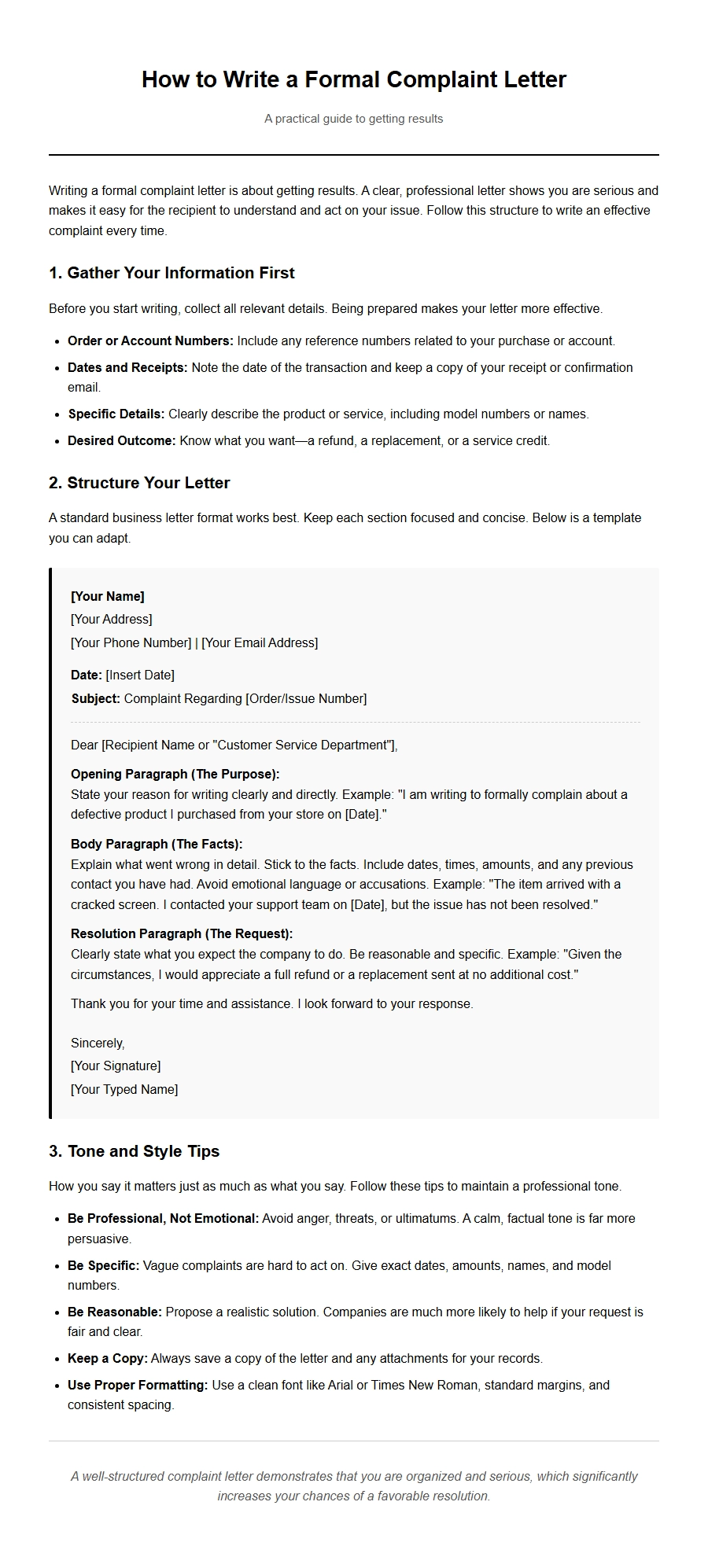 How to Write a Formal Complaint Letter
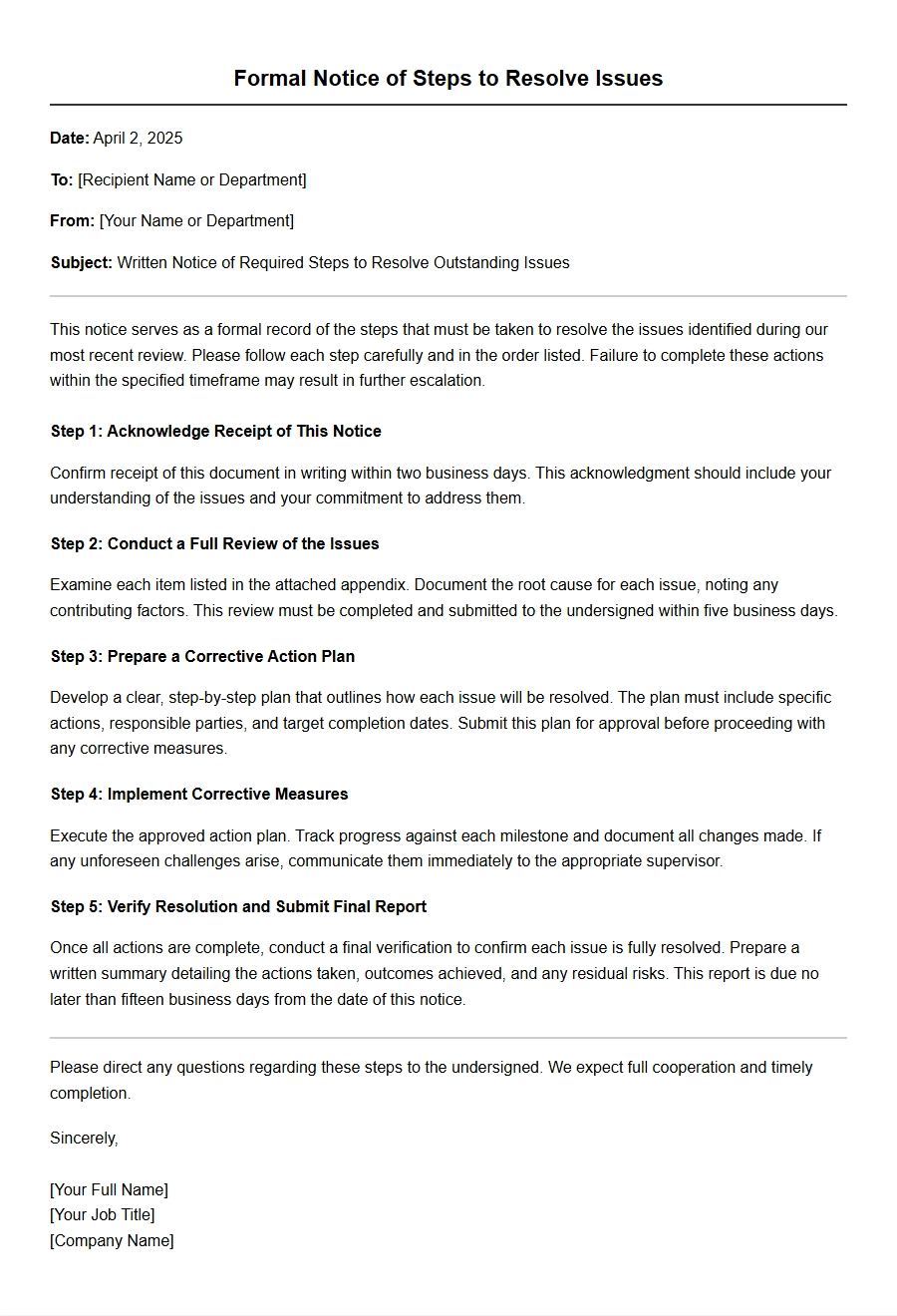 Steps to Resolve Issues via Written Notice
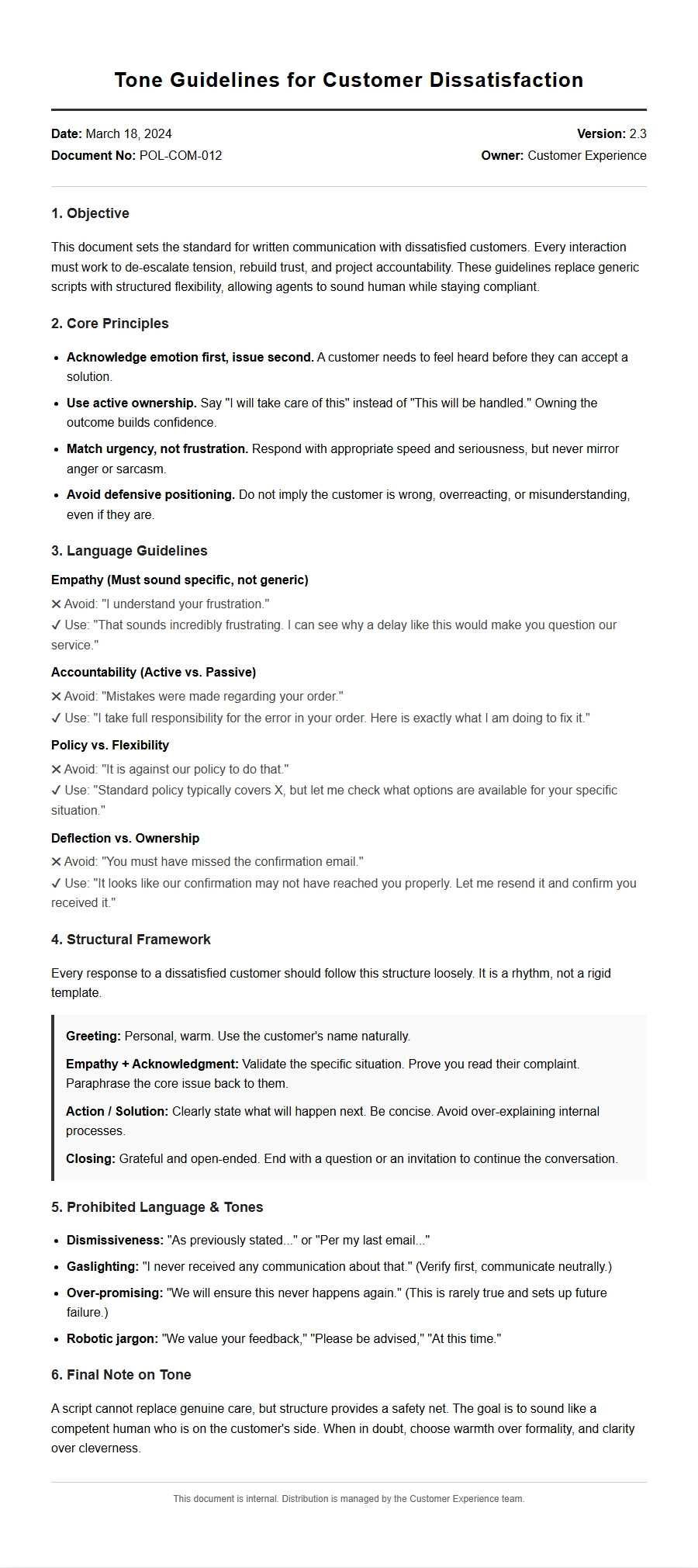 Tone Guidelines for Dissatisfied Customer Letters
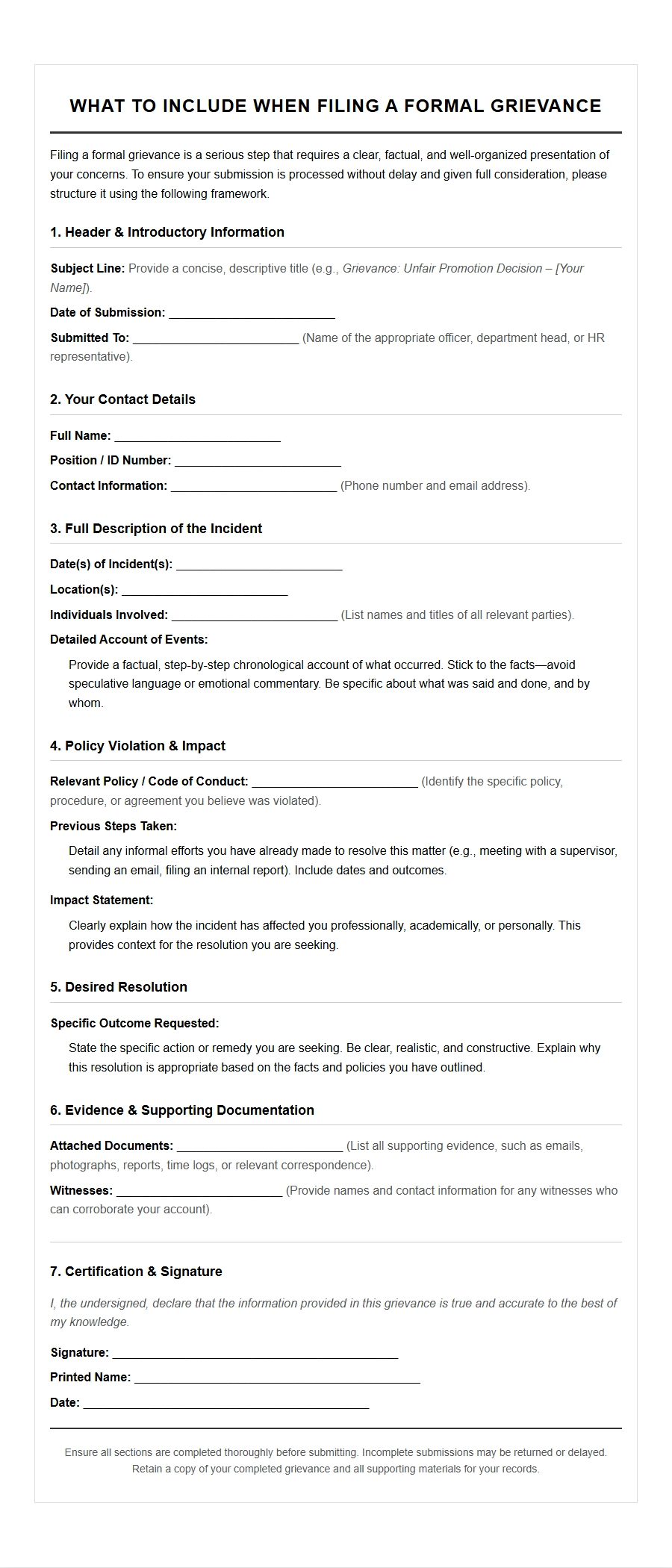 What to Include in a Formal Grievance Letter
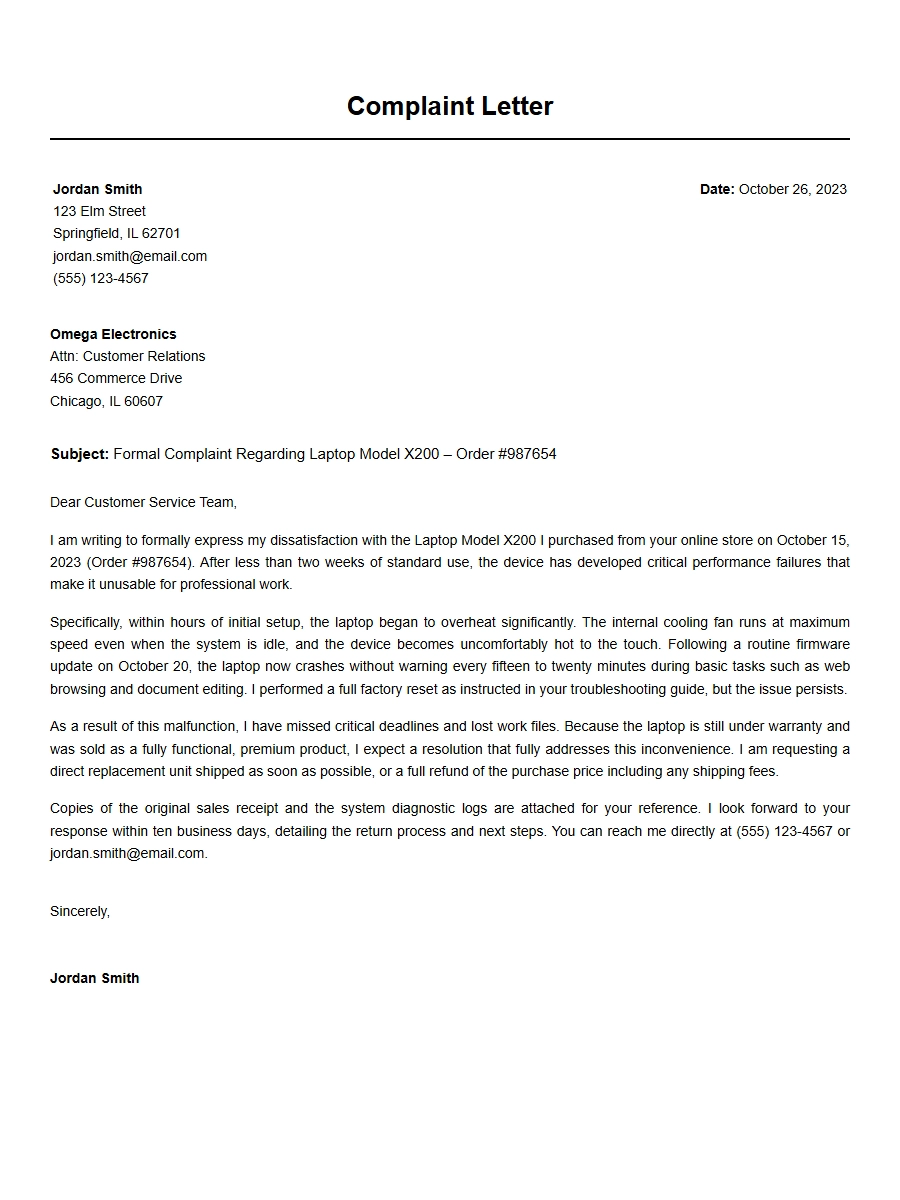 Structure of an Effective Complaint Letter
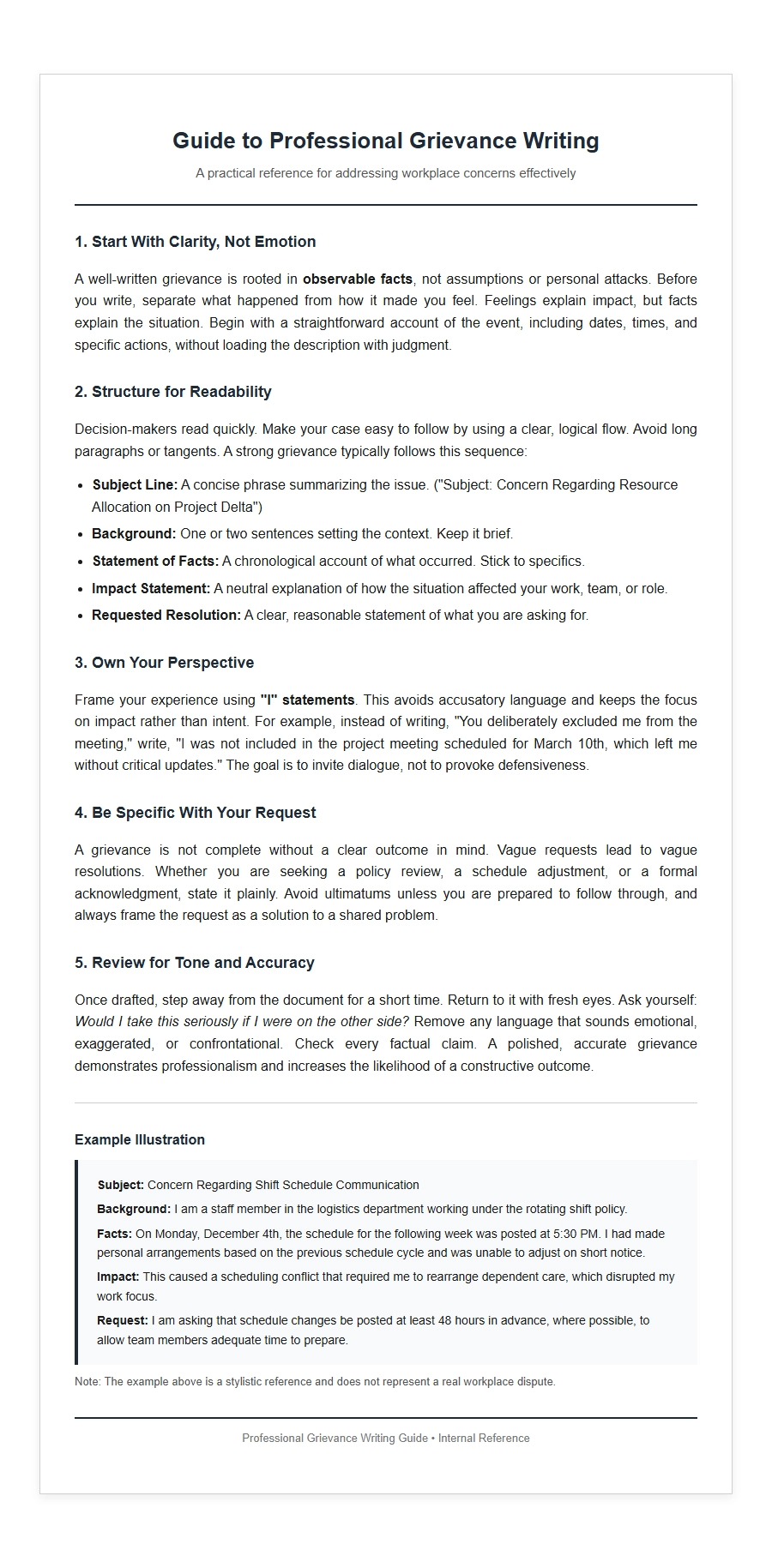 Best Practices for Writing Professional Grievance Letters