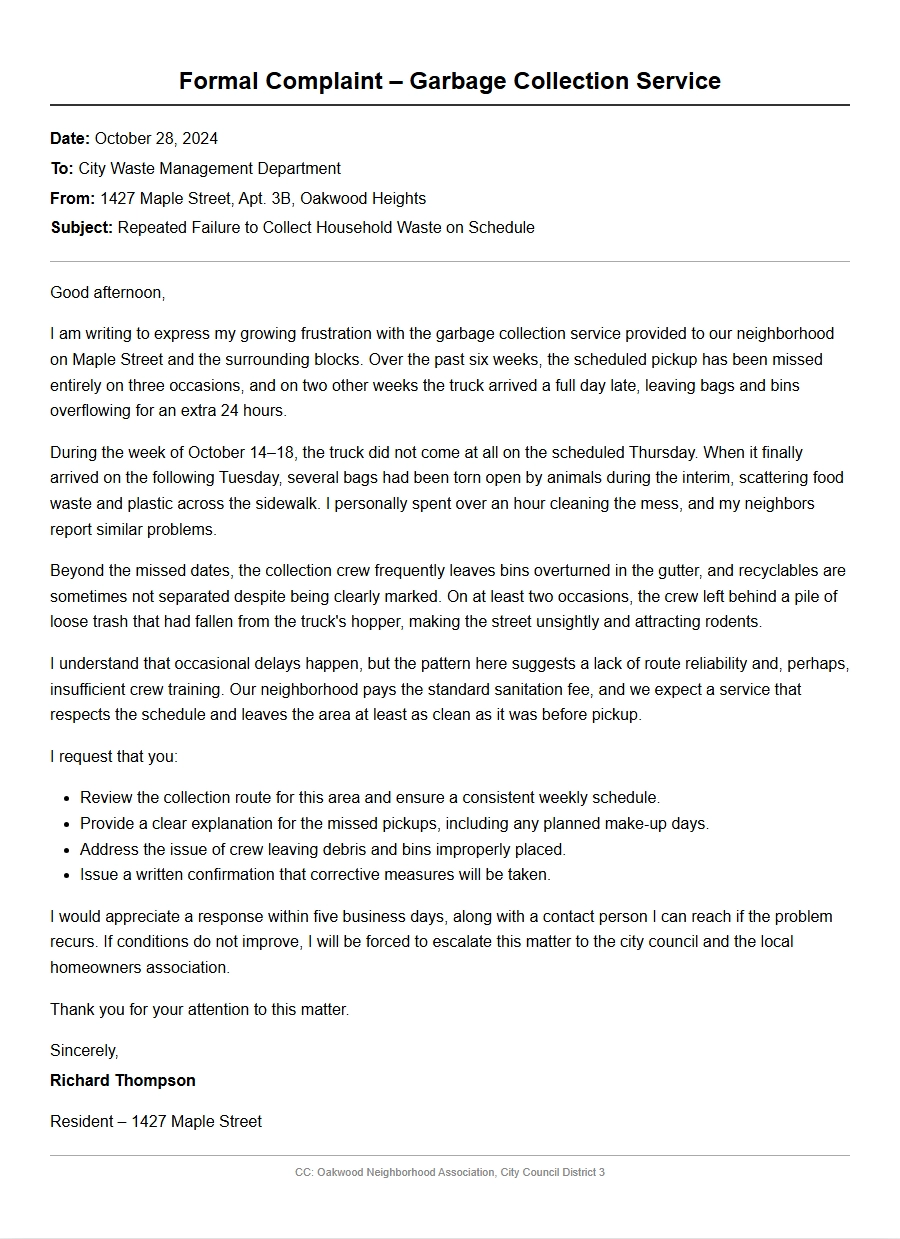
You’re standing at your kitchen window, watching a garbage truck speed past your bin while your neighbor’s pile is already gone. Or maybe you’ve had misshapen bags sitting on the curb for three days, attracting pests and smells. That frustration is real, and writing a formal complaint to the city or your waste management service feels like piling another chore on top of the problem. But a well-crafted garbage collection complaint letter can fix the issue fast—especially when you use a sample to get started.
Using a sample isn’t taking shortcuts. It’s smart strategy. A good letter template gives you the business letter format you need, the right salutation and closing, and a logical flow. You just drop in your specific details—date, missed pickup address, and what you want done. Think of it as customizable letter scaffolding. You’ll save time and avoid common formal writing tips pitfalls like being too vague or too aggressive.
Let’s walk through how to write a complaint that gets results, from the first sentence to the final proofread.
When should you write a complaint letter about garbage pickup?
Not every missed bin needs a formal letter. If it’s a one-time hiccup, a quick phone call or online form works. But you should write a professional correspondence when:
Pickup is consistently late or missed (more than two times in a month).
Your trash is left behind while others are serviced.
You’ve already called or emailed and nothing changed.
The issue involves property damage, health hazards, or safety risks (like broken bins blocking a sidewalk).
In these cases, a written complaint creates a paper trail. It shows you’re serious and gives the company or municipality something they can escalate and track.
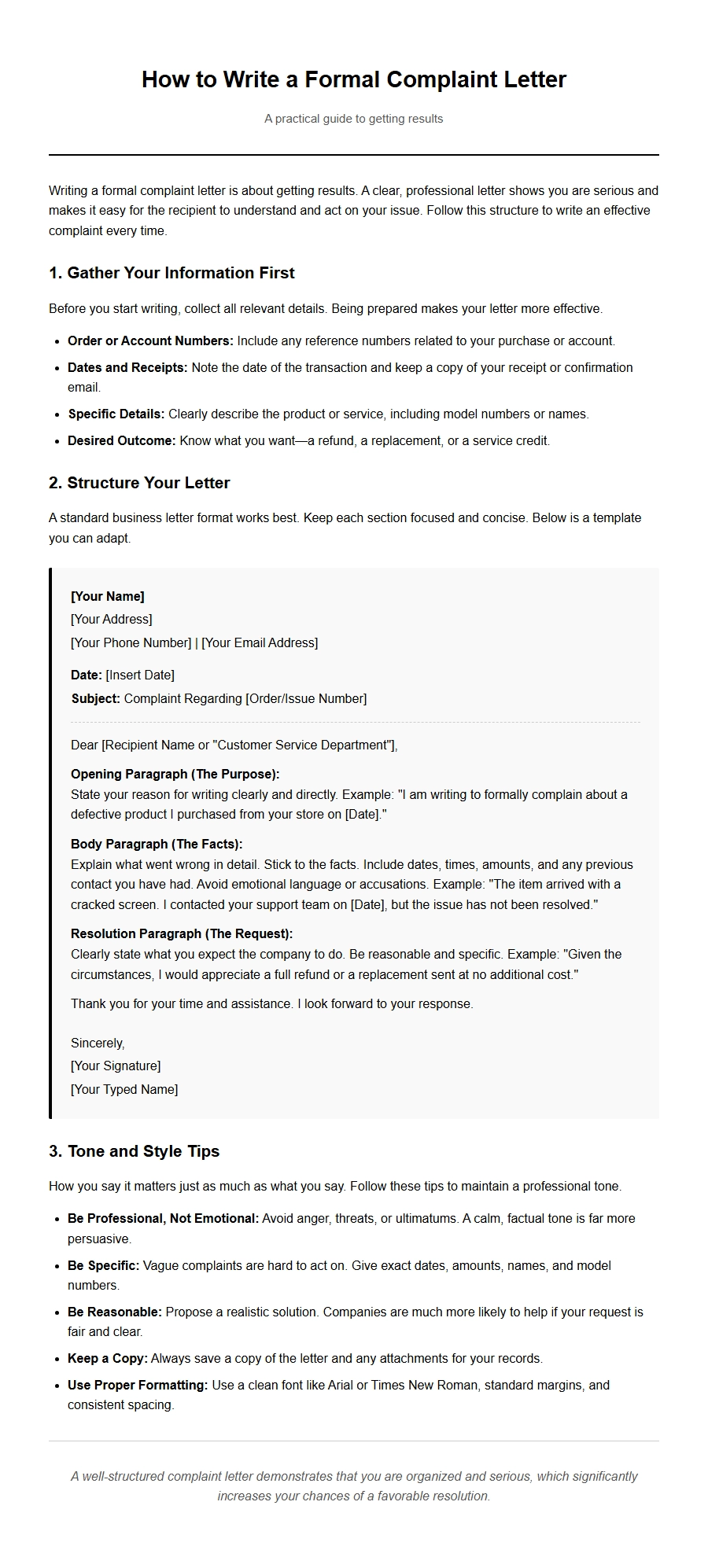
What should a good complaint letter include?
Think of the letter structure like a conversation: Your opening states the problem clearly. The body explains why it matters (your effort, the smell, the lost work day waiting for a late truck). The closing asks for a specific fix—rescheduled pickup, a new bin, or a refund of your service fee.
Here’s a quick breakdown of essential parts:
Date and your contact info – so they know who you are and when this happened.
Salutation – “Dear Customer Service Team” or “Dear [Department Name]” works fine. Avoid “To Whom It May Concern” unless you have no other name.
Opening line – State the date of missed pickup and your address. Keep it factual: “On April 10, 2025, trash at 123 Oak Street was not collected despite being at the curb by 6 AM.”
Body paragraphs – Describe the impact (e.g., “I had to reschedule my work day to bring the bin back in, and the odor is becoming a problem for neighbors”). Mention if you’ve reported this before. Attach photos if you have them.
Requested action – Be direct: “Please schedule a special pickup within 48 hours and confirm in writing that this won’t recur.”
Closing – “Sincerely,” or “Best regards,” followed by your name and phone number.
You can find cover letter examples or resignation letter sample structures online—they all follow this same skeleton. The key is adapting the tone to your audience. If you’re writing to a small private hauler, you can be a little more casual. For a city sanitation department, stick to letter writing etiquette and keep it polite but firm.
Common mistakes people make (and how to avoid them)
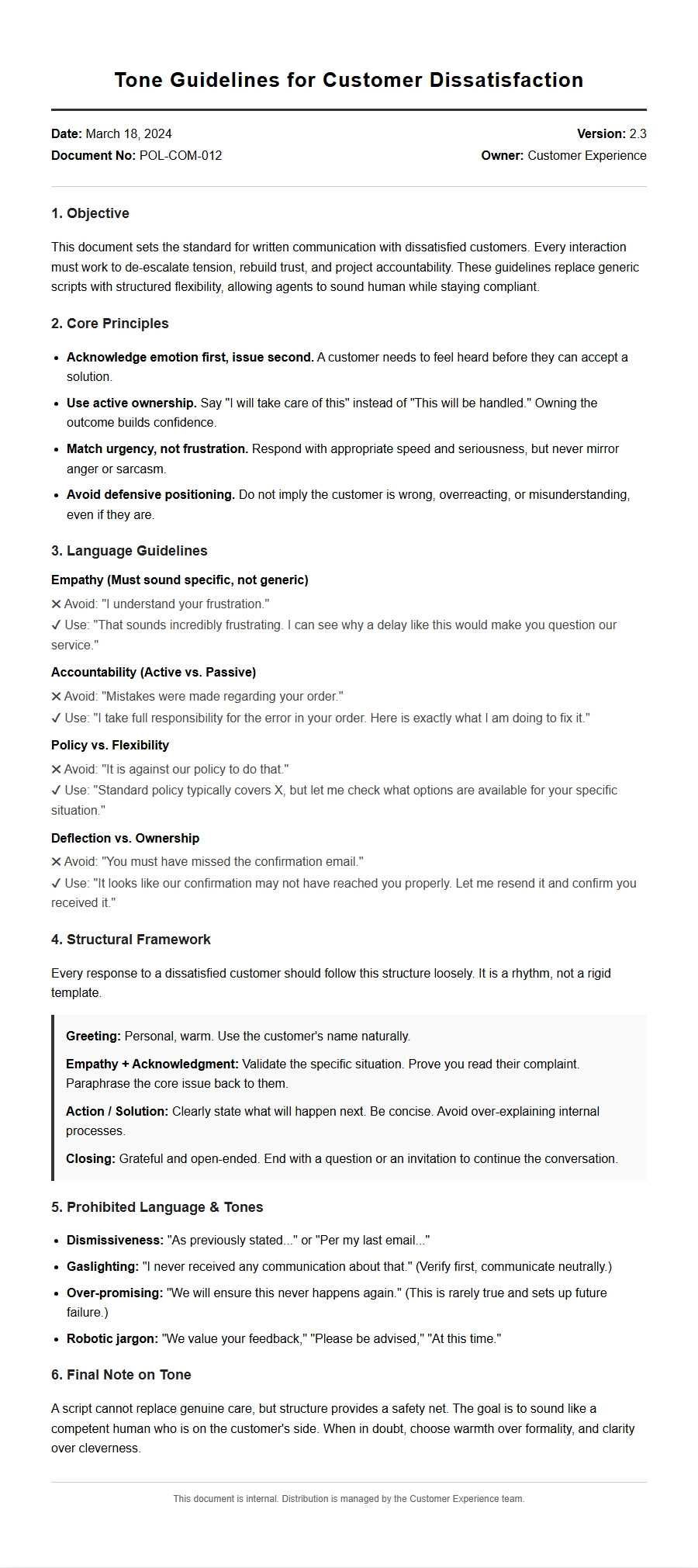
Ever received a letter that felt too stiff or too casual? That’s the tone in writing trap. With garbage complaints, a common mistake is to start with anger: “I’m furious that my trash wasn’t picked up!” That makes the reader defensive. Instead, lead with facts. Anger can come through later if you have to follow up two more times.
Another mistake: ignoring the format. If you’re sending a printed letter, use a professional letterhead design (or at least your name and address at the top). For email, a digital letter format works—put your address in the subject line: “Missed trash pickup – 123 Oak St – April 10.” Keep the body short, but include all the same information you’d put in a printed letter.
Don’t forget proofreading letter is crucial. A typo in an address or date makes you look sloppy and can delay action. Read it out loud or ask someone to glance at it.
How to personalize a sample without losing your voice
You’ll find dozens of garbage collection complaint letter samples online. The good ones leave space for your details. But here’s the trick: don’t copy word-for-word. Swap out generic phrases like “I am writing to express my dissatisfaction” for something that sounds like you: “I’m writing because my trash hasn’t been picked up since last Tuesday, and I need a fix soon.” That keeps your authentic voice while still following the letter template structure.
If you’ve had a similar issue with a different service (say, a pharmacy mixing up a prescription), you might notice the same pattern applies: state the error, ask for correction, set a timeline. For example, if you’re also dealing with a notifying pharmacy of prescription dispensing error complaint letters, the same clarity and calm tone will serve you well.
Likewise, if your garbage issue is part of larger tenant trouble—like a landlord ignoring rat problems from uncollected bins—you can adapt the structure from a tenant rights violation letter example complaint letters. Just change the specific violation details.
Sometimes a complaint about garbage pickup overlaps with other concerns, like a broken bin that’s a safety hazard. In that case, you’re essentially disputing unexpected bank fee letter complaint letters logic—prove the fee or inaction wrong by showing evidence. For example, “I have photos of the bin on curb by 6 AM, and your schedule shows pickup on Tuesdays.”
And if your neighborhood’s garbage collection problem is part of a larger service failure (like a school changing bus routes without notice), you can borrow language from complaint regarding curriculum changes affecting students complaint letters—describe how the change affects your daily life and why it’s unacceptable.
Category: Community & Local Services
Making your letter stand out
One quick tip: tailor your opening paragraph to grab attention. Instead of “I am a resident at…” start with the specific service failure, then state your address. For example: “On three consecutive Tuesdays, garbage has not been collected at my address (123 Oak St). This is the fourth missed pickup this year.” That tells the reader immediately this is a repeat issue.
If you’re emailing, use a clear subject line: “Repeated missed garbage pickup – 123 Oak St – need resolution by Friday.” That way it doesn’t get lost in the inbox.
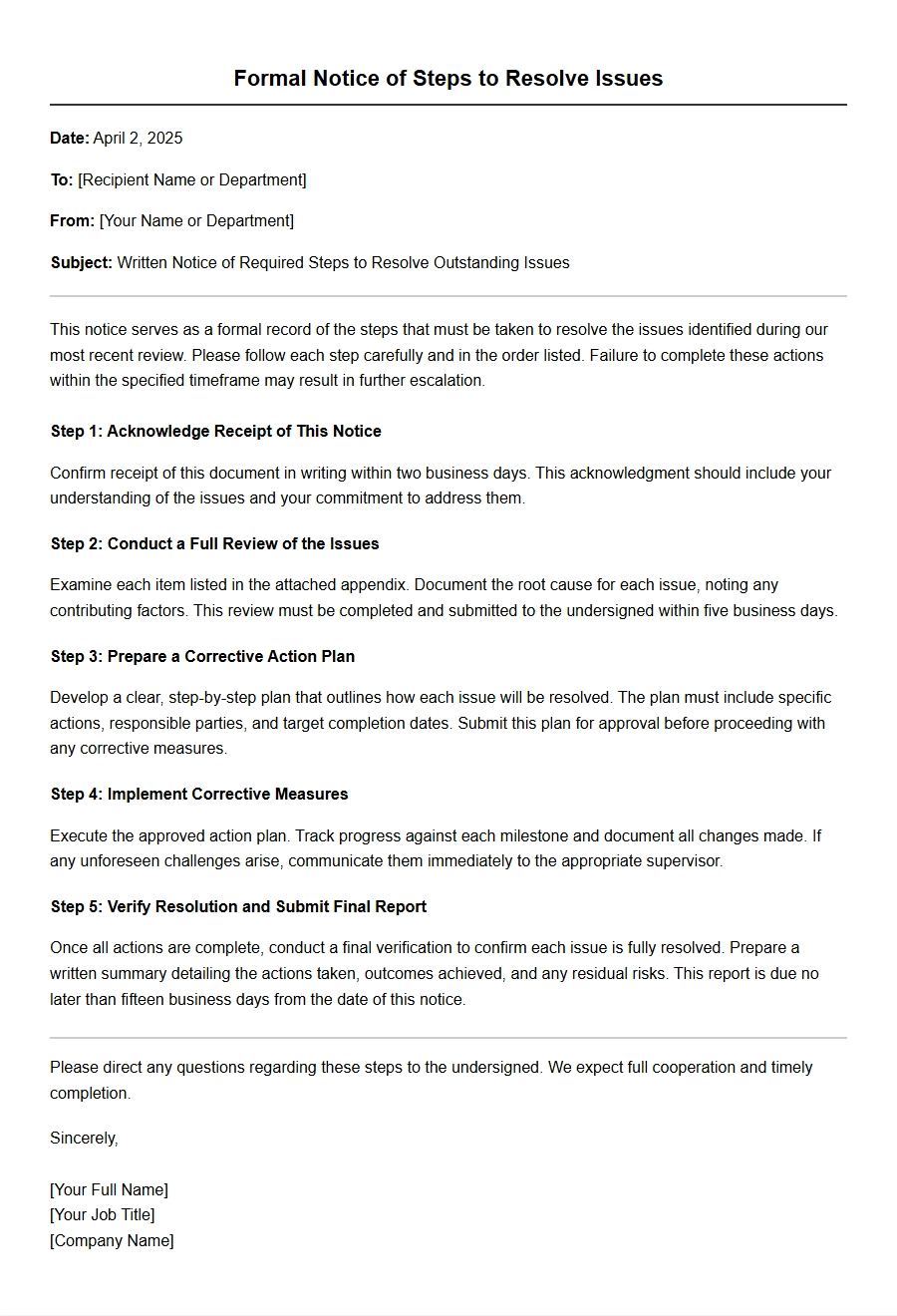
What to do after you send the letter
Don’t just fire and forget. Keep a copy (paper or screenshot) and note the date you sent it. If you don’t hear back in 3–5 business days, follow up by phone or with a second letter referencing the first one. Persistence often works because documented complaints get escalated faster than calls that vanish with the night shift.
Remember, the sample is your springboard, not your crutch. The best complaint letter feels professional but also personal—it shows you’re a real person with a real problem. After you do it once, the next time (even for something unrelated) you’ll have the confidence and a mental template. Practice makes the process faster and more natural.
Now go write that letter. Your clean street is waiting.
Samples to Guide You
Complaint Letter for Neighborhood Garbage Pickup
Missed Garbage Collection on Routine Day
Date: October 12, 2024
To: City Sanitation Department From: 452 Maple Street Resident
I am writing to report that our garbage was not collected on Wednesday, October 10, 2024, which is our scheduled pickup day. All bins were placed curbside by 7:00 AM as required, but the truck did not pass through our block. This is the second such incident this month.
We have attached a list of missed pickups for our street this quarter:
Date
Address
Type
Oct 10
452 Maple
Trash
Oct 10
454 Maple
Trash
Sep 12
452 Maple
Recycling
Please arrange a special collection as soon as possible. Our bins are now overflowing, and we are concerned about pests and odors. A confirmed pickup date by 5:00 PM today would be appreciated.
Thank you for your prompt attention to this matter.
Broken Garbage Bin Not Replaced
Date: November 22, 2024
To: Waste Management Services From: 67 Oak Avenue Resident
I am following up on a previous complaint (ticket #43921) regarding a broken 96‑gallon garbage bin at my residence. The lid is cracked and does not close, allowing rain and animals to enter. Despite two phone calls on November 5 and November 15, the bin has not been replaced.
Details of my residence and bin:
Address: 67 Oak Avenue, Unit B
Bin ID: WM‑8824‑J
Damage: Cracked lid, hinge broken
Complaint filed: November 5, 2024
Please schedule a replacement bin delivery within the next five business days. If this is not possible, I request a written explanation and a firm date. Continued service with a broken bin is unsanitary and violates local health codes.
I look forward to your timely response.
Noise and Early Morning Collection Disruption
Date: December 5, 2024
To: Sanitation Superintendent From: 213 Pine Street Resident
I am writing to express my dissatisfaction with the excessive noise from garbage trucks collecting on our street before 5:30 AM. On multiple occasions this month, trucks have arrived at 5:15 AM, banging bins and idling engines for extended periods. This is disruptive to sleep, especially for shift workers and young children.
Per city ordinance, residential collection should not begin before 6:00 AM. Please confirm the required start time and ensure drivers comply. If needed, I can provide a detailed log of early collections:
Date
Time
Notes
Dec 2
5:25 AM
Loud banging, 10 min idling
Dec 4
5:18 AM
Reversing beeper, engine noise
I request that drivers be instructed to begin on our route no earlier than 6:00 AM. A written confirmation of this change would be appreciated.
Thank you for your understanding.
Uncollected Bulk Waste Left for Weeks
Date: January 15, 2025
To: Bulk Waste Coordinator From: 97 Cedar Lane Resident
I placed a bulk waste item (old sofa) at the curb on January 2, 2025, in accordance with the city’s bulk waste collection schedule (first Tuesday of the month). However, the item was not picked up on January 7, and remains on the sidewalk. Neighbors have also reported similar issues.
Details of my request:
Address: 97 Cedar Lane
Item: Sofa (approx. 6 ft long)
Placement date: January 2
Scheduled pickup: January 7
Current status: Still present, attracting stray animals
Please arrange a special bulk collection within the next three days. If there is a fee or additional step I overlooked, please inform me. I am happy to comply with any requirements, but I need a resolution quickly. A confirmation by email would be ideal.
Thank you for your assistance.
Overflowing Bins After Holiday Delay
Date: December 27, 2024
To: Public Works Department From: 34 Elm Street Resident
Due to the Christmas holiday, our garbage collection was delayed by two days, but the bins were not emptied until December 26. Unfortunately, the accumulation from the holiday and the delay caused our bins to overflow. By the time collection occurred, trash was scattered on the street, and the alley behind our home smells strongly of rotting waste.
Our street has a high density of multi‑unit buildings, so the overflow is severe. I am requesting that the city dispatch a street sweeper and provide an additional temporary dumpster for our block for the next week.
Inventory of current issues:
Bin overflow: All 6 bins on our side of the street
Please let me know when the extra container will be delivered and if there will be any charge. I am concerned about health and safety.
Waiting for your prompt reply.
Missed Recycling Pickup for Three Weeks
Date: February 5, 2025
To: Recycling Services Division From: 118 Birch Court Resident
I am writing to report that our recycling bin has not been collected for three consecutive weeks (January 22, January 29, and February 5). Our neighbors on Birch Court report the same problem. We place our blue bins out every Wednesday morning, but the truck has either skipped our street entirely or only collected trash.
This is a recurring issue in our neighborhood. Below is a summary of missed pickups at our address:
Date
Type
Time Bin Placed
Jan 22
Recycling
6:45 AM
Jan 29
Recycling
7:00 AM
Feb 5
Recycling
6:50 AM
I am concerned that the accumulated recyclables will attract pests and may not be accepted if mixed with trash. Please arrange a special pickup before the next regular cycle. A confirmation by phone or email would be greatly appreciated.
Thank you for resolving this promptly.
Leaking Garbage Truck Damages Property
Date: January 30, 2025
To: Customer Service, City Waste Services From: 92 Walnut Avenue Resident
On January 28, 2025, a garbage truck servicing our street leaked a significant amount of dark, smelly liquid onto the pavement in front of my house. The fluid ran down the driveway and into my front yard, killing a patch of grass and leaving a residue that smells after three days. I have photos and witness statements from neighbors.
Details of the incident:
Date/time: Jan 28, 2025, approx. 8:15 AM
Truck license: City #4472 (estimated)
Area affected: 20 sq ft of sidewalk, 10 sq ft of lawn
Damage: Dead grass, oil stain, lingering odor
I request that the city dispatch a cleaning crew to power‑wash the pavement and remove the contaminated soil from my yard. Additionally, please inspect the truck to prevent future leaks. I expect a response within 48 hours regarding the cleanup schedule.
Thank you for your immediate attention.
Garbage Bins Not Returned to Curb After Collection
Date: March 10, 2025
To: Collection Supervisor, Sanitation Department From: 303 Spruce Street Resident
For the past two months, on multiple occasions, the garbage collectors have not returned our bins to the curb after emptying them. Instead, they leave them in the middle of the driveway, blocking the garage, or sometimes toss them onto the lawn. This has caused inconvenience and minor damage to a bin.
Below is a record of incidents at my address:
Date
Bin Location After Collection
Feb 12
Left blocking garage door
Feb 26
On lawn, lid open
Mar 5
In street, hit by car (damaged)
I understand that crews are under time pressure, but leaving bins haphazardly creates safety hazards and is disrespectful. Please remind drivers to place bins back at the curb, upright and with lids closed. If the issue persists, I may need to file a formal complaint with the city council.
I hope for a swift improvement.
Yard Waste Never Collected Despite Schedule
Date: April 8, 2025
To: Green Waste Services From: 55 Larchwood Lane Resident
I am frustrated that my yard waste (leaves, branches, grass clippings) has not been collected for the past three scheduled pickup dates: March 19, March 26, and April 2. I place the paper bags curbside by 6:30 AM, but they remain untouched while neighbors’ bags on adjacent streets are collected. After two weeks, the bags have started to decompose and smell.
Details of my submissions:
March 19: 4 bags, still present on March 20
March 26: 3 bags, not collected
April 2: 5 bags, left behind
I request a special pickup of all accumulated yard waste within 3 days. Additionally, please check if there is an error in the route assignment for Larchwood Lane. I would like a confirmation call when the pickup is scheduled.
Thank you for addressing this long‑standing issue.
Request for Additional Bins for Oversized Household
Date: May 20, 2025
To: Waste Capacity Department From: 2211 Sycamore Drive Resident
I am writing to formally complain about insufficient garbage bin capacity for my household. Our family of six generates more trash than the standard 64‑gallon bin can hold, even when we reduce waste. Over the past month, we have had to leave overflow bags next to the bin, and these bags have been left behind by collectors, leading to litter and complaints from neighbors.
Current situation:
Item
Current Status
Bin size
64 gallons
Average weekly overflow
2–3 bags
Missed overflow pickup
3 of last 4 weeks
I request an upgrade to a 96‑gallon bin and authorization to place one additional bag of overflow without penalty. If an upgrade is not possible, please provide two smaller bins at no extra cost. I have already reduced waste via recycling, but our household needs are not met.
Please send a written decision within two weeks. Thank you for understanding our situation.
 How to Write a Formal Complaint Letter
 Steps to Resolve Issues via Written Notice
 Tone Guidelines for Dissatisfied Customer Letters
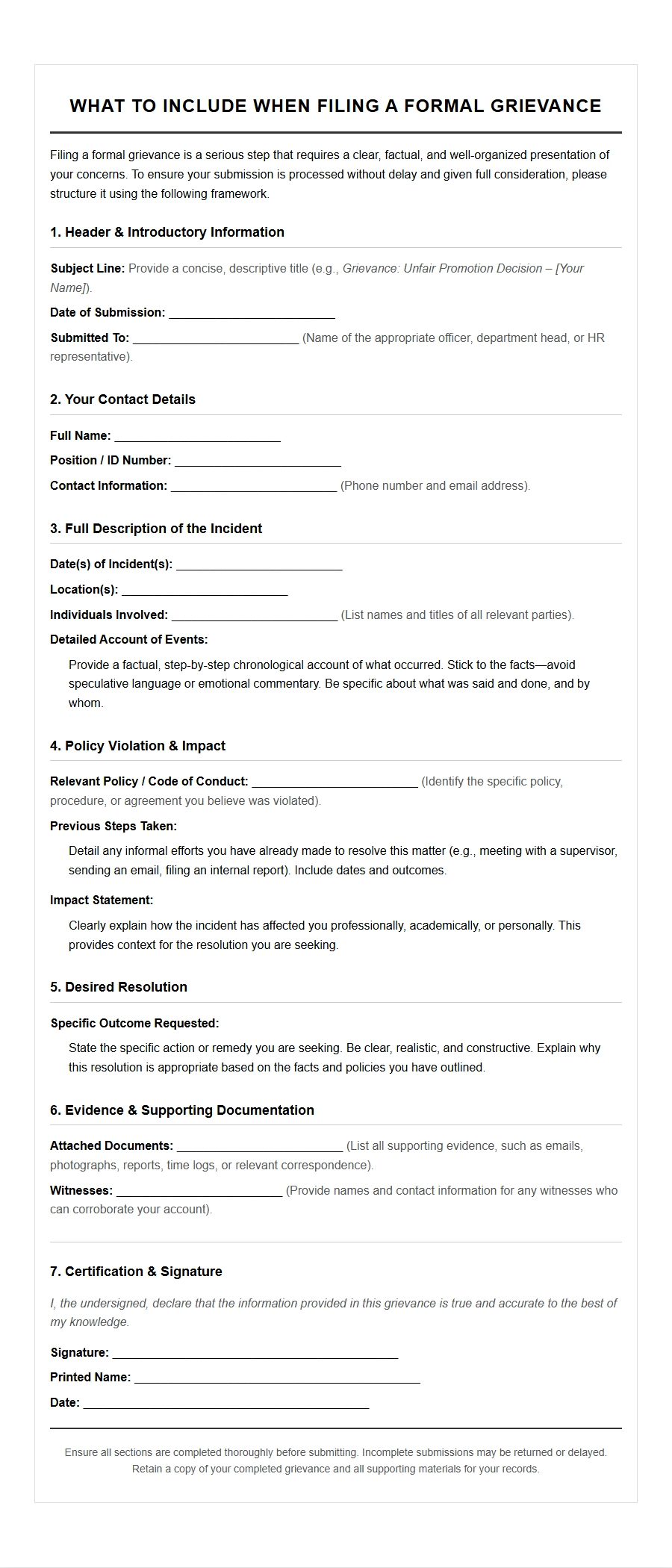 What to Include in a Formal Grievance Letter
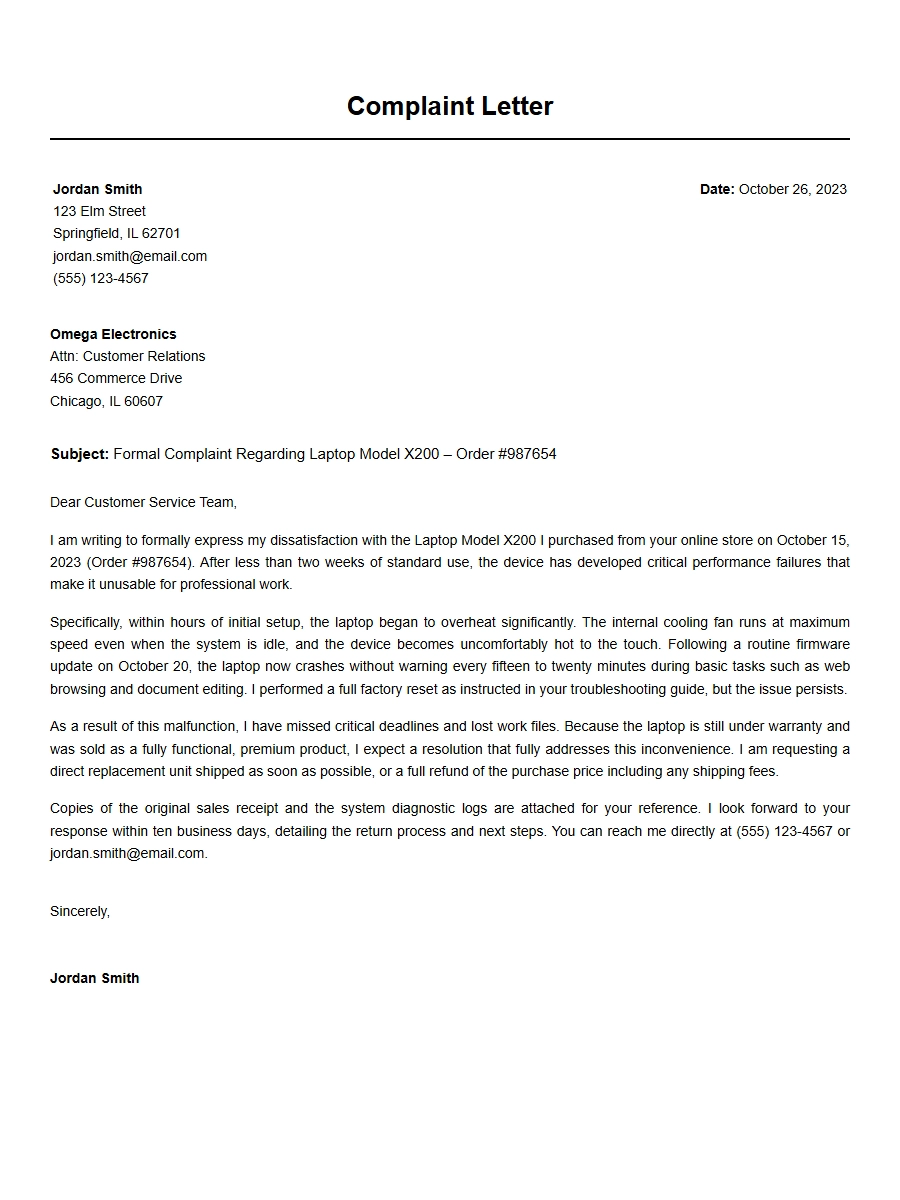 Structure of an Effective Complaint Letter
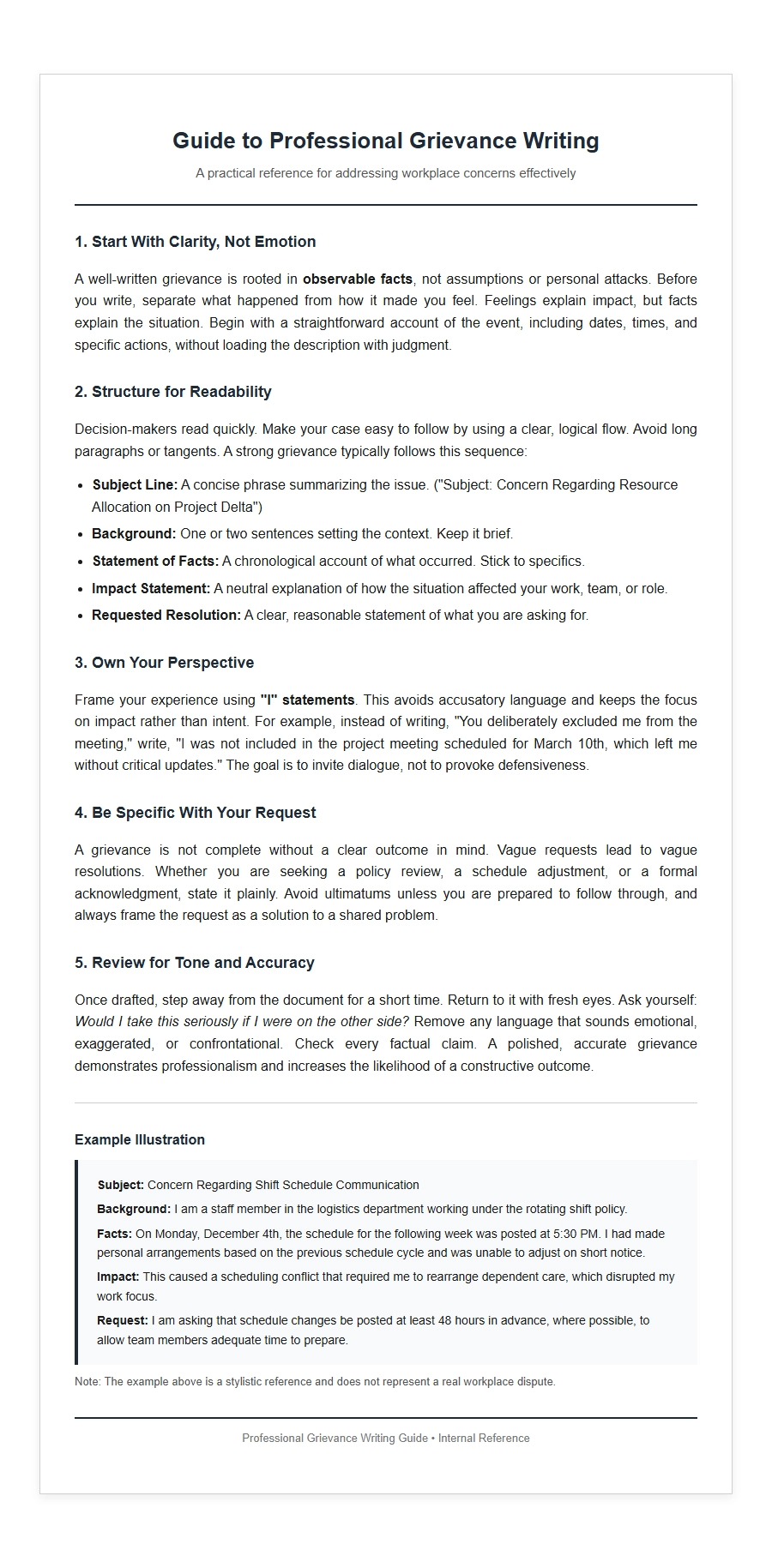 Best Practices for Writing Professional Grievance Letters