How to Write a Thank You Letter After an Interview
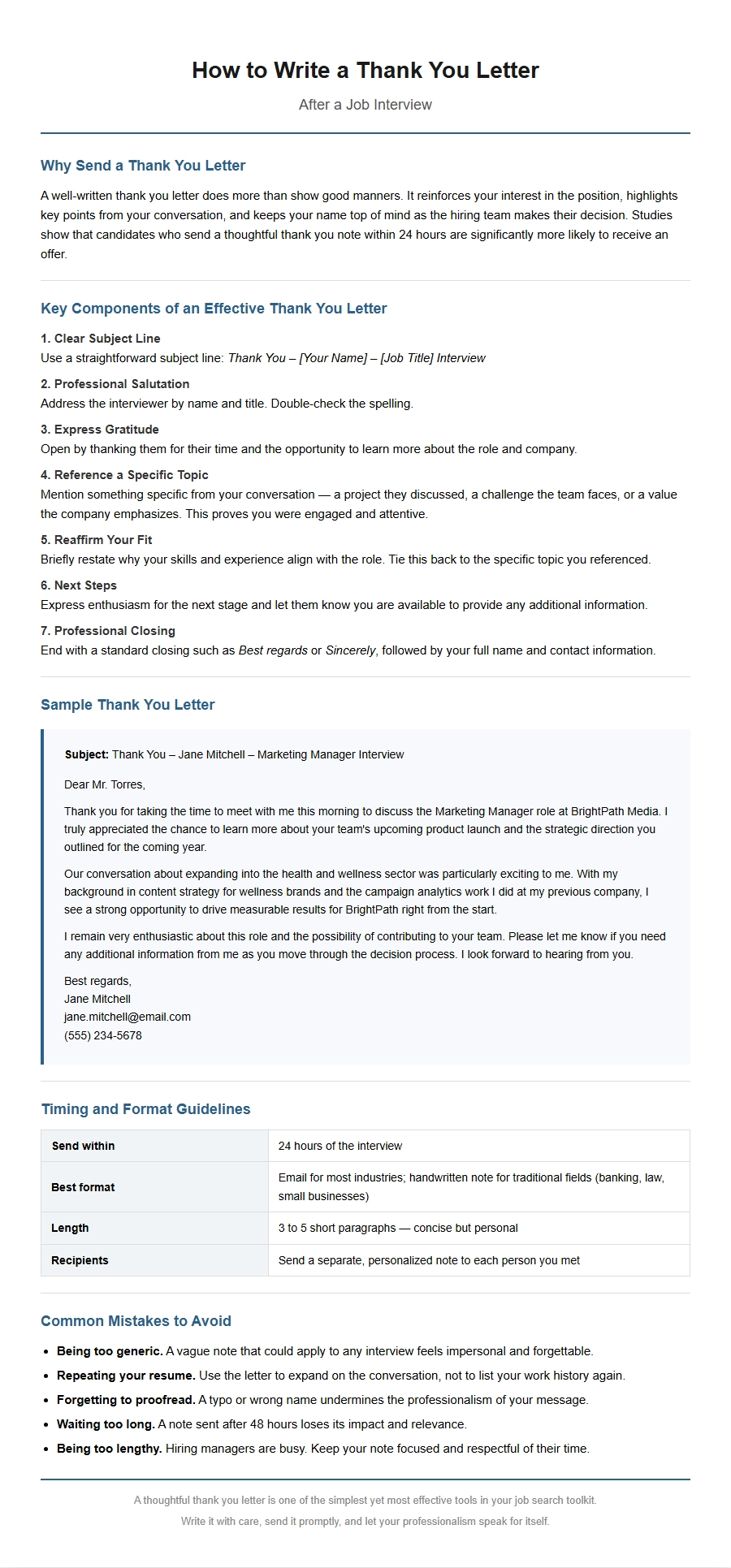
You just finished a job interview, and your brain is still replaying every answer. Should you send a thank you letter? Absolutely. It’s one of the easiest ways to stand out. The trick is writing one that feels genuine—not like you copied a script from the internet.
Why a thank you letter matters after an interview
A well-written thank you note does more than show manners. It reinforces your interest in the role and reminds the interviewer why you’re a strong fit. It also gives you a chance to mention something specific from your conversation—like a shared project interest or a challenge the team faces—that shows you were really listening. In a competitive job market, that small effort can tip the scales.
Find a sample, but don't copy it
Using a letter template is smart. It saves time and helps with structure. But don’t just swap in your name. The best professional correspondence adapts the sample to your voice. For example, if the interview was relaxed and conversational, match that tone. If it was formal, stick with traditional business letter format and a polite salutation.
Start with a strong opening. Thank them by name and mention the specific role. Then, reference one detail from the interview—a question you enjoyed, a shared connection, or something you learned about the company. That turns a generic note into a memorable one.
Email vs. printed letter: Know the format
Most digital letter format today works best for email thank you notes after interviews. Keep it short—three to four paragraphs. Use a clear subject line like “Thank You – [Job Title] Interview” to help them locate it later. If you’re sending a formal printed version, use clean letterhead design and include your contact info. For most situations, email wins because it’s faster and shows you’re responsive.
Common mistakes that hurt your thank you letter
One frequent misstep is using outdated letter writing etiquette. “To whom it may concern” feels stiff and impersonal. Address the person directly. Another problem is ignoring tone. A tone in writing that’s too casual—like using slang or emojis—can come across as unprofessional. On the flip side, overly flowery language feels fake.
Also, don’t forget to proofread. A typo in a thank you note after a job interview sends the wrong message. Take two minutes to read it aloud or use a simple tool to catch errors. It makes a real difference.
How to customize a letter sample without losing your voice
Start with a solid letter structure: greeting, opening thanks, specific detail, reaffirm interest, and close. Then replace the generic phrases with your own. If you use a resignation letter sample or cover letter examples for inspiration, you’ll notice they follow a similar pattern. Adapt that pattern, but swap in your own details. Authenticity builds trust.
If you’re uncertain about the tone, imagine you’re writing to a respected colleague. Polite but not stiff. Professional but human. That balance works for almost any industry.
Mentioning referrals or recommendations
If someone recommended you for the role, it’s smart to mention them—but only if the interviewer already knows. Don’t drop a name out of nowhere. If a letter of recommendation was part of your application, you can briefly reference it: “I hope my resume and reference from [Name] gave a clear picture of my background and enthusiasm for this role.”
For more examples of professional thank you messages, you can adapt those ideas to fit interview settings. The structure is similar—gratitude, specificity, and a warm closing.
Wrap it up with a forward-looking close
End your thank you note by expressing genuine interest in the next steps. Something like, “I’m excited about the possibility of joining your team and contributing to [specific project]. Thank you again for your time and consideration.” Then include a salutation and closing like “Best regards” or “Sincerely,” followed by your full name.
After you send it, move on. A thank you letter won’t fix a weak interview, but it can strengthen a good impression. Use it as a springboard—not a crutch. Over time, writing these notes becomes faster and more natural. You’ll know you’ve got it right when the letter sounds like you, just a slightly more polished version.
Examples You Can Adapt
How to Write a Thank You Letter After an Interview
Essential Parts of a Thank-You Letter
A well-crafted thank-you letter after a job interview should include these key sections:
Greeting – Address the interviewer by name and title, e.g., "Dear Ms. Johnson".
Expression of gratitude – Thank the person for their time and the opportunity to learn more about the role.
Specific discussion point – Reference one topic from the interview that reinforced your interest or highlighted your fit.
Reaffirm your interest – Clearly state that you remain enthusiastic about the position and the company.
Closing – Offer to provide additional information and end with a professional sign-off, such as "Sincerely, [Your Name]".
Keeping this structure helps you stay focused, personal, and professional—all of which leave a positive impression.
Email vs. Handwritten Note
Deciding between an email and a handwritten thank-you note depends on the company culture and the urgency of your follow-up. Use the table below to compare the two formats.
Format
Pros
Cons
Email
Fast delivery, easy to include links or attachments, can be sent within hours of the interview.
May feel less personal, risks being buried in the recipient’s inbox.
Handwritten note
Shows extra effort, stands out, and feels more sincere.
Takes days to arrive, cannot reference time-sensitive details, limited space.
When in doubt, send an email within 24 hours to ensure timeliness, then follow up with a handwritten note if you want to make a stronger impression.
Timing: When to Send
Timing your thank-you letter is crucial. Aim to send it within 24 hours of the interview—any later and your message may lose its impact.
Here are a few timing guidelines:
Same day – Ideal if you interview in the morning; send the letter that afternoon. It shows you are prompt and genuinely interested.
Next morning – Acceptable if the interview was late in the day. Avoid sending late at night; a next-morning email feels more professional.
After the weekend – If you interview on a Friday, sending on Monday is fine. Do not wait longer than 48 hours.
Second interview follow-up – Send after each interview round, even if you already sent one after the first round. It reinforces your continued enthusiasm.
Remember: a delayed thank-you can make you seem disorganized or indifferent.
Mentioning a Specific Topic
To make your thank-you letter memorable, reference a specific conversation point from the interview. This shows you were listening attentively and reinforces how you can contribute.
For example, if the interviewer discussed a challenge the team is facing, write: "I really appreciated our discussion about the upcoming product launch timeline. Your description of the need for a more streamlined workflow resonated with me, and I believe my experience in project management could help the team meet that deadline."
Choose a topic that:
Relates directly to the role you are applying for.
Demonstrates a skill or quality you possess.
Feels natural and not forced.
Avoid generic phrases like "I enjoyed learning about your company." Specificity makes your letter stand out.
Thanking Multiple Interviewers
When you meet with more than one person, you have two options: send a single group email or individual letters. Follow these steps:
Obtain contact information – Collect business cards or note down email addresses during the interview.
Decide on approach – If you interviewed with a panel, a single email addressed to all is acceptable. If you had separate one-on-one meetings, send individual thank-you notes.
Tailor each note – Even in a group email, mention something unique from each conversation. For individual notes, reference the specific topics you discussed with that person.
Use BCC carefully – If sending a group email, put all recipients in the BCC field to avoid reply-all clutter, but address them by name in the greeting.
Proofread names – Double-check the spelling of each interviewer’s name and title.
This extra effort demonstrates your attention to detail and respect for each person’s time.
Sample Thank-You Letter Template
Use this fill-in-the-blank template to write your own thank-you letter after a job interview. Replace the bracketed text with your personal details.
Subject: Thank You – [Your Name] – [Job Title] Interview
Dear [Interviewer Name],
Thank you so much for taking the time to meet with me today to discuss the [Job Title] position. I truly enjoyed learning more about [specific topic, e.g., the company’s new marketing strategy] and how the role contributes to [team or company goal].
Our conversation reaffirmed my interest in joining [Company Name]. I am particularly excited about [mention one aspect you liked, e.g., the collaborative culture or the growth opportunities]. My experience in [Your Skill] aligns well with the needs you described, and I am confident I can make an immediate impact.
Please let me know if you need any additional information from me. I look forward to hearing about the next steps.
Best regards, [Your Full Name] [Your Phone Number]
Common Mistakes to Avoid
Even a well-intentioned thank-you letter can backfire if you make these common mistakes:
Being too generic – A vague “Thanks for the opportunity” without specifics sounds like a form letter. Personalize each message.
Forgetting to proofread – Typos, grammar errors, or misspelling the interviewer’s name can ruin your chances. Read aloud before sending.
Waiting too long – Sending a thank-you note more than 48 hours after the interview suggests you don’t care enough.
Overdoing the flattery – Excessive praise can seem insincere. Stick to genuine appreciation.
Repeating your résumé – The thank-you note should add value, not restate what is already in your application.
Neglecting to send one at all – Many candidates skip this step; a thank-you note sets you apart from the competition.
Review your letter for these pitfalls before hitting send.
Industry-Specific Variations
The tone and content of your thank-you letter should align with the industry you’re applying to. Use the table below for guidance.
Industry
Tone
Key Points to Include
Corporate / Finance
Formal, concise, and professional. Avoid overly casual language.
Highlight quantitative achievements, attention to detail, and ability to meet deadlines.
Creative / Design
Warm and slightly informal, with a touch of personality.
Reference a creative idea discussed, express enthusiasm for the company’s portfolio, and show passion.
Non-profit / Education
Sincere, mission-driven, and collaborative.
Emphasize your alignment with the organization’s mission, mention a specific program you loved learning about, and your commitment to service.
Technology
Direct and detail-oriented, but still personable.
Discuss a technical challenge the interviewer mentioned, show your problem-solving mindset, and mention relevant tools or skills.
Tailoring your letter to industry norms demonstrates cultural fit and awareness.
Follow-Up After No Response
If you haven’t heard back within a week of sending your initial thank-you letter, a brief follow-up can show persistence and continued interest. Follow these steps:
Wait at least 5 business days – Give the interviewer time to review candidates and make decisions.
Send a polite email – Keep it short: thank them again, express your enthusiasm, and ask if they have any updates or need additional information.
Reference your original note – Write something like, “I wanted to follow up on my thank-you email from [date].”
Reiterate your interest – Mention one thing you are still excited about, but do not pressure them for a decision.
End with a positive closing – “I remain very interested in joining [Company Name] and look forward to hearing from you.”
If you still receive no response after another week, it may be best to move on—but a polite follow-up often prompts a reply.
Reaffirming Your Fit
Your thank-you letter is a perfect place to reinforce why you are the right candidate. Use it to highlight how your skills match the job requirements discussed during the interview.
Consider listing the top two or three qualifications the interviewer emphasized, then briefly show how you meet each one:
Skill: Project Management – "You mentioned that the team needs someone to streamline workflows. In my last role, I reduced project turnaround time by 20% using Agile methods."
Skill: Communication – "I appreciated hearing how cross-department collaboration is key. I have extensive experience leading cross-functional meetings and creating clear status reports."
Skill: Adaptability – "When you described the fast-paced environment, I recalled how I successfully pivoted a campaign with only 48 hours’ notice."
By explicitly linking your experience to the interviewer’s stated needs, you make it easy for them to see you as a strong fit—and increase the chance they will recommend moving you forward.
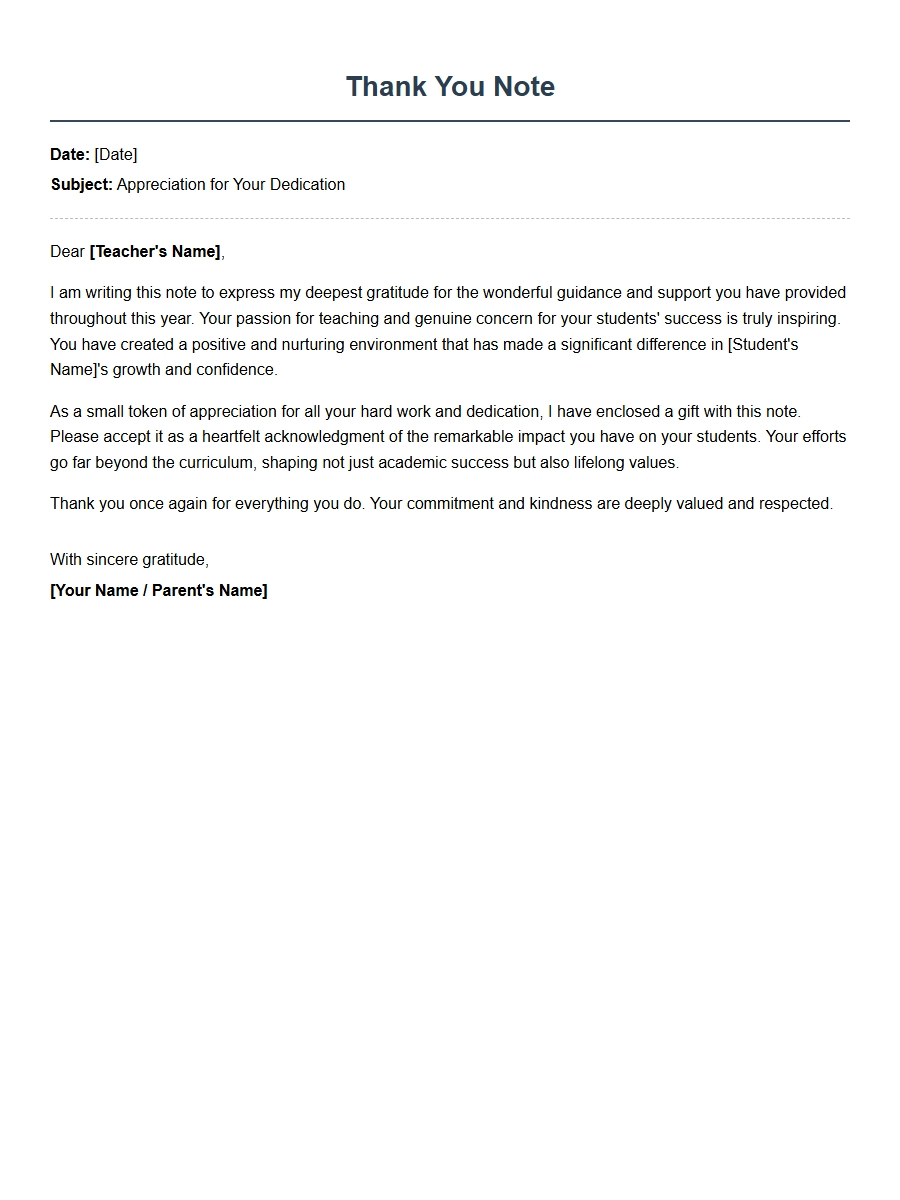 Sample Thank You Note for Teacher Gift
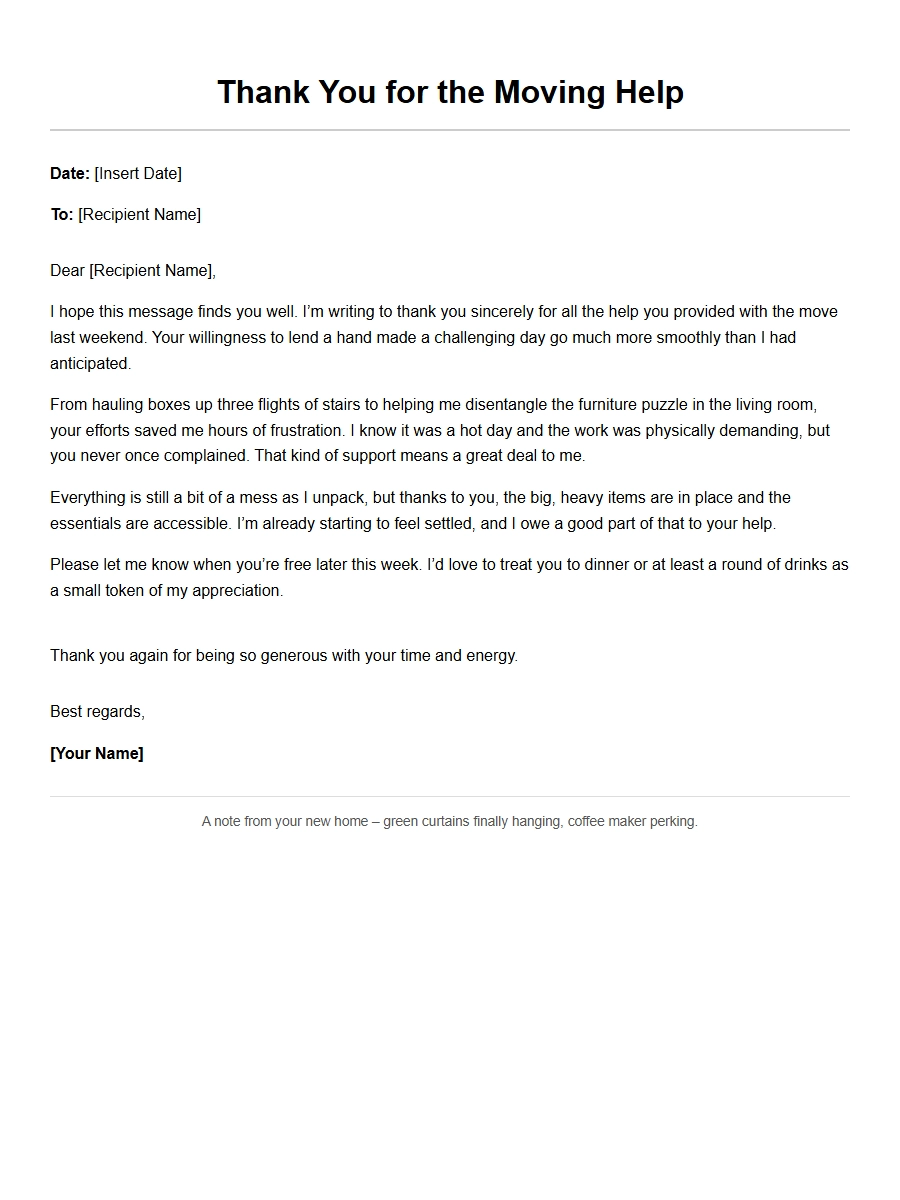 Thank-You Letter for Help with Moving
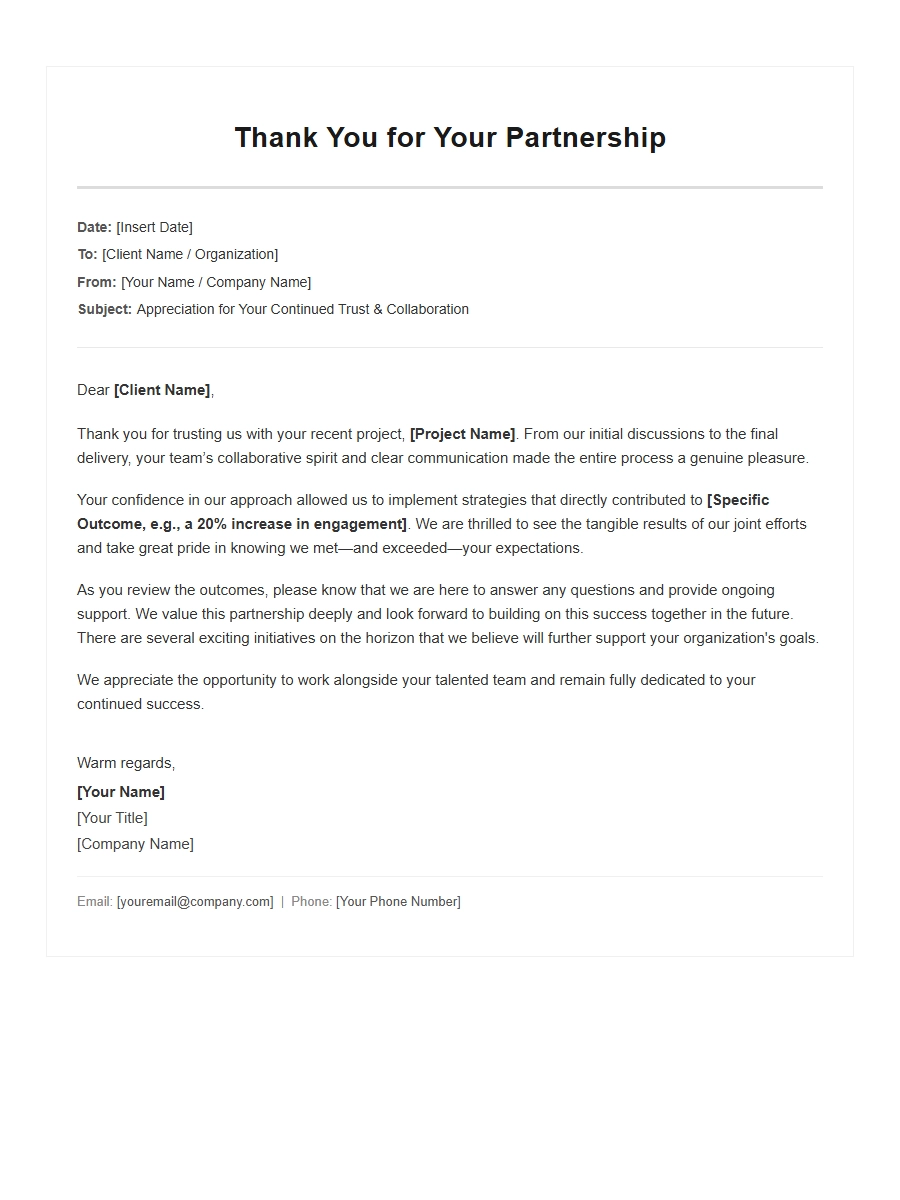 professional thank you email example for client - Thank-You Letters
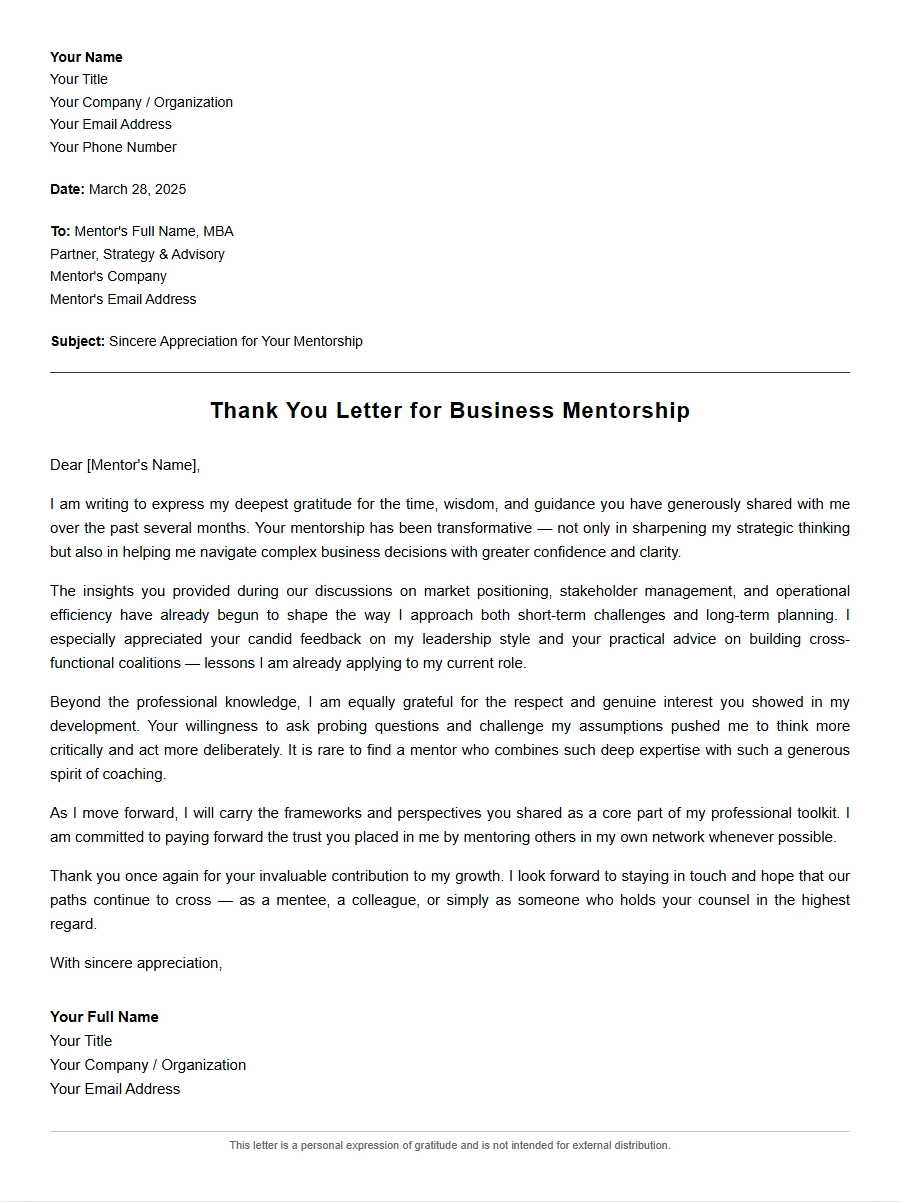 Business Mentor Thank-You Letter Guide
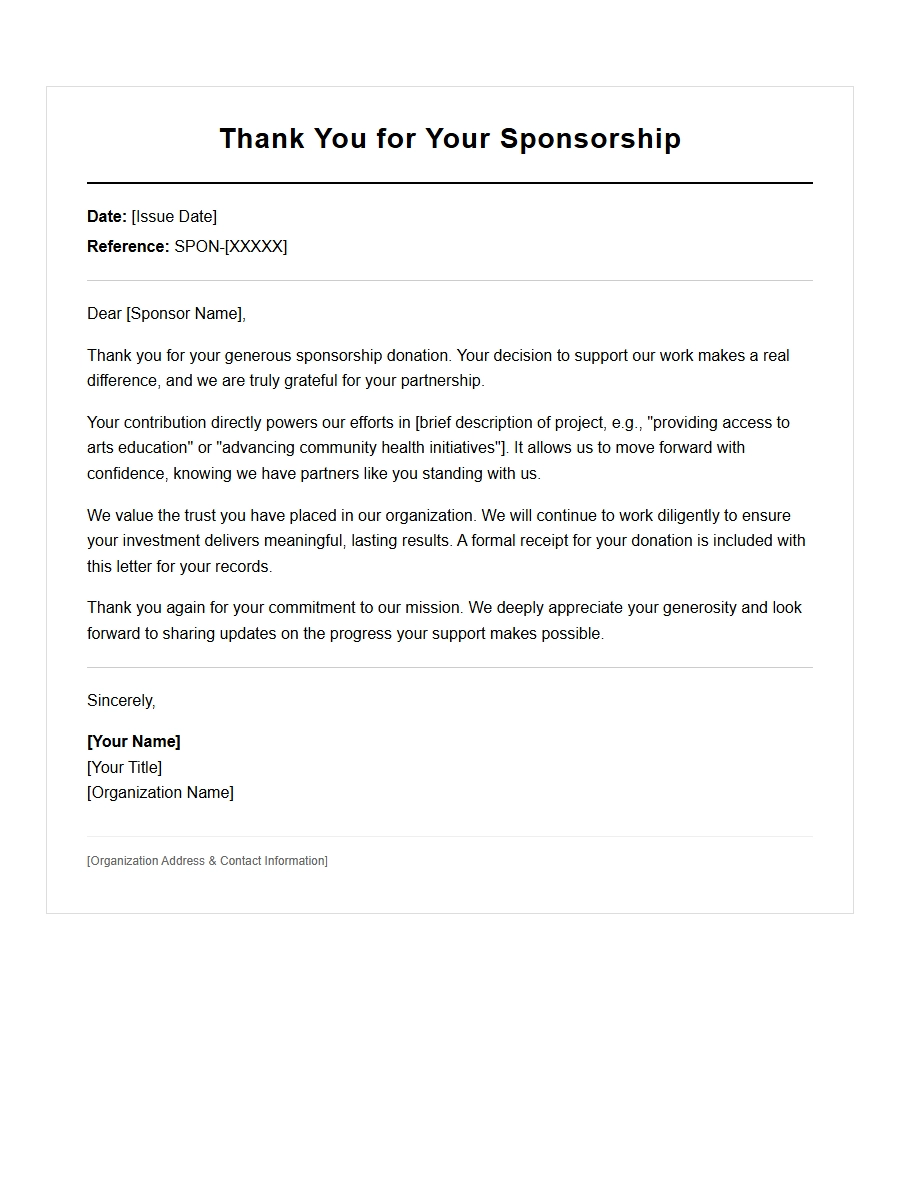 Thank You Letter for Sponsor Donation
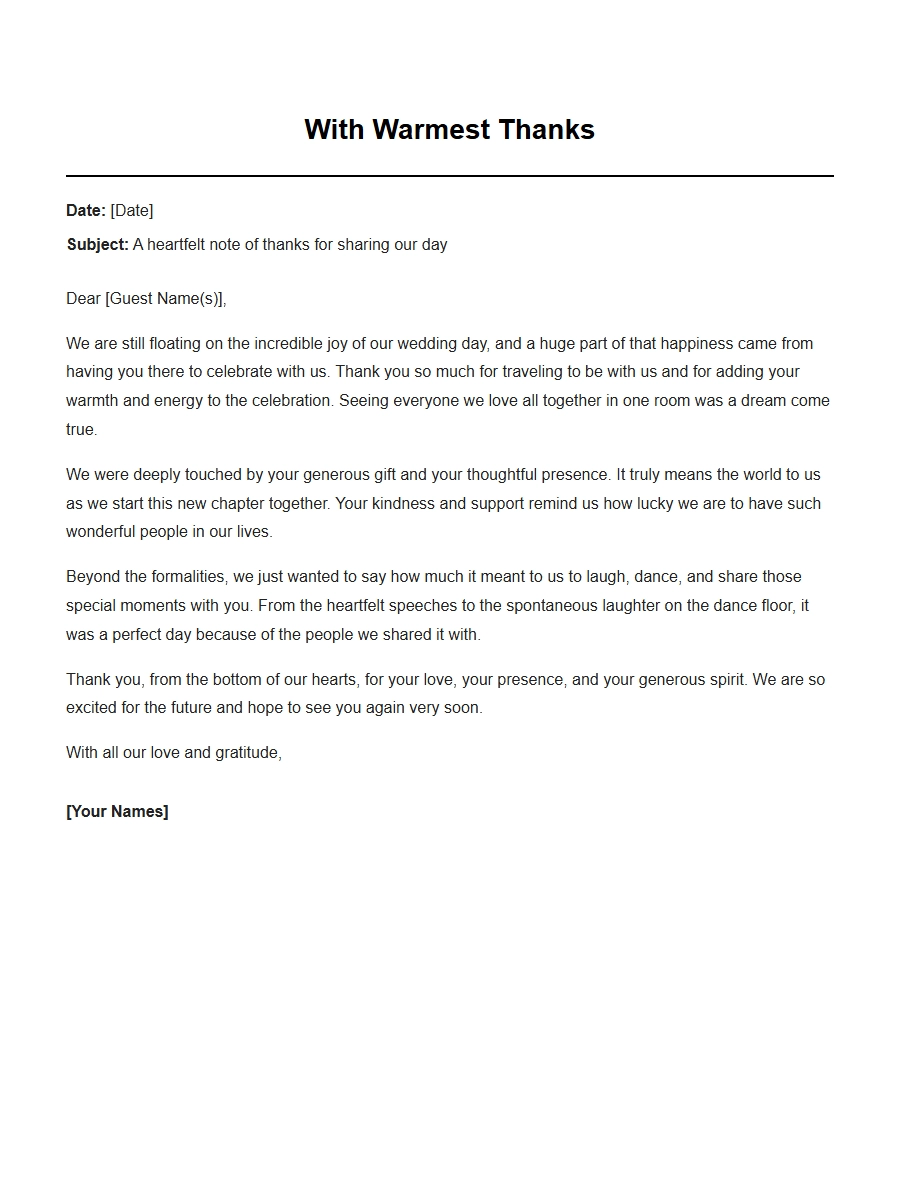 Wedding Gratitude Letter Template for Guests