Complaint Letter: Curriculum Changes Impacting Students
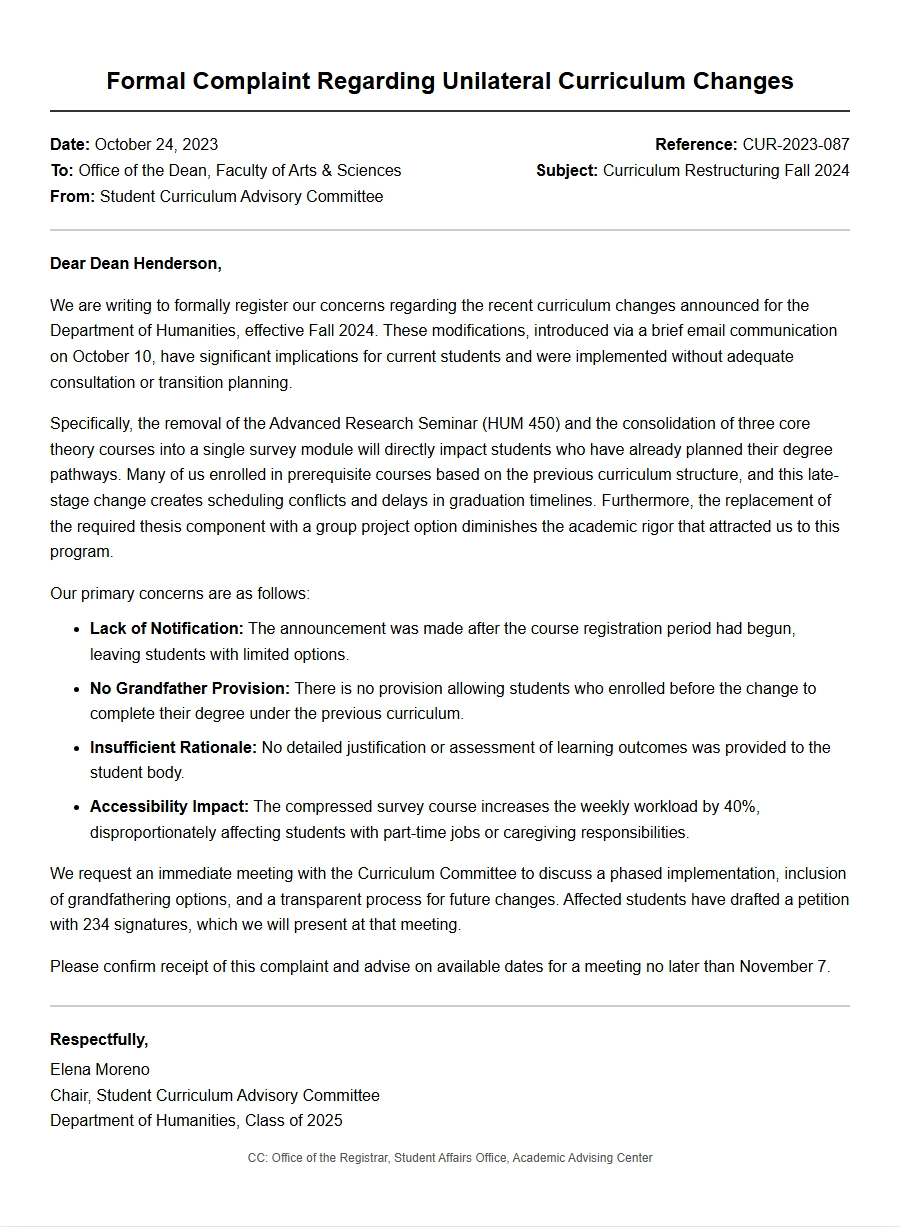
You’re staring at an email draft about new course requirements your child can’t meet, or maybe you’re a teacher watching a well-liked elective get cut with no warning. The frustration is real, and the blank page just adds to it. A solid sample of a complaint regarding curriculum changes affecting students turns that overwhelm into a clear, respectful letter you can send today.
Why a sample isn’t cutting corners
Using a letter template isn’t cheating. It’s a smart shortcut. A good sample gives you the right structure—salutation, body, closing—and sets the tone for professional correspondence. You don’t have to reinvent formal writing tips while you’re upset. Instead, you grab a strong foundation and make it your own. The key is picking a sample that fits your specific situation, whether you’re a parent, student, or faculty member.
Category: Education & Administration
Choosing the right sample for your complaint
Not all complaint letters are the same. A letter about curriculum changes affecting students needs a factual, respectful tone—not angry demands. Look for a business letter format that includes a clear subject line, a calm explanation of the issue, and a specific request (like reinstating a course or adjusting a policy). Avoid samples that sound harsh or overly legal unless you’re actually sending a demand letter for immediate resolution. For most curriculum complaints, a firm but polite approach works best.
Ever received a letter that felt too stiff or too casual? The best samples strike a middle ground. They show you how to phrase your concern without attacking the reader. For example, instead of “Your new policy is unfair,” a sample might suggest: “I’m writing to express concern about the recent schedule changes and their impact on students’ ability to complete graduation requirements.” That keeps the door open for a constructive response.
Adapting the sample without losing your voice
Once you’ve picked a template, the real work is personalization. Start by swapping out generic details with your own facts: specific course names, dates, and the exact effect on students or your child. Then rewrite the opening paragraph to sound like you. If you’re a parent, mention how your child was affected. If you’re a teacher, explain the academic impact. Letter writing etiquette matters here—keep the tone professional, but let your genuine concern show.
A common mistake is copying the sample’s salutation and closing verbatim. Don’t. Choose a greeting that fits your relationship with the recipient. “Dear Principal Rodriguez” is fine for a school administrator. “To the Curriculum Committee” works for a board. And always proofread. A typo in a complaint about student welfare undermines your credibility. Good proofreading habits include reading the letter aloud and checking for outdated phrases like “To whom it may concern” when you could use a real name.
Format matters for email and printed letters
Are you sending this as an email or a printed letter? The format changes things. For email, use a direct subject line like “Concern about new math curriculum requirements for 2025.” Skip letterhead design unless you’re printing on official stationery. For a physical letter, include your address, the date, and the recipient’s address at the top. That’s standard business letter format. If you’re emailing, keep the digital letter format clean—short paragraphs, no attachments unless requested.
One useful trick: if the sample uses a formal closing like “Sincerely,” you can adapt it to “Best regards” for a slightly warmer tone. The goal is tone in writing that feels both respectful and human. You’re not writing a letter of recommendation or a cover letter example—you’re raising a real issue. So keep the focus on facts and solutions, not emotion. Want to see how other community members have handled similar issues? Check out a sample for notifying a company about recurring problems—the structure of stating the issue clearly and requesting action transfers well to a school context.
Common pitfalls in curriculum complaint letters
People often make their complaint too vague. “The curriculum changes are bad” says nothing. Be specific: “Replacing the two-semester biology sequence with a one-semester survey means students won’t meet prerequisites for college science programs.” That gives the reader a concrete problem to solve.
Another mistake? Ignoring the audience. A letter to a school board should be more formal than one to a department head. If you’re unsure, err on the side of polite formality. And don’t bury your request. State clearly what outcome you want—reconsider the change, delay implementation, or create an exception process. If you need a more urgent tone, you can adapt this approach from a performance review dispute letter, which balances firmness with professionalism.
Use the sample as a springboard
The best letters feel both professional and personal. A sample gives you the scaffolding—you bring the bricks. After you write your first draft, step away for an hour, then read it fresh. Tweak any phrase that sounds borrowed. Replace jargon with your own words. Over time, you’ll get faster at writing these letters. For now, let a good template do the heavy lifting while you focus on getting your point across clearly and respectfully.
If you’re dealing with a situation that feels unsafe or urgent, such as notifying someone about unsafe conditions, the same principles apply—state facts, request action, keep a record. A complaint regarding curriculum changes affecting students isn’t a small thing. It affects real lives. Write it with care, send it with confidence, and don’t hesitate to follow up. Practice makes the process faster, but a good first draft makes today easier.
Writing Examples
Complaint Letter: Curriculum Changes Impacting Students
Parent Concern Over New Grading Policy
Dear Principal,
I am writing to express my serious concern regarding the sudden changes to the grading policy implemented this semester. As a parent of a Grade 10 student, I have noticed the new weighting system heavily favors final exams, which places undue stress on my child.
The key issues I have identified include:
Reduced weight for daily assignments from 40% to 20%.
Increased weight for final exams from 30% to 50%.
No prior notice or consultation with parents.
This change has negatively impacted my child's motivation and performance. I request a meeting with the curriculum committee to discuss reverting to a more balanced approach. Please acknowledge receipt of this complaint.
Sincerely, Martha Jenkins Parent of Liam Jenkins, Grade 10
Student Petition Against Accelerated Curriculum
To the Department Head,
We, the undersigned students of Grade 11, are writing to formally object to the accelerated curriculum introduced this month. The new schedule compresses two terms of material into one, leaving us unable to grasp core concepts.
The specific problems we face include:
No time for revision between units.
Increased homework load of 3-4 hours nightly.
High dropout risk for struggling students.
We request a return to the previous pacing or additional support classes. Attached is a list of 45 students who support this complaint. We await your response.
Respectfully, Anna Torres Class Representative, Grade 11-A
Teacher’s Feedback on Dropping Creative Writing
Dear Curriculum Coordinator,
I am writing to formally complain about the decision to remove the Creative Writing elective from the high school program. As an English teacher with eight years of experience, I believe this change stifles student creativity and critical thinking.
The negative impacts are evident:
Loss of a safe outlet for self-expression.
Decreased enrollment in advanced English courses.
Ignoring student requests to retain the subject.
I urge you to reconsider this change. Alternative solutions, such as combining it with journalism, could preserve the course. Please schedule a discussion before finalizing the decision.
Best regards, Mr. David Chen English Department
Alumni Concern Over Curriculum Relevance
Dear Board of Education,
As an alumnus from the class of 2018, I am alarmed by recent curriculum updates that remove practical skills like financial literacy and coding. These subjects were vital for my career. Removing them leaves students unprepared for real-world challenges.
I have listed the removed subjects and their importance:
Subject Removed
Practical Use
Financial Literacy
Managing budgets, taxes, investments
Basic Coding
Digital literacy, problem-solving
Public Speaking
Communication in any profession
I request reinstating these subjects or integrating them into existing courses. Our community deserves a forward-looking education.
Sincerely, James O’Brien Alumnus, Class of 2018
Complaint About Replacing History with Technology
To the Curriculum Review Committee,
I am writing to voice my strong disapproval of replacing two semesters of World History with a single technology course. History is essential for developing informed citizens. This change marginalizes humanities.
My concerns are:
Students lose understanding of cultural contexts and past mistakes.
Technology courses can be taught as electives, not replacements.
This decision was made without teacher input.
I propose keeping World History as a core subject and adding technology as an option. Please review this decision promptly.
Yours truly, Lisa Monroe History Teacher, 12 years
Parent Complaint About Overloaded Curriculum
Dear Superintendent,
I am writing to complain about the excessive workload caused by adding a new science module without removing any existing content. My daughter spends 5 hours on homework daily, causing anxiety and sleeplessness.
Here is a breakdown of her current weekly workload:
Subject
Hours per Week
Math
8
Science (new module)
6
English
5
History
4
No student can handle this. I request an urgent review and reduction of the curriculum to a manageable level.
Thank you, Priya Sharma Parent of Anika, Grade 8
Community Group Opposing STEM-Only Focus
To the School District Administrators,
We, the members of the Parents for Balanced Education group, strongly oppose the recent shift to a STEM-only curriculum. Arts and social sciences are being phased out, which harms holistic development.
Our complaints include:
Elimination of art, music, and drama classes.
Reduced funding for social studies electives.
Lack of student choice in course selection.
We demand a balanced curriculum that includes both STEM and humanities. Please organize a public forum to hear our concerns.
On behalf of 120 members, Carlos Mendez Spokesperson
Student Complaint About Unclear Online Module
Dear Curriculum Designer,
I am writing to complain about the new online math module introduced last week. The instructions are vague, and the content skips prerequisite concepts. As a student with average grades, I am struggling to keep up.
Specific issues:
No video explanations for complex problems.
Quizzes include topics not covered in readings.
Help forum is unresponsive.
I request either a revision of the module or extra tutoring sessions. This change is affecting my grade and mental health.
Sincerely, Emily Zhao Grade 9 Student
Teacher Complaints About Poorly Piloted Curriculum
Dear Principal,
I am writing to formally complain about the rushed implementation of the new biology curriculum. It was piloted for only two weeks before being rolled out school-wide, resulting in numerous errors and omissions.
Key problems observed:
Missing laboratory equipment for new experiments.
Textbook sections contradict module content.
No training provided for teachers.
I request a temporary halt to the curriculum until issues are resolved. Otherwise, student learning outcomes will suffer.
This letter serves as a formal legal notice concerning the unauthorized curriculum change for special education students. The new plan eliminates individualized support, violating federal mandates under IDEA.
Details of the violation:
Requirement
Status After Change
Individualized Education Plans (IEPs)
No longer followed
Specialized instruction hours
Reduced by 50%
Parent consultation
Not conducted
We demand immediate reversal of this change and restoration of services. Failure to comply will result in legal action.
Respectfully, Attorney Sarah Klein On behalf of Special Education Families
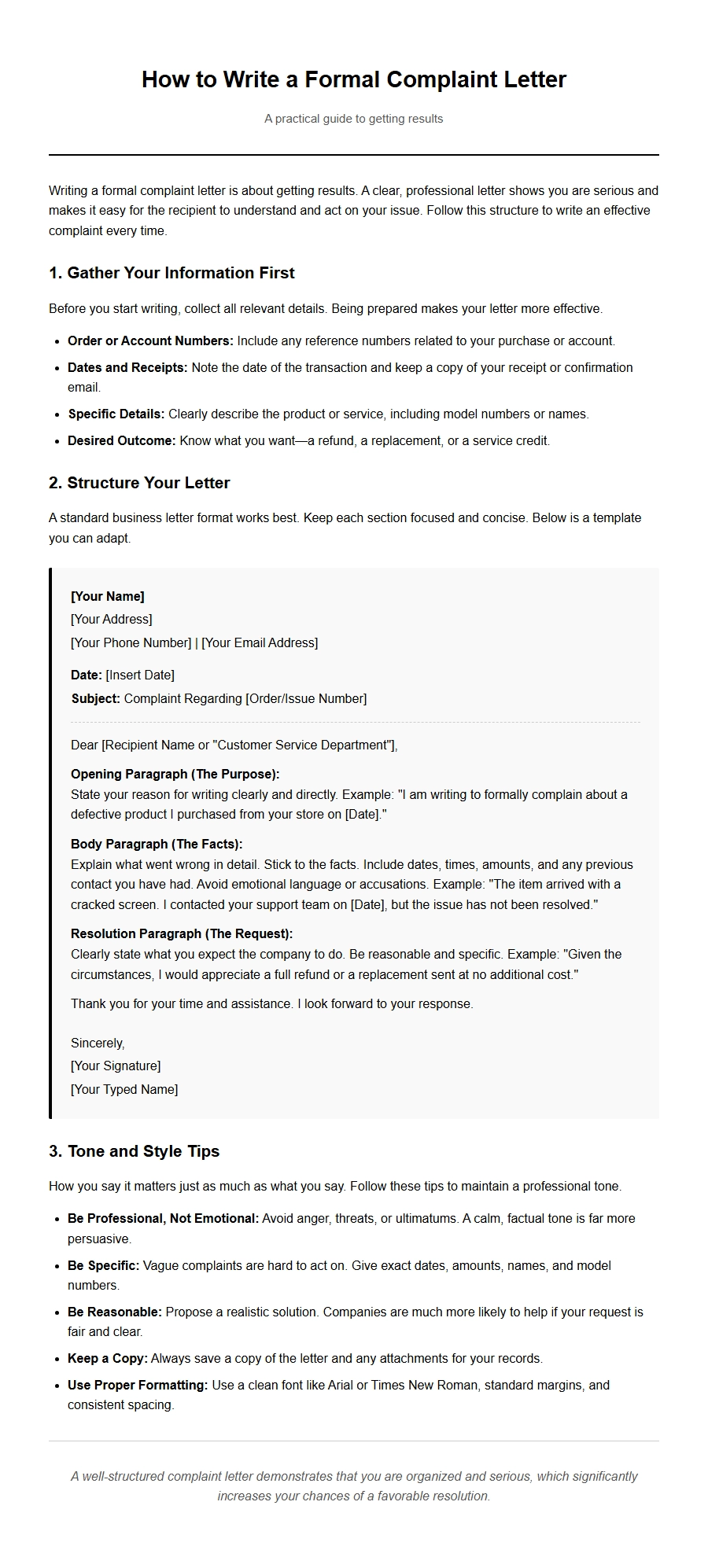 How to Write a Formal Complaint Letter
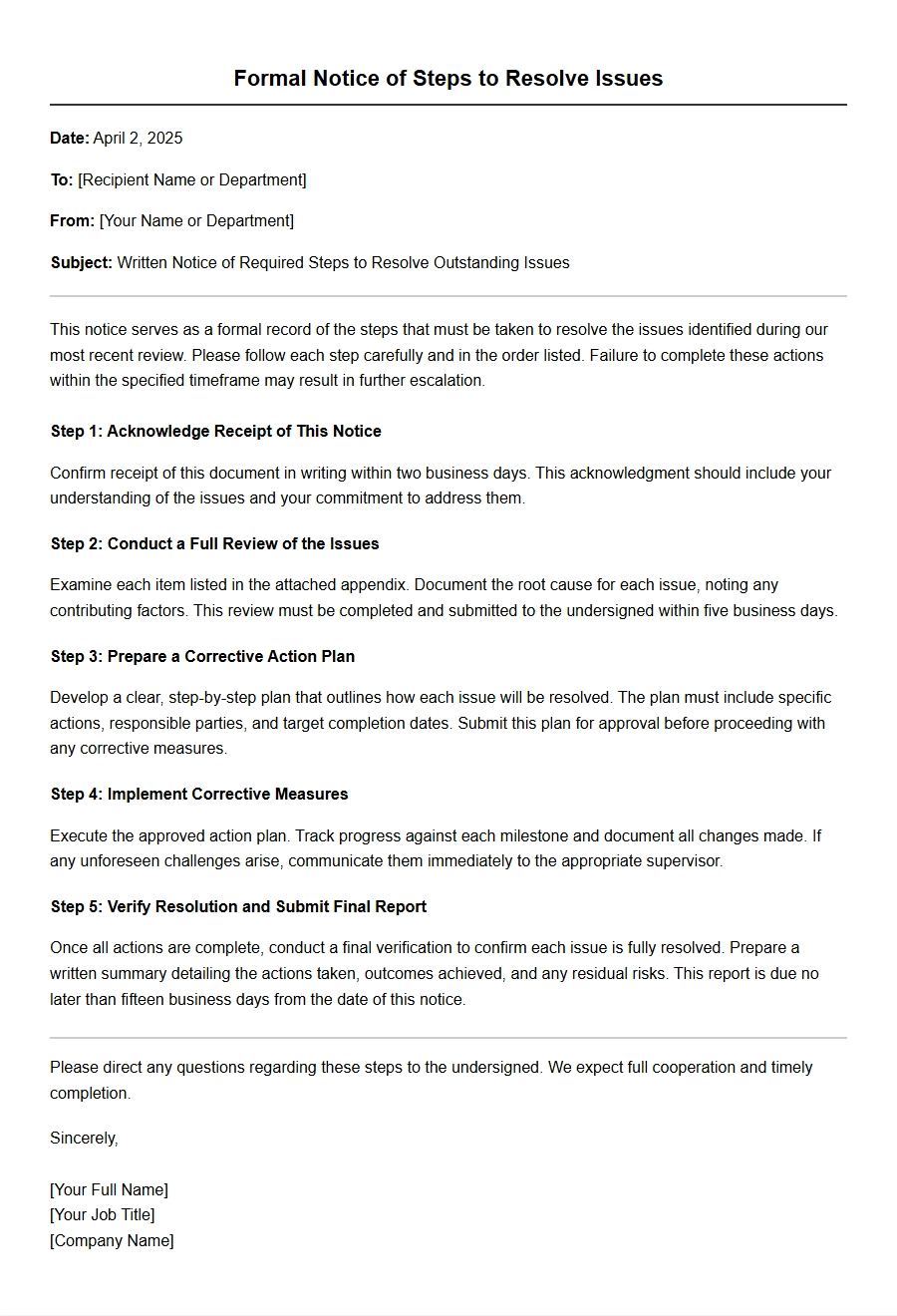 Steps to Resolve Issues via Written Notice
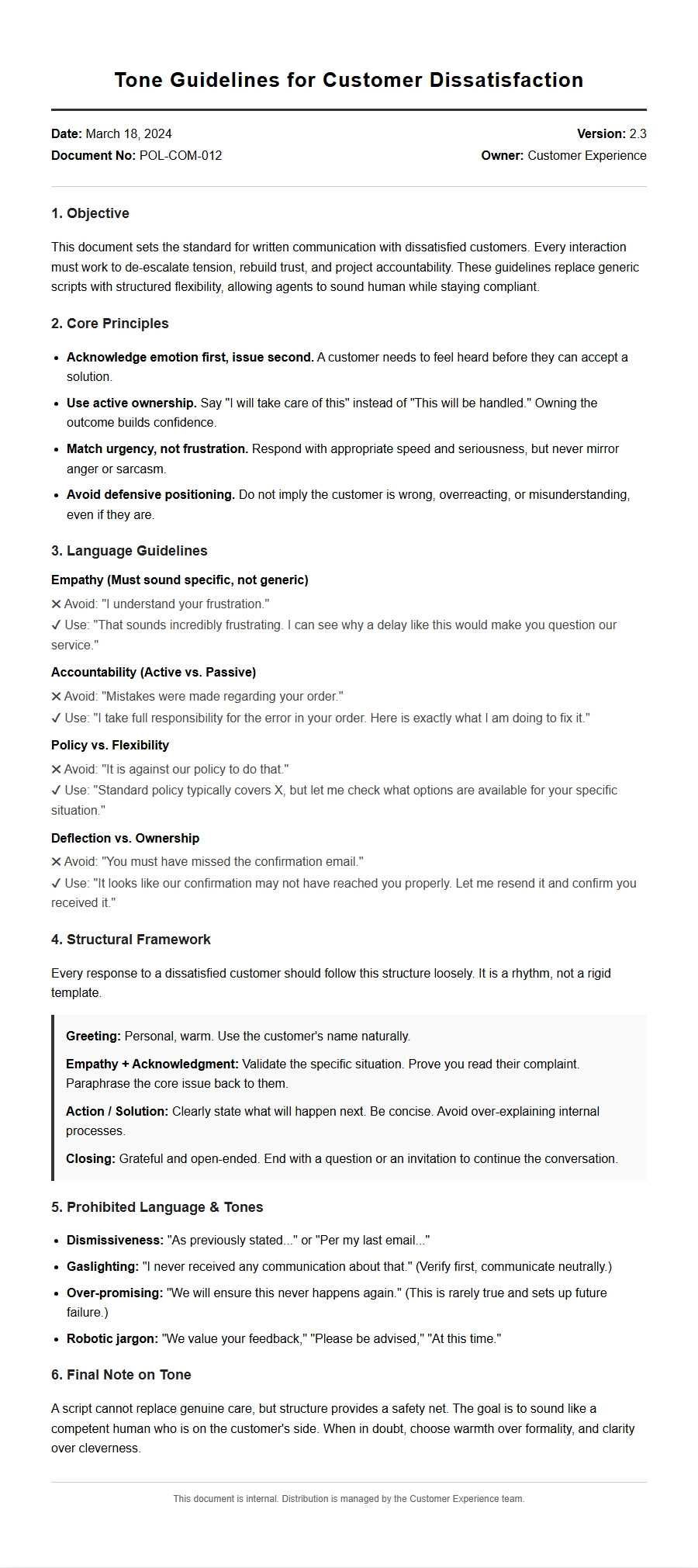 Tone Guidelines for Dissatisfied Customer Letters
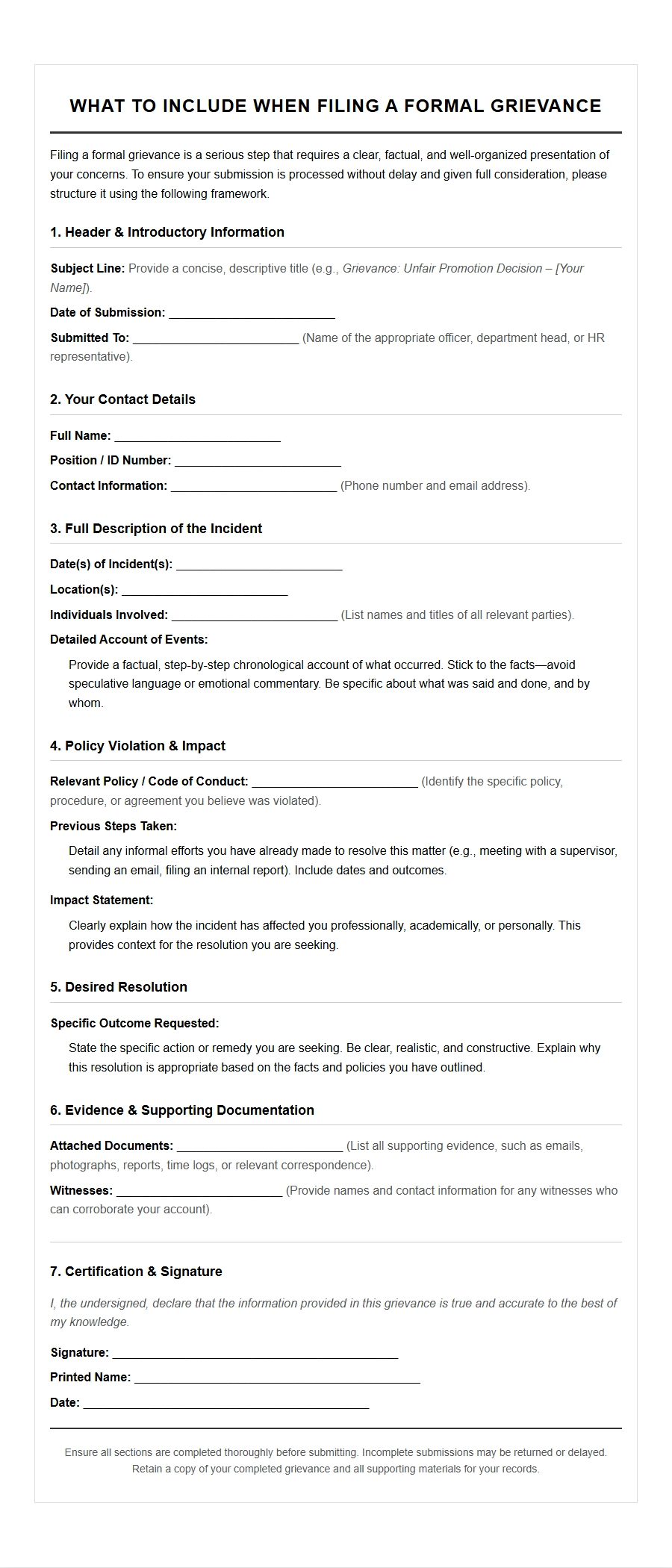 What to Include in a Formal Grievance Letter
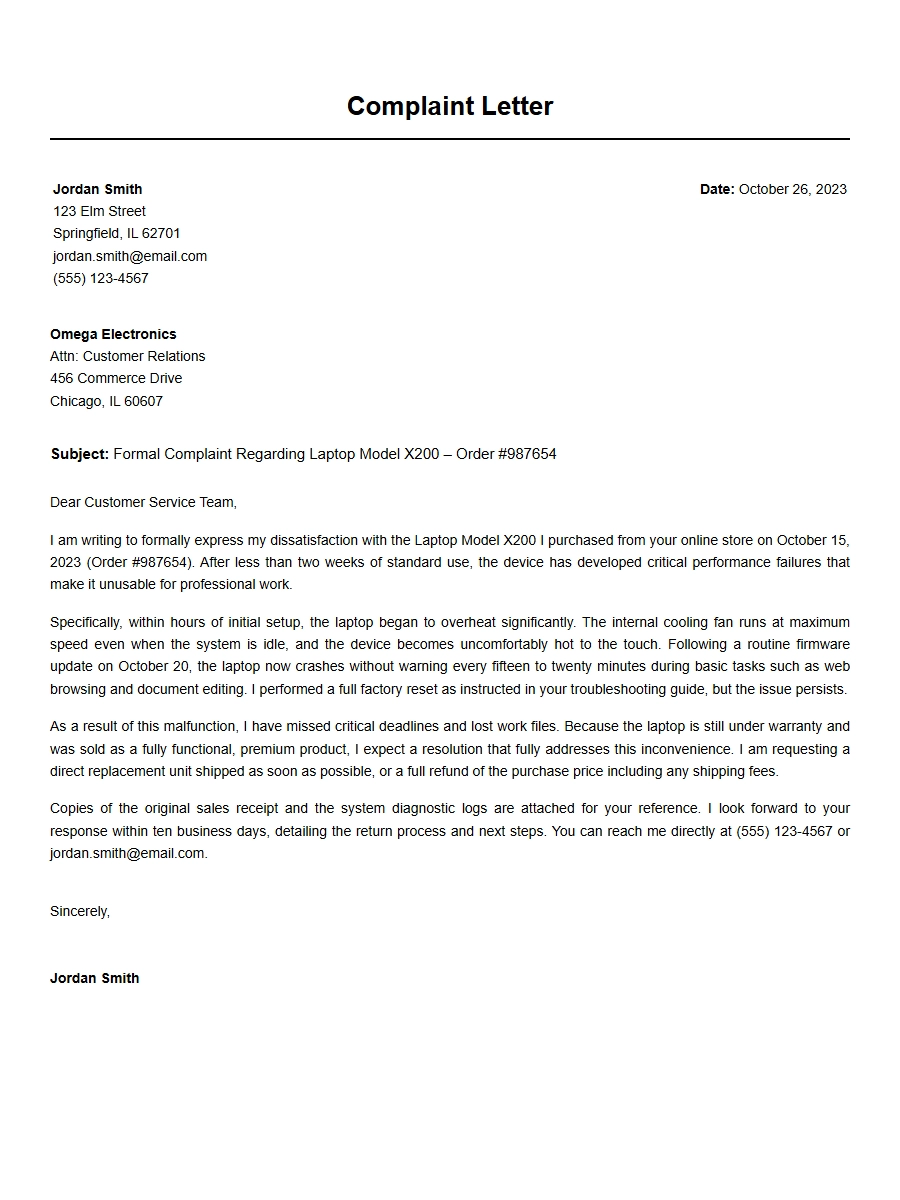 Structure of an Effective Complaint Letter
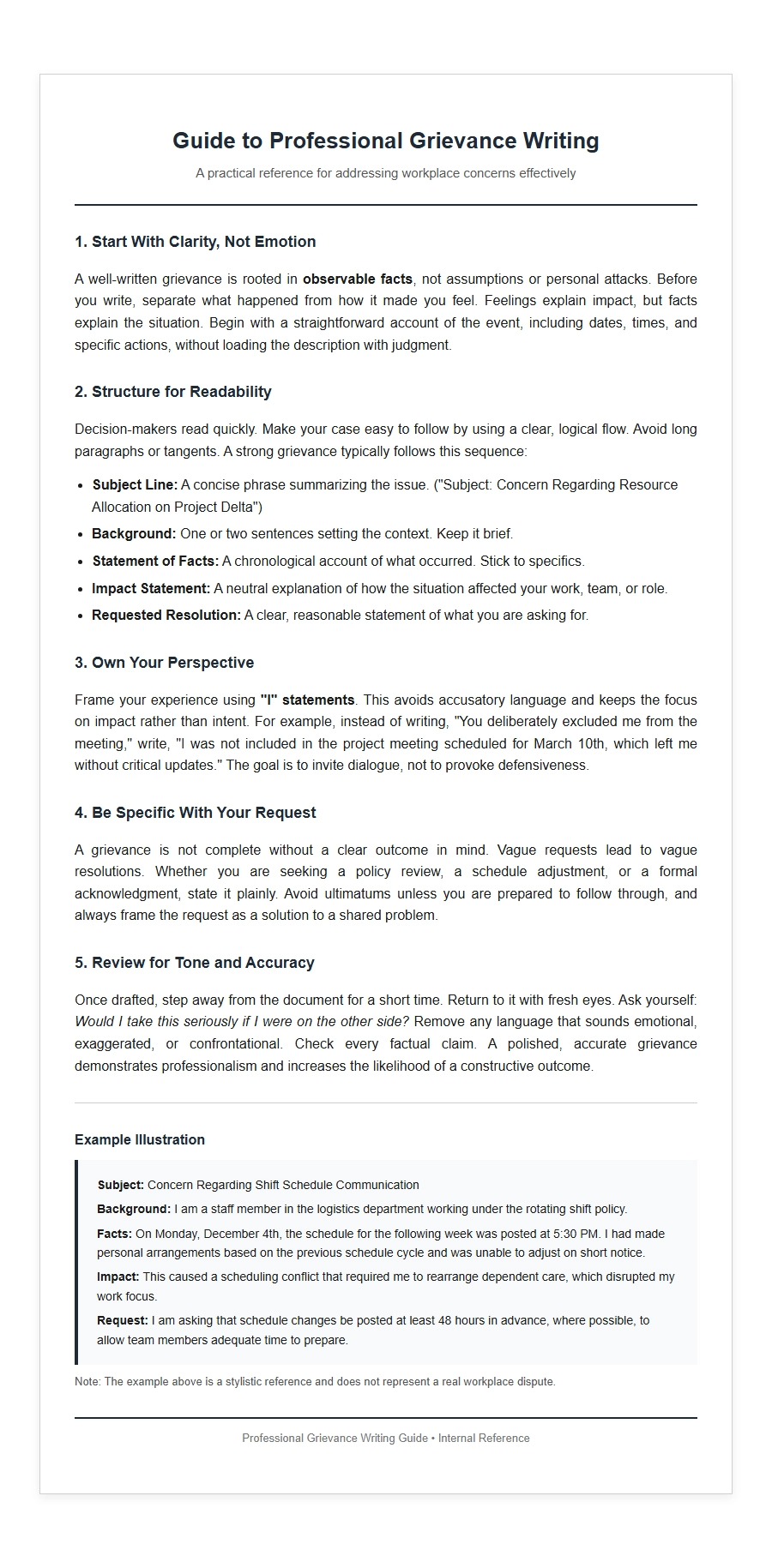 Best Practices for Writing Professional Grievance Letters